

Robert Indiana
Love
Mixed method
1970
Indianapolis Museum of Art, Indianapolis
The rights-restricted image is purposely blurred.
S12E10.
Anita Lerche
I chose Robert Indiana's LOVE sculpture. It's a Cor-ten steel sculpture, over 9,000 pounds and 12 feet tall. It's just amazing. It's the word "love" that speaks to me, because love is a theme of my life. I'm always navigating my life by following my heart in life and spreading love and happiness into the world. That's what I'm most passionate about. I love that you can find the LOVE sculpture in over 50 different countries around the world. And last year, Lego even made a set called LOVE with this special sculpture design, and it's the largest of its kind. So it's quite amazing to experience that live, and to think it's been here all my life.
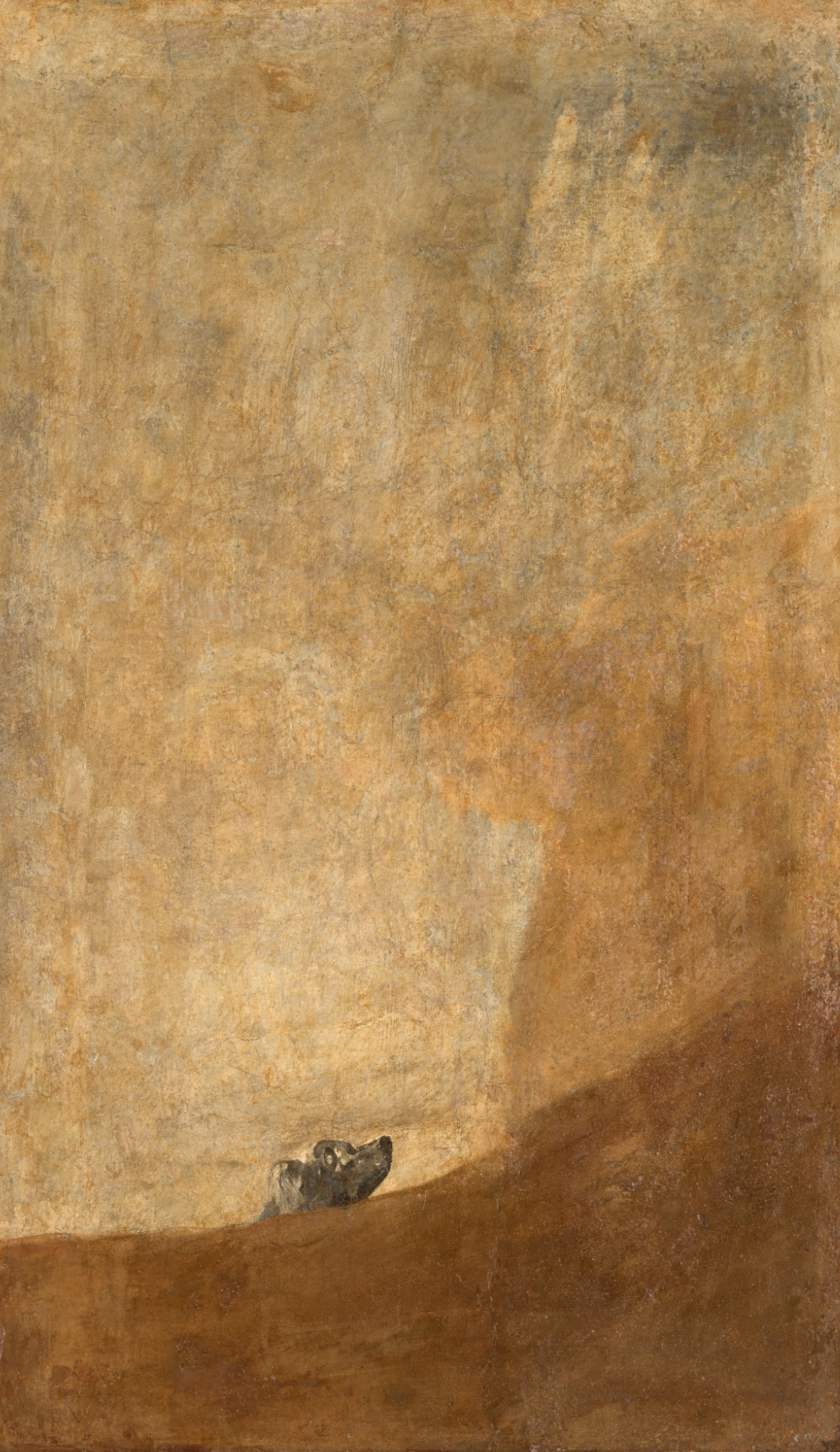
Francisco de Goya y Lucientes
The Drowning Dog
Mixed method
1820–1823
Prado Museum, Madrid
S12E9.
Kristoffer Hegnsvad
I've chosen The Drowning Dog by Francisco Goya. It's a weird image. It's the image of a dog, or the head of a dog at the bottom of a large vertically composed painting. Initially I adore the colors, the shades of earthy tones. But it's the curious attitude of the dog, the dog's stare, that attracts me. I think it's a very daring composition, where so much of the main motif is blocked or what we see is decentralized. It's probably a very boring explanation. It was a mural not meant for public display. What we see is not the full image but what was transferred to canvas. That mistake or that coincidence — it leaves the image open. Originally, the dog might have been staring at two birds or a figure that is no longer in the image. But the result is very inspiring to me in terms of framing or mise-en-scène. It's not always how the work came about that is what resonates later on. It's an artwork that has literally traveled with me for a very long time, in the form of a bookmark I bought after I saw it the first time. It's very dear to me, and it's been a reference point and a source of inspiration.
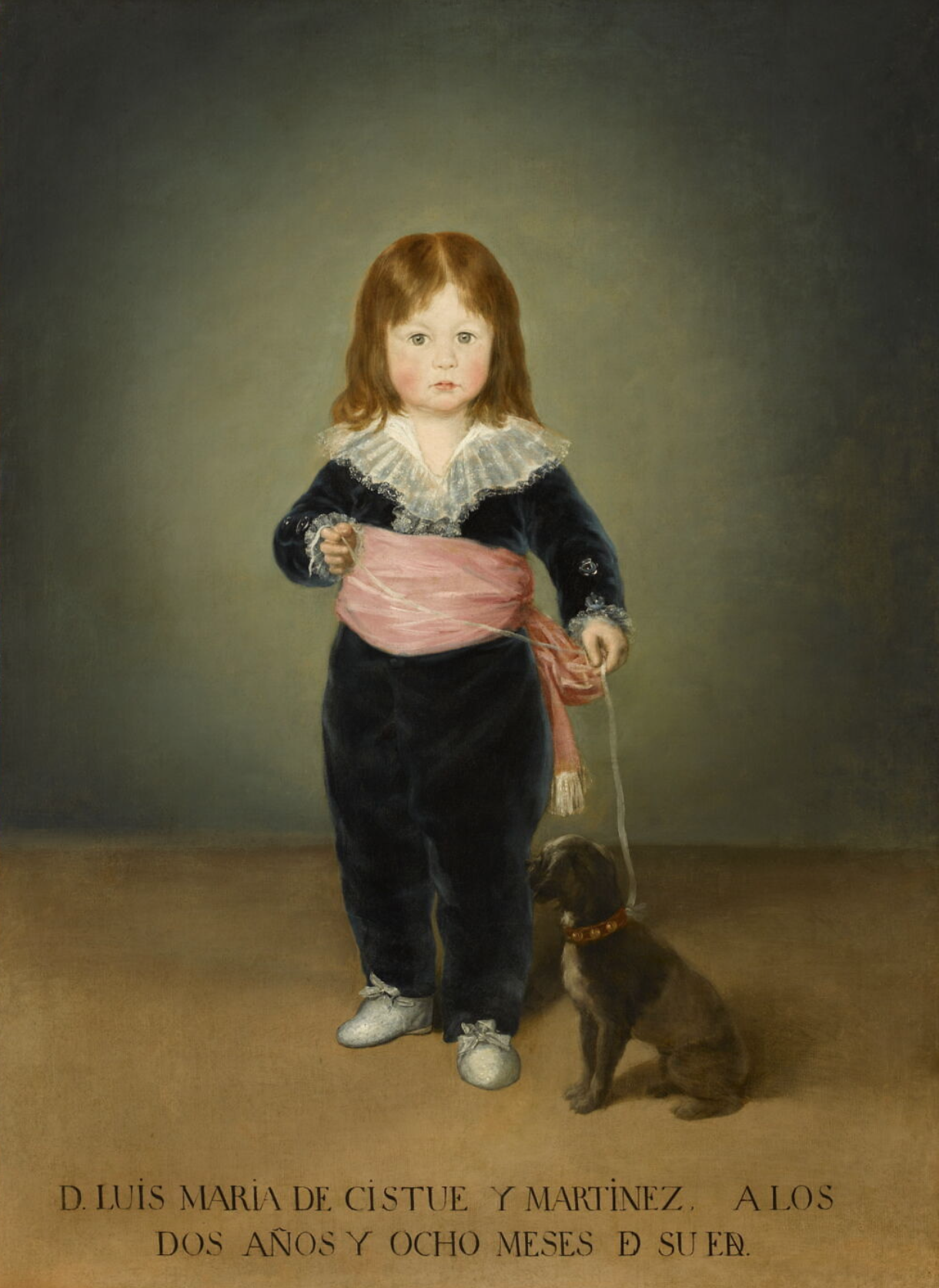
School of who is Goya y Lucientes, Francisco de Espagne
Portrait de Luis María de Cistué y Martínez (1788-1842)
Oil on canvas
1791
Louvre Museum, Paris
S12E8.
Jesper Richardy
I chose the School of Goya's Portrait of Luis María de Cistué y Martínez. So you will see a picture of a prince in regalia. With his fine lace and black velvet clothing, it represents a lot of wealth, but it also expresses a knowledge about materials and quality and luxury and also symbolic value of things. It’s sophistication. This painting used to be owned by Yves Saint Laurent. When he passed away, his entire art collection was auctioned off by Christie's. Before that, it was moved to the Grand Palais in Paris, and it was a spectacle. Everybody in Paris or in the art world globally was talking about it. But behind all of the buzz and the fashion was really something quite astounding to me. I have a pretty big collection of his work, especially from the '70s and early '80s. So I managed, by pulling all the strings I had, to get a pass to go and see the collection on view for two days before the auction. And it was the biggest art experience of my life. Not only this portrait, but to see that level of sophistication and eye for colors and textures and meaning from all kinds of periods, it wasn't so much about each individual object, it was about how it was put together. I felt so high from that experience, it was so beautiful. The billionaire class from all over the world had traveled to Paris to see and to bid on the sale. Everything sold for minimum three times the valuation, most of it much more. The prices weren't based on previous prices. Everybody just wanted to be part of this story of Saint Laurent and the legend that he was. It started all of these very complex thoughts in my mind about taste and value and luxury and what it really is. And it was something that I still think about today because the whole experience was just so absurd and unlike anything I will ever see again. That's why I chose this portrait.
Ruth Asawa
Untitled Installation
Galvanized steel, iron, copper, bronze, or brass wire
1955–1969
Fine Arts Museum of San Francisco
The rights-restricted image is purposely blurred.
S12E7.
Jeanne Carstensen
I chose Ruth Asawa's sculpture installation. They hang from the ceiling. They are very organic forms. They look kind of like hanging baskets. But the forms, they seem like they could come from the sea, or they could come from the land, and the inside and the outside is blended. It has a very peaceful feeling. Some contemporary art can feel more aggressive to me. This is a very soft and flowing piece that has always stayed with me. I love Ruth Asawa. We love her here in California. She had a studio in San Francisco, and she sadly died in 2013. I think her work is just stunning, her connection to nature, her playfulness. This sculpture makes me feel loose and happy and hopeful every time I see it.

Antonio Carradini
Femme voilée (la Foi?)
Marble
1700–1800
Louvre Museum, Paris
S12E6.
Chris Minh Doky
I chose a sculpture by Antonio Corradini, and it's called Femme voilée (la Foi?). It's this woman that has some sort of fabric covering her entire body and over her face. It's all done in marble, and it looks unbelievably real. When I look at this, it humbles me incredibly that somebody can take essentially a stone and make it so lifelike and beautiful. It blows my mind. And it reminds me of music, because music is wavelengths. It's sound, and sometimes it can move you, and sometimes it can make you cry or laugh, but sometimes it's just noise. After seeing this from many years ago, I got obsessed with this theme. This is beyond skill. Everybody can learn to carve in stone. But to make it this incredible, it's something else. And that's the same thing when I hear Miles Davis or Herbie Hancock or Tchaikovsky. It also inspires me, not only musically. This short trip we have here on Earth, whatever we're given or wasn't given, we gotta get the best out of it, no matter what. When I see this sculpture, it shows me what life can be if you really do your best.

Alberto Giacometti
Three Men Walking II
Bronze
1949
The Metropolitan Museum of Art, New York
© Artists Rights Society (ARS), New York
The rights-restricted image is purposely blurred.
S12E5.
Percy Beck Rørvig
I chose Albert Giacometti's Three Men Walking. The first time I saw them was in 1961. I was 16 years old, just a young boy. And probably I wanted things not to be complicated. Just standing there, you have three very skinny figures — skinny legs, bodies, and very narrow heads, like they're made out of metal matches or wooden matches. And even though you have a strong wind, they won't blow around or fall down. It just gives something of simplicity and the cleanliness of art. It's like love. You can meet many people, but there is one (at a time at least, I hope!) that really grabs you. That's it. Of course, this is a statue. With people, they use an expression called chemistry. I call it radiation, it's magnetic. Either you get it or you don't. It's very simple, in a way. These three men just standing there — proud, clean, ethical, straight back — that's important and that's how people should look at life straight ahead.

James Turrell
Aftershock
Installation
2021
Copenhagen Contemporary, Copenhagen
© James Turrell
The rights-restricted image is purposely blurred.
S12E4.
Peter Kreiner
I've chosen James Turrell's Aftershock. At first, when you enter it, you watch it from outside and you think, "Wow, is this two-dimensional?" until you realize you can actually enter it. So it is a three-dimensional installation where you yourself need to be a part of it, you need to immerse yourself into it. The way he works with light, he's messing with your perception and how things look and how they feel. No matter what you had in your mind when you entered it, you will stop and you will be completely taken to a new place. Whatever that place is, I don't know, that's up to you. The reason why it speaks so much to me is it shows how the world can be seen in so many different ways and approached in so many different ways. And also just by changing the way it works with the lights, it can completely turn things upside down for you. It is something that really gets under your skin, in a good way. It's fantastic and I love it.
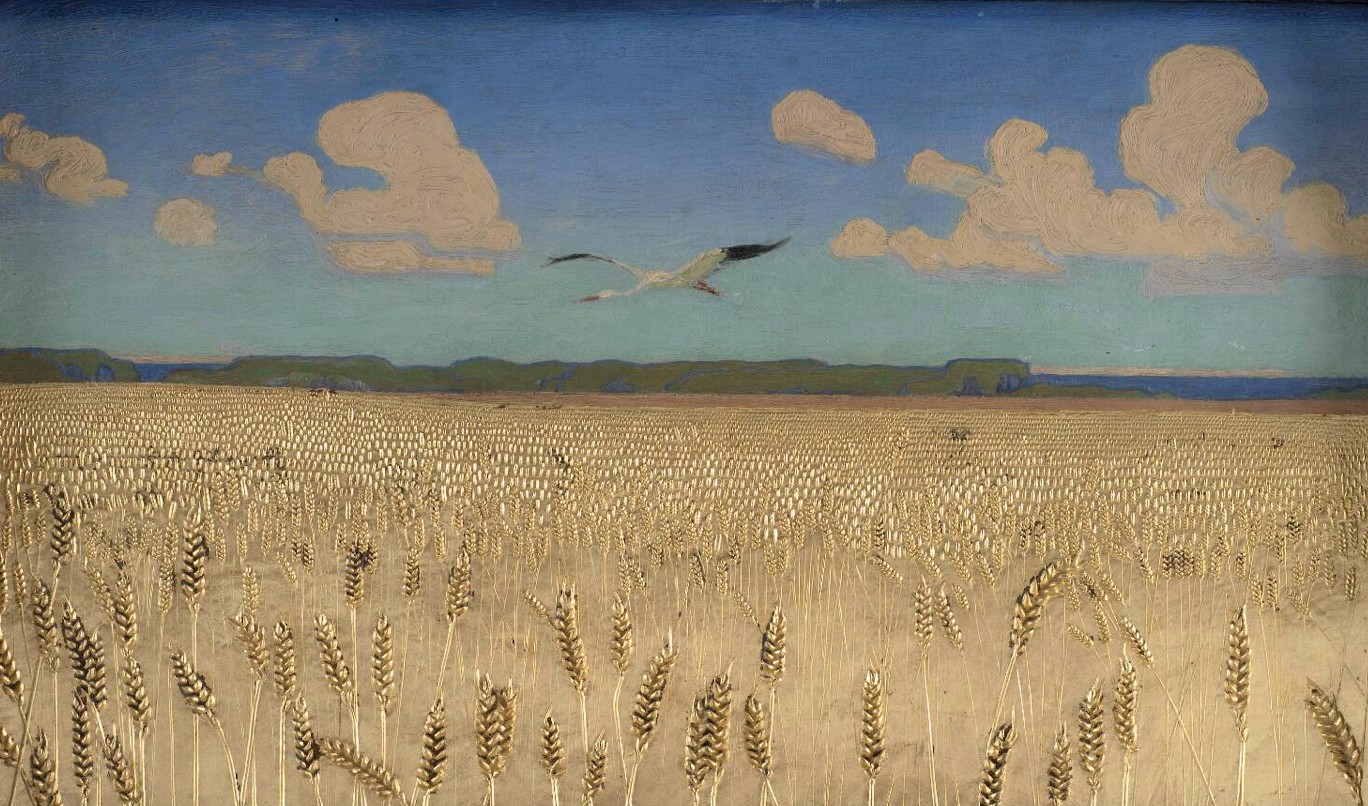
Harald Slott-Møller
Danish Landscape
Oil on canvas
1890
Statens Museum for Kunst, Copenhagen
S12E3.
Karen Hansen
I picked a landscape by Harald Slott-Møller from 1891. This image absolutely just spoke to my heart because it's everything from my childhood and what I grew up with. The light is just beautiful. It has the really warm feel of rye. Then you see the stalk right in the middle of the image, and then it has above that, in the distance, the rolling green hills and the water. And then of course, which is very well known, the beautiful clouds in Denmark that totally change all the time and are just going over the sky. As a kid, I so remember what the sounds are when the corn is just almost ready to take in and you can hear the whoosh that goes through the field when the wind hits it. And it's just like being back there. I just wanna go lay in the middle of it and hear all the sounds that's there.
Richard Serra
Equal
Forged weatherproof steel, 8 blocks
2015
The Museum of Modern Art, New York
© Artists Rights Society (ARS), New York
The rights-restricted image is purposely blurred.
S12E2.
Josefine Opsahl
I have chosen Equal by Richard Serra. It consists of massive 40-ton forged steel boxes, stacked in pairs. Two blocks are placed on top of each other, each of the four stacks is different, and the feel of the metal and the surface of each of them is different. They're symmetrical, but at the same time asymmetrical. I get hit by this feeling of weight and strange lightness. It strikes me, what is time and timelessness, ancient and contemporary? The blocks are both earthy and celestial. In this piece of minimalist art, your body plays just as important a role as the blocks themselves. It takes me inwards, and at the same time, I can look to myself from a different universal height or dimension, with a calmness next to these massive metal blocks. The title Equal. The installation invites me to melt away everything that I think I am to be pure bodily materials, and thereby I'm equal to any other body who would stand here. My ego is not important anymore. When we strip away our idea of culture, of differences, and we look to our shared ancient roots and biology, we're the same. This piece calls me back to material, it's about resonance between your body and these masses. It's a counterpoint to the virtual reality that takes up increasingly much of our time and focus. It's a completely mystical work. I need to go there and be in the middle of this piece.
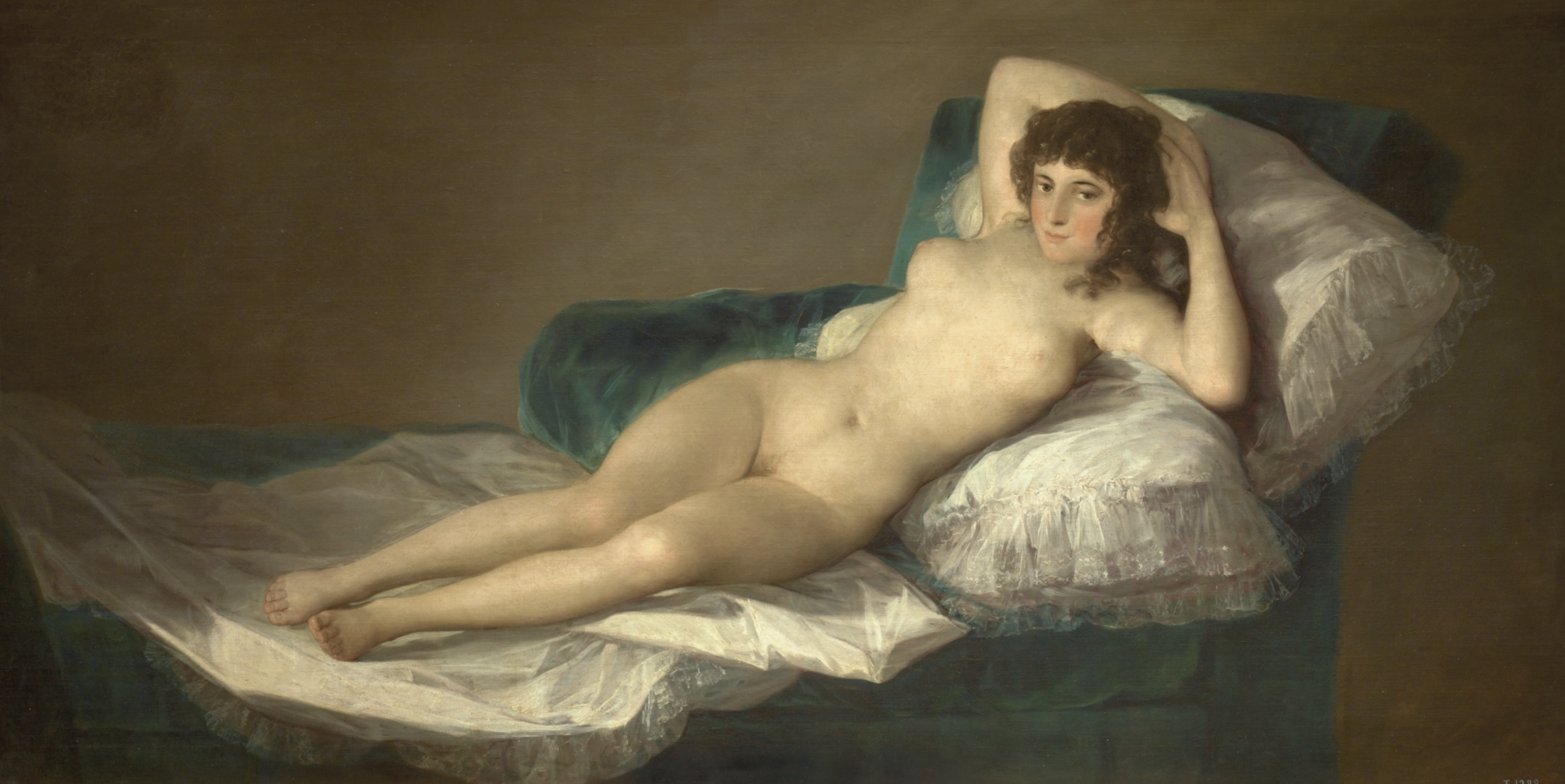
Francisco de Goya y Lucientes
The Naked Maja
Oil on canvas
1795–1800
The Prado Museum, Madrid
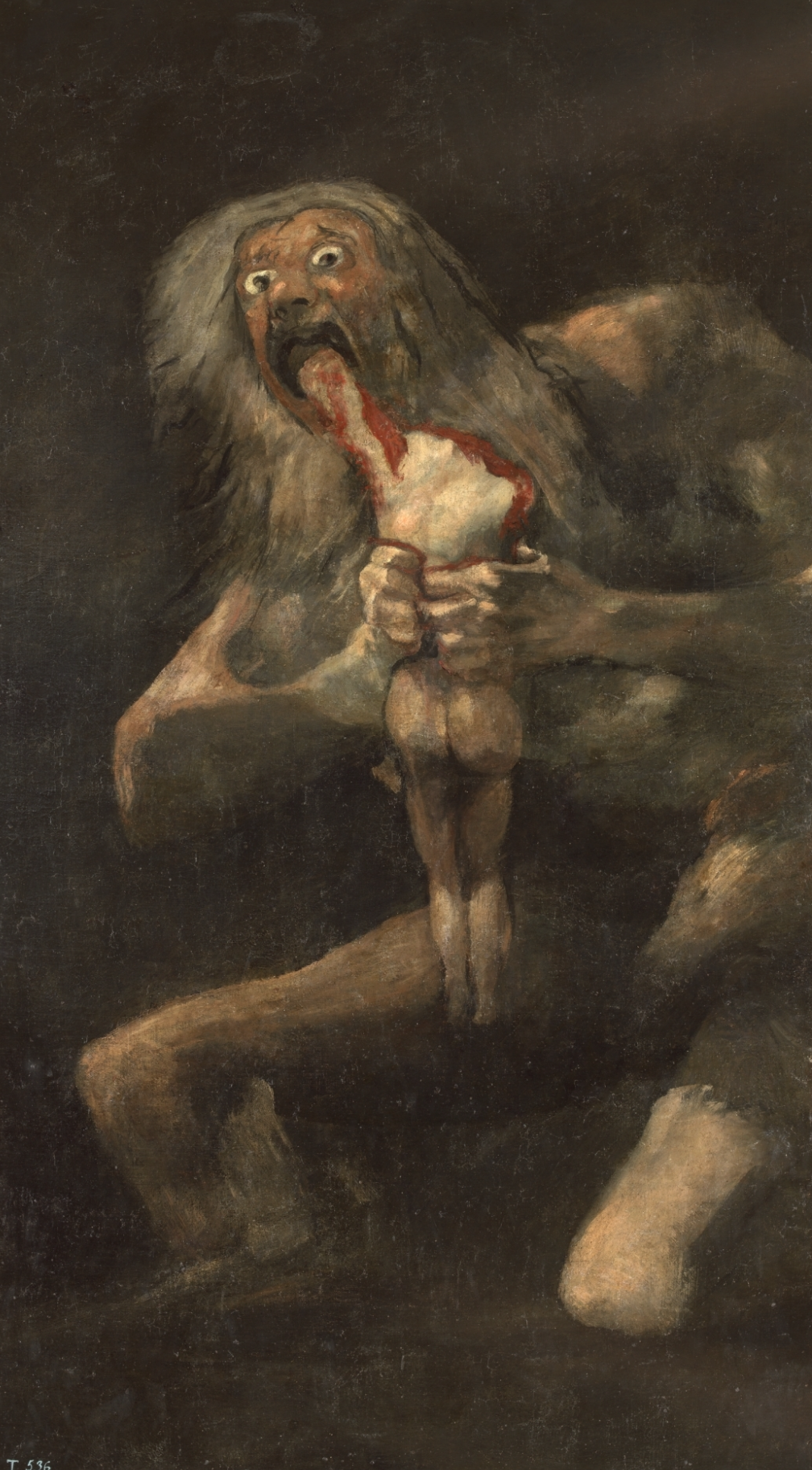
Francisco de Goya y Lucientes
Saturn
Oil on canvas
1820–1823
The Prado Museum, Madrid
S12E1.
Vibeke Holst-Andersen
I chose two pieces of art, both by Goya: The Naked Maja, and Saturn. The first one is Maja painted while he was doing well in social life, a young man, highly regarded as a painter. It's beautiful, romantic, realistic also. Fast forward 20 years later, Goya was sick, deaf, and impacted by war. He was alone and lonely. He painted in his house very, very dark paintings. Among others, of Saturn eating his own son. Oh, God, it's so terrifying. But it's also very impactful. During that period, he turned from Realism into starting the movement of being a Surrealist. When he painted in his house these dark features, it was not something he saw and painted, it was from his inside. That was later known to be the ancestor of Surrealism. The transition that a person can go through in 20 years and change completely, it made a big impact on me, I will never forget. I have always been blessed with good mental health, and I have struggled to understand what is depression really like. And that is where art comes in. That painting really showed me.