
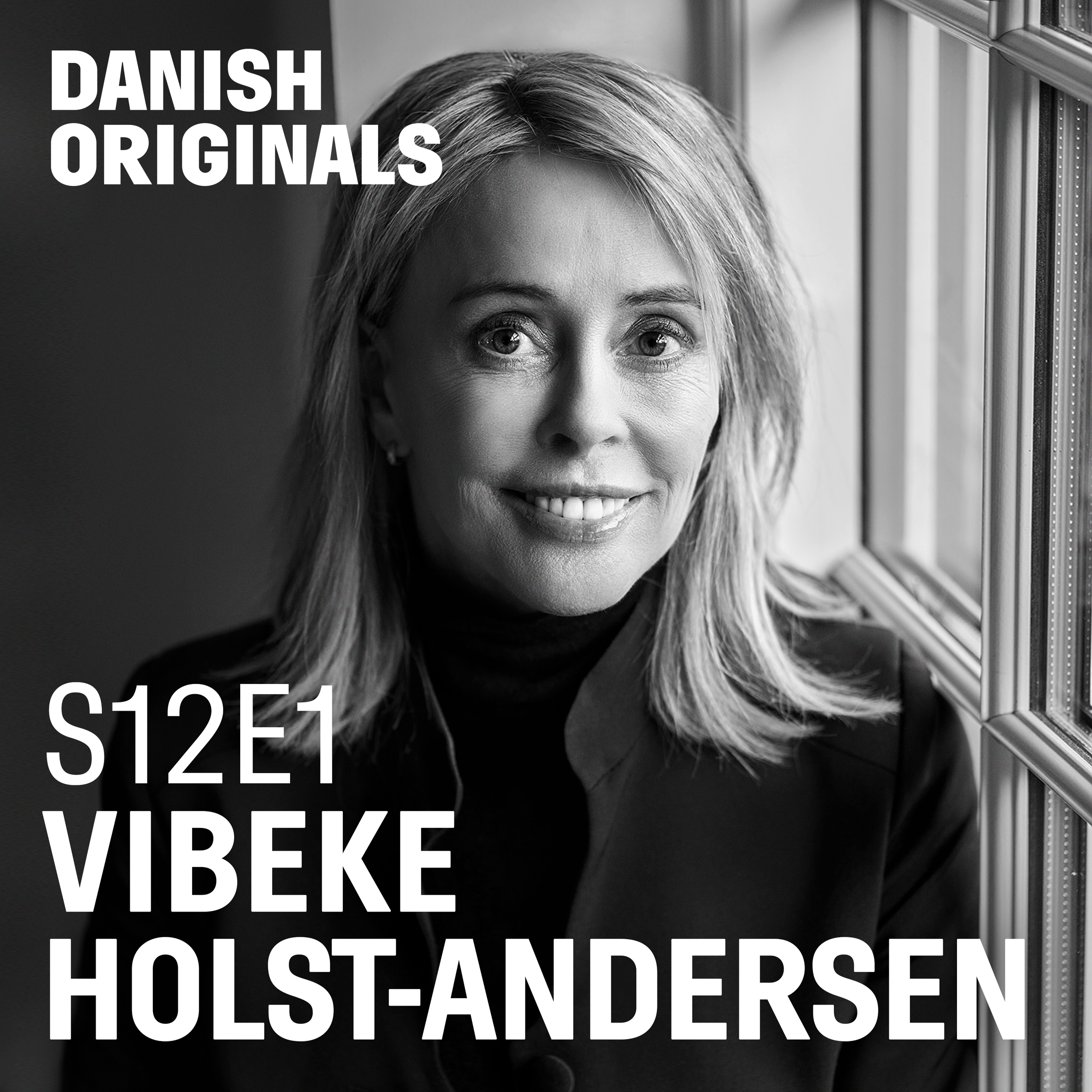
From her home in Long Beach, Sønderborg outskirts-born Danish global life sciences and diagnostics legal executive VIBEKE HOLST-ANDERSEN talks about her 13-year tenure with the international Danaher Corporation, first in Denmark, then in the US. She revisits her considerations as a Danish legal expert working in the US, and her experience passing the California Bar Examination only as a challenge for herself. Vibeke also talks about balancing a demanding career and a tight-knit family.
Photographer: Jens Honoré
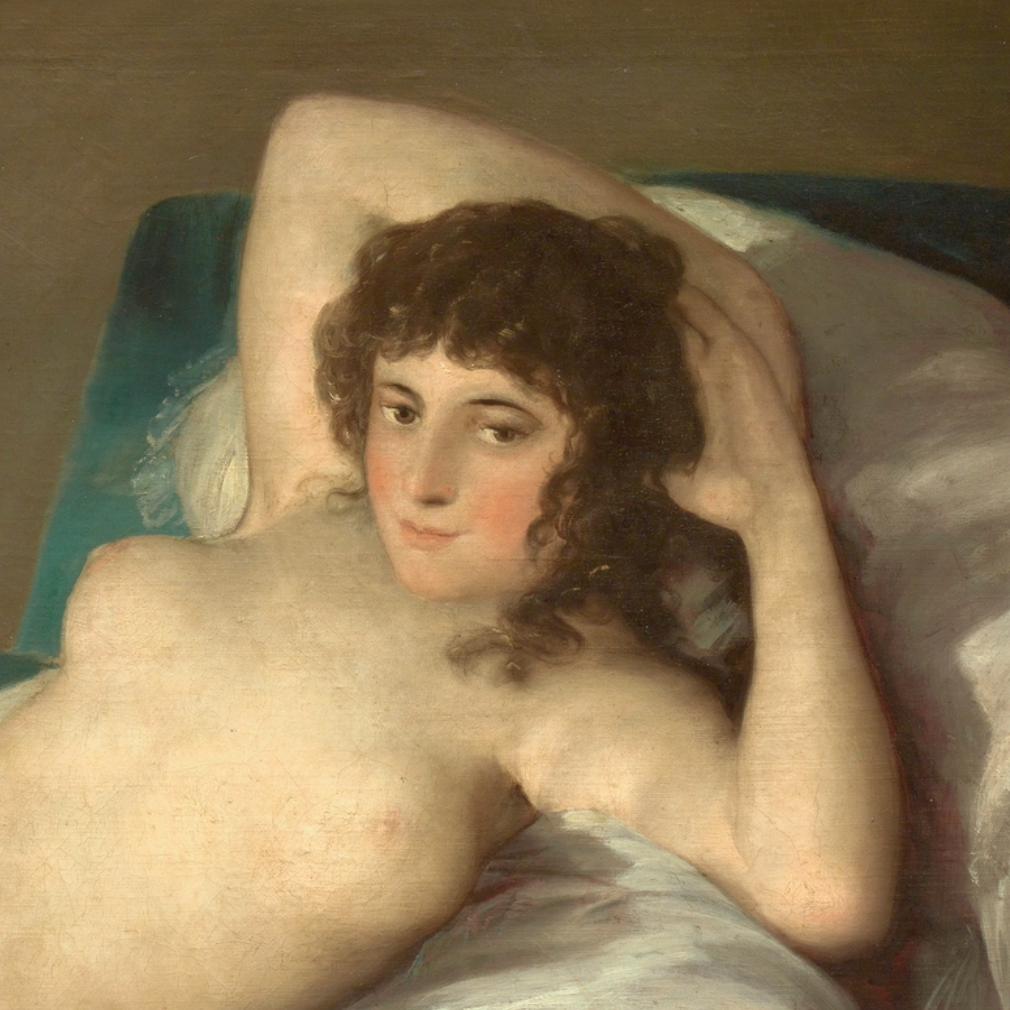
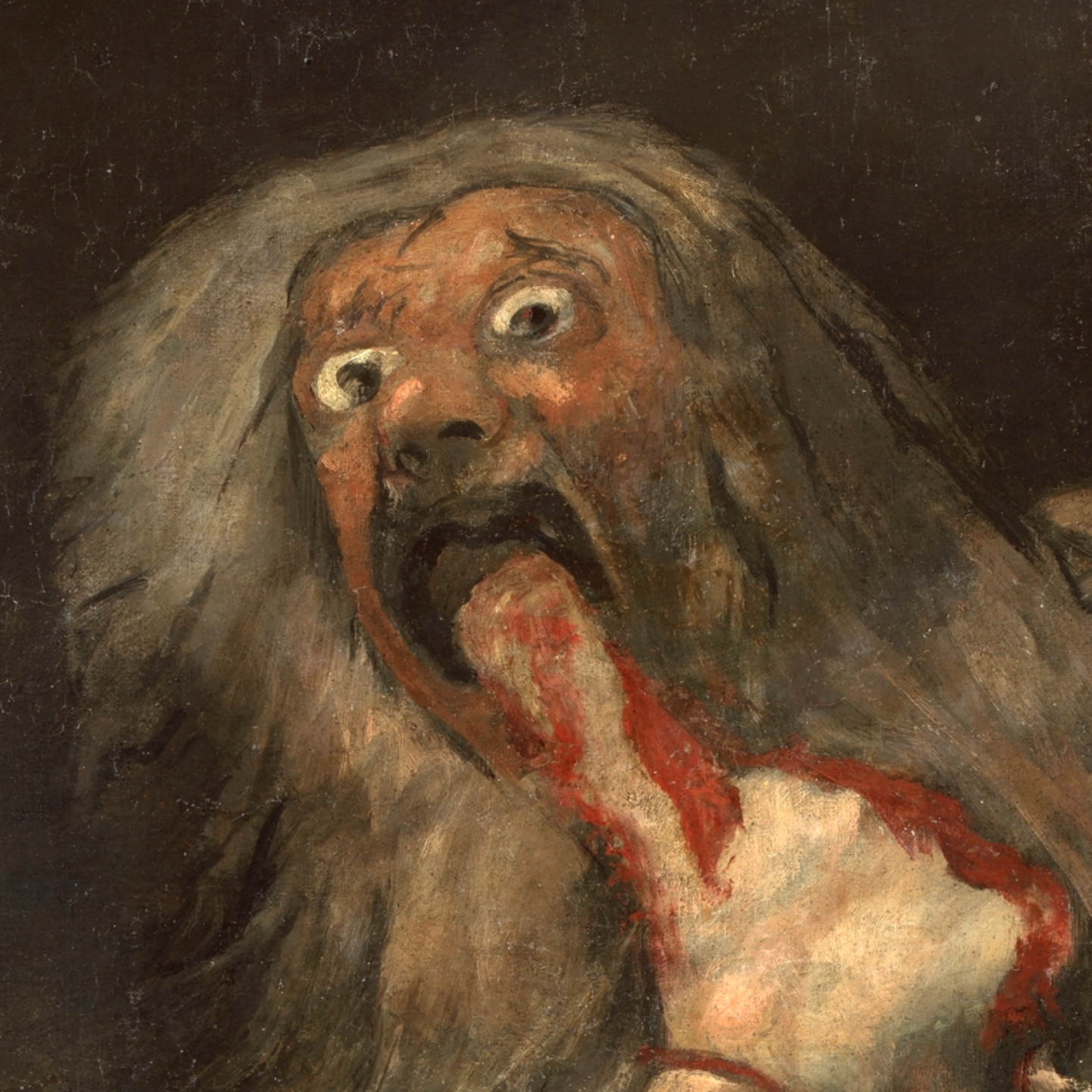
For today's episode, Vibeke Holst-Andersen chose Goya's The Naked Maja from 1795–1800, and Saturn from 1820–1823, from the collection of the Prado Museum, Madrid.
“Having a legal education prepares you to work in one jurisdiction. Maybe with the European Union, you can also work in other European Union countries. But I had never in my life imagined that I would be offered to take a position in the US, not at least California. That was a big surprise. Never expected.”
“I have my twin sister, Marianne. We had the dynamic of competing a lot with each other, competing in a good way. We looked to the other twin and said, “Hey, can she do that? Maybe I can do the same.” And that spurred the idea that we wanted to study in Copenhagen or in Aarhus.”
“It’s at the edge of really changing how we see diseases significantly. Personalized medicine designed to just target maybe a cancer exactly where it is in you, in that person. But to have this personalized medicine, it of course requires a very precise diagnostic, because the medication is extremely expensive.”
Powered by RedCircle
00:00
Vibeke Holst-Andersen
Being a Danish lawyer, moving to the US and taking on a much bigger role, I imagined the hesitation towards me. What can a Danish lawyer do in the US, one of the most litigious countries in the world? Having a legal education prepares you to work in one jurisdiction. Maybe with the European Union, you can also work in other European Union countries. But I had never in my life imagined that I would be offered to take a position in the US, not at least California. That was a big surprise.
00:40
Christian D. Bruun
My name is Christian D. Bruun. I'm the director of Danish Originals. Our goal is to celebrate Danish creatives who have made a significant mark in the US.
00:50
Christian D. Bruun
Today, our guest is Vibeke Holst-Andersen, a Danish global legal executive in the life sciences and diagnostics sectors. Welcome, Vibeke.
01:00
Vibeke Holst-Andersen
Thank you, Christian.
01:02
Christian D. Bruun
Very nice to have you here. We are together in your home in Long Beach, a coastal city in Southern California. How long have you guys lived here?
01:11
Vibeke Holst-Andersen
Not that long. My husband Klaus and I, we used to live down in Huntington Beach, since we moved here from Denmark seven years ago. Lately, we changed to this place.
01:22
Christian D. Bruun
And do you like the coastal life, the water, the ocean?
01:25
Vibeke Holst-Andersen
I do. The weather has been just beautiful this winter. Nothing to complain about.
01:31
Christian D. Bruun
It's nice to get away from the Danish winters.
01:33
Vibeke Holst-Andersen
That is really something.
01:35
Christian D. Bruun
And do you guys take advantage of the ocean and the beach?
01:38
Vibeke Holst-Andersen
We do. I walk there almost every single day.
01:42
Christian D. Bruun
Did you pick up surfing while you were here?
01:44
Vibeke Holst-Andersen
I wish I had. I didn't really practice or do anything to get there.
01:51
Christian D. Bruun
You recently stepped down from your role as senior vice president at Danaher Corporation. What is Danaher, and can you tell us about your role there? Did you have a large team under you? What was the setup?
02:02
Vibeke Holst-Andersen
Let me start from the beginning at Danaher. That goes back to Denmark because Danaher is a global conglomerate owning a lot of different smaller companies in the life science industry. I was hired to be general counsel at Radiometer, a Danish organization owned by Danaher. And that happened in the beginning of '13, so almost 13 years ago.
02:28
Vibeke Holst-Andersen
I started there as a GC. I was hired to build the legal team, and of course, I worked closely with my US colleagues. I will say I was quite successful building the team, a very strong legal support to the business, very good collaboration, and very good people on the team.
02:48
Vibeke Holst-Andersen
It's normal for Danaher to assign secondary and third roles to people who are doing good in the business. So after, I will say, a couple of years in that role, I had other responsibilities. I was a board member in Russia for Danaher, traveling back and forth a lot. Really interesting times. It was before, of course, what has happened since then.
03:13
Vibeke Holst-Andersen
And later on I got responsibility for a bigger platform, all the diagnostic companies under Danaher in Europe. I had to juggle these roles for six years. Actually, after four years, I was asked to take a role in the US for one of Danaher's largest companies, called Beckman Coulter.
03:33
Vibeke Holst-Andersen
But I felt uncomfortable moving to the US, honestly. It was a really significant change for me. My son was still, and Klaus' son, my husband's son, was also, first year of high school.
03:45
Vibeke Holst-Andersen
Klaus and I, each of us have two kids that we brought into our relationship. And we are fortunate enough that they are equally old. So the two oldest are exactly the same age, and the two youngest are exactly the same age. That has been a big advantage for them. And for us, it has been so fun, because they have followed each other so closely.
04:07
Vibeke Holst-Andersen
We thought, "Mmm…" Or I thought, because my husband did want to go as quickly as possible. But I thought, "I'm not going to do that." Then two more years passed. I was asked again. I was actually similarly reluctant to take that step. I didn't really want to move anywhere. I was concerned about the time difference to Denmark. I had strong roots in Denmark.
04:33
Vibeke Holst-Andersen
My husband was super excited to take the step. My dad loves the US, so he was a strong advocate for us to take that — I don't know if I should call it a risk — but to take the big step to move to the US.
04:47
Vibeke Holst-Andersen
When we moved here, the two youngest were 19, close to 20. They were out of high school at that time. Of course, I asked them: "Would it be okay? What do you think about us leaving for California?" They thought it was cool. "Great. Do it. Yeah, we can come visit."
05:03
Vibeke Holst-Andersen
And eventually, we agreed to do it. I thought, "Well, let's do it for three years. I can handle that." And we moved in the summer of '19. We found a really nice spot close to the beach, a great apartment. I promised the kids that I would pay for all their travels to the US whenever they wanted to come. They took me up on that, I can tell you.
05:26
Christian D. Bruun
I'm sure also the chance to go to California for a vacation is not the worst.
05:30
Vibeke Holst-Andersen
No, you bet. They loved that. So they came pretty often to see us. And they have been over here every Easter holiday, every fall break, they have been here.
05:43
Christian D. Bruun
So most of your hesitation was really about family, and you felt very much at home in Denmark and comfortable?
05:50
Vibeke Holst-Andersen
That is true. I knew the colleagues already from the new organization, so that was reassuring that it was not completely new. I knew many of them from my job in Europe, being responsible for the diagnostic platform.
06:06
Vibeke Holst-Andersen
But being a Danish lawyer, moving to the US and taking on a much bigger role, I imagined the hesitation towards me. What can a Danish lawyer do in the US, one of the most litigious countries in the world? I was a little bit concerned about that. But also moving away from my family, that was a big part of it.
06:29
Vibeke Holst-Andersen
Having a legal education prepares you to work in one jurisdiction. Maybe with the European Union, you can also work in other European Union countries. But I had never in my life imagined that I would be offered to take a position in the US, not at least California. That was a big surprise. Never expected.
06:53
Vibeke Holst-Andersen
The big issue was after not even a year, we ran into COVID. That was so disturbing. I really felt bad at that time. I was concerned whether we could travel to Denmark. There were not that many flights. At that time, we didn't have a green card. We had visas, and visa holders were not allowed to return back to the US.
07:17
Vibeke Holst-Andersen
In the summer of '20, I said to Klaus, "I'm going back, and then whatever happens, happens. We will take the chances." And we went back. Fortunately, at the same time, a new procedure was initiated that could grant us a national interest exception, it was called.
07:36
Vibeke Holst-Andersen
Being a diagnostic company, we actually already started to develop a COVID test. Danaher helped me, towards the government of the US, explain how important it was that I could travel back and forth. And I got this national interest exception, so we could travel back and forth as we wanted to, and that was a relief for me. It really eased up the entire me being in the US and being so far away during COVID.
08:03
Christian D. Bruun
So both of you would go back and forth?
08:04
Vibeke Holst-Andersen
Yes.
08:05
Christian D. Bruun
So you'd been on many planes during COVID?
08:07
Vibeke Holst-Andersen
Many empty planes.
08:09
Christian D. Bruun
Yes.
08:10
Vibeke Holst-Andersen
Yes, you bet. Actually COVID was good for something because it paved the way for us to stay over the summer in Denmark for two months, and then we spent December, so Christmas and New Year, in Denmark. And with the whole new solution of working remotely and with Teams and Zoom calls, everyone got so used to it, so there was no big problem for me being a couple of months in Denmark over the years. So that also was a reassurance for me that this was possible.
08:42
Christian D. Bruun
You worked for Radiometer, and that got bought by Danaher, and that's when you moved?
08:48
Vibeke Holst-Andersen
It was acquired, but that was before I joined Radiometer. Radiometer did not at that time have a legal team. And Danaher, being a US company where lawyers have a different position, really, they are higher regarded than in Europe, and they definitely wanted Radiometer to have a real general counsel and a legal team.
09:09
Vibeke Holst-Andersen
Radiometer, they told me very nicely, "Well, we didn't think we needed that, but Danaher, the owner, insisted." I think they eventually agreed that it was a good idea. So I came in that way, and built a legal team. And then I came to Beckman Coulter, the biggest diagnostic company in the organization.
09:29
Vibeke Holst-Andersen
And then in '23, I was offered the position to be responsible for three different diagnostic companies. So I regained responsibility for Radiometer, Beckman Coulter, and a company called Leica Biosystems.
09:43
Christian D. Bruun
So that's how you got here.
09:45
Vibeke Holst-Andersen
So that was a promotion I got during my time here, you can say. But it worked well for me because then, of course, I was traveling more back to Denmark, and I could see the family, being responsible again for Radiometer. So 13 years for Danaher, seven years here in the US.
10:04
Christian D. Bruun
And were you on West Coast time, or did you have to be on European time as well and get up at ungodly hours?
10:10
Vibeke Holst-Andersen
Oh yeah, I have done that a lot. So it is a global job. I did not only have responsibility for Europe and the US, but also China / Asia Pacific, India, Middle East, Latin America. Yeah, so many, many early mornings. So if you have a global call, there's only one way to do it. That is 6 am Pacific Time.
10:34
Christian D. Bruun
Gotta get up early.
10:35
Vibeke Holst-Andersen
Yes.
10:36
Christian D. Bruun
It's a very interesting time to be in life sciences.
10:39
Vibeke Holst-Andersen
You cannot imagine. It's at the edge of really changing how we see diseases significantly. Personalized medicine designed to just target maybe a cancer exactly where it is in you, in that person. So what we have been used to is treatments that are broader.
11:02
Vibeke Holst-Andersen
But to have this personalized medicine, it of course requires a very precise diagnostic, because the medication is extremely expensive. The authorities require that they have a very precise diagnostic and reliable diagnostic before they allow it. So we partnered with a pharma company to develop the diagnostic together when they were developing the medication.
11:28
Vibeke Holst-Andersen
So many things are happening also with DNA. It's gonna be a differentiator. You are already seeing some of it happening. You have seen this example of a little baby that had a really severe DNA failure. And last year it was possible to go in and change that DNA failure and make it completely correct.
11:52
Vibeke Holst-Andersen
And this little baby is perfectly fine and alive, and that is completely new. That was not in my department or the platform that I was working for, but in another one at Danaher. But very, very impressive.
12:06
Christian D. Bruun
I see. Let's rewind to find out where everything started and of course how you got here. Where did you grow up in Denmark, and what was your family life when you were growing up?
12:16
Vibeke Holst-Andersen
My family, we originate from the German minority in Denmark. Both my parents.
12:22
Christian D. Bruun
Can you explain that to us? What does that mean?
12:24
Vibeke Holst-Andersen
In 1864, there was a war in Denmark. The Germans attacked, the Danish lost badly, lost a lot of land that became German. Then fast-forward to the 1920s. There was, after World War I, an election. It was very modern, and they decided that there should be an election and people should vote if they wanted to become Danes or Germans. So the border was simply drawn along the line of where the majority was.
12:55
Vibeke Holst-Andersen
Super interesting, very, very democratic for the time. So of course there would be a minority on each side. And if you listen carefully to the Queen's or the King's speech at New Year's Day, many times they will send wishes to the Danish minority in Germany. But of course there's also a German minority in Denmark, and both my mom and my dad belonged to that, which was of course super difficult after World War II.
13:26
Vibeke Holst-Andersen
They met when they studied to become teachers, and they didn't know that they both belonged to the German minority. But they met there. And we spoke German in my childhood with my grandparents. It was a mix of Danish and German.
13:40
Christian D. Bruun
Interesting. And how did that make you feel? Did you feel both German and Danish?
13:44
Vibeke Holst-Andersen
No. I think nowadays it's not stigmatized as it used to be. I think it was difficult for my parents when they grew up, but I never felt anything. I love to travel to Germany and practice my German. It's a little bit rusty, to be honest, but I love to practice.
14:04
Christian D. Bruun
I know that the border has always been moved north and south throughout history. It's always moved around. And I remember as a child, you would go to Germany and buy cheap candy and food. And alcohol was much cheaper in Germany, so people would go and fill their cars and come back to Denmark with beer and stuff.
14:23
Vibeke Holst-Andersen
We did that a lot. My parents still do it.
14:25
Christian D. Bruun
There you go. It's still cheaper.
14:26
Vibeke Holst-Andersen
Still cheaper.
14:28
Christian D. Bruun
That's very funny.
14:29
Vibeke Holst-Andersen
It was definitely not in the cards that I should study law or move to Copenhagen or move to the US. I grew up close to the border, close to the city of Sønderborg, but in the countryside. So, ten kilometers outside of Sønderborg. It was far away from the big city and city life.
14:49
Vibeke Holst-Andersen
My parents were teachers. I have my twin sister, Marianne. We had the dynamic of competing a lot with each other, competing in a good way. We looked to the other twin and said, "Hey, can she do that? Maybe I can do the same." And that spurred the idea that we wanted to study in Copenhagen or in Aarhus.
15:11
Christian D. Bruun
And how did law come about?
15:13
Vibeke Holst-Andersen
That was not on the table at all. Initially I wanted to become a journalist, but that was in Aarhus, and I had a boyfriend in Copenhagen, and I didn't really know how to juggle that. I was offered by the system a conversation with some guide into what I could study because I spent three years after high school working. So the authorities had an interest in getting me to study. They were afraid that I would never get anywhere.
15:43
Vibeke Holst-Andersen
I took my bike, and I went to this guide or professional to have this conversation about my education. It was pouring. I was dripping wet when I entered the room. She pulled out my file, and she looked at me dripping, and she said, "So what would you wanna become?" "Yeah, maybe a journalist, or maybe I want to study in Roskilde Universitet."
16:10
Vibeke Holst-Andersen
And then she looked down on my papers and looked at me and said, "You know what? I think you should study law." And that sparked the idea. I had never thought about it, but then I thought, "Hmm, yeah, maybe that's a good idea. It can be used for a ton of stuff. Let's give it a try." I felt she looked through me. I had good grades, so maybe she saw that I should have some challenges. I'm forever thankful to this woman.
16:37
Christian D. Bruun
You have a law degree from the University of Copenhagen.
16:41
Vibeke Holst-Andersen
When I had this guide telling me to study law, I thought, I could do that in Copenhagen.
16:46
Christian D. Bruun
And be with your boyfriend.
16:48
Vibeke Holst-Andersen
Yeah. Well, I left him anyways!
16:51
Christian D. Bruun
Good for you. And of course, I have one thing that's just a very personal fun thing. You studied with my cousin, the now sort of famous Professor Morten Rosenmeier.
17:02
Vibeke Holst-Andersen
I did.
17:03
Christian D. Bruun
Yes. And he says hello.
17:05
Vibeke Holst-Andersen
And hello back to Morten. He was a really good friend, and that's how I recall it. I don't know what he's saying, but he was a good friend, and I admired his intellect. Oh my God, he was so clever and smart.
17:18
Christian D. Bruun
He is a brilliant guy, even though he's my cousin.
17:21
Vibeke Holst-Andersen
I had to lean on him for some of the details when I was studying law in Denmark, I can assure you that. So he helped me out.
17:28
Christian D. Bruun
Very good. A little shout-out to Morten Rosenmeier.
17:30
Vibeke Holst-Andersen
Yeah, absolutely.
17:32
Christian D. Bruun
You have a unique position of holding a license to, and I quote, "right of audience before the Danish High Court and the Danish Supreme Court." Can you explain what all that means? It sounds like that is a big deal.
17:45
Vibeke Holst-Andersen
Yes. In the legal community, it is. So the admittance to the High Court and the Supreme Court, I got that pretty quickly. I was a litigator in Denmark, before I went in-house, something that women often do when they have kids. I had two kids, so it was very busy to be a litigator.
18:04
Vibeke Holst-Andersen
But before I moved in-house, I took a test to get admittance to the High Court. I passed that, and then you just have to have a lot of High Court cases, and the judges will allow you to appear before the Supreme Court. It actually went quite fast for me. I got admittance to the Supreme Court in 2000, and that was five years after I became a lawyer.
18:28
Christian D. Bruun
And what does it mean to be able to appear in front of the Supreme Court of Denmark? What kind of cases did you have?
18:34
Vibeke Holst-Andersen
I never went to the Supreme Court. I had a ton of cases for the High Court, many of them being doctors' malpractice. Now there's a different system, but back then, it was expected for patients believing that they had been subject to malpractice to file a court case and show culpa, so guilt, on the part of the doctor, which was extremely difficult.
18:59
Vibeke Holst-Andersen
I always represented the hospitals, and that was a relatively easy task at that time because it was super difficult for the patients. It was actually really unfair, to be honest, to the patients. But back then, I was happy to win the cases, and I learned a lot, and it was super exciting. I loved to dive into the journals of the doctors and understand all the details.
19:22
Christian D. Bruun
Interesting. You also gained admittance to the State Bar of California. How did that come about? That doesn't sound like something that one does very easily.
19:31
Vibeke Holst-Andersen
Under a special program, I could work under my Danish license in the US and of course, have people on my team with a US license. But we ran into COVID, and without a lot of traveling and without commuting to work, I found that I had some excess time. I thought, "Well, let's give it a try."
19:54
Vibeke Holst-Andersen
I knew it was really difficult, but I was also interested in learning about, really, the legal system. What I did not expect was that everything had to be memorized. It was extreme. It was really, really difficult to learn all of that. I took the exam in February '22, and I passed the same year. It was a great experience, and I was so happy after having passed. I didn't expect it, actually.
20:22
Christian D. Bruun
I can imagine. How big is the curriculum?
20:26
Vibeke Holst-Andersen
It's thirteen different subject matters you have to learn about. And the thing is that in the US there's a common law system, and I have been educated in a civil law system, so almost everything was extremely different from the Danish and the European system. I cannot tell you exactly how many pages, but it's extremely comprehensive. Many, many details you have to understand and learn. And you cannot bring anything to the exam, not a book, not notes, not anything.
20:56
Christian D. Bruun
And you passed in the first try?
20:58
Vibeke Holst-Andersen
I did. I was fortunate enough to pass.
21:01
Christian D. Bruun
That's great. We're very proud of you as a Dane! This is a very general question, but what are the main differences between practicing law in Denmark and in the US in broad strokes? You just mentioned the difference between common law and civil law. What does that mean?
21:17
Vibeke Holst-Andersen
So one of the places you see the differences the most is actually in litigation. There will mostly be a jury in US litigation. We know that from films and everywhere. What we don't know is that in the US there is a process called discovery that forces both parties to deliver to the court and the other party all documents they have on a certain topic that is, of course, the subject matter of the litigation.
21:46
Vibeke Holst-Andersen
That is not the case in Europe. You are not forced to make available to the other party the evidence that you have on your own part, and that is such a difference. Actually, I came to like it because more is left to coincidence in Europe. Here, you will get access to the evidence that the other party is in possession of.
22:10
Vibeke Holst-Andersen
In Europe, you cannot necessarily rely on being able to get that evidence. So I like that. It's of course very, very expensive, and that's of course a downside. On the other hand, you are certain to get access to all evidence, and it makes the litigations more predictable.
22:28
Christian D. Bruun
Interesting. It sounds like the American system is more fair in some ways?
22:32
Vibeke Holst-Andersen
I would say that it's more fair in many ways. Other parts of it are not as fair. For example, in Europe, you will be reimbursed for at least some of your attorney fees, if you win the case. That is not the case in the US.
22:47
Christian D. Bruun
You're stuck with the bill.
22:48
Vibeke Holst-Andersen
Most often, yeah, you will have to pay your own attorney even if you win.
22:53
Christian D. Bruun
And are there different emphases in requirements for passing the Bar here versus Denmark?
22:59
Vibeke Holst-Andersen
Oh, yeah. It's very different. Here, you go to law school, and you pass the Bar Exam, then you can open up your own attorney practice. In Denmark, you have to go to law school, and then you work for an attorney for three years as a kind of a trainee or associate, and you practice on their behalf, really, for the first three years. And then now there is a smaller exam, but it's not really significant compared to the US system.
23:26
Christian D. Bruun
And just to back up a little bit. When you took the bar, you did it on your own. That was your own idea, it wasn't required from your job?
23:32
Vibeke Holst-Andersen
No, it was not. I was not expected to take that. No one asked that from me. I was just curious to see if I could do it really.
23:40
Christian D. Bruun
That is amazing. I'm sure they must have appreciated that.
23:43
Vibeke Holst-Andersen
Absolutely, yes.
23:45
Christian D. Bruun
Are there things that were surprising to you in terms of, let's say, regulation of your field versus Denmark?
23:52
Vibeke Holst-Andersen
Not really. As I mentioned, the law is different, but something like contract law, we work with compliance, so adherence to anti-corruption legislation, stuff like that. Working for a US company, you have to adhere to the same regulations. In that way, it was not that different. I didn't need to take the Bar Exam to do my work really. I did not.
24:18
Christian D. Bruun
So how did you get into life sciences? How did that appear in your life?
24:23
Vibeke Holst-Andersen
My first job was being a litigator at the law firm Bech-Bruun. It still exists in Denmark, it's a big law firm. I left that to work for Toms Group, confectionery, chocolate, candy. It was actually a fun time. I was, for the first time in my life, part of a leadership team. It worked well. I didn't miss being a litigator as much as I expected because we had so much fun in the leadership team.
24:48
Vibeke Holst-Andersen
It was a new and young team and just working out. Then I was approached by my old law firm, Bech-Bruun, and they asked me if I would be interested in working for a diagnostic company. That was not Radiometer. It was a different Danish company called Dako. And I didn't know it, so I just turned it down. "No, I don't wanna do it."
25:07
Vibeke Holst-Andersen
Then they called me again and said, "Hey, you really need to listen to this because this is a great opportunity. You will have a bigger team. There is a big site in the US, actually in California, close to Santa Barbara." And as I started to understand the details and dive into it, I got it and understood that it was a great opportunity. So I took it, and worked for the Dako organization for five years. It was a fun time. We sold the company to private equity.
25:39
Christian D. Bruun
And then from there you moved to Radiometer?
25:41
Vibeke Holst-Andersen
I had a pit stop at DONG Energy. That was not my favorite time. I was there for three years. I quickly started to look for something else, and that was how I got in contact with the Radiometer recruiters. And actually, when we were selling Dako, Danaher had been a potential buyer, so they knew the organization. Maybe they had met me, I don't know, already at that time. It worked out well.
26:09
Christian D. Bruun
And life sciences, is that a particularly Danish thing? We all know Novo now, of course, as a big Danish company. Is that a particularly Danish industry or sector?
26:20
Vibeke Holst-Andersen
It is generally a big industry. I think we have proportionally a lot of life sciences, also medical devices, diagnostic companies like Coloplast, Ambu, Radiometer, Dako. So it's significant in Denmark, compared to Denmark's size.
26:37
Christian D. Bruun
And doing business here, what are some of the differences between the US and Denmark, and what did you bring to the table as a Dane, perhaps?
26:45
Vibeke Holst-Andersen
That's a good question. I have always been known, since I worked for a US organization, to be very direct. And honestly, I don't think I'm specifically direct, but apparently, I'm perceived like that in a US organization. I will say, for Danaher, that is very non-political. It has worked well for me to be direct. But I could also see that some people may find it a little bit too much.
27:12
Christian D. Bruun
That's interesting. Do you think that's a Danish thing?
27:15
Vibeke Holst-Andersen
Yeah.
27:15
Christian D. Bruun
Because if you think of a stereotypical description of Danish people, Danish people are slightly introverted and more quiet, and Americans are very outspoken and direct in some ways. But maybe in reality, it's a little bit different?
27:28
Vibeke Holst-Andersen
But there is, in the US, a layer of politeness that everything is wrapped in. I don't think we have the same level of politeness in Denmark.
27:39
Christian D. Bruun
I have noticed that when I go back, and you go to any cafe or restaurant, there is a certain, not lack of care, but they're definitely very direct and not particularly polite.
27:51
Vibeke Holst-Andersen
Exactly. And what I really like about the US, I didn't expect it at all, but this way of speaking to everyone in the elevator, connecting, just small talking. Sometimes it makes your day. And that is not something we are really used to in Denmark. When I return, I will work to be more open and speak to people. I think that is different, and I prefer that.
28:15
Christian D. Bruun
I agree with you on that. Good luck speaking to people on the train or the bus.
28:19
Vibeke Holst-Andersen
They will find me strange. What a weird lady.
28:22
Christian D. Bruun
Exactly. They'll move away a few seats. Have you had a chance to travel in the US to see the country?
28:28
Vibeke Holst-Andersen
Yes. We have been to many places. Of course, a lot for business, also for pleasure. This summer, we went to Yellowstone. It was amazing, absolutely mind-blowing. Work-wise, I've been to Minneapolis, a ton to DC. That is the headquarters of Danaher. You feel the political vibe in DC everywhere. And people will point out to you, "Well, that is the president, that is the vice president, passing by."
28:58
Vibeke Holst-Andersen
And they know what to look for to see the difference. You have a different feeling about it being in DC, definitely. I have really come to understand the different parts of the US. I knew about it, but I didn't really appreciate it on the same level before, how the different parts are perceived by Americans. That's funny to really understand.
29:22
Christian D. Bruun
The US that we think we all know is really just New York and LA in some ways. How was Yellowstone? Obviously, it's become very famous now because of the TV show with Kevin Costner. Even in Denmark, people are loving this show and maybe have a different appreciation of the whole cowboy myth and all that.
29:38
Vibeke Holst-Andersen
I must admit I was inspired by the show, so I wanted to go there. We went into the park, of course, to see the wildlife. That is so amazing. You don't have to do anything specific. You just drive around, and you will see it. Do some hikings, and of course see the basins of volcanoes and all of that.
30:01
Christian D. Bruun
Did you ride horses?
30:02
Vibeke Holst-Andersen
We did not. Not there. We have been riding in Palm Springs. Klaus and I had this tradition. Every time there was a little bit of bad weather in Huntington Beach where we lived, we would immediately find time to go to Palm Springs. We love Palm Springs.
30:17
Christian D. Bruun
Palm Springs is amazing. And just for our listeners, Palm Springs is a desert town about two and a half hours from LA, I would say.
30:24
Vibeke Holst-Andersen
It would take us two hours. We had our favorite hotel, we'd go out to Joshua Tree Park, see all those places. We have been there many, many times and taken visitors and our children, the family, to go with us as well.
30:38
Christian D. Bruun
That is one of the great things about California. You can drive a little bit and then you're in completely different climates and different terrains. Joshua Tree is a good example.
30:47
Vibeke Holst-Andersen
At one point, Klaus' son spent a month here. He was in some kind of trainee position over here, and he stayed with us, and we all went up to ski in Big Bear. It was the most beautiful winter weather. Amazing. And it took us two hours to get there. So it's not a joke. You can get to ski and sunshine on the same day.
31:10
Christian D. Bruun
That is amazing. Have your parents been to visit here?
31:13
Vibeke Holst-Andersen
After COVID, my parents came here for a couple of weeks. That was fun. Klaus and I, we still have both our parents in Denmark, and they are not super happy with us being so far away. But my parents visited just after COVID when I was done studying for the Bar. I didn't allow any visitors during my studies because that would take away my attention. But after that, they spent two weeks here. Unfortunately, Klaus' mom is not so excited with flying, so Klaus' parents have not been here.
31:48
Christian D. Bruun
I know you are going back to Denmark. I know a lot have moved back because of the current political situation. What are your thoughts on that?
31:57
Vibeke Holst-Andersen
We moved here during Trump's first period as president. When we arrived, he was the president. Then we had four years with Biden, and then Trump came back. I can feel a difference from when Trump was in the seat the first time. It was not perceived as controversial to live in the US as a Dane back then.
32:19
Vibeke Holst-Andersen
And I think that of course Greenland has played a significant part in that. We are approached more about, how can you live in the US? But I won't say that that has anything to do with me moving back, to be completely honest. I know the political situation is difficult, but it's impacting Denmark and Europe just as much as living here in California.
32:43
Vibeke Holst-Andersen
I don't think that I will feel any different being back in Europe. You still have the tension of what is going on in the world. You have the feeling of not being able to impact it at all, not having any power to do something about it. So I think that feeling is the same. And when you live here in California, you know that is a very Democratic state, you don't get a sense of people being hostile. I know, of course, I will still feel impacted by it living in Denmark.
33:14
Christian D. Bruun
Right. Well, it definitely seems that the world, and particularly Denmark, has changed the perception of what the US stands for and what kind of place it is to live in.
33:24
Vibeke Holst-Andersen
After seven years, I think now is the time to return for me. I'm gonna miss it. In my heart, I'm Danish, and sometimes I have felt a little bit down for leaving Denmark. Our parents are getting older, and I want to be there, also, for my twin sister too.
33:44
Christian D. Bruun
Are you identical twins?
33:45
Vibeke Holst-Andersen
We are. We are identical. She's also in business, working in telecommunication, in IT.
33:54
Christian D. Bruun
She didn't study law?
33:55
Vibeke Holst-Andersen
No, no. Our strong mom said, "Well, one of you should study something related to society, and one should be a scientist." And we could decide between each other who wanted what. She was afraid that we would compete too much if we were in the same industry.
34:15
Christian D. Bruun
Was she correct about that?
34:16
Vibeke Holst-Andersen
I think we have always supported each other. I can honestly say that I just cheer for my sister always, and she's just a great businessperson. We are super close, and although we are talking a lot, of course, on the phone and connecting all the time, I will say there is a difference being so far away in a different time zone that is nine hours away. It's not as easy to follow each other's daily life as closely as when you live in Denmark.
34:46
Vibeke Holst-Andersen
So of course, that is something that is important for me. Also, the children, it has been a pleasure, so far away, to see how they have been able to support each other with us being away. Of course, they also have their other parents back in Denmark. But it's just nice to see that they still support each other, spend time together, and hang out. That's really nice.
35:08
Vibeke Holst-Andersen
Klaus and I have missed out on some of the bigger events in their lives. I missed out on my daughter's graduation from university and I regret that. Caroline, she graduated — is it already three years ago? I think so. In IT and economy. And my son Nikolaj is graduating from university in medical chemistry. And I look forward to being there more.
35:35
Christian D. Bruun
Okay, so that's a little bit in the same field.
35:38
Vibeke Holst-Andersen
A little bit! We can discuss some things. I got the impression that he was surprised that I knew about some details that he was studying. So I was really proud about that.
35:48
Christian D. Bruun
Very good. And you can help him with patent applications when he comes up with something brilliant.
35:53
Vibeke Holst-Andersen
Yeah. I did encourage him to think about patents, at least.
35:55
Christian D. Bruun
Good. And what about your set of kids from Klaus?
36:00
Vibeke Holst-Andersen
We are super close. Marcus, he's a brilliant guy. He is also, like my daughter, from CBS, has a master's also in economy and has been working for Boston Consulting Group. Now he is an entrepreneur building his own company, so very exciting. And Viktor is a veterinarian nurse.
36:21
Christian D. Bruun
Oh wow, okay.
36:22
Vibeke Holst-Andersen
So all of them are really doing super good. We have spoiled them by having big parties every summer, for them, their friends, the family. And now that is a tradition we will never get out of.
36:33
Christian D. Bruun
Very good. And are you returning to Sønderborg?
36:36
Vibeke Holst-Andersen
No. We will be living north of Copenhagen.
36:39
Christian D. Bruun
And the rest of your family is still in Sønderborg?
36:42
Vibeke Holst-Andersen
My parents are. And my in-laws are also in Jutland.
36:46
Christian D. Bruun
Going back to Denmark now, is your husband gonna join you? And for full disclosure, of course, I'm working with Klaus on some projects, so I hope he's staying for a little bit at least.
36:56
Vibeke Holst-Andersen
Oh, he is. He is really adventurous, with a crazy energy. He took his acoustic art company and started to roll out that whole business in the US enthusiastically. But then he has the nature of being engaged in a ton of stuff. Right now he is working on the Olympics that will be here in LA in '28.
37:19
Vibeke Holst-Andersen
He's helping the Danish teams find accommodation, logistics, all of that. He will wait until the end of the Olympics. When that's over, I think he will return for good. And then we will have to make it work traveling back and forth a little bit, how best we can. He cannot leave. He's too engaged.
37:38
Christian D. Bruun
That's very good. Okay! And here's my final question to you, Vibeke. So having reached the top of the legal ladder, what's next for you? Would it be a natural next step, or will you surprise friends and family and colleagues with your next adventure?
37:52
Vibeke Holst-Andersen
Well, that is still to be seen. I'm interviewing for an executive position out of Europe. It could still be a US organization or could also be one in Germany or Sweden. So it doesn't have to be Denmark exactly. A senior leadership position in the legal world would be great.
38:13
Christian D. Bruun
Well, thank you so much, Vibeke. This has been a lot of fun and very educational as well.
38:19
Vibeke Holst-Andersen
I hope so! Thank you!
38:25
Christian D. Bruun
For today's episode, Vibeke Holst-Andersen chose Goya's The Naked Maja from 1795–1800, and Saturn from 1820–1823, from the collection of the Prado Museum in Madrid.
38:45
Vibeke Holst-Andersen
I chose two pieces of art, both by Goya: The Naked Maja, and Saturn.
38:52
Vibeke Holst-Andersen
The first one is Maja painted while he was doing well in social life, a young man, highly regarded as a painter. It's beautiful, romantic, realistic also. Fast forward 20 years later, Goya was sick, deaf, and impacted by war. He was alone and lonely. He painted in his house very, very dark paintings. Among others, of Saturn eating his own son. Oh, God, it's so terrifying. But it's also very impactful.
39:27
Vibeke Holst-Andersen
During that period, he turned from Realism into starting the movement of being a Surrealist. When he painted in his house these dark features, it was not something he saw and painted, it was from his inside. That was later known to be the ancestor of Surrealism.
39:45
Vibeke Holst-Andersen
The transition that a person can go through in 20 years and change completely, it made a big impact on me, I will never forget. I have always been blessed with good mental health, and I have struggled to understand what is depression really like. And that is where art comes in. That painting really showed me.