
Lene Adler Petersen (1944–)
Bjørn Nørgaard (1947–)
Leaf from the series "The Female Christ". The Stock Market Action 29.5.1969
Offset lithography
1969
Statens Museum for Kunst, Copenhagen
© Lene Adler Petersen , Bjørn Nørgaard/ VISDA
The rights-restricted image is purposely blurred.
S6E10.
Birgitte Moos Chalcraft
I chose The Female Christ by Lenea Adler Petersen and Bjørn Nørgaard, a happening at the Stock Exchange in Copenhagen in 1969, showing Adler Peterson walking naked down the Stock Exchange carrying a cross. There's only her, the rest are men in suits. It was a rebellion against the fact that men were in power in the financial world, and a comment on the story of the male Christ that we are brought up to believe in. It did outrage the viewers because of a naked woman. They forgot to ponder what it really was about. It's about gender discrimination, it's also about religion. It was very provocative, with a political message for sure. And I love it, absolutely.
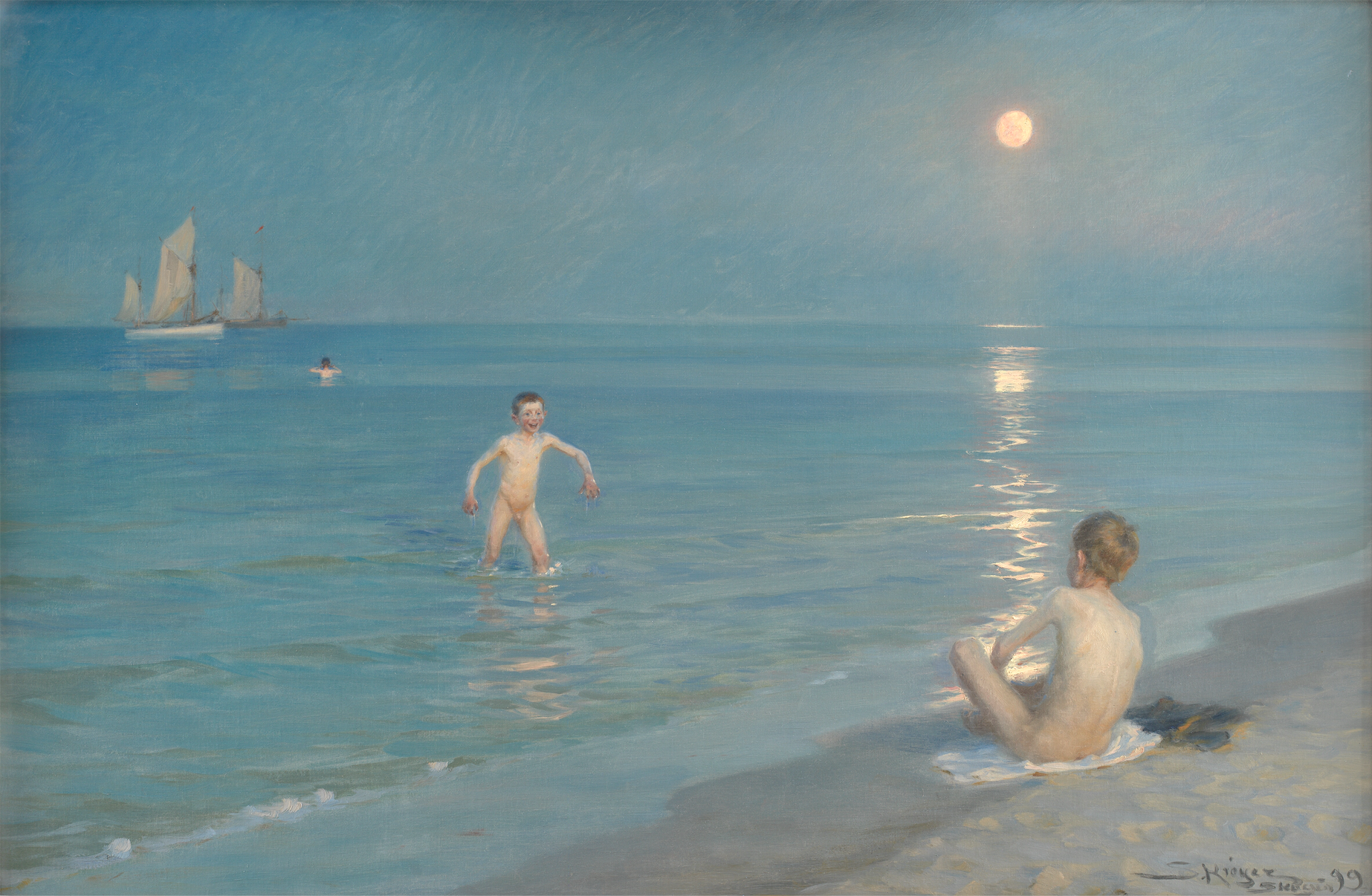
P.S. Krøyer (1851–1909)
Boys Bathing at Skagen. Summer Evening
Oil on canvas
1899
Statens Museum for Kunst, Copenhagen
S6E9.
Nicolai Rottbøll
I chose P.S. Krøyer's Boys Bathing in Skagen, Summer Evening from 1899 because it speaks to my happiest moments in my childhood and even in my adulthood. On a summer evening, it's nice weather, and you have this really nice light that you experience when the sun is on its way down. The water is pretty calm. We take that dip in the ocean before bedtime or before dinner. You walk up to the summer house. You maybe make a bonfire, and you gather around and have a chocolate and play a game. My family always had and still have a summer house in Løkken in northern Jutland on the west coast. I couldn't even walk the first time I was there, and we still go there every year. My kids would also answer, this is the best place on the planet. It's a combination of summer holidays, strawberries, swimming, staying late up at night, being close to the family. I have a lot of family up there, oceans of time ahead of you. It's not really a real summer if we haven't been there. So it really brings me that feeling.
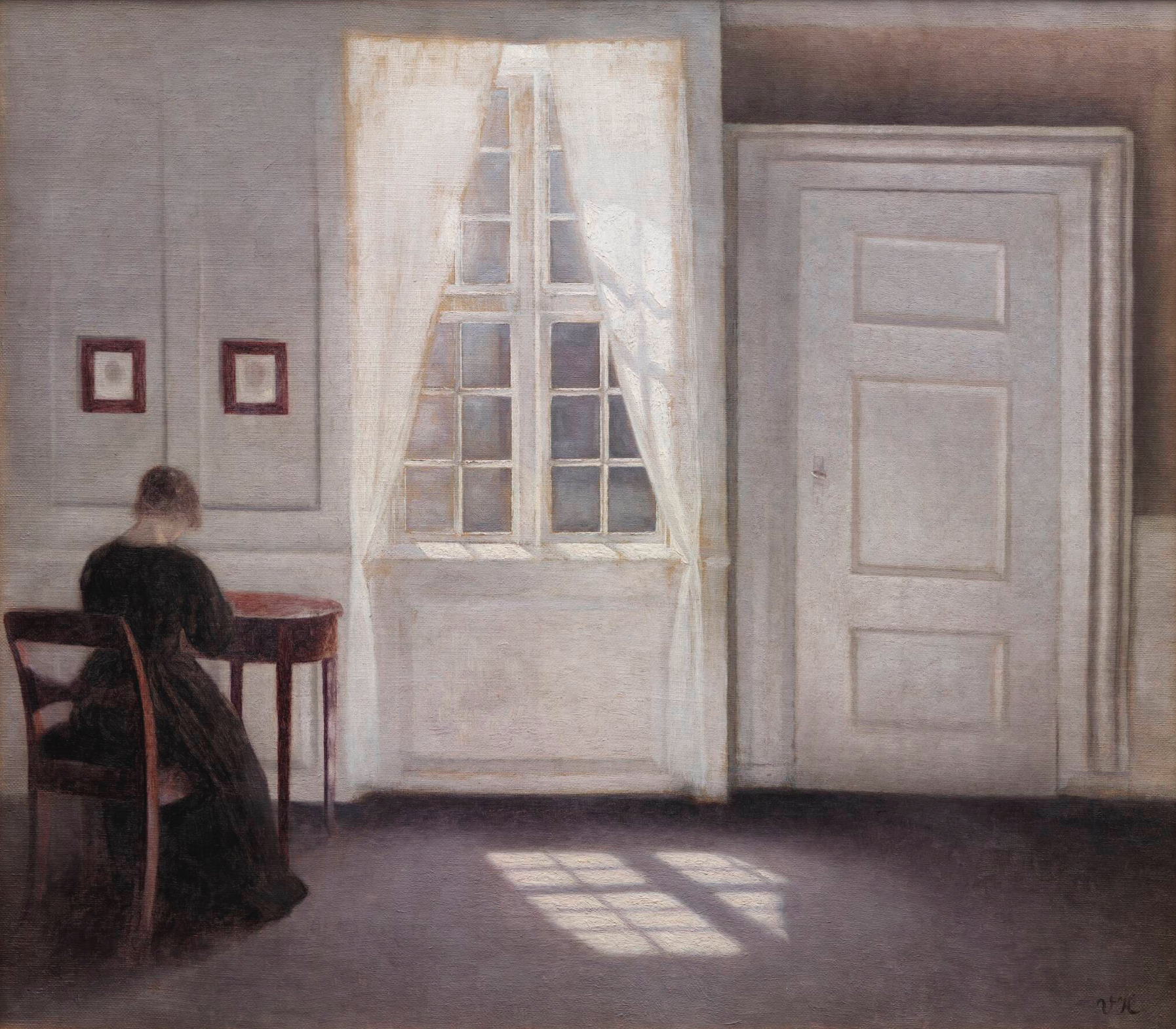
Vilhelm Hammershøi (1864–1916)
Interior in Strandgade, Sunlight on the Floor
Oil on canvas
1901
Statens Museum for Kunst, Copenhagen
S6E8.
Mus White
I chose Stue i Strandgade med solskin på gulvet, Sunlight on the Floor by Vilhelm Hammershøi. He painted it in 1901. He was born in 1864, the same year my grandfather was born. My mother was the youngest of 13 children. And I think it's interesting to me to be attracted to a painting in my grandparents' age. This is a purified, clarified world. It's clean. The door has no doorknob. You can't get in there, but you can't get out of there either. It's enclosed like a poem. There's a stillness, which I appreciate and yearn for myself. I'm sure there were other things in the room, but he's taken out elements and reduced it to a haiku. Every morning I write a haiku. It's like an emotional diary. It's a feeling and it's a discipline that I like. I think he's a very disciplined painter. This is a privileged world that I could only dream of being in. This was the slums when I was growing up there. There's sunlight on the floor. I don't remember that. This is a different Christianshavn than I grew up in. I wanted that life. And I think I've gotten it in some ways.
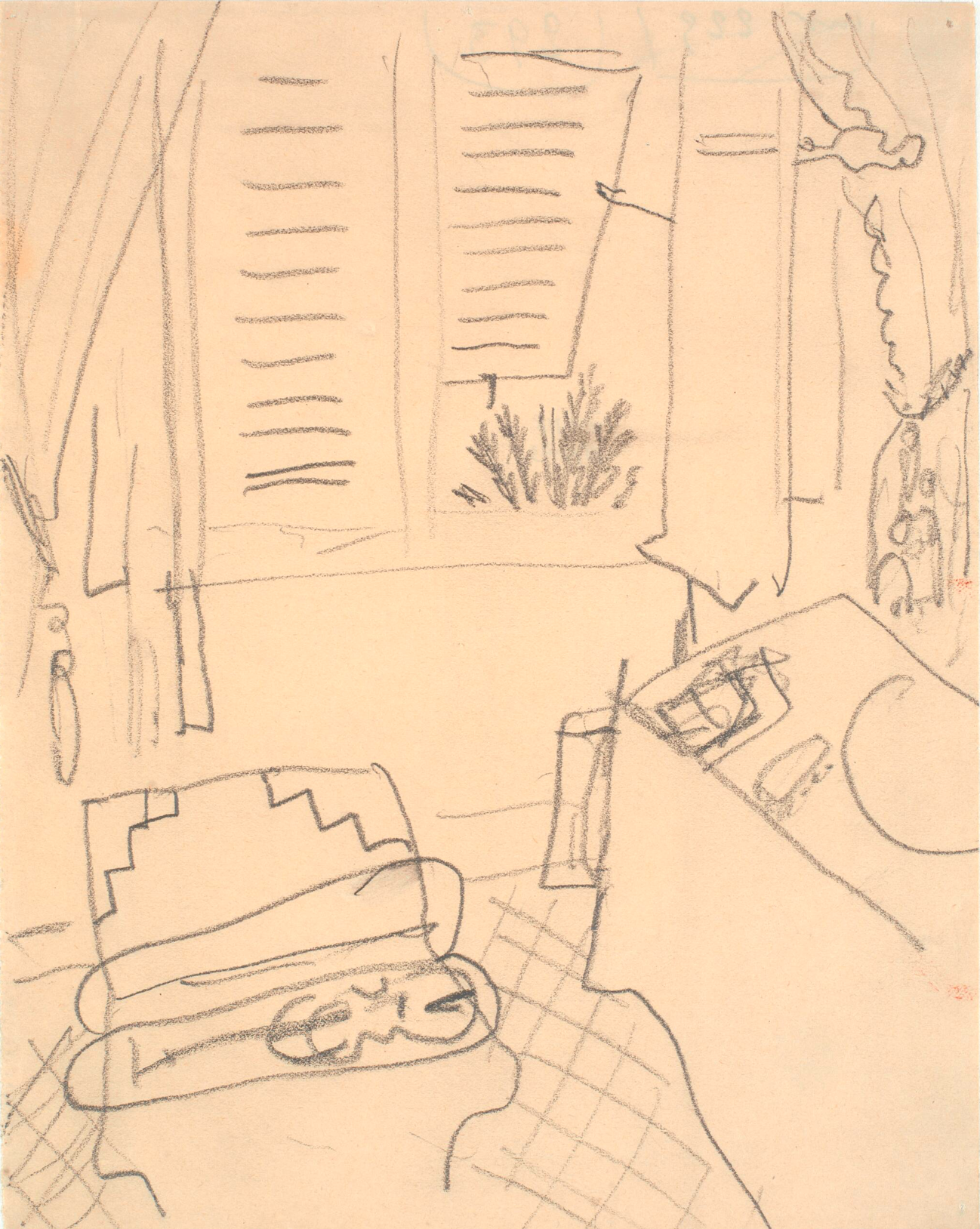
Henri Matisse (1869–1954)
Interior with a Violin
Drawing
1917–1918
Statens Museum for Kunst, Copenhagen
S6E7.
Søren Fleng
I chose the sketch Interior With Violin by Matisse. It immediately reminded me of those moments of inspiration I think we all as humans get once in a while. And Matisse was just a master of catching that moment. I felt I was standing in that room. I experienced a moment with him when I saw the sketch. I could feel him feel the moment, where you don't know yet whether or not you will succeed with that inspiration you got. And that actually made me feel a deep sense of gratitude. And I think that ties really well with how I work as a producer, in looking at animation from new and upcoming directors. And I think that's just very, very beautiful.
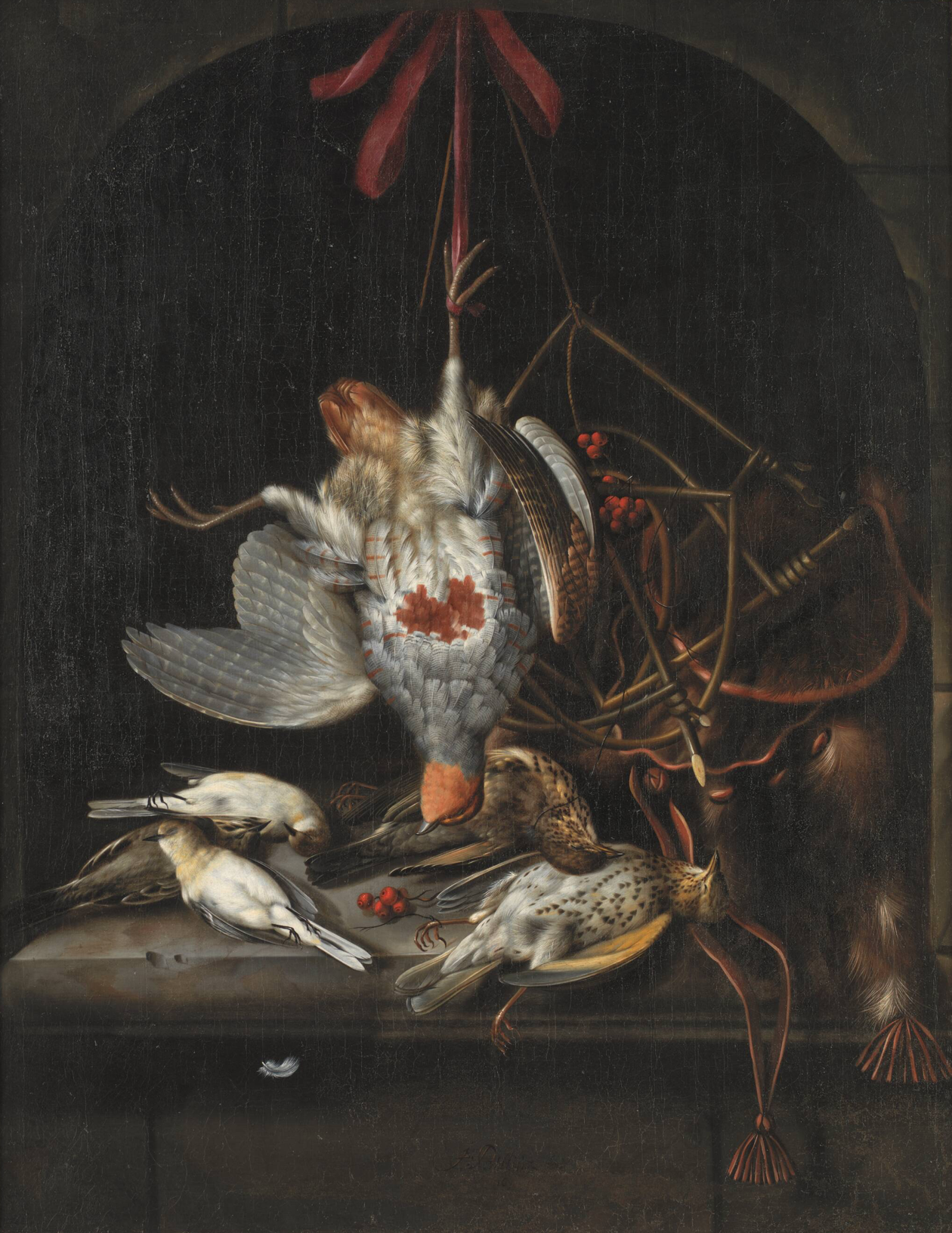
Jacob Biltius (1633–1681)
Dead Wildfowl
Oil on canvas
1674
Statens Museum for Kunst, Copenhagen
S6E6.
Simone Fabricius
I chose the painting Dead Wildfowl from the 17th century by Jakob Biltius. It's a Dutch kitchen — dark backgrounds, arched stove, and then you have the different animals, game, and birds hanging. They are dead, but they look like they're sleeping. It's a loving scene of death, and even if it sounds so grim, there is a beauty in that. I feel you can linger on these paintings for so long, and your gaze can really lock into certain details. And this 3D-like scene, this drama and this sense of depth, is fascinating to me. Since I was a child, I've always loved still-life. I have been fascinated with the technique, the compositions, and how life and death lives side by side in such a beautiful way. It's poetry. It's just incredibly beautiful.
J.F. Willumsen (1863–1958)
A Mountain Climber
Oil on canvas
1912
Statens Museum for Kunst, Copenhagen
© J.F. Willumsen / VISDA
The rights-restricted image is purposely blurred.
S6E5.
Louise Bokkenheuser
I chose J.F. Willumsen's A Mountain Climber. It's a painting from 1912. It's a painting of a woman who has climbed to the top of a mountain, and she's standing there in the grass, leaning on her walking stick and looking down into the valley. And there's some clouds above her head, but the sun is coming through. You can almost hear the wind in the mountains and the cows with their bells on just outside the frame. Despite the setting, the proportions and the dimensions are human scale. When you think about Caspar David Friedrich, for example, that's a much more man dominating nature. And here, the woman is a piece of the nature. By the way the light falls on her, it's maybe late afternoon. Her clothes are kind of the same colors that there are in the landscape. And quite expressionist colors.For me, it is a very humanist, quiet painting. It's very serene. There's a sense of achievement, a kind of calm after having done something really hard, like climbed to the top of the mountain.
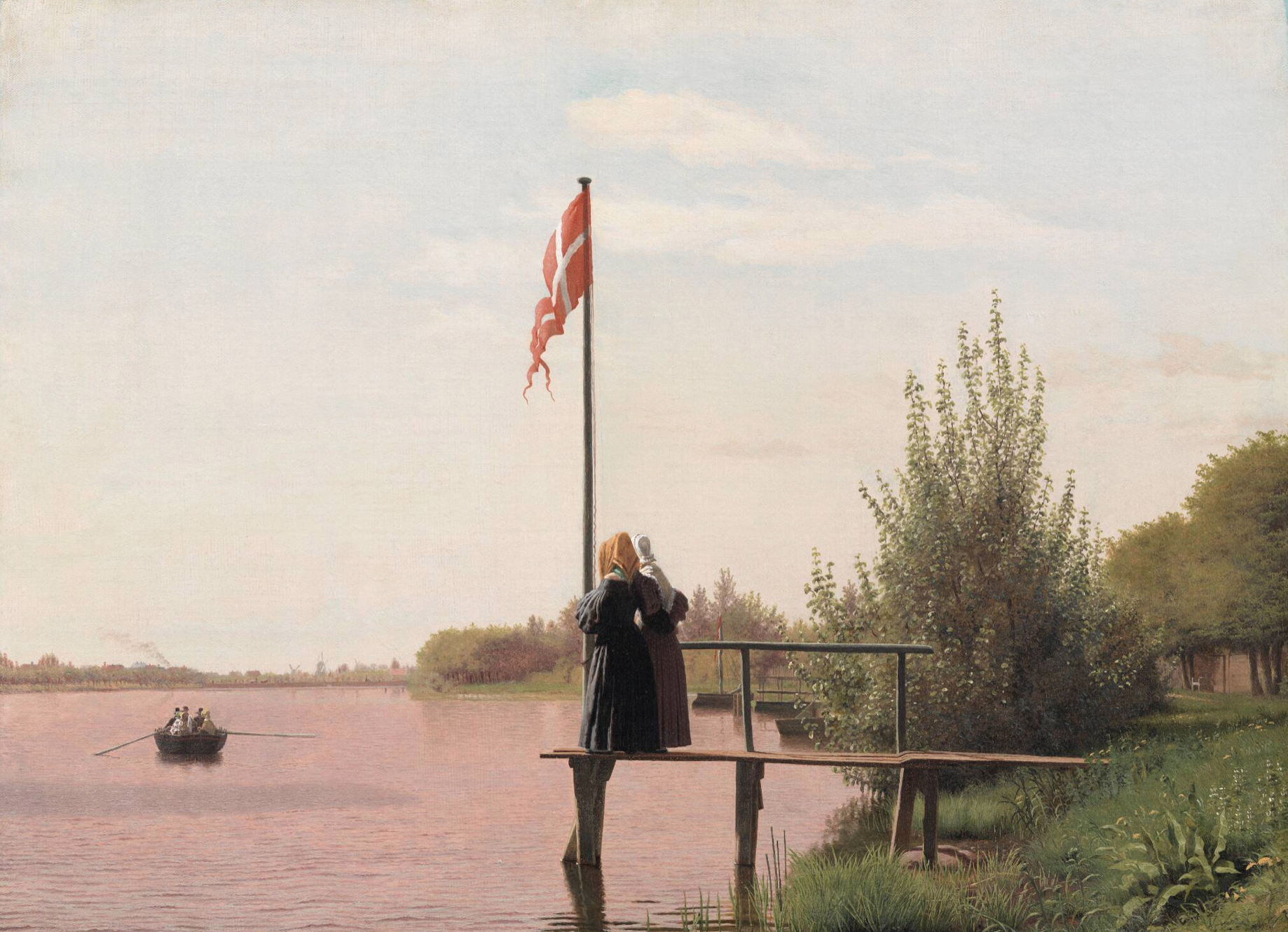
Christen Købke (1810–1848)
A View of Lake Sortedam from Dosseringen Looking towards the Suburb Nørrebro outside Copenhagen
Oil on canvas
1838
Statens Museum for Kunst, Copenhagen
S6E4.
Henrik Rehr
I have chosen A View of Lake Sortedam from Dosseringen by Christen Købke. It's a wonderful painting. It is composed on the horizontal and vertical lines, which is not that common for people like me who do graphic novels and comics, because we are always told to compose on the diagonals because it is more dynamic, but I guess Købke didn't get that email. It is a very calm scene, a very poetic picture. Some people are crossing the lake on a rowboat, meeting two women on a bridge. We don't know if they're coming or going, why they're meeting. It is a very tender painting, I think because of the way he has portrayed the water of the lake with pink and violet hues, the way he creates a very fragile light and atmosphere in the painting. My sister lives right around the corner from this actual location. And even though it looks different now, her and I have often taken a walk right here by this lake in Copenhagen. This one goes out to my sister, Marianne.
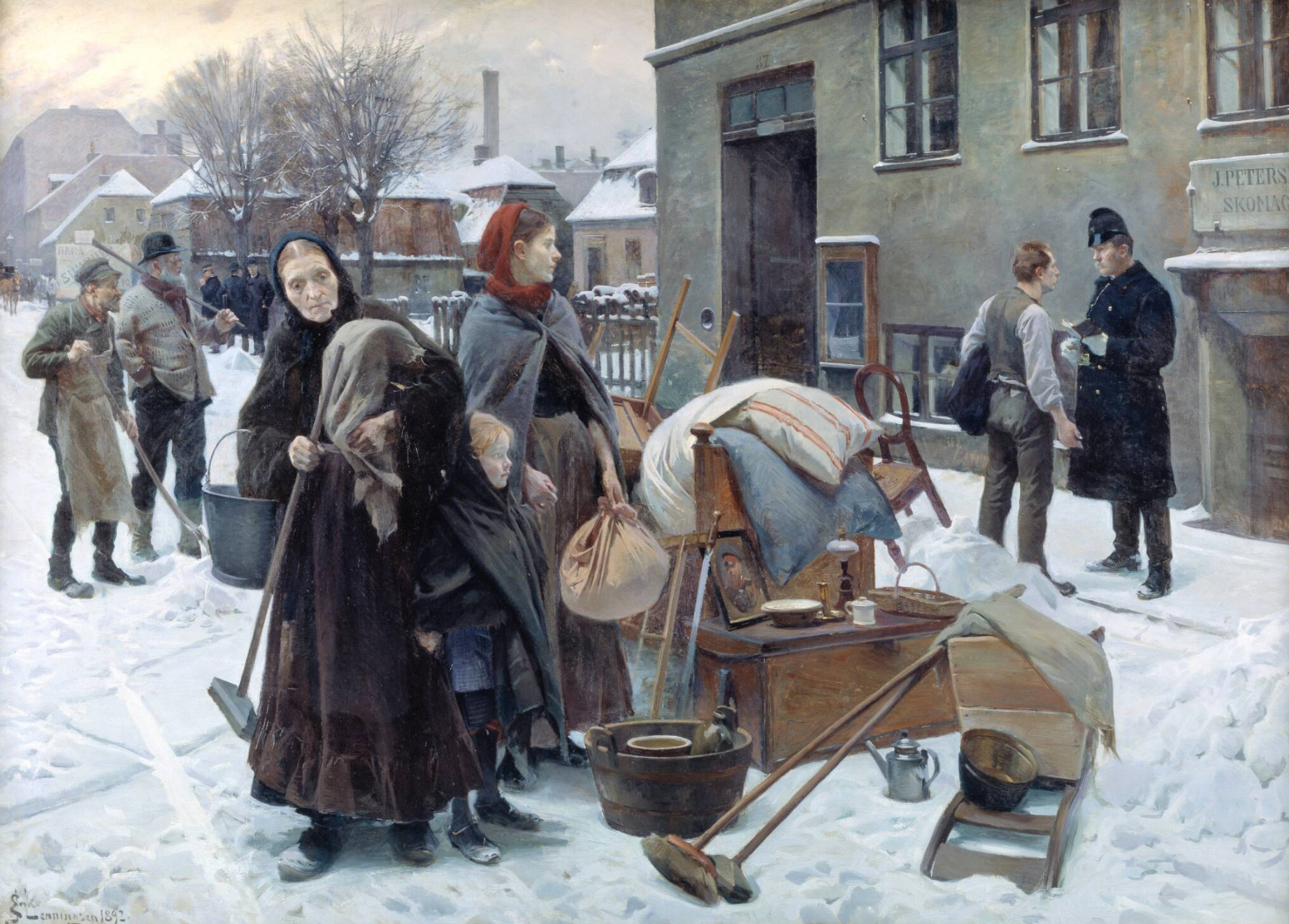
Erik Henningsen (1855–1930)
Evicted Tenants
Oil on canvas
1892
Statens Museum for Kunst, Copenhagen
S6E3.
Merete Angelica Baird
I chose Evicted Tenants by Eric Henningsen, a forlorn painting from 1892 of poor people evicted from their home. The painting shows a grandmother and a young wife and a little girl and their miserable belongings in snow and sleet, and a husband discussing with a policeman who has evicted them. And the neighbors, like us, are looking at all the destruction that's happening. And of course, the authorities are at a safe distance. They are standing there, but they're so far away, you can hardly see them. And they certainly don't notice the desolation that they are creating with their power. Even though this is a story about people in 1892 being evicted, it also very much mirrors the present situation in the US, even though the painting has nothing to do with that — the feeling that one feels right now for all the defenseless people in America that's being thrown out in this lavine of firings and immigrant deportations that Musk and Trump are organizing. This picture gives very much an emotion that's timeless.
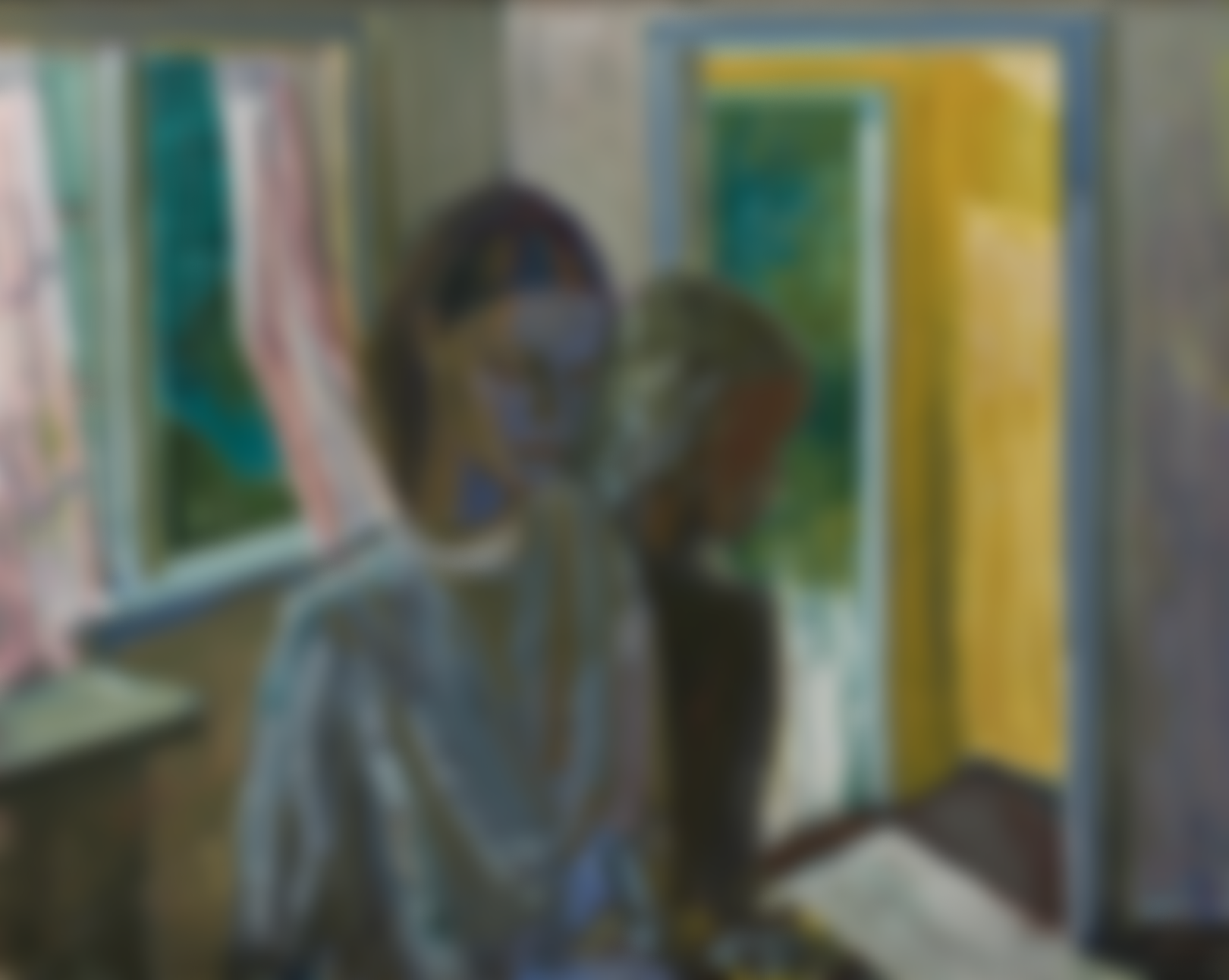
Paul Høm (1905–1994)
The Sitting Room
1938
Statens Museum for Kunst, Copenaghen
© Paul Høm / VISDA
The rights-restricted image is purposely blurred.
S6E2.
Marc Hom
I chose A Sitting Room from 1938, and it's painted by my grandfather, Paul Høm. And I think it's my grandmother in the front, her name is Kirsten Høm. And she was, at least she told us that, she was the first woman to get into the Royal Academy of Painting, I think in, I want to say '29 or something. Might even not be true, might be a story that she told, I'm not sure. But I do believe it actually. I have pictures of her and my grandfather dragging paintings from and into the Royal Academy. Her and my grandfather Paul, they lived in Bornholm, a little island, Danish island. I love the color feeling of it. And I like the picture. It's anonymous, in a way, because you don't really see the girl's face. You just see my grandmother's face. And it's probably my father's little sister on the side. So there's something hidden there that creates attention, I think. I actually really like his strokes. But mainly the color palette. It's probably not his best painting, I don't think. But what really touched me — and it's something I just realized in the last couple of years, it's all coming back to me — it resonates a lot with my color palette in my photographs. It has this very Scandinavian light, it has the blues, it has the warm tones. I might've been unconsciously very inspired by his colors.
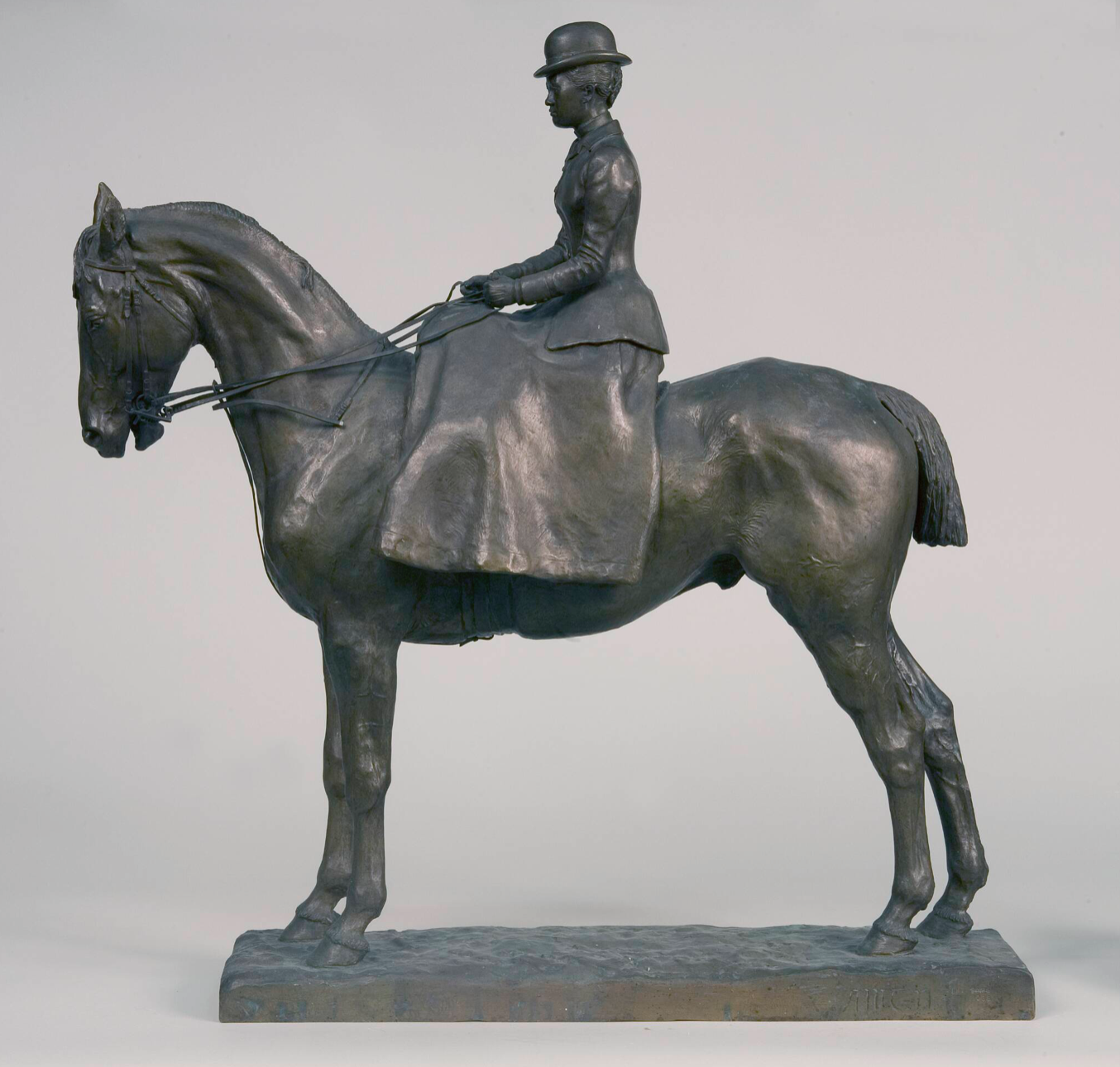
Anne Marie Carl Nielsen (1863–1945)
A Lady Mounted on Her Favourite Horse
Bronze
1897–1901
Statens Museum for Kunst, Copenhagen
S6E1.
Amanda Collin
I've picked A Lady Mounted on Her Favorite Horse. It's a sculpture from Anne Marie Carl Nielsen. I love horses. They're so dangerous and big and scary, and to ride in a movie would be crazy. I found a really beautiful quote of her: "She had, through her art, defeated all prejudice. and was now equal on her natural spot between the best of her male colleagues … She fought her way through, despite everything and everyone, and now it's history, but once it was for her, just the bitter truth." And I think for everyone who fights their way through something, it's just the bitter truth of their very present moment. This is something that they have to do. And I think that's a really important thing to remember in art, not to put people anywhere else, that they do it from exactly the present moment, and that's what they needed to do right there.