
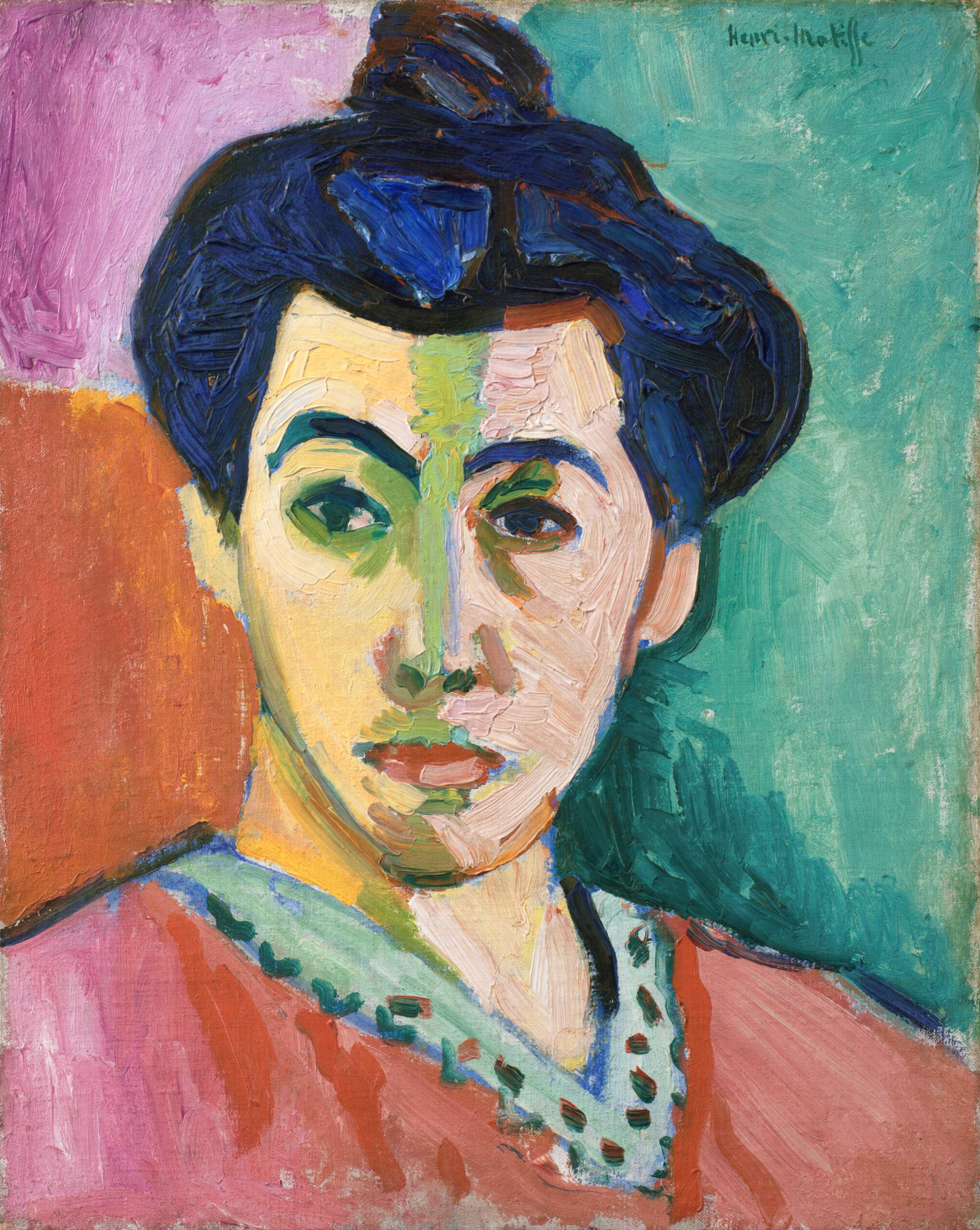
Henri Matisse (1869–1954)
Portrait of Madame Matisse. The Green Line
Oil on canvas
1905
Statens Museum for Kunst, Copenhagen
S1E10.
Dan Laustsen
It's called The Green Line. It's a painting from Matisse, and he painted that in 1905, that's close to 120 years ago. It's a very colorful painting. I'm getting into this color world where I really like strong colors. When you cannot see something, it's difficult to paint it. He's seeing something and he's painting. And he just has this feeling about how strong the colors are. I don't understand how he can see that. One side is warm. Another one is cold. The middle, the nose is green. And for me, it's so amazing how he sees it, how he's thinking. For me, it's a super strong portrait. When I saw it for the first time in Copenhagen, actually, it was like, excuse me, what is this? Is this painted two years ago? No, it's painted 120 years ago, in a very strong and beautiful way. These strong palettes of colors — I think he chose that very carefully. And the green color in the middle is the green color we like in all our movies right now. What I would say, steel blues, green blues. And it's like, where was that coming from? He had been seeing something that was naturalistic, and then he painted an abstract world. And that's a little bit like we are seeing the world in the movies we are doing right now. It makes me very happy.
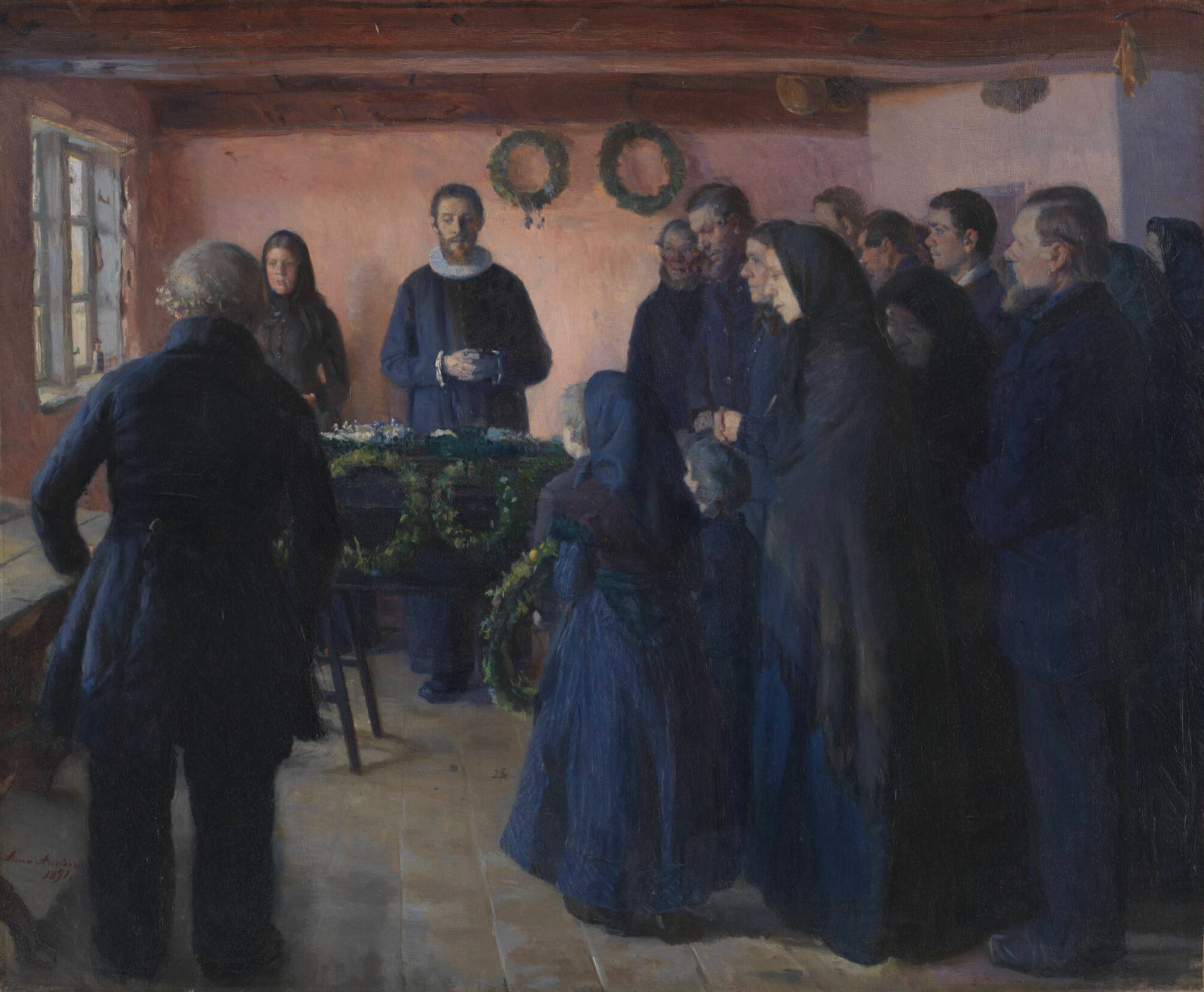
Anna Ancher (1859–1935)
A Funeral
Oil on canvas
1891
Statens Museum for Kunst, Copenhagen
S1E9.
Trine Dahl Klubien
In Anna Ancher, The Funeral, I take it's a family saying goodbye to someone who passed away. Somebody has their back turned on us. I don't know if he's a church servant of some sort. Obviously they're mourning, but it's a peaceful moment where they are saying goodbye to a loved one. And I take it that he's saying some words, the priest. And I love the very old school floristry in those wreaths hanging from the plateau of where the coffin is, and in the ceiling. The whole scene is very familiar to me. As a florist, you get to be involved with your clients' most private moments of birth and anniversaries and death. I've had some really very tragic experiences with my clients. A couple came and ordered their wedding flowers and the guy turned up a week later and ordered her funeral flowers. She was pregnant and she had been run over by a truck. That makes profound impressions on you. When you are hired as a florist to decorate the coffin, you are alone in that room with the coffin, just you and some flowers and all those echoing sounds. The dark moodiness of the painting, the light that comes in from the window, the pink with the bluish blacks, I find it very beautiful and peaceful at the same time.

Emil Nolde (1867–1956)
North Sea Dunes
Oil on canvas
1936
Statens Museum for Kunst, Copenhagen
© Nolde Stiftung Seebüll
The rights-restricted image is purposely blurred.
S1E8.
Joachim Svare
I picked a picture by Emil Nolde called Vesterhavsklitter. And I picked it because it represents something from my childhood. I have great memories from Vesterhav, which is the sea on the western coastline of Denmark. It's basically the Atlantic Ocean, right? I want to see something that gives me a strong feeling inside. I remember from my childhood, me and my cousins, Thomas and Mette, their mom, my moster Inge Lise, and my granddad, we had spent several summers over there in a summer house. And my granddad loved the sunsets and we always walked down like it was five minutes from the beach, and we walked down there so many times and we were looking out over the ocean. And that picture, when I saw that, that's what it brought me back to.

Richard Mortensen (1910–1993)
The Hall of Silence. Opus I
Oil on canvas. 1980
Statens Museum for Kunst, Copenhagen
© Richard Mortensen / VISDA
The rights-restricted image is purposely blurred.
S1E7.
Henrik Fisker
The Hall of Silence, Opus 1, from Richard Mortensen. The composition of different pieces and colors put in a certain order. It's structured, but not quite structured. It gives this calmness first when you look at it. And then when you spend a little more time, you see some of the lines are actually not quite straight. The color composition is something that would brighten up a room. There's that interesting energy and a certain optimism in it. I think what's unique about this as a painting, too, is it has a little bit of what I would call design strokes in it. I draw with a pencil, and there is some feeling of pencil strokes. And, of course, then is the actual painting of the colors, which I would also do if I do a rendering of a car. What I always look at in a car is proportions, and proportions is how different elements come together in size versus each other. The proportions of this painting, they're the right size towards each other.

J.F. Willumsen (1863–1958)
A Mountain Climber
Oil on canvas
1912
Statens Museum for Kunst, Copenhagen
© J.F. Willumsen / VISDA
The rights-restricted image is purposely blurred.
S1E6.
Anne-Grethe Krogh Nielsen
I picked En bjergbestigerske, A Mountain Climber. It has been one of my favorite paintings for many years. Willumsen was this Renaissance man. This is a painting of his second wife, and it is this wonderful manifestation and celebration of a woman. As a woman, I like that. She is standing there. She's confident. She has just conquered the mountain. She's up there, leaning a little bit and taking in the view, the wonderful nature, God's nature, that is around her in all the colors and splendor and majesty. She's there alone. She made it on her own up there. History-wise, this is the time where women got their voices in politics, they could finally vote. The notion of climbing mountains, that can be both physically when you're out hiking and you take in the world around you in a moment of silence and reflection, but also in a religious manner that you withdraw a little bit from your busy life and you see from a different perspective. One of my favorite Danish poets is Benny Andersen. He has a wonderful poem where he says that we Danes need to train in vertigo and perspective. We need to climb some mountains from time to time, to go up and see how violent and different life can be. And then return again to the flatter country and figure out how practical it is that the mountains are lying down. I like that we need to train in vertigo and perspective. We need to have these moments of going higher, as a woman, as a pastor, as a society.
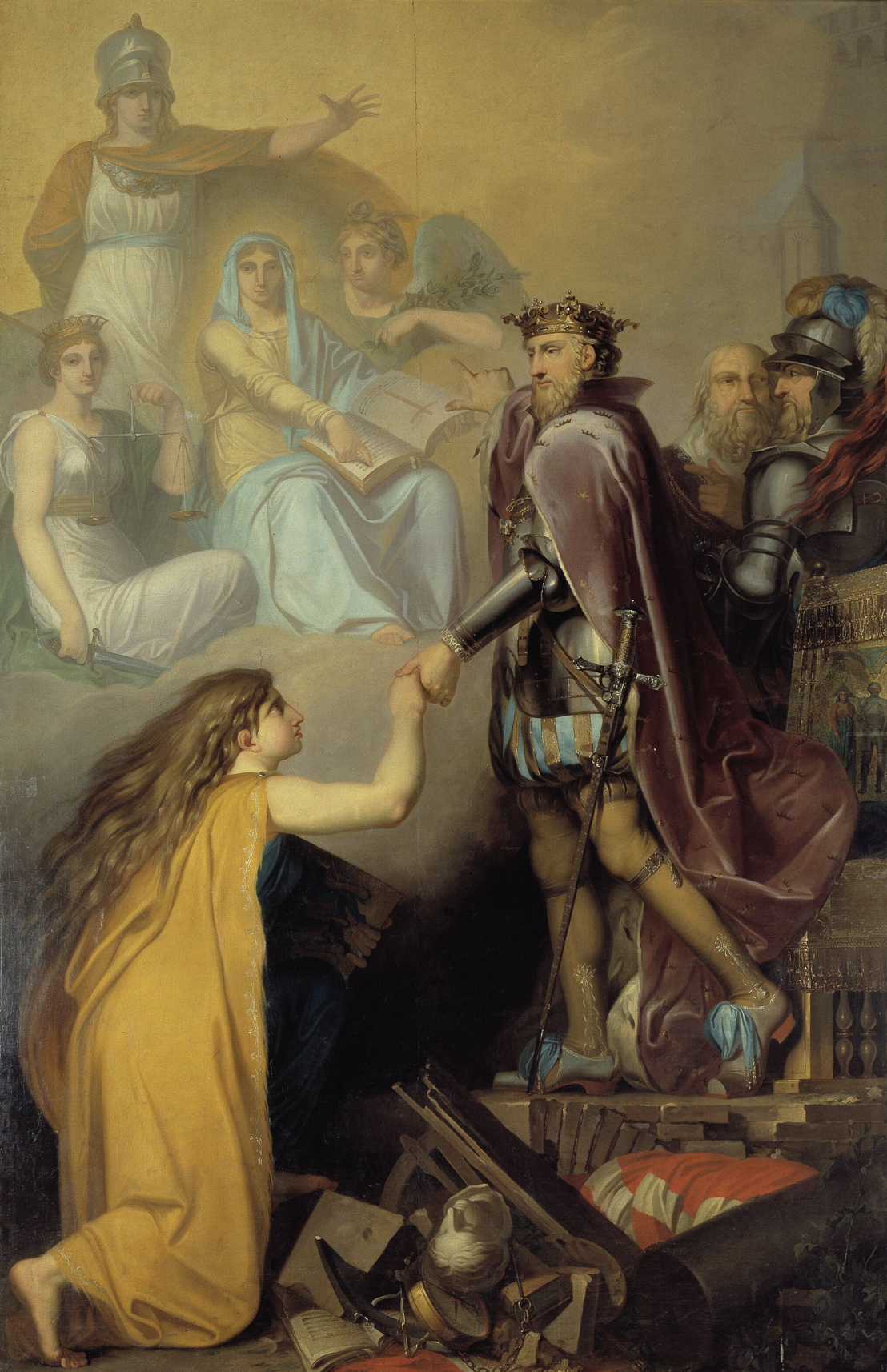
Nicolai Abildgaard (1743–1809)
Christian III Succouring Denmark
Oil on canvas
1780–1781
Status Museum for Kunst, Copenhagen
S1E5.
Aka Niviâna
In this picture, you have the light colors in the background and these deep colors in the front. A lot of contrast. Makes me think about how our society contradicts in many ways. You have a king wanting to help the common people, but at the same time, it's also a king living in a hierarchy and he's on top of that hierarchy. So I think it's a good sense for me to think about how I form opinions or think about all these nuances that I've been trying to navigate in these spaces, and not always having the answer for what is definitely right and definitely wrong. Monarchies around the world and empires and all of that. And only now we live in democratic society, and it's so young. I think we're still learning how to human sometimes.

Olafur Eliasson (1967–)
Island Series
Color photography
1995
Statens Museum for Kunst, Copenhagen
© Olafur Eliasson
The rights-restricted image is purposely blurred.
S1E4.
Kim Magnusson
The picture from 1995 by Olafur Eliasson, Iceland Series, actually has something that also belongs to me. The first time I was in Iceland was in the late '90s when I did my first short film there. The open sky, open air, vast horizon has underground bubbling water from the craters. It's the last standing frontier in the Western and modern world that we know of. The endless world out there. Full of storytelling, like no other place. What are the opportunities? A small child with closed eyes, thinking about: Where can I go next? What story can I tell next? What story can I be embraced with? Storytelling is all about that. This picture, for me, stands out as a great metaphor for my life in the film industry, and how I see the connection between storytelling and the opportunity to tell what you are meant to tell.
Kirsten Justesen (1943–)
Surfacing
Color photography
1990–1992
Statens Museum for Kunst, Copenhagen
© Kirsten Justesen / VISDA
The rights-restricted image is purposely blurred.
S1E3.
Sigrid Dyekjær
I chose Kirsten Justesen and I chose this amazing — not a painting, it's a photo — of this woman. And I think it is Kirsten herself. I love that she put fish in front of her. It's a provocative photo. It's very feminine and it hides some of the normal things you would think would be the most provocative things. And it turns it upside down by having these beautiful fish. I love it. It really is enormously beautiful. It spoke to me because I love the female body. It's just such a beautiful sculpture, and you can't watch it enough.
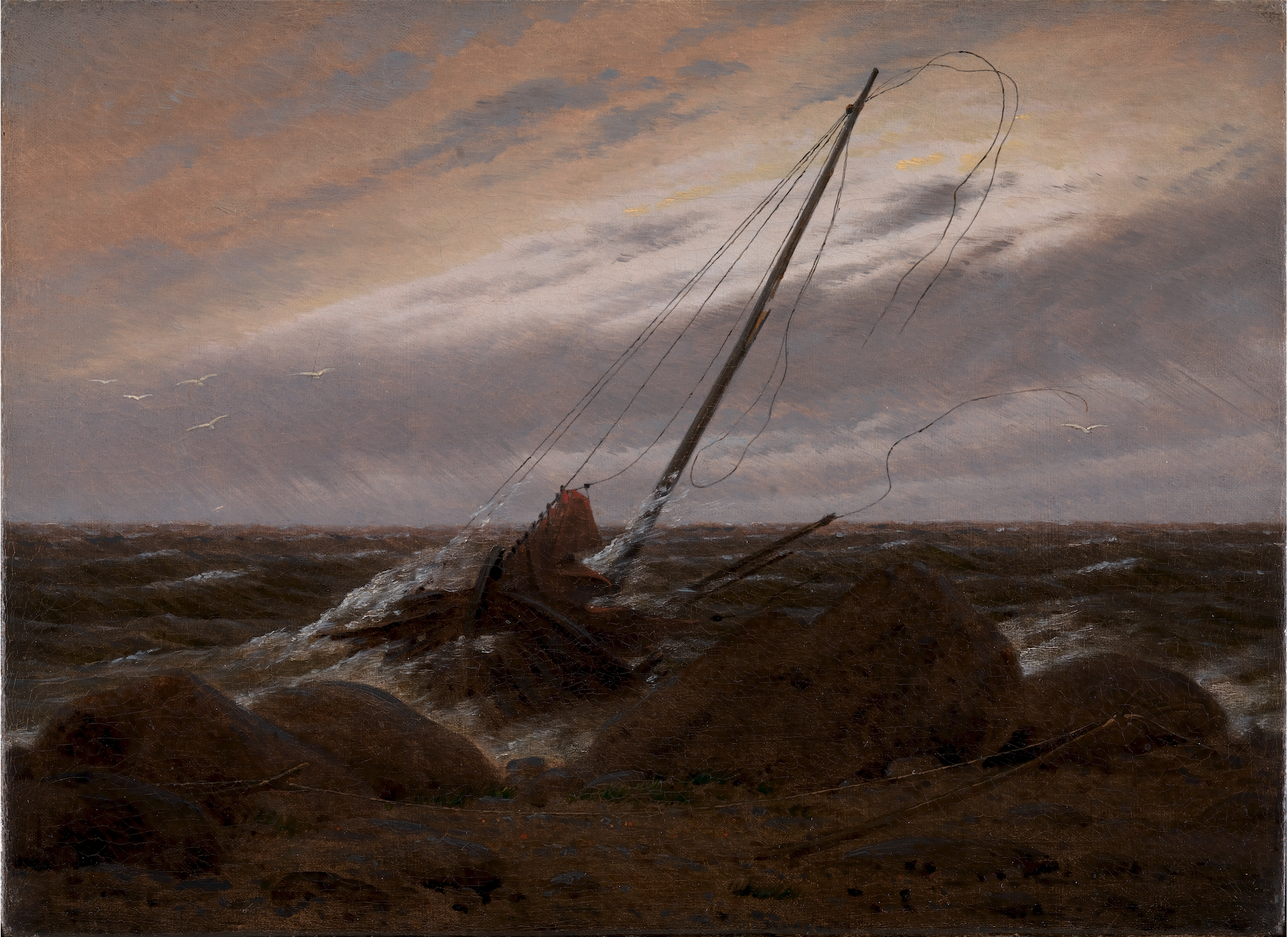
Caspar David Friedrich (1774–1840)
After the Storm
Oil on canvas
1817
Statens Museum for Kunst, Copenhagen
S1E2.
Nikolaj Arcel
I have chosen After the Storm by Caspar David Friedrich. And the reason I have that is because, and this is very classical for a director, this was the most dramatic. Whenever I go to a museum, I love all kinds of art, but I'm always drawn to the slightly dangerous images of a shipwreck or a mermaid trying to lure sailors off. It's the adventure of it. I was drawn to that because it felt quite riveting. It's a small boat, it's a fisherman. And you can see that there's been a storm, and he's almost shipwrecked on some rocks. He's all alone in the world and waves are crashing in. It's not like, it's not like you feel he's going to die. But you feel like this is gonna be a tough one to get out of. And it's just that sort of man against nature thing, which, by the way, also is a theme in my new film, that I gravitate to.
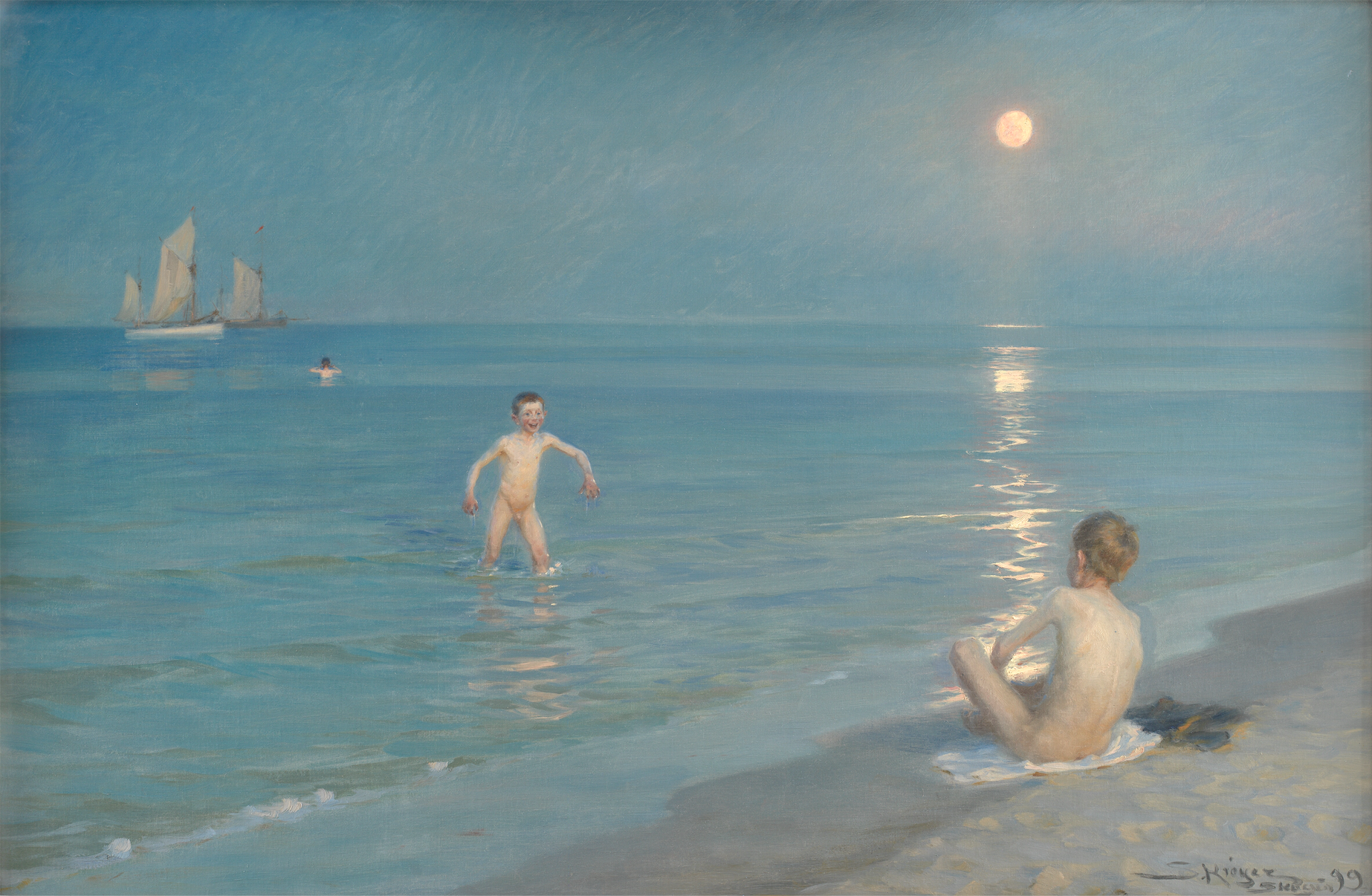
P.S. Krøyer (1851–1909)
Boys Bathing at Skagen. Summer Evening
Oil on canvas
1899
Statens Museum for Kunst, Copenhagen
S1E1.
Ole Henriksen
The painting that really speaks to me is by Krøyer, a renowned, brilliant Danish artist that actually spent the better part of his life in Skagen, the very tip of Denmark in the late 1800s to early 1900s. The ocean this very day means everything for me, wherever I am, whether it is in Denmark, I jump in the big waves, the bigger, the better. And I always say, also my philosophy of life is, I love to jump down deep because I know I'm always going to reach the surface. Here they are, these little boys in blue, blue colors, different shades of blue — blue being my favorite color. But it really reminds me of me and my love affair with jumping into the ocean as a little kid. The ocean in Denmark is never really warm. But when you're a kid, just the freedom of floating there underwater and learning to swim felt magical. And we often did it naked when we were very tiny, because us Danes are very free-spirited.