
Exhibition
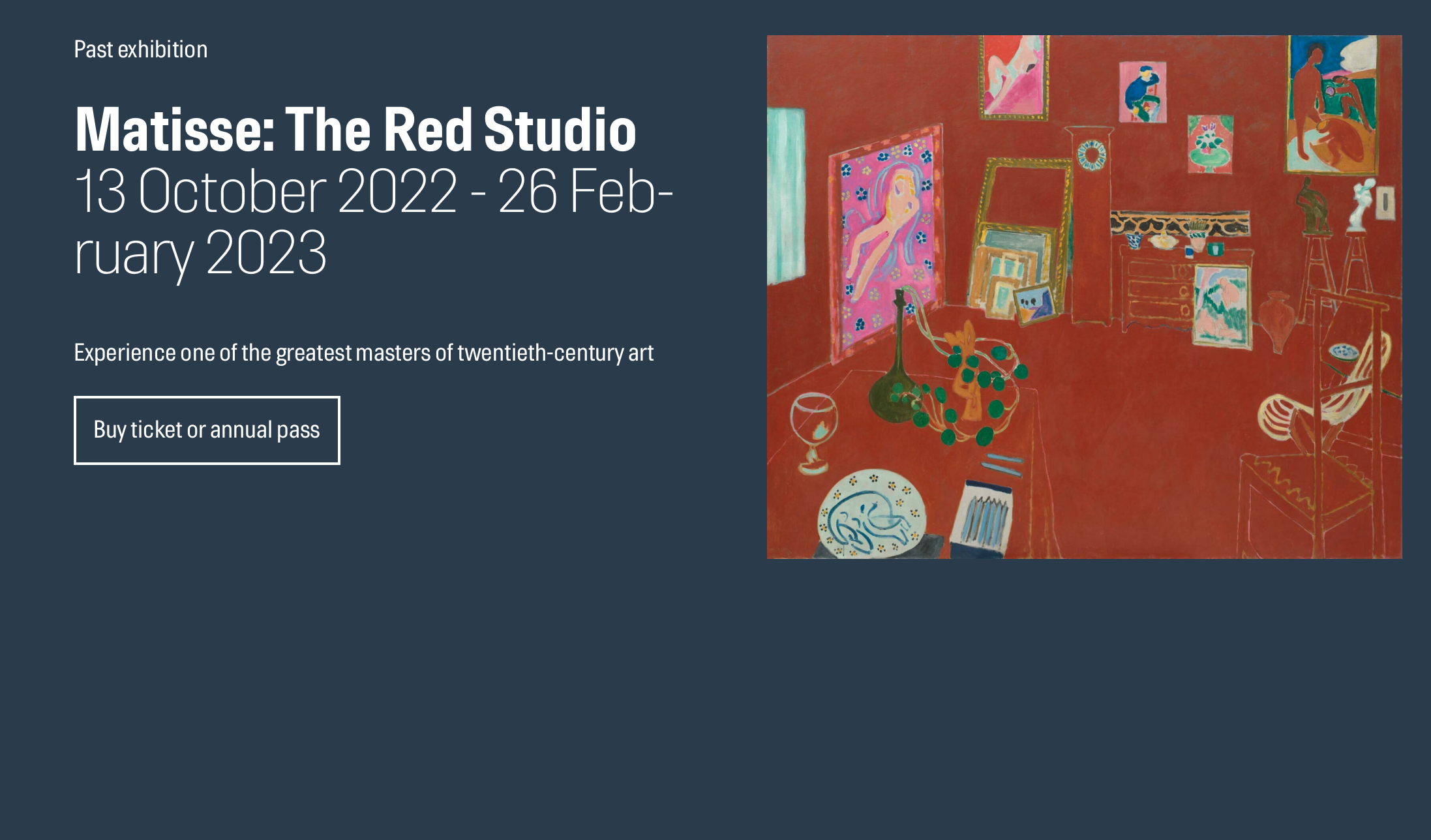
Matisse: The Red Studio
13 October 2022–26 February 2023
Statens Museum for Kunst, Copenhagen
S8E10.
Marie Brock
I chose a painting by Matisse called The Red Studio, which is a painting Matisse did of his own studio. I saw the exhibition at SMK, I believe it was '22. It's pretty dramatic that he created this whole work and then suddenly he takes a left turn and then slaps this red paint all over it and it's become one of his most famous paintings. I don't know what he was thinking at the moment. Maybe he was frustrated. He was like, I'm just gonna put some dramatic red paint on it. But that's also a color of passion. As a creative, it blew the lid off my head a little bit, that thing of knowing sometimes the inner critic comes in too fast, but you also gotta have that inner critic that sometimes comes in and helps you. I feel inspired. It's so interesting also when you read a script, sometimes it's alive. You already feel a vibration on a cellular level. And I feel that painting gives insight into how sometimes that bold choice makes that art that we just don't forget.
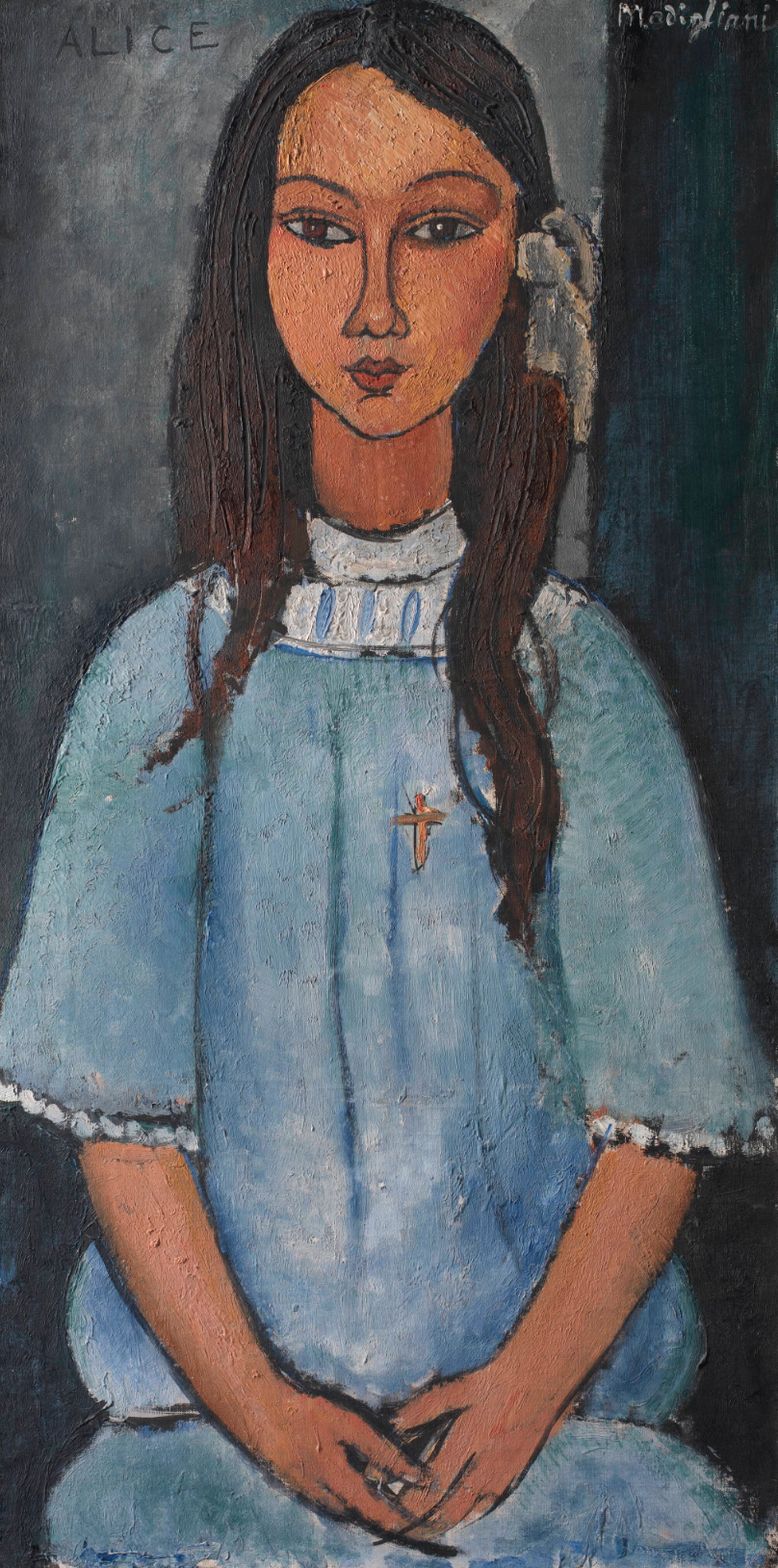
Amedeo Modigliani (1884–1920)
Alice
Oil on canvas
1916–1919
Statens Museum for Kunst, Copenhagen
S8E9.
Marie Foegh
I picked Modigliani's painting of Alice, a girl. That was the first painting I got attracted to when I was 18-years-old, and left the little village in Southern Jutland for Copenhagen for medical school. I hadn't seen it before. It was simplistic and I thought it was elegant. You could see her moods, and then I opened my eyes for Modigliani. And in spite of all his women having the same thing, elongated faces and almond eyes, you could see the difference, you could feel the difference. The muted colors. He could have used Matisse-like colors, but no. You can't really put him in a box of "ism." I like people who can't be put in a certain box. That's what attracts me to Alice.
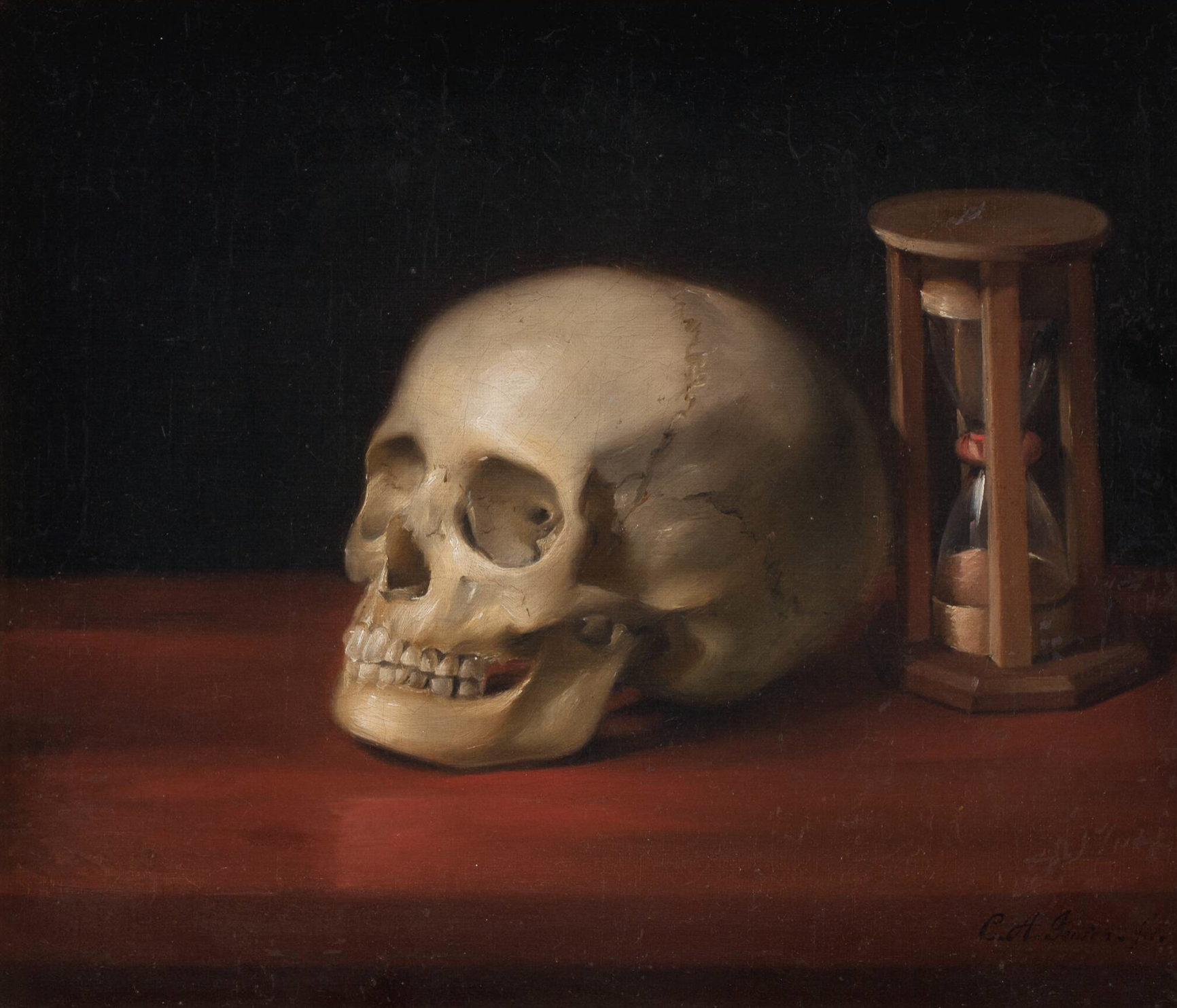
C.A. Jensen (1792–1870)
Skull and Hourglass
Oil on canvas
1714–1814
Statens Museum for Kunst, Copenhagen
S8E8.
Frederik Bokkenheuser
The piece I've chosen is Skull and Hourglass by C.A. Jensen. It's a skull next to an hourglass on a table. It's very dark and ominous. The motif is heavy. Your days are numbered, but make the best out of the days you have here. I am a firm believer in living each day with as much joy and optimism and happiness as you can because we never know how long we have. I like the darkness. I like the deep shadows. I like the warm tones of the table. How the light falls out into complete darkness behind the hourglass, it's a very strong image, something I could have colored myself in my job. When I work with people, often references are what brings us together on a project. It's like we all know what tri-tip tastes like, but not until we taste the same one that's the same marinade, then we know what we are talking about. This is an image I would use as a reference on a palette I really like.
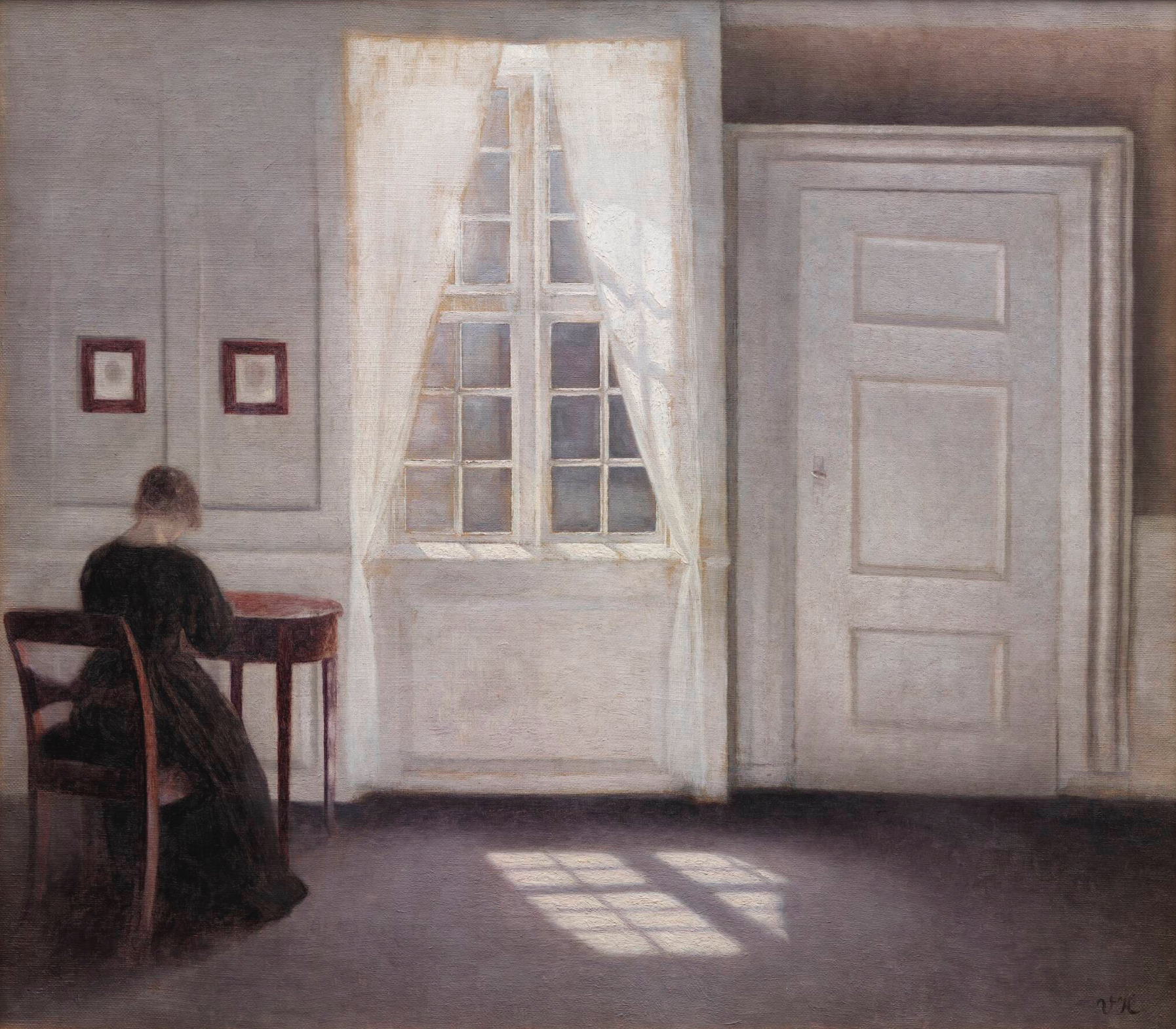
Vilhelm Hammershøi (1864–1916)
Interior in Strandgade, Sunlight on the Floor
Oil on canvas
1901
Statens Museum for Kunst, Copenhagen
S8E7.
Michael Møller Pedersen
I chose a picture, Interior in Strandgade, Sunlight on the Floor by Vilhelm Hammershøi. One of the things that spoke to me about the painting is the simplicity of the setup and the excellence of execution. Really focusing on a simple motive that's not in itself necessarily noteworthy, in this case, a woman sitting by a table in front of a window. It's not something you would even take a picture of today with your phone. But spending a long time capturing that on a canvas and highlighting a scene and making something that's everyday commonality into something unique and special, that speaks to me. By elevating it into something that's noteworthy and grander with perfect lighting and perfect technique, I think that was something that relates to the work that I do.
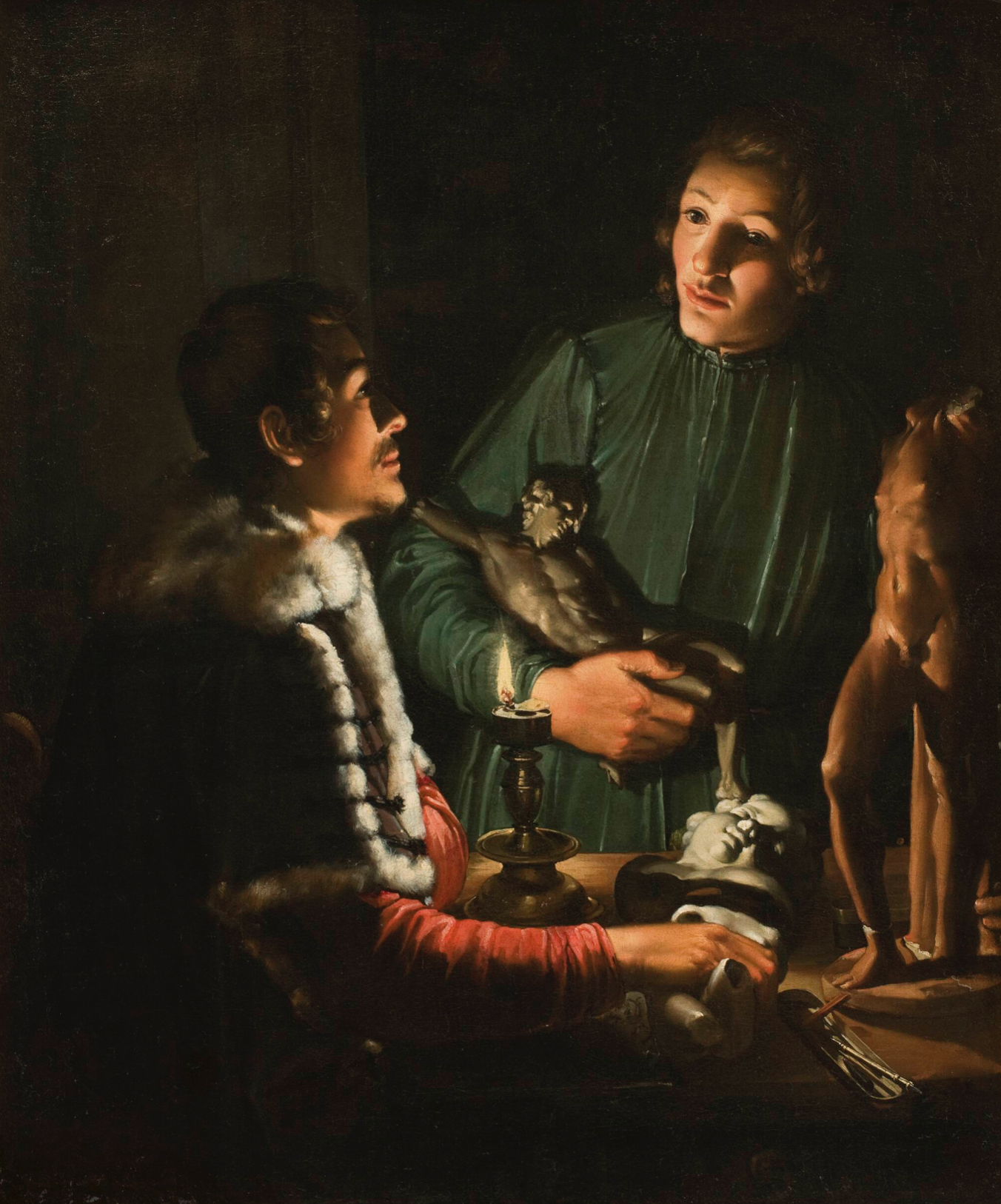
Attributed to Adam de Coster (1584–1643)
Two Sculptors at Night in Rome. Double Portrait of Francois Duquesnoy and Georg Petel
Oil on canvas
1620–1623
Statens Museum for Kunst, Copenhagen
S8E6.
Sarah Holm Johansen
I chose the work of Adam de Coster. This picture has two men looking at each other in some kind of a standoff. The background is super dark, and their faces is where the light is. It's about what you see, it's also about the feeling you get. And it's the same way I light my scenes. A lot of the stories I do have evil, grief, sorrow, but also optimism, pride, elation, joy. I think it's because I'm fundamentally interested in the darkness of the human mind. You can do bad things and not be a bad person. You can do good things and be kind of a shitty person also. I've come across that again and again in my work. I've based my entire career reporting on some of the most awful actions human beings can possibly partake in. And I'm still fully convinced that almost everyone is fundamentally good. We all contain light and dark inside of us. Sometimes they're at odds, sometimes they're fighting. Sometimes darkness wins, sometimes lightness wins. The painting — I think it is really emotive and gets you thinking and feeling. As artists, if we don't do that, what are we even doing?
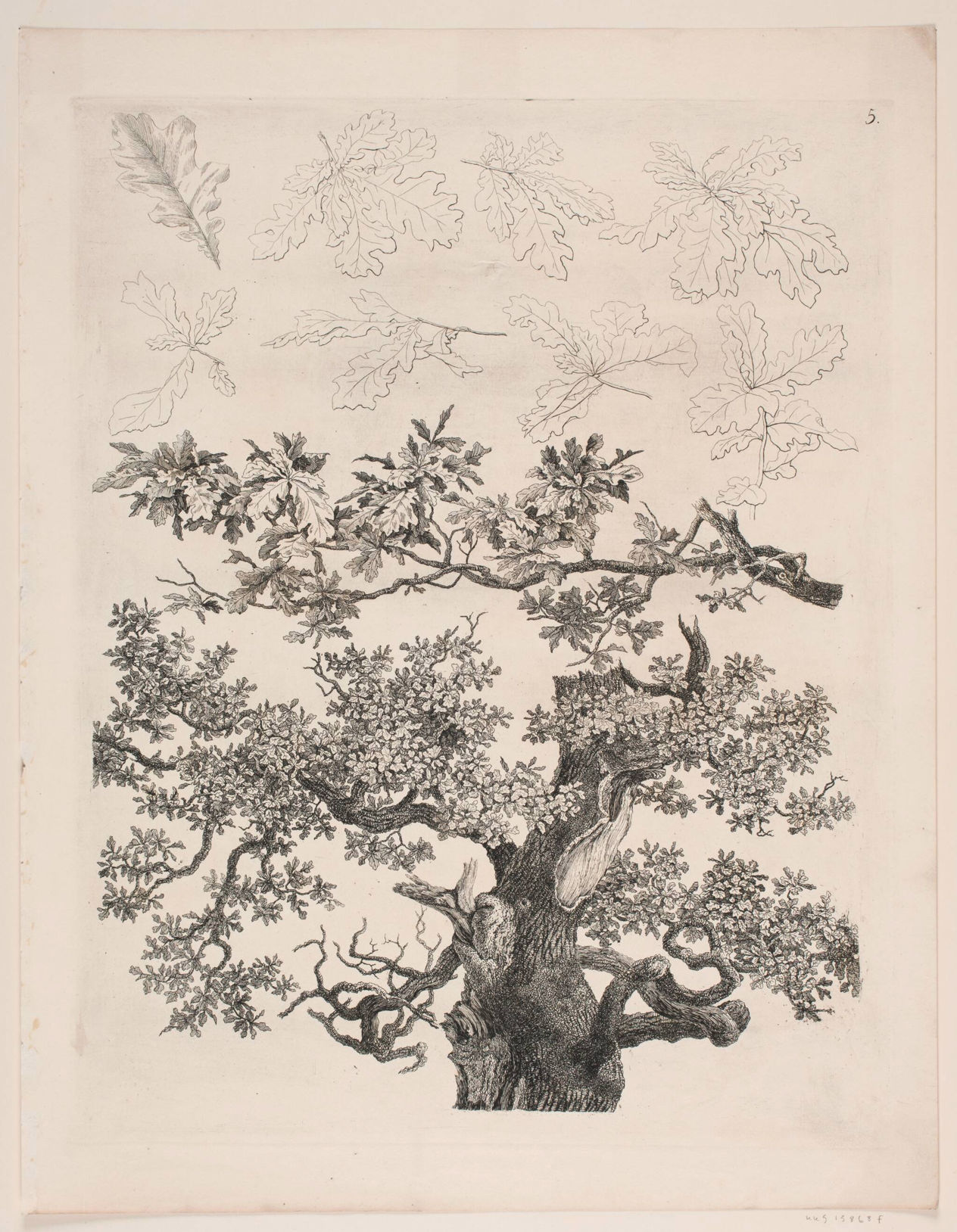
Søren Henrik Petersen (1788–1860)
Studies from Nature with Regard to Landscape Drawing by S.H. Petersen, no. 5.
Engraving
1816
Statens Museum for Kunst, Copenhagen
S8E5.
Claus Toksvig Kjær
I chose Søren Henrik Petersen's drawing of a tree. Growing up in the countryside, I always loved those gigantic trees, how old they grow, how much history they carry. The roots are talking to each other. It's a complete network. And the life they bring. We had this huge oak tree, and how many owls lived there when I was a kid. And it is a home for so many creatures. And when you just close your eyes and think of a tree, nature will make it much crazier than you can ever think or draw. Tim Burton, animator, director — I always loved his take on trees. And then one of my mentors said, think of that tree, then you go out and study nature and you will see that nature is even crazier than Tim Burton. Because it's real life, it's not something condensed. The fascinating thing for me is the branches that can go in any direction. I can always characterize them so they get a personality. A tree, it's like a person, it becomes a personality itself.
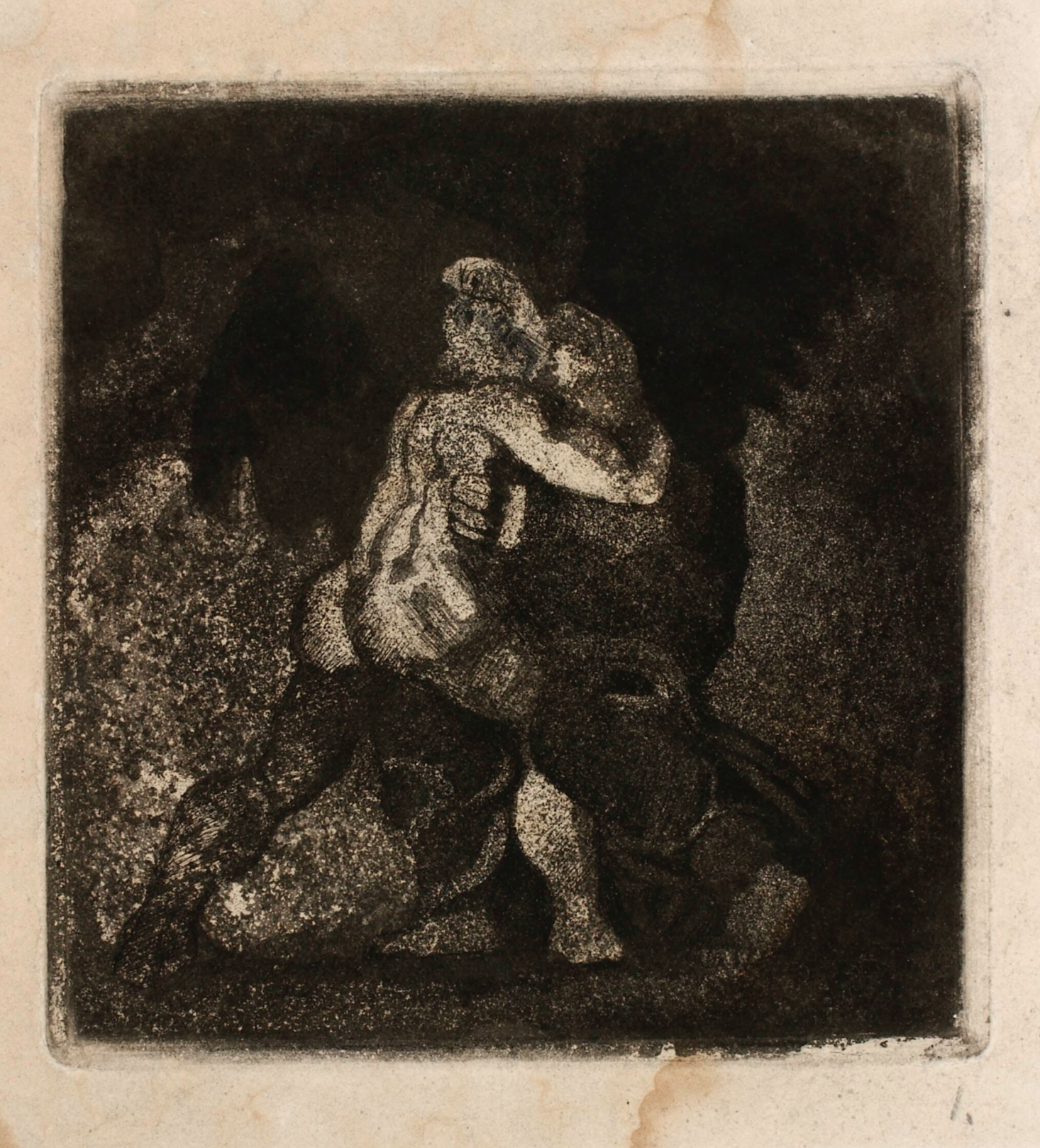
Oluf Hartmann (1879–1910)
Jacob's Struggle with the Angel
Aquatint and etching
1905
Statens Museum for Kunst, Copenhagen
S8E4.
Louise Rosager
I chose Jacob's Struggle with the Angel by Oluf Hartmann. It just fascinated me so deeply. The title indicates a struggle, but the image itself looks like Jacob is embracing the angel or the angel is holding him up. I learned that in the biblical story, Jacob thinks that he's struggling with a man, but it's actually God that he's been wrestling with. What this image gives me is such a visual, visceral sense of how when we're really trying to transform something deep, it feels like a battle. It feels like we're battling forces that are so much greater than us. But when we look back at it later on, what we realize is that those were the times that God was actually holding us, if we believe in God, or that the universe, the environment, was actually holding us because God was stretching our capacity to live that authentic life that we set out to live. I'm always grateful afterwards of the struggles that I've had, as horrible as it felt at the time, because I grew so much from them. So that's why I chose that one.
Hans Scherfig (1905–1979)
Gadebillede, New York
Gouache
1929–1930
Statens Museum for Kunst, Copenhagen
© Hans Scherfig / VISDA
The rights-restricted image is purposely blurred.
S8E3.
Jan Gehl
I chose a painting by Hans Scherfig and it's called Street View in New York. It refers back to my love for New York and my work in New York and my devotion to these fine people I met and worked with over there. It's a back street, a rear street. It is a little bit of a depressing scene. It's dark colors. It's somewhat blue. It is surrounded by highrises. I can see at least 12 stories and a fire stair going up. I can see a stoop. I like the stoops of Brooklyn very much. I think to have a good life in a city, you feel much more comfortable in a space than in a void. And in all the history of city planning, we always had cities made of spaces. Venice is made of spaces. Rome is made of spaces. Paris is made of spaces. Spaces are where life goes on. And I think that's very deep in human nature and in the human body that we need spaces. So building spaces is very deep in man. But it is very hard to get a space if you haven't from the start. I've seen many of these places in my time. So I see this as an opportunity to make something much better.

Wolfgang Tillmans (1968–)
Still life, Lucca
1993
Colour photography
1996
Statens Museum for Kunst, Copenhagen
© Wolfgang Tillmans / VISDA
The rights-restricted image is purposely blurred.
S8E2.
Sebastian Perez
I chose "Still life, Lucca. 1993" by Wolfgang Tillmans. I see at the top, turquoise from the pool, the cracked stone, and what looks like freshly harvested eggplants and tomatoes fresh off the vine. I have Spanish roots and a lot of my youth was spent in Spain and Italy. I immediately thought back to summers, walking along the cliffs down in southern Spain where we'd go as children, plucking fresh produce off the trees and you're by the pool, you're on the beach. I remember Italy up in the mountains along the Amalfi Coast and up by Cinque Terre where we'd have all this fresh produce, sitting down by the small beaches with the small boats in the water. This image, it gave this sense of calm and serenity that brought me back to my youth spending time in Southern Europe.
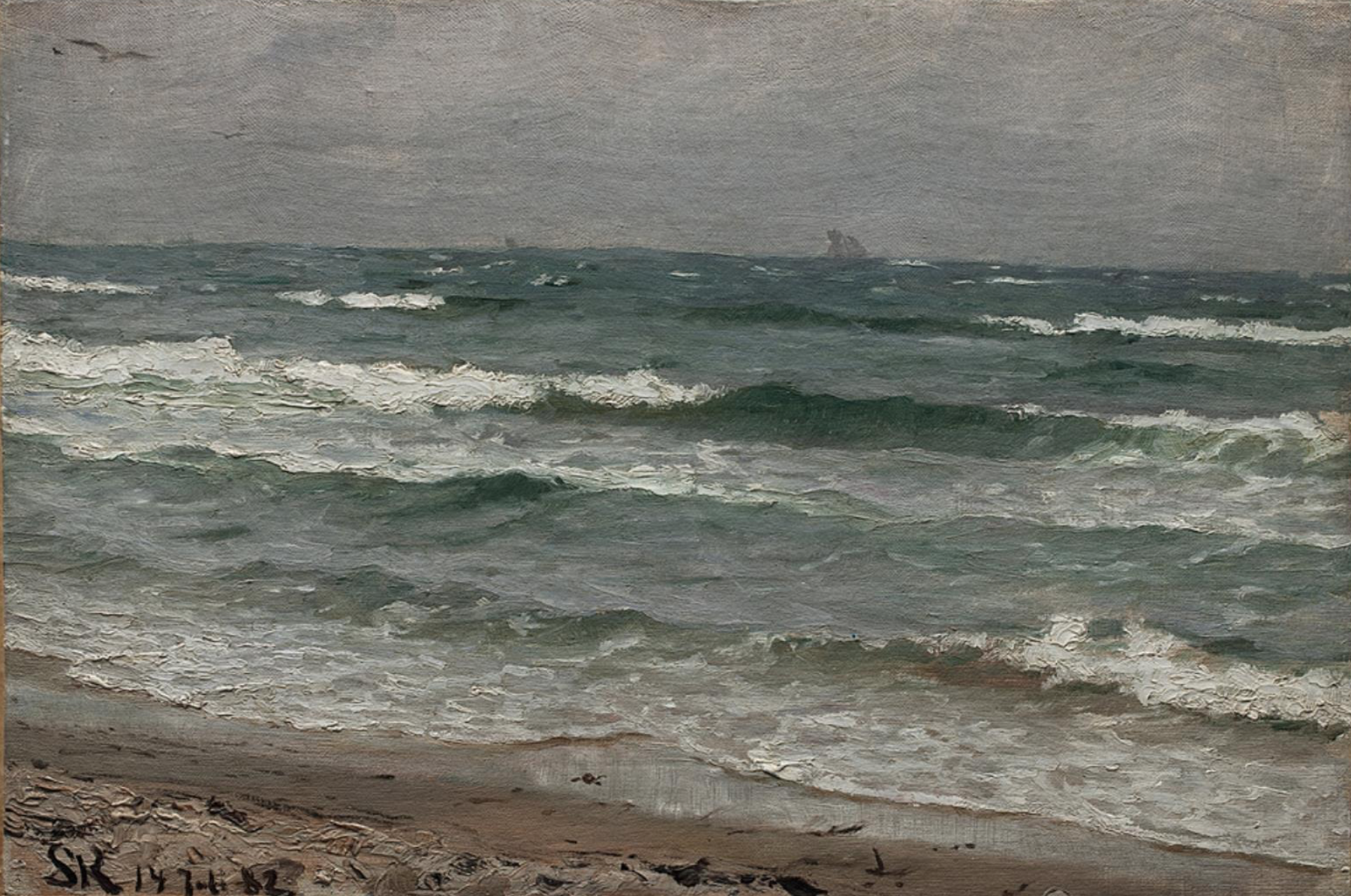
P.S. Krøyer (1851–1909)
Seascape. Skagen
Oil on canvas
1882
Statens Museum for Kunst, Copenhagen
S8E1.
Christian Winther
I picked P.S. Krøyer's Seascape. Skagen, 1882. The water has always been a big inspiration to me. It connects us like great art and music. And growing up surrounded by water, I can hear the sounds, I can almost sense the smell, and it feels familiar and it feels like home. It's in many ways similar to great jazz, I think. He wants to share that specific moment in time, that pure and honest expression. And I believe that is what we as artists want to achieve. I feel the same kind of intensity in many of Krøyer's pieces when listening to my favorite jazz musicians. There's a certain honesty of expression. It jumps out at you, what he wants to say. And jazz musicians, we live for those moments, too, and I feel that's similar in a lot of ways to his work.