
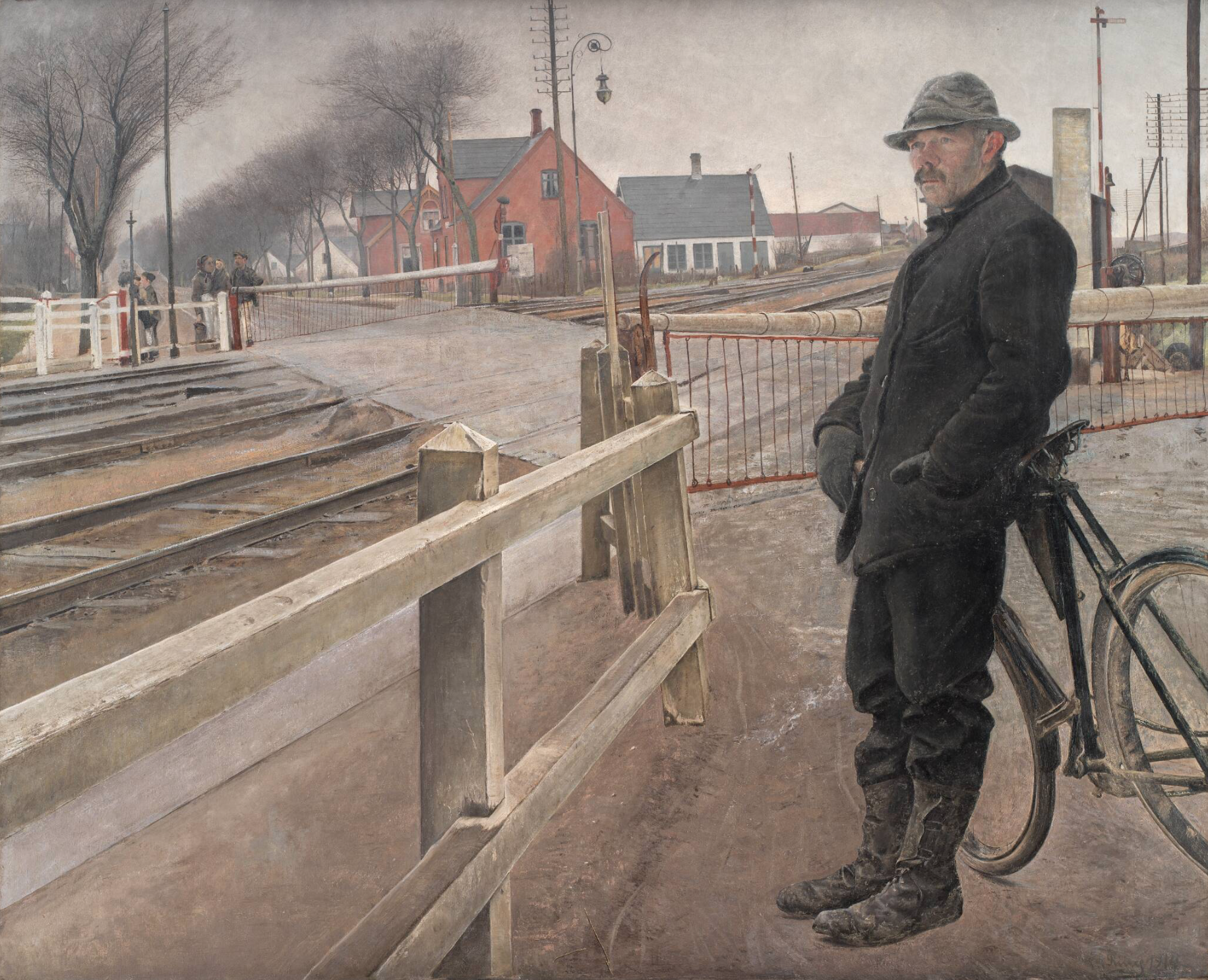
L.A. Ring
Waiting for the Train. Level Crossing by Roskilde Highway
Oil on canvas
1914
Statens Museum for Kunst, Copenhagen
S10E10.
Lars Mikkelsen
The picture I've chosen is by L.A. Ring (Laurits Andersen Ring). Part of the title is Waiting for the Train. And that painting just hit me immediately when I saw it. It's something in the eyes of the guy standing there with his bike and waiting for that train to pass, so that he can pass. There's something for me about industrialization in that time and age, you know. This guy, he must ride his bike back and forth every day and he's looking at it. Where's the damn train? Where are we all gonna go from here? Today, it's trains. Tomorrow, it's ugh. There's something in his eyes where he's just confronted with modernity and the modern times and his own existence in the waiting of the train that just hit me like a hammer. And that face, lost in transition, just struck me. You have to see it up front.That's where you get the impact from it. Laurits Andersen, he was a socialist. He went around with a gun, waiting for revolution. And he was the embodiment, actually, of Jante, in some ways, because he was all about the commoner. He painted for the commoner and he painted commoners. He was tied into the working community and the worker. Maybe it's the old socialist in me that also feels aligned with them.
Unknown
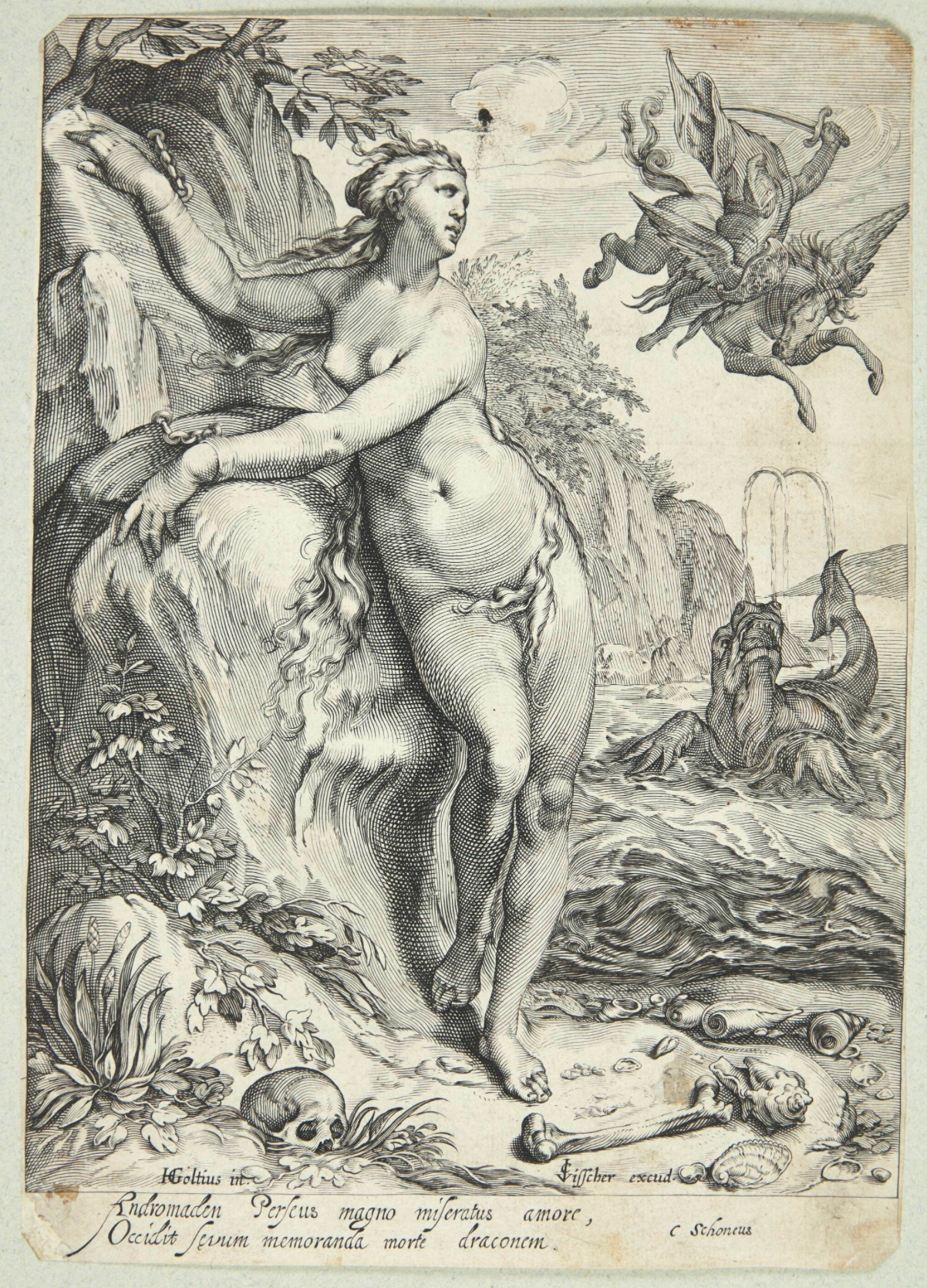
Perseus and Andromeda
Copper engraving
1601–1652
Statens Museum for Kunst, Copenhagen
S10E9.
Natasha Fisker
I chose Perseus and Andromeda. There's a lot of action going on in this piece. The lines, the textures, the movement. It's really beautiful. There's a skull on the ground, some bones. There's a creature in the background coming out of the water. I can feel the movement, whether it's the water or the horse in the background flying, her arms spread across the mountain that she's laying by. There's someone riding the flying horse fighting for her or protecting her. She's on some kind of battlefield. But she is prevailing and she is standing tall. I don't know exactly what's going on, but I can feel her through the art, which is very cool. The drama in her face. She has a lot of passion in her face, which I can resonate with. I'm very passionate about everything that I do in my life. She's in charge. She's standing very confidently, very open with her body. Being a female entrepreneur, starting my own business, this spoke to me. She stands so tall, so beautifully, which really inspired me.
Martinus Rørbye
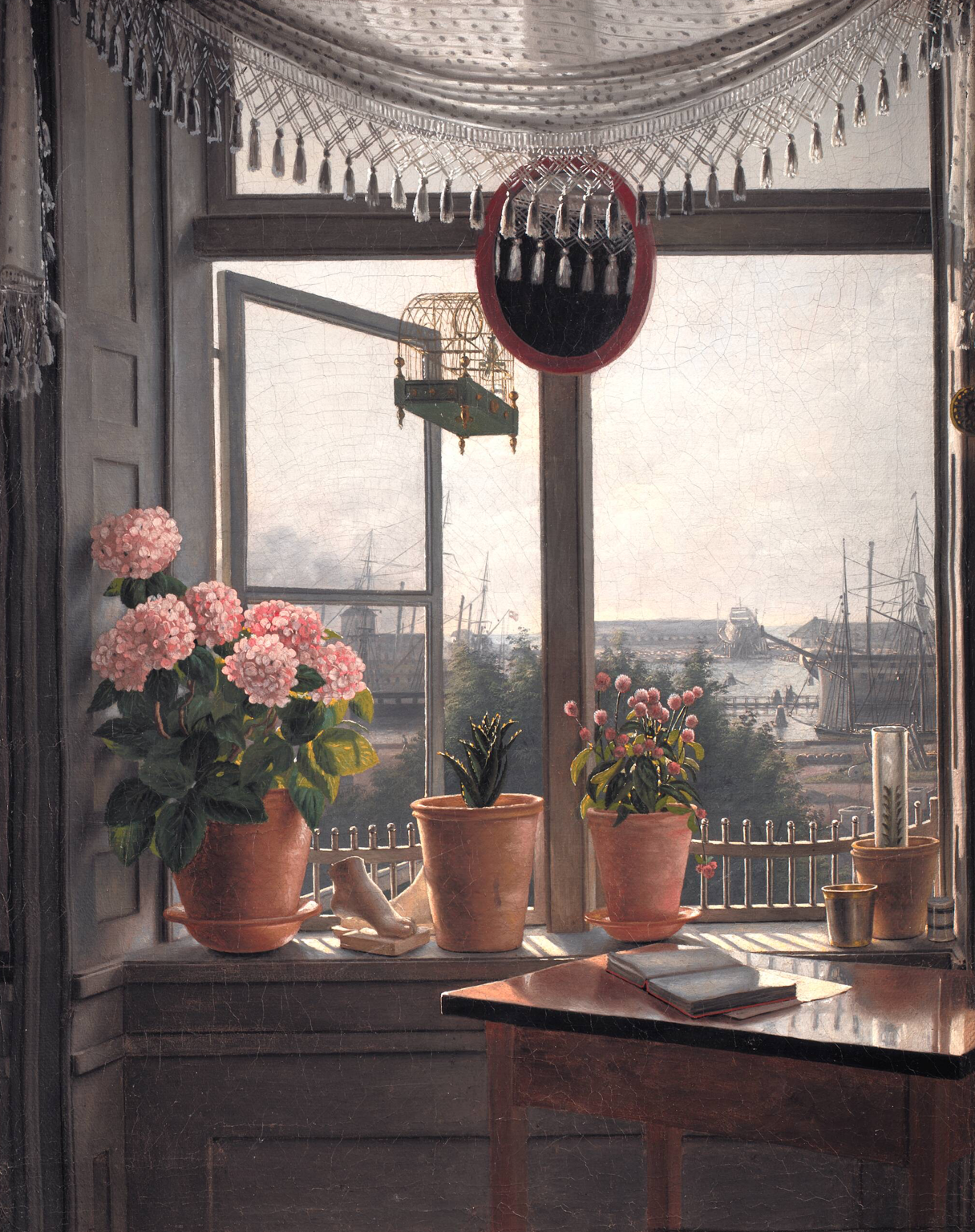
View from the Artist's Window
Oil on canvas
1823–1827
Statens Museum for Kunst, Copenhagen
S10E8.
Olivia Neergaard-Holm
I chose View from the Artist's Window by Martinus Rørbye. I couldn't stop looking at it. The beautiful light creates this calm feeling in me. It feels gentle. I'm in the room and I start imagining the noises. It has a very intimate quality that I appreciate, but also there's a story happening in the distance. I imagine looking out and trying to figure out what to do with this scene. It's an interesting framing but I just connected to it more on a personal level. I can very much relate to that situation when I'm stuck in a creative process. It almost became a lived experience. It's a little space, a mental space that I go in, reminiscing, trying to solve problems or just daydreaming. Those were the aspects of this painting that spoke to me.
Søren L. Lange (1760–1828)
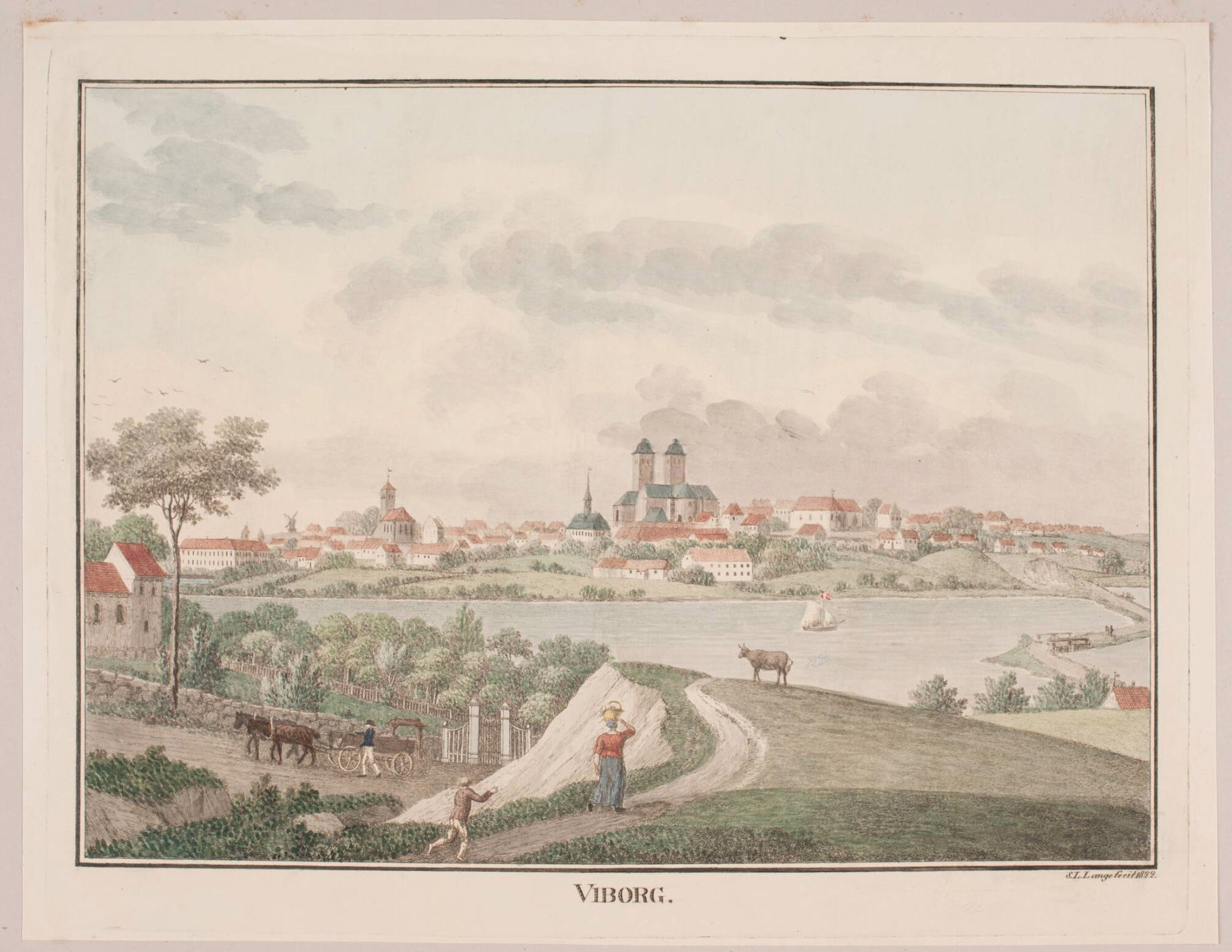
Viborg
Etching
1822
Statens Museum for Kunst, Copenhagen
S10E7.
Christian Mathiasen
I've chosen a picture from Søren L. Lange called Viborg from 1822 of the southern part of the Viborg lakes called Søndersø with the old cathedral in the background. It is the place that I grew up, and I got baptized in the cathedral. My parents got married here as well. I think the place that will always mean the most is the place where I grew up with my parents, where my siblings got into the world, and I had a safe childhood with a lot of great people around me. You remember when you went to that bakery when you were six years old. When I started running on the side of soccer, Søndersø was the lake you ran around. Despite all those beautiful memories, that is a past chapter, but the feeling of being back here brings so much happiness.
Per Kirkeby (1938–2018)
Untitled (Winter Picture)
Oil on canvas
1995
Statens Museums for Kunst, Copenhagen
© Per Kirkeby / VISDA
The rights-restricted image is purposely blurred.
S10E6.
Janus Metz
I chose Per Kirkeby's painting Vinterbillede, which means winter image, winter picture. I grew up with Per Kirkeby's paintings. My father was part of the same circles of artists in the '60s and '70s. It's an abstract expressionist landscape. Per Kirkeby and the familiarity my father's paintings have with Per's has instilled me with a sense of immediate understanding of the relationship between painting and nature, reality and art. There's a tactility to Per's canvases that resonate with me and that has become part of my soul, in a way. I'm always looking for that inexplicable power of the canvas that comes out of Abstract Expressionism. That's become part of my filmmaking.
Ejnar Nielsen (1872–1956)
And in his Eyes I Saw Death
Oil on canvas
1897
Statens Museum for Kunst, Copenhagen
© Ejnar Nielsen / VISDA
The rights-restricted image is purposely blurred.
S10E5.
Sofie Kvist
I chose a painting by Ejnar Nielsen, titled And in his Eyes I Saw Death. It's a reminder of our limited time here on this planet and of making the most of it while we are here. The painter is from the same town as me. Growing up in a small town in Jutland and coming to a big museum in Copenhagen as a teenager and seeing the name of a street from your town, that had an impact on me. I grew up walking the street that's named after him. My grandma lived on that street. I'm reminded of this other painter who was a protegé of his, Erik Raadal, and he painted street scenes and landscapes from this little town. Almost kind of mundane, just a street corner with someone walking down the street. In this very simple life — a reminder that life is short, that it's important to find beauty in the everyday.
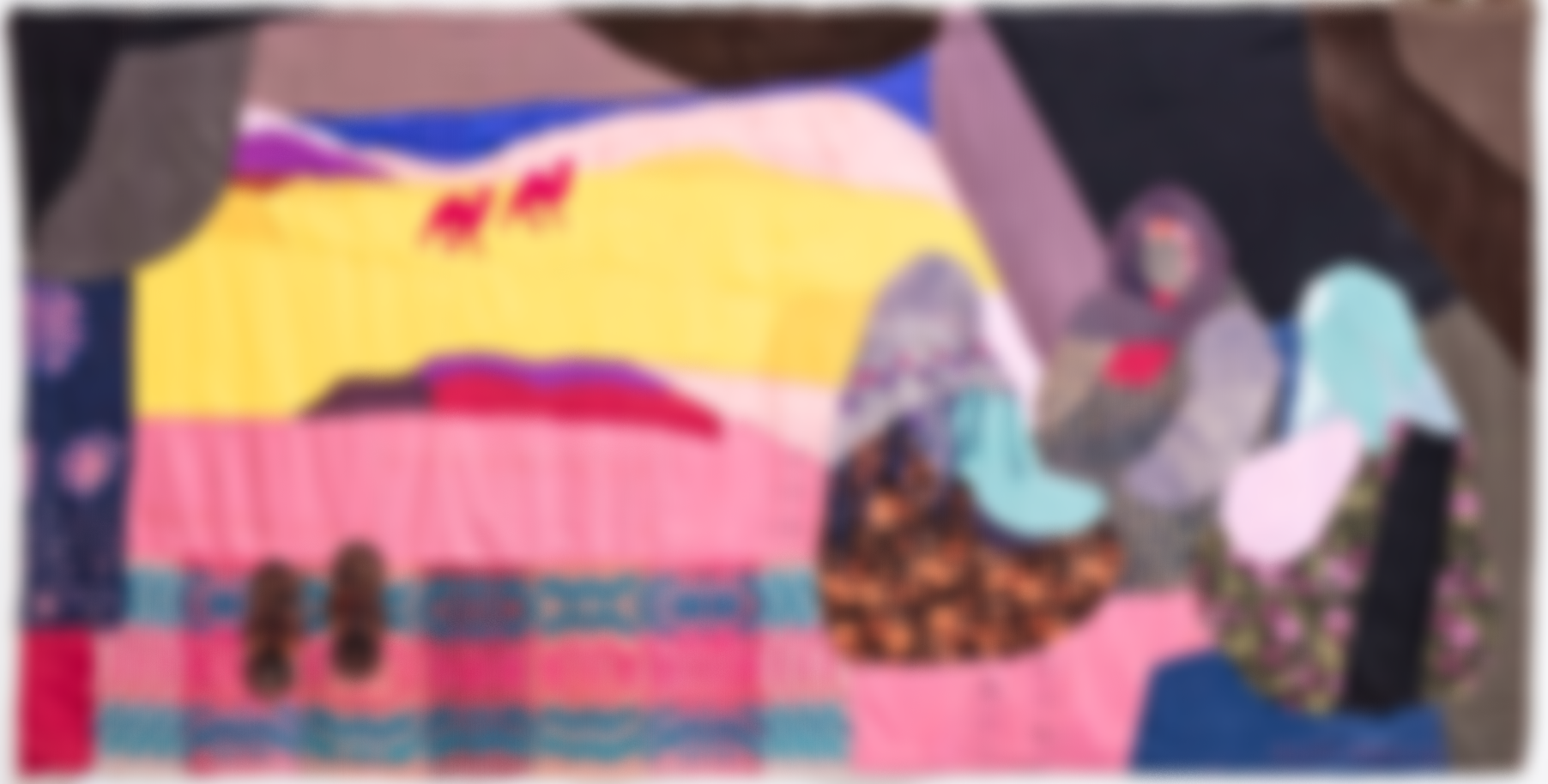
Ragna Braase (1929–2013)
Untitled
Textile
1988
Statens Museum for Kunst, Copenhagen
© Ragna Braase / VISDA
The rights-restricted image is purposely blurred.
S10E4.
Helle Faber
I've chosen this picture by Ragna Braase, it's without a title. It's actually a patchwork, and that's what I really like about it. It's made of fabric. It displays three women with a desert and some camels, ordromedars, in the background. We are somewhere in the Middle East, I would say. The women, they have no faces, they're all covered. They are chatting, sitting on the floor, having a good time. I've made a lot of films from Afghanistan and places like Africa. So it just stays with me because I think it's such a quiet moment. These women are sharing a quiet moment in a tent and at the same time, you may get the idea that everything outside is not so quiet. So this picture, for me, captures normality — normal people trying to have a normal life in conflict zones.
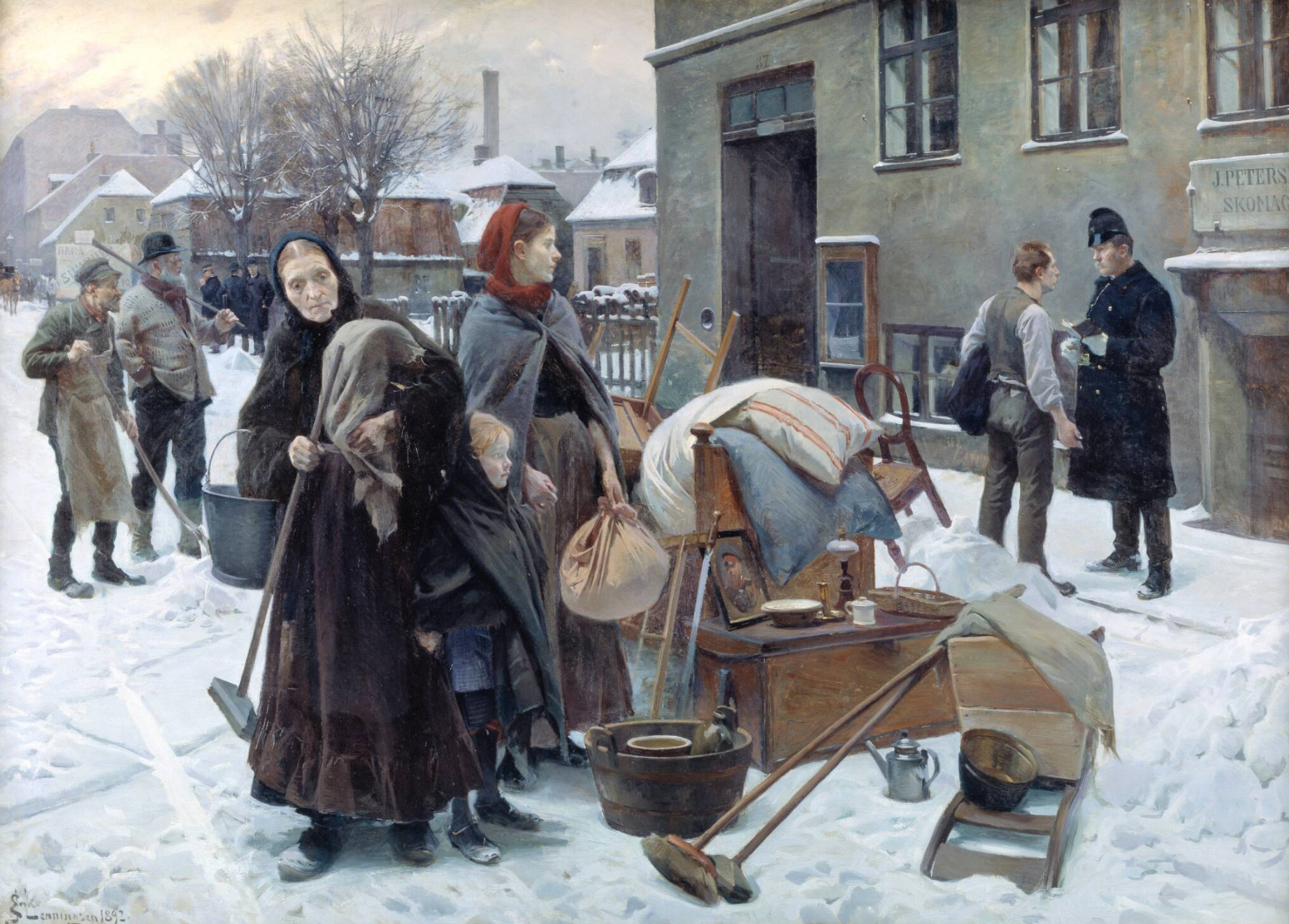
Erik Henningsen (1855–1930)
Evicted Tenants
Oil on canvas
1892
Statens Museum for Kunst, Copenhagen
S10E3.
Lea Thau
I've chosen the painting Sat ud or Evicted Tenants by Erik Henningsen, it's from around 1900. I was not that interested in art as a kid. It was honestly a hard thing with my dad that we spent so much time in art museums. But one painting by Erik Henningsen's brother Frants Henningsen made it okay for me. This one reminded me of that a little bit. It's in a different style. The one that I loved as a kid is more of a tear jerker. It's a mom clutching a baby and some dirty little toddler clutching her skirt and they've also been evicted. I would sit there and I would cry imagining the lives of these people. The plight of this poor mother who had been so abandoned, but as a kid I could relate to that. This one by Erik Henningsen is much more sober. I've spent my life trying to tell other people's stories so that we might be a little bit moved by the life of a stranger, of a refugee, of a homeless person, of somebody whose life is different and maybe less fortunate than ours. And I think it taught me how art could stir a real connection to the human condition and the inequality in the world.
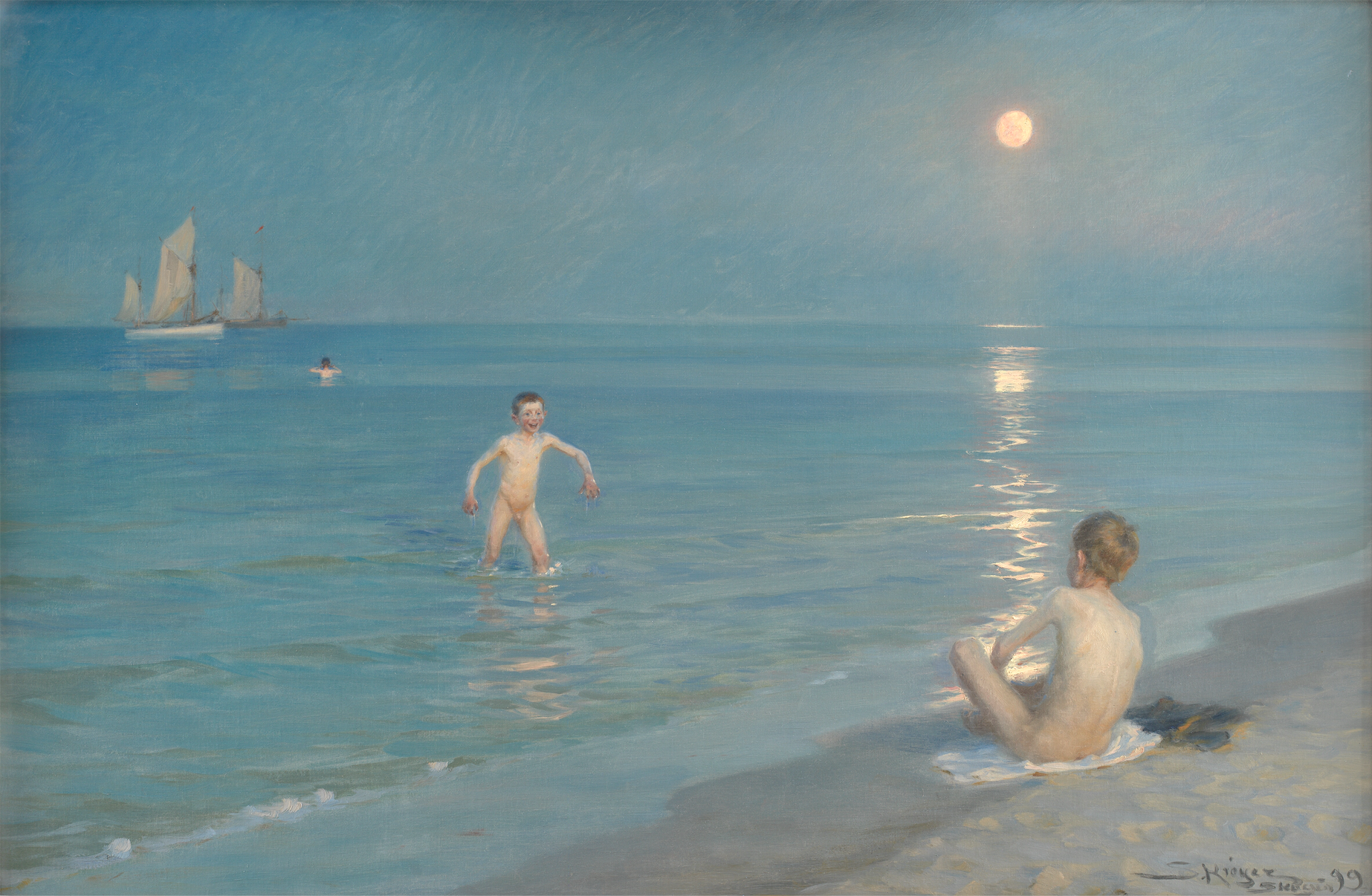
P.S. Krøyer (1851–1909)
Boys Bathing at Skagen. Summer Evening
Oil on canvase
1899
Statens Museum for Kunst, Copenhagen
S10E2.
Leo Steen Hansen
The painting I chose is called Boys Bathing at Skagen. Summer Evening by P.S. Krøyer, one of the famous Skagen's malere. The naked boy in the water could have been me talking to another little boy is sitting on his towel on the beach and getting ready to get in the water. Just this magical moment, all the shades of blue light shining through. Skagen has a big place in my heart and the painting takes me to this happy place. When my parents had their 25th anniversary, because it is a special place to them, me and my siblings, we went up there and we had us painted on the beach in Skagen. I've always been close to the water and the beach and that does speak to me, and it seems so innocent and peaceful. By American standards, 45 minutes is nothing, but I feel today I live far away from the water. The light summer evening, such a uniquely Danish thing, and the streetlights come on at 10:30 pm maybe. I tell my kids a lot of these stories, I always say back in my day, and they're like, yeah, Dad. Yeah, it was different.
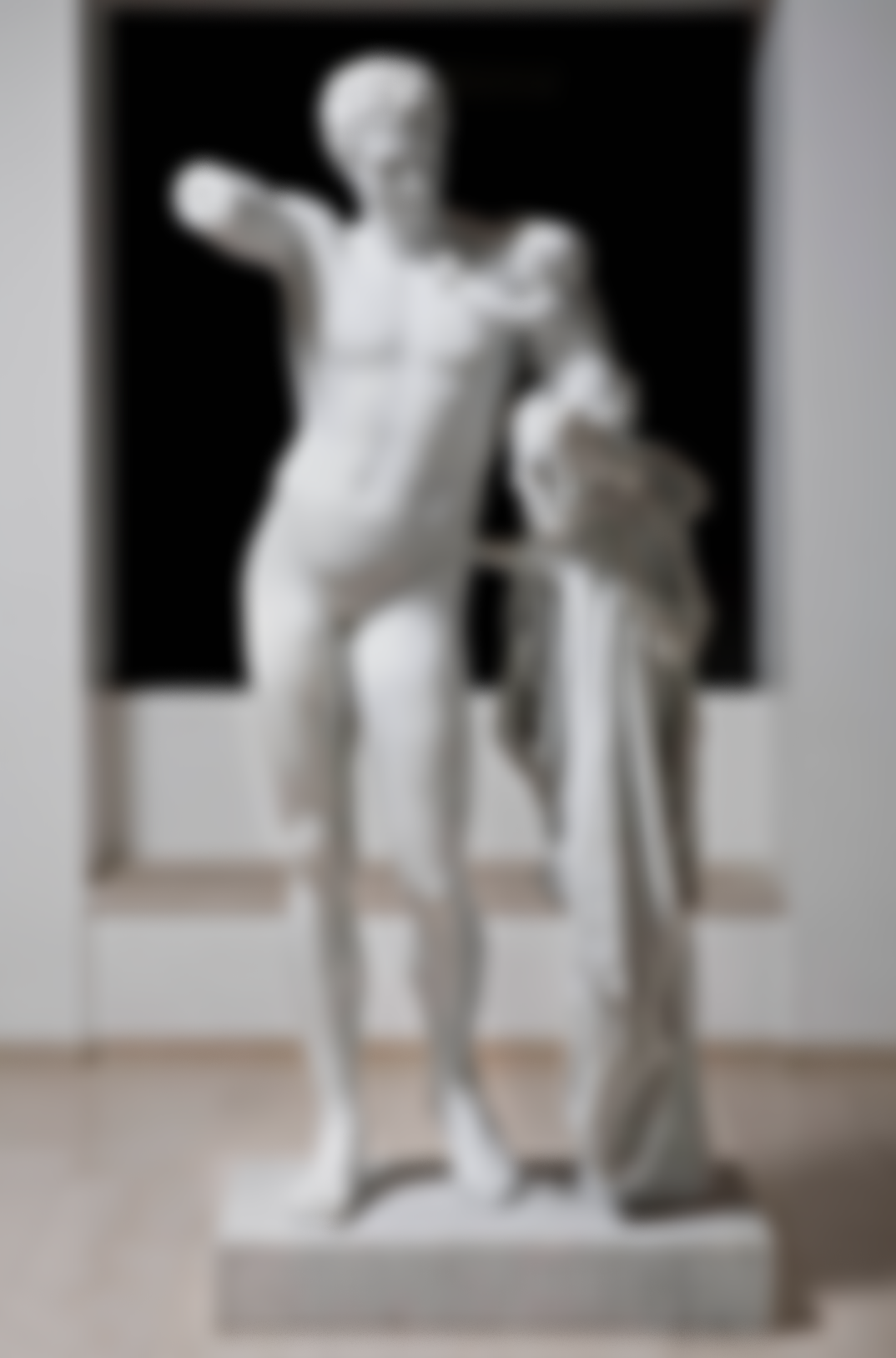
Christian Lemmerz (1959–)
Adam-Kadmon
Marble
1997–1998
Statens Museum for Kunst, Copenhagen
© Christian Lemmerz / VISDA
The rights-restricted image is purposely blurred.
S10E1.
Søren Solkær
I chose Adam-Kadmon by Christian Lemmerz. On first view, the sculpture looks like an ancient Greek sculpture and the title refers to Adam-Kadmon, the primordial man in the Kabbalah. When I see a marble sculpture, I have a lot of expectations due to its long history. Normally it's the material for the beautiful and the ideal. Lemmerz changed a lot of the details. The traditional sandal had been replaced by a high-heeled woman's shoe and Hermes' genitals had been transformed from male to female. So this very classical reference had been transformed into both a transvestite and a hermaphrodite. On the base of the sculpture, there's a carved inscription in braille that says, "don't touch." What I love about this sculpture is that Lemmerz seduces our senses, and the material he's chosen only to play with our intellect and preconceived knowledge. Lemmerz's wit and irony made a huge impact on me. I think this is the role of art, to ask the big questions and to expand our consciousness by speaking to all of our senses.