
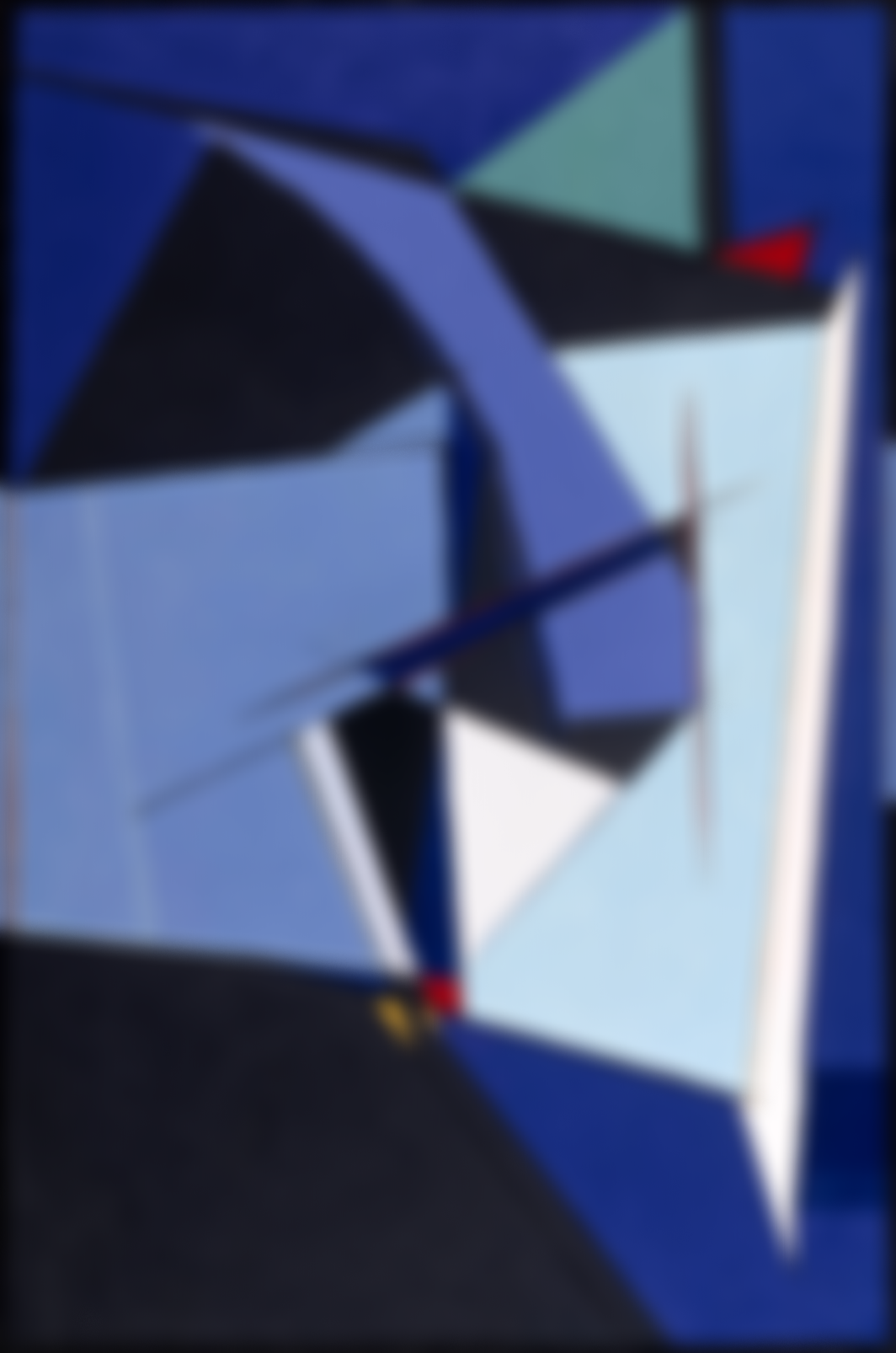
Richard Mortensen (1910–1993)
Propriano
Oil on canvas
1960
Statens Museum for Kunst, Copenhagen
© Richard Mortensen / VISDA
The rights-restricted image is purposely blurred.
S7E10.
Vanessa Johansson
I chose a painting by Richard Mortensen called Propriano, painted in 1960. It's blues and blacks and white and little tiny touches of yellow and red. It's full of very straight lines, and right in the middle, amongst all of these very severe forms and shapes, you have this element that is hand drawn, you have this softness right in the middle of it. I think everybody has a little softness in the middle no matter how hard we are on the outside. My father has a real love for this artist, and has a Richard Mortensen on his wall in his living room, and it is his most prized possession. It belonged to his father, and when he died, this was the one thing my dad wanted. The movement and the way the forms come together as a whole, it's just quite beautiful.
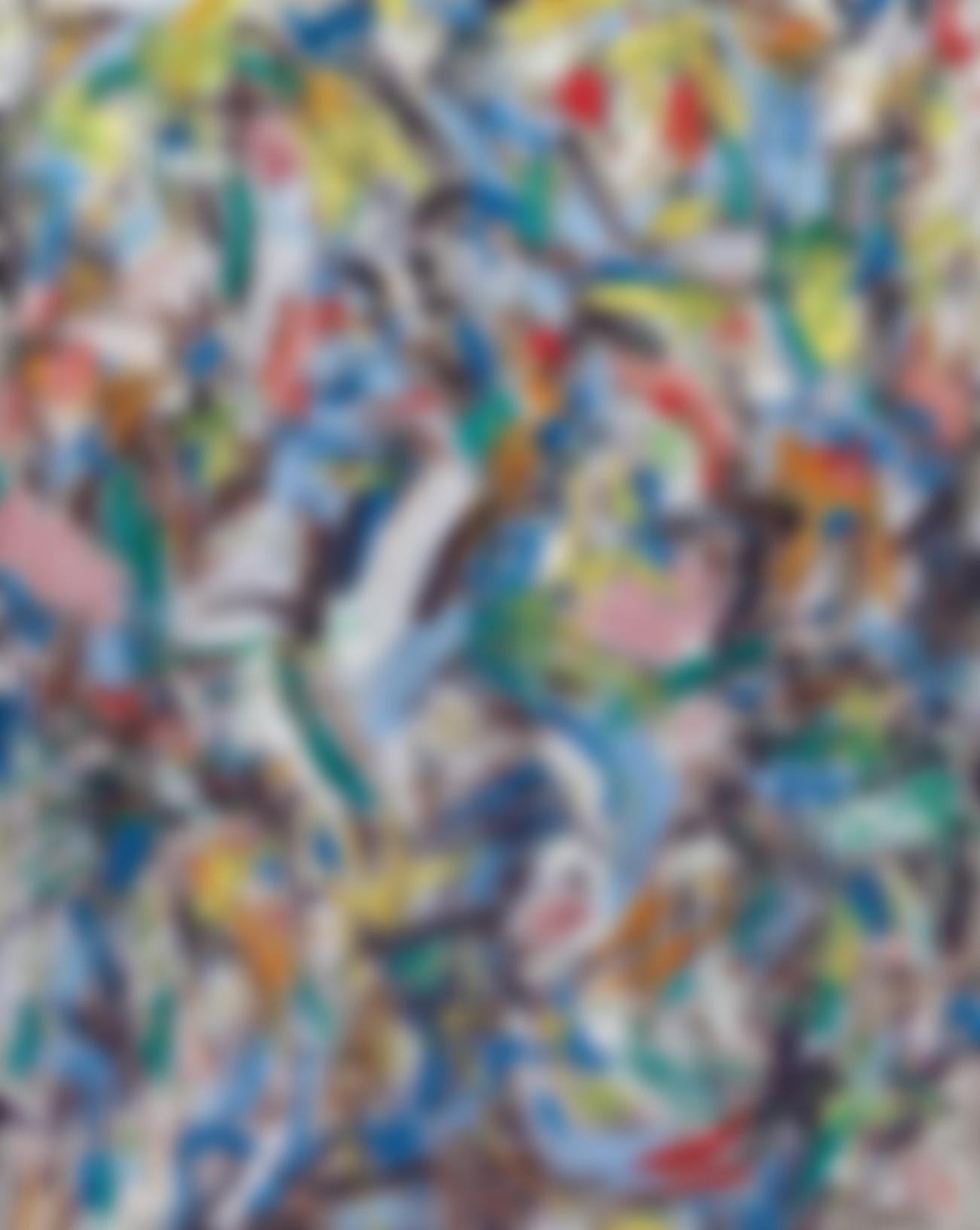
Asger Jorn (1914–1973)
Written in Sand: Alpona
Oil on canvas
1971
© Donation Jorn, Silkeborg/ VISDA
The rights-restricted image is purposely blurred.
S7E9.
Kenneth Vinther
I chose Asger Jorn's Written in Sand, a painting that really speaks to me. The colors, the composition of the colors, it's like you're looking at maybe a marketplace. Lots of people, lots of life, lots of love. I can see a shape of a human, I can see a shape of an animal. I see some eyes. I see chaos. Yet, it's abstract. It's like a blurred vision of life. I like abstract over classical painting. When you look at a house painted on a canvas, that house is the same house every day you look at it. When you look at abstract work, every day you see something different, you see something new. You change your thought of what the artist wanted to do or show. And every day is a different day when you look at the painting. This painting here, I would love to be able to have it on my wall, wake up every day, and look at it.
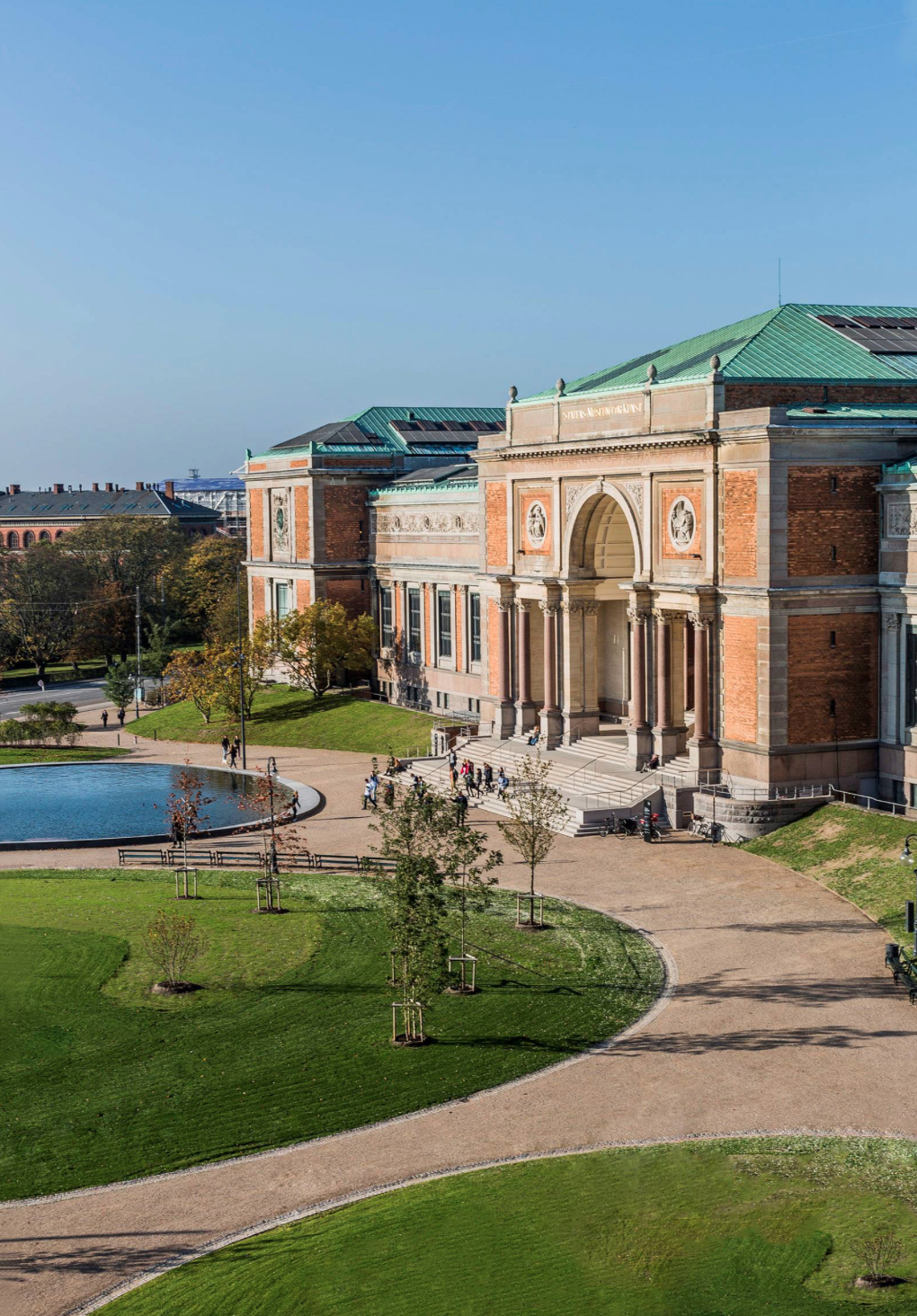
Statens Museum for Kunst, Copenhagen
Vilhelm Dahlerup and G. E. W. Møller, 1896
Anna Maria Indrio and Mads Møller of C. F. Møller Architects, 1998
S7E8.
Alex Højrup Munch
I have chosen the building of the National Gallery of Denmark. The front of the building is Italian Renaissance style, very classic, very beautiful. The new extension in 1998 by the architects Anna Maria Indrio and Mads Møller from C.F. Møller was very exciting and totally new. In between the white, new modern architecture and the red, yellow, old Italian style building, you have this glass pathway that divides the new and the old. I moved in 1997 from the old world of Aalborg and my past to the new world, the vibrant city of Copenhagen. I had actually been for a short period of time been a bike messenger. So I had been driving past the National Gallery, watching the progress of the building. The extension was quite a discussion in Denmark at that time. Some really hated it. It was quite new to build something so different, so modern on something so old and so traditional. It was a shock to many people. But I loved it and I still do. It takes my breath away when I go through the entrance to that new building. This has been a big part of my life, looking at traditions versus the new. It's symbolic.
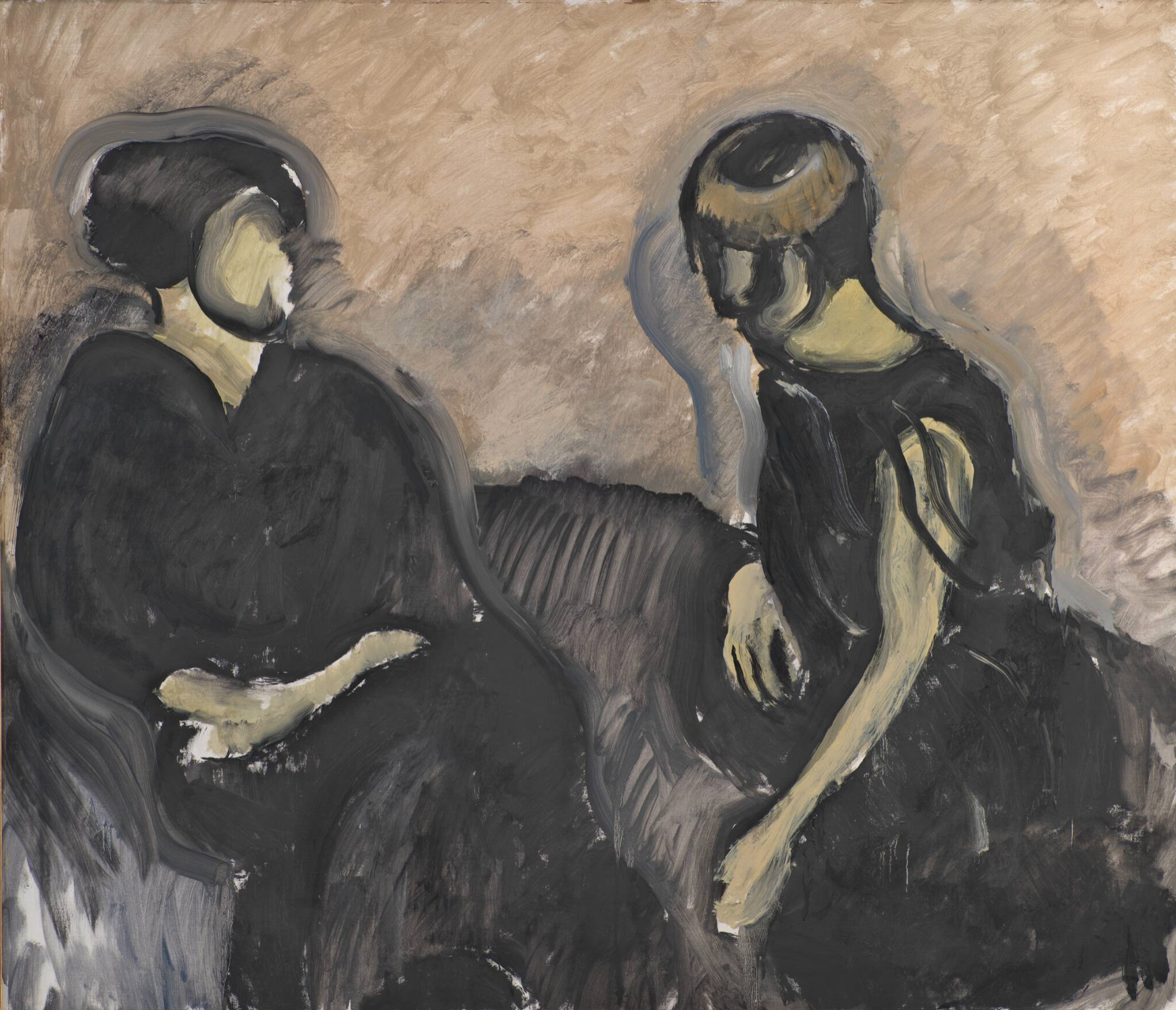
Harald Giersing (1881–1927)
Two Ladies
Oil on canvas
1922
Statens Museum for Kunst, Copenhagen
S7E7.
Line Langebek
I have chosen the painting by Harald Giersing from 1922, and it's called Two Ladies, To damer in Danish. And it was one that I used during the development process of The Girl with the Needle. I did a lot of research, both about the historical period, but also in terms of visuals. This particular painting spoke to me because there's a sort of quietness to it, and it's two women on the couch. The colors are quite muted. There's something very Scandinavian about it. And in this challenge of trying to find the humanity in a story about something that was so gruesome and something that could very easily just have been a story about a monster, that spoke to me. It was like, oh, this is Karoline and Dagmar talking and what does that look like? There is a kind of doppelganger aspect, I think, to these two women that sit on a sofa talking. One is a little bit older than the other, but they also look alike quite a lot in terms of what they're wearing, and their haircuts, and so on. That painting immediately drew me to it.
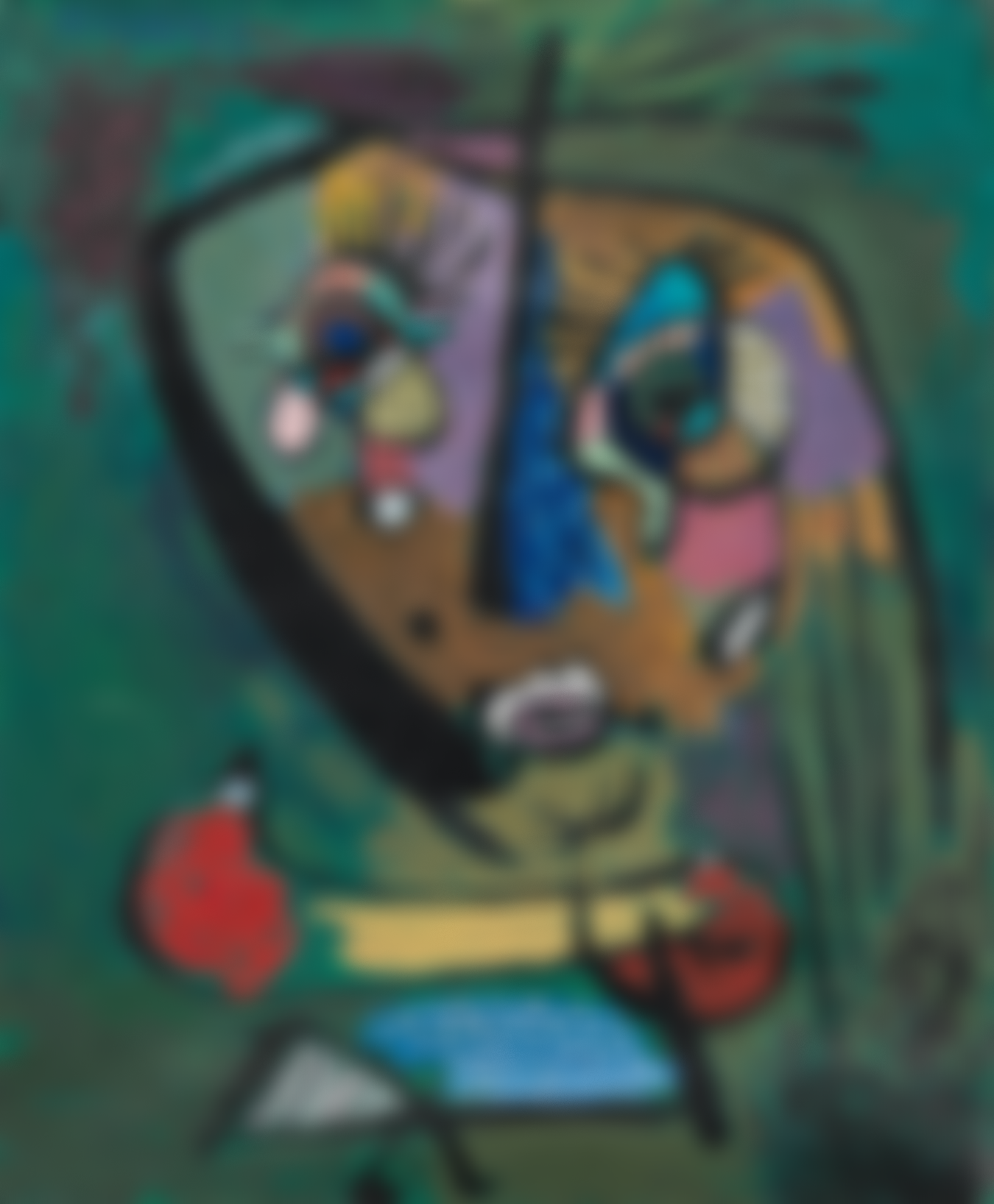
Asger Jorn (1914–1973)
Tearful Eyes
Oil on canvas
1940
Statens Museum for Kung, Copenhagen
© Donation Jorn, Silkeborg/ VISDA
The rights-restricted image is purposely blurred.
S7E6.
Jeppe Jarnit-Bjergsø
The painting I chose is by Asger Jorn. It's called Tearful Eyes, or Grædeøjne. It's a woman — very colorful woman, big eyes. Even though it's abstract, it still has some kind of a symmetry. I like colors. I have a couple of tattoos and they're all very colorful. All my furniture is very colorful. I like to look at colors and the artwork that I like and also the few original pieces I have in my house are all very colorful. I grew up with a lot of posters from similar painters — Picasso, Matisse, and Asger Jorn also. It brought me back to my childhood home. It's pleasant and easy to look at. I like to look at stuff that gives me some kind of relaxation. And a lot of paintings don't do that. This one, I don't know, maybe it's the color combination or how the colors play together, it just gives me some kind of calm, I don't know how to explain that. It's a cool painting.
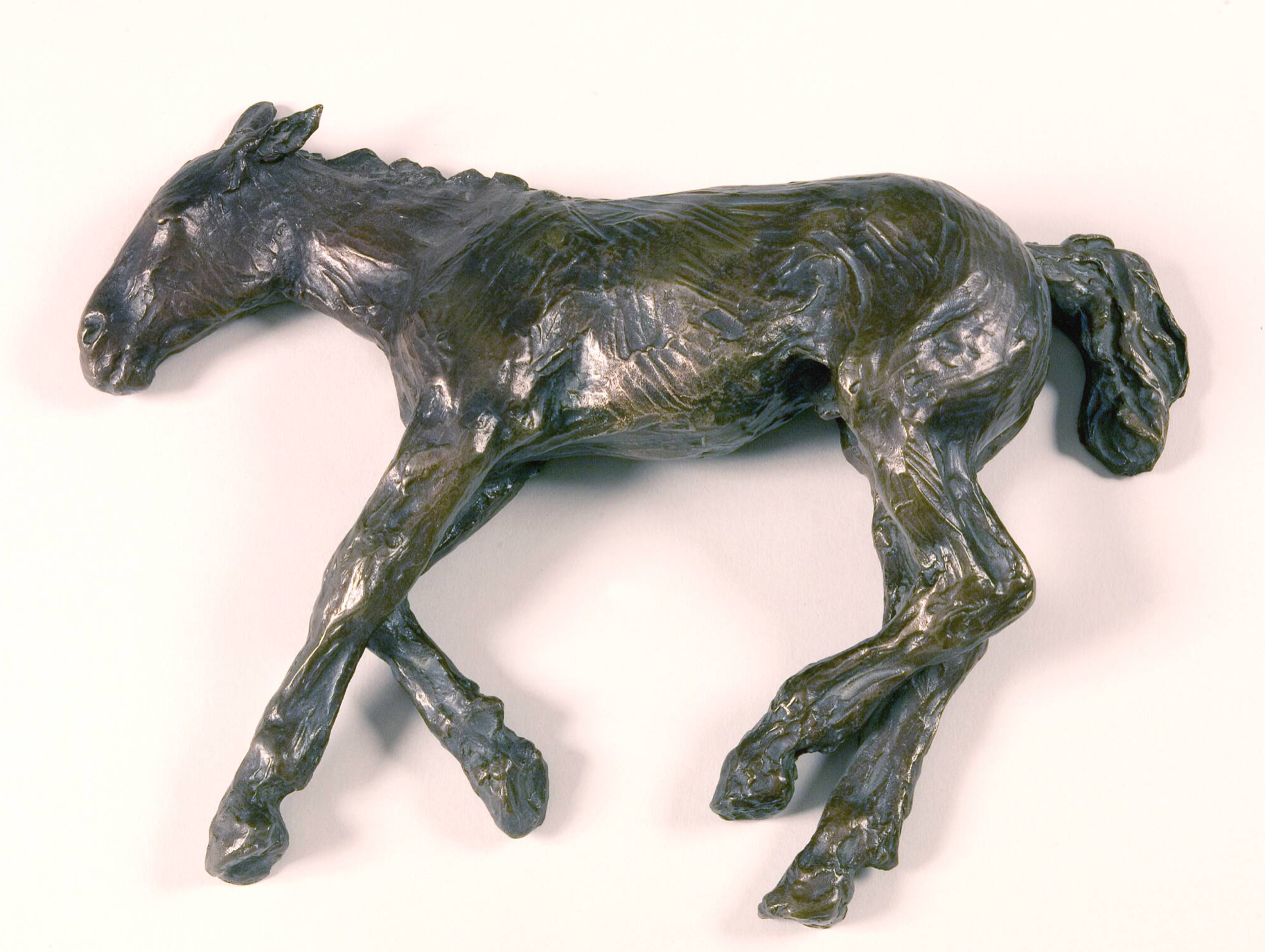
Anne Marie Carl Nielsen (1863–1945)
Reclining Foal
Patinated bronze
1937
Statens Museum for Kunst, Copenhagen
S7E5.
Camilla Stærk
I've chosen Hvilende føl by Anne Marie Carl Nielsen. It's a sleeping foal, or resting foal. And it's just very peaceful. I grew up on a farm, I was an only child, and I had this very deep connection with the animals. My mom was a horse breeder, so there were always foals around. Reminds me of the foals we had on the farm, resting in the grass on a summer's day, tiptoeing around to not wake them up. Sculpture, especially bronze sculpture, always inspired me. My parents always had quite a few. And sculpture as an expression is something I always looked at in my own work as inspiration. And it is those different things that merge together for me in this beautiful piece.
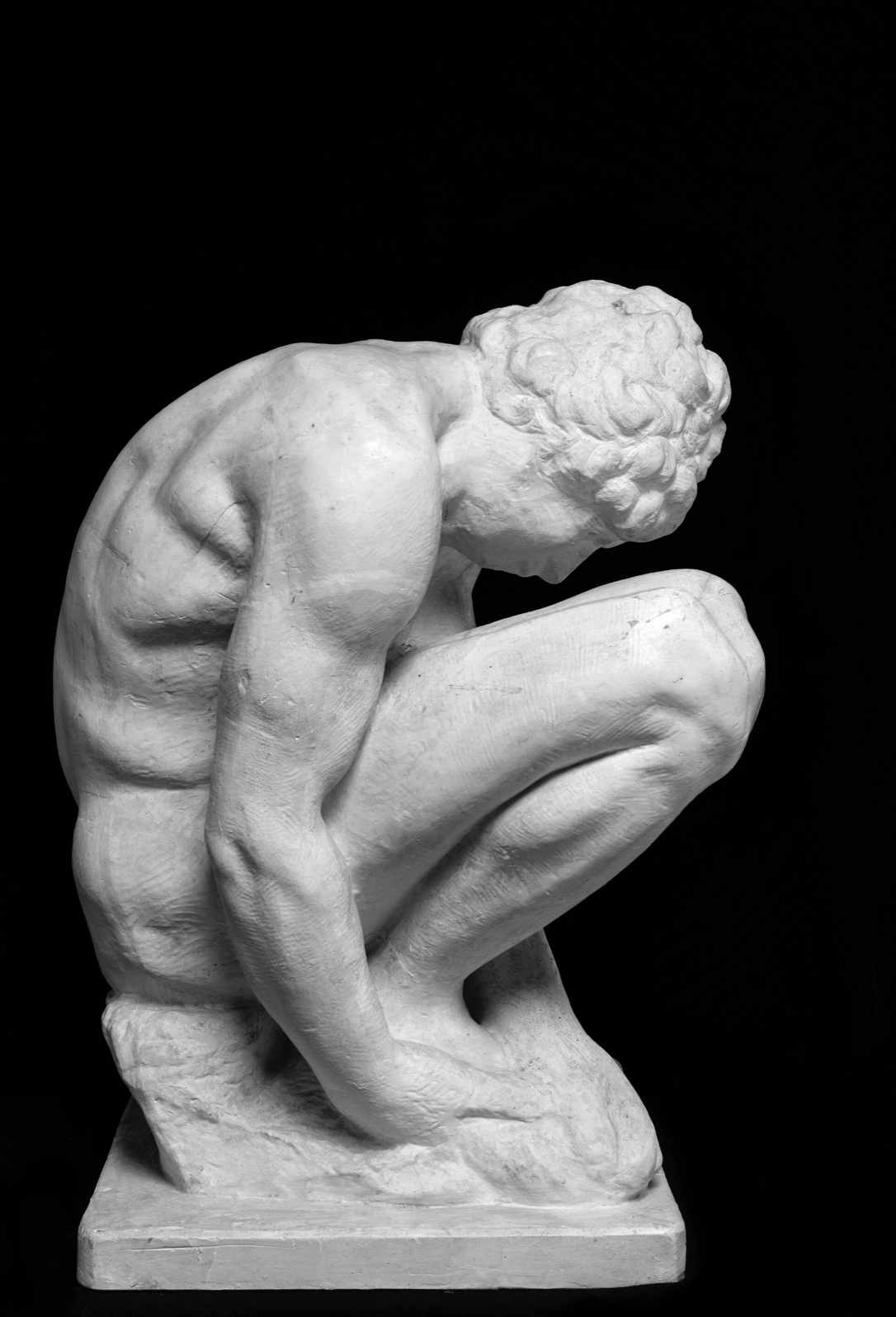
Michelangelo Buonarroti (1475–1564)
Crouching Boy
Plaster cast
1915
Statens Museum for Kunst, Copenhagen
S7E4.
Kristian Thomassen
I chose the sculpture Crouching Boy by Michelangelo, part of the exhibition, Michelangelo Imperfecto. There's a lot of conversation about what the boy's doing, if he's fixing something on his feet, or if he's taking out a nail. A lot of people say that Michelangelo created this sculpture to mourn his youth. The way that he's crouching over himself, you really see so many emotions come through, even though that marble is such a hard concrete medium. Michelangelo always strived for perfection, which is why I think he left most of his works unfinished. He always used the body to express feelings and emotions. I think he wanted to remind himself that as human beings, we're always in progress. And I think there's something beautiful about a metaphor for that in life too, that we are constantly moving, we're constantly in progress, and we are never really finished, even though we all want to be perfect.
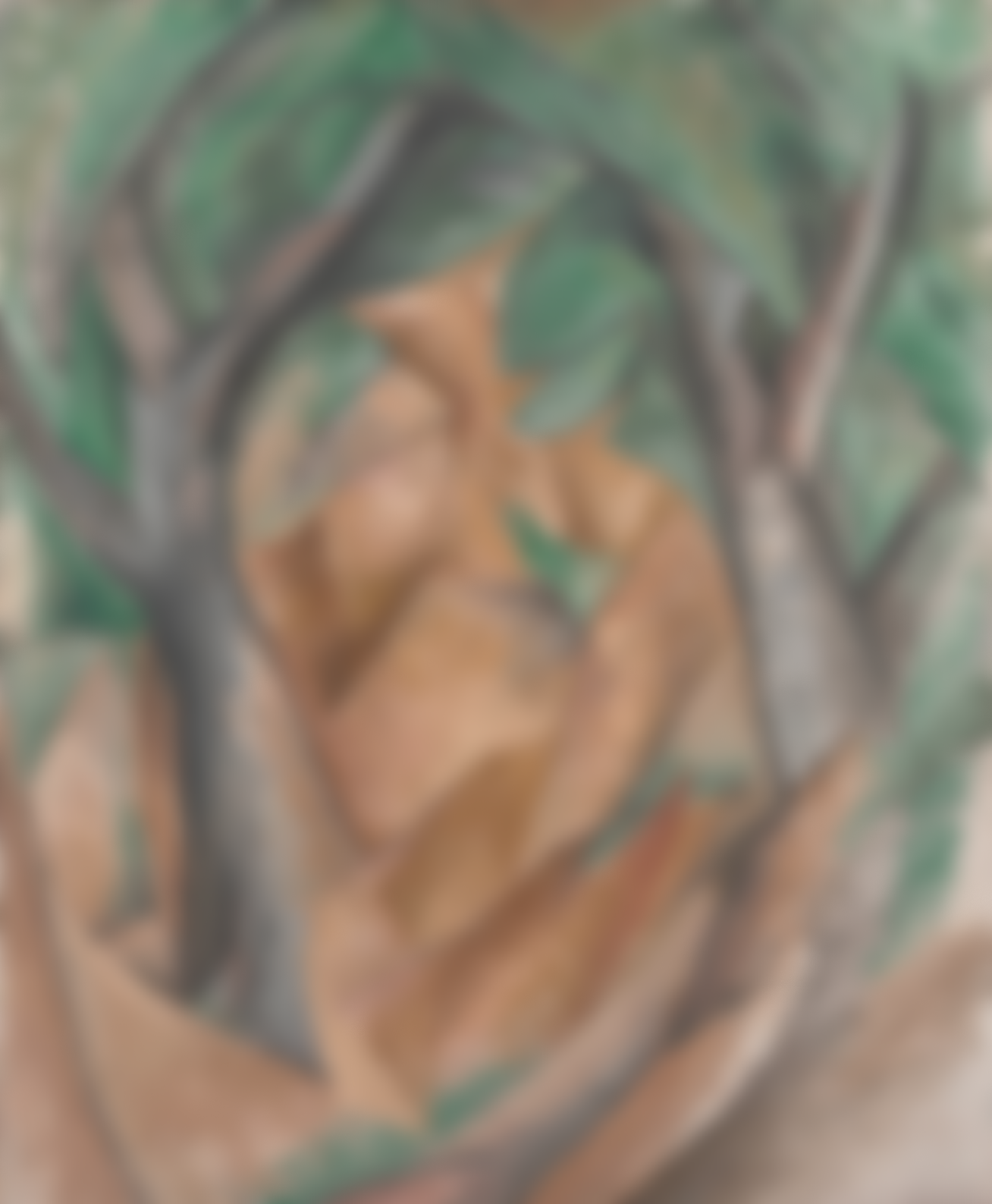
Georges Braque (1882–1963)
Trees at l'Estaque
Oil on canvas
1908
Statens Museum for Kunst, Copenhagen
© Georges Braque / VISDA
The rights-restricted image is purposely blurred.
S7E3.
David Posey
I chose Trees at l'Estaque by Georges Braque. It's a painting made in 1908. I saw it and I was like, oh, that's our endive salad on our menu now. The endives are organized yet haphazardly, which reminds me of the limbs and the leaves of the trees. I chose this painting because of the movement, the colors, the feeling of walking through the woods, but having it be very modern and very abstract, harsh lines, as opposed to the very organic, soft lines of nature. This painting makes me feel very open, like wandering through a forest, but very closed with no horizon and the jagged edges of what I'm guessing are the path through these trees. I get inspiration for our food here from many different things. So, this painting really resonated with me.
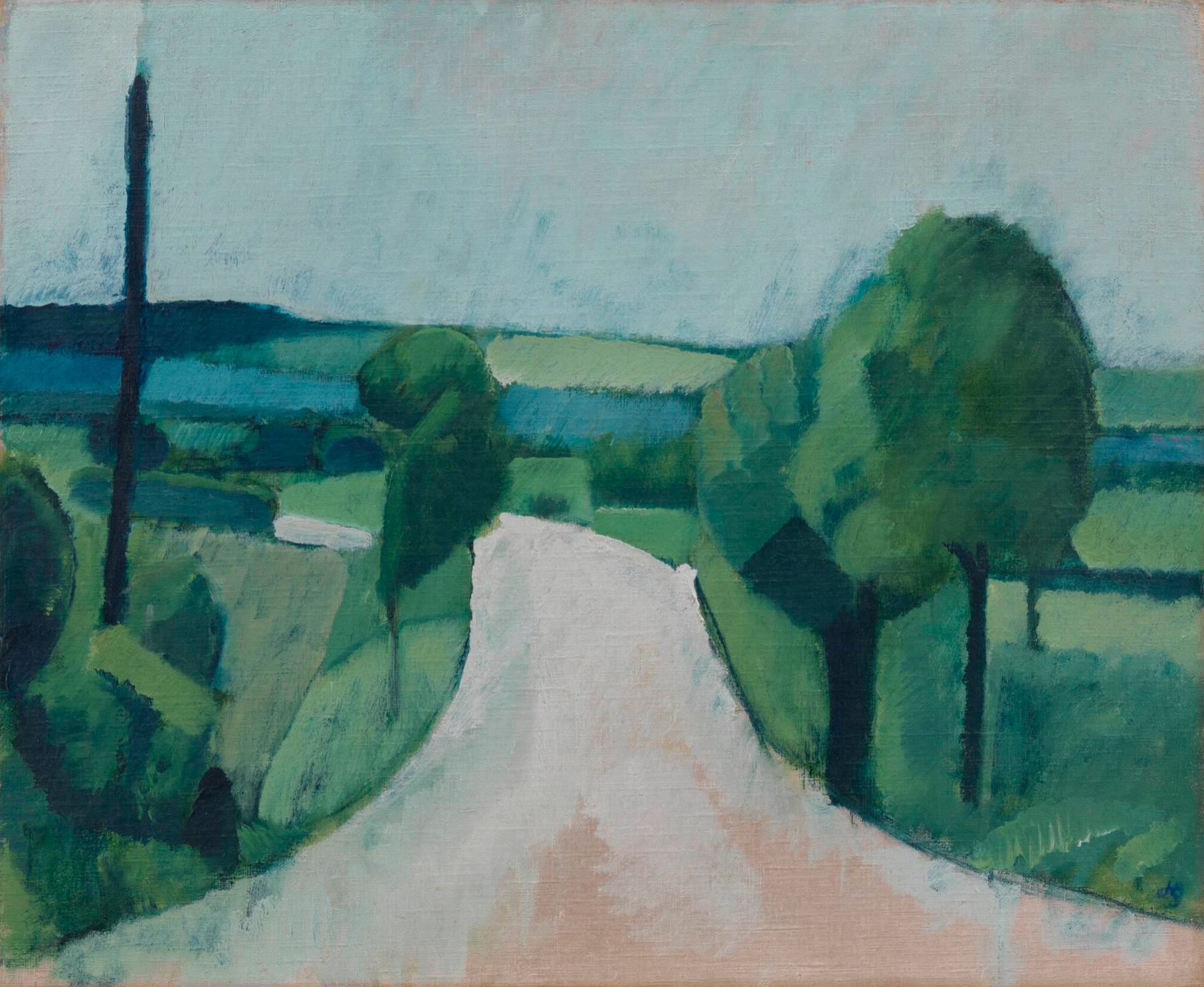
Harald Giersing (1881–1927)
Road near Fåborg on Funen
Oil on canvas
1920
Statens Museum for Kunst, Copenhagen
S7E2.
Kristina Haslund
The painting I've chosen is by Harald Giersing, Landevej ved Fåborgon Funen. It's from 1920. I love this painting. A beautiful countryside road, it speaks to me in a textual form because I love oil on canvas and I think it's painted with a palette knife. The road itself made me think about driving in Denmark, obviously, but also the English countryside. And I drive these roads in LA. It makes me feel quite free. And I love the colors, the greens. This impressionist feel — he went to Paris in his early '20s and he met Manet and Gauguin and he became very inspired by them. I always think, what will look great in a beautiful room, probably with white walls, because that's very Danish. A strong abstract type of artwork image. And I really loved this.
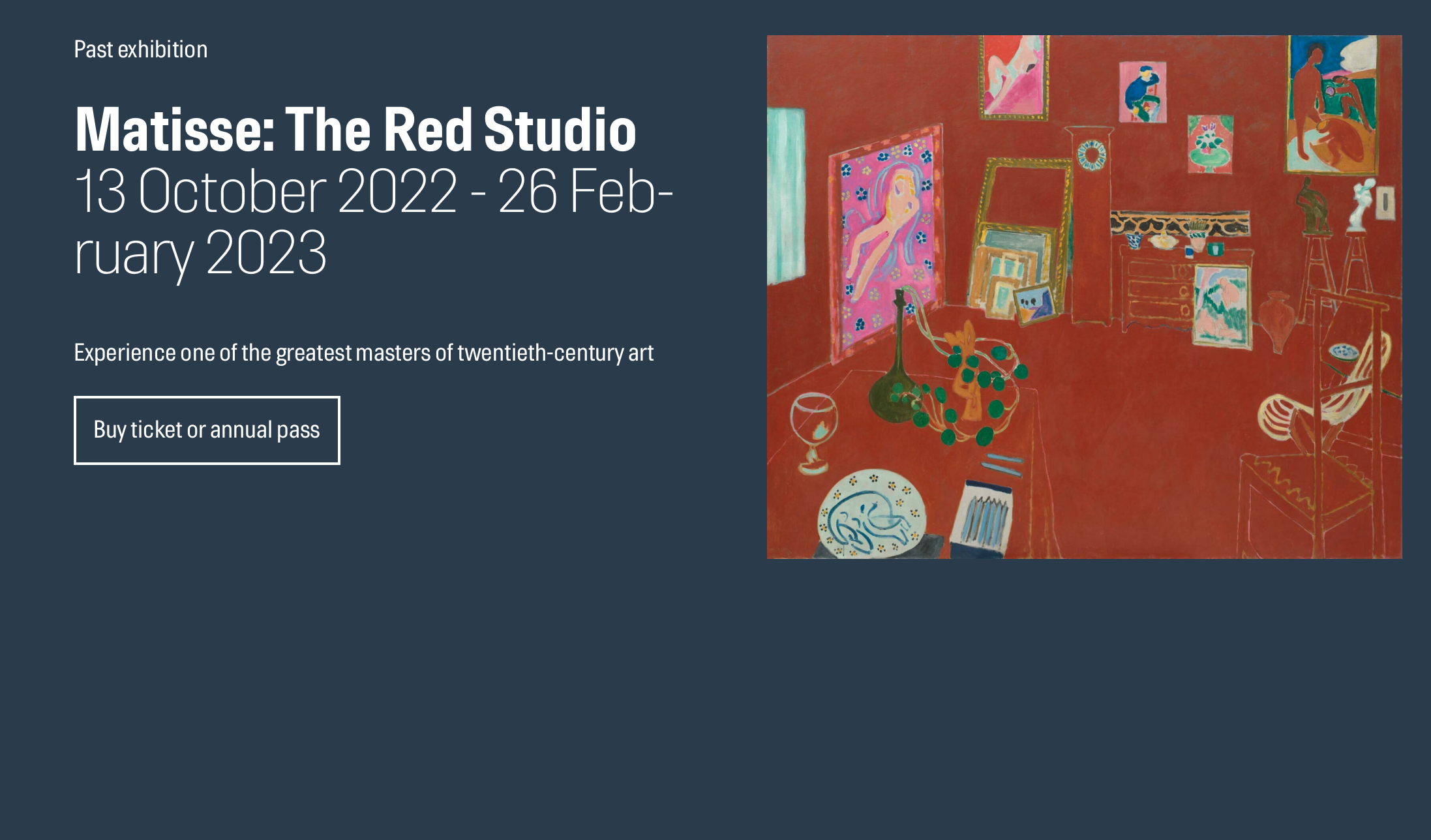
Exhibition
Matisse: The Red Studio
13 October 2022–26 February 2023
Statens Museum for Kunst, Copenhagen
S7E1.
Nikolaj Hess
I chose The Red Studio painting or L'Atelier Rouge by Henri Matisse, centered on The Red Studio exhibition at MoMA and SMK. It wasn't red from the beginning. This layer of paint was applied later. When it was done, he painted it red. He changed the whole painting. It had been sitting there as a different painting, different color for quite a while, and then he made a decision and painted it almost all of it red. He had an idea, I don't know what will happen when I do this. And I think that's a very jazz way of seeing things, following that artistic instinct. What does the painting look like as sheet music? I like music that you can just experience and I like art that you can just experience. I have an album called The Red Studio, which is different perspectives on how I hear it. It's endless exploration and inspiration.