
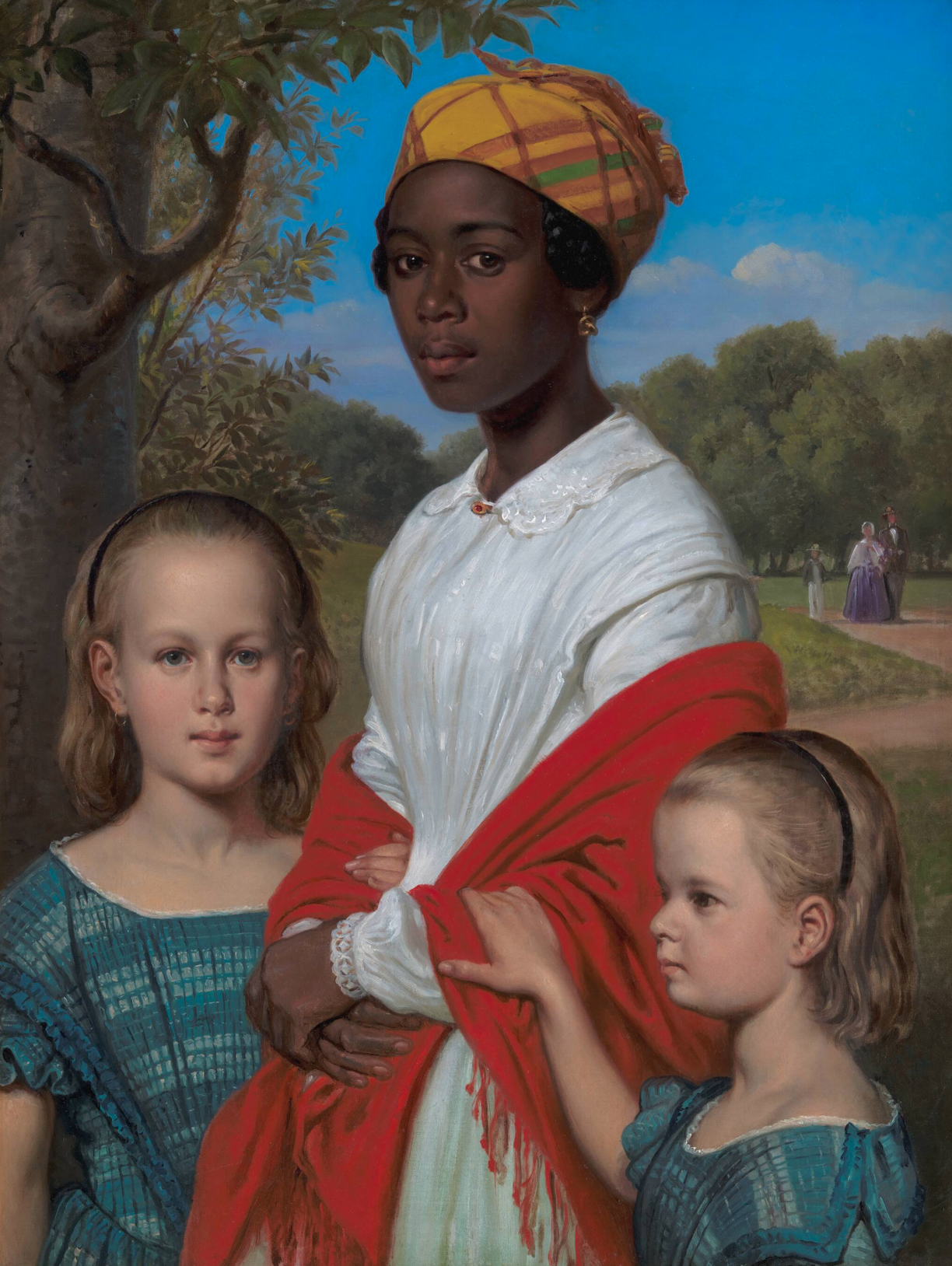
Wilhelm Marstrand (1810–1873)
Portrait of Otto Marstrand's two Daughters and their West-Indian Nanny, Justina Antoine, in the Frederiksberg Gardens near Copenhagen
Oil on canvas
1857
Statens Museum for Kunst, Copenhagen
S9E10.
Henrik Zillmer
I chose the Portrait of Otto Marstrand's Two Daughters and their West Indian Nanny Justina Antoine in Frederiksberg Garden in 1856. And the painting is done by Wilhelm Marstrand. This nanny was probably taken from her family of the West Indies to Denmark to be a nanny for this guy Otto Marstrand's daughters. I was always fascinated with the story of Denmark and the West Indies and slavery. Denmark, as many other European countries, had colonies in the West Indies. And it shows the horror of what happened back then. The contrast of an African woman taking care of two Danish girls, completely white. Probably she was one of the few in Denmark in 1856. As a colonial power, we had islands in the West Indies. But then partly because Peter von Scholten, Danish governor of the West Indies, fell in love with a local, love in a way became the first building stone of abolishing slavery. I don't know if the painter had different intentions, he's family. But that was what it made me think of.
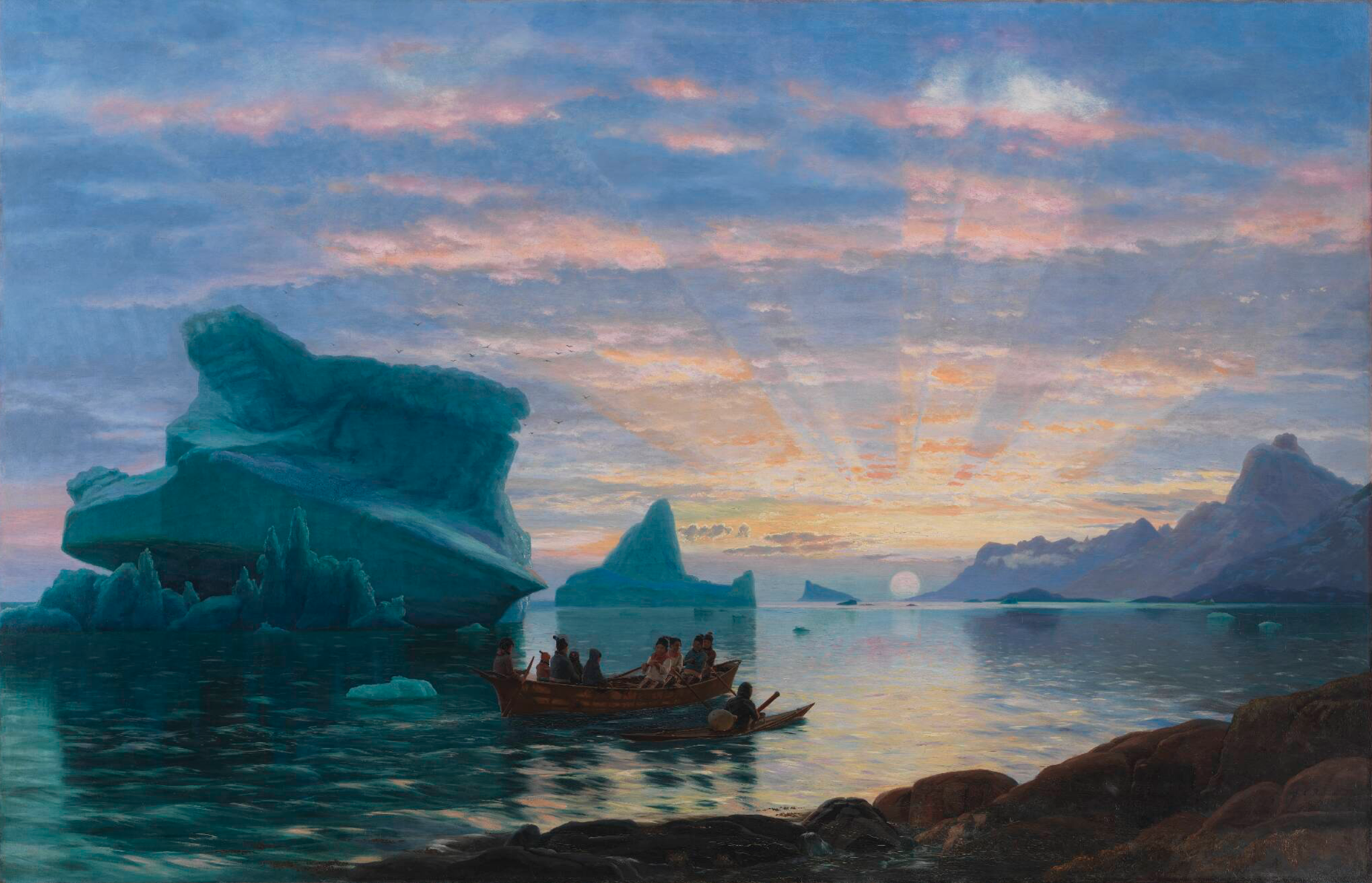
Carl Rasmussen (1841–1893)
A Stretch of Coast in Greenland. Midnight
Oil on canvas
1872
Statens Museum for Kunst, Copenhagen
S9E9.
Holly Dorger
I've chosen A Stretch of Coast in Greenland. Midnight by artist Carl Rasmussen. What captured me first off was the light in the clouds. There's kind of a face in the iceberg, and I like the idea of that being of a Viking or maybe a Greenlandic myth. It just puts a little extra character. You can give him a backstory. They are such beautiful colors, and I would say hopeful colors. There's this hope that the boat is going towards. They're in a very harsh landscape. That takes some survival skills. And that I can relate to. I can admire that through hardships and ups and downs and plot twists of life, you can still find the hopeful light and keep sailing towards it. There's layers to this painting and whether or not that is necessarily true, you can create them as the observer. It's beautiful, but it ain't easy.
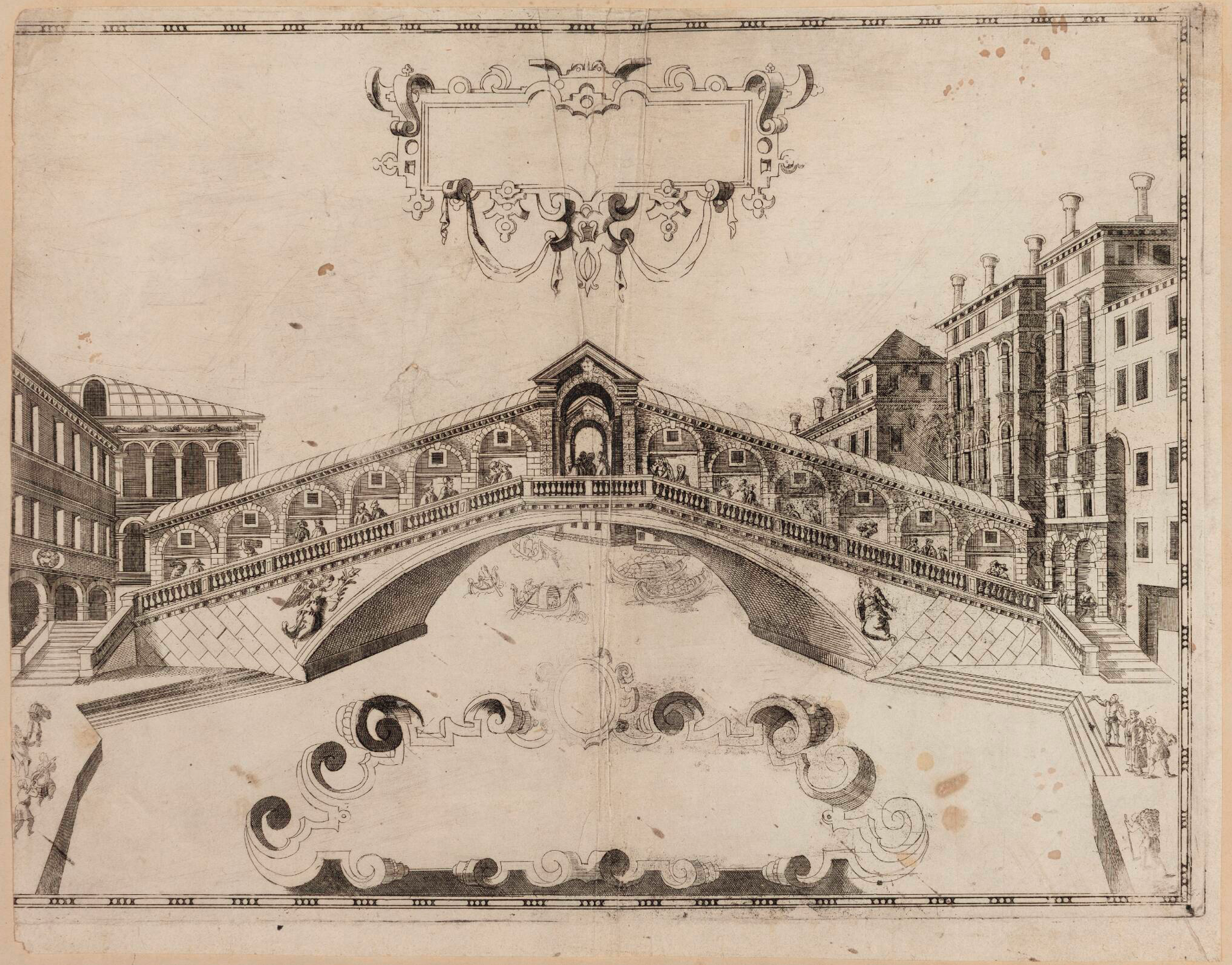
Unknown Italian Artist
Rialto Bridge in Venice
Copper engraving
1670–1679
Statens Museum for Kunst, Copenhagen
S9E8.
Torben Orla Nielsen
I chose the drawing The Rialto Bridge in Venice by an unknown artist, and it is from 1670 to 1679. My father was an architect. During his studies at the Royal Academy, he went to Venice in 1956 and did some sketches. He had a big desk in his study. You can open the top, and below was a number of drawings and sketches he made over the years. But it was not something that was special to him. Because of his upbringing, he was concerned about the future. Even though he worked at the same company for 40 years, he was always concerned whether there'll be a new project. He raised two sons, dragged around two sons to see cathedrals in Europe, to see and experience architecture. But that uncertainty, I think, was the reason none of us pursued that career. When he passed away, the Royal Academy issued a book and picked sketches made by architects during the last decades. And two or three that my father did on that specific trip to Venice were in the book. Beautiful small sketches. It wasn't the Rialto Bridge, but it reminded me of that.
Wolfgang Tillmans (1968–)
Planet, afterhour, Berlin. 1992
Photograph
1996
Statens Museum for Kunst, Copenhagen
© Wolfgang Tillmans / VISDA
The rights-restricted image is purposely blurred.
S9E7.
Christine Detlefsen
I chose the photograph Planet, Afterhour, 1992 by Wolfgang Tillmans. It's outside, after a rave, kids are hanging out and talking and coming down off the drugs that they've taken all night. 1992 was when I first started looking at this new scene, this new youth culture that was coming from Berlin, the UK, house music, raves, techno. I was really drawn to that. It also somehow made me move out of Denmark because I wanted some of this excitement. I could see that there was something going on, a rebellion, an appetite for something new. This was wild and it was a little bit more driven by the music itself and not designed for kids like the discos I used to go to. I was very much drawn to the feeling of youth culture creating itself outside of the normal parameters. And I love the colors in the image as well. I love the red, the green, the blue. The ravers are wearing casual clothing, streetwear, and I see quite a lot of jeans as well. It speaks to me as a little bit of a glimpse of my own past.

Tomas Saraceno (1973–)
Biosphere
Plastic and rope
2009
Statens Museum for Kunst, Copenhagen
© Tomas Saraceno / VISDA
The rights-restricted image is purposely blurred.
S9E6.
Luise Fauschou
I chose a work by Tomas Saraceno, the spheres, for many reasons. It's beautiful. It's visually striking. It's intriguing. He really shares with us alternative visions. He shows us how everything is interconnected, multidimensional, and why it's important that we have interspecies interconnectivity. And I've been happy to work with Tomas on multiple locations. He opens up our minds and makes us curious. And he does that with incredible beauty. There are future visions that artists can share with us. I share his belief in basing things on science and knowledge and facts, working with community, but adding to that a future vision that everything is connected.
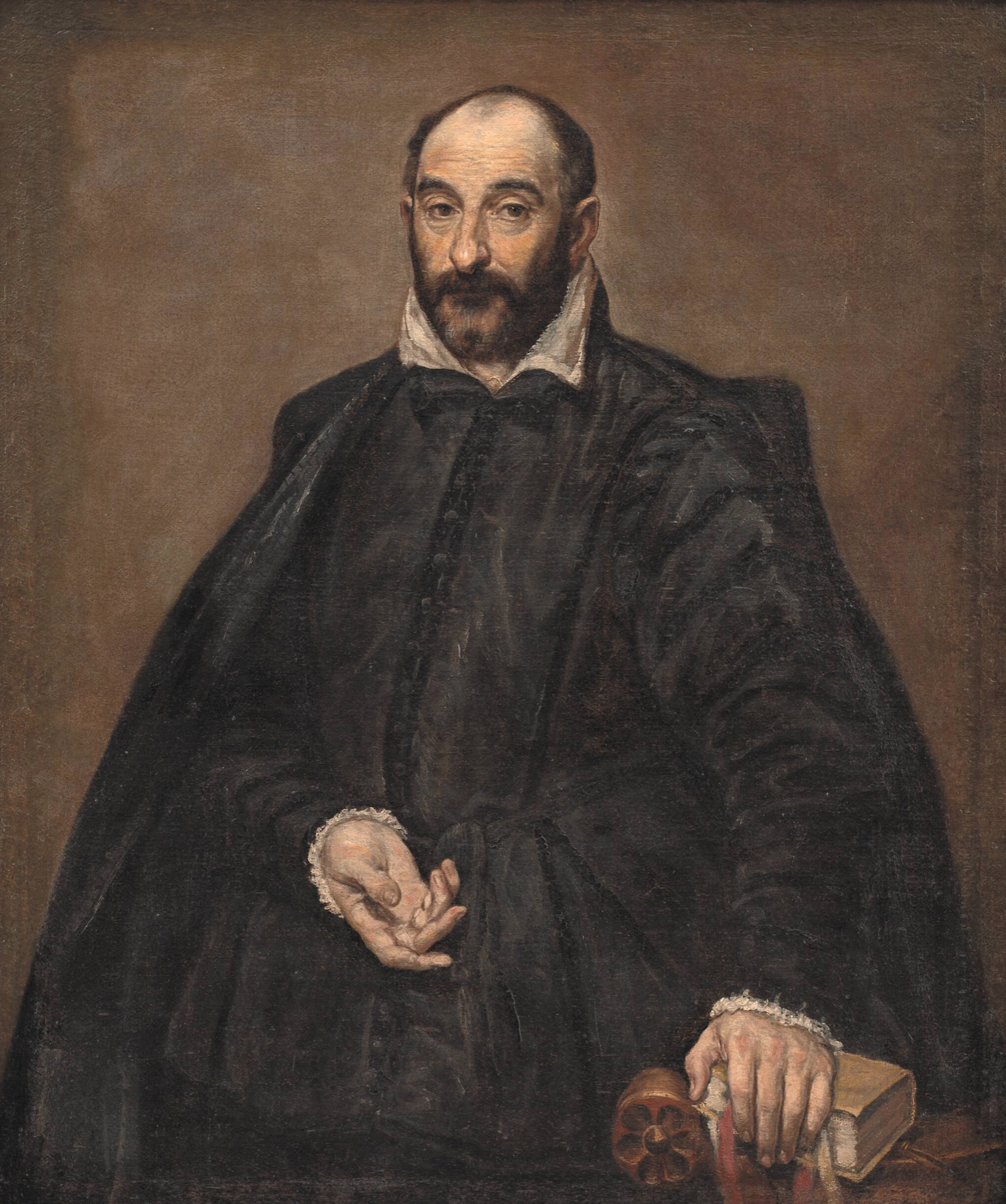
El Greco (1541–1614)
Portrait of a Man
Oil on canvas
1570–1575
Statens Museum for Kunst, Copenhagen
S9E5.
David Heinemeier Hansson
One of the things I really love about art in general is this sense of shared history across generations. We are not just the people I knew in my lineage, we're not just my grandparents and my parents, and then me. There's a history that goes much further back and we see it in art. I picked El Greco's Portrait of a Man to illustrate that. It looks so modern. It looks so relatable. It was right at that cusp where paintings went from the style that looked ancient, like the proportions not quite right, and then the technique just got so good right around that early Renaissance period. It could have been done by someone who was into that style maybe just 50 years ago, but it's actually 500 years old. That's long enough that the world was intensely different at that age. We have these artifacts and we have them so well conserved that I can enjoy them. I can be influenced by them. I can be inspired by what we were capable of back then. Love it.
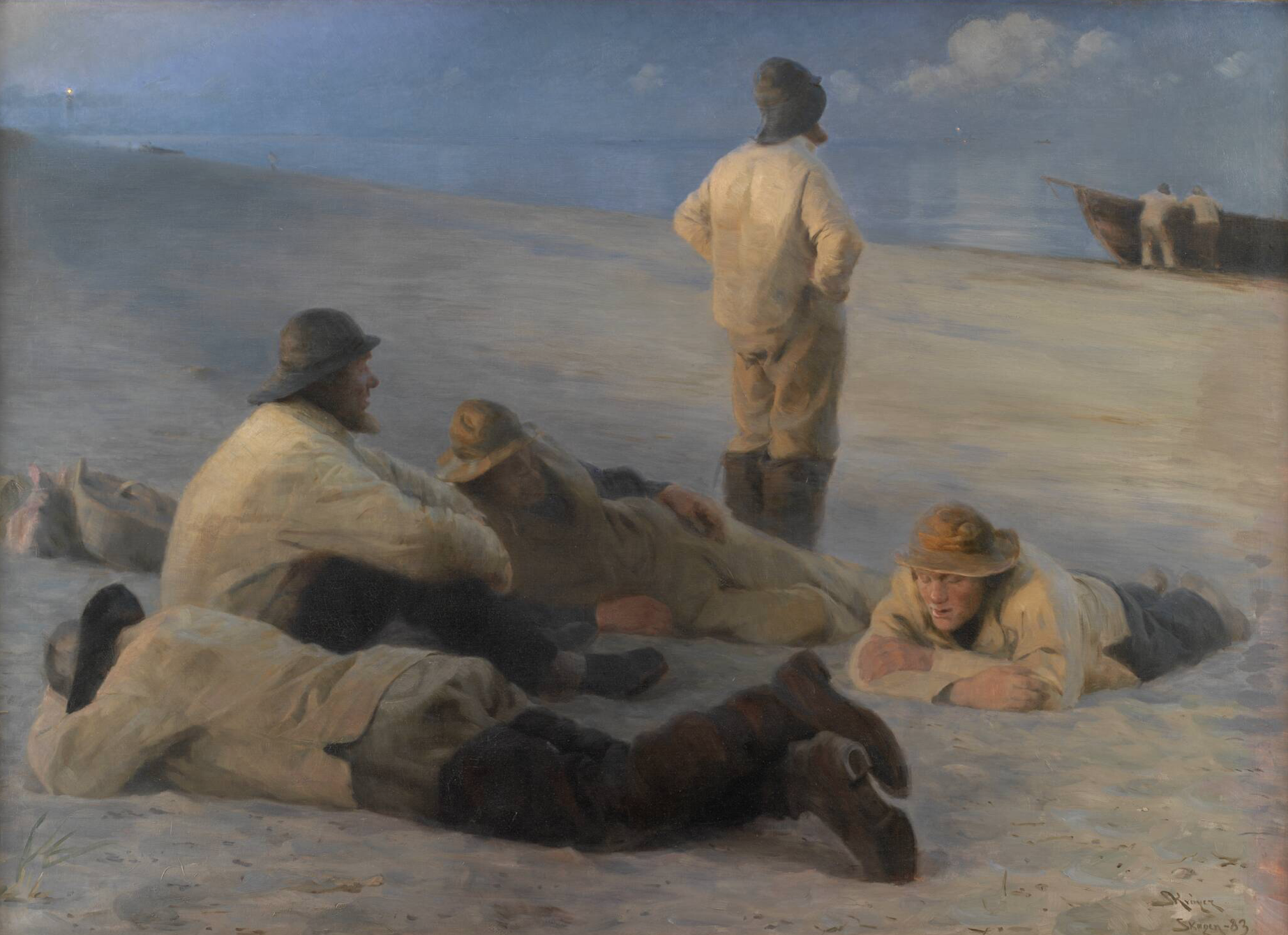
P.S. Krøyer (1851–1909)
Fishermen at Skagen Beach
Oil on canvas
1883
Statens Museum for Kunst, Copenhagen
S9E4.
Louise “Lulu” Eschelman
I have chosen the painting Fiskere på Skagens strand by P.S. Krøyer. It's very muted. It's very creamy and brownish. It's an image of realistic normal life. This shows fishermen laying on the beach relaxing. There's a boat being pulled in. It's hard to tell whether they're going out to fish or they just came back. It evokes so many memories from my childhood. This beach, in particular, is right by where I grew up. I used to walk my dog here every day. We used to swim there in the summers. There's the blue light, which is this light that happens at the end of the day in Skagen. It looks like the water goes into the sky and it becomes the same color, it becomes one. We used to look at these paintings in art class at school. It feels like such a part of who I am and part of our art history. It reminds me of home and growing up. And it makes me happy.
Jens Søndergaard (1895–1957)
Stormy Sea
Oil on canvas
1954
Statens Museum for Kunst, Copenhagen
© Jens Søndergaard / VISDA
The rights-restricted image is purposely blurred.
S9E3.
Søren Meibom
I chose a painting by Jens Søndergaard called Stormy Sea. The light is so dramatic. That incredible beauty of the coastline, the force of the ocean. You can almost smell the ocean, you can feel the wind. And the people standing, looking over the ocean, you are learning about their lives, these stoic, hardworking, honest people. Their hardships, their interaction with the ocean, how they probably lost many friends and family members out there on that dangerous but very, very beautiful nature. My grandmother is from there. We used to go as a family, we would always go there on vacation. It's such an emotional and loaded visualization of the coast of northwestern Denmark. His motives check so many boxes for me in terms of my childhood memories.
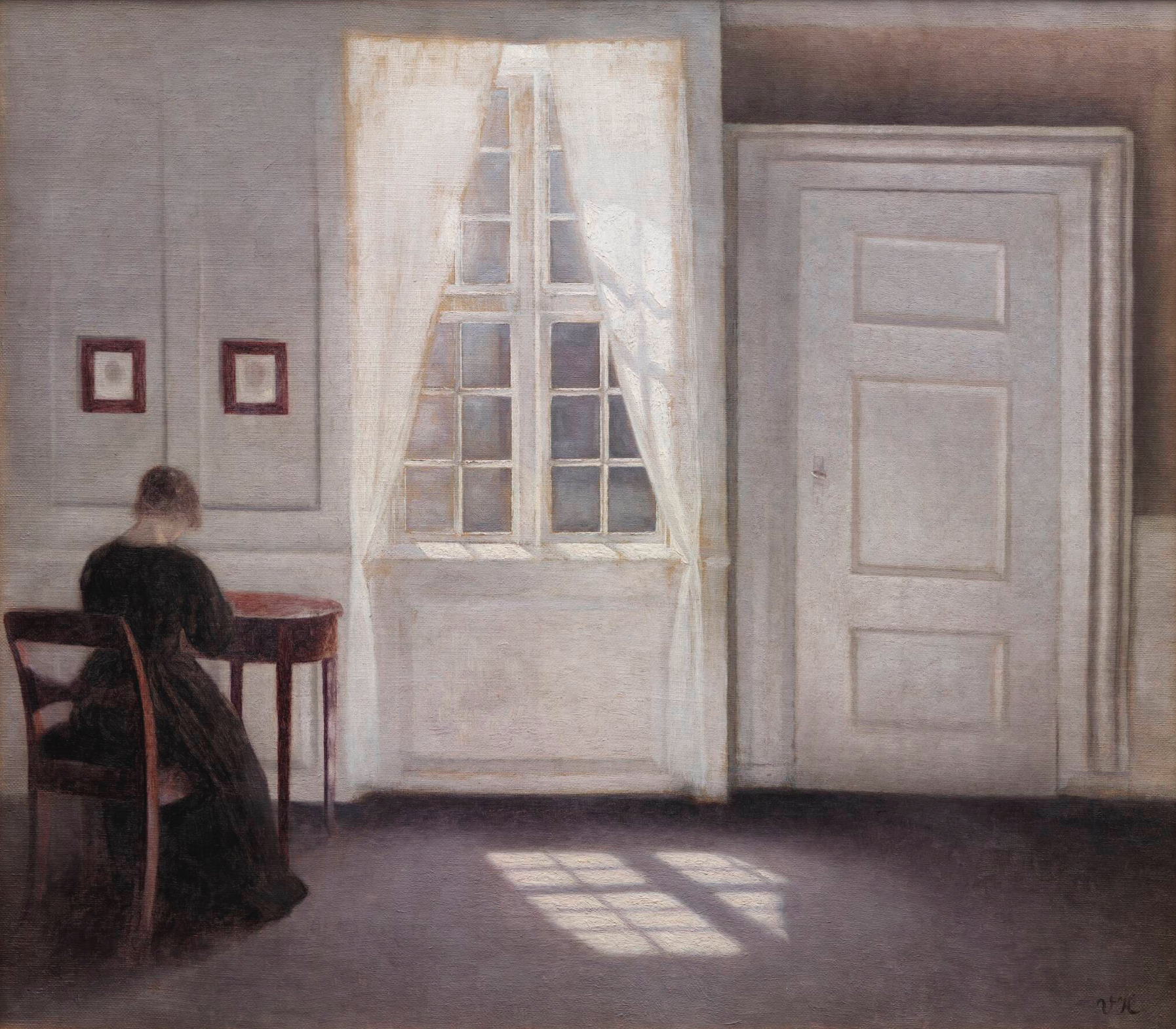
Vilhelm Hammershøi (1864–1916)
Interior in Strandgade, Sunlight on the Floor
Oil on canvas
1901
Statens Museum for Kunst, Copenhagen
S9E2.
Anne-Kathrine Schjerbeck
I chose a painting by Vilhelm Hammershøi called Interior in Strandgade, Sunlight on the Floor and it's from 1901. It shows an almost empty room in gray, white, black tones. There's a woman sitting with her back turned. You don't see her face. There's a closed door, and the sunlight's coming in and hitting the floor, and reflecting back the outlines of the window. It's an intimate scene with open-ended questions. In California, you live with the sunlight all the time. In Denmark, the light's not around in the same way. And it does something, I think, differently to you because it's just a moment. That overall mood of deep reflection and stillness is something I connect to and recognize as a feeling of coming back to Denmark and also living far away from it.

Per Kirkeby (1938–2018)
Untitled, Læsø
Oil on canvas
2001
Statens Museum for Kunst, Copenhagen
© Per Kirkeby / VISDA
The rights-restricted image is purposely blurred.
S9E1.
Jacob Sten Petersen
I chose a painting by Per Kirbeby that he painted in my favorite place in the world, a place called Læsø. It's an abstract painting. It has red and blue and green colors. It's very vibrant, like Læsø. This small, almost deserted island, where you really can't do anything than just be. You go out and you look at the sea, you look at the dunes, and then 30 minutes later, the colors are completely changed. I'm 62 years old. I've been there every year since I was two months old. And we have a small family summer house, it is only 50 square meters. It was built in the middle of nowhere very close to the sea. It's where we as a family come together and for me, a place to wind down in my busy life, which is sometimes difficult with the job I have. It's a place where I can be with the people I love the most in the entire world. We have a funny story. My grandmother had inherited the summer house from her aunt who was Stauning (a famous Prime Minister)'s secretary. And I think they were lovers and doing their thing in that summer house away from Copenhagen. So the summer house for sure has a long history. We love being the center court of what goes on in that summer house.