
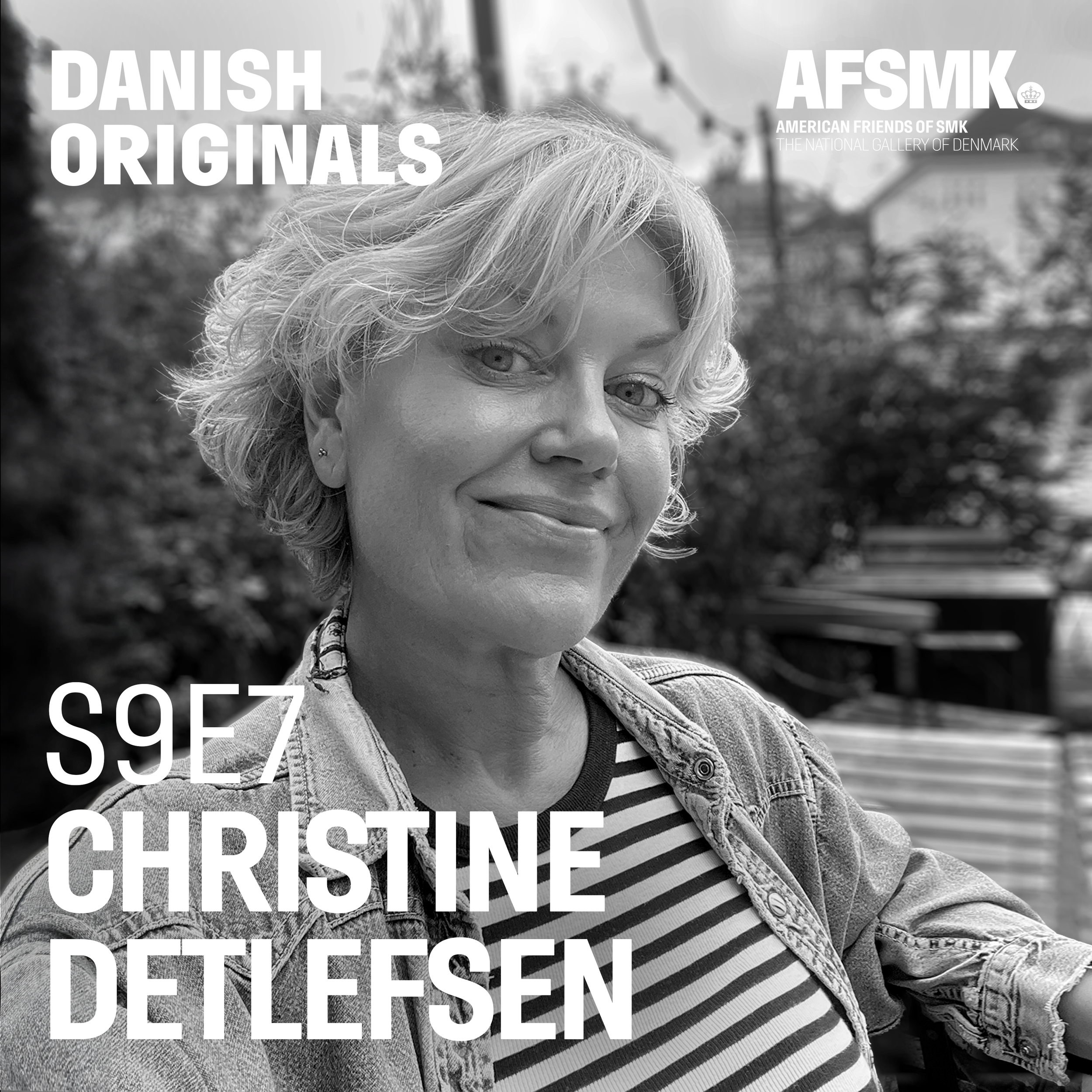
From her home in Valby, Copenhagen, Elsinore-born Danish denim and jeans designer CHRISTINE DETLEFSEN finds her inspiration from the vintage world while combining sustainable and responsible innovations in fiber, fabric, and washing. Trained at Levi's, Christine recalls the years working in New York and Los Angeles, and executive producing a documentary about the unique cultural history of jeans. And she walks through how denim design requires an artistic and engineering mindset equally.
Private photograph
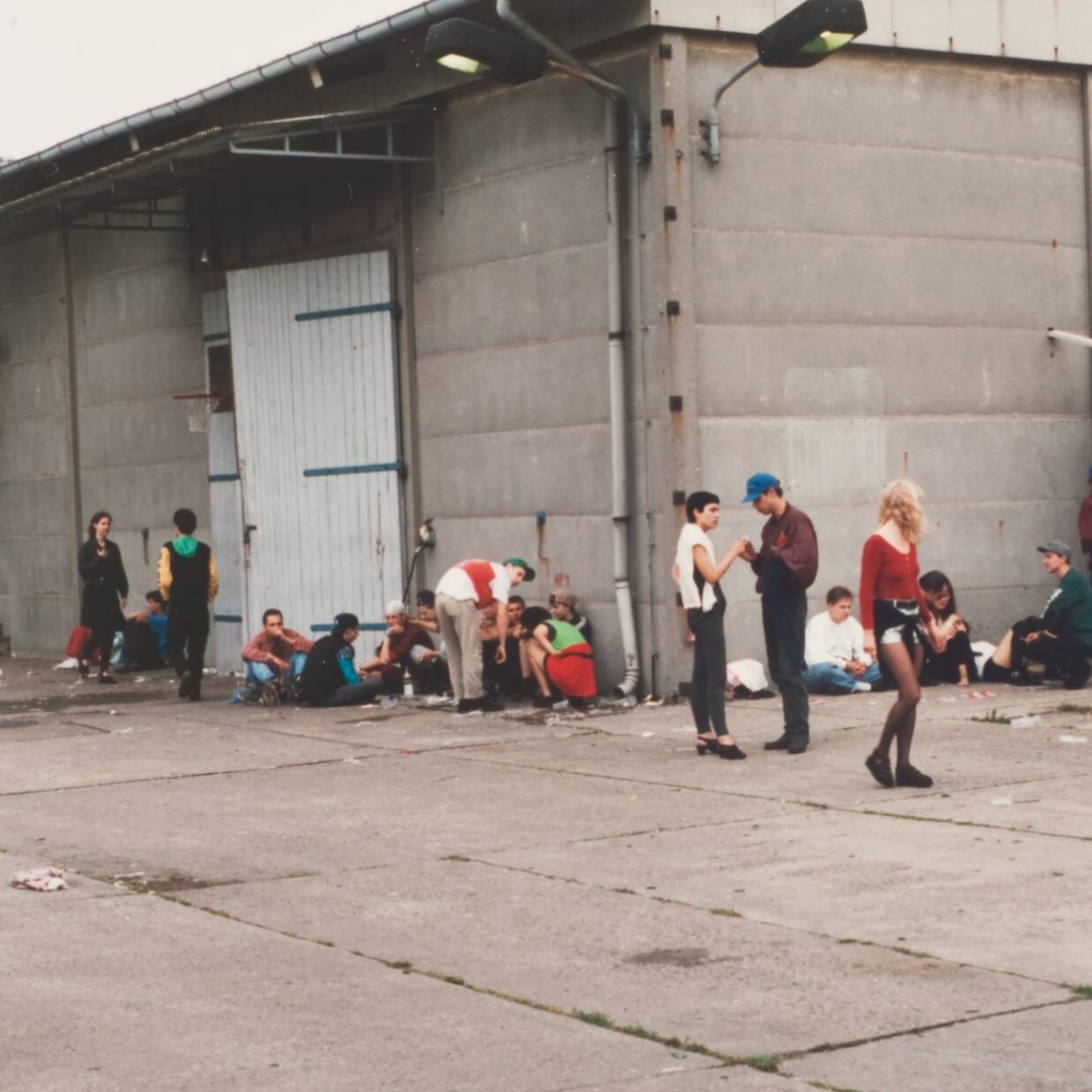
For today's episode, Christine Detlefsen chose Wolfgang Tillman's Planet, afterhour, Berlin. 1992 from 1996 from the collection of the National Gallery of Denmark, Copenhagen.
“As a jeans designer, you always have a little bit of an eye in the back of your head and an eye in the front of your head. You’re looking back into history, especially the cultural history of jeans is quite unique. And at the same time, it can get quite technical as well.”
“We gotta all understand that every time you create a commodity, you’re on the wrong side of the sustainability line. Having said that, we can try and create the best possible product with the least resources wasted or used to create these products.”
“I’ve been asked this question a few times, how come you were always at the right place at the right time? I think as a designer, you gotta put yourself in the right place at the right time. And then you need a little bit of luck as well.”
Powered by RedCircle
This conversation by Christian D. Bruun occurred on October 13, 2025.
00:04
Christine Detlefsen
I chose the photograph Planet, Afterhour, 1992 by Wolfgang Tillmans.
00:11
Christine Detlefsen
It's outside, after a rave, kids are hanging out and talking and coming down off the drugs that they've taken all night. 1992 was when I first started looking at this new scene, this new youth culture that was coming from Berlin, the UK, house music, raves, techno. I was really drawn to that. It also somehow made me move out of Denmark because I wanted some of this excitement.
00:40
Christine Detlefsen
I could see that there was something going on, a rebellion, an appetite for something new. This was wild and it was a little bit more driven by the music itself and not designed for kids like the discos I used to go to. I was very much drawn to the feeling of youth culture creating itself outside of the normal parameters.
01:03
Christine Detlefsen
And I love the colors in the image as well. I love the red, the green, the blue. The ravers are wearing casual clothing, streetwear, and I see quite a lot of jeans as well. It speaks to me as a little bit of a glimpse of my own past.
01:25
Christian D. Bruun
My name is Christian D. Bruun. I'm the director of Danish Originals, a podcast series created in partnership with the American Friends of the National Gallery of Denmark. Our goal is to celebrate Danish creatives who have made a significant mark in the US.
01:40
Christian D. Bruun
Today, our guest is Christine Detlefsen, a Danish fashion designer, denim and jeans design consultant and product developer. Welcome, Christine.
01:51
Christine Detlefsen
Thank you.
01:52
Christian D. Bruun
I am very excited to speak with you today, Christine, especially since you and I worked together on a very cool project when you lived here in Los Angeles. But we'll get to that later. To begin, I'm here in my home in Los Angeles. Can you share with our listeners where you are?
02:10
Christine Detlefsen
Of course. I moved back to Denmark, so I am here in Copenhagen. Precisely, I'm in Valby, which is a small little town in the city. I'm just at my house. This is where I live and work. So it's part studio, part living space, everything rolled into one.
02:26
Christian D. Bruun
Well, that sounds very nice and cozy. Today you're working in Copenhagen, after many years in other parts of the world, specifically London, Brussels, New York, Los Angeles. And you're the owner of Danish Denim Design. Tell us what that means.
02:41
Christine Detlefsen
Well, yes, it's been a long road. Basically I'm a fashion designer, so that's maybe the top level headline. I've been working with workwear and jeanswear almost my whole career. For at least the last ten, 15 years, I've specialized very much in denim.
02:57
Christine Detlefsen
I come in to work with companies, brands, to set up either a new denim line, a new jeans line, or to work on something existing that needs a little lift. I work on fit, wash, fabric, communication, sustainability. I paint the whole picture with my little blue brush.
03:18
Christian D. Bruun
How is designing jeans and working with denim different from other sides of the fashion world?
03:24
Christine Detlefsen
It's not different in the sense that we still follow trends and we look at what's going on on all the different cultural platforms and everything like that, and all influences, of course, what we do. But as a jeans designer, you always have a little bit of an eye in the back of your head and an eye in the front of your head.
03:41
Christine Detlefsen
You're looking back into history, especially the cultural history of jeans is quite unique. And at the same time, there's a lot of innovation going on in fiber and fabric and washing and everything like that, so it can get quite technical as well.
03:57
Christine Detlefsen
You always gotta work with a little bit of the history, something that came before to meld those two viewpoints. At least that's how I work. I prefer something that hinges back to something historical and at the same time feels new and modern.
04:11
Christian D. Bruun
Can you walk us through the steps of the design, the thoughts, and the actual process that goes into it?
04:17
Christine Detlefsen
Every project is a little bit different. First of all, I need to understand who's my customer, what's the brand, what are their goals, obviously, and their ambitions. And then I plug myself into it. I use my own aesthetic. The aesthetic that I'm known for is quite classic, quite driven by a masculine look.
04:35
Christine Detlefsen
When I design men's or women's jeans, it's always with a little bit of a masculine touch, I'd say. That's what the customer is buying. I start normally with the fabric side. When it comes to jeans, without a great denim fabric, you have no jeans.
04:52
Christine Detlefsen
And I need to find out what kind of quality I want to go for, or what kind of qualities. That becomes my foundation. And then on top of that, I build the washes. Even before I think about styling and detail, I start building washes. And that can come from vintage inspiration or it can come from a garment that I bought in the stores from another brand.
05:14
Christine Detlefsen
I'm not very selective. Obviously I buy only brands that I really care for. And that becomes my brush, my palette, to start creating a project. And then later on, we talk about fit, we talk about the details. Some brands need the whole package, like the back pocket, the detail, the trimming, the branding. So that becomes more and more layers of this type of cake that we make together.
05:41
Christian D. Bruun
And what are the washes and why is that so unique to denim? When you buy other pieces of clothing, you expect them to look brand new when you buy them. But denim is special in that sense, right?
05:52
Christine Detlefsen
With jeans, to get a look or a wash on a pair of jeans, we need to put them through quite a long process in the laundry. So all jeans are just dark blue or black or whatever color the fabric is when they're stitched together at the supplier level, and then we bring them to a big old laundry.
06:10
Christine Detlefsen
And the laundry has so many different machines that we can utilize to impact this fabric. It's a big machine. Some of them are washing, some of them are taking the color out. Some of them are over-dyeing. And we also use a lot of lasers and new technologies like ozone and so forth.
06:29
Christine Detlefsen
The main part of creating the wash is the trip through the laundry. And to have that language you need to speak fluent chemistry also with the workers on the floor. And that's really fun, actually, to go to the laundry and to work with the technical staff as well.
06:44
Christian D. Bruun
I remember seeing people with sand paper and dremels and all kinds of tools when we were filming.
06:51
Christine Detlefsen
Exactly. Some of the laundry technicians are real artists, they can be very expensive as well. So you always wanna have a few of those in your laundry. The people who can really think outside the box and create, because unfortunately in the fashion world and in the jeans world, everybody loves to just copy what someone else did already.
07:10
Christine Detlefsen
To find someone who can really understand your vision and your taste level, and to work with these people, it's quite unique. And once you find them, you don't wanna let go. I think we all have a really strong bond as well. Designers, technicians, merchandisers, we all really care for each other because we work very passionately together, so it becomes a little family in the end.
07:34
Christian D. Bruun
I do remember getting that sense of family. But I want to talk a little bit about what you're doing now. I know that a focus of your company when it comes to manufacturing is on responsible and sustainable solutions. And what does that mean? Are your collaborators and the different brands usually open to your proposals, or do they need to be educated on what it means to be sustainable?
07:56
Christine Detlefsen
Most brands now are quite open. Everyone seems to have their own interpretation of what sustainability is. And I have to admit, maybe ten years ago, I was a little bit more gung-ho about — we just gotta use organic cotton and we just gotta do it like this.
08:12
Christine Detlefsen
But we gotta all understand that every time you create a commodity, you're on the wrong side of the sustainability line. Having said that, we can try and create the best possible product with the least resources wasted or used to create these products. We try to avoid conventional cotton as much as we can. We use a lot of organic cotton.
08:37
Christine Detlefsen
Now there's more and more focus on using non-cotton fibers, because all cotton obviously is a commodity. It's scarce and takes a lot of water to grow cotton. Now we're using fibers like Tencel, new cellulosic fibers as well, that's coming up.
08:53
Christine Detlefsen
And also we are using a lot of recycled cotton — recycled from the factory floor, we are also using post-consumer recycle, that means old collected jeans gets reworked into fibers, spun into yarns, and woven into fabric. So I pushed that agenda with almost every brand.
09:13
Christine Detlefsen
And the brand that I worked for now for ten years, we started building the collection from a sustainability platform. There, I have more power to impact the way that I see best fit. But every brand, they have a different agenda and obviously price can also affect the perspective.
09:34
Christian D. Bruun
I guess also maybe living in Denmark, there's a bigger focus and attention to sustainability in some ways.
09:40
Christine Detlefsen
Yeah, I think that is a fact at least most brands would like to profile themselves like that, where we're claiming responsibility and sustainability. We need to be very careful what we claim is in fact what we do. And I have to say, when margins become a talking point, the first place that is cut is often the sustainable part.
10:02
Christine Detlefsen
I try to impact as much as I can also in terms of production countries, minimizing waste, minimizing extra ordering. Sometimes brands are ordering big quantities, but they don't really need it, so it becomes landfill. So there are many ways that we can be conscious and careful when we work with these products.
10:22
Christine Detlefsen
And especially in the laundries, we have a lot of technology that minimizes water consumption. And also we use quite low energy machines now, whereas ten, 15, 20 years ago we were using hot water and a lot of chemistry and bleaching and all these technologies that weren't very good for anybody, especially not the environment.
10:44
Christine Detlefsen
And now it's a whole different ball game. It's a whole different machinery and the setup is really good. It's been quite a revolution for the past 15, 20 years in terms of the laundries.
10:55
Christian D. Bruun
That is very cool. I want to talk a little bit about Blue Gold now. When you and I met, we worked on the feature documentary film Blue Gold: American Jeans. I actually met you and our good friend Theis through this film. We all came together and we set out on this many, many year journey to make the film. And I think it premiered in 2014 at the Berkshires Film Festival.
11:21
Christian D. Bruun
You were the executive producer. I was a director. And you had had this idea for a long time to make a film about jeans, and you were the one who introduced me to the world of denim and we went to the Rose Bowl Flea Market at four in the morning. It's a long time ago, probably 15, 18 years ago or something. Can you tell us a little bit about your vision for the film and how the whole thing came about?
11:44
Christine Detlefsen
I was reflecting on that earlier. I read this book called Jeans: A Cultural History, and I was just really happy to dive back into that mindset, because at the time I was working in New York and I felt that the work I was doing was very much just driven by the market and the need for new collections and cheaper products.
12:03
Christine Detlefsen
And I lost my connection with the real denim world, I felt. Coming from Levi's and working with laundries and working with people of the vintage industry was really what truly inspired me. And I felt that I lost connection with that. When I grabbed this book and I read it, I thought, why don't we make a movie?
12:21
Christine Detlefsen
And that's where you came into the picture. I know absolutely nothing about making movies. When we started working together, you understood the calling and how insane it is that so many people are so fascinated by jeans and how insane it is that one piece of clothing has been used and worn by people throughout so many decades.
12:44
Christine Detlefsen
And also how it's used to proclaim your political views or your cultural views, or your sexuality. And it's really a unique item that can tell so many stories. So I'm very happy that we managed to push through with this project. And for me it was also a way to reconnect with the world that I really wanted to connect with, the world of the vintage.
13:08
Christine Detlefsen
And I started coming to LA a lot more, which was also a big wish from my side, to come back to the laundries and feel that blue blood rushing in my veins again.
13:21
Christian D. Bruun
I remember I was in LA at the time and you came out to visit from New York. You introduced us to people like Adriano Goldschmied, who was there. There's the whole Downtown world of making jeans, and also the Rose Bowl Flea Market, the big vintage market for jeans.
13:38
Christine Detlefsen
The Rose Bowl is very unique. As you know, it's, I think, the world's largest flea market. And for denim heads like myself, it's a treasure trove. It's a gold mine. Pardon my lame references.
13:49
Christine Detlefsen
You kind of arrive at a big parking lot and it's dark outside and you drive into Pasadena and suddenly you see hundreds of, especially Japanese kids with their headlights on, the little light on the front of their heads, basically crawling over the fences to get in before it even opens.
14:06
Christine Detlefsen
And it becomes a bit of a frenzy for the first few hours. Because really you're in there to get all the best pieces before anybody gets in there before you. And it's this whole collector's mindset. And also, some of these jeans are worth thousands of dollars. So it can also be a real payday for you.
14:24
Christine Detlefsen
If you find a pair and it's like $5, $10 in a bucket or in a pile of old jeans and it's a Big E or whatever, you can really cash in. And then you have all the famous vintage dealers there who've been out finding great jeans or items of denim in the back of lorries or in old farms or whatever. It sounds a bit romantic, but really it's dirty work.
14:49
Christine Detlefsen
And they're there presenting all the latest stuff that they found. And you find a lot of designers like myself actually, out there buying, and this is a little bit what I talked about earlier. You buy for inspiration, but you also buy a little bit for passion.
15:03
Christine Detlefsen
So if you see something, even though you don't know what you're gonna use it for at the moment, if you see something that you connect with, you buy it. 'Cause you know it'll come in handy later on. And it's a big vibe really. It's a bit of a party, it's a shopper's vintage party all rolled into one and people have a little beer and it becomes quite a party throughout the day.
15:27
Christine Detlefsen
Once the dust has settled and the frenzy is over in the morning, it becomes a little bit more bearable. And I used to go there also to sell. I've seen it from both sides, from the buyer's perspective and from the seller's perspective. A lot of money is changing hands there.
15:43
Christine Detlefsen
A lot of dollar bills are being passed over and actually the week before and the night before, people are meeting in motels and hotels, parking lots around the city to exchange because all the real gold nuggets are not even making it to the Rose Bowl. They're being sold ahead of the Rose Bowl.
16:02
Christine Detlefsen
Private setups and collectors from Japan are meeting with sellers from the US or vice versa. There's a whole network happening. And you really gotta be in the know to have the connections. It's a little bit of a mafia vibe. The world of the mafia comes quite close to this, I would say. And stacks of cash. Cash is king in this world. It's fun.
16:27
Christian D. Bruun
And I remember one of the guys telling us that he had those Big Gulp cups in his car. And he would keep all the cash rolled up in there, so nobody would steal it if he got pulled over, or somebody was trying to rob him. All the little things. It was such a fun time. And it was such a fascinating world.
16:44
Christian D. Bruun
And so you find an old pair of jeans. And some of the things you are looking for, the way they are worn, the way somebody's scratched them, or used them. What are the things you are seeing in there?
16:55
Christine Detlefsen
When I look, I don't really care too much if it's a really expensive pair of jeans, if it's a Big E. I mean, of course I'd love to find a pair of Big E's for $10, that's for sure. My inspiration goes more into the washing or the stitching or the way the pocket is set up, especially on Army and Navy and workwear where the designer wasn't thinking about style or look, but thinking more about functionality.
17:19
Christine Detlefsen
The pockets are set in a different way, the stitching is done maybe in a very hard wearing way when it comes to army articles, army denim. So sometimes those details can be super inspiring. We've all seen a classic 501 a million times, but that can also be stitched in so many different ways.
17:36
Christine Detlefsen
Sometimes you look for stupid little details — a different size belt loop, or the back pocket was worn off and someone stitched on a different back pocket. Or the way the jeans were kept or lying around for ages, they were hit by the sun in a different way so that it has a funny shadow, and you can use that as inspiration for a new wash.
17:56
Christine Detlefsen
Or of course, it's just a great wear where you can see the woman or the man has been leaning on the right knee all the time, or they've been maybe sitting in a truck. So you can see how they've been worn down in a different way because there's a lot of creasing in the front. You can tell what that person was doing. And of course we don't have a lot of cowboys anymore, but you can see if it was a working class guy or who else was wearing it.
18:22
Christine Detlefsen
And in Scandinavia, you see a lot of back pockets with the little round imprint because people are using the snuff and it comes in round packets. So over here we get a lot of these round imprints on our back pockets.
18:35
Christine Detlefsen
Whereas in the US you get a lot of wallets, and nowadays, you're starting to get the iPhone imprint on the pocket. Because whatever you're putting in your back pocket, is showing, especially when you got the three little circles from the iPhone camera, that's fun.
18:49
Christian D. Bruun
It's a timestamp on the jeans. I love that. It's so cool.
18:53
Christine Detlefsen
Absolutely.
18:54
Christian D. Bruun
And maybe for our less informed, non-denim heads in our audience here, what is a Big E?
18:59
Christine Detlefsen
A Big E is the red tab on the backside of a 501 from pre-'70s. Levi's was making the jeans in San Francisco. It was made in a special denim, which is selvedge. So it's made of better quality basically. Before it became mass-market, Levi's was making 501s locally in the United States.
19:20
Christine Detlefsen
And the Big E, it's Levi's, L-E-V-I-S, but the E is capital. After the '70s, the E changed to lowercase e. So we see a lot of lowercase e red tab 501s, but we don't see so many Big E's. Big E is the caviar of jeans or a very expensive bottle of red that you find hidden in the back of an old aunt's cabinet or something like that.
19:49
Christian D. Bruun
Yeah. Well, it's good. Now we know what to look for.
19:52
Christine Detlefsen
But there are so many copies these days that you really gotta be an expert.
19:58
Christian D. Bruun
Wow. To return Blue Gold for a moment. The main character of the film is of course the vintage jeans, but a secondary character is a guy called Eric Schrader, who was a jeans hunter and a vintage jeans expert. And he refers to himself as Joe Blow from Idaho. Tell me a little bit about him and his role in the film.
20:18
Christine Detlefsen
I love Eric. He's such a character and I remember how I met him. I started buying a lot of his pieces at the Rose Bowl. I became a good customer. When dollars are exchanging hands, then you start chatting. And what I love about Eric is that he's not from that designer perspective, he doesn't come from New York.
20:36
Christine Detlefsen
He doesn't really live that whole fashion lifestyle. He lives a totally regular life in Idaho. He also brands himself as being this Joe Blow from Idaho, which I think is cool. I think he would have a hard time finding another alias. He's a great character and he's actually one of the few who chases down or hunts down the jeans himself still.
20:58
Christine Detlefsen
Obviously he has a huge network of people that helps him out, but he's still out there in the old potato farms, ripping down the ceilings to look for jeans that've been hidden or used as insulation or whatever. He's, I would say, the real deal. And there are a lot of vintage dealers who are a lot of talk and not so much walk. I would say with Eric, what you see is what you get. We've been friends for 20 years now.
21:23
Christian D. Bruun
Yeah, he's great. He's a very fun guy. I traveled with him to Japan as well. He's fantastic. During the same time as we were making the film, you also had your own label Bess NYC, which became very popular with celebrities like Lady Gaga, Kanye West, Justin Timberlake, and many others. Can you tell us about the design vision for this brand? And was it in New York and LA?
21:48
Christine Detlefsen
Yeah, the story about this whole collaboration was that there was a store on Lafayette Street, New York called Bess run by Douglas. He had a fantastic universe of rock T's and very unique pieces. And my ex and I, we used to go there a lot.
22:06
Christine Detlefsen
We started talking and before we knew it, we started a brand together. The production side was in LA. Me and my ex, we were working on leathers, shoes, denim, t-shirts, and we were reworking vintage pieces and using studs and dyes and rewashing and redye-ing and printing, and then we would sell it through the store in New York.
22:29
Christine Detlefsen
And I don't know what happened, but it became like hotcakes. Every piece was one of a kind and they were truly unique pieces. And it just seemed that even though it was an economic downtime, people had money, they still wanted to spend it. It was a great brand and the vision was more creative than the business side.
22:52
Christine Detlefsen
The business side was very rock and roll. We used the money that we had to buy the vintage pieces. We used some of our money to pay the ladies who were studding it and dying it. And that was the end of our business plan. After a few years of doing that, we tried to make it bigger and start selling to stores abroad, Japan and everything.
23:11
Christine Detlefsen
That was really difficult for us. The first couple of years was probably the best time. A lot of magazines were featuring it. It was a little bit ahead of the time 'cause we were doing vintage pieces, reworking, which is right now something that a lot of brands are doing.
23:26
Christian D. Bruun
And what were some of the fun experiences you had with that brand?
23:30
Christine Detlefsen
There's a Lady Gaga video where she's featuring Beyoncé. We were doing all the vintage pieces and the studded items for Lady Gaga. That was just a dream to see something that you've actually bought at 5:00 am at the Rose Bowl dragged all the way to the house, and then you worked on it with your employees to put the studs on and to do all the vintage work. It was fun.
23:53
Christine Detlefsen
And a lot of hip hop artists also seemed to like the look. And that was quite surprising to us because our look was very punk inspired, very rock inspired, very dark, almost gothic. And when the hip hop artists started picking up on it, it also was a bit of a surprise.
24:09
Christine Detlefsen
It was almost like two worlds colliding. And I love that when you design something that wasn't intended for a certain customer, but that customer sees something in the product that you didn't see or that you didn't imagine.
24:24
Christian D. Bruun
Which is a beautiful thing, when you just work from passion and there's no real business plan, you actually make something that maybe hits a nerve and everybody loves it. There's no speculation about trying to corner the market, it's just pure love.
24:37
Christine Detlefsen
We just bought all the vintage pieces that we loved and we piled them up in the house. We lived in a loft downtown in the Arts District in LA, and back then it was really, truly gritty, and everybody who lived in that old fish factory were also artists or porn stars or whatever. It was very lo-fi.
24:54
Christine Detlefsen
And what was also driving us was a little bit living on the edge. One day we'd had $10,000 in our pocket and the next day we'd be splitting up a $10 bill to buy gas for the tank, to get to the laundry, to pick up the goods. I don't know how many times I've used my female charm to get the goods out of the laundry without paying until next week.
25:17
Christine Detlefsen
It taught me a lot about how to run a business and how to really work with your passion and take a lot of risks. I had a lot of sleepless nights, I have to say, because there was no regular income, it was a little bit risky.
25:33
Christian D. Bruun
It's hard work following your dreams and figuring out what that balance is and the authenticity of your dreams and all that kind of stuff. It sounds like you lived the whole thing.
25:42
Christine Detlefsen
I was happy getting out of the office, that's for sure. And I was living my life in my car, basically going from the laundry to the vintage shops, back to the studio, picking up, dropping off and everything like that. But I really loved being involved hands-on.
25:57
Christian D. Bruun
We're gonna return to LA in a little bit, but I want to go all the way back and talk a little bit about your childhood and talk a little bit about Denmark. Where were you born? What were your childhood and teenage years like? And were you always into fashion? Was that a big part of your world growing up? Tell us where you're from.
26:14
Christine Detlefsen
I'm from a town called Elsinore. It's north of Copenhagen, a mid-sized Danish town, and I grew up there in the '80s and the '90s. I was a little bit of a rebellious kid, I'd say. I quickly picked up on a little bit of a counterculture. I was involved in a political movement called Next Stop Soviet, where we went to visit the Soviets to try and make peace and all that stuff.
26:40
Christine Detlefsen
I developed quite an early passion for countercultures, I'd say. I wasn't really necessarily very interested in living a middle class life. And then from there I went to Copenhagen for a short time, and then I moved to London.
26:53
Christian D. Bruun
And you went to the famous Central Saint Martins College of Art and Design in London, and you majored in fashion design and marketing. What made you decide to take your education to the UK and not in Denmark?
27:05
Christine Detlefsen
I'm a little bit embarrassed to say this, but I felt that Denmark was too small for me. I had quite a big ego as a young woman. I went on a trip to London and everything about London just hit me, the street culture, the youth culture, the music scene that was coming up around the house scene, techno, rave, all that stuff.
27:26
Christine Detlefsen
I just packed my bags and I went and I'd done a little bit of a tailoring course before. I'd always designed my old clothes and stitched my own clothes and been sketching and things like that. Actually I thought I wanted to be a costume designer. But when I arrived in London, friends of mine pointed me towards Saint Martins.
27:44
Christine Detlefsen
I was naive enough to apply and I didn't really know how difficult it was to get in, but somehow I managed to get in. It was at the old Charing Cross Road location, where Sid Vicious was giving one of the Sex Pistols' first concerts in the canteen. Alexander McQueen had just graduated and Stella McCartney had just graduated the year before.
28:04
Christine Detlefsen
So there was a lot of hype around these UK designers. And there was this sense that something new was happening in fashion, going from all this very Paris-focused fashion world with a lot of haute couture and suddenly there were a lot of new UK designers coming up, like Paul Smith, and Hussein Chalayan, and this whole new breed of designers, which I was really fascinated by and very inspired by.
28:33
Christine Detlefsen
But I didn't really have the best time at Saint Martins. I always felt a bit an outsider, I couldn't really understand the whole academic level. You had to be quite academic in the way that you presented your collections and things like that. I was doing quite badly for the first two years or three years. But then it turned on a dime for me because street fashion became really strong and All Saints and Spice Girls were coming out.
28:58
Christine Detlefsen
And suddenly my teachers, my tutors were looking at my work and being like, oh, that's what you've been doing all the time, that's why you're doing baggy pants with lots of pockets on and velcro and whatnot. Because I guess the tradition of the school is a little bit more haute couture and my work was very street. Finally I got my recognition before I left the college.
29:23
Christian D. Bruun
I love that. But that's what it takes. You have to stay a little bit ahead of the times, and you have a good eye for things that other people don't see, things that are lurking on the horizon. And then later on, the rest of the world catches up.
29:36
Christine Detlefsen
I'm not so much inspired by going to fine art galleries or anything like that. Especially when I was younger, I was very drawn to the backside of the metal, the dark side, I'd say.
29:48
Christian D. Bruun
What was your journey from London to New York?
29:52
Christine Detlefsen
I was working for a brand called Maharishi, which was a streetwear brand. And then I went from there to Levi's in Brussels. So I was at Levi's for almost three years, designing this whole new icon called Engineered Jeans or twisted jeans. And it became a worldwide success.
30:09
Christine Detlefsen
It's a classic today. I see kids wearing it now in the streets in Denmark, and it's so fun to see something that you designed become a vintage classic. But anyway.
30:19
Christian D. Bruun
Well, tell us a little bit more because you're brushing over it. That design was a big deal. It is a big deal. I remember when we were filming Blue Gold, we would see people in LA wearing those jeans. Can you describe what they were and how they were different and what was the innovation in that?
30:36
Christine Detlefsen
When I joined Levi's, the whole idea was to create a team of young designers who were coming from different fields to really try and create a new classic for Levi's. At the same time, Volkswagen had just created their modern Beetle and the iMac, the colorful see-through iMac, had just come out.
30:54
Christine Detlefsen
There was this idea that big brands could make a new, modern classic. The brief — when I arrived at the team, we had a team called the Blue Team, it was me and another designer called Rikke Korff, and head of design, called Caroline Calvin — and we were working together on trying to figure out what could be the new classic for Levi's.
31:16
Christine Detlefsen
The idea was to take the seam, the outside seam that normally twists around when you wash your jeans, at least it did back in the day when the fabric was a little bit more rough, the jeans are twisting around. We took that idea and we made this new look, or the new seaming, which also was a little bit more engineered, a little bit more three dimensional.
31:40
Christine Detlefsen
And we took away a lot of the classic detailing, the patch on the back and the double needle also to make it more streamlined, more modern looking. A lot of work went into that. Also, the fabric was actually one of the first denims or the first denim ever made with this Tencel fiber.
31:58
Christine Detlefsen
So there was actually an early beginning of this sustainable thought built into that collection as well. It really struck a chord, especially with the European youth. To Americans, it was a little bit too strange for them, but in Europe it became a bit of a streetwear classic.
32:13
Christine Detlefsen
A lot of skaters and kids who weren't really into Levi's normally would wear these jeans because they had this new sporty, futuristic vibe. So that became quite a big splash for Levi's. And I think it helped turn the company around at least to become credible with the young generation. At that time, people looked at Levi's like a bit of an old man's brand.
32:40
Christian D. Bruun
The 1980s' 501s. You received a very prestigious award right in 1999. Will you tell us about that?
32:48
Christine Detlefsen
That was actually together with the team. It was for creating this innovation and working on the project. And we received the Levi award for that, 1999, the same year it launched.
33:01
Christian D. Bruun
It was the Levi Strauss and Co. Excellence Award for Outstanding Achievement for Contribution to Levi's Engineered Jeans. Not bad!
33:11
Christine Detlefsen
Well, hallelujah for that! And actually, when we filed for the patent for the pattern of these jeans — there's a special pattern for it and obviously it was patented. They needed to have a person's name on the patent, the company couldn't file the patent. So it was my name that was put on the patent when it was filed.
33:30
Christine Detlefsen
So that's a funny little story. Obviously I don't own it. That was my beginning of my time in the denim world. I couldn't have expected a better education in the denim or the jeans world than working for Levi's because you have the best experts and I learn something new every day.
33:47
Christian D. Bruun
Well, that really is the classic jeans brand. It also then took you back to the US where jeans, in many ways, were invented. How did you then get to New York from there?
33:56
Christine Detlefsen
I got a call one day from Calvin Klein, and they needed someone to spice up their life a little bit, and also they lost touch with the younger generation. They had their CK Jeans line, it needed a new look, a new level. And they had this younger line. And I arrived there and I stayed there, I think for six months, one year, because I absolutely hated it.
34:21
Christine Detlefsen
It was like walking into The Devil Wears Prada. It was a horrible atmosphere. Everything was white and black. Even the fire extinguishers were painted white. You could only write on black Post-It notes with a silver pen. It was so ridiculous. And my mindset was just not like that. It was like being in a prison cell.
34:40
Christine Detlefsen
And I was wearing my Dunks and my baggy jeans and everything like that, and I certainly didn't fit in. I did everything I could to get out of that contract. They brought me over on a visa, they paid for my move, they paid for my apartment. They pretty much owned me. In the end, they let me go because they could see it wasn't a great fit.
34:58
Christian D. Bruun
Wow. Well, it's good to have something to rebel against, right?
35:04
Christine Detlefsen
Exactly. At least I got to New York. And then I actually bumped into a friend one day, and he introduced me to the idea that I could join his team.
35:12
Christian D. Bruun
And what team was that?
35:13
Christine Detlefsen
It's a bit embarrassing talking about it these days. I started working for P. Diddy. He just launched his new brand Sean John. And at the time, that was the hot ticket in town. And we started developing this brand together. And I worked for Sean John for almost five years.
35:31
Christian D. Bruun
Okay. Yeah. Times have changed.
35:35
Christine Detlefsen
I've seen what happened. I didn't go to the after parties. I just went to the regular parties where people were regularly badly behaved.
35:45
Christian D. Bruun
But then you came out to LA. What took you out to the West Coast?
35:49
Christine Detlefsen
While you and I were working on the movie Blue Gold, I started hanging out more and more in LA and it became more and more obvious to me that I wanted to go work there. At the time, there was a new denim wave happening called premium denim. A lot of these new brands were based in LA, made in LA.
36:06
Christine Detlefsen
And brands like 7 for All Mankind, Citizens of Humanity, J Brand, these were all new brands that were really looking at a more feminine silhouette and also using stretch fabrics, really sculpting jeans to fit a woman's body especially. I was a little bit tired of sitting in an office in New York and sending FedEx packages back and forth to China.
36:29
Christine Detlefsen
I wanted to get my hands on the fabric, on the garments, and on the laundry process again. And that's where I met you at the same time, started working with the vintage dealers a lot, buying more and more vintage pieces. I ended up partnering privately with one of them. And because of this romance, I decided to move to LA finally.
36:50
Christine Detlefsen
LA has a lot of denim brands and it's an interesting family of brands, a lot of them are owned by the same people, it turns out. I also met with Adriano Goldschmied out there. He also owned a few brands there. I worked with something called antique denim. I worked with Von Dutch for a while.
37:10
Christine Detlefsen
That's also a little bit of a coincidence actually. The phone, again, rang one day and it was Tonny. I'd never heard of him, I didn't know who he was. He was reading a newspaper on a plane one day, and there was an article about when I was working for P. Diddy. So he thought, okay, this girl knows how to make money.
37:28
Christine Detlefsen
He called me up and asked me if I wanted a job to try and restart that whole Von Dutch brand identity. And obviously since I was looking for a job in LA, I accepted. And we started working on trying to bring Von Dutch back to where it started, which was with a pinstriper in the '50s. And somehow it ended up being trucker caps with glitter and rhinestones on it.
37:52
Christine Detlefsen
That's fashion for you. When that whole trucker cap trend burned out, they didn't really know what to do or where to go. We tried to rebrand the collection back to the '50s and the inspiration from the old pinstriper, who actually was the real Von Dutch. I did different freelance jobs for different brands, at the same time as I was running my own brand.
38:16
Christian D. Bruun
Looking back at your creative life, would you say you fell into the field of denim and jeans? Did denim and jeans find you or the other way around? And why is that such a perfect marriage, you and denim?
38:29
Christine Detlefsen
I know that I was looking for something in fashion. I couldn't really find it. When I started working in the streetwear business, I started getting a little bit of the smell of what it could be to be a designer who wasn't designing for a big Paris house, for instance.
38:45
Christine Detlefsen
I was also always very passionate about fabrications. I did an internship at Massimo Osti in Bologna, the inventor of Stone Island, and his passion for fabrications and innovation really set something on fire inside me. My passion became more and more focused on fabrication.
39:04
Christine Detlefsen
I was a poor designer living in London. I couldn't afford the subway home. And then Levi's called and asked me if I wanted to join them. And when they presented me with the salary, there was no doubt in my mind. I could say it was a total coincidence, but at the same time, I think I never really believe in total coincidences.
39:24
Christine Detlefsen
And I've been asked this question a few times, how come you were always at the right place at the right time? I think as a designer, you gotta put yourself in the right place at the right time. And then you need a little bit of luck as well. I just knew when I arrived at Levi's that there was something there for me.
39:42
Christine Detlefsen
I remember going into the store room where they kept all the rolls of denim and just the smell of the indigo and the passion of everybody involved in creating these beautiful jeans just was so amazing to me. It was like coming home. I felt I was searching for a few years, from the college years through the streetwear business.
40:05
Christine Detlefsen
I was always a little bit searching for something that I could truly immerse myself into. I found it when I arrived at Levi's, it spoke to me. And it's just this ongoing source of inspiration to work with denim and jeans. I never really let go after that.
40:24
Christine Detlefsen
As a designer, and I think maybe I speak for quite a lot of people on my side, when we work with the denim fabric and when we design the products, we all pretty much feel true passion. The fact that it's big business obviously drives us as well because if you make something truly unique, you have a big impact.
40:45
Christine Detlefsen
But you don't need to work for a big brand to have that sensibility. Tomorrow I'm going to Amsterdam to a big denim fair, and I feel I'm going to a family party. It's not only a big business, but it's also a family. And a lot of us have known each other for maybe 20, 25 years, and we've grown up in this business together.
41:05
Christine Detlefsen
And people are still really passionate, it doesn't really change. We change, everybody seems to have more gray hair these days, but the passion is still the same. Now we just need more young kids to come into the industry to sustain it.
41:20
Christian D. Bruun
What is the current status of the jeans and denim world? Are kids and young designers still as interested as they were 20 years ago?
41:29
Christine Detlefsen
I think they are interested. It takes quite a lot of skill and quite a lot of knowledge to really exist in this world. The good news is, there's a denim school now in Amsterdam actually, and they really promote jeanswear and denim. It's a whole department within the fashion school.
41:46
Christine Detlefsen
So that speaks of the desire for the younger generation to enter into the denim world as well. It's a design job that you really gotta be a little bit more of an engineer sometimes than you are a designer, or both at the same time.
42:01
Christine Detlefsen
You're designer and artist, but at the same time, you need to have this engineering mindset because you don't just make a beautiful sketch on your screen or on a piece of paper. You really gotta know how to engineer the product as well. It's a fashion game, but I think it speaks to designers who are also very practical people, hands-on people.
42:22
Christian D. Bruun
So you returned to Copenhagen about nine years ago, having established yourself internationally. How's the business environment different in Copenhagen from the US, to compare the two? And did you feel like a homecoming when you first returned to Denmark? And what excites you about the current business environment and design environment in Copenhagen?
42:43
Christine Detlefsen
Copenhagen is a very different environment to work in. Over here, people work normal hours, for a start. Obviously, we do work late once in a while, but not on a weekly schedule. I remember in the US, I pretty much worked all the time and I never had any holidays either.
42:59
Christine Detlefsen
And over here you've seen a growth of brands over the last ten, 15 years, maybe especially the last five to ten years, a real growth of brands also basing themselves on jeans. Not only in Sweden, but in Denmark as well.
43:15
Christine Detlefsen
And since I moved to Copenhagen, I feel that the business is a lot better for me as a consultant, because I have more brands to choose from, or more brands to approach, or more brands who call me. I have a little bit of a bigger sea to swim in.
43:31
Christine Detlefsen
When I first moved back, it was a little bit difficult for me to really see the opportunities here. The good news for me is that I'm now working a lot closer with European suppliers, whereas before I was working a lot overseas, between the US and China, I would produce a lot of products out in China.
43:48
Christine Detlefsen
Now I'm working more with Turkey, Tunisia, and I enjoy that very much. There's a different sensibility in the European market than in the US market, I think. And also it's a slightly slower pace. We are not here to outcompete each other. We're a little bit more helpful towards each other, perhaps. That's nice. It takes the blood pressure down a little bit.
44:11
Christian D. Bruun
Well, that's good. It also feels Copenhagen and Denmark, in general, has put itself more on the world map of fashion, much more than it was 25 years ago.
44:22
Christine Detlefsen
Oh definitely.
44:23
Christian D. Bruun
We have Fashion Week there that's quite big. We have Bestseller, one of the biggest clothing manufacturers in the world. It's a different time than it was when you went to London, I'm sure.
44:32
Christine Detlefsen
There's so many brands here now. You have Ganni, you have a lot of big international brands. And also I think the whole outlook on fashion has totally changed. You mentioned Fashion Week, and Copenhagen Fashion Week is now a really important time of the year for the fashion calendar.
44:47
Christine Detlefsen
You also feel it on the streets. Kids are really fashionable now. The whole momentum of art, fashion, food, also the tourism coming into Copenhagen is supporting a lot of the stores here. So there's a whole different momentum in terms of fashion here than even just ten years ago. It's exciting to see it because it gives us credibility.
45:12
Christine Detlefsen
And a lot of young designers are coming up, new brands starting. Unfortunately many young designers are also folding after a few years. It's part of the process sometimes, or maybe the backing is not there, who knows? But there's an energy here and a really big group of young designers who are doing amazing work. So more power to them.
45:32
Christian D. Bruun
Very good. My final question for you, Christine, is in two parts. First, what is next for you? And will Copenhagen be a base for you for a while or forever, or with the right circumstances, would you consider moving abroad again?
45:48
Christine Detlefsen
I think I will stay in Copenhagen. I'm actually really happy being back here with family and friends. I think that means more to me than I knew when I was living abroad. And actually what's next for me is that I've just started a new education. You can't really translate it so well in English, det hedder friluftsvejleder. I'm becoming a wilderness guide or an outdoor guide.
46:14
Christine Detlefsen
Parallel to being a designer, I want to do something quite different. I've been doing everything that I wanted to do for the past 20, 25 years. Now, I just see myself going in this direction as well. So I think I will have two parallel lives, one out in the bush and one behind the screen, you know? So that's the new plan. It's exciting.
46:35
Christian D. Bruun
I love that. And if I were to ask you to recommend a pair of the coolest jeans today out there, where would you send me?
46:44
Christine Detlefsen
Well, the brand I work for right now, that I worked for maybe ten years back, which I helped build the denim line. I think we have great genes at Samsøe Samsøe, it's a Danish brand.
47:54
Christine Detlefsen
Of course, you can go to Acne as well if you want something a little bit more wild, a little bit more innovative. Or I'm gonna always recommend you to go to APC for a good pair of jeans. It's classic Japanese selvedge denim, and you wear them from raw and nothing beats that.
47:13
Christian D. Bruun
Well, I'm gonna head out right now and get myself a pair then. Well, thank you Christine. It was so much fun talking to you and thank you so much for being part of Danish Originals. You truly are one. You've always been somebody who pushed the boundaries and have done incredible things. And I had so much fun talking to you. Thank you for being here.
47:33
Christine Detlefsen
Thank you for having me.
47:38
Christian D. Bruun
For today's episode, Christine Detlefsen chose Wolfgang Tillman's Planet, afterhour, Berlin. 1992 from 1996 from the collection of the National Gallery of Denmark.