
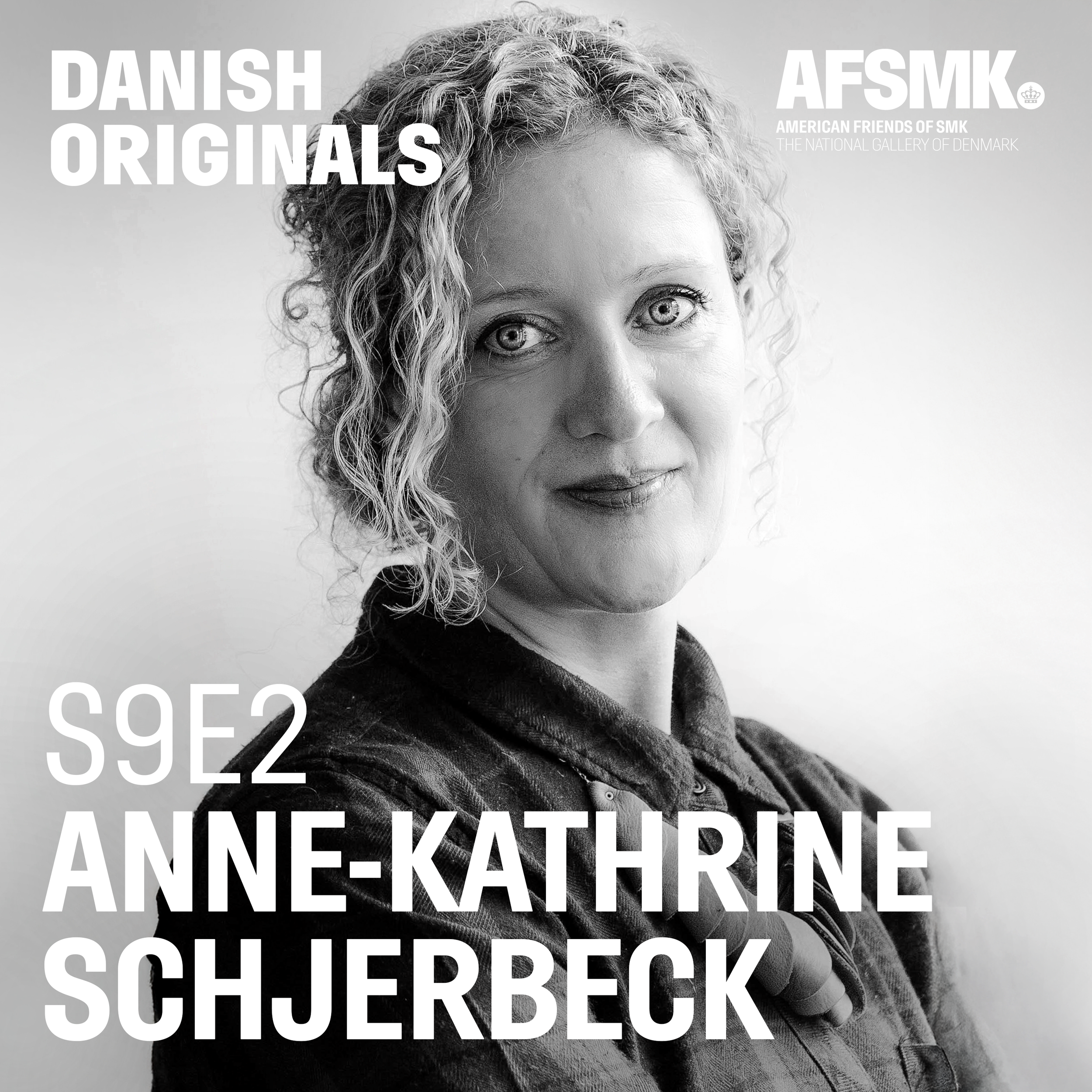
From her home in Healdsburg, California, Hørsholm-born Danish gallerist ANNE-KATHRINE SCHJERBECK talks about the beginnings as well as latest collaborations at Gallery Lulo that merges craft with art and design with a Danish minimalist sensibility. She recalls growing up in Kenya and Zambia where her parents were diplomats, how she felt affinity with the African-American community when she lived in New Orleans, and how climate change post-Katrina brought her out west.
Photographer: Amy Debonis
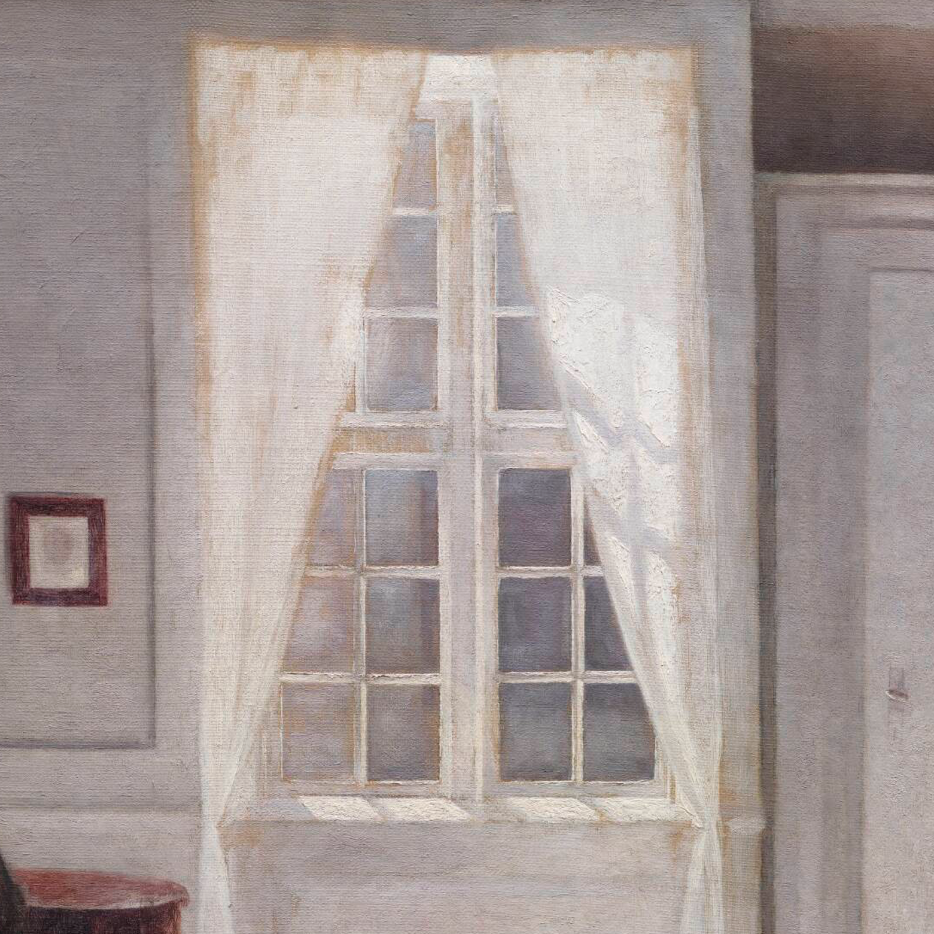
For today's episode, Anne-Kathrine Schjerbeck chose Vilhelm Hammershøi's Stue i Strandgade med solskin på gulvet, or Interior in Strandgade, Sunlight on the Floor, from 1901 from the collection of the National Gallery of Denmark, Copenhagen.
“From the get go, we didn’t follow a traditional model. We are a gallery, but we’re a gallery of many different mediums. And mixing those might seem a little controversial, but it’s actually been wonderful to have fine art, sculpture, jewelry, and everything has its own relationship and all these mediums enhance each other.”
“The exposure early on, the moving back and forth, the very multicultural aspect that you get opens something up to you. And I know from other kids that have lived that life, that tends to be what happens, this traveling lust. But I also think it’s the multicultural aspect that really draws you in. It’s just hard to shake.”
“After the fires happened here so many years in a row, it just felt like the epicenter of all climate change for a while. And maybe we should think about going back to Denmark, and just security and stability and it’s so well functioning, and wonderful education. I did feel that I should give that to my kids. But then when I did go back, it just never felt like we could fit in.”
Powered by RedCircle
This conversation with Tina Jøhnk Christensen occurred on August 11, 2025.
00:04
Anne-Kathrine Schjerbeck
I chose a painting by Vilhelm Hammershøi called Interior in Strandgade, Sunlight on the Floor and it's from 1901.
00:14
Anne-Kathrine Schjerbeck
It shows an almost empty room in gray, white, black tones. There's a woman sitting with her back turned. You don't see her face. There's a closed door, and the sunlight's coming in and hitting the floor, and reflecting back the outlines of the window. It's an intimate scene with open-ended questions.
00:35
Anne-Kathrine Schjerbeck
In California, you live with the sunlight all the time. In Denmark, the light's not around in the same way. And it does something, I think, differently to you because it's just a moment.
00:51
Anne-Kathrine Schjerbeck
That overall mood of deep reflection and stillness is something I connect to and recognize as a feeling of coming back to Denmark and also living far away from it.
01:13
Tina Jøhnk Christensen
My name is Tina Jøhnk Christensen, and I'm the host of Danish Originals, a podcast series created in partnership with the American Friends of the National Gallery of Denmark. Our goal is to celebrate Danish creatives who have made a significant mark in the US.
01:29
Tina Jøhnk Christensen
Today our guest is Anne-Kathrine Schjerbeck, a Danish gallery owner and entrepreneur. Welcome, Anne-Kathrine.
01:36
Anne-Kathrine Schjerbeck
Thank you for having me.
01:38
Tina Jøhnk Christensen
It's wonderful having you with us.You have a gallery named Gallery Lulo in Healdsburg in the northern part of California. It's a small town north of the famous wine country, Sonoma and Napa Valley. How would you describe the location so the listeners can get an idea of the place you're at?
01:58
Anne-Kathrine Schjerbeck
Yes, it's a small, very cute town. It's about an hour and a half north of San Francisco, so it's really not very far from San Francisco. And then it's about 45 minutes from the coast, which is nice too. And then in between, there's the redwood. So it's surrounded by all these little hills and microclimates. And it's about 12,000 people.
02:24
Tina Jøhnk Christensen
I imagine that living in a small town in northern California is very idyllic. Is that the case?
02:32
Anne-Kathrine Schjerbeck
It's very idyllic. Yes. It's beautiful here. I think initially what brought us here and what we were so taken by is the natural landscape — it's gorgeous. And we like to cook and we like to grow food. We have a garden and you can grow everything, which my husband likes to do.
02:51
Anne-Kathrine Schjerbeck
And then also, it was very intimidating moving to a small town because I felt like you were constantly being watched. You can't get away with anything like in a big city.
03:01
Tina Jøhnk Christensen
Which you really need to, huh?
03:03
Anne-Kathrine Schjerbeck
I need to get away with a lot of things. No. So it kind of keeps you in check! But I think the beauty is that it's a pretty strong community. With any community or family, there's dysfunction as well. But it's beautiful that you do know who is around and everything is close by.
03:24
Anne-Kathrine Schjerbeck
At the same time, I would say Healdsburg is not at all one thing. It's diverse in its own way. Because of the proximity to San Francisco, it has people coming here from all over the country. It's not a rural little town in that sense. It's different. It's almost an extension of San Francisco or has become one in a way.
03:45
Tina Jøhnk Christensen
You opened the gallery with the artist Karen Gilbert in 2009. What made you decide to open a gallery there?
03:54
Anne-Kathrine Schjerbeck
She was an artist, I loved art, and it just seemed to make sense. We thought it would be a great contribution to the town and it would be fun, but there wasn't really this big sit-down talk about it. A space became available and we just leaped into it. And my son Lucas, my firstborn, was two weeks old, and Lola, Karen's daughter, was a year old, so we named it after Lucas and Lola, Lulo!
04:24
Tina Jøhnk Christensen
So you were busy bees, you had young children, and you opened a gallery. What a nice time to do that!
04:31
Anne-Kathrine Schjerbeck
I know. It was pretty crazy. But spaces don't come up a lot, and I think we had the foresight to see that this was such an attractive area and that these were going to be sparse spaces to get, and it was close to the main square. So we were just, we're gonna do it. We're going to do it, see what happens, we'll give it a few months. If it doesn't work, it doesn't work. But it did work.
04:55
Tina Jøhnk Christensen
What were the challenges of starting your own business? One thing is getting the idea, finding the location that inspires you, and then go from there. But it's not easy, is it? What were the challenges for you and what was it like to all of a sudden be a business owner?
05:14
Anne-Kathrine Schjerbeck
Well, you do everything yourself. Nobody does anything for you. So that was the challenge. And it continues to be one. But it's also, I think, very empowering. It's the relationships you build with the artists and with the clients, and it's understanding that relationship and what works for your business and what works for your customers.
05:41
Anne-Kathrine Schjerbeck
And so you have to make these little compromises. You constantly have to be dynamic in order to break through and capture people's attention. I would say working with the artists has actually been a really wonderful thing, so I don't find that to be challenging at all, which is wonderful.
06:02
Tina Jøhnk Christensen
How do you pick the artists? Are they local? Are they from California, or are they international?
06:07
Anne-Kathrine Schjerbeck
They are from all over. So there are a handful that are local to Healdsburg because there's a huge makers and art community here. And then we have a lot of artists from San Francisco. We have New York and we have quite a few European artists as well, from England and Germany right now.
06:27
Tina Jøhnk Christensen
Not Denmark?
06:28
Anne-Kathrine Schjerbeck
Not Denmark. I know! Working on that.
06:35
Tina Jøhnk Christensen
I've unfortunately not visited you in the gallery yet. How would you describe it to our listeners? What is special about the art pieces and the jewelry that you have here? What's your identity?
06:48
Anne-Kathrine Schjerbeck
I think from the get go, we didn't follow a traditional model. We are a gallery, but we're a gallery of many different mediums. And mixing those might seem a little controversial, but it's actually been wonderful to have fine art, sculpture, jewelry, and everything has its own relationship and all these mediums enhance each other.
07:14
Anne-Kathrine Schjerbeck
It is a very beautiful space to step into. It's very light, it's minimal. Even though it sounds like it would be packed with things, it's actually quite minimally curated. And as I said before, all these pieces relate to each other. So it's quite a beautiful experience. It merges craft with art and design. It's all these different things that are speaking to each other.
07:43
Tina Jøhnk Christensen
Let's go back in time. You were born in Copenhagen.Your parents were diplomats, and you spent time in Kenya and in Zambia as a child. How old were you when you were in Africa?
07:55
Anne-Kathrine Schjerbeck
I moved, or my parents moved, to Kenya when I was maybe two. My brother was born there. I'm four years older. We were there for six years and then back to Denmark and then Zambia for six years. And my dad lived in Africa, 30 years total. They got divorced. So it was just always there.
08:17
Tina Jøhnk Christensen
It gets under your skin, Africa, doesn't it?
08:20
Anne-Kathrine Schjerbeck
Oh, it does. Yeah. Very much so.
08:24
Tina Jøhnk Christensen
And you went to high school in Hellerup. Did you feel at home in Denmark too? Or did you always know that you were going to leave Denmark? Your parents did it as part of their jobs being in the Foreign Ministry, but you became an expat. That's a very different thing.
08:40
Anne-Kathrine Schjerbeck
I didn't think I was going to leave Denmark. I never consciously thought about leaving Denmark. And I think the period that I had going to high school there and later college, I felt very at home. I had a really fun time in Copenhagen at the time, so I never thought about it that way.
09:01
Anne-Kathrine Schjerbeck
But it just happened that I came to a stage in life where I thought if I'm going to leave and live somewhere else, I just want to do it now. I felt it was the right time to try and do something. Mid-20s. And so I just did. And that's when I moved to Italy. And then very unexpectedly, it took me on a completely different route.
09:24
Anne-Kathrine Schjerbeck
But I would say that I was well equipped for it. It didn't scare me. I didn't think twice about it. I think it felt that wasn't something that was foreign to me to do either. So off I went.
09:38
Tina Jøhnk Christensen
You were 27 at the time that you went to Italy and ended up in New Orleans. You needed a break from your studies at Copenhagen University. You studied English and philosophy.
09:49
Tina Jøhnk Christensen
I moved to Italy and thought I was going to live a romantic life there in an olive field and have a glass of red wine close by all the time within reach. But I met someone who brought me along to the US.
10:01
Anne-Kathrine Schjerbeck
It's funny to think back on that pretty soon into my romantic idea of moving to Rome — it was all very romantically driven, that having visited a few times — I met somebody from New Orleans and a group of friends from there.
10:19
Tina Jøhnk Christensen
And Danny is your husband and he's an American? I believe you met Danny there while working as a tour guide and it was love that led you to New Orleans?
10:29
Anne-Kathrine Schjerbeck
Yes.So it just took over so fast. And Italy is so beautiful. But I have to say that living in Rome, it's tough, you have to do it the Roman way. You know, to have dinner at 10:30 at night, and then go for gelato at midnight. The Italians, they do it their way, and I just didn't really think about that when I moved there.
10:51
Tina Jøhnk Christensen
You sleep during the day, you have a nap. You go for lunch and then you eat a lot and you have a nap.
10:56
Anne-Kathrine Schjerbeck
Yeah, you have a siesta. That doesn't really happen anywhere in the world either, does it?
11:01
Tina Jøhnk Christensen
Maybe in Spain. Did you ever feel your time in Italy was too short and that you would've liked to explore it a bit more?
11:09
Anne-Kathrine Schjerbeck
My romantic ideas of it, let's just say it politely, dissolved. So it was a good experience. I don't think I would live in Rome again, even though it's so beautiful. So I didn't think it was cut too short. I do regret not learning better Italian though, but that just didn't happen.
11:29
Tina Jøhnk Christensen
You were in New Orleans, where we met when I interviewed you right after Hurricane Katrina. That was back in 2005. What was your first encounter with this magical city in Louisiana, which used to be both a French and a Spanish colony?
11:46
Anne-Kathrine Schjerbeck
I went to visit Danny in New Orleans and I had no real idea of what it was going to be like. And I came in August with the heat and the humidity, which was a great test to see if I could actually live there. Because the heat — I just remember as the first thing. I had never felt anything like it.
12:08
Anne-Kathrine Schjerbeck
I had met a lot of Danny's friends before I met him, so there was a group of people that we all are friends with. And so my first encounter there was also going to all these fantastic music venues and of course the incredible food is something in and of itself. It's this big melting pot of French, Spanish, African-American, it's very unique like that.
12:38
Tina Jøhnk Christensen
Were you part of a Danish community at the time? Did you seek out the Danes in New Orleans?
12:43
Anne-Kathrine Schjerbeck
No, I didn't. I was lucky to run into a friend, Pernille, who I met there randomly. It turned out our parents were in Africa at the same time and knew each other. She also married an American and lived in New Orleans. But she's my only Danish friend. I was not part of a Danish community there.
13:03
Tina Jøhnk Christensen
You worked at the Ogden Museum of Southern Art for a couple of years. It's a museum that focuses on art of the American South. What did you do at the museum? Talk about what your job entailed and what did you learn about Southern art? What makes it unique?
13:20
Anne-Kathrine Schjerbeck
The Ogden Museum of Southern Art had a contemporary perspective, which I really liked. It was younger, emerging artists, and it was craft, history as well as music. These were all my interests. And I helped curate the little store that they had, getting artists, crafts people from all over, kind of like a lot of the things that Lulo is doing today.
13:44
Anne-Kathrine Schjerbeck
For me, what really stood out living in New Orleans and working at a museum and seeing all the artists that were brought together, was this richness of the African-American community. What they've brought to the South, that really intrigued me, and how that's infiltrated and merged especially with jazz, but the food as well.
14:08
Anne-Kathrine Schjerbeck
I ended up writing my thesis on African-American literature. Also having a background in Africa and then coming to the US, that has stood out to me a lot.
14:22
Tina Jøhnk Christensen
There are many African-Americans in New Orleans and obviously their forefathers and mothers brought parts of their cultures with them from Africa.
14:32
Anne-Kathrine Schjerbeck
It had or has, maybe more so before Hurricane Katrina, very, very strong African communities there that were dismantled when Katrina happened. It just comes through in so many ways, in the music and in the food, I think the wild, crazy atmosphere that exists there, dancing on the streets. There's always sounds and there's always things going on.
15:04
Anne-Kathrine Schjerbeck
I think that just reminded me a lot of what it was like living in Africa, that open, fun, wild, chaotic sense. And I guess I happened to like that or recognize it somehow. So yeah, I felt at home.
15:25
Tina Jøhnk Christensen
You did not leave immediately after Katrina devastated the city and made it unlivable for a while. What made you finally leave New Orleans? What made you step away from this amazing place?
15:38
Anne-Kathrine Schjerbeck
It was a lot, post-Katrina. And I think when we met you, I don't think we had even processed what we had gone through. And that aftereffect came later. And there were a lot of — New Orleans is a little crazy with the crime —
15:56
Tina Jøhnk Christensen
Corruption.
15:57
Anne-Kathrine Schjerbeck
Yeah, and we had been in some situations. I just think we sat down one day and we wanted to simplify our life and wanted to pinpoint what mattered to us. What do we like to do? What are our values? And let us try to find that moving forward.
16:14
Anne-Kathrine Schjerbeck
And very freaked out as well with the prospect of hurricanes and climate change, having to live through this potentially every year. So when we came here, we didn't think that that would happen here in the same way. And what do you know?
16:32
Tina Jøhnk Christensen
Fires.
16:32
Anne-Kathrine Schjerbeck
I know how to pick them. And now it seems to be everywhere. But the hurricane, of course, it had really scared us on a much more fundamental level.
16:46
Tina Jøhnk Christensen
It's been 20 years since Katrina. By the way, your nickname is Katrina.
16:51
Anne-Kathrine Schjerbeck
I know!
16:52
Tina Jøhnk Christensen
How would you describe what you went through and how did it affect your lifestyle in New Orleans after that?
16:58
Anne-Kathrine Schjerbeck
Well, I think it just jolts you. You realize you can lose everything so fast. Things you take for granted can be gone. The whole structure of society was erased, and I think that was a hard one to process afterwards that there was no police, there was no hospitals, schools were gone.
17:25
Anne-Kathrine Schjerbeck
Now with COVID and fires, it's happened over and over again, but that was really on such a large scale the first time. So I don't know, I think when we moved here, we didn't think it could happen to us, so it affected us because we moved away thinking it was more unique to that area.
17:44
Anne-Kathrine Schjerbeck
And now I have a different perspective on all of that. But I also think it caused us to sit down and think about how we wanted to live our life. What do we want? What don't we want? And so we made that move based on that.
17:58
Tina Jøhnk Christensen
You were living in New Orleans when you fell in love with Healdsburg. What attracted you so much to this place that you moved there just six months after you fell in love with it?
18:10
Anne-Kathrine Schjerbeck
It was a bit of a leap for us. I had come up here with a childhood friend who was doing a show in San Francisco. Her studio mate was Karen, whom I'm now partners with. They had just moved up here, her and her husband, and we at the time, my friend and I, thought they were a little crazy to move to the country and we had to check it out.
18:33
Anne-Kathrine Schjerbeck
So we went out with them afterwards. It was supposed to be a day, turned into three days. And it was just immediate for me. I just fell in love with it. I just thought it was such an exciting place. There were so many things on the fringe going on. It felt like there was a huge artist community. It just felt really raw and like something that we had access to, in a way.
18:57
Anne-Kathrine Schjerbeck
I was very naive about that. And I did call Danny on the third day and said, I've found the place that I think we should live. And he was like, well, let's talk about it. But he said yes. And sight unseen, we drove cross country, checked into a motel and started from there. That was a little crazy.
19:17
Tina Jøhnk Christensen
Do you think your wanderlust led you first to Italy and then New Orleans?
19:24
Anne-Kathrine Schjerbeck
I think so, absolutely. I think the exposure early on, the moving back and forth, the very multicultural aspect that you get opens something up to you. And I know from other kids that have lived that life, that tends to be what happens, this traveling lust. But I also think it's the multicultural aspect that really draws you in. It's just hard to shake.
19:57
Tina Jøhnk Christensen
As a gallery, you have worked on collaborations with a variety of creatives and entities, including a very high profile project with the global Olson Kundig architecture and design firm. Would you tell us a little about that?
20:12
Anne-Kathrine Schjerbeck
This was a really exciting opportunity because Olson Kundig came to Healdsburg and built these beautiful apartments in the middle of this redwood grove, and wanted to work with us doing offsite exhibits where we got to showcase multiple of our artists alongside a furniture design maker and a lighting company SkLO, as well as curating the wine and the food around these exhibits.
20:41
Anne-Kathrine Schjerbeck
So we did that and it was great energy. Beautiful, covered by California Home+Design, which was fantastic marketing for all our smaller, professional, independent working artists and seeing that cross energy with furniture and food.
20:58
Tina Jøhnk Christensen
To those of our listeners who don't know who Olson Kundig is, maybe you could introduce them.
21:03
Anne-Kathrine Schjerbeck
They are a world renowned global architectural firm with multiple awards behind them, and they have really built all over the world. So it was very prestigious to have them come to little Healdsburg and build this huge apartment in the middle of this historic redwood grove, keeping the nature in mind and it's a very beautiful project.
21:28
Anne-Kathrine Schjerbeck
Healdsburg also has a tradition of more modern architecture, thankfully, which has really shaped the aesthetic cultural movement that you see here, more than just falling back on the past and tradition and all of that. So in a way, they fit in quite well. So it was fun, it was great, and we wanna do a lot more of these collaborations. It's good energy.
21:55
Tina Jøhnk Christensen
And you also worked on the HBO TV series And Just Like That. It's the sequel to Sex and the City. Some of the beloved characters, like Carrie and Miranda and Charlotte, to mention a few of them, are wearing your jewelry.
22:10
Tina Jøhnk Christensen
I interviewed the costume designers Molly Rogers and Danny Santiago, so I know they're very hands on with everything that they're wearing. Did they discover your work or how does this work in general? Do you contact them or do they discover you?
22:25
Anne-Kathrine Schjerbeck
We've never even thought about contacting bigger entities like that just because I think it would be so difficult to break through. They discovered us through our social media and contacted us. And sure, we lent them a lot of the jewelry and they used a lot of the jewelry in the series, which was so exciting for all the different artists to suddenly see, 'cause they could have really gone with anyone.
22:52
Tina Jøhnk Christensen
Maybe tell us who's wearing what in the show.
22:56
Anne-Kathrine Schjerbeck
Miranda's wearing a Elisa Bongfeldt ring and Maral Rapp earrings. And then there's a younger artist out of Oakland, Nikki Couppee, who's being worn in the party scene. And then, oh shoot, I forget the character's name right now, she's wearing the really big statement pieces. And throughout, the series has rings by a French artist that we carry. There's a lot. There's a lot. It was very exciting.
23:22
Anne-Kathrine Schjerbeck
And that has led to The Devil Wears Prada, which is being filmed now in New York. Also contacting us and using a lot of the jewelry as well as a lot of custom pieces that have been made specifically for the characters in the movie. And so that's gonna be very exciting to see when it comes out.
23:44
Tina Jøhnk Christensen
And what does this mean to you that you get this kind of exposure?
23:47
Anne-Kathrine Schjerbeck
I don't quite know yet. It's so different because we are so multidisciplinary in the art forms that we do. There's the art side of it, then there's the design part, and then there's the jewelry and the fashion element. And for the jewelry and the fashion element, I really don't know because this is sort of a first time.
24:07
Anne-Kathrine Schjerbeck
So I think it all builds reputation and credibility and visibility for all these smaller artists as well as our gallery and our ability to curate. And so I think we're gonna be used a lot more in the future. That's my hope. And then, we will see. Hopefully it'll lead to lots of sales through the website.
24:31
Tina Jøhnk Christensen
Does it mean more followers on Instagram?
24:34
Anne-Kathrine Schjerbeck
It absolutely does, yes.
24:37
Tina Jøhnk Christensen
And The Devil Wears Prada. It's 20 years ago that the first one was released with Anne Hathaway and Meryl Streep. Do you somehow get perks? Do you get to go on set with the actors or go to the premier or something like that? I'm creating a dream scenario.
24:53
Anne-Kathrine Schjerbeck
I actually got a really big part in the movie — no, I'm kidding, I wish! I was gonna try and sell myself as a younger Meryl Streep or something. That would be awesome. I don't see any perks quite yet. We'll see. We'll see what happens.
25:08
Anne-Kathrine Schjerbeck
The perks right now are that we get to work with some ideas and shape the creative form of these ideas and then pass them onto the character, and working, of course, with the artist, but that's as much as a perk as I get.
25:24
Tina Jøhnk Christensen
Aside from Gallery Lulo, you have also been restoring your own home. Would you tell us about that?
25:32
Anne-Kathrine Schjerbeck
We came across this house after looking a lot after our initial idealistic dream of moving here and buying a barn fell through and discovered how competitive the housing market is. We were so lucky through a friend to come across this old home, which was built in the 1900s, with a big yard, but at the time, completely overgrown.
25:56
Anne-Kathrine Schjerbeck
Nothing had ever been done to the home. It was just kind of sitting there, which is very strange. What we saw was the beautiful bones of this home, high ceilings and the original windows and the backyard. So we were lucky to get it. And have been working on it pretty much ever since.
26:13
Anne-Kathrine Schjerbeck
It just brought a lot of New Orleans back to us, that experience with old homes and restoring them and keeping their character and not just tearing it down, especially the beautiful windows and the glass. So we've been working with that and we've added some modern Danish features.
26:34
Anne-Kathrine Schjerbeck
The backside of the house, which you actually probably see behind me, is a very modern addition to the old part of the home and then opens up the whole backside of it,which is an idea we came up with. We took a bit of a chance, it could have been a disaster, but it opens up into this bigger backyard, which is really what we love to do, which is growing our own food, the plants and everything. So that was our little creative project here.
27:00
Tina Jøhnk Christensen
So tradition mixed with modern.
27:03
Anne-Kathrine Schjerbeck
Yeah, that's the Danish flair!
27:04
Tina Jøhnk Christensen
The Danish flair, yes.
27:05
Tina Jøhnk Christensen
Now that you've lived abroad for so many years and have two children who are American, do you ever think about how life would've turned out if you'd stayed in Denmark? Or is this just completely natural to you and the thought doesn't even strike you, what would life in Denmark be like?
27:24
Anne-Kathrine Schjerbeck
I still have close friendships in Denmark, so we followed each other through the years, and I think my trajectory would probably have been very similar. I think I would've stayed in Copenhagen for sure, I don't know, and be married. It feels so strange to think about because I can't help thinking, would I — no, that sounds arrogant — be bored a little bit?
27:48
Tina Jøhnk Christensen
It doesn't sound arrogant at all. That's exactly what I would think.
27:52
Anne-Kathrine Schjerbeck
Okay. All right. Yeah.
27:54
Tina Jøhnk Christensen
I think it's just built in you when you have that wanderlust.
27:57
Anne-Kathrine Schjerbeck
Yes, I think so. Yeah.
28:00
Tina Jøhnk Christensen
Not arrogance.
28:02
Anne-Kathrine Schjerbeck
But I went through times, I think after the fires happened here so many years in a row of why this is probably the most terrible place to live that you can choose. It just felt like the epicenter of all climate change for a while. And maybe we should think about going back to Denmark, and just security and stability and it's so well functioning, and wonderful education.
28:33
Anne-Kathrine Schjerbeck
I did feel that I should give that to my kids. But then when I did go back, it just never felt like we could fit in. Especially, I mean, Danny from Louisiana. How would that work? But the kids have now gone to this wonderful Danish summer program called The Danish Summer School.
28:56
Anne-Kathrine Schjerbeck
And it's for kids who live internationally. And they've met all these kids that have the same lifestyle as them that feel Danish, but live abroad. And that's opened up a new perspective for me on what it means to go back. Because they have a future there more than I do, I think.
29:18
Tina Jøhnk Christensen
Danny's American, so I assume that the language at home is English and not Danish. Did you manage to teach them Danish? Do they speak it?
29:26
Anne-Kathrine Schjerbeck
Oh, I tried with my firstborn. I really did. But I will tell you it's hard working and speaking Danish when your husband also doesn't speak Danish. But I think I did a pretty good job with Lucas because he picked it up when he went to the Danish camp pretty fast, so he can speak a little bit, but understands mostly everything.
29:50
Anne-Kathrine Schjerbeck
And then it just all went south with my younger son, the second born. That just was too much, it wasn't happening, but he's gonna go there, so I think he'll get that from other places.
30:04
Tina Jøhnk Christensen
How old are the boys?
30:06
Anne-Kathrine Schjerbeck
11 and 16.
30:08
Tina Jøhnk Christensen
11 and 16. Okay. Well, so soon he's gonna go to college, I assume, the oldest.
30:15
Anne-Kathrine Schjerbeck
Yeah.
30:16
Tina Jøhnk Christensen
Is that going to happen in the US or in Denmark? I know a lot of Danes who send —
30:21
Anne-Kathrine Schjerbeck
Their kids back to Denmark? I don't know, we go back and forth all the time. He really wants to go to UC Berkeley. We'll see if he gets in. It's extremely hard, but I think he's very drawn to doing something in California and starting out that way as his base, and then maybe doing a year in Denmark.
30:41
Anne-Kathrine Schjerbeck
I think it just feels like a big step to do that right off the bat, because that's just not something we've necessarily nurtured.
30:51
Tina Jøhnk Christensen
And Berkeley is close. It's in California.
30:53
Anne-Kathrine Schjerbeck
And Berkeley is close. And it's Berkeley, so.
30:56
Tina Jøhnk Christensen
And known as a very good university or college.
30:58
Anne-Kathrine Schjerbeck
Yeah.
31:01
Tina Jøhnk Christensen
Does Danish still come easy to you? If you and I were to switch and speak Danish, would you speak it fluently and not have to choose American words here and there?
31:12
Anne-Kathrine Schjerbeck
I think if I met somebody who is fully Danish, I would probably sound very annoying because I do mix in so many English words all the time. It's like The Julekalender. Remember that one —
31:25
Tina Jøhnk Christensen
Yes.
31:26
Anne-Kathrine Schjerbeck
— from the old days when they were constantly speaking Danish and English. I feel like I sound like that.
31:33
Tina Jøhnk Christensen
So it doesn't come easy? You think in English —
31:36
Anne-Kathrine Schjerbeck
No, no, I think it would come easy. Yes, absolutely. I just would mix in some English words here and there. Probably not even think about it that much. It's just become morphed, but it hasn't gone away at all.
31:50
Tina Jøhnk Christensen
Do you still feel Danish after all this time? And I assume you have dual citizenship. Do you feel American too?
31:58
Anne-Kathrine Schjerbeck
I have dual citizenship and yes, I still feel very Danish. I don't think that ever goes away and it's such a beautiful country. There's so much to be so proud of, the way that it even works as a society with their education and their health system and just progressiveness compared to here at times. So yes, I mean, and it's just in you, I think. So, yes.
32:33
Tina Jøhnk Christensen
And to what extent do you feel American?
32:36
Anne-Kathrine Schjerbeck
I feel very American as well. Again, it's something that's very difficult, I think, to define. How do you — because America is so big and it's so complex. But I think the openness here, I'm very tied to the natural landscape of California. I just think I get so happy looking at it all the time.
33:02
Anne-Kathrine Schjerbeck
It would be very difficult to leave a place like California. And the friendships that you have. It's all these little things that add up to a certain way of life that I think is very American and it would be hard to leave. I like it a lot.
33:22
Tina Jøhnk Christensen
And now you have the perspective of being both in Louisiana and California, which are two completely different parts of the US, how would you have defined the main differences between the two and the experience of living there as a Dane?
33:37
Anne-Kathrine Schjerbeck
When I first moved to New Orleans and lived in the south, as a woman, I felt that it was very restrictive somehow, coming from Denmark with '70s parents and feminist mom to a place that's very traditional — religion plays a very big part in how you go about your life and your relationships.
34:07
Anne-Kathrine Schjerbeck
That was just very foreign to me and I didn't like it. I felt I had to conform to be a certain way and it just wasn't something I was identifying with. So that was, I remember, a big factor of also wanting to leave — just somewhere more neutral, more familiar to me.
34:29
Anne-Kathrine Schjerbeck
And so when we came here, Northern California, those are the hippie values, and I just feel it's actually very aligned to Danish values in so many ways. So that was a big difference.
34:47
Tina Jøhnk Christensen
California is a blue state, a liberal state, compared to Louisiana.
34:52
Anne-Kathrine Schjerbeck
Yeah.
34:53
Tina Jøhnk Christensen
New Orleans is democratic.
34:56
Anne-Kathrine Schjerbeck
I think it was the religion that really threw me there, that it's so strong.
35:01
Tina Jøhnk Christensen
It's mainly Catholic, right?
35:03
Anne-Kathrine Schjerbeck
Yes. Yeah.
35:04
Tina Jøhnk Christensen
When you think about the person you've become, do you recognize something in your own personality that makes you particularly Danish, that goes back to your Danish upbringing?
35:15
Anne-Kathrine Schjerbeck
I think it really comes through in what I am working with daily with the art side of my business. The perspective and aesthetic that we have in Lulo is very much driven by this Danish minimalist sensibility.
35:37
Tina Jøhnk Christensen
My final question to you. You've been to quite a few countries in your lifetime already. You've lived in many countries. Do you feel that the US is your final destination? Or is there another place you can imagine growing old?
35:54
Anne-Kathrine Schjerbeck
I don't think that I have anything definitive. It's hard for me to think that way, and I think I'll always keep an open mind about the future and where I end up for sure. I don't have anything particular in mind, but it's open for sure.
36:14
Tina Jøhnk Christensen
Alright, thank you so much, Anne-Kathrine, for being part of Danish Originals. It's been a pleasure having you with us.
36:20
Anne-Kathrine Schjerbeck
Thank you for having me.
36:26
Tina Jøhnk Christensen
For today's episode, Anne-Kathrine Schjerbeck chose Vilhelm Hammershøi's Stue i Strandgade med solskin på gulvet, or Interior in Strandgade, Sunlight on the Floor, from 1901 from the collection of the National Gallery of Denmark.