
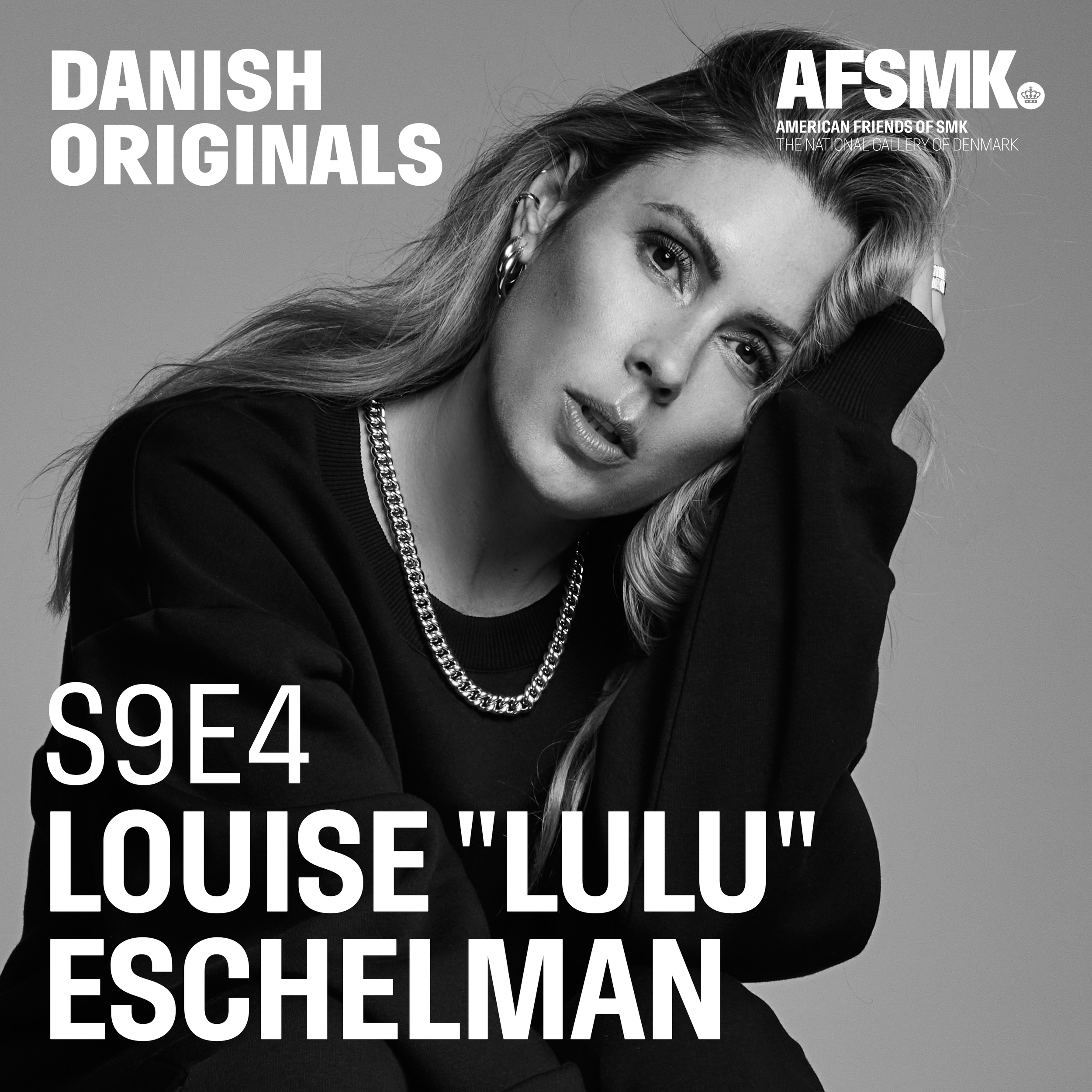
On a visit to Los Angeles, Skagen-born, Silicon Valley-based Danish designer and creative consultant LOUISE "LULU" ESCHELMAN recalls arriving in LA on a one-way ticket. She shares the vision of her company Lumilla, founded on Danish minimalism with a laidback California sensibility, that has evolved from a luxury leather to a lifestyle brand. Louise talks about giving back, how she found her footing, and her new venture to work with new artists and brands, especially from Denmark.
Photographer: Eji Eustaquio
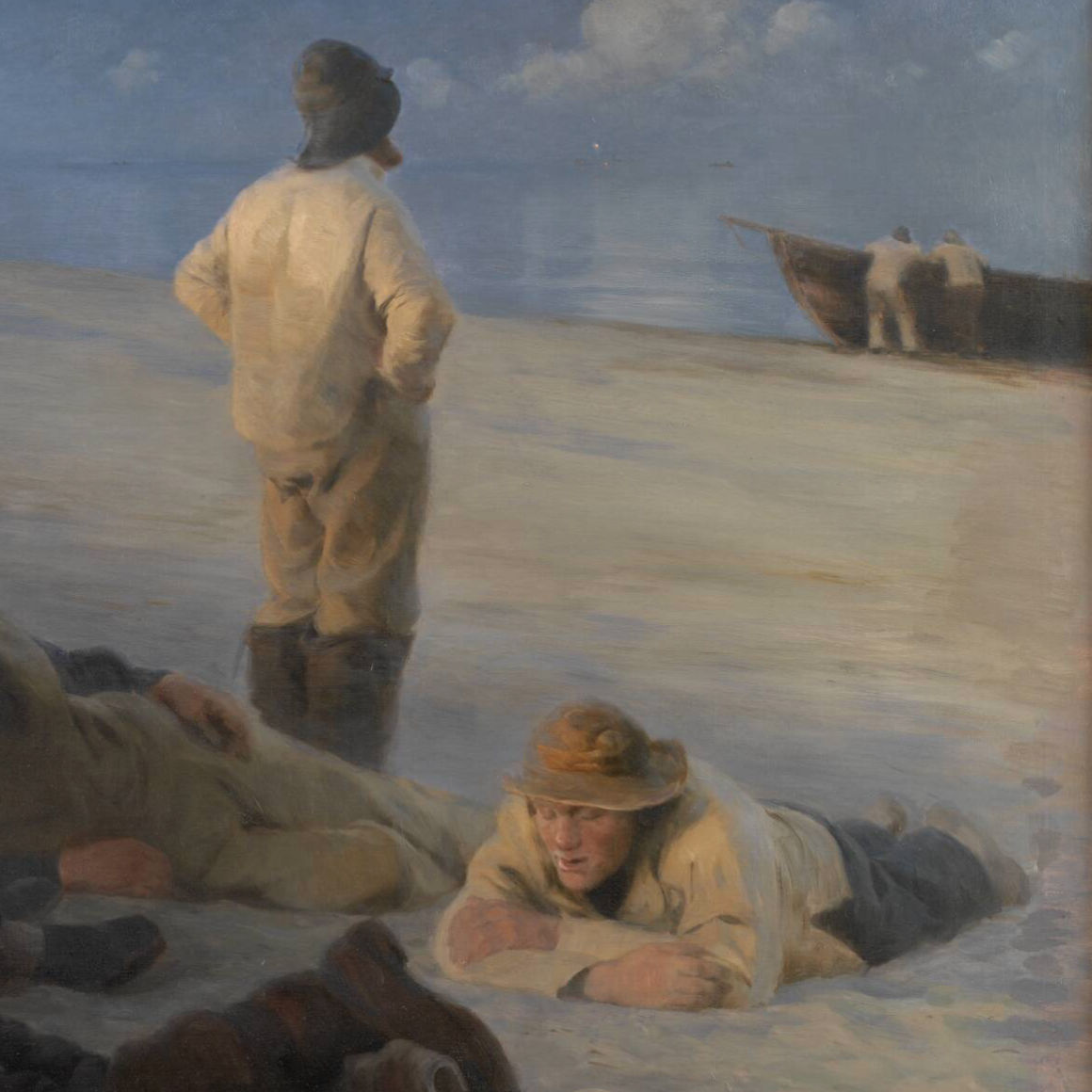
For today's episode, Louise Eschelman chose P.S. Krøyer's Fiskere påSkagens strand, or Fishermen at Skagen Beach, from 1883 from the collection of the National Gallery of Denmark, Copenhagen.
“You can’t please everybody. I think if you try to do that, you lose your own sensibility. You lose your own aesthetic and you lose the vision.”
“I love following artists and just getting in creative people’s minds and seeing the different creative universes. I love biographies of designers and artists and seeing how the process of getting to where they were and what they picked up along the way.”
“The charitable component I actually built in before we even launched the company. There’s much more to life than fashion. I love fashion, but I wanted it to have a really positive footprint and also to show my children, you can do things you love and then you can do good with it.”
Powered by RedCircle
This conversation with Tina Jøhnk Christensen occurred on September 22, 2025.
00:04
Louise Eschelman
I have chosen the painting Fiskere på Skagens strand by P.S. Krøyer.
00:10
Louise Eschelman
It's very muted. It's very creamy and brownish. It's an image of realistic normal life. This shows fishermen laying on the beach relaxing. There's a boat being pulled in. It's hard to tell whether they're going out to fish or they just came back.
00:27
Louise Eschelman
It evokes so many memories from my childhood. This beach, in particular, is right by where I grew up. I used to walk my dog here every day. We used to swim there in the summers. There's the blue light, which is this light that happens at the end of the day in Skagen. It looks like the water goes into the sky and it becomes the same color, it becomes one.
00:49
Louise Eschelman
We used to look at these paintings in art class at school. It feels like such a part of who I am and part of our art history. It reminds me of home and growing up. And it makes me happy.
01:08
Tina Jøhnk Christensen
My name is Tina Jøhnk Christensen, and I'm the host of Danish Originals, a podcast series created in partnership with the American Friends of the National Gallery of Denmark. Our goal is to celebrate Danish creatives who have made a significant mark in the US.
01:23
Tina Jøhnk Christensen
Today, our guest is Louise Eschelman, a Danish designer and creative consultant. Welcome, Louise.
01:29
Louise Eschelman
Thank you. Thanks so much for having me.
01:31
Tina Jøhnk Christensen
You're very welcome. We are actually in my home in Glendale, so Louise is visiting us, which is lovely.
01:38
Louise Eschelman
Yes.
01:39
Tina Jøhnk Christensen
First of all, your nickname is Lulu. What is the history behind this name?
01:44
Louise Eschelman
When I moved to the States, for some reason nobody could pronounce my name, Louise. Everybody called me Louisa or Lois, which was not my favorite. When I met my husband, he started calling me Lulu. Everybody could pronounce it, they could write it on my coffee order and then I became Lulu. To my Danish family and friends, I'm still Louise. To Americans, I'm Lulu.
02:05
Tina Jøhnk Christensen
You opened your company Lumilla in 2013. How would you describe Lumilla? You combine Danish minimalism with a laid back California sensibility. What does this mean?
02:18
Louise Eschelman
I really wanted to bring my Danish design sensibility. By saying minimalistic, that's almost an overused word for Danes at this point, but it's really about creating something that's really simple, well made, and very functional. I don't think that it needs a lot of bells and whistles that are not necessary.
02:37
Louise Eschelman
A bag needs to serve a purpose. What's really difficult about creating minimalistic pieces is there's so much that goes into it that you can't see. You have to hide things, and then have to be strong. For me it was creating something that felt very authentically Danish. And then I love California, I like the lifestyle. It's laid back and chill. I like that you just have jeans and flip flops and you throw a great bag over your shoulder. I didn't want it to feel fancy.
03:04
Louise Eschelman
I wanted it to be also very transitional. You can use the clutch for your laptop. You can put your jewelry in it when you travel, you can use it out at night. It's a super chic clutch. They need to serve a purpose and you have to buy less but better. They last forever. That was the thought behind it in the beginning. That's where we've stayed true to.
03:25
Tina Jøhnk Christensen
I love that philosophy. I really do. What is it about women's bags that fascinate you and what is important for you in terms of the design of the bag?
03:35
Louise Eschelman
First of all, it has to be strong. I think a lot of people overlook the fact that we stuff a lot of stuff in our bags. We carry a lot. Our testing process is quite extreme. We put big bricks in there. We really try to test the strength of the bags. I think that's important.
03:54
Louise Eschelman
Also, something that I think a lot of people don't focus on is how does it actually feel on your body? Does it cut you on your shoulders when you wear it? Does it cut your arms? Is it annoying it falls off your shoulders? It's an extension of apparel. It has to actually fit the woman's body. If you make a bag that you have to hold in a weird way, that's not the bag you gravitate towards.
04:16
Louise Eschelman
You want this bag to be just living with you. You throw it in the car, you put it on, you travel with it. Those things are important. The aesthetic component, it really has to be beautiful. It has to be pleasing. It can't just be utilitarian, if you will. You have to be drawn to it when you see it.
04:33
Louise Eschelman
I think coming from Europe, there's such an emphasis on beauty. I was very drawn to how you create something that's really beautiful and that you look at it, you have to have it. And then when you get it, you're impressed with the quality. That's been something that has been very true to all of our collections. They last and they're beautiful.
04:51
Louise Eschelman
There's something about bags for women too, it's an emotional purchase. We just love them. My husband always says, how many bags do you need? I don't like following trends. I want my bags to be amazing now and in ten years. I don't want them in crazy colors. I don't want people to say, oh, that was spring of '13 and that's done.
05:10
Louise Eschelman
They're very black. I do mostly my bags in black. Not everybody thinks that's the greatest business model, but I love it. I know most people need a black bag, so there's that.
05:23
Tina Jøhnk Christensen
I think all my bags, apart from one, are black. What do you always have in your bag and how does it affect the way that you design bags?
05:35
Louise Eschelman
I want all the bags to have an inside zipper. That's important to me, because I don't like big zippers. I don't like producing bags with big zippers. It's a hassle. I don't like the look of it. I like bags to be really beautiful and leather lined at the top.
05:49
Louise Eschelman
I always create a small pocket inside for your valuables. You can put your wallet in there, your passport, if you travel, your phone, that's important to me. Most often I make feet. If you put it down, you don't ruin the bottom of the bag. Those are some important things.
06:04
Louise Eschelman
What I always have in there. I almost always have one of my padded clutches, either with jewelry, I tend to carry around a lot of jewelry, I like to change my mind during the day. I always have my laptop. I always have a sketchbook, if I get inspired. I rip out a lot in magazines and I'm always collecting creative little reminders.
06:25
Louise Eschelman
I like having a sketchbook. I have always a couple of lip glosses. I'm a very big lip gloss person. I have Stimorol, the Danish chewing gum. I always have Stimorol, that's my favorite. That's about it for what I always have. Aside from that, I'll put all kinds of stuff in there. I'll have flip flops if I'm wearing a heel — transitional, I can go from day to night.
06:45
Tina Jøhnk Christensen
So the bag has to be fairly big.
06:47
Louise Eschelman
I like big bags. Yes.
06:49
Tina Jøhnk Christensen
What inspired you to create your own business and what were the challenges?
06:54
Louise Eschelman
It's one of those things where it's better not to know everything. I actually worked for a Danish designer, Ann Wiberg, and she had a haute couture brand called Trash Couture. We were brought over to the States to introduce haute couture to the American customer, and we were in New York first and then in LA.
07:12
Louise Eschelman
And I had this wild idea that I was just gonna book a one-way ticket, stay in LA after we did that, finish off with her and I would figure it out. I would find a place to live, I would figure something out. I had nowhere to live, I had no real plan, not a whole lot of money, but I was just excited.
07:30
Louise Eschelman
I ended up moving to LA, I found a place to live. I would always roam around looking at design stores walking down Rodeo Drive, and I was bothered with the price point. Coming from Europe, there's such an emphasis and focus on craftsmanship and the way things are created and made. I like paying for that.
07:52
Louise Eschelman
There were a lot of companies where you're paying for the name and it's part of the game, it is what it is, they have built a brand. I wanted to merge those two. I wanted to create something that felt luxurious but that people used every day, not a gown you'd take out two times a year. I wanted to create an haute couture piece for your everyday life.
08:13
Louise Eschelman
I personally just love handbags. It's always been one of my favorite items and it's something that we all wear and need and use and love. I started toying around with the idea of creating my own luxury leather company.
08:29
Louise Eschelman
I ended up getting hired by Von Dutch Originals. That was quite the detour from working in haute couture and European fashion. This was fast fashion, screen printed t-shirts, such a different world, which was amazing for me because I needed to learn marketing. I needed to learn the US market and the customer and how everything worked.
08:49
Louise Eschelman
I came from such a different way of selling. We would have customers come into the showroom many times, create the gowns on the customers. I loved that. This was mass production, huge quantities, big, big orders, and we had to go to markets and sell. I learned so much from that. But I also really learned that I wanna go back to my love for craftsmanship.
09:15
Louise Eschelman
I had my first child, took a break from Von Dutch, and ended up having three kids back to back. And then I found a great French manufacturer in Downtown LA. They were amazing, very focused on craftsmanship, very, very particular, all about everything that I loved. It was a little bit more expensive, but the quality was fantastic. Eight years we worked together, everything was handmade and super luxe.
09:41
Louise Eschelman
That's what differentiated us from some of the other handbag companies. It felt good because I stayed very authentic to what I had set out to do. It didn't feel like I was cutting corners. It was made in the US which felt good. This was the country that welcomed me, so I liked producing it here. That was the start.
09:59
Tina Jøhnk Christensen
You worked with Gwyneth Paltrow's Goop. You met the former actress turned businesswoman through a friend. How did the collaboration come about and did you actually sit down with Gwyneth herself to make the deal?
10:13
Louise Eschelman
All of that, yes. We had a show in LA. She's really good friends with one of my really good friends. We did a show, we did a presentation of some of our bags. At that point we had done a collaboration with Montage Hotels & Resorts. We had this resort collection with striped linen and leather on the bag. They were very chic.
10:32
Louise Eschelman
My friend, they came by, and she said, you have to go see Lulu's bags. This is totally your deal: it's female founded, it's all about luxury and quality and craftsmanship. And she loved them. I thought she could just be nice and say that she loves them. I gave her a couple of bags.
10:49
Louise Eschelman
That afternoon, she emailed me and she said, I love these bags, I want you in the store and I want to do a collaboration. I want to work with you. I want to do something together. Which was exciting. She had just opened in San Francisco, a little popup. That was our very first live store. They sold out. That was super exciting.
11:07
Louise Eschelman
She's all about the cleanliness of her products, the health of it, having everything be intentional. It was a very good fit. She's an incredible businesswoman. She's very professional. She's a badass. She knows what she wants. She doesn't apologize. I love that.
11:24
Louise Eschelman
She was very clear in what she wanted. I was very clear on what I did, we just worked together really well. I worked with her team. I would come up with prototypes. We would give them to her. She would look at them and say, I don't like this, I like this. It was very easy.
11:40
Tina Jøhnk Christensen
I've interviewed her many times as an actress, so I've met her and she's very professional with that too, and actually very kind.
11:47
Louise Eschelman
I don't know if this is a little bit of a Danish thing, where we like it very straightforward, or at least I do. I just don't like all the fluff and the over-explaining or trying to be nice. She's very direct and it's just easy for me to work with. That's how I work. There's no hurt feelings if things don't work and it cuts out a lot of the in-between, whatever you call that, fluff.
12:12
Tina Jøhnk Christensen
Yes. Fluff. Noise.
12:14
Louise Eschelman
Noise. I don't want Lumilla being for everybody. You can't please everybody. I think if you try to do that, you lose your own sensibility. You lose your own aesthetic and you lose the vision. Because then, well, maybe I should do all these different colors, maybe I should do it cheaper. She was a perfect example of I know what I like, I'm not gonna apologize, but this is what I like. Her team was great. It was great. I loved it.
12:37
Tina Jøhnk Christensen
You also had another coincidental meeting with somebody in a cafe, I think in Brentwood, where you ended up on a reality show. Talk about coincidences, huh?
12:47
Louise Eschelman
Oh gosh, that was crazy. It is interesting what happens when you're just roaming around in the universe. At some point in my career, I really needed money, I needed investment in order for me to grow.
13:01
Louise Eschelman
We live in the Silicon Valley area, which has a lot of investors, a lot of capital, and a lot of very bright, smart people. And I had spoken to a few and pitched the brand. I was too creative of a company for somebody to get their return on investment. It was too flimsy for some of those big time investors to come in and invest in a fashion company.
13:23
Louise Eschelman
I knew I had to do something different and I wasn't gonna give up. That was for darn sure. I had to find a way. There's a lot of investment shows on TV and I love them. I love hearing people come in and pitch their concept. And it's so creative, too, to see what people come up with and how they got there and who also gets the investments. And it's a little brutal —
13:43
Tina Jøhnk Christensen
They get insulted too.
13:44
Louise Eschelman
They are very insulting and that's what makes good tv. I knew I didn't want to go on and stand in front of a show called Shark Tank. But, I did want to find an investor that almost wanted to invest in me more than just a company, that saw a potential in what I was doing.
14:00
Louise Eschelman
There was another show called The Profit, and it's one guy investing in companies and he goes in and he helps scale and helps grow and resuscitate, if you will, some companies, if you're at that point. I applied to the show. I think they get 60,000 applicants every season.
14:20
Louise Eschelman
I figured, it's a long shot, but why not me? I didn't hear back, of course. I was sitting and having brunch next to Goop at a little restaurant called Farmshop, and we always eat there when we have meetings. I happened to see the producer of this show. I recognized her because she speaks to the investor on this show as part of the show. They talk about the people on it.
14:42
Louise Eschelman
I figured, what do I have to lose? I want to just go introduce myself, say hi, say I love the show. I walked over, she was having brunch with her little son. I totally interrupted her, and I said, I just wanna say how much I love your show. It's so inspiring and I just think you guys do such a good job, it's one of my favorite shows.
15:00
Louise Eschelman
And I have actually also applied to it this season. She goes, oh my gosh, you have? I said, yeah, I haven't heard back from you guys, which of course they can't get back to 60,000, however many are applying. She said, oh, let me go back and let me check it out, let me go look.
15:19
Louise Eschelman
She was being nice and it was just a nice interaction. I didn't think anything was going to come from it. I was driving back to San Francisco that day and I went to get gas in my car and they called me. And they said, can you come in for an audition? I said, absolutely. That was the beginning of it. It was a very strenuous and exhausting ordeal.
15:44
Tina Jøhnk Christensen
And he's brutal, the host?
15:46
Louise Eschelman
He's pretty brutal. He was very kind to me, I thought. But he's brutally honest. It's reality tv, right?
15:56
Tina Jøhnk Christensen
There has to be some drama.
15:57
Louise Eschelman
It has to be exciting for the viewer. And you don't know what you don't know. The way that they do it, you shoot with the team for three to four months and you don't know where you're going, ever, until the day before and you don't know when you're going somewhere. They tell you, jump on a plane, meet us in New York tomorrow, meet us in Downtown LA.
16:17
Tina Jøhnk Christensen
That's demanding stuff.
16:19
Louise Eschelman
It's wild. It was wild. It was incredibly exhausting. And then you walk into places and the team is there with the camera crew and you don't know who you're walking in to meet. It can be an artist, it can be a businessman. I went into a school in Chicago of students that were challenging me on my designs. All kinds of stuff.
16:43
Louise Eschelman
We walked into an incredible artist downtown that spray painted all the bags. You don't know. And then he'll really challenge you on your finances, which was daunting because you're sitting on camera being recorded when you're trying to do math, which is not my favorite.
17:02
Louise Eschelman
And at the very end of it, he'll tell you whether or not he wants to invest. You basically shoot for three to four months and then you may or may not get an investment. But the show will still air. It's a chance.
17:15
Tina Jøhnk Christensen
And some other people might see it and want to invest.
17:17
Louise Eschelman
100%. I also just felt, I'm gonna go on there, do my very best, give it my very best shot, be very true to who I am. Then let's see what happens. He invested, thank goodness.
17:27
Tina Jøhnk Christensen
And he didn't make you cry?
17:28
Louise Eschelman
He did not make me cry. Nope. They told me ahead of time, you will be crying on camera. I did not. Maybe a little bit behind the scenes.
17:37
Tina Jøhnk Christensen
That's okay, a little crying in the corner's all right.
17:41
Louise Eschelman
Exactly. So yeah, that was a wild, wild ride.
17:45
Tina Jøhnk Christensen
So it sounds like the investment was important. What did it do for your company?
17:50
Louise Eschelman
It allowed me to scale. My dream was always to scale and create a much bigger company. What happened was the investment allowed us to grow really quick. We did a huge production run, we added onto the collection. We added colors, which was his idea. He said, it's important if we're gonna scale, you can't just be black. We did all that, we did the biggest production we'd ever made.
18:19
Louise Eschelman
We actually took it overseas to some of the luxury manufacturers. We took it out of our own little handmade facility, did a huge run, had it containered in. I got into the whole business of importing and containers. Just as we got it in, COVID hit —
18:39
Tina Jøhnk Christensen
Oh no.
18:40
Louise Eschelman
The biggest production, the largest investment, the biggest opportunity came to a screeching halt. We brought in all this inventory. It was rough. We were all scared. Everybody was at home. Nobody was focusing on buying luxury leather handbags.
18:58
Tina Jøhnk Christensen
We couldn't go anywhere with them.
19:00
Louise Eschelman
We couldn't go anywhere. I guess you could sit at home and look at them. They were pretty, maybe that would've made us happy. It was a great opportunity and just incredibly bad timing. We ended up having so much inventory. That was really hard.
19:13
Louise Eschelman
Another thing was, I thought the investment came with a network of people that were going to guide me and help me. I had two people helping me on the Lumilla side. High caliber fashion people. Thank God for those two because they got me through and they were incredible. The money came and we grew and scaled, but it was still just me doing everything.
19:37
Louise Eschelman
The company grew, but I was still just me. It was interesting and exciting, but it became something I didn't even want it to be. I thought I wanted that. I thought I wanted that huge, big fashion company. I lost touch with the production. It was no longer handmade. We took a little bit of a detour from what I set out to be, and I didn't end up loving it.
20:02
Louise Eschelman
Again, maybe it's a little bit about Danish, it doesn't all have to be so grand. There's something special about creating smaller runs and focusing on how you make it, what's behind it, how is the leather treated, all those things. It was a wild ride.
20:20
Louise Eschelman
The guy was amazing. I ended up actually buying him out. He bought into the company. He got actually 50% of it. I ended up buying him out again. I'm back to owning all of it again by myself.
20:32
Tina Jøhnk Christensen
That's probably for the good.
20:33
Louise Eschelman
But he was great. I'm eternally grateful for what he did for me. It's what I wanted. I had to get there. I would have been going for that investment now, today still, that had to happen for me, to understand that's not what I wanted.
20:48
Louise Eschelman
You could have hired a team, you could have had somebody else run it. I need to physically go down, touch the hides and go through the stitching process and the coloring of the stitch. All that. That's what I love. That's the creative part I love.
21:03
Tina Jøhnk Christensen
You mentioned that you tear out clippings if you see something that inspires you. In general, where do you get inspiration for your bag design?
21:12
Louise Eschelman
Where I get the most inspiration is traveling. I love seeing how people live in different spaces and how they use bags throughout the day. 100% I get the most inspired in Copenhagen. That's never, ever changed.
21:31
Louise Eschelman
There's something about the Danish girl especially, guys too, very stylish there. They have a way of putting themselves together uniquely. They don't follow a certain trend. They'll go to the thrift store, they'll put on a cool t-shirt from there, they'll have a cool bag. They just mix and match. I like that sensibility. It feels effortless and not so edited. I like that. I get very inspired there.
21:58
Louise Eschelman
I get very inspired by art. I love art. I love going to museums. I love following artists and just getting in creative people's minds and seeing the different creative universes. I love it. I read lots of creative people's biographies. I love biographies of designers and artists and seeing how the process of getting to where they were and what they picked up along the way. I like living in a very artsy, creative world. I'm very inspired by that.
22:30
Tina Jøhnk Christensen
You have expanded. Talk about how you've expanded Lumilla from handbags to other products.
22:36
Louise Eschelman
So, my vision for it was always to grow it into more of a lifestyle brand. It goes back to why I wanted to do the bags. I felt I couldn't find what I wanted myself at a price point that I thought was fair to pay for it. I basically wanted to create my favorite wardrobe and things that I wanted for myself, and then I figured if I need it, there's gonna be a lot of other people that need it and that love it.
23:00
Louise Eschelman
It started with handbags and then we expanded into some apparel. We call it everyday basics. So, really well made t-shirts that became the next thing. Again, something we all need — black and white t-shirts — and we produced them with a big factory that does a lot of the luxury brands. It was a very luxurious t-shirt. Those were great. We did some sweats, things that we all just like roaming around in. That was a little bit of an after-COVID thing.
23:27
Louise Eschelman
Then my own personal love for jewelry is quite big. I felt I really needed to bring that into the company, again in a more affordable way, but I wanted it to be fine jewelry. I wanted to find a way that we could have that laid back, every day, California wardrobe, a really cool bag, a great t-shirt, a pair of jeans, and then just a killer piece of jewelry.
23:56
Louise Eschelman
We launched that about two, three years ago and it completely exploded. What I learned was, which is exciting, and it comes with being in business for quite a lot of years. Once you build trust in your customer and they love your brand, they want to have everything you curate.
24:17
Louise Eschelman
I think curation is important. If you curate the Lumilla look, people will gravitate towards it. I figured jewelry will fit into that nicely. And it did. It's become our biggest seller. Jewelry has way surpassed the bag business at this point.
24:36
Tina Jøhnk Christensen
Really? Okay.
24:36
Louise Eschelman
And then we launched a perfume, that was the next thing.
24:38
Tina Jøhnk Christensen
It's called Copenhagen.
24:39
Louise Eschelman
It's called Copenhagen. It had to be. It had to be. It reminds me of home too. There's something about the scent that reminds me of Denmark. It's very sexy. It's quite dark and heavy. We worked with a company out of Paris and they do these very emotional scents. You're very drawn to the scent, which I love.
25:00
Louise Eschelman
It was very difficult. I figured if you just put everything together in a scent, all the scents you love, then you're going to create the most amazing scent, the best scent in the world. I said, okay, I love this, I love this, I love this. We put it all together and it was terrible. Absolutely terrible. It was not good.
25:16
Louise Eschelman
We worked on it for a long time and she taught me the process. You have to mix, it's almost like the dark and the light, which is a theme of the perfume. We went back and forth for a long time and the end result is amazing. We created this scent, it's called Copenhagen, and then we created a little art kit perfume.
25:32
Louise Eschelman
It's called the Crayon. It's a combination. It's the scent split up into like a he and a she, a dark and a light. You can mix and match it the way you want. If you do one spray of one side and one of the other, that is Copenhagen. If you do two of one side, then you do a heavier version of Copenhagen, two of the other one, you do a lighter version. It's a fun little art kit, if you will, of the perfume. You can stick it in your little handbag. It's small.
26:00
Tina Jøhnk Christensen
And you do charity work. Which ones would you highlight and how important is it for you to work with a wide range of companies and associations?
26:10
Louise Eschelman
It's incredibly important. The charitable component I actually built in before we even launched the company. Maybe it was also having children. There's much more to life than fashion. I love fashion, but I wanted it to have a really positive footprint and also to show my children, you can do things you love and then you can do good with it.
26:34
Louise Eschelman
The very first bag we launched was called LOLA. We partnered up with a charity in Downtown Los Angeles called the Ann Douglas Center for Women.
26:44
Tina Jøhnk Christensen
Kirk and Ann Douglas's charity.
26:46
Louise Eschelman
That's exactly right.
26:47
Tina Jøhnk Christensen
For those who don't know, the famous actor and his wife.
26:50
Louise Eschelman
Yeah, they're fantastic. It's fantastic what they've created. It's a home for homeless women, where they take the children and place them with family members. They brought the kids in on the weekends.
27:01
Louise Eschelman
We figured when the kids come in and the mothers meet them, what better way for them to connect than doing art? You don't have to speak, it's emotional, it's therapy. We built a whole art studio for them with the proceeds from the LOLA bag.
27:15
Louise Eschelman
We brought in art supplies, we brought in different artists, some of my family members, some of my good friends, artists that I know, and they would go work with the women and they would create art. And then, at the end, we did a big art exhibition of their art. We dressed the women. They looked pretty and they were excited, happy, and proud of their work.
27:37
Louise Eschelman
They presented the art to buying customers. The money went back into the program and we continued it. So that's how we started. The focus has been on helping women and children. I figured I have to pick a lane that feels very natural to me, and very important.
27:56
Louise Eschelman
One of my favorite collaborations was with Catt Sadler. She's a journalist and a host on E News, a really great woman. She worked with a home in Kenya for girls — unwanted girls, if you will. There was a girl in particular that really touched our heart. Her name was Jacki and she had lived in the home. She had worked on herself. She was going to school and she had some illegal surgeries and ended up passing away. It was very sad.
28:29
Louise Eschelman
We named the bag after her and we called it the Jacki bag. We sent little leather pieces down to all the girls living at the home, and they did beautiful beaded art, and created the pieces for the entire collection. Every single strap had a piece on it with a beaded piece of art by one of the girls from the home, the Olmalaika Home, it's called.
28:51
Louise Eschelman
All the proceeds we sent to them, and they built, with the proceeds, a shower facility for the girls. It's incredibly important to me.
28:57
Tina Jøhnk Christensen
Let's talk a little bit about the path to the US. You were working with haute couture in Copenhagen, Paris, and London before moving to California. What made you make the step to leave Denmark and seek an international career in the first place?
29:14
Louise Eschelman
It was a little bit of a wild idea. I had grown a little bit tired of the Danish Jante Law, it's a very odd unwritten law that Danish people live by, in a way. It's a little bit, don't think you're too much more than the rest of us, don't flatter yourself, don't think you're all that. If it was such a good idea, why wouldn't somebody else have had it?
29:38
Louise Eschelman
I didn't love that mentality. It bothered me a little bit. I had such big dreams and I wanted to be in a place where it felt supported and encouraged and celebrated. And the weather. I was really very tired of the Danish weather.
29:55
Louise Eschelman
I had actually never been to the States. What pushed me was an incredible opportunity. The designer I worked for, Ann Wiberg, had an haute couture brand called Trash Couture. Saks Fifth Avenue carried us in their stores, and they invited the team over to New York and to LA to introduce the US market and the buyer to haute couture.
30:19
Louise Eschelman
That was what ignited the reality of it. We had five days in New York, five days in LA. I said, this is it, I'm ready to do something new. I got a one-way ticket. I told Ann, this is my resignation, if you will. This is my last job that I'm gonna do, I'm gonna stay in LA. I kept it open — if you want something, obviously, I'm there to help, I can help with the US market, I can help communicate with buyers and stores, but I'm not coming home.
30:50
Louise Eschelman
Looking back on it now, it was a little crazy. I knew I wanted to be in LA because I wanted palm trees and beaches and warm weather. I used to watch Beverly Hills 90210 and Melrose Place. I wanted to live that whole life. I was dead set.
31:06
Louise Eschelman
We spent five days in New York, and then we flew into LA. I landed and I just felt at home. There's something about the scent, still, coming into LA, I just love it. All what I envisioned. It was a fantastic five days, but a little daunting because it was my countdown to finding a place to live in this big city.
31:25
Louise Eschelman
I borrowed a little bit of money from my parents, spent a long time getting their money back, and that was the start.I got hired at Von Dutch and I got my visa through that.
31:36
Tina Jøhnk Christensen
So that's Tonny Sørensen who we already had on Danish Originals too. Did you immediately feel at home in LA or did it take you some time to settle in in this huge city? It sounds like you had a rough beginning but also a very nice beginning, so that's welcoming.
31:51
Louise Eschelman
Coming here, I didn't really know what to expect. I don't think Americans always have the best reputation out in the world. I was incredibly impressed with the kindness of everybody around me. Everybody was helpful. Coming from Jante Law, it felt very different. I was very impressed with that. Everybody wanted to help. They want to see you succeed, they're excited, they want to hear your story, they want to talk with you.
32:16
Louise Eschelman
In that way, that was very easy. The kind of logistics behind the scenes of getting all your visa and setting up a bank account — you can't set up a bank account if you don't have this and that — but I felt at home.
32:30
Tina Jøhnk Christensen
And at the time, Von Dutch was pretty huge, right? Talk about that, how you experienced that.
32:36
Louise Eschelman
Huge. Also, it feels long ago, and it feels we've lived this life with influencers and product placement and how celebrities play into helping your brand. They were some of the first people to understand the importance of getting your product on people that are seen, that are your spokesmodels, if you will.
32:58
Louise Eschelman
It was super interesting coming in at that. They were so hot, they had just exploded, they were on fire. They had started with Paris Hilton and Britney Spears and they would come into the store and we would close the store and they would get whatever. Coming from haute couture, we did not hand out haute couture gowns to anyone.
33:17
Tina Jøhnk Christensen
But you lent them, right?
33:18
Louise Eschelman
Yeah, we lent them to people, to a lot of people around the world. But we didn't give them away. It was so interesting to see how that worked. It was before Instagram and seeing how they could take your brand to such a different level.
33:32
Tina Jøhnk Christensen
Because the stars — Paris Hilton, et cetera — started wearing it and it just became —
33:37
Louise Eschelman
So huge. She was also one of the first that really became influencers. It was exciting. It was such a fast growing company. Everything was exciting and wild. It was fun.
33:48
Louise Eschelman
And there were a lot of Danes. The owner was Danish, the COO Niels, Danish, and another guy, Josef was there, Danish. It was a soft landing, honestly, in a way because I was with a bunch of Danish guys that I loved, and we could speak Danish.
34:05
Tina Jøhnk Christensen
Let's go back in time. You grew up in a small town in Denmark, Skagen, which is a famous part of the country because it's rather unique. Can you describe it to the listeners, the place you're from, Skagen?
34:19
Louise Eschelman
It's magical. I was actually just back a couple weeks ago. It's the very top of Denmark, the mainland of Denmark, that connects to Germany. It is surrounded by water, it's very flat, it has incredible light.
34:31
Louise Eschelman
It's a magical, beautiful spot. A lot of the houses are yellow, it almost feels like a vacation town, it's very sweet. Small, very small. By the time you go to high school, you have to go somewhere else. It was a great place to grow up.
34:45
Louise Eschelman
It was originally a fishing village, it became an artist colony, and it's very much part of the Skagen heritage. The kids know about it. In school, you study them. It's on T-shirts. I live right next to Michael and Anna Ancher's house. It's such a part of the history of the town.
35:06
Louise Eschelman
I take my family back every summer. They love it. They bike around, they go down and they get their fiskefrikadeller (fish meatballs) and their hot dogs and all the little Danish things.
35:18
Tina Jøhnk Christensen
You live in Northern California now. Why did you decide that this part of the world would be the location to settle down?
35:26
Louise Eschelman
It was a very family oriented move. We lived in Los Angeles. We had three children and no family around. All my family's in Denmark. My husband's family is up in Northern California. When we had the third baby, we wanted to calm things down and be closer to family. We moved up to the peninsula just about half an hour south of San Francisco, where my husband's sister lives with her family and his parents are there half a year.
35:51
Louise Eschelman
It's a small town, it's very quaint, it's very equestrian. Both of my daughters ride their horses around town. They can ride their horse down to the little store, tie the horse up outside, go have a smoothie and ride on.
36:07
Louise Eschelman
It was a little harder for me to settle, not so much for my husband. For the kids, it was fantastic. We moved when my oldest started kindergarten. It's been quite magical. I still come down to Los Angeles a lot for work.
36:21
Tina Jøhnk Christensen
Since you are a designer, I assume that your home is very stylish. What is important for you in terms of the private space that you have created for yourself?
36:31
Louise Eschelman
Our home looks exactly like a Danish summer house. It's a little ranch type style home, black with white windows. We have a pool, lots of greenery around. What's important to me is hygge, the coziness, having it be very livable and warm. I want the kids to have their friends over. I want people to love hanging out at the home.
36:35
Louise Eschelman
What I really love about California is the indoor outdoor living. This is very much how we live. It all opens out to the pool and the backyard. It's very cozy, very calm, I would say, very Danish, very black and white. I love being surrounded by beautiful things.
37:11
Tina Jøhnk Christensen
Did you dream of escaping Denmark or something else back then when you were a kid?
37:16
Louise Eschelman
I always had very big dreams. I'm not quite sure where that comes from, but I thought I could do and be whatever I wanted to be. Which is interesting, coming from such a small, quiet town. I was creative. I would take art classes and I loved any kind of creative medium. I loved clay. We did woodworking in school. We learned how to sew in my elementary school. Cooked. That was a huge part of what I was drawn to.
37:45
Louise Eschelman
I never really wanted to escape Denmark. That was never something that I planned. It was a later-in-life wild idea. But I did know that I did not want to stay in a small town. I wanted to see the world. I knew that, but I didn't know that I was going to live somewhere. That was never the plan.
38:05
Tina Jøhnk Christensen
Which part of your personality would you say is still Danish? Can you pinpoint something that you recognize as Danish traits?
38:14
Louise Eschelman
I think simplicity in living. Not everything has to be so big and fast, and more of everything. Enjoying the smaller things and focusing on them, pausing and appreciating beauty instead of constantly flying by, wanting to get more or buying more, buying better, making more money.
38:33
Louise Eschelman
It's fast here, it's faster here, it feels faster in the US. The quality of things in everything, in friendships, in people you work with and collaborate with. It's more important to what feels authentic and genuine. Scaling things back a little bit, I think that's what ended up happening with Lumilla too. I do miss Denmark sometimes, a little bit of a simpler way of living.
38:57
Tina Jøhnk Christensen
And my final question to you, what would you still like to achieve?
39:02
Louise Eschelman
I would like to keep growing the jewelry. Jewelry is very much a passion of mine. I'm also building out a whole new side of Lumilla. It goes back to how people helped me and how it was so important to have people believe in me and support me.
39:18
Louise Eschelman
I would like to do that for other brands. We're building out a section of Lumilla that's a creative consultancy where we work with newer, upcoming brands and artists and Danish brands. I would love to be more involved with Danish brands and help them transition into the US market and be their person on the ground over here.
39:41
Louise Eschelman
I'm very excited about it. I would love to help people navigate those first years that were hard for me, that I had to do in many ways on my own, use my platform and my 20-plus years' experience growing other brands, challenge myself to help them with their creative vision.
39:58
Louise Eschelman
I'm working on a little bit of a hobby project also. It's an art gallery. The focus is again, the upcoming and the unseen, new artists that may not have a platform to promote their art. We're bringing in upcoming artists and Danish artists. I would love, in my new ventures, to be much more connected to Denmark. I feel such a strong calling going a little bit more back to my roots now.
40:26
Tina Jøhnk Christensen
Well, thank you so much for your time, Lulu, and appreciate that you were part of Danish Originals.
40:32
Louise Eschelman
Thank you so much for having me. This was such a pleasure.
40:35
Tina Jøhnk Christensen
And thank you for coming all the way to Glendale.
40:37
Louise Eschelman
I loved it. No, no problem at all.
40:40
Tina Jøhnk Christensen
Thank you so much.
40:45
Tina Jøhnk Christensen
For today's episode, Louise Eschelman chose P.S. Krøyer's Fiskere påSkagens strand, or Fishermen at Skagen Beach, from 1883 from the collection of the National Gallery of Denmark.