
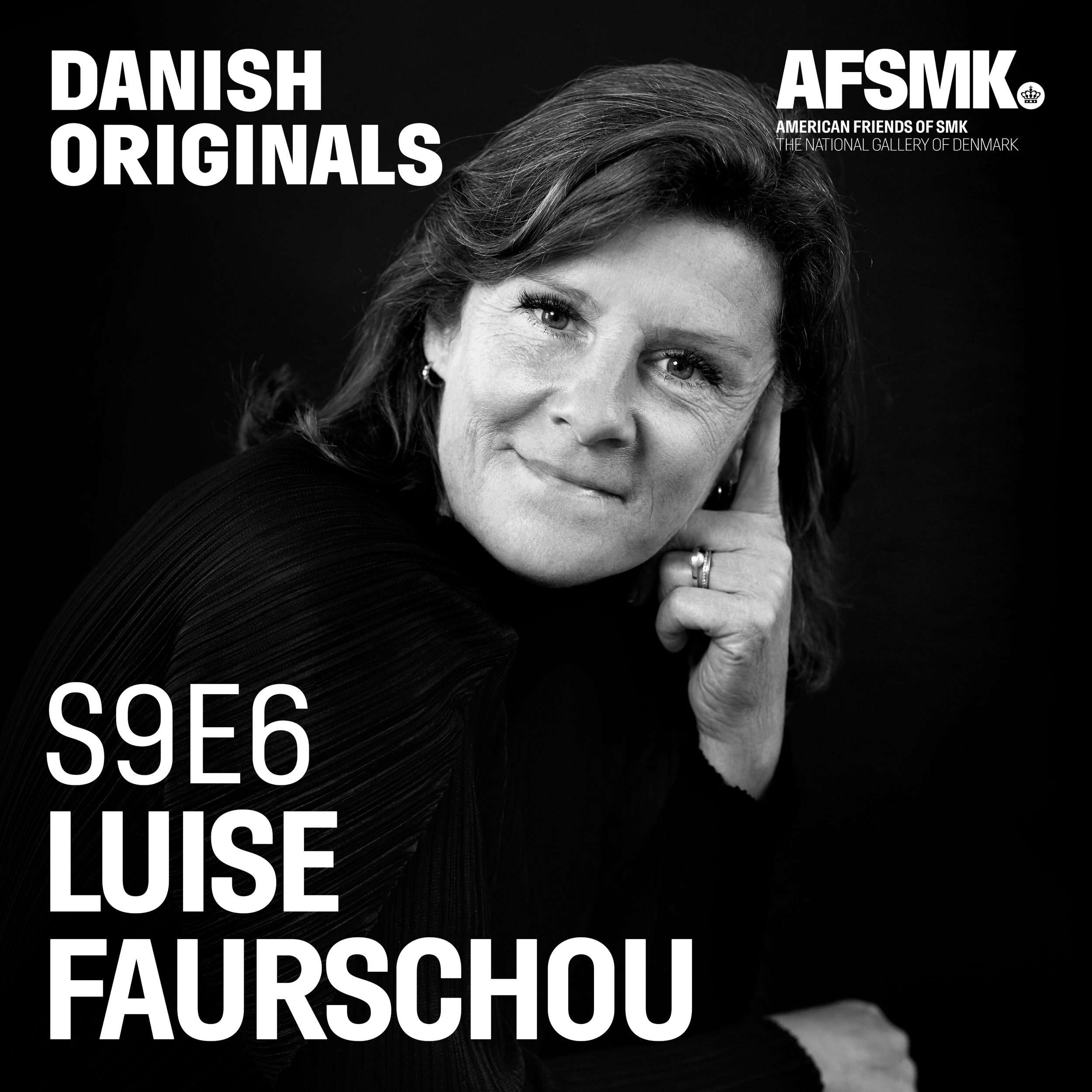
From her home in Klampenborg, Copenhagen, Central Zealand-born Danish curator, art advisor, and founder / director of ART 2030 LUISE FAURSCHOU talks about the non-profit's projects in New York City and at the UN Headquarters. With a strong belief that art changes people and people change the world, she describes a 40-year career in art that culminates in collaborations with artists, galleries, and museums to champion the art sector to help envision an interconnected and sustainable future.
Photograph Source: Tine Harden. Courtesy of ART 2030
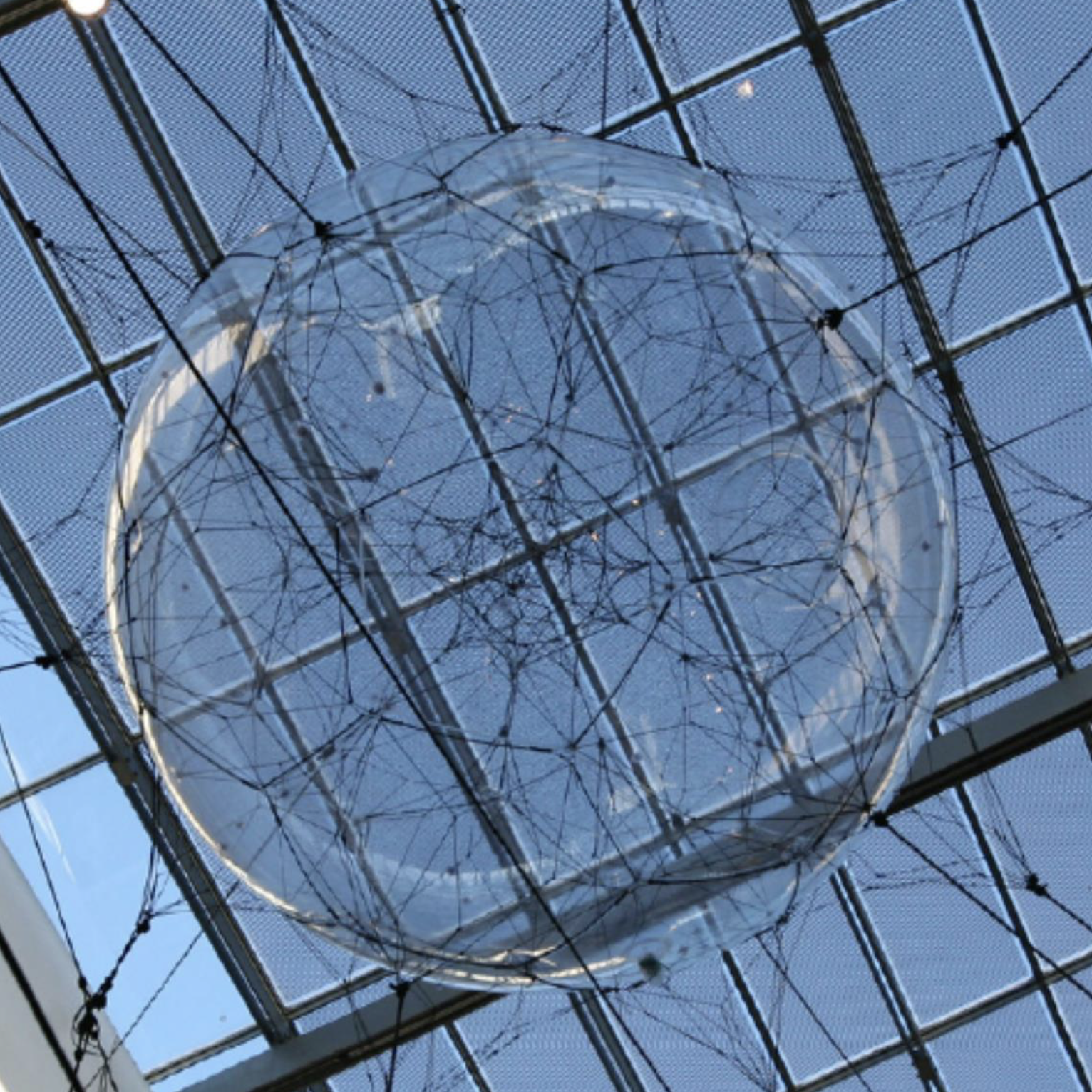
For today's episode, Luise Faurschou chose Tomas Saraceno's Biosfære, or Biosphere, from 2009 from the collection of the National Gallery of Denmark, Copenhagen.
“When the Sustainable Development Goals were agreed on and the Paris Agreement signed, I was like, whoa, this is the best plan I can see. That’s why we are connecting the art sector and art to the Sustainable Development Goals.”
“I trust that we take action when we take a stand. And when do we take a stand? We do that when we are delighted, engaged, provoked, challenged. When something feels so important, we start discussing it with friends and family. That’s what you do with art.”
“What I particularly enjoy is connecting dots. One thing that has gone throughout my entire career is connecting dots.”
Powered by RedCircle
This conversation by Christian D. Bruun occurred on October 6, 2025.
00:02
Luise Faurschou
I chose a work by Tomas Saraceno, the spheres, for many reasons. It's beautiful. It's visually striking. It's intriguing.
00:15
Luise Faurschou
He really shares with us alternative visions. He shows us how everything is interconnected, multidimensional, and why it's important that we have interspecies interconnectivity. And I've been happy to work with Tomas on multiple locations. He opens up our minds and makes us curious. And he does that with incredible beauty.
00:48
Luise Faurschou
There are future visions that artists can share with us. I share his belief in basing things on science and knowledge and facts, working with community, but adding to that a future vision that everything is connected.
01:20
Christian D. Bruun
My name is Christian D. Bruun. I'm the director of Danish Originals, a podcast series created in partnership with the American Friends of the National Gallery of Denmark. Our goal is to celebrate Danish creatives who have made a significant mark in the US.
01:36
Christian D. Bruun
Today, our guest is Luise Faurschou, a Danish curator, art advisor, and foundation director of ART 2030. Welcome, Luise.
01:46
Luise Faurschou
Thank you very much.
01:48
Christian D. Bruun
We are very excited to have you here and talk about all the great work you've done for art and for sustainability, especially in the US. I'm speaking with you from my home in Los Angeles. Will you share where you are, describe the space you're in?
02:05
Luise Faurschou
I'm in the outskirts of Copenhagen, Klampenborg, close to the ocean and the forest, and looking forward to our conversation.
02:14
Christian D. Bruun
Excellent. That sets up a nice atmosphere for the talk. You founded ART 2030 in 2016. It's a Copenhagen-based non-profit organization that unites art with the United Nations 2030 Agenda for Sustainable Development Goals. Will you first explain what these UN goals are? And following that, what is the agenda and the message of ART 2030?
02:38
Luise Faurschou
The Sustainable Development Goals, also called the Global Goals, in Danish we call them verdensmålene, is a coherent plan on how we can find a sustainable future for all and everyone. There are 17, and what's relevant here is that they're all interlinked.
02:59
Luise Faurschou
We cannot have a sustainable climate if we don't look into poverty. Poverty is interconnected with education, that means infrastructure. So the reason why this is the best plan we have for people and the planet, we have to move on all of these 17 goals in one to really have a prosperous future for everyone.
03:22
Luise Faurschou
And the reason I'm connecting that to art is that I wish for a future also for my grandchildren and the generations to follow them. Art has so much to offer because basically the Global Goals is about: who am I, who are you, where do we come from, where do we wanna go?
03:42
Luise Faurschou
That's very much the core of what art is discussing and has been discussing for all times. When the Sustainable Development Goals were agreed on and the Paris Agreement signed, I was like, whoa, this is the best plan I can see. I wanted to use my experience, now 40 years in the art world —
04:02
Christian D. Bruun
We'll get into that later. Yes.
04:04
Luise Faurschou
I wanted to connect my experience and network to this agenda. That's why we are connecting the art sector and art to the Sustainable Development Goals. Do you want me to explain how?
04:18
Christian D. Bruun
Yes, please, because we always hear about it politically or environmentally, but what is the art angle?
04:23
Luise Faurschou
Art and culture are essential for us to really move the world. I truly believe that art can change people and that people change the world. That's the motto behind it. And I trust that we take action when we take a stand. And when do we take a stand? We do that when we are delighted, engaged, provoked, challenged.
04:49
Luise Faurschou
When something feels so important, we start discussing it with friends and family. That's what you do with art. That's the reason we can connect this agenda with hearts and minds and feelings and engagement.
05:06
Luise Faurschou
From a very practical point, what we do, we walk primarily on two avenues. One is that we facilitate art projects very often in the public realm, in collaboration with an institution. It could be SMK, where we did some of our first projects. But really where the audience is enchanted directly, they meet the artworks. So that's one avenue.
05:31
Luise Faurschou
The other avenue is to make the art sector become sustainable itself. And that's really highlighting practices on how you produce, transport, exhibit, store, ensure the entire value chain, how we, on a practical level as a sector, do our practices more sustainably. That's the two main avenues. And then I can come up with a lot of examples.
05:57
Christian D. Bruun
I produce movies and we also spent the last 30 years trying to figure out how to make that more sustainable. But it's from a very practical standpoint of what to use, how not to put people on a plane. So what are some of the things on a practical level that the art world can do to be more sustainable?
06:14
Luise Faurschou
In the US context, we made a collaboration with MoMA. MoMA is the mother of all modern museums, so in order to have a good partner and a good reach, we connected with MoMA and we did the Circular Museum series, which is an online podcast. You can find it on our website.
06:35
Luise Faurschou
Circular Museum is highlighting concrete ways already implemented in leading museums around the world. So it's not what we can do in ten or 15 years. We have made a series where we have chosen an institution and a specific exhibition and then the museum and the artists share their considerations on how to work more sustainably.
06:58
Luise Faurschou
Also from a very practical point of view, when we are making the exhibition plan for the next two years, we are trying to reuse the same walls, the same floor plans. And another very concrete example is Guggenheim Bilbao. They have lowered the temperature in all the galleries by 2%, and that has saved enormous amounts of CO2. So it's like, okay, can we all lower the degrees by two? Yeah. Et cetera, et cetera.
07:31
Christian D. Bruun
A lot of things that you don't often connect with art.
07:34
Luise Faurschou
It also has to be very sector-specific, and that's why we have taken the initiative to the Art Charter for Climate Action (ACCA), which is a collaboration with UN Climate Change. They bring the science and the facts and the measurements, but as a sector, it needs to work in practicality out of the museum.
07:54
Luise Faurschou
So if it doesn't work there, it's not being implemented, and then we are not moving. The Art Charter for Climate Action — which we have now handed over to UNFCCC, is a very practical toolkit on how you can implement sustainable practices.
08:11
Christian D. Bruun
I want to go a little bit on the other path and talk a little bit about the artists that you worked with and some of those projects. Your latest project with ART 2030 is called What If by Chinese-American artist and environmental advocate Maya Lin.
08:27
Christian D. Bruun
Her first notable work was the 1982 Vietnam Veterans Memorial in the National Mall in Washington, DC. Can you describe the project you did with her? And I think you did it in collaboration with Climate Week New York?
08:42
Luise Faurschou
Yes. But first of all, thank you for pointing to the work with the artist, because everything starts with the artist. The project with Maya Lin is inside the UN Headquarters and across the city of New York. We commissioned Maya Lin to do 20 new works, based on her decade-long project What Is Missing? that is also accessible online.
09:07
Luise Faurschou
During the United Nations General Assembly and Climate Week New York, they were displayed at the plaza inside the UN, which means that all politicians, delegates, and decision makers have to pass by them to get into the negotiations inside the UN.
09:25
Luise Faurschou
Equally important is the voters. So they have been turned into large scale posters. We've made a strategic partnership with JCDecaux, the world's biggest company for ads in the public realm. These posters have been exhibited across New York City at hundreds of bus shelters, both in Manhattan, but also the five boroughs so that people can experience them directly.
09:54
Luise Faurschou
As you mentioned, the project is called What If, and Maya Lin asked the question, what if we used water wisely? What if we could cool down, for instance? Because we all know that rising temperatures and heat is a growing problem. So it's a large scale poster, it has a striking image and semi-provoking question. And then there are actually a lot of solutions and answers.
10:24
Luise Faurschou
If you are at a bus stop and you have two minutes, you might only see the question, what if we do this and that? Okay, you will carry that question within you. But if you have five minutes, you can actually see that we do have the solutions. The solutions are all there, we just need to implement them.
10:46
Luise Faurschou
And you can go further via a QR code and via our website, you can get all the scientific facts for the solutions. So a question, a bit of humor, visually striking, and solutions.
11:02
Christian D. Bruun
Well, New York City is definitely a good city to get people's attention. It's a very vibrant city and certainly a place where a lot of arts and culture is happening. It's maybe, in some ways, the capital of the world.
11:13
Christian D. Bruun
But it's also a very difficult city to be in. And so I'm curious, how did you pull off all these things? When was a moment when you're like, all right, I'm going to take all this on, I'm gonna do it in New York, I'm gonna work with the UN. It seems like a very huge task.
11:27
Luise Faurschou
Yeah, but if you wanna get somewhere, why don't you aim for the highest?
11:33
Christian D. Bruun
Are these proposals you make to the UN? How did this all come about?
11:38
Luise Faurschou
I have always believed, first of all, that art has so much to offer. And what ART 2030 does is we always base all of our projects on science, so that we know that it's reliable, the messages we send onwards. Then we combine that with artists that have a long practice within that specific realm.
12:01
Luise Faurschou
And then combining that with the belief that some of the hard discussions that you also touched upon. One of the many wonderful things about art is that it's an extremely good discussion space, because I may have an opinion, you may have another one. We might not like the same art piece, but we can still discuss it.
12:26
Luise Faurschou
Art is a unique space, of course, for reflection, but also for discussion. So we might learn something new. We might disagree on something, but it might leave me with a new insight. And therefore, back to what ART 2030 does is that if you have a scientific report of 300 pages or something, very few people will read it.
12:54
Luise Faurschou
But if you condense the essence of it and have an artist visioning it — it's actually the natural science people that say that they can tell us how things are, they cannot vision what it will be, but the artist can. So I think that's why I really deeply think that art has something unique to offer in this space.
13:18
Luise Faurschou
And it's important for me to underline that it's always with full integrity of the artist. So we will never ask an artist to illustrate something or be political. People can have whatever political opinion. We just think that sometimes it's good to discuss and you might have a new reflection, and that's what we bring to the table.
13:39
Luise Faurschou
And back to how we do it. From a very practical point of view, I have simply sent a proposal to someone I could get a hold of and said, if you think this is a good project, would you send it onwards to this-and-that person? You don't need to share their emails, I don't know if it'll ever reach the Secretary-General, but it did.
14:03
Christian D. Bruun
Fantastic. Wow. Amazing. Amazing. What a great thing to have, as you said, a space where we can meet and disagree, but walk away having learned a little bit from both sides. That seems to be urgently needed these days.
14:18
Luise Faurschou
We need that more than ever.
14:20
Christian D. Bruun
I know, right? I want to talk a little bit more about the other projects. You've presented a total of four projects at the United Nations Headquarters to promote awareness of the United Nations Sustainable Development Goals. Aside from Maya Lin, the one in 2019 featured Danish artist Jeppe Hein. And in 2021 it was the Danish art collective SUPERFLEX. They're very different projects. Would you walk us through and describe both of them?
14:47
Luise Faurschou
Yes, I would be delighted to. In 2019, we did a project withJeppe Hein. It's based on his practice for a decade. The project is called Breathe with Me. And Breathe with Me is an invitation for the entire world to breathe together. And you might say, how do you do that? It's very simple.
15:08
Luise Faurschou
Jeppe had a burnout ten years before. So he started working with his breath himself. Like a kind of meditation, he started to paint his own breath at his table on a regular piece of paper.
15:24
Luise Faurschou
So the artists do their projects, what ART 2030 adds to it is scale and reach. We took Jeppe in collaboration, and artists are the most amazing people to work with and also the most generous. Jeppe could really see the vision. What if we invite the entire world to breathe together?
15:44
Luise Faurschou
So what we do with Breathe with Me is you take a deep inhale and while you exhale, you paint one blue line. So it's the simplest and the biggest at the same time. We all have to breathe — mentally, physically, as a group, as an individual, but also as a society. Animals, plants — the globe has to breathe. So if the planet cannot breathe, we cannot. So we are interconnected also through generations, through our breath.
16:18
Luise Faurschou
And at the same time, it is the core of what painting is. It is difficult to visualize a breath, but you actually paint it. We did it at the UN, we opened it at the Climate Summit in '19 and invited the heads of states and presidents and climate activists. And we really wanted to do high, low, big, young, old.
16:45
Luise Faurschou
We started at the UN and then we continued in Central Park and had half a kilometer long canvas inside Central Park. It was the biggest project since Christo's The Gates. We invited thousands of people to breathe with us.
17:02
Luise Faurschou
And we really wanted to engage schools. And what ART 2030 does is always working with partnerships. So we reached out to the Metropolitan and asked if they would engage with their school programs. So it was actually through the Metropolitan Museum that the schools were invited.
17:23
Luise Faurschou
One of the most beautiful moments and touching moments in my entire career within the arts was standing inside Central Park, shoulder to shoulder with Jeppe Hein. We had some very unprivileged kids from one of the suburbs that had never been in Central Park before, poor kids that didn't usually feel invited into Central Park.
17:48
Luise Faurschou
Jeppe just looked at them and said, this is just about being scared. Do you know how it is to feel scared? I could see in the eyes of these kids, they know how it is. And then see their joy of expressing their breath. So it's also a project that, of course, is about climate, but it's also very much about equality.
18:11
Luise Faurschou
The canvases were sustainably produced, the painting was sustainable, and then we built everything on building scaffolding so that we didn't have to produce a lot of stuff. The canvases were then donated to the schools that joined us in Central Park. So it's a beautiful project.
18:29
Luise Faurschou
We've actually toured it since '19 around the world. We have had an estimated reach of 125 million people. We've made it open source. You can go to the website, and you could do it at home, at a dinner party, at your school or your community center.
18:48
Luise Faurschou
We've done it at museums and all sorts of places, festivals, dah, dah, dah, dah, around the world. All we ask people is to send an image. It's wonderful. All of a sudden you get some photos from Albania or some unexpected places. We've done it in quite a lot of places in the US as well. So yeah, a wonderful project.
19:13
Christian D. Bruun
Amazing, so each line represents a breath.
19:16
Luise Faurschou
Yeah.
19:17
Christian D. Bruun
Amazing. I saw a video where you were standing in front of the canvas. You have a white coat on and somebody's painting a stripe on your coat.
19:25
Luise Faurschou
Yeah, yeah. And we've also done it at schools where to not produce a lot of materials, we used old books that were disposed of. We did it on those papers. It just becomes more and more beautiful.
19:38
Christian D. Bruun
Right. Amazing. What a great project. Yeah.
19:42
Luise Faurschou
This was in '19, and then in '21 we did a wonderful project also with the Danish artist collective SUPERFLEX. And the title of the project is Interspecies Assembly. The narrative is that, as we all know, humanity meets once a year at the General Assembly to discuss: how are things going, where should we adjust, what we should do.
20:07
Luise Faurschou
But that's only one species, that's only humans. And if that one species wants to have a future on this planet, we need to start talking to, listening to the other species. SUPERFLEX made a projection on the UN Headquarters, 156 meter high, of a marine creature, it is called a Siphonophore.
20:33
Luise Faurschou
It's an actual living marine creature. It's like a gopler that moves up and down the headquarters. And what's wonderful about it is, again, the artists, they have been diving with these Siphonophores. They've actually been deep diving in research for this project. The Siphonophore lives approximately a kilometer down in the deep sea.
20:58
Luise Faurschou
Every night it moves up the ocean and comes up to the air. And it takes CO2 while going back and stores it at the bottom of the ocean. They have various sizes, they work and live in colonies, a bit like humans. And we've only known about the Siphonophores' existence for 15 years. There's so much we don't know yet. The world is so magnificent and we only know the tip of the iceberg.
21:33
Luise Faurschou
We connected the project to the Smithsonian. Again, we made a strategic partnership with the Smithsonian because they're scientists, they know all that details. The artist or ART 2030, we are not scientists, we cannot be experts on the Siphonophores. If you go to our website, you are led to the Smithsonian, where you can actually see the hardcore science.
22:00
Luise Faurschou
We also did a collaboration with Google, because not everyone can be in New York during the General Assembly. With Google, we made a virtual version so you can actually invite it home in your living room.
22:14
Christian D. Bruun
Really? Wow. Okay. Oh, I love that. Wow. Incredible. It sounds like you're very busy with a lot of undertakings.
22:23
Luise Faurschou
Oh yeah, this is definitely a full-time job. ART 2030 is a nonprofit organization. We are located in Copenhagen and we do have an American Friends of ART 2030 in order to have a 501c3, so we can receive donations from the US which is tax beneficial for Americans.
22:45
Luise Faurschou
We are a small team of four and we have a group of patrons that supports us so that the organization is secured. To realize each project, we are fundraising via foundations, but we do have a wonderful group of patrons, which is central.
23:06
Luise Faurschou
Otherwise, we simply couldn't exist, my colleagues wouldn't know if they have a salary in six months, and we couldn't plan a project in a year or two without some continuity. So we're so grateful. Otherwise we would not be here. And more can be welcome.
23:20
Christian D. Bruun
Good. Let's spread the good word and get some more patrons on board. Can you share something that you're working on that's coming up, a project that you are realizing?
23:29
Luise Faurschou
Yes. We are working on a project with Danh Vo, a Vietnamese Danish artist, that will be very much about soil and food and community, and gardening. It's very exciting. Danh Vo had his large retrospective at the Guggenheim in New York six, seven years ago, so the New York audience will know his works as well. So that's coming up.
23:58
Christian D. Bruun
Amazing. Very cool. I visited his farm outside of Berlin, which is all about that. It's about collaboration and community and eating what you grow.
24:07
Luise Faurschou
And that's all the values, and the seed has been planted there, but we are turning it into a bigger project, which will be more publicly accessible.
24:18
Christian D. Bruun
I see. And this is part of the UN series?
24:22
Luise Faurschou
No, this will be a permanent project in Denmark.
243:25
Christian D. Bruun
Oh, fantastic. Wow. I'll keep an eye on that.
24:29
Luise Faurschou
Yes. Keep an eye out.
24:32
Christian D. Bruun
So I want to ask you, ART 2030's mission to align culture with sustainability, that goal is very clear. How do other areas of the nonprofit and for-profit art world fare in the world of sustainability and practicing sustainability? In the US, who is helping the art world move in the right direction? And we talked about it a little bit in the beginning, but are there other initiatives?
24:57
Luise Faurschou
Yes. When we started out with ART 2030, the UN Sustainable Development Goals were not very known. And when we started to work with biodiversity six years ago, that was not a common, known thing either. So it's always interesting to try to address these things in a way that everyone can understand and relate to. That's also what we try to do.
25:26
Luise Faurschou
But for hardcore sustainability, the big galleries in New York — Gagosian, Hauser, Zwirner, Lisson, and Pace — those five actually hosted ART 2030's first initiative in New York in '18. So the interest was there, but it's been amazing to see how the engagement has raised, especially the last three years.
25:53
Luise Faurschou
Everybody now knows that this is urgent. The first five years, it was always us reaching out to world famous artists, but I'm happy to say that it is now the other way around. It's really become high on the agenda. Last week, I attended a wonderful summit at Hauser & Wirth in New York, which is called Sustainability in Action. Look at their website. It was a great one day summit with very relevant conversations. Check it out.
26:25
Christian D. Bruun
I will definitely do that. 2030 is not that far away. It's about five years out. The message of ART 2030 is, as you said earlier, art changes people and people change the world. So how are we the world doing? Are you energized? Are you tired? Are you meeting your own expectations with ART 2030 that you set out to do in 2016?
26:52
Luise Faurschou
I don't expect that the Global Goals will be reached by 2030. I wish. I wish it was, but that's not realistic. I'm very, very content with where ART 2030 is according to our strategic plans. But the world is far, far off track, unfortunately. So of course that is worrying and saddening. Yet I am actually still optimistic.
27:23
Luise Faurschou
Look at the green transition. Despite what might be said, it is actually happening. It's far cheaper to use wind than oil. Last week when I was at Climate Week, I also attended several summits and among them, the Bloomberg Forum and it's super inspiring and energizing to hear about all the projects that are simply just taking place. Unfortunately, we might not hear as much about them as we could, but the transition is in action. I hope that it will be fast enough.
27:59
Christian D. Bruun
Well, that is always a great concern. So ART 2030 will still exist in '31?
28:06
Luise Faurschou
Oh, yes, we are relating to that agenda. It was never the plan, it was not an expiry date. Of course, the best case scenario would be if the world was fully sustainable by 2030, I couldn't be more happy to say "mission completed" for the world. But I think we have quite a lot of work to do.
28:27
Christian D. Bruun
Still work to do. Yes, absolutely. So just a year before you founded ART 2030, you also founded Faurschou Art Resources. So you're busy on many fronts. Tell us a little bit about what Faurschou Art Resources is. Are they separate or do they overlap?
28:44
Luise Faurschou
No, they're totally separate because ART 2030 is a nonprofit with a professional board and constituencies, et cetera, and fully dependent on donations. Faurschou Art Resources is a one person (me) consultancy that assists collectors around the world in finding very specific pieces that I can find because I've been here for more than 30 years.
29:17
Christian D. Bruun
Got you. Well, this seems like a good place to go back in time a little bit. Maybe you can share with us what you were like as a young person. I read that your father was a nature keeper. So maybe tell me a little about his influence on you, and your mother, and just generally growing up in Denmark.
29:31
Luise Faurschou
I think in creating, in founding ART 2030, it's been very helpful to grow up in Denmark. You ask, how have you done it? I grew up with great values from my parents. And being a Dane, we are not so hierarchically thinking. So, if I think it's important, then I can reach out to the Prime Minister, right? That's the way Denmark very much is. If you have something at heart, you can actually get your way through. I think that has been critical.
30:06
Luise Faurschou
As you mentioned, my father was a nature keeper and I very much learned that if we put marks in nature, we better do them right. They should look right and they should be taking care of the nature they're in. Even if you put up a fence, make it look nice. I think that's where my aesthetic eye comes from really.
30:32
Luise Faurschou
In Faurschou Art Resources, I've done quite a lot of projects, among others, at a wonderful sculpture park in France, Château La Coste. I can highly recommend a visit there. And that's a good match for me. As a food, wine, art culture, it's based on the values of the marks we make, we should do right. And that's why I'm really, really happy continuously making projects there, where there will also be adding a couple in the years to come.
31:02
Christian D. Bruun
Excellent. This is Tadao Ando? Is that the one?
31:05
Luise Faurschou
Yeah. Tadao Ando, Renzo Piano, Niemeyer — it's all the world's greatest architects, really.
31:12
Christian D. Bruun
A place to visit.
31:13
Luise Faurschou
Yeah, I can highly recommend it.
31:16
Christian D. Bruun
Put on the list. Were you always interested in art growing up or is that something that happened later?
31:23
Luise Faurschou
My upbringing was in a home that was with culture, but I know where I had the first groundbreaking experience where it was clear that I need to work with art. It was 40 years ago — '85, '86, perhaps. I can't remember, mid-'80s. I was in London and I saw an exhibition with Joseph Beuys at the Anthony d'Offay Gallery.
31:47
Luise Faurschou
And at that time, it was before I read art history. So I walked in and I saw this Joseph Beuys exhibition. I had no idea who it was, and it totally swept my feet away. And I am actually really grateful that I had no knowledge of who Beuys was because I got that pristine virgin experience of, whoa, this is amazing. And then after I could dig in to say, who is this, what is this? And the rest is history.
32:30
Christian D. Bruun
You made a name in Denmark in the 1990s as someone who promoted Danish artists abroad and also international artists in Denmark. And you were a world expert on the Norwegian artist Edward Munch. How did that come about? How did Edvard Munch come into your life?
32:47
Luise Faurschou
As an art historian and as an art lover, I think Edvard Munch is one of the very, very, very best artists in history. And obviously as a Dane coming very frequently to Norway, I visited the Munch museum regularly. But most of Munch's works are at the Munch Museum in Oslo.
33:18
Luise Faurschou
My then partner and I saw an exhibit in Switzerland and realized that a number of Munch paintings were in private collections and thought, okay, it's a shame that people outside Norway do not see Munch as much as they should.
33:37
Luise Faurschou
So we reached out to some of these collectors and actually made an exhibition in Copenhagen and in Switzerland and in New York. And that led to the opportunity of publishing the catalog raisonné of the entire Edward Munch paintings, because Munch donated all of his works to the City of Oslo. So the city of Oslo has an enormous collection, but they don't have the means to publish a catalog raisonné.
34:18
Luise Faurschou
I think what I particularly enjoy is connecting dots. One thing that has gone throughout my entire career is connecting dots. And this is also an example of, okay, there are great works, there are also scholars that have been studying these works for years, but it needs to be put together in something that is public and that's the catalog raisonné.
34:48
Christian D. Bruun
Amazing. Did that result in any of the private collection works being put into other museums around the world?
34:56
Luise Faurschou
Oh yes, several museum acquisitions and three world records at auction.
35:04
Christian D. Bruun
Incredible. Speaking of artists, who are some of your favorite artists? And what makes them great artists to you?
35:12
Luise Faurschou
An American artist is Robert Rauschenberg. I just visited his foundation last week in New York. There's public access, I can only recommend it. I think it's once a week or once a month, I can't remember. He is such an amazing artist. I have had the pleasure of making an exhibition with him in Denmark and in China. He kept being so curious and making that connection between his everyday life and the biggest issues.
35:45
Luise Faurschou
That's what artists can do. And Rauschenberg did the first poster for Earth Day in '72, and it's the American eagle. It's an amazing piece. That's probably one of the biggest American artists in my view. Another artist that has a very dear position in my heart is Louise Bourgeois, who was French born. I would consider her French American because she had her breakthrough at MoMA.
36:14
Luise Faurschou
She was around 80 when she had her big breakthrough with a solo exhibition at MoMA. And again, Louise Bourgeois really makes that connection of something that is recognizable for all of us from her everyday life, and really something that is very universal. I think quality art is a universal language.
36:39
Luise Faurschou
I did an exhibition with Louise Bourgeois in Norway at Kistefos Museum. The Kistefos Museum, I can also recommend to visit, that it's an hour out of Oslo. And I added an angle to Louise Bourgeois's work, which is about wounds we get throughout life.
36:58
Luise Faurschou
We might get hurt, physically or mentally or emotionally, but to quote Louise Bourgeois, that's not what's interesting. What's interesting is how we cope with it and where it'll bring us. And to me that's really what we all can lean to, and learn so much from art.
37:21
Christian D. Bruun
You've done a lot of work internationally, obviously. I was in Beijing a few years ago in, what is it called? Area seven — I always forget that.
37:31
Luise Faurschou
798.
37:32
Christian D. Bruun
798. I saw the Xu Bing exhibition that was up at the time, but I walked by Faurschou Gallery and had no idea that there was a Danish gallery right there in that incredibly vibrant part of Beijing. How did that come about?
37:46
Luise Faurschou
I was curating an exhibition with Michael Kvium in a museum in Beijing. We are back in 2005 or something like that. That was my first visit to China and it was like, whoa, things are happening here. What? And it happens fast. So the reason we ended up choosing to make a gallery in Beijing and not, for instance, Paris or New York, was actually to say, wow, the effort you put into creating such a place, here it can make a huge difference.
38:25
Luise Faurschou
And that's why I thought it was especially appealing. As an example of what I mean, why you can really make a difference there, is that the audience didn't have access to all the amazing art that we in the West can have access to. We did an exhibition with Shirin Neshat, who lives in New York and is an Iranian American artist, an amazing artist. We did an exhibition with Shirin and there were 45,000 people visiting that exhibition.
38:58
Christian D. Bruun
Wow. Okay.
39:00
Luise Faurschou
This is an exhibition called "Women without Men." We didn't make any advertisements. It was only mouth to ear. So 45,000 people chose to come and see six videos between half an hour and 45 minutes. They did that. So then you really feel that it's worthwhile.
39:22
Christian D. Bruun
Of course. Wow. What a great thing. And the galleries are still there?
39:27
Luise Faurschou
Nope. We turned it into a foundation, and it's not active anymore. No.
39:32
Christian D. Bruun
I see. One of your first ventures in the US, which was also in New York City, was the DCA gallery, the Danish Contemporary Arts Gallery. And I remember visiting that space down in Chelsea. It was a great space and it seemed incredibly ambitious. It was right next door to some of the most important galleries in New York at the time. Can you share the story of that with us? How did that come about?
39:55
Luise Faurschou
Yes, I really believe in community. At that time we were very young, this was next door to Leo Castelli Gallery. We were a group of Copenhagen galleries that went together to do a gallery together. And I still think that we can lift more together. It was a great experience. So we had, I think, one or two exhibitions a year, instead of having 12, like we could really do our best and lift together.
40:28
Christian D. Bruun
Yeah, I remember, I think, I saw the Michael Kvium exhibition.
40:32
Luise Faurschou
Could be.Yeah, we did Michael Kvium, and we did Christian Lemmerz, we did Nina Sten-Knudsen, and yeah.
40:41
Christian D. Bruun
And it was there for about six years?
40:43
Luise Faurschou
Yeah. We did it in collaboration with the Cultural Ministry as well. And I think we did a five year lease first, and then after that, we kept on a little, but it was also very costly. But it had meant, I think, a great deal for the Danish artists to come into New York and be exposed next door to their heroes, so to speak.
41:15
Luise Faurschou
And it shows that their quality could definitely meet everything happening in New York. I also very much believe that it's healthy for them to be exposed next to their heroes. For many years I worked with Bjarne Melgaard, and as a young artist being put next to Edvard Munch, he was, okay, now I really have to do my best. And don't we all?
41:42
Christian D. Bruun
Of course. I just moved to New York at the time, looking at galleries, and there was this spectacular Danish gallery right next to all the big New York galleries. It was very, very impressive.
41:55
Luise Faurschou
And it's funny because then we moved to Chelsea from that location, and then Chelsea has been sort of the hotspot for a couple of decades, but now it's moving back to Soho and Tribeca. I was also enjoying all the galleries and exhibitions there a week ago. It's always amazing to come to New York and see how it moves around, the hot spot.
42:17
Christian D. Bruun
Yes. Exactly. So my final question to you is in two parts. What is coming up in your world that you can share with us? And in terms of your international work in the US, are you thinking of moving beyond New York and perhaps further west?
42:35
Luise Faurschou
I would love to, but that's really a matter of funding. We are currently working on The Hope Forum for the Biennale in Venice. We have done The Hope Forum in 2022 and 2024. We started out making The Hope Forum in collaboration with the UN and UNESCO. And so that's something I'm working on quite intensely right now.
42:57
Luise Faurschou
We are working on our annual initiative called Art for a Healthy Planet, where we work with partners, a lot in New York, actually, the galleries I mentioned before, Hauser and Zwirner, also the museums. And we are working on a project with an American artist that unfortunately I cannot share the name with yet, for the UN.
43:24
Christian D. Bruun
There's the cliffhanger right there.
43:26
Luise Faurschou
That's the cliffhanger.
43:27
Christian D. Bruun
We'll have to keep an eye out for that. Alright. Well, thank you Luise, so much for all the work you do in art and sustainability for our planet, and for being part of Danish Originals, we are super honored to have you on.
43:40
Luise Faurschou
Yes. And I would like to express the warmest, warmest, biggest thank you to the artists because everything starts with the artists. And if it was not for their courage and commitment, the rest of us would not be there. So, an overall thank you to the artists and their visions.
44:03
Christian D. Bruun
Perfect. That is a good note to end on. Thank you, Luisa.
44:05
Luise Faurschou
Thank you very much.
44:09
Christian D. Bruun
For today's episode, Luise Faurschou chose Tomas Saraceno's Biosfære, or Biosphere, from 2009 from the collection of the National Gallery of Denmark.