
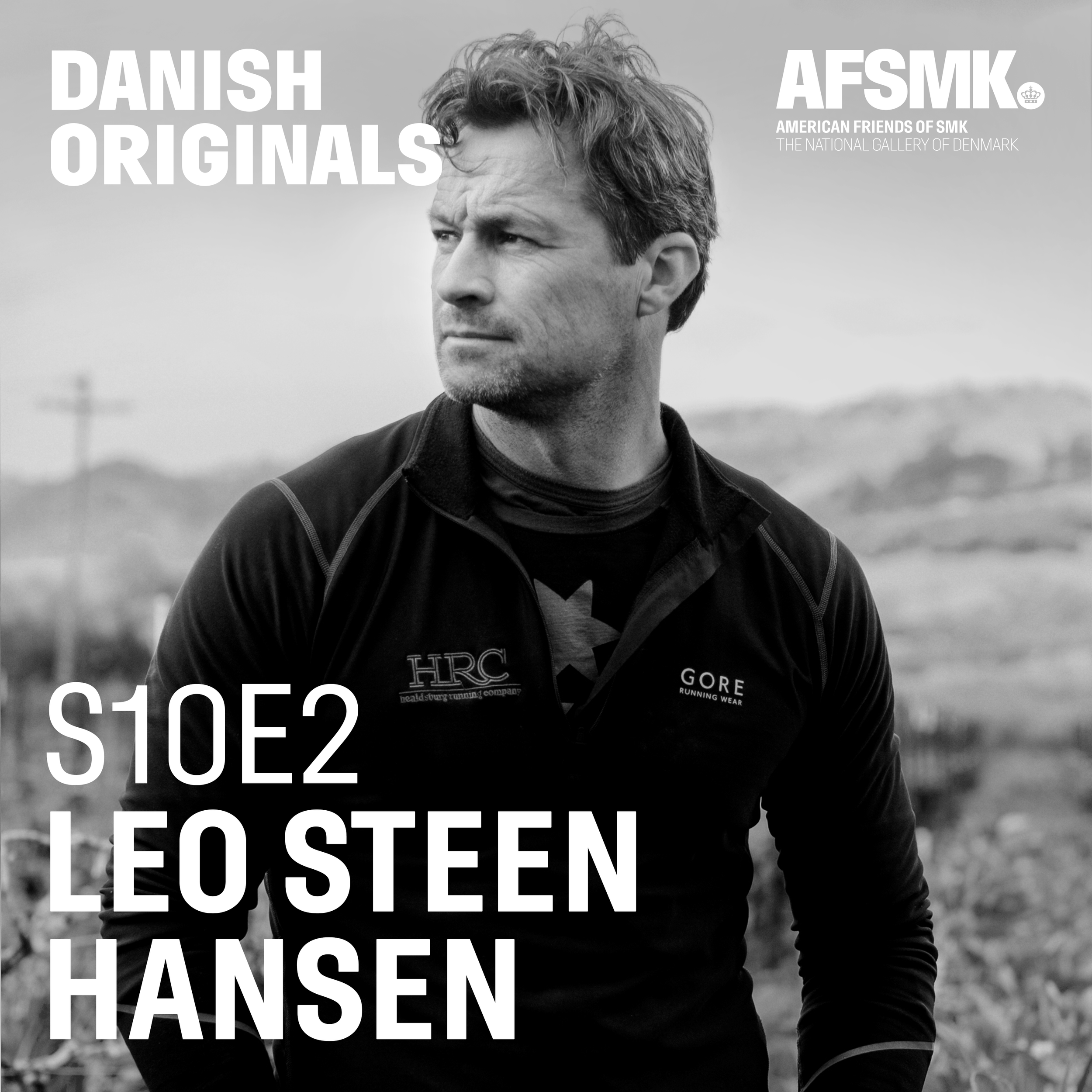
From his home in Healdsburg in Northern California, Taulov-born Danish winemaker LEO STEEN HANSEN recalls his journey in 1999 from sommelier at famed Copenhagen restaurant Kong Hans to natural winemaking in Sonoma County. Leo shares insights on his approach to his food-friendly wines at Leo Steen Wines, especially his signature Chenin Blanc, and his relationships with vineyard partners along the California coast. And he talks about his newest venture in Denmark, Scout by Leo.
Photographer: Stephanie Hopkins
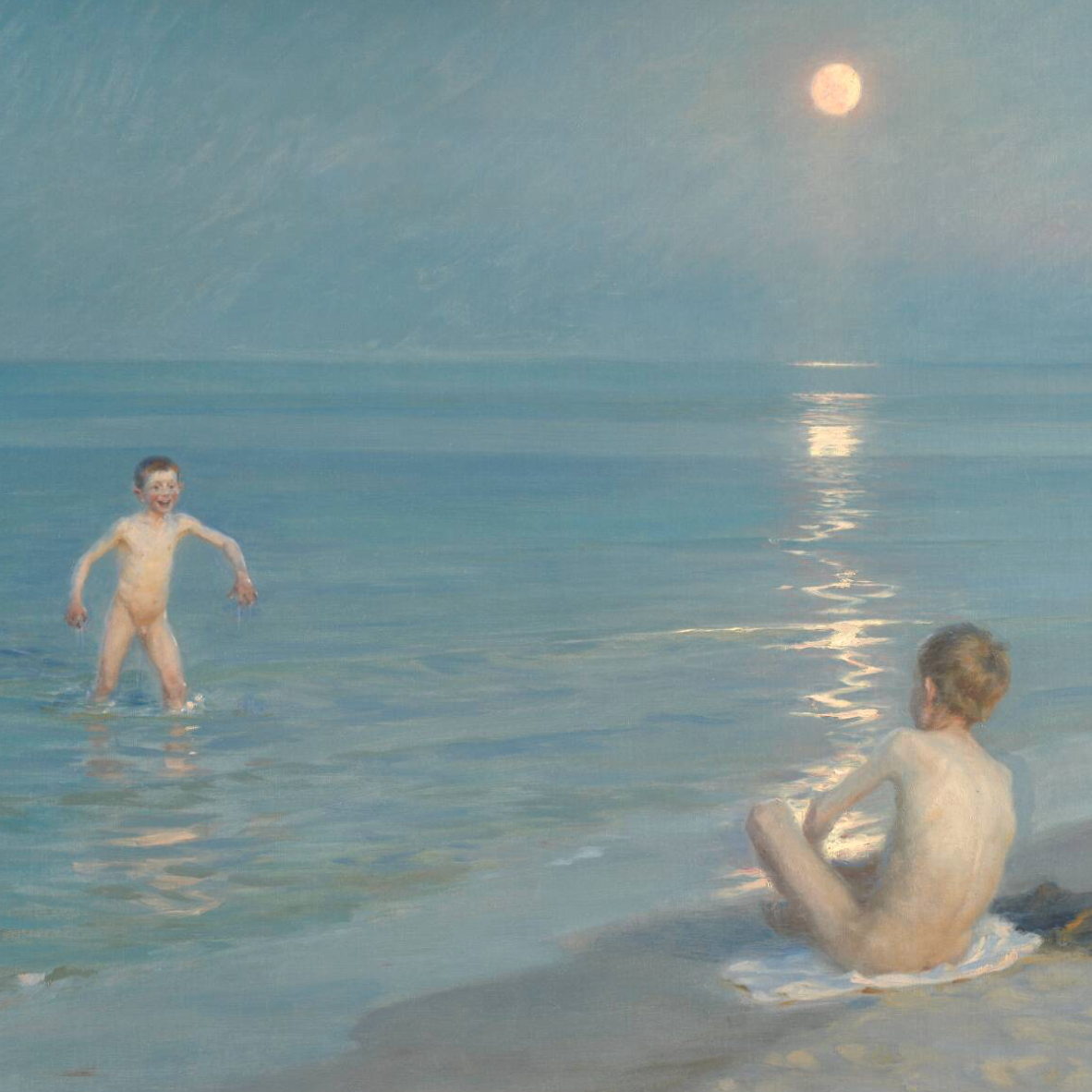
For today's episode, Leo Steen Hansen chose P.S. Krøyer's Badende drenge en sommeraften ved Skagens strand, or Boys Bathing at Skagen. Summer Evening, from 1899 from the collection of the National Gallery of Denmark.
“The style we make has very much been the new flavors of a lot of restaurants and sommeliers and also retailers. They are a little more moderate and not so full throttle, a little more balanced with the alcohol, the acid. They’re hands off winemaking.”
“I’ve been willing to travel a lot and spend a lot of time. I am, at harvest, a truck driver. I drive around a lot to pick up grapes. Some of them are overnight, I go down the night before, I drop bins, and we leave early in the morning. It’s a big commitment, when you are busy already.”
“This project Scout by Leo is very much catering to everybody. It’s very price sensitive. It’s a bottle of wine that everybody in Denmark can go out and buy. And I take a lot of pride in making something that I feel is in that price segment and that we feel is delivering or overdelivering in the content.”
Powered by RedCircle
This conversation with Christian D. Bruun occurred on December 10, 2025.
00:04
Leo Steen Hansen
The painting I chose is called Boys Bathing at Skagen. Summer Evening by P.S. Krøyer, one of the famous Skagen's malere.
00:14
Leo Steen Hansen
The naked boy in the water could have been me talking to another little boy is sitting on his towel on the beach and getting ready to get in the water. Just this magical moment, all the shades of blue light shining through.
00:30
Leo Steen Hansen
Skagen has a big place in my heart and the painting takes me to this happy place. When my parents had their 25th anniversary, because it is a special place to them, me and my siblings, we went up there and we had us painted on the beach in Skagen.
00:47
Leo Steen Hansen
I've always been close to the water and the beach and that does speak to me, and it seems so innocent and peaceful. By American standards, 45 minutes is nothing, but I feel today I live far away from the water.
00:59
Leo Steen Hansen
The light summer evening, such a uniquely Danish thing, and the streetlights come on at 10:30 pm maybe. I tell my kids a lot of these stories, I always say back in my day, and they're like, yeah, Dad. Yeah, it was different.
01:24
Christian D. Bruun
My name is Christian D. Bruun. I'm the director of Danish Originals, a podcast series created in partnership with the American Friends of the National Gallery of Denmark. Our goal is to celebrate Danish creatives who have made a significant mark in the US.
01:40
Christian D. Bruun
Today our guest is Leo Steen Hansen, a Danish winemaker. Welcome, Leo.
01:45
Leo Steen Hansen
Thank you so much.
01:47
Christian D. Bruun
I'm very excited to learn more about your wine and about you and your journey from Denmark to the US. We are here in your home in Healdsburg in Northern California. Thank you for hosting us. Would you describe your home so our listeners can join us and get a sense of where we are?
02:02
Leo Steen Hansen
We are in the town of Healdsburg and this has been our home for almost 20 years. We're sitting in my favorite part of the house, which is our kitchen, where most conversations go on in our little household. We are in the northern part of Sonoma County where multiple wine regions merge — Russian River, Dry Creek Valley, Alexander Valley, Chalk Hill.
02:25
Leo Steen Hansen
And Healdsburg is the center of that and has definitely become over the years. So people traveling to wine country most likely would've been in this area. Our house, it's an old house, the original part is from the early 1900s. This table we are sitting with is wood I found after I took this old garage down when we bought the house.
02:45
Leo Steen Hansen
It was full of termites and was about to fall apart. I took it down and underneath I found this beautiful Douglas fir. The hinges said "1908"on the garage. And then we built a bench and I have another big outdoor table at the winery.
03:01
Christian D. Bruun
Oh, amazing. Well, it's always fun when there's something old in an otherwise pretty young country.
03:06
Leo Steen Hansen
It's always been something that's been dear to me. You can see the saw marks. My grandpa had a sawmill and that's always been a thing for me.
03:14
Christian D. Bruun
Oh, I see. And had you ever heard about Healdsburg before you came here?
03:19
Leo Steen Hansen
Never. I just came because I was gonna work as an intern in 1999 and just never took my flight back. That's 25 years ago. I did not know Healdsburg at all. And it was also a very different town back then. My internship happened to be right outside of town.
03:35
Christian D. Bruun
I see. I've also only been up here recently. It's a very charming small town. The town square feels very American, in a way.
03:44
Leo Steen Hansen
An hour away from San Francisco, half an hour to 45 minutes from the Pacific Ocean. You can go the other way in three and a half hours and you are in the mountains of Tahoe if you are a skier or biker. It's a very convenient location for being in California for sure.
04:00
Christian D. Bruun
I want to start with today and then we're going to go back in time. You're the owner of Leo Steen Wines, which has a unique story starting with the name. Leo is your first name, and Steen is a family name along with Hansen. What's the story behind the name?
04:15
Leo Steen Hansen
In 2004, my day job was a bigger winery called Stuhlmuller Vineyards, just ten minutes out of town, and I started making a little bit of wine on the side. My last name Hansen was already trademarked. There's a vineyard and there's other places.
04:34
Leo Steen Hansen
So then I was going to call it Soda Rock Cellars. The reason is that it was on West Soda Rock Lane. And there's an old historical winery at the time, it was just a pile of rocks in Alexander Valley, that was called Soda Rock Winery. And I decided not to.
04:52
Leo Steen Hansen
I came up with Leo Steen Wines. And I think you know in Denmark your middle name was something you didn't really talk about when you were growing up and it became a thing that everybody was referring to you by your middle name.
05:03
Leo Steen Hansen
And I wanted to work with primarily Chenin Blanc and in South Africa, which has more plantings of this variety in the world, they call it Steen. So that was a tie into the wine world that way.
05:17
Christian D. Bruun
I see. And do you have a special connection to South Africa?
05:21
Leo Steen Hansen
No. And people do think often I'm from South Africa because my winery is Leo Steen.
05:26
Christian D. Bruun
I see. Maybe you can describe Leo Steen Wines to those new to you, let's say against the context of wine in this region. And imagine the listeners may be connoisseurs or newcomers who don't know wine. What is Leo Steen Wines?
05:40
Leo Steen Hansen
Initially, I was making wine as my day job as I mentioned, a winery called Stuhlmuller Vineyards. And we made what people would associate to be classic California wines, especially at the time, 20-plus years ago, the wines that got rated and were more heavy-handed. You picked grapes ripe, you had more alcohol, you had more intensity. They were more textured.
06:03
Leo Steen Hansen
My wines were a little bit the opposite way. I picked a lot earlier, lower alcohol, no new oak use, trying to have a sense of place and food-friendly wine overall, driven by freshness and acidity. I like to think that you are craving another glass, in Danish, læskende, you want another. So it was more on those lines.
06:23
Leo Steen Hansen
And then also work with varieties that were not the most classic varieties and not the most expensive. So they're very affordable wines in general for California, what we started making. And since then there has been a huge trend making stylistically a lot of those wines.
06:39
Leo Steen Hansen
It's been fun to be one of the first ones who changed that from what people associate with the Parker Era or Wine Spectator era of California wines, which was up through the '90s and early 2000s for sure.
06:52
Christian D. Bruun
I remember as a kid watching the TV show Falcon Crest, which was set up here somewhere. I know you just went through it a little bit, but again, separating yourself from the more traditional, and maybe high-end in people's mind, wines from France and Italy and Spain and even Austria and Germany, what is that new world winemaking in California? And how do you see yourself? Are you part of that, or do you do something different?
07:16
Leo Steen Hansen
There's definitely been a big movement towards this style of wine that I am making. I think that's the new way, actually. There's still the big brands that go out to supermarkets or retailers in huge quantities.
07:31
Leo Steen Hansen
The style we make, I think, has very much been the new flavors of a lot of restaurants and sommeliers and also retailers. They are a little more moderate and not so full throttle, a little more balanced with the alcohol, the acid. They're hands off winemaking.
07:50
Christian D. Bruun
And the process of doing this, is that a radical departure from the past? Is it a whole different process of when you pick the grapes? What are the indicators of this?
07:58
Leo Steen Hansen
Probably that's the main thing: what site you work with and also how does it work during the growing season in the vineyard. For instance, if I take my main SKU, our biggest production of Chenin Blanc from a local vineyard not far from here, we like to shade those clusters a lot during the growing season. Otherwise they get that classic California style, if they get a lot of sun because the sun is intense.
08:24
Leo Steen Hansen
We like a lot of shade. It gives you greener notes, maybe some herbal notes or greener fruits, rather than the more, let's say yellow and riper fruits. So a little bit like if you say everybody can relate to a green apple rather than a yellow apple, there's a big difference of taste and freshness and acidity and crunchiness.
08:46
Leo Steen Hansen
So we refer to that as wines with energy and freshness. And so those are important factors to me. So yes, picking decisions, the growers, the vineyards, and then stylistically, winemaking. That can be very technical, what we do. All in all, we try not to do too much, actually.
09:06
Leo Steen Hansen
The more healthy the grapes, the juice that you work with that's going to convert to wine, the less issues you would have. Because it's just generally a healthier product, meaning with nutrients and the yeast. We don't add anything.
09:21
Christian D. Bruun
I see. You're known for making natural wines, and your vineyards are sustainable, they're biodynamic and organic. Maybe you can explain to us what those terms mean.
09:32
Leo Steen Hansen
I work with various growers, so these are relationships I've had for some 20 years, some shorter. Our business is production and making the wine and bottling and selling it. We don't own the land. In my previous job, the vineyards were right outside the winery and we would just walk out and say, okay, block two is ready to pick tomorrow or whatever, and they'll come in on a tractor.
09:57
Leo Steen Hansen
Now I go through California, which is very much the California way, you can seek out vineyards in various regions. I go way down to Santa Barbara, I go up to Mendocino, which is the next county up, and then obviously some vineyards locally here in Sonoma County. I love the quality coming out of Santa Cruz, that coastal influence.
10:21
Leo Steen Hansen
We work with people that respect the land. Old time farmers, they're often maybe more the sustainable part of it, and to make them change certain things is generally a slower process. And some take it to different levels of organic and biodynamic farming practices. So since we are dealing with people and owners of the vineyards, they're all different, as you say, sustainable, organic, biodynamic.
10:48
Christian D. Bruun
And what is the difference between organic and biodynamic?
10:53
Leo Steen Hansen
In organic or biodynamic farming, they would manually remove weeds around the rows around the vines, so there's no competition for water or any nest bugs that can live in, so to speak. Organic is like any other product. There's organic products, which are a natural compound you spray so you don't have any pesticides and herbicides and so forth. Biodynamic, they would make their own.
11:19
Leo Steen Hansen
I know in Denmark they love the certifications of that kind of stuff. I don't think that's really the case so much here. I work with a lot of small-time growers and they have been doing organic farming for many years, but they do it because that's their land and that's how they want it done, not necessarily for paying money to be part of a certified group, so to speak.
11:43
Christian D. Bruun
I see. So it's more local pride or this is their land and they want to take care of it.
11:48
Leo Steen Hansen
That's their land, that's how they do it. I work with a biodynamic farmer down in Sonoma Valley, we buy some Grenache for Rosé and red. And he was one of the first biodynamic growers in Sonoma County. He's certified. He has chickens for fertilizing and sheep taking care of all the weeds and worms and the whole nine yards. There's many levels, as I mentioned, of biodynamic farming.
12:18
Christian D. Bruun
Your grapes are grown and not just in one location, as you mentioned earlier, but in vineyards across several regions in Sonoma, Santa Barbara, Santa Cruz, and Mendocino. Again, maybe explain a little bit more what does that mean and do you work with specific farmers in each place? How did you choose those places?
12:35
Leo Steen Hansen
It's a relationship business. There are certain varieties I wanted to work with. And there are certain soil types throughout California that's unique. Where we are, there's a lot of volcanic material, and you can be lucky to find lighter soil types, calcareous and limestone soils, in other parts of California.
12:53
Leo Steen Hansen
So that's been one reason for me to come out and find other things. And there's also business in it. There's parts of California where you can find equally good quality grapes for a lot less than I would have to pay locally. Our neighbor, Napa Valley, for instance. A ton of grapes there is a lot more expensive than anywhere else in California.
13:17
Christian D. Bruun
Got it, okay.
13:18
Leo Steen Hansen
It's a mix of things and I feel it is very exciting to find something unique for whatever that category is. And I've worked with vineyards that have been neglected for many, many years and brought back to life. And as I mentioned, Santa Cruz has very unique soil types down in that part of California.
13:37
Leo Steen Hansen
I've been willing to travel a lot and spend a lot of time. I am, at harvest, a truck driver. I drive around a lot to pick up grapes. Some of them are overnight, I go down the night before, I drop bins, and we leave early in the morning. It's a big commitment, when you are busy already.
13:55
Leo Steen Hansen
At Stuhmuller when I was there and I was there for 16 years, everything was just coming in right from outside on the tractor and really working closely with the same little parcel. Different parcels year in year out ,really was unique too in its own way. And then I think when I went solo, there's just all this excitement, all these different pieces and pockets in California that I'm still learning about, which is fantastic.
14:21
Christian D. Bruun
Seems to me, as an outsider, one of the fascinating things about wine making is that on one hand it's a massive process, some aspects slightly industrial. It's also this intensely personal endeavor, and you have to go out and find the grapes and you have to know if it's on a Tuesday or a Wednesday you need to harvest and all that. That must be so interesting for you.
14:41
Leo Steen Hansen
It is. And that never gets old and it's an instinct. You trust your instinct that this is the time. That's the first thing. And then there's obviously a lot of logistical and practical things that have to come together. So that's why it's a busy time of year.
14:54
Leo Steen Hansen
The grower has to make sure he has his crew ready that can do the picking and we have to have everything ready on our end and can get it picked up, but that generally works out pretty good. Sometimes you have to be a little flexible and adjust.
15:09
Christian D. Bruun
And I know that your Chenin Blanc that we mentioned earlier is considered one of the best in the US, so that's a huge accomplishment. How did you take to that particular grape and how did you find the exact spot that you wanted to harvest that from?
15:25
Leo Steen Hansen
I work with four different Chenin Blanc vineyards, so that's been the trademark of the brand. When I went to school for sommeliers in Denmark a long, long time ago, it was very exciting. And visiting the Loire Valley in France where they grow a lot of it definitely had planted a seed of some passion for this very versatile variety.
15:45
Leo Steen Hansen
I came on a J-1 student visa. I also worked as a sommelier when I got my green card. That's what I did in Denmark, and that's what I knew. So I pretty much had two jobs for a long time.
15:55
Leo Steen Hansen
They had opened a hotel here in Healdsburg called Hotel Healdsburg in 2001. And Charlie Palmer was a chef from New York that came over here. He wanted to raise his family in this little town. And the concept of the wine list was the grapes had to come from Sonoma County.
16:11
Leo Steen Hansen
So giving back to the local community was a big thing. And we had 700–800 different wines on the list. So pretty extensive and indepth wine list for being a pretty small area. But there was not one dry Chenin Blanc. So there was some little eye-opening potential, maybe a niche of a business in that.
16:33
Leo Steen Hansen
And I asked my employer at the time if I could make a little wine on the side. And we made a handshake deal that I did not make what they did. And we made at Stuhlmuller classic California wines, as I mentioned, Chardonnay, barrel-fermented Cabernet, a little bit of Zinfandel. But the bread and butter was the Chardonnay and the Cabernet.
16:53
Leo Steen Hansen
So he had no problem. He had probably never heard of Chenin Blanc, so he was like, yeah, whatever. It took me a few years and I was spreading the word with growers and other people that I was looking and I was getting close to a few old vineyards that were just pulled out.
17:07
Leo Steen Hansen
People couldn't really sell Chenin Blanc. It had a huge popularity back in post-WWII, '60s, '70s, and then slowly was pulled out. But back then it was just a variety where if they were irrigated, they would push out a huge yield and maintain acidity in this Mediterranean climate, making neutral, non-expressive wines or blends. They weren't bottled as varietal wine.
17:33
Leo Steen Hansen
So I went for that and it was fairly inexpensive as well to start a project on because it was available and I found this vineyard that I worked with for 20 years. It's the oldest in the county. They're dry farmed, old vines, and they've been growing grapes for four generations.
17:49
Leo Steen Hansen
And that particular site survived this whole trend to plan more international and popular varieties, Chardonnay, Sauvignon Blanc, etcetera, because it went to Baseline, a sparkling wine producer for many years. That was probably the reason why they weren't pulled out.
18:06
Christian D. Bruun
I see. Did you then sit with the growers and help reinvigorate or reinvent the way to use it?
18:15
Leo Steen Hansen
They were very much keen on trying something new and I said, can we do a little trial? These are some of the ideas I had, how to do it in the vineyard. And little by little we changed some of the stuff. I work with the son primarily out there.
18:31
Leo Steen Hansen
And then word got out that I was working with Chenin Blanc, so I had other guys contacting me. Primarily we just work with old vineyards, for California standards.
Another guy, he lost the contract he had for his grapes. And he called me, I heard you work with Chenin Blanc, do you wanna come look at my vineyard?
18:51
Leo Steen Hansen
His grapes used to go to a brandy producer, so they just fermented and distilled it. And that's how they survived. Fast forward 20 years, today on expensive addresses in Napa, Sonoma Coast, you name it, all over California. Not in big vineyards, but they're planting Chenin Blanc all over the place. So it does have a renaissance. There's a comeback here.
19:15
Christian D. Bruun
And you were part of that, right?
19:16
Leo Steen Hansen
Yeah, definitely. For sure. It's been fun and following and seeing a lot of people, and there's a lot of good ones out there.
19:23
Christian D. Bruun
That is very impressive. I want to also go back a little bit to where everything started. Where did you grow up in Denmark and where did your wine fascination come from and were your parents into food and wine? Take us back to your childhood.
19:37
Leo Steen Hansen
I am the youngest of three. I grew up in a small town in Denmark called Taulov. It is not as charming as it was back then in the '70s and '80s. If you're coming over from the island of Funen to the main peninsula Jutland, it's between Fredericia and Kolding. Very small community, safe, everybody knew everybody.
20:00
Leo Steen Hansen
My parents were in the restaurant business in the outskirts of town. There was, I think for the time, a pretty famous inn called Kryb i Ly Kro, an old countryside inn. And my dad had been the main chef there for actually before I was born. But he was there for about 20 years. My mom also worked there. And me and my siblings naturally got to work there.
20:24
Leo Steen Hansen
My first job was peeling potatoes and everybody would recognize the Danish thing about potatoes. I'll tell you, after school, a normal day would be two bags of 50 lbs. Friday, Saturday, it was 100 kilos, so 200 lbs.
20:41
Christian D. Bruun
Wow.
20:42
Leo Steen Hansen
We did have a machine to do it, and then you have to clean them afterwards. My favorite time was summertime when we had new Danish potatoes, because they were so easy and it was okay, they had some potato peel on them. It was a busy place and the obsession with potatoes is crazy.
20:57
Leo Steen Hansen
That was my job. And then when I was 15, I was promoted to dishwasher where you made more money and you had to be 15 to work with machines and other things. I had all kinds of jobs. I also had a little side gig. I was supposed to put the wine away. They got wine delivery once a week.
21:14
Leo Steen Hansen
I don't know how old I've been: eighth grade, ninth grade maybe. And I think the wine came from a distributor up in Aalborg called Sigurd Müller, one of the big ones in Denmark. And I could figure out, oh, these wines are from Alsace from the shape of the bottle and stuff. And I could probably also figure out that this was a Riesling or Silvaner or Pinot Gris or what have you.
21:37
Leo Steen Hansen
If there was more to it, like a vineyard or something, I think I mixed them up on the shelves all over the place and clearly that job didn't last long. So, five minutes from our house, and it's a very neat little place with a beautiful view over Kolding Fjord. So it's a neat little area. And I think it was two years ago when I was home, and me and my siblings, we took my parents there for dinner.
22:01
Christian D. Bruun
That must have been fun. Has it changed a lot?
22:03
Leo Steen Hansen
Yeah. Yeah.
22:04
Christian D. Bruun
How often do you go back to Denmark and see your family?
22:08
Leo Steen Hansen
I might go back at least once, sometimes twice a year.
22:12
Christian D. Bruun
That's great. So when you were in high school, and of course as Danes, we had our share of Carlsberg and Tuborg. Were you drinking red wine? When did the wine fascination really kick in?
22:26
Leo Steen Hansen
I was drinking beer. I remember my parents definitely offered wine, when we were out to dinner or some family function or what have you. I think both my brother and sister always did it. I never did, I was always drinking beer.
22:42
Leo Steen Hansen
Since I grew up in this business, my parents strongly suggested not to go into this industry. They always said, don't go into the restaurant business. They were never home at the same time. It's a lot of hours and evenings. And I think my dad had one evening a week probably if he was home.
23:01
Leo Steen Hansen
But as a young teenager, I was like, okay, since you're telling me not to, that's why I'm gonna do then. And that was also a world I knew, and there was something unique about the energy in a hotel restaurant business. That's what I grew up with, and I really enjoyed that.
23:20
Leo Steen Hansen
Instead of going to the back of the house in the kitchen, which looking back I probably should have in terms of cooking that would've been something I enjoyed a lot, I went to the front of the house. My dad, when they realized I was serious about it, he actually found an apprenticeship for me at a different place.
23:40
Leo Steen Hansen
And I, again, was a stubborn teenager. I found my own apprenticeship and it turned out to be a fantastic place, a little bigger place, similar to what I grew up with. And I had only been there for a short time, three or four months, and they sent me to school and that was the first time I was really excited about school.
24:02
Leo Steen Hansen
Learning about wine regions — I was mentioning the Loire Valley — it was really exciting. There was a lot of geography and history mixed in, and those are two of the things that I was most fond of when I was going to school.
24:15
Leo Steen Hansen
I came back after spending ten weeks at school. The place I was an apprentice at is in Vejle, so not far away from where I grew up, it's called Munkebjerg Hotel. It's a big conference and hotel and they also had a small high-end restaurant with a tremendous wine cellar and a wine program that was probably one of the most regarded and respected in Denmark at the time.
24:34
Christian D. Bruun
How old were you at this time?
24:36
Leo Steen Hansen
So I'd gone to handelsskole and tried a few other things. So I was about 20 when I started, I think.
24:45
Christian D. Bruun
Okay.
24:47
Leo Steen Hansen
The apprenticeship was maybe three and a half, four years. I got to work with a sommelier at the time, Orla Farmann. He would be the one representing Denmark for the World Cup and stuff. And I remember he was gonna go to Japan and Brazil to compete in blind tasting and different skillsets of a sommelier and decanting wines and what have you. He's definitely a legend if you go into the '80s, '90s Danish restaurant scene. So that was very fascinating.
25:16
Leo Steen Hansen
And that was really what sparked my interest. We rarely tasted wine, I would say, but it was a lot of just studying and talking. And I would just grab his booklet and if we had a slow afternoon I could just question him about all kinds of stuff. That was definitely the driving force in my apprenticeship.
25:38
Leo Steen Hansen
And the places I worked afterwards were more geared towards smaller, high-end places in Denmark, more focused on the food, the wine, that whole scene. There was no money to be made in that business. It was terrible. We got to work for not a whole lot — it was definitely a passion driven industry for sure.
25:58
Christian D. Bruun
And so this is the early '90s?
26:00
Leo Steen Hansen
Yeah.
26:01
Christian D. Bruun
What was your first high-end wine experience that really made a difference for you?
26:05
Leo Steen Hansen
I think wine is also, who did you share it with and the circumstances and all that. I'll say an eyeopener for some of the wines was one of my first weekends at the high end restaurant at my apprenticeship, that restaurant was called Tree-Shop. There was a birthday party, we closed the restaurant and it was a woman's 50th birthday. Their family owned the chewing gum factory Dandy. You remember Dandy?
26:32
Christian D. Bruun
Yeah, of course, classic Danish chewing gum.
26:35
Leo Steen Hansen
It was quite the party. I remember most of the wine they were drinking. So my mentor there, Orla, would stand on the patio overlooking Vejle Fjord and just savoring Salon Champagne. Today that's ridiculously expensive, but he would just pop them. That's what they had to start. And to finish, they were drinking a legendary dessert wine from Bordeaux called d'Yquem.
26:59
Christian D. Bruun
Wow.
27:00
Leo Steen Hansen
The whole way through was just these crazy wines. And for days at work, I know I just said we didn't taste much wine, but that was one of the special circumstances. There were a few leftovers and we can try some of these things. Those were some of the first wow moments.
27:17
Christian D. Bruun
Sounds like a Babette's Feast kind of moment.
27:20
Leo Steen Hansen
It was a feast, it was a big party. I think my shift was 18, 20 hours that day.
27:27
Christian D. Bruun
Maybe describe a little bit the food scene in Denmark at the time, because I remember growing up there, there was Søren Gericke and maybe a little later, there was Claus Meyer, but it wasn't like a big food country as such. There were very few high-end restaurants and the food culture in some ways wasn't there, I feel, at least growing up.
27:48
Leo Steen Hansen
Denmark was Siberia of food. People were not coming to Copenhagen to eat for sure. They were there for other reasons and had to eat.
27:58
Christian D. Bruun
It was like a North German province of food.
28:02
Leo Steen Hansen
Later on I was in Copenhagen. There were a lot of good restaurants, but except for maybe Era Ora, they were all focused on French food. And the French had its uptake in the early '80s, up through the '90s. And then I think most people know how things have changed since the early 2000s.
28:23
Leo Steen Hansen
When I was in Copenhagen, we had many slow nights. But for the French techniques and the style of food, I think in Copenhagen there were a lot of very talented young people and they would go out and work and see the world. But it was tough. I think also if you don't have the financial backing like today —
28:47
Christian D. Bruun
You became the sommelier at Kong Hans. At the time, Kong Hans was a legendary place and the only Michelin starred restaurant, I think.
28:54
Leo Steen Hansen
It wasn't the only, but Kong Hans was the first restaurant in Denmark to get a Michelin star. Daniel Letz left in '97, something like that, Thomas Rode took over and I came in and I was going to do the front of the house and the wine. And in many ways it was probably a fantastic job. How many restaurants do you get Christmas off, Easter, and closed in July? That's unheard of, especially here.
29:21
Leo Steen Hansen
But I was young. I had a lot of other things I needed to do and see, and I had just started. And their wine import was very heavily French wine. I had this passion for New World and different wines. So I was to go on this trip to California. That was summer '98.
29:44
Leo Steen Hansen
The owner of Kong Hans, the Grønlykke family, which was also the ones that brought in French gastronomy to Denmark in many ways, from cheese and oysters and wine, and they had their big wine import on the side — end up saying, okay, we'll pay for your trip. Not the restaurant Kong Hans, but the mothership Løgismose. And they're like, we will pay for your trip if you can maybe find some wine we can import from California.
30:10
Leo Steen Hansen
I was like, oh, this is great. So I did some research and I set up some appointments. I met with some people and I stayed a week over Napa, driving around and this and that. And I will say, I thought I brought home some interesting ideas, but they were still very much stuck in their way, it had to be French wine.
30:26
Christian D. Bruun
Yeah, they must have had an incredible wine cellar, right?
30:29
Leo Steen Hansen
Oh God, yeah. But heavily in the same categories, Bordeaux and Burgundy. Classic, big name champagnes and that kind of stuff.
30:39
Christian D. Bruun
So you came in as the wild kid.
30:41
Leo Steen Hansen
Yeah, maybe a little bit to try and change certain things and spice it up a little bit. And it wasn't until I actually made wine for Stuhmuller that they started, so Løgismose actually brought those wines to Denmark and sold them for years. So there were, they, the connection, the circle finished later on.
30:59
Christian D. Bruun
That's full circle, full circle, that's very interesting. But you were the sommelier at Kong Hans, is that correct?
31:05
Leo Steen Hansen
Yes.
31:05
Christian D. Bruun
Okay. Got it. When you think of a sommelier, you think of a very sophisticated, very high end, very elegant, knowledgeable wine expert at the front of the house. So how did you go from that, and then you came over here and then you were like, let's, let's get our hands dirty and start making wine?
31:21
Leo Steen Hansen
That's what I wanted. And when I was over on this trip, I was traveling with a friend of mine, he was my driver, I told him, within the next five years I wanna come and work here. It took me about a year and a half. I just wanted to get out there and learn. And you studied and you thought you knew so much about wine, but there's a lot of other sides to it.
31:41
Leo Steen Hansen
I started working as a sommelier on the side as well. It was difficult to come work at bigger serious American restaurants because the sommelier doesn't touch plates, you are just running wine whereas at Kong Hans you are wearing many hats. You are doing everything, that was just how it was.
31:58
Leo Steen Hansen
Also the American dining culture is so different. People, they want to get to know you. They wanna know your story. In Denmark, you go out and eat. You want good, attentive service, but you don't want them to be your friend. You don't want them to be part of your dining experience. I think also Denmark is changing that way.
32:16
Christian D. Bruun
Right, of course. In the process of making wine and establishing your brand, you rely on your taste. But every vintage you have, do you look for a certain thing that you try to steer it in that direction? What is the guide to how your wine ends up tasting?
32:36
Leo Steen Hansen
There's several things in that. I talked a little bit about what we do in the vineyards, and that's the key part of all of this, and then the right picking date. If it's for white, we get grapes in, we would press the juice off, we might give it some skin contact or not.
32:52
Leo Steen Hansen
Reds, there's two very key things in the first step of the production, and that's the picking and the pressing, and you only have one shot at all these things. If I was making large volume wine, you can blend away an error, so to speak. We make so small lots that ten, 15 tons of something, that's a big portion for us. You don't really have that luxury of hiding something.
33:20
Leo Steen Hansen
And it's very much vintage dependent. There are so many variables. Every year I feel there's a new curve ball of something we are learning.
33:27
Christian D. Bruun
Suddenly you have a cold winter, a cold summer. Or the fires.
33:31
Leo Steen Hansen
Fires, storms, heatwaves, all of that. 2024 was a really hot summer unlike last year, 2025 was a very moderate cool summer and perfect all the way through. Especially for me, because we pick early, but also work with a lot of white varieties. Later ripening varieties like Cabernet Sauvignon and other things had a more of a challenge in 2025 because of all the rain.
33:59
Leo Steen Hansen
We had unusually high amounts of rain and lots of rain throughout September to October. The norm used to be, we always said, the rain starts mid-October, the rainstorm. And we'll generally pick before that around there. But things are changing. There's a lot of things going on.
34:16
Christian D. Bruun
It's so unpredictable, right? You have five years of drought and nothing happens and suddenly rains for many months straight. And of course the smoke from the fires can ruin the grapes.
34:28
Leo Steen Hansen
We've learned a lot. '20 was the first real challenge of that. What made me make Rosé, actually, was the fires. I always said, I don't wanna make Rosé. I felt like everybody, all the small brands, all my colleagues, everybody made Rosé. I work with a little vineyard, it's the closest to us right here.
34:49
Leo Steen Hansen
It's literally a few kilometers from here in the outskirts of town and there's a little Grenache vineyard. It was the beginning of COVID, so a lot of people were financially not sure where things were going, and there was no wholesale. The grower normally sold to three different people, me included. And I was the only one that signed a contract for my portion, the same rows I get every year of the vineyard.
35:12
Leo Steen Hansen
And she was calling me, oh, I don't know. And I said, we'll figure this out. I'll take all the grapes. I'll take and pay for my contract, I'll make sure they don't hang and rot on the vines, the grapes. So I'll take them all. We'll make it, we'll figure something out.
35:27
Leo Steen Hansen
Then we had these unfortunate fires in late August from all these lightning storms that ignited, I don't know how many hundreds of fires in California, but we ended up having a big one out here. We all got evacuated, that was the second time in a row. I called her up. I said, how soon can you get a crew ready?
35:47
Leo Steen Hansen
Let's pick these grapes now. We are not making red wine. We'll press it off and make Rosé, and that way we'll try and eliminate any form of smoke taint. So we made Rosé and it turned out Rosé was a lot easier to sell than certain other things I have been doing. And my wife said, we are making Rosé from now on. So here we are.
36:06
Christian D. Bruun
So that's now part of your repertoire.
36:08
Leo Steen Hansen
So that's one of our biggest SKUs today.
36:11
Christian D. Bruun
Oh, that's fantastic. What does your average day look like? Do you ever have time off? Take us through a couple of regular days in your work life.
36:19
Leo Steen Hansen
There are never two identical days because I work very much around the calendar year. A normal day, and I do love my everyday life. I would have to say. I love the hverdagen, so to speak. A day can be getting up and walking the dogs, getting to work. I can be in the cellar, my headphones on and listening to music or a podcast and topping barrels. It's part of the job.
36:43
Leo Steen Hansen
It can be that I'm out traveling, that's probably my least favorite. But selling wine, doing winemaker dinners, doing tastings. I'm going to Utah here in a month, that's my last trip of the year. Winter and springtime is a lot of sales and a lot of cellar work. So it's a combination of that, getting ready for bottling in the early part or later part of summer before harvest.
37:06
Leo Steen Hansen
Harvest is very intense. Then I don't schedule, I don't book myself anywhere. And that typically runs from late August to late October, something like that.And then the rest of the year, we get time off. I'd be very much in control of our own time for the most part. It's just me doing the job. So certain things, as long as it gets done this week, it's not critical if it's Tuesday, Wednesday, but at harvest time that doesn't work that way.
37:38
Christian D. Bruun
I bet that that must be very intense. I can imagine. And when you're selling wine, do you visit restaurants? Are there conventions or trade shows?
37:47
Leo Steen Hansen
It's mainly — I'm actually going to a trade show in Denmark in March. I was asked to go with my distributor, my importer called Østjysk Vinforsyning, and they asked if I wanted to join them at Foodexpo, the biggest in Scandinavia.
38:00
Leo Steen Hansen
I go to Denmark for work at least once a year, and we will see retailers or restaurants or do some events at night. There can be many different things: a business, a wine club, a wine bar that does some special night, but it is always with a distributor sales person.
38:17
Leo Steen Hansen
I go to LA quite a bit, several times a year, it's a big market for me. We don't sell in too many states in the United States. It's very selective. We only sell in a handful of places. New York, Utah, and California are the main states.
38:32
Christian D. Bruun
And do you sell directly to restaurants or you can also buy your wine in shops and stores?
38:37
Leo Steen Hansen
Only locally. So we are what we call "Direct in Sonoma" — local. Everything out of Sonoma, it's through a distributor, so I go through them, they set it all up, I'm just along for the ride.
38:49
Christian D. Bruun
I see. And how many bottles do you make a year? Is that a trade secret?
38:54
Leo Steen Hansen
No, but it varies. And I also do other projects, private labels and stuff. If I do all of that, it's, I don't know, 150,000 bottles maybe. But my brand is not that big. We may be selling a third of that.
39:12
Christian D. Bruun
What is a private label?
39:14
Leo Steen Hansen
So this project I'm doing in Denmark, it's called Scout by Leo, and we are launching it pretty heavily. And so that's a private label. My distributor, Østjysk Vinforsyning, they are the ones that are designing that and also saying these are the parameters or price. And then we talk about style.
39:34
Leo Steen Hansen
And then I go out and I find the vineyards and make the wine and get it bottled and shipped, and they do the selling. But they're the engineers behind the label and the idea. So that's a private label. A lot of big brands, or a big supermarket, might have their own label, you just don't know it.
39:53
Leo Steen Hansen
Over here, Costco, Kirkland, that's a private label. Private clients have a brand, but I am making the wine. They have an idea and this is a vineyard I want to work with. And then I execute the winemaking process and bottle it. And from that point on, I don't have to deal with it, I don't have to sell it.
40:14
Christian D. Bruun
Just get it out there. So that must be quite exciting to be working with Denmark at large.
40:21
Leo Steen Hansen
It's very exciting. I also feel I make wine in a certain style. But this project Scout by Leo is very much catering to everybody. It's very price sensitive. It's a bottle of wine that everybody in Denmark can go out and buy. And I take a lot of pride in making something that I feel is in that price segment and that we feel is delivering or overdelivering in the content. And I think that's exciting.
40:51
Christian D. Bruun
I see you have a dessert wine called SØD, which is a Danish word that means sweets. How did that come about? And is that a Danish product or American?
41:00
Leo Steen Hansen
It's from here, I've had two different ones. The one we currently are selling, it's a fortified wine. Initially, the inspiration behind this wine was a trip up in the Alps to a wine region called Jura. And locally they call it Macvin up in that region. In California, it was made in LA, and they called them an Angelica style wine.
41:25
Leo Steen Hansen
They were made from a variety called Mission, a variety the Spanish brought over and it was pretty much extinct in California. I think it was probably a very neutral, not so exciting variety. So they fortified it. I made my version with Chenin Blanc and the one we are currently selling, the grapes were picked in 2011.
41:49
Leo Steen Hansen
They were picked earlier. The fermentation just got to start and maybe produce up to 3–4% alcohol. And then we added a high proof alcohol to stop the fermentation or prevent it. And by that you add, this was barrel-aged brandy, enough of it. So you bring the alcohol up where the yeast can't live. So this was about 16 ½–17% alcohol. Then the yeast cannot live under those circumstances.
42:17
Leo Steen Hansen
And that would be the traditional way of doing it. It's a juice, there's a lot of primary freshness and fermented a little bit. So it's a very different product. And then typically a wine like that, the Angelica wine or Macvin, would've been bottled after one, two years. Mine, I left it 12 years in barrels.
42:36
Leo Steen Hansen
And what we didn't do is we did not open the barrels and top them up. Normally you would top barrels monthly or every three weeks, because they evaporate. We left them intentionally to oxidize. So when I opened the barrel that normally holds 60 gallons, there was 40 gallons left.
42:57
Christian D. Bruun
Interesting.
42:59
Leo Steen Hansen
So hence the angel on the label. It's the Angelica style wine, but it's also the angel's share, so to speak.
43:04
Christian D. Bruun
Ah, yes. I've heard of the angel's share, that's right.
43:07
Leo Steen Hansen
So that's what it was. My accountant thought I was crazy letting that go up to nothing. So this is a very different style of wine, but we've also done it as a late harvest we call SØD as well, so more like a traditional dessert wine.
43:21
Christian D. Bruun
I see. The fortified portion of the process, can you explain that to us?
43:26
Leo Steen Hansen
So there was at the beginning of harvest, not long after we picked the grapes and we added the alcohol, I wanna say the ratio was two thirds juice to one third high proofed alcohol. Again, depending on the alcohol's strength, but something along those lines.
43:41
Christian D. Bruun
And that's where you get the sweetness and it's a higher alcohol level also?
43:46
Leo Steen Hansen
Yeah. So fortified wines are typically, in that 16–21%-ish range, depending if it's Port, Sherry, or Madeira. And then how is it aged, how long, and all of that will have an influence on the product.
44:02
Christian D. Bruun
Right. Looking back, what has been one or two of the proudest moments for you with Leo Steen wines?
44:09
Leo Steen Hansen
I think one of the first ones was when I started making these dry Chenin Blancs. The wine writer from The New York Times, Eric Asimov, wrote that up early on and I thought it was very nice to see recognition.
44:24
Leo Steen Hansen
And then something that was fun and unique was I'd been contacted if I could sell some wine to the airline company JetBlue. They had this new wine consultant, he's a very renowned wine writer, and he was a consultant for them on the wine program and they had full bottles if you're in First Class.
44:46
Leo Steen Hansen
My wine was on there on several occasions. But I remember I was on the very first day, this is pretty random, I didn't plan this. I was on a flight back from New York, and it was the first day that the wine was on the flight. And the steward from First Class came down to me. I was sitting down back, Hey, do you want to try your own wine? I was like, yeah, actually, I would love to try my wine at 32,000 feet. That would be very interesting.
45:12
Christian D. Bruun
That is very cool. That's a big moment.
45:14
Leo Steen Hansen
It was cool and people were looking. It was fun.
45:16
Christian D. Bruun
Your wife is American, and together you raised two boys and two dogs. Is your wife your partner in both love and in Leo Steen Wines? What do your boys love most about your wine country life, and what do they love least about it?
45:36
Leo Steen Hansen
Yes, Debbie, my wife, she's my partner personally and also in business. And we do try to separate that. Our winery is a small me-and-Debbie show, so to speak. She's doing all the admin and a lot of other things. And I do all of the winery work and sales.
45:53
Leo Steen Hansen
My boys — Max, my oldest, he might remember more than Aksel. When I was at Stuhmuller, he loved to come out when he was little. When we finished with fermentation, we shoveled out tanks of pomace. Those are the grapes that have been fermented. And he did a bit of tractor trailer and he loved coming out and got to ride with his dad.
46:13
Leo Steen Hansen
Today he's 16. They both like to come out and be part of it, because I have a power washer and a forklift. What's not to like? There's a lot of action, a lot of stuff going on, and generally the music is playing loud somewhere.
46:26
Leo Steen Hansen
My youngest Aksel, he's definitely more verbal about it. On his desk in his room, he has several of my bottles, and he likes that. He also told me in school, he's in eighth grade, they might have been last year in seventh grade where he said, oh, we looked up our parents. And apparently there were a lot of different interviews coming up on me, unlike some of the other parents, and he thought that was cool.
46:48
Christian D. Bruun
That is very cool.
46:48
Leo Steen Hansen
I don't know if it was good or not, but —
46:51
Christian D. Bruun
That's good.
46:52
Leo Steen Hansen
I guess. Max, he's not so verbal about that, but he's been the one helping me the most. They enjoyed it and I think they see this as exciting. And what do they like the least about it? I would think it's generally intense during the springtime if I'm on sales trips, and maybe at home I come home and I need to talk business with mom and they have something else on their mind.
47:16
Leo Steen Hansen
They have seen a lot of vineyards. We go down to their grandparents, or we go on a road trip, there's always a vineyard we are looking at somewhere. I'm trying to be better.
47:23
Christian D. Bruun
It is also a very cool business to be in. Wine is something that people enjoy. I've been reading about how the media seems to be sharing a message that the younger generation don't drink as much wine as their parents or they're not growing up in that tradition. Do you see that?
47:43
Leo Steen Hansen
There's a lot written about this subject and there's a lot of things in it. And for bigger brands, sales have been declining. And I can see our direct to consumer customer base are my generation and older, generally speaking. There's a lot of alternatives today that didn't used to be there.
48:05
Leo Steen Hansen
I also think just in general, in life, more things happen a little later. You buy a house later, you have kids later, and I think they will get that moment when they chase that Merlot, and they might just be 34 and not 24, where they say, wow, this is not too bad, or this is good. I'm hopeful they'll come around. I guess that's what I'm saying.
48:28
Christian D. Bruun
You've been here for 25 years in the States. Do you still feel equally Danish and American?
48:35
Leo Steen Hansen
I feel Danish.Yeah. That is never gonna go away. I still say when I travel to Denmark, I go home. But I also go home when I go this way, this is my family. I follow what goes on. I can get very intense when Denmark plays a soccer game. Does that sum it up for you?
48:53
Leo Steen Hansen
I was traveling over to work and then my boys came over and they spent some time with me and I took them to a handball game, team handball. They don't know what that is. And they were just mesmerized. What is this sport? My little one's like, had I lived in Denmark, I would play this.
49:10
Christian D. Bruun
There you go.
49:11
Leo Steen Hansen
It's funny to share some stuff and something that's very unique to Denmark and very Danish.
49:17
Christian D. Bruun
That's a huge sport in Denmark but not that known anywhere else, I feel.
49:21
Leo Steen Hansen
Especially not here.
49:23
Christian D. Bruun
For sure. Before we wrap up, I just want to ask you, what is next for you? Are there things you still want to accomplish? And where do you see your winemaking going? And is there a possibility of winemaking in Denmark?
49:35
Leo Steen Hansen
That's always been a romantic dream of mine.
49:37
Christian D. Bruun
Okay.
49:38
Leo Steen Hansen
We just talked about the state of the industry, I don't think this is the time to go completely out on a limb and start doing a bunch of other things. But I would love to be part of setting up some vineyards in Denmark. I do have some ideas, stylistically and techniques, to make some decent wine.
50:01
Leo Steen Hansen
It would be cool to do. I would like to do that. I don't see myself being there full time, but as a part of a project.
50:11
Christian D. Bruun
This has been great. Thank you Leo. And thank you for being part of Danish Originals and for hosting us here in your beautiful home.
50:17
Leo Steen Hansen
I appreciate you coming up.
50:18
Christian D. Bruun
Thank you.
50:22
Christian D. Bruun
For today's episode, Leo Steen Hansen chose P.S. Krøyer's Badende drenge en sommeraften ved Skagens strand, or Boys Bathing at Skagen. Summer Evening, from 1899 from the collection of the National Gallery of Denmark.