
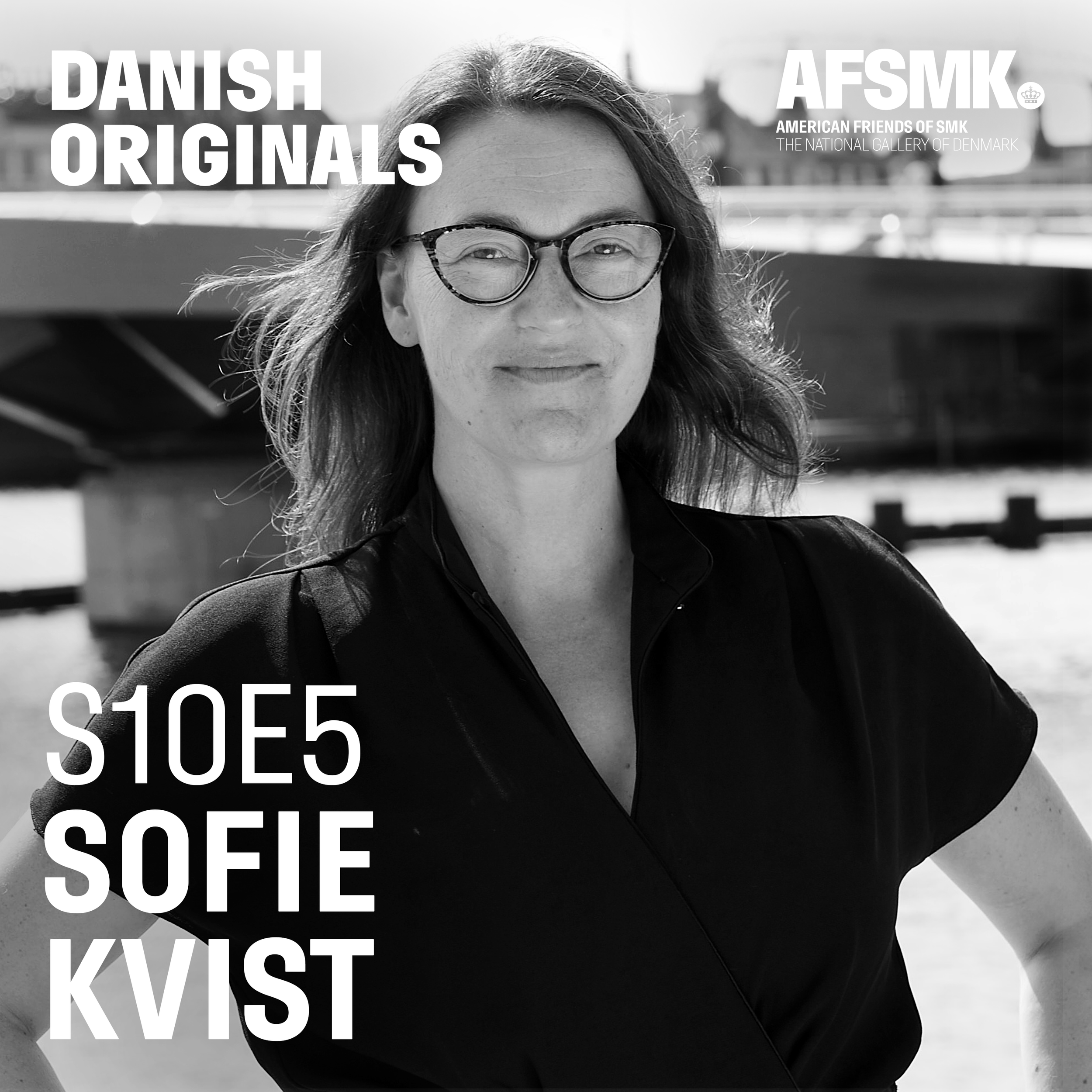
From Gehl Studio on Powell Street, Gjern-born, San Francisco-based Danish architect, urban strategist and designer SOFIE KVIST recalls moving to the US when Danish firm Gehl People opened its west coast office. She describes her people-centric and data-driven work focused on public spaces as more social science than design. And she shares conceptual design projects in North American cities that have, at their core, attention to foundational cultural, social, and environmental sustainability.
Photograph Source: GEHL
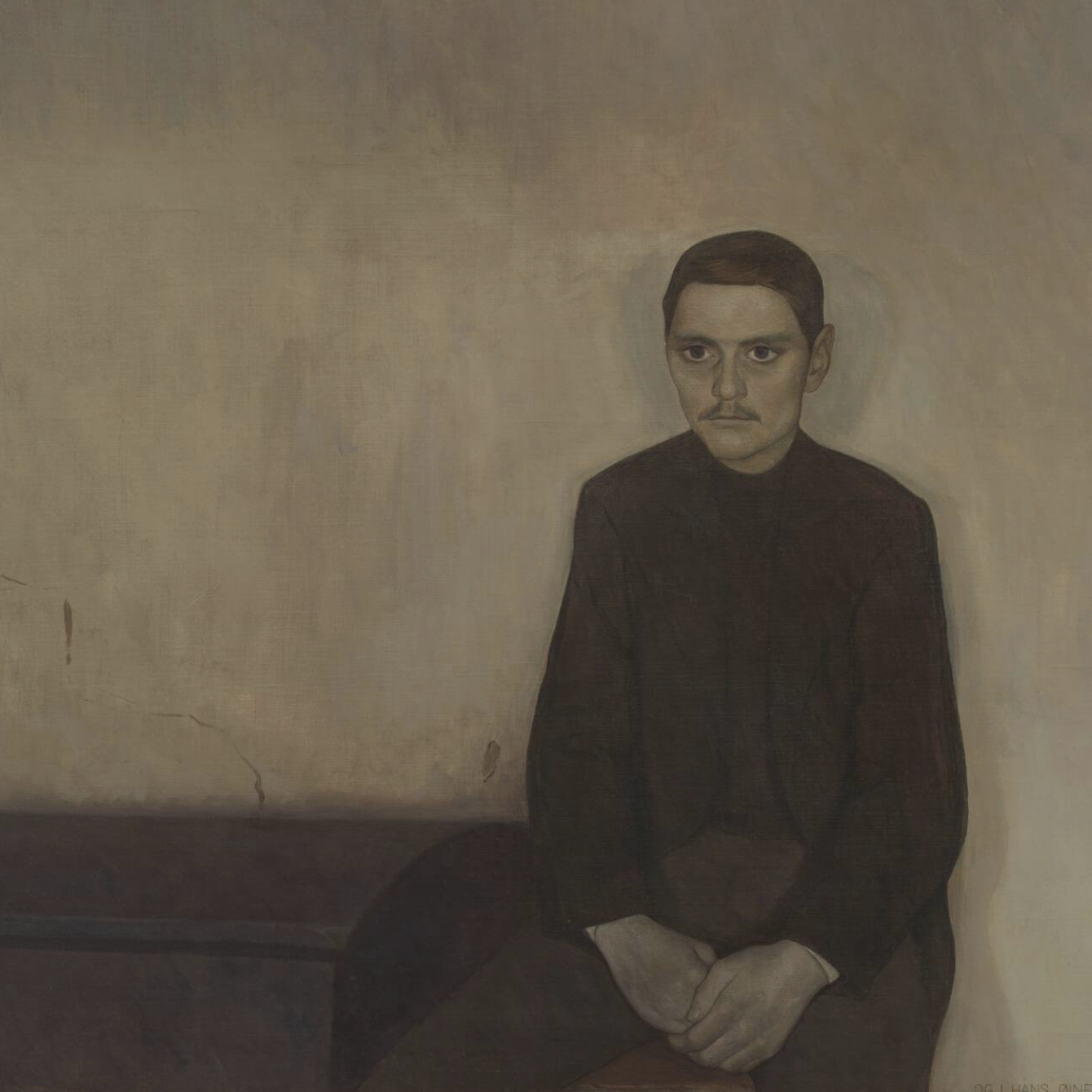
For today's episode, Sofie Kvist chose Ejnar Nielsen's Og i hans øjne så jeg døden, or And in his Eyes I Saw Death, from 1897 from the collection of the National Gallery of Denmark, Copenhagen.
“It’s more about bringing people together around something that is easily digestible and understandable and people can get behind, or say, I was expecting this to be a little bit different than what I’m seeing here.”
“I was always more interested in how can I, through the work I do, be part of creating a better world, a better place for people? Composition is important, aesthetics is important, having a pleasurable place to be in — but it’s not the first thing.”
“Jan Gehl is definitely a hero of mine. He’s a fantastic person, and the impact he’s had on the world of planning and design is immense. Also some of his peers, like Jane Jacobs from Toronto. Both looked at architecture through the lens of more social science than design.”
Powered by RedCircle
This conversation with Christian D. Bruun occurred on November 7, 2025.
00:04
Sofie Kvist
I chose a painting by Ejnar Nielsen, titled And in his Eyes I Saw Death. It's a reminder of our limited time here on this planet and of making the most of it while we are here.
00:22
Sofie Kvist
The painter is from the same town as me. Growing up in a small town in Jutland and coming to a big museum in Copenhagen as a teenager and seeing the name of a street from your town, that had an impact on me. I grew up walking the street that's named after him. My grandma lived on that street.
00:43
Sofie Kvist
I'm reminded of this other painter who was a protegé of his, Erik Raadal, and he painted street scenes and landscapes from this little town. Almost kind of mundane, just a street corner with someone walking down the street. In this very simple life — a reminder that life is short, that it's important to find beauty in the everyday.
01:15
Christian D. Bruun
My name is Christian D. Bruun. I'm the director of Danish Originals, a podcast series created in partnership with the American Friends of the National Gallery of Denmark. Our goal is to celebrate Danish creatives who have made a significant mark in the US.
01:30
Christian D. Bruun
Today, our guest is Sofie Kvist, a Danish architect, urban strategist, and designer. Welcome Sofie.
01:36
Sofie Kvist
Thank you.
01:38
Christian D. Bruun
I'm very excited to be here and learn all about your work and also about you and your journey to the US. We are here at your workplace, Gehl, in San Francisco. Thank you for hosting us. Would you describe the space we are in and the office we're in so our listeners can get a sense of the surroundings?
01:56
Sofie Kvist
Absolutely. Welcome and thank you for coming here and I'm very excited about this as well. The space we're in now is one shared space with smaller room dividers in soft materials, wood, and a lot of books. We have some beautiful plants and some brick walls, which reminds me of the streets of Copenhagen.
02:20
Christian D. Bruun
You've brought a little bit of Danish sensibility to San Francisco.
02:24
Sofie Kvist
Absolutely.
02:25
Christian D. Bruun
Your position here at Gehl is director, and for those listeners who are not familiar with Gehl, it's a rather unique firm. Would you explain to us what it is and how it's different from other architecture firms?
02:38
Sofie Kvist
Absolutely. At Gehl, we found our work in the works of Jan Gehl that dates back to the early '70s. Jan started his very prolific career looking at what makes good cities for people and that is still our ethos — what makes good places for people and how can we design and plan for urban environments for both people's health and planetary health.
03:07
Christian D. Bruun
And for my own clarification, it's called Gehl or Gehl People?
03:12
Sofie Kvist
It is one firm. In the US we operate under the name Gehl Studio, the Copenhagen office operates under the name Gehl Architects, but as a firm, we are Gehl People.
03:23
Christian D. Bruun
That does sound very humanistic in a good Danish way. So you're not designing buildings, either residential or commercial, you're not designing schools or hospitals or hotels. Your focus is on the in-between public spaces. You focus on wellness, sustainability, community as I understand it. And what does that include?
03:46
Sofie Kvist
A lot of our work is about uncovering stories of people in place and being the facilitators of telling those stories so they can be the foundation for change. And oftentimes our starting point is to get out into the urban environments that we work in, whether it's a street, a park, a neighborhood, or a downtown, a larger city area, regional area, and understand the people experience at eye level through our own bodies and through engaging with people on the ground.
04:17
Christian D. Bruun
I see. Correct me if I'm wrong. The area that you operate in is city planning on a more intimate scale than larger city planning, right?
04:25
Sofie Kvist
We see ourselves and call ourselves urban designers and urban strategists. And oftentimes we do look at entire cities or entire downtowns. But rather than looking at them top down from a planning or a solely strategic perspective on a map, we spend a lot of time understanding the lived experience at eye level.
04:49
Christian D. Bruun
You've worked on many projects all over the world. But let's talk about some of the US projects. I'd like to start with the project in Detroit, Michigan that you recently completed. Can you share that with us?
05:01
Sofie Kvist
Absolutely. We have been lucky to be engaged by the Belle Isle Conservancy to help them craft a vision for what they have named the Belle Isle Commons. Belle Isle is an island, as the name states, in the Detroit River in the waters between the US and Canada. It's on the US side and it's part of the city of Detroit.
05:25
Sofie Kvist
For decades, that island has served and still serves as a recreational park for all Detroiters. And people come in the summer to picnic, they come to go to the conservancy of flowers and some of the other incredible destinations that are there. But they've also more recently learned that there are things that people don't find on the island.
05:49
Sofie Kvist
The conservancy came to us to have us help them with crafting a vision and a concept design for a small part of the island that's a critical and key space. It is next to the aquarium, which is one of the oldest, if not the oldest, in the US. They wanted the indoor-outdoor experience to be more seamless and more integrated, and create a space that people feel comfortable coming to all year, rather than mostly, as it is today, in the summer.
06:21
Christian D. Bruun
Who approaches you or hires your firm, who pays for projects like this?
06:27
Sofie Kvist
We work for a lot of different clients. This one, specifically, the conservancy is a foundation, and they pay for our work on the island.
06:36
Christian D. Bruun
In general, is it more at the city or state level, or private architecture firms?
06:42
Sofie Kvist
It's a bit of a mix. We have clients that are private developers, and we work with foundations that support urban environments and urban transformation across the US. And then we do a fair amount of work for public sector clients, whether it's municipal or regional or state level.
07:00
Christian D. Bruun
Walk us through the process of how it gets done, how it gets built, and who builds it, for a project like that?
07:06
Sofie Kvist
So the Belle Isle Commons was a little bit of an outlier for us in some ways, because the starting point was us coming in by invitation of the conservancy to help them shape this vision.So it was a direct commission with the same starting point — site exploration, being in place, understanding what works and what doesn't work from the Gehl lens of what makes good urban environments and what makes people thrive, collectively shaping that understanding with the client team through workshopping and site walks.
07:40
Sofie Kvist
And then from there, we drafted a vision statement and some goals, and then we drafted a concept design for this Commons that is an area comprised of multiple smaller sub-character areas that offer different experiences within a small part of the island. We rarely do long written reports. A lot of the work we do is about visual communication through illustrative drawings and succinct written communication. It's more about bringing people together around something that is easily digestible and understandable and people can get behind, or say, I was expecting this to be a little bit different than what I'm seeing here.
08:24
Christian D. Bruun
Are you there throughout the whole process of building it?
08:26
Sofie Kvist
We rarely do implementation. We are more at the high level inception phase of the project and help craft the starting point for a project to happen. It's rare for us to go beyond conceptual design. But that said, we do sometimes go beyond and are part of what is called schematic design and construction design, but never alone, always with a technical partner.
08:56
Christian D. Bruun
There's another US project that you are currently working on in Chicago. Will you tell us about that?
09:02
Sofie Kvist
We have been working with a really interesting site in Chicago for some time, the North Lakeshore Drive redevelopment, which is a big infrastructure project that is run by a local engineering firm. They invited us to join the team to help them craft a vision for how this infrastructure project could also be a delivery for better access to the lakefront and some improvements within the park on the lake.
09:37
Sofie Kvist
Our role was to come in to understand the place, how are people using it today. Our methods have been developed since the early days of Jan's work around studying public life and public space through observation with volunteers, and also doing online surveying to capture the wider Chicago population to understand people's experience of the lakefront from a broader perspective.
10:07
Sofie Kvist
We put together an analysis of all the data that we collected and that analysis is like a health check of how is the lakefront "performing" today — how are people experiencing the lakefront, and what are things that they find challenging. And are there ways, through this big infrastructure project, we can actually bring some transformations that will change that for people who come to visit the lakefront.
10:38
Christian D. Bruun
It's a very large project, it's seven miles of lakefront. What did you come up with? What is missing? What does Chicago need?
10:46
Sofie Kvist
It's an incredible and really important asset in the city. And people come here to enjoy the weather in the summer and to cool down from the heat, which we very much experienced when we spent multiple days there doing surveys on ground. It gets incredibly hot and that lakefront provides a lot of relief from that city heat in the summer. We learned a lot of things from this survey.
11:11
Sofie Kvist
But some of the key things was that people love coming to the lakefront, but they wish that there were more things to do. They love that they can come, they can recreate, they can picnic, they can take a dip in the water. But they were also missing more playgrounds, places to connect with nature that wasn't a lawn, but actual nature. And then other facilities, like places to buy some food and go to the bathroom, which are pretty far and few between today.
11:41
Christian D. Bruun
It's a very iconic drive, with all the Mies van der Rohe apartment buildings and all that, a very iconic Chicago view.
11:49
Sofie Kvist
And the drive is staying. The road is getting redeveloped because the infrastructure is crumbling and because with the redevelopment you can gain some land. And in this instance, they're actually gaining 64 acres of lakefront land that can be utilized for park assets instead of asphalt.
12:11
Christian D. Bruun
Do you then work with the city on what parking spots you need, all those very practical things? Or that's something that comes in later?
12:18
Sofie Kvist
It's part of our understanding of existing conditions and needs. Chicago is a city that has good public transit and they do have a fair amount of bike infrastructure and great sidewalks in their downtown, but you also have a lot of people that drive. And for us, it's important to understand that arrivals experience from all modes and make sure that that is catered to in the vision.
12:44
Sofie Kvist
So to answer your question more directly, we don't do technical analysis of parking assessments, but we do look at the data, how people arrive, what modes are they arriving by, and then through that at the existing assets and whether they actually serve those purposes.
13:04
Christian D. Bruun
I see. And then you go in and suggest you need such and such here?
13:08
Sofie Kvist
Exactly. We're hearing that people wish that it was easier to park their bike over here. Can we put in some better bike parking? People arrive here by bus. The bus stop is a little far from where they're going and it's hot to walk there. Can we either move the bus stop or put in some more trees or other kinds of shade to make that walking experience better? So it's very much about understanding all these little user journeys and moments that people go through, and then how can we make that the most optimal.
13:39
Christian D. Bruun
And I'm sure bicycling is a big part of bringing in the Danish aspect to some extent.
13:44
Sofie Kvist
I will say that a lot of cities in the US have turned up the efforts in providing cycling infrastructure. And I think especially when we saw bike shares starting to come into cities in the US and more and more people wanting to be on the road by that two-wheel mode, we've seen quite a shift in how much infrastructure is actually provided.
14:09
Sofie Kvist
And it's been interesting, having been here for almost ten years, to see how that transformation has happened in San Francisco where I live. And as someone who bikes myself also feeling the change on my own body. They have done some great investments in cycling infrastructure here and you see it in the numbers. There's simply more people on bikes out in the city.
14:33
Christian D. Bruun
That is great. Yeah. I've also noticed in Los Angeles, there's a lot more bicycle lanes now. I'm always worried that the cars don't know that they're there. It's a process, right, for everybody to figure out that new system.
14:47
Sofie Kvist
Change takes time. And I think as someone who bikes in the US and has biked in LA too, coming from Copenhagen, you have to put your habits a little bit to the side and learn how to navigate a place where people are not as used to looking out for cyclists and to some degree even for pedestrians as well.
15:08
Christian D. Bruun
Leaving the US for a bit, but still staying close to home, you have a really interesting project in Vancouver called the Gastown Public Realm Plan. Tell us about that.
15:21
Sofie Kvist
The Gastown Project is a collaboration between Gehl and multiple Vancouver-based firms, and the city is the client. Gastown is the birthplace of Vancouver, and it is on the downtown waterfront geographically, but not directly connected to the waterfront, which is a rarity in Vancouver.
15:44
Sofie Kvist
The actual shoreline is underneath one of the streets that we're looking at as part of the public realm plan. They did a fair amount of landfill, put in a major rail. So in that one spot, the city's detached from the water, where there is a big rail yard. The rest of the city you can get straight to the waterfront.
16:05
fie Kvist
Gastown is a super interesting and very complex project. It's a beautiful historical neighborhood with historical brick buildings, and it is the birthplace of the Vancouver we know today, which is Colonial Vancouver. It's also the historical land for First Nations in Vancouver since time immemorial. The first nations would go hunting and fishing and sell their goods to each other or exchange their goods to each other. That's the place where you don't see the water anymore.
16:38
Sofie Kvist
This layering, pre-colonial and colonial, and then today where Canada is going through a reconciliation process with the First Nations across the country and Vancouver is very much on the forefront of that — the complexities of urban design in that context and understanding the harms that history has done to the original peoples of Canada, is complex and super interesting and I feel privileged to be a part of that work.
17:09
Christian D. Bruun
What a good thing that you can go in and help fix some of the errors of the past. That must be very rewarding. For the kind of work that you do, to be people-centric, implies you need to collect multiple opinions, convince people of your vision, bring people together, and a lot of ground level organization. What would you say are the qualities required that are maybe not obvious?
17:33
Sofie Kvist
A lot of that for sure. A lot of our work is about listening and facilitating conversations between different parties that have a stake in the place where we work, whether it's a neighborhood or a city or a local park. And that is really what we build our work around. Of course, we also build our work around decades of experience and working globally and bringing examples from elsewhere of what works well and where there's challenges, and learning from that. Every place is different and you need to approach it with open eyes.
18:09
Christian D. Bruun
Let's go to Los Angeles for a second. I want to talk to you about a project that you completed in 2020, which is the Santa Monica Third Street Promenade in Los Angeles where I live. I understand that you employed the Public Space Public Life (also known as PSPL) benchmark survey. This was right before the start of the pandemic. Tell us about that process and what you guys did.
18:35
Sofie Kvist
Absolutely. For Third Street Promenade, we worked with Los Angeles based-firm RIOS on really understanding what is going to be the next version of the Promenade. So the project was deemed Promenade 3.0. 2.0 was pedestrianization of the Promenade in the '80s, and physically that had started to meet its lifespan in terms of materials deteriorating and so forth.
19:04
Sofie Kvist
The city and the BID, the local business improvement district DTSM (Downtown Santa Monica, Inc.) partnered up to take a look at what are things that we could do to improve their promenade experience as this key destination in Santa Monica and a key economic driver for this city.
19:22
Christian D. Bruun
How far did you get and what is the status of that?
19:25
Sofie Kvist
You mentioned the pandemic. That of course threw a little bit of a wrench in it for the city. I will say that just zooming out a little bit, Third Street Promenade has been one of the few pedestrian malls in the US that have survived through different ages and stages of the retail economy, but they were starting to see some challenges.
19:48
Sofie Kvist
So a big part of the revitalization process and why they wanted to reinvest in the street was also to talk about how could they expand what the Promenade actually serves and maybe bring it a little bit back to also being a local street, where people who live in the area also want to come, which is one of the things we learned from our survey, that wasn't really the case at the time.
20:15
Sofie Kvist
And then still be a tourist destination and a draw for all of LA. Our work was thinking about Third Street Promenade as a public space first and foremost, that has retail on it, but what else could it serve? A big part of the work was to think about how it could offer experiences for locals.
20:35
Sofie Kvist
One of the things they have there already is a farmer's market. So could we really expand on the idea of having more local serving events and also maybe implement something more permanent, like a splash pad that could bring some families down and so forth?
20:51
Sofie Kvist
Before we went full on on the concept design and what this place is gonna look like and what do we think is right, we did the PSPL, as you mentioned, and that was to mostly talk with people because the foot traffic numbers were quite high and we counted that. We also looked at, do people stop and stay, do they actually spend time on the Promenade or do they just walk through? And we learned that it wasn't super "sticky," as we call it.
21:19
Sofie Kvist
A lot of food traffic but people didn't spend a lot of time there. And when we then talked to people, we learned that they thought it was too crowded, there weren't good places to sit. And so as part of the design process we implemented with the client and our design partners, a series of temporary projects to test some hunches about what we think will actually be the things that are needed to make this a different draw than it is today.
21:46
Sofie Kvist
And then we measure it again during the implementation period of these temporary projects to see if our hunches were right. And then we used that to inform a permanent redesign. The permanent redesign has not been implemented. It was approved by the City Council at the time and it was budgeted for, but then COVID hit and as you know, a lot of things stalled across the country, well, across the world.
22:13
Christian D. Bruun
Do you know if it's still somewhat on track? Is there a desire locally to implement it?
22:19
Sofie Kvist
I do believe that there is still a desire locally to implement it. It's a big project financially, of course. So balancing that with other city needs, that's what everybody is doing at the moment. You wanna invest in your key public spaces, but there's also a lot of other things that the budgets need to serve. I know that they've continued with more temporary programming and more events and that has been quite successful. But they're also seeing a bit of a continued struggle with vacancies.
22:50
Christian D. Bruun
It's always surprising to me because it used to be such a vibrant place and they had a lot of high-end restaurants, and just a great place to visit. I was just there last week and actually, there were a lot of people and a lot of restaurants have opened and there's a lot of stuff going on. It seems everything is being renovated and built out.
23:09
Sofie Kvist
And we're sitting in downtown San Francisco at the moment and Powell Street has had some similar challenges with a lot of vacancies and there's still a fair amount of vacancies. But we are also seeing that the programming efforts and the clean-and-safe efforts are bearing fruit. There are more people on the street now than there were a couple of years ago. And it seems tourism has really bounced back downtown as well.
23:38
Sofie Kvist
And we are here, our offices here now, we worked from home for many years, not just during the lockdown, but also afterwards. And now we're part of the change that we talk about everywhere, by being some of the first movers into some new office spaces downtown.
23:55
Christian D. Bruun
We talked to Jan Gehl about the whole New York project, which was a huge undertaking and restructured how people use that city. Are you guys doing anything here in San Francisco?
24:06
Sofie Kvist
We have done a bit more work in San Francisco previously than we are currently doing, including work with the Civic Center, looking at how that could become more of an everyday space and not just a place that has big events and hosts important civic events as well as protests. And one of the outcomes of that was the implementation of playgrounds, and also spaces where you can buy food. And that's changed the dynamics a little bit of Civic Center.
24:37
Sofie Kvist
That project was interesting because it's a very complex social landscape, where there's also unhoused people that use the Civic Center as a living room and they're part of the population. And so our work there was to understand the needs of all people that come to the place and use the place. That's been a great project to be a part of. And even getting to speak directly to people in the unhoused populations or people experiencing homelessness and understanding their needs have been a great learning process as well.
25:11
Sofie Kvist
We've done some work with Market Street similarly. We did a prototyping festival where we worked with the Yerba Buena Center for the Arts and had more than 20 local artists and makers put installations up on the street, and then we measured the impact on public life from those.
25:28
Christian D. Bruun
Historically, of course, American cities are famous for not really having public space as the foundational structure of those cities. I have a friend who works in city planning, and there's a lot of resistance to change, people have to learn how to use the city and the space in a different way. You guys are right at the heart of all this.
25:48
Sofie Kvist
You're hitting it spot on. People don't like change, so you've got to find ways of bringing people along. And I think what has been successful in San Francisco has been a lot of temporary projects to show people that we can use the city space in a different way. And then those programs have since been formalized to a large degree. Direct citizen engagement can be quite powerful and has been a great tool also for Gehl as an organization in the US.
26:19
Christian D. Bruun
I want to go back in time a little bit. I want to hear where you were born. Where did you grow up? What was your childhood like in Denmark, how did you get into architecture, what were your inspirations growing up?
26:31
Sofie Kvist
I grew up in a small town in the Danish countryside called Gjern, it's in the Silkeborg area where there's forests and lakes. And I grew up walking and biking the local streets, riding horses in the woods, and playing drums in the basement to my sister's frustration, so to speak.
26:56
Christian D. Bruun
What songs were you playing?
26:58
Sofie Kvist
That was probably an added layer to the frustration because I was really into noise and metal music. So I'm sure it was not the most fun experience.
27:08
Christian D. Bruun
The house was shaking.
27:09
Sofie Kvist
Yes, exactly. But I was drawn to cities from a pretty early age and I would go to Silkeborg with my grandma on the bus. And Silkeborg is a small town or a small city compared to a lot of cities around the world where I've since worked. But that was the first, oh, there's something bigger, wow, that's interesting. And then going to Århus as a teenager, being able to take the bus by myself and experience urban culture and go to shows.
27:38
Sofie Kvist
We didn't get concerts much out in Gjern, so you had to go to the city for that. And that was a big part of the draw. And then when I was in gymnasium, I was very drawn to Spain and I wanted to go live in Spain and study Spanish and immerse myself in Spanish language and culture.
28:00
Sofie Kvist
Then something happened where I was reminded of my family history in furniture design and woodwork. Both my parents worked in furniture. My dad started as an apprentice when he was very young in a furniture wood shop that since became a furniture factory that did exports to Canada and the US. I started looking at the School of Design and the School of Architecture and ended up applying to the School of Architecture because I thought I was going to become a furniture designer.
28:38
Christian D. Bruun
You and I actually went to the same school —
28:40
Sofie Kvist
That's right.
28:41
Christian D. Bruun
— in different decades to Arkitektskolen Aarhus. I was a few years ahead of you. I was in something called Department D that was later closed. It was a very experimental, cool department with teachers like Poul Bæk and Jan W. and Svein Tønsager.
28:59
Sofie Kvist
Yeah. They were also there when I was there.
29:02
Christian D. Bruun
Okay, good. I had such fond memories of Århus. Your degree is in city and urban community and regional planning. Maybe tell me a little bit more about your school experience that steered you to urban planning and what you do now.
29:17
Sofie Kvist
My actual title is Architect because I went to the School for Architecture, but I did my master's in Urban Design. Jan Gehl's books were part of that draw, getting to know those in my first year of school. And at the time it was really about landscape urbanism, and that was for me a very interesting overlap between density living and natural systems.
29:47
Sofie Kvist
We spent the first two years going through all the different disciplines that you could master in. And it was everything from furniture design to graphic design to building architecture and larger scale urban planning and design. And I was very drawn to urban planning and design mainly from the perspective of it being more of a social science than a design discipline.
30:18
Sofie Kvist
And I think that's part of what also has become my path to Gehl, that I was always more interested in how can I, through the work I do, be part of creating a better world, a better place for people? Composition is important, aesthetics is important, having a pleasurable place to be in — but it's not the first thing.
30:41
Sofie Kvist
There was a lot of focus on aesthetics in the realm of building architecture and also in some of product design, while the urban design planning was a little bit more around user experience. And that's what I found interesting. So having the title Architect is a little bit funny because I don't actually design buildings.
31:05
Christian D. Bruun
I was there when they decided to get rid of all the parking lots from the '60s that were built over the river, which when you look back, seems to be a crazy idea. And of course once they opened it up, it became the most popular part in the city with restaurants, and people would hang out there. And who doesn't want to be by the water?
31:25
Sofie Kvist
Yes, absolutely. One of the things that is also in the inception of the work from Jan Gehl is to expand on the way we look at creating solutions through having data on multiple things. So you have more than one KPI for your outcome. What we saw, especially through the '60s, and to some degree still is happening in a lot of places, is that you have a primary purpose of maybe moving people fast and efficiently, but then you forget all the other things and actually build yourself into corners.
32:01
Sofie Kvist
And that's some of the things that we see that can be good intentions in wanting to put in a bus rapid transit (BRT) line, for instance, that we've done some work with in Bogotá. You should also look at other KPIs or other intended outcomes of what you're trying to achieve. Because if you only have one, that's what you're gonna get, right? If your only outcome is we need to build more housing and housing only, that's an important outcome.
32:28
Sofie Kvist
But if you don't think about what are the amenities that are going to support the people who are going to live in this housing — is there going to be daycare? Is there going to be a grocery store? Are they going to be able to walk to the bus? Then you're creating another challenge for yourself that you have to come in and solve later on.
32:44
Christian D. Bruun
Right. Like in the '70s in New York City, they were planning an expressway through lower Manhattan and through the Village that would all have been erased now. So there are sensible people like you guys who can look at things and make sure things don't go completely off track.
33:02
Christian D. Bruun
Do you have any heroes growing up and were there Danish figures or non Danish figures who played a role in how you envisioned your future? We all grew up with Arne Jacobsen and all the furniture design as part of the Danish DNA.
33:16
Sofie Kvist
Yes, absolutely part of the Danish DNA. What was talked about in my family was furniture makers or furniture designers like Wegner. But later on, I will say, Jan Gehl is definitely a hero of mine. He's a fantastic person, and the impact he's had on the world of planning and design is immense. Also some of his peers, like Jane Jacobs from Toronto. Both looked at architecture through the lens of more social science than design.
33:48
Christian D. Bruun
A very humanistic approach. You now reside in San Francisco. What do you love about the city and is your commute to work convenient?
33:56
Sofie Kvist
I love the West Coast. I think it is a very special place and there's something about how you can be in a city and then at the same time, you can go in multiple directions and get very different experiences. Whether you go to the Pacific and you go to the beaches or you go inland and you go to the woods and the desert, there's something really magical about the West Coast.
34:23
Sofie Kvist
And I think San Francisco has a lot of that magic embedded in the city with the waterfront, a lot of beautiful big parks in the city and a lot of nature in the city too. I live in the Mission and the Mission is a quite green neighborhood. There's a lot of street trees from all over the world that represent the multicultural neighborhood that it is. And I do a lot of walking around the city and experiencing the city on foot.
34:52
Sofie Kvist
Typically I bike to work on the city bikes, which is a very smooth and very easy ride, mostly down Market Street, the main street that has bike lanes. You just have to be careful you don't get into the tram tracks when you cross the street. And then sometimes I take the Bart, which is the subway in San Francisco. But I like the urban experience through the pace of walking.
35:18
Christian D. Bruun
So what was your journey to San Francisco and was that an easy decision? What was your thinking?
35:25
Sofie Kvist
Coming to San Francisco was very much a decision through Gehl. Before I moved here about nine years ago, I was working in the Copenhagen office. And I had been in the office for about four or five years when they decided to open an office in New York and one in San Francisco.
35:44
Sofie Kvist
And I was part of the first group of people who would travel to the US and collaborate with our new colleagues in the US on projects here and in Latin America predominantly. And then at one point I was spending more time in the US than I was in Copenhagen. One of my colleagues in Copenhagen posed a question whether I would be interested in relocating.
36:09
Sofie Kvist
And it was not a hard decision from a professional standpoint and from my love for the west coast. Copenhagen was hard to leave, no doubt. Incredible friends, beautiful city. I don't miss January in Copenhagen, I'm not gonna lie, but there's a lot of things that I miss about Copenhagen, for sure, including my friends and family, which was the hardest to leave behind.
36:36
Christian D. Bruun
Of course. You've worked on projects both in Copenhagen and here. You also have projects all over the world. So do you travel a lot for those projects?
36:46
Sofie Kvist
We travel a fair amount as a group because we do have projects everywhere and we're still a small firm in comparison to a lot of urban design firms. So I do get to travel a fair amount, which is wonderful because you get to experience and learn from new places and you meet a lot of interesting people on your travels.
37:07
Sofie Kvist
I get to collaborate directly with both members of the community in the places I go to, and other professionals. It never gets boring. I've been going to Canada a lot. I've traveled around the US in different cities, but also Latin America — Mexico, Chile, and so forth. And then once in a while I get to go to Australia, which is a real treat.
37:32
Christian D. Bruun
Are there places you would say that are maybe a new frontier for the kind of work that you do, where you can make a lot of progress and a lot of change?
37:40
Sofie Kvist
I think there's different degrees of impact and change. I think because cities and urban environments are in constant transformation, everywhere we are, there's always something interesting to do. For example, in the Bay Area now, we have a project that is a conversion of a mall into a mixed use development with housing and new public spaces, making it more of a neighborhood. There's about 25,000 vacant malls across the US. Things never get boring in this field, there's always something to bite into.
38:14
Christian D. Bruun
You've been in the States for ten years?
38:17
Sofie Kvist
Almost ten years.
38:18
Christian D. Bruun
Almost ten years. What do you find are the biggest differences in terms of office and work culture between the two countries?
38:25
Sofie Kvist
Maybe because this office was founded through a Danish company and we are one firm, it doesn't feel like a big difference. There is a lot of humanistic perspective that has translated to our office here. On a day-to-day basis, it feels very much like home for me to work in this office here in San Francisco.
38:51
Christian D. Bruun
Let's talk a little bit about sustainability, because that can be applied on many levels, right?
38:58
Sofie Kvist
I would say as a foundational part of our work, we are focused on creating better balance in the systems that we operate in. Better balance between traffic modes — we were talking about biking before, enabling more walking in the urban environments and getting people out of their cars and into public transit and those things.
39:19
Sofie Kvist
And it's about balance and not about being against cars. We also know that we can change many other things by creating more pedestrian friendly and people friendly cities. We can change levels of emission that have a big climate impact. Our work is inherently sustainable in that sense.
39:40
Sofie Kvist
More directly, I have multiple projects where I do streetscape strategy and design and concept design for streets and transformation of urban streets. We talk a lot about sustainable material, local sourcing of materials, materials that will last longer than 30 years. We talk a lot about integrating natural systems, so things like soil cells where trees can grow healthy and they're self-watering, very practical things.
40:08
Sofie Kvist
And then zooming back out to public life, there's a lot of conversations around social sustainability and what does it mean to create urban environments where everybody feels that they belong. And that is back to the core of our work, really understanding what makes people tick.
40:28
Christian D. Bruun
Right. Before I let you go, Sofie, are there certain types of projects or environments that you would like to get your hands on, sites in faraway places, back in Denmark, perhaps? What is next for you, what does the future hold?
40:45
Sofie Kvist
That's a very interesting question. Recently, I was lucky to be involved in a project in Melbourne that was about building out a new metro line. And our role on that was through an organization that was embedded in the metro development company called the Metro Tunnel Creative Program. That's a bit of a mouthful.
41:07
Sofie Kvist
Our role there was to help them evaluate the impact of their project, less so as a design partner and more as a research partner. Melbourne is interesting as a city in general, but it was about construction mitigation and can art play a role in the mitigation of construction impact in our urban environments when we have a big build, like this critical infrastructure.
41:33
Sofie Kvist
We got to interview and talk to a lot of artists that were involved in the program who got their art out in the city. And I think that kind of community impact and also how art can be a convener for communities was incredibly interesting. That was a great project and I would love to do more work in that realm. So more multidisciplinary, beyond design and social science, more collaborations with people who are maybe the less usual suspects when it comes to the field of planning. That's where my interest is going for sure.
42:10
Christian D. Bruun
We'll see what the future brings, in other words.
42:12
Sofie Kvist
Yes, absolutely.
42:14
Christian D. Bruun
Very good. Well, thank you Sofie, for taking the time to speak with us and be part of Danish Originals. It's been a real pleasure chatting with you.
42:22
Sofie Kvist
Thank you for having me.
42:26
Christian D. Bruun
For today's episode, Sofie Kvist chose Ejnar Nielsen's Og i hans øjne så jeg døden, or And in his Eyes I Saw Death, from 1897 from the collection of the National Gallery of Denmark.