
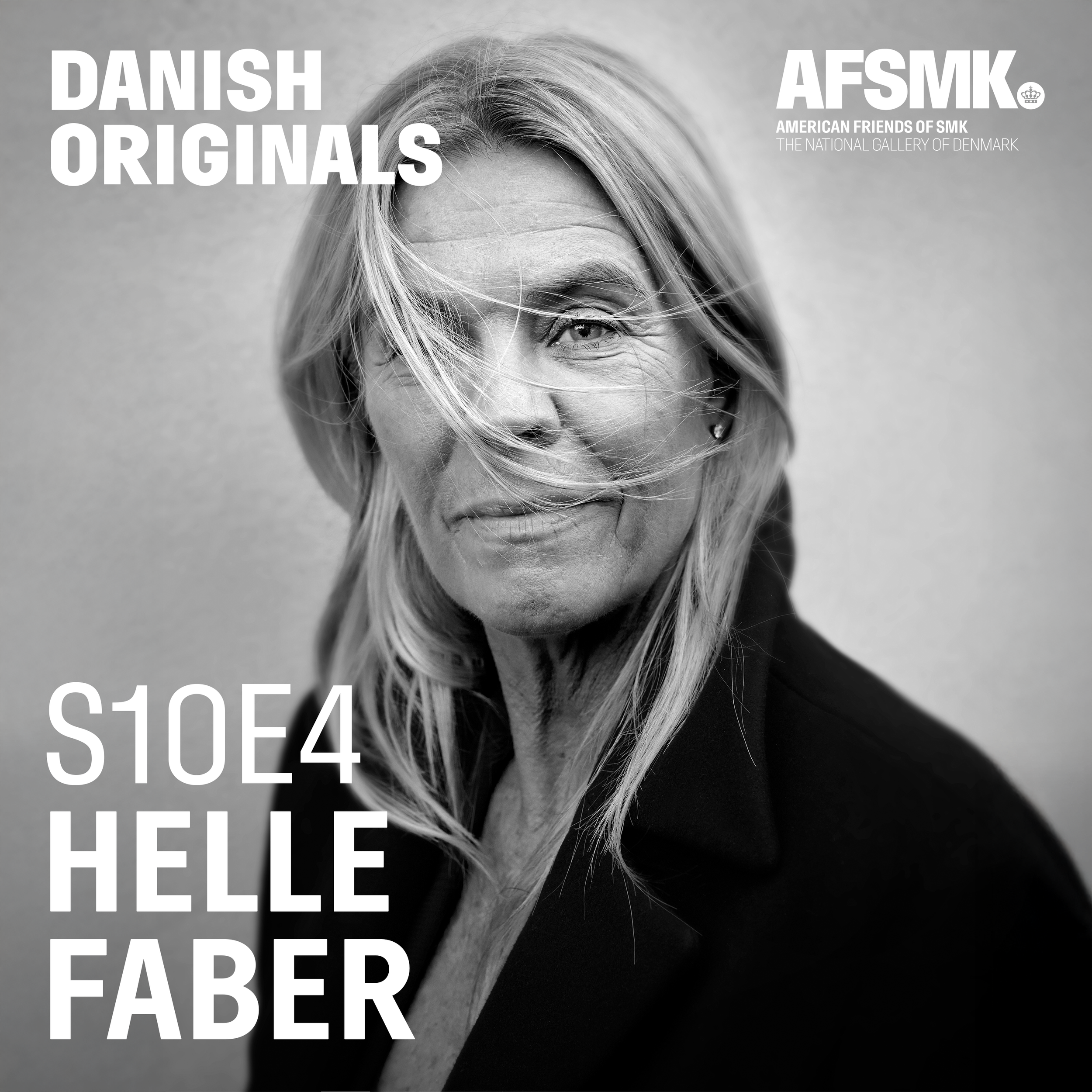
From Copenhagen for a short stopover during awards season, Herning-born, Copenhagen-based Danish documentary film producer HELLE FABER talks about her film Mr Nobody Against Putin, currently nominated for an Academy Award for Best Documentary Feature. Helle discusses how she got involved in the secret film, how the subject and filmmakers had to trust each other, and how the team got the subject out of Russia for his safety that would then secure the film's chances to be shown.
Photographer: Martin Bubrandt
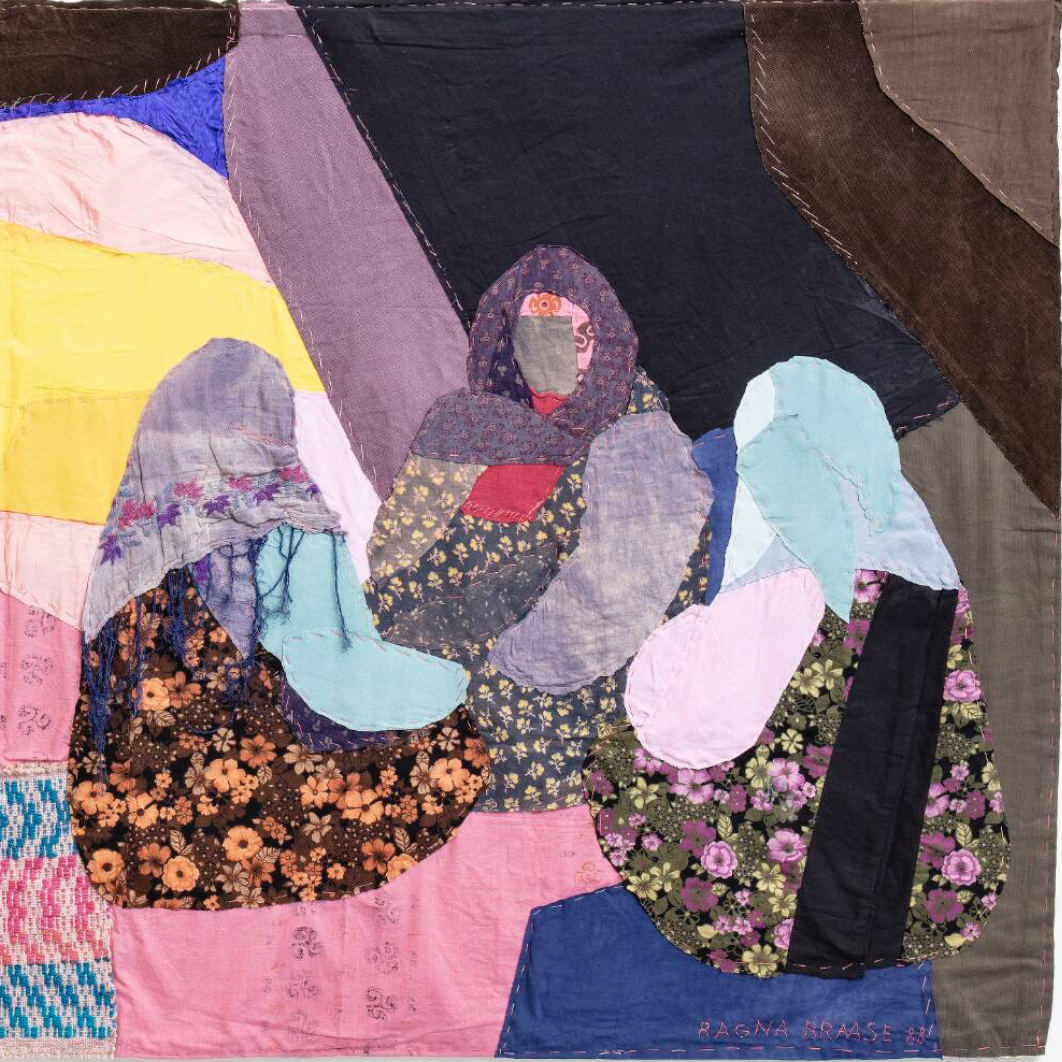
For today's episode, Helle Faber chose Uden titel, or Untitled, from 1988 by Ragna Braase from the collection of the National Gallery of Denmark, Copenhagen.
“I watched this footage and I knew right away that I wanted to make this film. But I also knew right away that there were so many obstacles to getting this film out that we would have to conquer on the road. And one of them, obviously to me, was that we needed to get Pasha [Pavel Talankin] out of Russia if we should ever show this film anywhere.”
“You have to remember everything is done in secrecy. It’s so secret, everything. All the financers are told not to share anything internally in their offices. So it’s only, in DR, maybe two people know of this, at the Danish Film Institute, only a small group of people knows of this project. It’s so secret everywhere.”
“We lived with the risk. I woke up every morning during that period of time and knew there was a risk that I might have to go back to all the financers and tell them that I spent all the money, but there would not be a film, because of course his [Pavel Talankin] safety was above all other stuff. ”
Powered by RedCircle
This conversation with Asger Hussain occurred on February 20, 2026.
00:02
Helle Faber
I've chosen this picture by Ragna Braase, it's without a title. It's actually a patchwork, and that's what I really like about it. It's made of fabric. It displays three women with a desert and some camels, ordromedars, in the background.
00:21
Helle Faber
We are somewhere in the Middle East, I would say. The women, they have no faces, they're all covered. They are chatting, sitting on the floor, having a good time.
00:32
Helle Faber
I've made a lot of films from Afghanistan and places like Africa. So it just stays with me because I think it's such a quiet moment. These women are sharing a quiet moment in a tent and at the same time, you may get the idea that everything outside is not so quiet. So this picture, for me, captures normality — normal people trying to have a normal life in conflict zones.
01:14
Asger Hussain
My name is Asger Hussain. I'm a film producer and guest host of Danish Originals, a podcast series created in partnership with the American Friends of the National Gallery of Denmark. Our goal is to celebrate Danish creatives who have made a significant mark in the US.
01:30
Asger Hussain
Today I'm joined by Helle Faber, a veteran producer and the founder of Made in Copenhagen, a Copenhagen-based documentary company known for internationally recognized films. Helle is the producer of Mr Nobody Against Putin, which won the World Cinema Documentary award at the Sundance Film Festival in 2025, and is currently nominated for a BAFTA and an Academy Award for Best Documentary Feature. Helle, welcome.
01:58
Helle Faber
Thank you so much. Thank you for having me.
02:00
Asger Hussain
It's great to have you. I've been so excited to have this conversation. I've been hearing about this film, talking about this film, watching this film, and simply just spending the last weeks if not months, being excited to meet you. Where are you calling from today?
02:17
Helle Faber
I'm calling from Copenhagen. I'm back for a short stopover, and then I'm off to London tomorrow morning, very early, for the BAFTAs. And then I'm just gonna head home on Monday, and then Wednesday I'm off to Los Angeles for the next three weeks.
02:32
Asger Hussain
Very good. Well, Los Angeles is where I am and I'm glad that we could meet this way, and thank you so much for taking the time to meet us with your busy schedule. I want to talk about the movie Mr Nobody Against Putin, but let's go back a little bit. I want to learn a little bit more about how you got into this and where it all started. Where are you born and raised?
02:54
Helle Faber
I'm born and raised in a place called Herning in the west of Jutland. And after I graduated as a journalist, actually, I moved to Copenhagen for my internship. That's how it all started for me.
03:09
Asger Hussain
Did you work as a journalist?
03:11
Helle Faber
Yes, I did. I was graduating from the Danish School of Journalism. I wanted to become a journalist because I was very preoccupied with telling stories. And then at the school, I realized that the way journalism is working may not be the way I wanted to work in the future. So I think, already back then, I was more fascinated by longer formats — and storytelling, really — not so much about revealing stuff or what I realized journalism is mostly all about.
03:47
Asger Hussain
Absolutely. So when did you decide that the documentary film form might be a way for you to express that innate desire?
03:58
Helle Faber
I started out doing longer formats for radio. It already started when I was doing my internship with DR. I was in a youth program called P4, which was a very exciting place to be back then. It was a place where you could really grow as a storyteller, and it was also a really difficult place to graduate from because they had really high standards of what they would air.
04:25
Helle Faber
So most times your pieces and stories were not aired. It was a needle eye to actually make something that they wanted to air. So different from today. Today you wouldn't waste any content at all. Back then only the highest quality would actually be aired.
04:44
Asger Hussain
And it wasn't 24 hours, right? It was a limited number of hours a day, so it had to fit in there. And just for our American listeners, DR is the equivalent of the BBC or NPR. It has both a radio component to it and a television component to it. And the standard is absolutely impeccable and covers so many different things that we call public service, of course, from entertainment to news stories. It's been something that every Dane grew up with essentially, and that set the standard for I think what we expected for a long time.
05:21
Helle Faber
That's true. After I graduated, I went back and kept doing this for a while. And then I moved into television, and that was originally because I was asked to become a host of a live program, becoming a news journalist. I felt that to develop my career, I needed to try to make news as well. I did that for, I think, 18 months.
05:49
Helle Faber
And then I started doing documentaries on my own, as a director actually, but still within DR TV, the Danish national broadcaster. I had a course at the Danish Film School and I had the feeling this was what I was going to do. In the beginning, I was fortunate to have the opportunity to do these documentaries by myself at DR TV, but I could also see that it would not last because you have so limited time to work with a documentary when you are a full-time employee.
06:23
Asger Hussain
And what were some of those early subject matters you were drawn to at that time?
06:27
Helle Faber
I've always been very drawn to cinema verité, being the fly on the wall, observing people. So for me it was the opportunity to get into a room with exciting people or with people's dynamic happening in front of me. And I would film it with my camera. I was a very bad photographer, I have to admit that. But sometimes...
06:55
Asger Hussain
People watching with a camera is the best, I guess.
06:59
Helle Faber
Basically, that was my first step into documentary making that I would use my camera. And the first subject I filmed was a school back in 2003. It was a school that tried to accommodate 18 different nationalities within 23 children. I was following this fifth grade class for a year, and the teacher, who was the main subject of my film, and her way of trying to deal with all these different children. Some of them didn't speak any Danish.
07:36
Helle Faber
It was a different way of telling a story about integration and how that worked out in Danish society. It made a huge impact and headlines, because nobody really watched it from this perspective before. So that was really interesting and that really got me hooked on documentaries.
07:57
Asger Hussain
When you do something like this, you obviously have an entry point into it. You can see that there is an interesting subject there. Has there been any time where you start shooting and then it doesn't turn out to be what you thought it would be, or it is just not interesting enough? This is obviously ripe for exploration because there are so many different stories within that contained setting. Have there been things over time that didn't really turn into great cinema or people watching on camera while you're in it?
08:30
Helle Faber
Yeah. What you are always looking for with your camera is some kind of development and storylines to follow. And sometimes you start out with something and realize that the story is already told, there's nothing more to follow. You're too late somehow because you should have followed this process maybe two years ago or something like that.
08:53
Helle Faber
So that happens. Sometimes, because it takes such a long time and you can't control reality, or you can try to control reality, but you can't do it to any extent. It becomes boring on the way. And if you already are in production, you'll have to find a way to deal with it because you need to finish the film somehow. That's why it's not always as successful as you think it will be in the beginning.
09:22
Asger Hussain
And in that process, and I know there's different types of documentaries too, there's reenactments and you told us you like the cinema verité style. Do you find yourself, over time, exploring different storytelling techniques to keep things moving along as well? If you feel that there is a subject that's great, but it needs a little help to be accessible to the audience, how do you come in at that point and make a decision about what to do?
09:50
Helle Faber
One of the techniques that we would use is to try to see if you can get another character to enter the stage or the scene and maybe bring some more, you could say, drama into the scene. That's one way of doing it. But also as a producer, I have been exploring many ways of storytelling. And it also comes down to the director, of course, when you work with a certain director and what they wanna do.
10:18
Helle Faber
But something that's been really fascinating for me has been trying to mix fiction and documentary in such a way that they will interact with one another. Some years ago I did, as a producer, a film called The Stranger. This was a story that has already been told. So how do you make it vital by reenacting it? What we did was to take the real woman who was the center of this story and expose her to an actor and make him play that guy she had a crush on back then.
10:58
Asger Hussain
Oh, that's fun.
11:00
Helle Faber
We had them doing scenes together, her as herself with this actor as this guy she used to know. And that was so interesting also because the director Nicole Horanyi managed to make this meta layer where the woman would actually comment on the scenes while they were taking place or right after. And she would explore herself, so to speak, and get new findings about her own psychology and realize new stuff because she was reenacting these scenes with this actor.
11:36
Helle Faber
It means that you create documentary moments in that way, something completely different from having actors playing out scenes and then you have somebody to explain what is going on, blah, blah, blah, blah, blah. Because that's not so much documentary to me. But if you do it in this way, you can actually create real documentary moments. And I think documentary filmmaking is all about that, creating these moments if you don't have them naturally.
12:07
Asger Hussain
If you don't have them. And I think also going back to the classroom, you had a clear entry point and you knew you were gonna stay there for about a year or so. But in other documentaries, sometimes especially something that we're going to be talking about, Mr Nobody Against Putin, when do you know it's enough?
12:28
Asger Hussain
There's obviously outside factors such as budgets, personal safety, security, risk, those types of elements. But in general, if a story keeps progressing, if a story keeps evolving, when do you know when to say, this painting is done, this sculpture is done?
12:47
Helle Faber
What we do is that we work with certain storylines. And you really wanna find an ending to this storyline. And once you feel that you have some kind of an ending or solution, that could be a stopping point. But of course, if there's a drama that's just keeping unfolding, you would not stop. You wouldn't stop before that actually is over, which I think is also the reason why some documentary films take ten years to make.
13:17
Asger Hussain
I was going to ask about this 'cause you and I are colleagues, but in different parts of the film industry. And as a feature producer, we spend three to five years getting a movie started, but once it starts, there is a date for when we finish. We might miss it within a week or a month, but there is a clear sort of beginning, middle, and end to that.
13:37
Asger Hussain
How do you do something that stays in production for five years? Obviously you work on multiple things at a time, but how do you keep that fire going too, personally?
13:48
Helle Faber
First of all, when I commit to a project as a producer, I know for a fact that I have to live with this production for at least five years, which is also why I'm extremely picky with projects. I really need to feel from the beginning in my gut that I want to stay with this project for so long that it's interesting enough for me to keep, as you say, the engagement going for so long.
14:17
Helle Faber
And then obviously sometimes it's a drag and nothing happens for a long time. And you sit down with the director and you discuss how to move on, and of course there are ups and lows in that process. But until now, I didn't find it hard to engage with a story for a long period of time because you just know that it's the condition for making them.
14:41
Helle Faber
Of course if you are hit by something like Corona or the COVID pandemic, everything is just like, oh my God, when are we gonna film again? We made a film in Uganda right there, and it took us forever to get started again. That was really not nice.
15:00
Asger Hussain
I want to talk a little bit about Mr Nobody Against Putin. And for our listeners, this is a film about an ordinary Russian school teacher who begins quietly documenting how propaganda reshapes his classroom. What starts as routine filming becomes an intimate portrait of power and compliance and personal conscience under Vladimir Putin.
15:24
Asger Hussain
Tell us what you can about this film 'cause it is so fascinating and it is so good and it deserves all the accolades that are being thrown its way. How did it come to you? How did you get involved? Tell us everything you can.
15:39
Helle Faber
Okay, so I'll start from the beginning —
15:43
Asger Hussain
A very broad question, but please.
15:45
Helle Faber
I'll start from the beginning. It's a long and complicated story. What happened was our director David Borenstein, who's American but he lives in Copenhagen with his family, came to me with, I think, 15 minutes of footage from the school. It was right after the full scale invasion of Ukraine. And the schools in Russia had this call from Putin where he asked them to do this kind of propaganda in the schools.
16:14
Helle Faber
And I was watching this footage where our teacher Pasha was directing the teachers in the classroom because he was supposed to film what they were doing in order to document that they were actually doing this propaganda to the kids. He would film it and he would upload it on a server for the educational ministry.
16:35
Helle Faber
I just thought, this is crazy. And then this history teacher Abdulmanov enters the stage and he's telling the kids the most insane stories about how Russia is the only country in the world who can actually feed themselves, that there's no food, there's no gas in Europe, that the French people, they are eating frogs and oysters and that's all the food they have, and that people are basically driving around in horse carriages in Europe and stuff. And I was just like, this is just so hilarious if it wasn't as serious as it is.
17:20
Helle Faber
So I watched this footage and I knew right away that I wanted to make this film. But I also knew right away that there were so many obstacles to getting this film out that we would have to conquer on the road. And one of them, obviously to me, was that we needed to get Pasha out of Russia if we should ever show this film anywhere. So that was where it all started.
17:45
Asger Hussain
And just for context for our listeners, and Danish listeners, maybe, this would be the equivalent to us having morgensamling or an assembly every morning where we would have to sing highly nationalistic songs. There's a teacher who would be filming it because he was the audiovisual teacher. We all had one of those who would do everything related to camera and lights.
18:10
Asger Hussain
And then on top of that, they would have lessons where the history lesson would just turn completely fictional. They would tell these most absurd lies about history, but also the threat that Russia is facing on an everyday level and that everyone is against Russia and its Russia against the world. And that is being filmed and uploaded as part of documenting history.
18:37
Asger Hussain
And if you think about it, those tapes, if they weren't disputed, could be the actual history in 20 years from now when people look at it and say, no, we were really going through a hard time and it was Russia against the world. So it was mind boggling at so many different levels.
18:54
Asger Hussain
How did this teacher, when did he decide that he just wasn't going to be the audiovisual person at school, but was instead going to smuggle these tapes out? How did that come about?
19:06
Helle Faber
In the beginning of the production, we were able to have a DoP actually go and film a little bit with Pasha. He actually gives in his resignation at the school quite early in the film because he doesn't want to be part of this anymore. He thinks it's ridiculous that he's wasting his time.
19:25
Helle Faber
When this DOP films with him and the idea occurred that you could also stay and we could document this and you could send these tapes out to this production company in Denmark and we could see what happens, instantly he decides to stay and he goes to the headmaster's office and gets his resignation back and says that he wants to keep on working at the school. So that is actually where he thinks that he can make something different with this material and make his own comment on what is going on.
20:04
Asger Hussain
And a quiet resistance in a way. What's interesting is he's so liked by his students as a day-to-day teacher, and as a day-to-day presence in the school. And they also talk about, in the movie, the contrast of the town that they're located in is a very depressed town overall. And it has a high degree of casualties from pollution and it has one of the lowest life expectancies in Europe, if not the industrialized world.
20:35
Asger Hussain
And yet he speaks of it fondly and he speaks of it as this is a place that I have great memories from. And this school is something that is an absolute light in this society. And the students respond to that and he's immensely popular.
20:54
Asger Hussain
Does he ever talk about — on camera or to you in person, because I'd assume you've met now — did he notice something about the children? Was there a change within the children that he saw that made him want to do this? Because he's putting himself at immense risk.
21:10
Helle Faber
Yeah, there's a huge change with the kids. I also just want to comment on what you just said because Karabash, the name of this town, that's Pasha's home, and he loves the place because he has all his friends there, he has his family there, and it's basically the only place he knows of. He's not been traveling abroad before he met us.
21:32
Helle Faber
I think he's maybe been to Moscow once or a couple of times to St. Petersburg, but that's all he knows. So he loves the place because it's home. And what he realizes with the children and what he sees is that the propaganda works, and they become increasingly closed because with propaganda, paranoia occurs as well.
22:00
Helle Faber
You start untrusting your fellow students, and of course a character like Pasha, he's untrustable when it comes to this, because before he was the guy who would try to open up their minds and all of a sudden it becomes dangerous to be around a person like that.
22:20
Asger Hussain
And did anyone know, anyone at all, what he was doing? Teachers or students, or did he —
22:25
Helle Faber
No one.
22:26
Asger Hussain
No one, and not even his family, of course.
22:28
Helle Faber
Not a single soul knew about what he was doing. And that was also something that we spoke with him about in the beginning, that he could not tell anything to anybody about what we were doing. So he would joke from time to time, because people started asking questions, why are you filming all the time? He was filming in the hallways and in the canteen and in the streets, and blah, blah, blah.
22:52
Helle Faber
And they were like, why are you filming all the time? And then he said, as a joke, I'm making a film for the BBC. And this was actually before the BBC came on board. But no one believed him, because how would he ever be in contact with the BBC? So it was undercover, but out in the open.
23:13
Asger Hussain
And he says that in the film too. It's actually the perfect cover to do it this way, just to be completely visible. And I think the authorities, while they're always paranoid, they also have a certain level of arrogance to think that no one would actually stand up to them in this particular fashion, right? People move in numbers or they move in other ways, but no one just stands in front of people every single day and does this. How long was this process?
23:42
Helle Faber
It went on for two years and he would send us footage on an encrypted server and we would speak with him on encrypted lines. David would speak with him every week. I would attend the calls sometimes, but mostly I would talk to him about his situation, the future plans.
24:04
Helle Faber
I was trying to plan for him to go somewhere, but I didn't know where. Where should he go? It was like, he only speaks Russian. Today he speaks a little English as well, but he didn't speak English at all at the time. So I was trying to figure out what would a future look like for him and who could actually help us.
24:25
Helle Faber
I was doing a lot of research with human rights lawyers and NGOs to see if someone could help. And at some point I run into our Czech co-producer, Radovan Síbrt from PINK Production. You have to remember everything is done in secrecy. It's so secret, everything. All the financers are told not to share anything internally in their offices. So it's only, in DR, maybe two people know of this, at the Danish Film Institute, only a small group of people knows of this project. It's so secret everywhere.
25:03
Helle Faber
So I meet Radovan at a film festival. We've known each other for years. And we sit down and catch up on a boat trip that's arranged and have some drinks. And after a couple of hours, I decide to confide in him. So I tell him about this project. And I tell him about my challenges, finding Pasha a new place to live, and what should I do?
25:28
Helle Faber
And he says that he might be able to help me because he actually knows a couple of lawyers that might be able to help. So him and me, we meet up with some human rights lawyers. And until this date, I actually don't know who exactly helped us with this, but two years after we start this production, we all meet in Istanbul.
25:52
Helle Faber
And at that time we have a Schengen visa for Pasha, so he can go to Europe. And after researching all of the places like Georgia, places close to Russian culture and where people actually speak Russian, some of them at least, we decided it would not be safe. We knew we would have to get him to Europe somewhere somehow. So we got him a Schengen visa. Somebody helped us somewhere in the system. And then we started applying for asylum for him after a few months.
26:28
Asger Hussain
Helle, when you do something like this — I think this is a twofold question. The start of that process was that because you felt, film aside, this is getting too dangerous for him to be there at some point, or did you know that the film is coming to an end and thus we must get him out? Or were those two things just intertwined?
26:47
Helle Faber
It's a little intertwined. From the beginning, we didn't know where this story would end, but we could see from the footage that he sent us that it was developing. It was really crazy what happened. All of a sudden, the Wagner Group is in the school showing the kids how to throw hand grenades, making hand grenade competitions and showing the children all kinds of guns and landmines. It's just insane what really happens.
27:16
Asger Hussain
And for our listeners, the Wagner Group is a mercenary group, essentially, right? It's a hired army.
27:22
Helle Faber
It is, that Putin used a lot in the beginning in Ukraine. They're really the bad boys.
27:28
Asger Hussain
They are. So you get him out. And this is not so much related to Pasha as it is a general question, what happens when you interact with a subject like this? Strictly speaking, at what point do you decide, this is no longer work, this is so important that — we often-times get asked, what does a producer do?
27:49
Helle Faber
Yeah.
27:50
Asger Hussain
You handle the mechanics of everything. You're the therapist, you're the financier, you're everything literally. Plumbing and electricity is you as well.
27:58
Helle Faber
Emptying the dishwasher.
28:00
Asger Hussain
Emptying the dishwasher. When do you decide that the only thing left to do is essentially now stepping into the story yourself and extracting this person?
28:14
Helle Faber
After two years, we have so much material now that we know we really have a film, right? And then we decide a strategic time for him to leave. And that is when the summer holiday starts because if he just vanished overnight in the middle of a school year, people would start wondering, where did he go?
28:32
Asger Hussain
Smart.
28:34
Helle Faber
So we decided that he would finish the school year, and then he would go on vacation and nobody would notice — just after a long time that he didn't come back. If somebody found out what he was doing, we would've done it, of course, earlier, but it was okay. Nobody noticed. Nobody was suspicious of anything. So we decided to just let the school year finish and then he left, peace and quiet.
29:01
Asger Hussain
And then you obviously met him at one point.
29:04
Helle Faber
Yeah.
29:04
Asger Hussain
What was your reaction?
29:06
Helle Faber
Yeah. So I've been speaking to him a lot of times, of course, about this and that. And we all met in Istanbul when he was getting out and it was a very moving time for all of us. He was really nervous and he was also doubtful about what were we doing. What was this film? He had never seen anything. We didn't send him rushes because we were afraid that he would share them with someone, that he would be too tempted to show it to someone.
29:36
Asger Hussain
Yeah.
29:37
Helle Faber
So David sat down with him in Istanbul and showed him a rough cut of the film, and it was 90 minutes long. And after that, Pasha looked at David and said, you know what, 50% of me thought this whole thing was a scam. And that was when it became very, very clear to us how much trust he had put in us.
30:01
Asger Hussain
Immense amount of trust.
30:03
Helle Faber
And you don't think of that on a daily basis because you can trust yourself, but of course, he's thousands of kilometers away. He's in the middle of nowhere in Russia. He's never left the country. Why on earth should he trust us?
30:19
Asger Hussain
I know. And you had reason to probably trust him more 'cause he was delivering what you asked him to deliver. But he, on the other end, was in complete darkness about what would happen with this.
30:30
Helle Faber
Yeah. No, but there was also, all the time, this uncertainty. Even though I really tested him, I think, maybe once a month, if he really wanted to do this, if he really wanted to leave. There was always this doubt that he might change his mind at the last minute. And if he decided to stay in Russia, we would never be able to show the film anywhere.
30:52
Asger Hussain
Of course.
30:53
Helle Faber
We lived with the risk. I woke up every morning during that period of time and knew there was a risk that I might have to go back to all the financers and tell them that I spent all the money, but there would not be a film, because of course his safety was above all other stuff. So if he had decided not to go, that would've been the case. We would never have been where we're now.
31:17
Asger Hussain
Does he recognize the scope and the magnitude of what he's done?
31:22
Helle Faber
Pasha is not a humble person. He told us right away that he expected the film to receive an Oscar!
31:29
Asger Hussain
Good. I think that's a good way of doing it too.
31:35
Helle Faber
And we were like, yeah, right, that's fun. So when we made it to the short list, he was not surprised. Because, I told you so! And when we made it to the nomination, he was happy, but he was not surprised because he told us so.
31:53
Asger Hussain
Maybe that kept him going too.
31:56
Helle Faber
It does. And also, the impact that this film has on the Russian diaspora, the exiled Russians and everybody else in the world. In America, when he goes on stage to make a Q&A after a screening, it's a standing ovation every single time. So he can see that the film is making a huge impact.
32:22
Helle Faber
And it gets people to talk not only about the Russians, but also about their own conditions in the school system everywhere and how we should really nurture our democracies and freedom of speech. And especially in the US, so many people came up to us and said, this is happening here too, slice by slice.
32:46
Asger Hussain
Little by little, it's happening.
32:48
Helle Faber
It's happening.
32:50
Asger Hussain
That reminds me, I saw, I think maybe it was an article — 'cause you've obviously been covered everywhere from The New York Times to a lot of other big outlets too. It might have been a review and I saw this one line that said wars are taught before they're fought. So these kids are indoctrinated about who the enemy is and what they need to do in order to preserve an existing world order.
33:16
Asger Hussain
And for him to step in that way — and I thought about it. History is filled with just ordinary people that do this and sometimes they have the biggest impact. What do you think makes an ordinary person like this just step up and say, not today? It's a big question.
33:37
Helle Faber
And it's really hard to answer. I spend a lot of time with Pasha, all the time, especially now when we're traveling around. It's hard to answer. And when people ask him that question too, it's also hard for him to answer that question. I just think he's that one person in a small society that sticks out and he's really bad with authorities or people who tell him what to do. He doesn't like that.
34:04
Helle Faber
And when you watch his mother, you understand where it comes from. His mother is also in the film and she's also such a character. I just think that he gets crushed when people tell him what to do. And if he doesn't like it, if he feels it's wrong, he can't do it simply. So I think that's why he opposes so hard, because he thinks it's just fundamentally wrong to expose children to this kind of brainwash.
34:34
Asger Hussain
Let's talk a little bit about the international journey of the film. How is it to be working on something in total secrecy for so long and then all of a sudden you're at the premier film festival in the world, the film festival that breaks all the talent, that breaks all these impactful stories and see it with an audience, and then obviously go from there. You travel a full year with the film. What goes through your head when something like that happens?
35:03
Helle Faber
Our premier at Sundance was extremely emotional. At that time, Pasha couldn't join us because his asylum process was pending and he was not allowed to leave and travel. So, we were going, David and me and our Czech co-producers, Radovan Síbrt and Alžběta Karásková, we went together. And right before the screening starts, David gets this very good idea.
35:31
Helle Faber
Why don't we call him on Facebook right after so he can see the audience while we are on stage? And we did that. When he came on Facebook, it was only on David's phone because it was just an idea. And even though people couldn't see him, we told them that he was right with us — again, standing ovation.
35:52
Helle Faber
I think we all cried because it was such a revelation to show this film to the first audience ever. But we also took it very slowly because we were not sure how the world would actually receive the film. So in the beginning, we were really careful about not putting Pasha in front of too many journalists. David would do all the press at Sundance, and we were being really careful about who Pasha should talk to at that point.
36:24
Helle Faber
And then gradually, we went from festival to festival and we could see that the reception was really good and we got really good reviews out of Sundance. So we became a little bit more brave. And in June, Pasha got his asylum and then he could start traveling with us. And then he's actually been traveling nonstop ever since.
36:51
Helle Faber
It makes such an impact that he's with us because he's the guy that everyone wants to see when the film is done. Everybody wants to ask him questions. And they're so happy to see that he's okay, that he's traveling with the film. And he's really happy about it. He's a very good public speaker. Unfortunately he still needs translation —
37:15
Asger Hussain
That's okay.
37:16
Helle Faber
But still then, you know, he's really good with audiences. And they just love him.
37:21
Asger Hussain
And I think that's what comes through too, right? He's just authentic, where people see that he was this person and now he's here and he's talking about his experience. I can fully imagine him in that room and just taking over an audience.
37:36
Asger Hussain
And how has it been when you travel to all these fancy things and you get to go to the Oscars. Tell the audience a little bit about how that actually works. Do you have to show up at the Oscars at 11:00 am in the morning? How does that work?
37:52
Helle Faber
Yeah. I think it's 11:30 am, something like that.
37:56
Asger Hussain
I'm asking, because I seem to remember.
37:59
Helle Faber
The Oscar campaign, I think we started talking about doing it back in June last year, and tried to give it a shot. And I knew from my fellow documentary producers here in Denmark who tried the same, that it's exhausting and it takes so much time and so much money.
38:19
Asger Hussain
It's a sales process.
38:20
Helle Faber
It is, and we didn't have money. We didn't have anything to start with. So we were just making the film eligible from a theater run in Los Angeles and paid $6,000 to make it eligible. And that was where it all started. And then we were so fortunate that the Danish Film Institute selected it as the Danish entry for Best Feature.
38:41
Asger Hussain
Amazing.
38:43
Helle Faber
So that gave us the first small amount of money from the Danish Film Institute so we could actually hire a publicist and start working a little bit with the film. And then the Czech producers managed to get some donations within the Czech Republic that allowed us to also buy some of the very expensive ads that come out to all the people who can vote, the so-called e-blasts that I had never heard about before, and cost a fortune. Nobody reads them, but if you don't do them, people will not know that you are serious about your campaign. It's crazy.
39:21
Asger Hussain
There's a whole ecosystem created around this.
39:25
Helle Faber
It is, and so expensive. So it just added on. And we also did a lot of groundwork to have so many screenings and because the film was so popular in the US we would get a lot of screenings for free, either because the film was selected for film festivals — we've been in more than 25 film festivals in the US alone, I think.
39:49
Helle Faber
But also because we had screening places that would just screen the film for free. And we could invite whomever we wanted to come to those screenings, like the Scandinavian House in New York. And actually a great place in Los Angeles is the Wender Museum who just opened an amazing screening room. And they would give us screenings for free as well in that place, and reception in the garden and stuff.
40:15
Helle Faber
So we did a lot of groundwork to make all that happen and have people come do Q&A with David and Pasha and sometimes me as well. And it just added up and the two last weeks before we got nominated, it felt like we had that breakthrough.
40:35
Asger Hussain
You were flying.
40:36
Helle Faber
Yeah, I could feel that, also because at that time, a piece came out in The New York Times that we've been working on for 10 months or so, and they decided to break that on the day people could start voting. So thanks to The New York Times.
40:51
Asger Hussain
It was a wonderful piece. It was a wonderful piece. I shared it. Yeah.
40:56
Helle Faber
So at that time it really felt like people were getting in the know that the film existed. It just felt different all of a sudden.
41:06
Asger Hussain
It's a great journey. I want to ask you: for fiction, Denmark, the Nordics, very well known and lots of Academy Award nominations across categories, but I think even for documentaries, I believe Denmark has been nominated nine or ten times over the last 30 years.
41:27
Helle Faber
I think we are Number 10. Ten times —
41:30
Asger Hussain
Ten times.
41:32
Helle Faber
— for documentary.
41:33
Asger Hussain
How come this tiny little country is able to do this year after year, or at least consistently with a few years in between? We're talking hundreds if not thousands of movies at the starting point, and then it whittles down, and then in the end there are five left. And as you explain it, there are certain mechanics, there's a certain financial requirement. You have to put a lot of work into it.
42:00
Asger Hussain
But that's not how it starts. It starts with looking at something on paper or a picture or a piece of footage and saying, this is worth sharing with the world and this has importance. Why do you think the Danes are so good at it?
42:15
Helle Faber
I think we make great films.
42:17
Asger Hussain
That's a pretty simple answer.
42:22
Helle Faber
My colleagues make great films as well. And I just think that there is a high standard both for documentaries and fiction in Denmark and the high standard comes with a supporting system that can support the right talent and the right production company.
42:43
Helle Faber
And especially when you go to the US and you see how everything is gone and the streamers has just monopolized the documentary world, maybe also the fiction, you know more about that, but at least the documentary world is so monopolized now by Netflix, that they might only commission five to ten films a year.
43:09
Helle Faber
And that's basically where you can get funded nowadays in the US. So I'm just mentioning this to underline how important it is to be in a country where people can see the value of what we do and want to keep supporting it.
43:25
Asger Hussain
I think it goes back to where we started the conversation with DR, Danmarks Radio, having that high standard and if something doesn't fit into a box immediately, you can still work on it, you can still explore. The only real criteria there is quality, whether it's technical quality or storytelling quality. Otherwise there's a big tent for what is allowed and nurtured in a way. And I think that makes the system really great when it works.
43:57
Helle Faber
It's also important that they take a risk with something that they know will not get a high amount of viewers. And new talent.
44:07
Asger Hussain
Absolutely.
44:08
Helle Faber
And because nobody starts their career doing an Oscar film. So it's just so important that young talent can get the chance to do a film that may not have a huge, huge, huge audience and try their way to find their own language.
44:24
Asger Hussain
I know, I know. With that, have you found new talent? Are you undercover again as we speak? Are you doing something else that we can't talk about but is interesting to you?
44:34
Helle Faber
Yes, I am.
44:37
Asger Hussain
You're gonna put on a wig and do something else right after this call?
44:42
Helle Faber
So, David and me, we are working on something new.
43:46
Asger Hussain
Very good.
43:47
Helle Faber
Yeah, let's see where it goes. It's still early days in development, so you never know. You never know where it goes. I don't know why I have a tendency to get attracted to complicated processes. I don't know why that sticks to me somehow. I don't know why.
45:02
Asger Hussain
You clearly have a knack for it, as has David, and the two of you have crafted something very wonderful here along with Pasha. So I'm sure that the next thing will be equally interesting.When you look back at this entire journey of this film, what stays with you the most?
45:20
Helle Faber
Of course the moment that we realized that our plan is going to happen to get Pasha out. And that was only in August 2024 that we knew that he was inside the EU now and he would somehow be safe there. That is the most important moment of the whole production.
45:46
Helle Faber
We also knew right there that we would show the film to the world, that we already submitted it to Sundance, and we knew that should they take it, we would actually be able to show it. So that was a huge, huge, huge revelation.
46:02
Asger Hussain
Well, work well done. I think it was an extraordinary film. It actually made a physical impact as I was watching too. There's times where I was sitting and trying to see what was happening on screen, but at the same time, thinking about the enormity of what he was doing in the broader context of history.
46:21
Asger Hussain
So really congratulations to all of you who made this extraordinary film. And I just wanna say thank you for your time today. You've been so generous with this story and just about the documentary process in general. It was really, really fascinating. So thank you very much.
46:39
Helle Faber
Thank you so much. It's been a pleasure being with you.
46:46
Asger Hussain
For today's episode, Helle Faber chose Uden titel, or Untitled, from 1988 by Ragna Braase from the collection of the National Gallery of Denmark.