
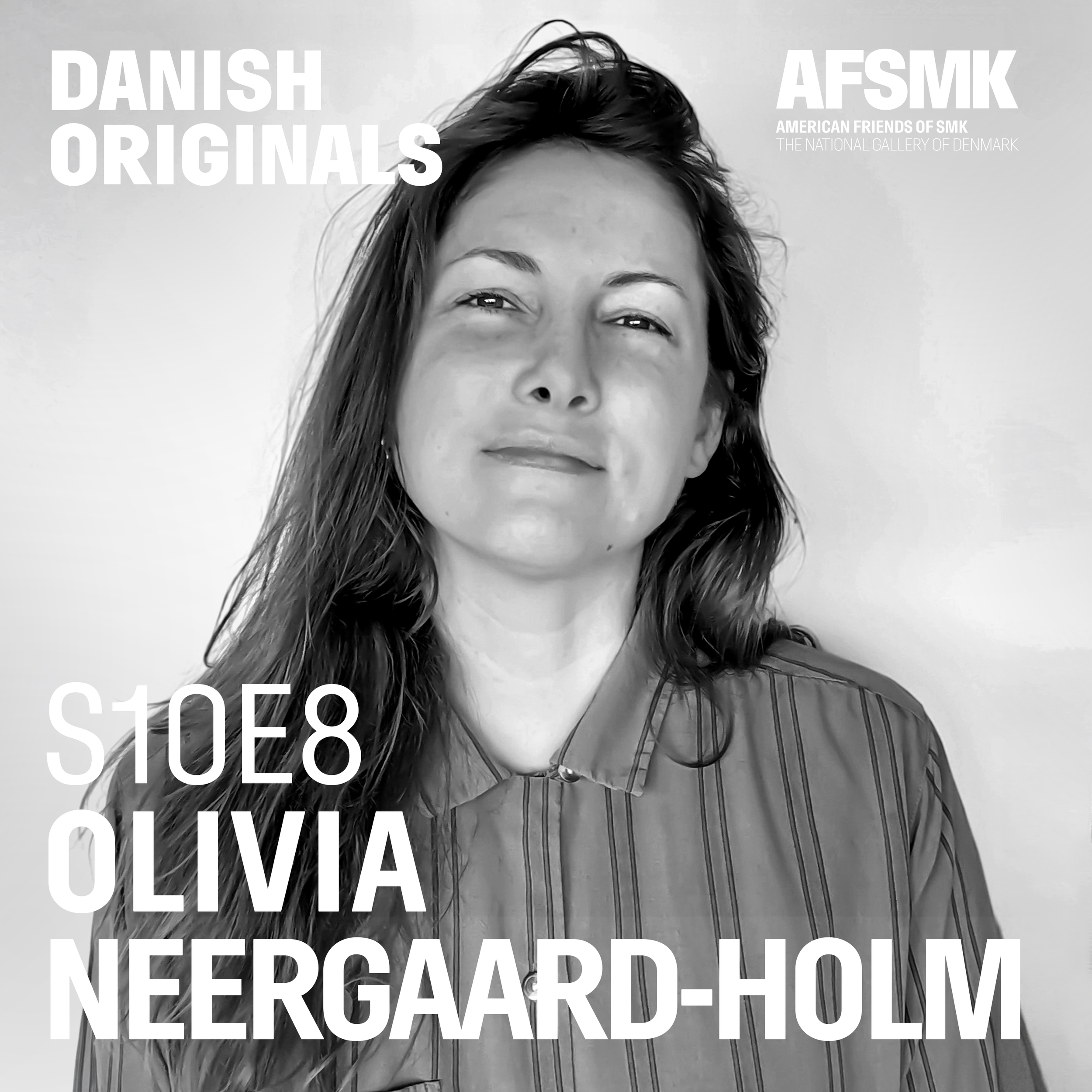
In her home in Nørrebro, Germany-born, Kolding-raised, Danish-German film and TV editor OLIVIA NEERGAARD-HOLM talks about her process pre-, during, and post-production with her arthouse projects in various languages. She discusses creative ownership and revisits projects such as her 2015 one-take Berlin-set film Victoria, her 2025 US feature The Chronology of Water, and discusses the challenges with the 2024 biographical drama The Apprentice about Donald Trump's formative years.
Photographer: Emily Turner
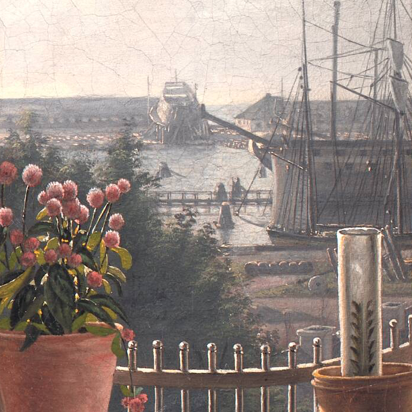
For today's episode, Olivia Neergaard-Holm chose Martinus Rørbye's Udsigt fra kunstnerens vindue, or View from the Artist's Window, from 1823–1827 from the collection of the National Gallery of Denmark, Copenhagen.
“International film right now, I feel, there are no barriers. Everything works on the cloud. Everything can be done remotely to a certain extent. I would never edit a whole feature just remotely, but those barriers, those borders, they’re broken down in my mind.”
“I connect to projects for various reasons. I’m very keen to do more art house, wouldn’t mind doing something more commercial as well. But in reality, it’s just more about connecting to the story, to the script, and to the director, most of all.”
“What works for me is sitting down, getting to know the footage, watching all the footage, internalizing it, and starting to understand what this is. It’s communicating with the director, deep diving with the director, going up and down this emotional process and ending up somewhere else than where you started out.”
Powered by RedCircle
This conversation with Asger Hussain occurred on November 12, 2025.
00:04
Olivia Neergaard-Holm
I chose View from the Artist's Window by Martinus Rørbye.
00:09
Olivia Neergaard-Holm
I couldn't stop looking at it. The beautiful light creates this calm feeling in me. It feels gentle. I'm in the room and I start imagining the noises. It has a very intimate quality that I appreciate, but also there's a story happening in the distance. I imagine looking out and trying to figure out what to do with this scene.
00:35
Olivia Neergaard-Holm
It's an interesting framing but I just connected to it more on a personal level. I can very much relate to that situation when I'm stuck in a creative process. It almost became a lived experience. It's a little space, a mental space that I go in, reminiscing, trying to solve problems or just daydreaming. Those were the aspects of this painting that spoke to me.
01:07
Asger Hussain
My name is Asger Hussain. I'm a film producer and guest host of Danish Originals, a podcast series created in partnership with the American Friends of the National Gallery of Denmark. Our goal is to celebrate Danish creatives who have made a significant mark in the US.
01:25
Asger Hussain
Many filmmakers say editing is the ultimate art form. It's where the film truly takes shape. The performances, the camera work, the tone, all of it comes together, and suddenly the movie starts to breathe. Few editors embody that process more vividly than our guest today, Olivia Neergaard-Holm.
01:45
Asger Hussain
She's the editor of The Apprentice, last year's much discussed political drama about the formative years of Donald Trump, and Victoria, the Berlin-set film that was sensational in its audacity as it was shot entirely in a single take. Most recently, she edited the upcoming film The Chronology of Water, the directorial debut of Kristen Stewart, a project that has already earned early critical acclaim.
02:11
Asger Hussain
Olivia, it's great to have you here. I'm sitting in Los Angeles, it's early morning. Where are you joining us from today?
02:20
Olivia Neergaard-Holm
I am in Copenhagen, in my borough Nørrebro, where I've lived for the last 15 years.
02:28
Asger Hussain
Very nice. And do you work in Copenhagen as well?
02:32
Olivia Neergaard-Holm
Yes. I do work here most of the time and sometimes I go on international adventures, you know, working remotely from Denmark and then a little bit abroad, however the production can make it work. I do like that aspect of getting out into the world and doing fun things. You're just close up in the dark room the whole day, it's good to get out a little bit and interact with the film in the country where it originates from.
03:02
Asger Hussain
It's very fun to visit the editing room for the rest of us. But I can imagine if you're sitting there all day, you want to see something else from time to time. I've been so excited to talk to you because I am one of the people that think that editors are magicians. You have a lot of elements, and we think we know what's already there. But then when you actually put it together, it's almost like a sleight of hand. What comes out on the other side is something that we couldn't really have imagined.
03:32
Asger Hussain
And as a film producer, it's one of the most satisfying things to see. When I read a script for the first time, it all unfolds in a very organic way, as in the scenes play clearly in my head, it's all about rhythm and tone and the emotion of it all and how it moves, but I can never really see the characters' faces. When you first see a story or a script, how does it take shape for you?
03:58
Olivia Neergaard-Holm
I guess when I read a script, I read through it and imagine it quite vividly. I start having red flags, like why is she doing that? Or, this doesn't make sense. It's intuitive. I don't really use script writing tools. And it's mostly from an emotional point of view.
04:16
Olivia Neergaard-Holm
It's always hard in the script writing phase — also depends where in the script writing phase. If it's very early, then you can go full on critiquing and just really be honest and blunt, if you have a good relationship with the director, and push it in the direction. And then you can be hands off and say, I did my part.
04:38
Olivia Neergaard-Holm
If you don't understand why a character is doing what they're doing or you are missing some elements to fully understand their struggles, in my experience, that's issues you'll have later on in the editing process. So I internalize it and try to understand what the characters are doing and feeling what they're going through. Maybe it sounds a bit basic, but at least that's how I approach it.
05:04
Asger Hussain
Do you imagine those characters in your real life? Do you imagine who they resemble or do you imagine if you know someone like that person? It doesn't have to be that exact person, of course. Is there something about characters that you latch onto that gets you started in a way where you think, this works, or this is maybe not so truthful?
05:26
Olivia Neergaard-Holm
I guess you have to be careful to project too much because if you can't read a character that doesn't resemble anything from your own life, you might have problems understanding what this movie is about. It takes me quite a long time to read a script because I really need to get my head around trying to understand, what's the intention here, and the writing pace? And how it's written often reflects to a certain degree at least how the director envisions it.
06:01
Asger Hussain
You mentioned red flags before of things that may not work. Are there things that you personally latch onto that you find exciting?
06:09
Olivia Neergaard-Holm
You never know. At first glance, maybe a project couldn't seem like something that could resonate with me, but then you actually read the script and you're like, whoa, I'm so touched by this, or this is so intriguing, or it seems a great challenge. You always find something in a film that resonates with you. Maybe it's the character, maybe it's the director's language.
06:34
Olivia Neergaard-Holm
Based on their past work, you can really tell that they have this style that's really intriguing. It might be challenging to work with, but also really fun to hop onto and try to enhance their vision together. So it can be a lot of things. That one movie that exactly is what I would love the most, I don't know what that could be, 'cause every project that I've done has something that I really love. And you just really go into that.
07:04
Asger Hussain
Let's rewind a bit to where it all began. Where were you born and raised?
07:11
Olivia Neergaard-Holm
I was actually born in Germany, but came to Denmark with my family quite early. My dad is Danish, my mom's German. And then I was raised in Kolding, which is a city in the mainland of Denmark, with 60,000 people at the time. And when I was 17, I had enough of that life and moved to Copenhagen.
07:40
Olivia Neergaard-Holm
A long story short, I always felt I needed to go somewhere where there was a bit more vibrant city life. I just didn't really fit in there. I moved to Copenhagen quite early and I had a few good years of partying and deejaying and trying to figure out a creative path for myself. Maybe I thought I was gonna be a graphic designer. I thought filmmaking was a very far away, distant thing that I didn't even know how to approach.
08:11
Asger Hussain
The same thing happened to me. I didn't start until quite late in life. In school, almost from kindergarten, we have art, right? And we have music, and so we learn those types of expressions. And I don't think film comes until much later as an add-on that you can choose called film og mediekundskab, right?
08:31
Asger Hussain
And if you don't have anyone in your family or immediate group of friends that have done this, it's a very abstract thing, in a way. But you say that you tried different things. Graphic design's obviously a visual palette and music as well, you deejayed. Tell me a little bit about music and how that affects you and your creativity.
08:52
Olivia Neergaard-Holm
That's a big question. When I'm working, of course I use it a lot as a tool, maybe more than I should, but I really love having a mood and using that to color how I'm editing the scene or working with the material. And then often we strip off everything because it's just way too much.
09:13
Olivia Neergaard-Holm
It's such a motivating tool for me to work with, to also figure out what is the tone and what is the feeling here? Oh, it's actually a sad moment, or maybe it could be a different tone. So I use that a lot. I listen to a lot of jazz and I guess I'm a little more old school now than I used to be when I was playing techno music at the Copenhagen nightclubs. It was good for me to have that going in there, but I was also ready to leave that behind when I applied to film school.
09:45
Asger Hussain
I was going to ask how that transition happened into film. Can you talk a little bit about that?
09:51
Olivia Neergaard-Holm
It was pretty seamless once I got into film school, 'cause I got in at a late age. I got in when I was 28 years old. Some people continued deejaying but I was like, I need to have a different chapter in my life. I need to have a different focus. I really wanted to do this. I had been wanting to do this for so many years, but I just hadn't dared to apply. And I went to film and media studies for a stint at university, tried a little bit there and it was just too academic and I dropped out.
10:25
Olivia Neergaard-Holm
I met this girl that I knew from the party scene, younger than me, a really cool girl. And she said, I'm gonna apply for editing. And I was just like, what? I need to apply now. And then I went and applied and I got in. So she helped trigger this inertia that I had of not daring to do it. I don't know if I would've done it if I hadn't met her that one late night. I owe her a lot.
10:53
Asger Hussain
I think most things happen that way, or many things. You're not the first person that said that they had an idea, they had a motivation, but the specificity of what they ended up doing may not have come about unless they spoke to someone else about it or flipped through a book or read something somewhere else. So that's, I think, when you look back, a "normal" path for many people.
11:19
Asger Hussain
How were those early years of editing and what were some of the things that you worked on that shaped you as an editor? Was there some early work that created a certain way, a certain style of doing things?
11:33
Olivia Neergaard-Holm
I guess you could say I had a pretty fortunate beginning, and this led to me doing Victoria as my second feature. Anders Morgenthaler was gonna do a feature film. Once film school ended, Anders asked Sturla (Brandth Grøvlen), my good friend and DP, and I — to do that. Sturla was probably a no-brainer, but Anders fought to get me. We did that feature film and that was very rock 'n' roll because he is like that, punk and cool.
12:04
Olivia Neergaard-Holm
He wanted me to come edit on a bus, it was shot in Germany. So I was there editing in the bus and on the road, and the whole team was small. The actor Sebastian Schipper was in that film and he was gonna do Victoria soon, and he saw these cool Danes and other people from the team who were just very versatile and adaptable and rock 'n' roll. And then he approached us to do this film and that was cool.
12:36
Asger Hussain
That is not an experience that many first time editors have to be on the tour bus, which is now the edit bus, and then go off and do something. And I feel if you had thrown in a dead body or a heist, it would be a movie in itself, and then come back and edit in real time.
12:56
Asger Hussain
But you mention Victoria, which I've been so curious to ask you about because there's certain times you see a film — and for me, I've had some of those experiences such as Old Boy, the Korean film, or City of God, or the action film The Raid, each one of those have a very specific thing about them that's mind blowing at the time that you see them. And I think Victoria was one of those films for me.
13:26
Asger Hussain
Before we jump into the film and the specifics of it, could you tell our listeners just a little bit about the overall premise for how it was shot and why that was so groundbreaking?
13:40
Olivia Neergaard-Holm
Yes. It was a one take, one shot movie, I think you call it a one-take movie. And really it was one take. Birdman was out around the same time, and that was also categorized a little bit in the same way. But there had been fake cuts and VFX and all this. In our movie it was really, turn on the camera and turn it off when the movie ends, and literally that was what it was.
14:09
Asger Hussain
It's more than two hours.
14:12
Olivia Neergaard-Holm
Yeah, two hours. Russian Ark, did they do it? I don't know. Not a lot of movies have done it, but I think recently it's just starting to become a little easier probably. But back then it was pretty new.
14:25
Asger Hussain
And to the listeners at home, the technological aspect of it, the logistical aspect of having a lot of actors do exactly what they're supposed to do. And then also just keeping that tension and tone as a single, coherent movie was, I think, nothing less than spectacular in a way. And I think I read somewhere that you shot it three times. You had three long takes each night, or was it over a period of time? How was that?
14:58
Olivia Neergaard-Holm
So the process was, and that's where I guess my editing, writing, whatever you wanna call it, comes in.
15:06
Asger Hussain
All of it.
15:08
Olivia Neergaard-Holm
First, we had ten days of rehearsal shoots, we called it. And in those ten days, they were in full costumes and everything was set up. And we rehearsed each scene in sequence, you could call it, like from the club to the street, ten minute chunks or something. Those takes were quite different, they were really trying out camera and dialogue.
15:32
Olivia Neergaard-Holm
It was a lot of improvising 'cause it was just a ten page treatment, no dialogue. So they were just really working through it. And then at the end of the day, I would get it in and I would sit and edit all that and play around, do jump cuts, pick the best dialogue and camera movements, really trying to piece together the cream of the crop, is that what you call it, the best?
15:58
Asger Hussain
Yeah.
15:59
Olivia Neergaard-Holm
So then we would have that sequence and then a guideline for when they would shoot it. And we did that with the whole movie. When that was done, we had an assembly, a rough assembly, and of course the intention was to shoot one take. But we were always uncertain if that idea would hold. So we would always have that as a backup in case we just needed to edit and do it like that.
16:24
Asger Hussain
It worked beautifully. And I think after a little while, you stop paying attention to it. But I think as a filmmaker, when you see it, you just keep getting surprised at how well it works and how well it's done and how it's actually possible within a medium that I thought I knew very well, you can keep being surprised at how things are done and that was very interesting to see. And it was also interesting to see that your editing then came in pre-production, so before the film was almost done. So that was part of how you shaped it.
17:03
Olivia Neergaard-Holm
And it was also during. We had a guideline at best. And then we started doing the one takes and we had three of those. The first one was beautiful cinematography, everything was very on point. Everybody was acting nicely, but there was just no edge. And the main character didn't feel like she belonged in the movie.
17:30
Olivia Neergaard-Holm
We had talks about that. I was sitting with the director Sebastian, and we were coming up with ideas. And then he went in there the next day and gave everybody some good instructions. The second take was just a bit too crazy, all over the place. I think everybody was maybe just feeling a bit too comfortable as well.
17:53
Olivia Neergaard-Holm
So for the third one, that was just tension in the air and it was on. And it became really crazy. A lot of things went wrong as well on that shoot. They went the wrong way with the car. You could actually hear Sebastian shouting in the background after the bank robbery. But all that chaos just added some coolness.
18:17
Olivia Neergaard-Holm
For me, the most important thing was to get Victoria in the center of the movie, that she's driving the story. And that's one of the things I feel I contributed to in that phase, which you can't do normally when the film is shot. But there I could really see we needed to create some elements and scenes that come more from an inner need in her, that it's not just something that happens, but something that she needs, and she's actually looking for thoughts like that.
18:48
Olivia Neergaard-Holm
And one thing probably is okay I take credit for is the scene on the rooftop, which is basically my life. And that's a movie where you can use yourself because I could see myself in her at the time, I was also young. But I was like, we need to see some part of her, like a larger than life Titanic moment, I think I called it. Maybe it's a bit stupid, but I just felt it just needed to come out, something needed to come out there.
19:22
Asger Hussain
Not at all, it worked.
19:23
Olivia Neergaard-Holm
Sebastian was totally on board with that and he did that scene and they all got it. It gives such a nice little pause and break with the characters before everything goes bad. But that's such a privilege to be able to work like that because normally you sit in the edit room and you didn't maybe spot it in the script like we talked about earlier. What are the red flags? There's just some connections that you're missing and you can't always pinpoint it, but you can see there's something missing here. Working like that — every editor should be allowed to do that.
19:56
Asger Hussain
I know. I actually think that in the word itself, editor, I think you should have those eyes even at the story level. For some, not all. Some editors that I have worked with are definitely more technicians and can execute better. And you see this with writing too. Some people are great with ideas, some people are great with execution.
20:18
Asger Hussain
I have worked with editors that were in very early and that helped shape the film. And not just editors, but also composers and other key department heads that really shaped the film just from the written word. Sometimes directors will put up a wall with reference photos and images and the mood that they like, but it's actually very interesting to hear what people think from the blank slate.
20:45
Asger Hussain
I want to jump a little bit. You've also worked in television. You have worked on something called Copenhagen Cowboy with Nicolas Winding Refn. How is the process of working in television versus working in film? And I realize Victoria is an anomaly in terms of the way that it was put together, but film versus television, what's the main difference?
21:09
Olivia Neergaard-Holm
For me, process-wise, it's not such a big difference. And Copenhagen Cowboy also wasn't a super commercial project. I do mostly art house and to me that felt in the same vein being able to have creative ownership. So that's a little hard for me to answer. To me, that feels similar.
21:35
Asger Hussain
And I ask because in the US, I feel, with films you have a great degree of autonomy. There's a core team of director, writer, editor, producer that are involved in shaping the film. But I feel for television there is a much bigger scope and size and then there is a committee of people that are giving notes when they weren't really involved at the script level or even when we were shooting and putting it together.
22:05
Olivia Neergaard-Holm
Yeah, those TV shows that I've worked on, they haven't been like that.
22:08
Asger Hussain
That's great to hear.
22:09
Olivia Neergaard-Holm
I've worked at DR as well. And it just feels like a small movie. That's the processes that I've had — great people, you get to have creative ownership, you get some notes, but just mini movies. I have yet to try the big machine, see if I fit in.
22:30
Asger Hussain
The big machine … So working in Denmark and working with a German director. You've also worked with other international directors. You've worked with a US director. Your last feature, The Chronology of Water. Talk a little bit about how that came about.
22:46
Olivia Neergaard-Holm
Yes. It came about through Kristen (Stewart) and Jacob Schulsinger, who's a good friend of mine, an editing colleague. They approached me. Jacob was initially gonna do the project. He had worked on her short film, but due to another project that got pushed around, he thought he would recommend another Danish editor.
23:08
Olivia Neergaard-Holm
Maybe he thought that it would be a good thing for her to have a good Danish editor who takes creative ownership, which we are schooled to do here in Denmark. I don't know if that sounds silly, but at least he felt compelled to recommend me. We had a good connection and we started up for collaboration.
23:28
Asger Hussain
Very nice. And I was going to ask you about working with different types of directors. For our listeners, Kristen Stewart is a very well established actress. She did a short film and then this was her first feature film. Did you notice anything different in terms of process that Kristen brought as an artist?
23:49
Olivia Neergaard-Holm
Every director is different and Kristen of course, is amazing and so smart and had this really bold vision, I would say, to make a first feature like that, especially in America. A very European approach, I would call it, which I, of course, really appreciated and felt very at ease to come up with ideas.
24:17
Olivia Neergaard-Holm
The language itself that we developed together, I could tell she wanted to fragment the narrative and go unconventional, go punk, all these things were just like, yes, hell yes, let's do this. I did not expect my first US feature to be that creative and have so much freedom. So I feel a little bit spoiled, honestly. We set a high bar there and it was really playful and made a really cool movie and felt very honored to have been a part of it.
24:53
Asger Hussain
It's also very interesting to see how you've gone from Danish to German to English. I'm not sure if there are many other editors that have moved so fluidly between language worlds. Is that something you think about?
25:10
Olivia Neergaard-Holm
I am half German, I don't know if it would've influenced my German adventure, whatever you call it. I'm just starting on a Mexican film now. And I just seek it out a little bit. International film right now, I feel, there are no barriers. Everything works on the cloud. Everything can be done remotely to a certain extent. I would never edit a whole feature just remotely, but those barriers, those borders, they're broken down in my mind.
25:40
Asger Hussain
It's definitely gotten easier. I remember physically having to carry everything everywhere across all departments. So we have it a little bit easier.
25:50
Asger Hussain
I want to talk to you about The Apprentice. It's a political film, but it's also deeply psychological about power and seduction and transformation. What does it mean to work on a story about a real person who's still alive and who continues to affect the very fabric of the US and the world in real time? And for our listeners, The Apprentice is about Donald Trump and his formative years, his early years.
26:20
Olivia Neergaard-Holm
Oh God, it's a nightmare. Sorry, everybody!
26:26
Asger Hussain
That's okay. I think it's very interesting because you still need to go to work and you still have to show up and do what's required. But as a viewer, I did find it very fascinating in many ways.
26:40
Olivia Neergaard-Holm
Yeah. At the time that we made the film, I think it was problematic for a lot of people. And working on it concretely was tough because we were shaping a character that we had way too much knowledge about in real time. And it was this mind boggling thing. Every morning we wake up and you read something in the news. He's gonna get elected and maybe not.
27:09
Olivia Neergaard-Holm
Half of the time we were just discussing politics. We're like, okay, we gotta make the movie on its own terms, really trying to pull ourselves back into the movie. But we were so scared. What are we doing? Is it pro? Is it against? We just try to find the human aspect of it and focus on that because otherwise it was just way too stressful to think about the consequences.
27:34
Asger Hussain
There have been movies about real events and real people in the history of Hollywood too, where no matter what you do, there is going to be an existing agenda. People want to put it into what their thoughts are on the matter. And I think in a completely different way, I recall Steven Spielberg talking about Munich saying that half the country thought that he was in one direction and the other half thought he was in another direction, and there's just no way of appeasing people in that way. It's just about finding your voice.
28:10
Asger Hussain
Did it help that the film was set in a specific period? At least you had, in a way, a more condensed story, even though it unfolds to something that's much bigger, of course, because he becomes who he is.
28:25
Olivia Neergaard-Holm
It definitely alleviated the direct problem. We created some distance, I would say, and we were trying to tell the story as best as we could without demonizing or iconizing, if that's the right word. Just find that middle ground, which I guess you could also critique it for. At the same time, now, I think it somehow resonates more with people than it did back then as a means to try to understand the situation.
29:04
Asger Hussain
I think so. And for our listeners, it's about Donald Trump and how he finds his mentor in Roy Cohn, who's a scrupulous lawyer and power player. And basically I think there's a couple of lines that are very formative in the way that he has been shaped. If you look back, Roy says three things: attack, attack, attack, deny, deny, deny, and claim victory no matter what. Right?
29:35
Olivia Neergaard-Holm
Yeah.
29:36
Asger Hussain
And this happened 40 years ago, and if we look back at it and consider what's happening today, I think a good amount of people would say that is how certain things are shaping out in politics today.
29:49
Olivia Neergaard-Holm
Yes.
29:50
Asger Hussain
When you edit a performance like that, and you've already answered it to a certain degree. The stakes are not just artistic, they're also cultural at large. They affect society, at least people that are going to watch it. Does it affect you in the moment when you're editing something like that, or do you try to think of it the same way you would any other film?
30:14
Olivia Neergaard-Holm
No, it did affect me more. I don't know. If we had done the movie after the election, probably I wouldn't have thought so much about it, but I felt there was so much at stake. What are we doing? What's this movie going to do? We were quite stressed and felt we were doing something important, but also felt a little delirious and in over our heads.
30:43
Olivia Neergaard-Holm
At least I personally on an emotional level, not with the film itself, but reality checks sometimes. Mostly I can distance myself from the material I'm working on, unless it's a documentary where there's a lot of death or real life suffering. That's also something you take home. But mostly I'm there to make it work and you shut down some of your ethical dilemmas. But with this movie, it was tough.
31:15
Asger Hussain
And did the film change a lot from the script to the final product, also just in the context of Victoria and how that was put together, which was a very different endeavor?
31:27
Olivia Neergaard-Holm
I wouldn't say it changed. Essentially, it was a very different process. There was so much good footage. They really went bananas and shooting with two cameras and so much improv and two amazing superstar actors who just delivered —
31:50
Asger Hussain
Unbelievable performances.
31:51
Olivia Neergaard-Holm
Over-delivered. We had so much to choose from. So it's really just putting the pieces together and deciding what was best for the story 'cause everything was great. So it was a different process, and we had not so much time as well. So it was Olivier (Bugge Coutté) and I, and we got some more help as well. We worked nonstop to get ready for Cannes and we just made it.
32:19
Asger Hussain
Excellent. Olivia, what are some of the films or some of the projects you are excited about right now, whether they are out there, you've seen them, or it's something that hasn't even come about? What is it that gets you going? You mentioned that you are working on a Mexican project. What is it that you're looking for right now? Or is it still a blank canvas after all these years?
32:49
Olivia Neergaard-Holm
I am quite open. I'm gonna work with Nathalia Acevedo on this feature that she's starting now. I don't know. I connect to projects for various reasons. I'm very keen to do more art house, wouldn't mind doing something more commercial as well. But in reality, it's just more about connecting to the story, to the script, and to the director, most of all.
33:18
Olivia Neergaard-Holm
'Cause you are gonna be a team and go through ups and downs together. I'm looking for more international work as well, but also very happy here in Denmark. I don't know what to say. There's nothing like a blank canvas, I guess.
33:36
Asger Hussain
You're not making a movie about Hillary Clinton.
33:40
Olivia Neergaard-Holm
No, I'm trying to stay out of where I do too much of the same thing. I always get excited about something that I haven't done before. I like to challenge myself.
33:52
Asger Hussain
Have you ever worked on a music documentary or a music project ,given your background and your interest?
34:00
Olivia Neergaard-Holm
No, not a music documentary. When I did the documentary about David Lynch, The Art Life, half of that, I would say, is musically driven and half of that, his paintings and his art. It was a very fun experience to edit that. And his stories, his anecdotes paired up with the soundtrack and everything. But a music documentary as such, no.
34:27
Asger Hussain
And was David Lynch a part of it or did he maintain some distance on the project?
34:34
Olivia Neergaard-Holm
Not directly with me, but with the other directors. But for me, no. I was just shaping it up in the edit room.
34:42
Asger Hussain
But I assume, or I hope, or I would think that you were a fan.
34:47
Olivia Neergaard-Holm
Yes, there's no denying that.
34:49
Asger Hussain
I know. So does it feel different to do something about a subject that you truly admire?
34:57
Olivia Neergaard-Holm
It felt like a privilege. I was very humble doing it and trying to be not projecting too much, be honorable to him and to his work, not adding on too much fluff, just keeping it clean. I don't know if that answers your question.
35:20
Asger Hussain
It does.
35:22
Olivia Neergaard-Holm
People have to make up their own minds about him. That was what's so cool about that documentary. I had the feeling that everybody would watch the documentary trying to look for how to become a genius, like how do you become like him, how can I become like him? But essentially just realize it's a way of thinking, it's a way of being, and you just enjoy seeing him be.
35:47
Asger Hussain
Yeah, no, I think it answers the question. And for me personally, I think privilege comes to mind quite a bit on many projects actually. Not just the subject or the story, also just people you meet or as a producer, the places you get to go and just you think that there is no way that I could have tried this in a regular life, just by way of the profession.
36:12
Asger Hussain
Olivia, working across countries and languages, how has your private life adapted to that or did work adapt to your private life? Tell me a little bit about that.
36:25
Olivia Neergaard-Holm
I'm so fortunate that I'm married to an American woman. We actually met in LA while I was visiting, when they were shooting a movie there called Pleasure that I was editing later on back in Denmark —
36:41
Asger Hussain
Oh yeah.
36:42
Olivia Neergaard-Holm
Or in Sweden actually, both places. She's living now here in Copenhagen and we have a son. We are a rainbow family, so our son has his father as well, who's an active member of the family. We're co-parenting together and he's also very keen on traveling to the US in general, everywhere. So we have a very flexible and fluid family arrangement, all of us. I just feel so fortunate to be able to both pursue my career and still have a meaningful family life.
37:19
Asger Hussain
It's such a great starting point to have actually two or three people from different backgrounds too. Right now it's Denmark and the US but you never really know where it might end up longer term too. I think once you have had that mindset of being able to travel and being open to it, then it just becomes such a journey.
37:42
Olivia Neergaard-Holm
Yes. You get addicted to it almost.
37:45
Asger Hussain
I know, I've been there.
37:49
Olivia Neergaard-Holm
Now you're in LA.
37:50
Asger Hussain
And now I'm in LA. I moved from Denmark to New York for 18 years, and then over to LA about five years ago. So it's been a while as well. And I'm contemplating the next move.
37:03
Olivia Neergaard-Holm
Yeah. As are we.
37:04
Asger Hussain
Just one final question. It's a big one. When you think about the future of editing, what's the one thing you hope never changes?
37:14
Olivia Neergaard-Holm
You have to send me these questions in advance.
37:17
Asger Hussain
No, that's the best part. Half the questions I didn't even have, they were just based on I wanted to know more.
37:25
Olivia Neergaard-Holm
I'm not good at answering questions on the spot, but if I think about the future of editing, I hope it never changes, I just generally hope it doesn't change a lot at all. What works for me is sitting down, getting to know the footage, watching all the footage, internalizing it, and starting to understand what this is.
38:49
Olivia Neergaard-Holm
It's communicating with the director, deep diving with the director, going up and down this emotional process and ending up somewhere else than where you started out, because it's never just this clear cut vision that comes out of Avid two weeks later.
39:08
Olivia Neergaard-Holm
It's months of deliberating and trying out and taking out scenes and making new scenes and writing and shaping. And of course, if AI just comes in and does a rough cut and then the director can sit alone and tell them what to do, I just don't think movies will come out of that. So I think the relationship between the director and how the editor is able to spend time with the footage, that's just holy and that should never be taken away.
39:43
Asger Hussain
I agree. Olivia, it's been such a pleasure to hear about your process. Thank you for being with us today.
39:50
Olivia Neergaard-Holm
Thank you, yes.
39:55
Asger Hussain
For today's episode, Olivia Neergaard-Holm chose Martinus Rørbye's Udsigt fra kunstnerens vindue, or View from the Artist's Window, from 1823–1827 from the collection of the National Gallery of Denmark.