
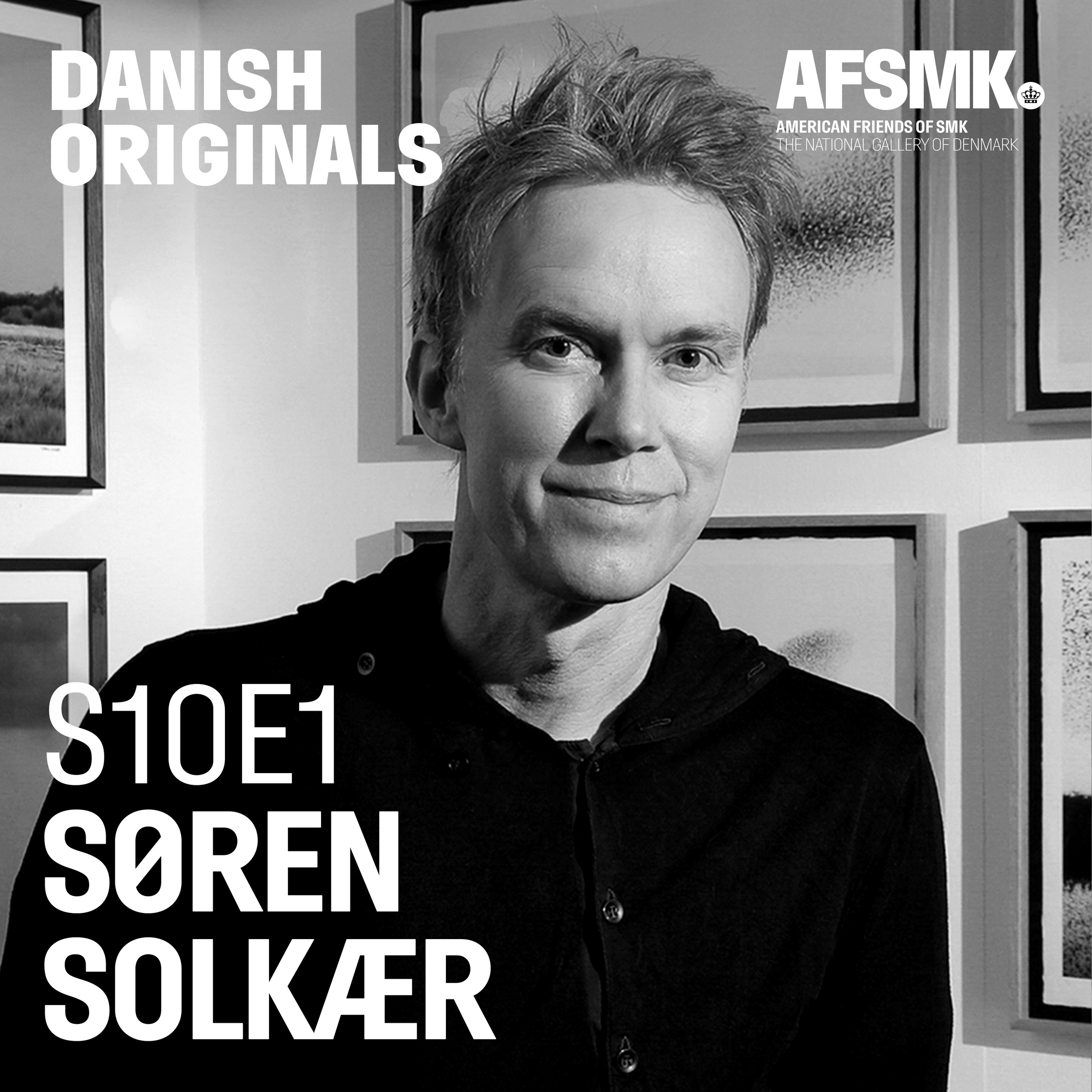
From his studio in Vesterbro, Sønderborg-born Danish photographer SØREN SOLKÆR is home in Copenhagen after an exhibition opening in London. Søren talks about the evolving role of his camera over his three-decade long oeuvre of long-term global projects such as Surface, Photographs Posed, Passage, Souls, Black Sun, and One, focused on people, nature, and spirituality, and his relationship to patience. And he shares his plans for the Adventurer's Club where he is a lifetime member.
Photographer: Søren Solkær
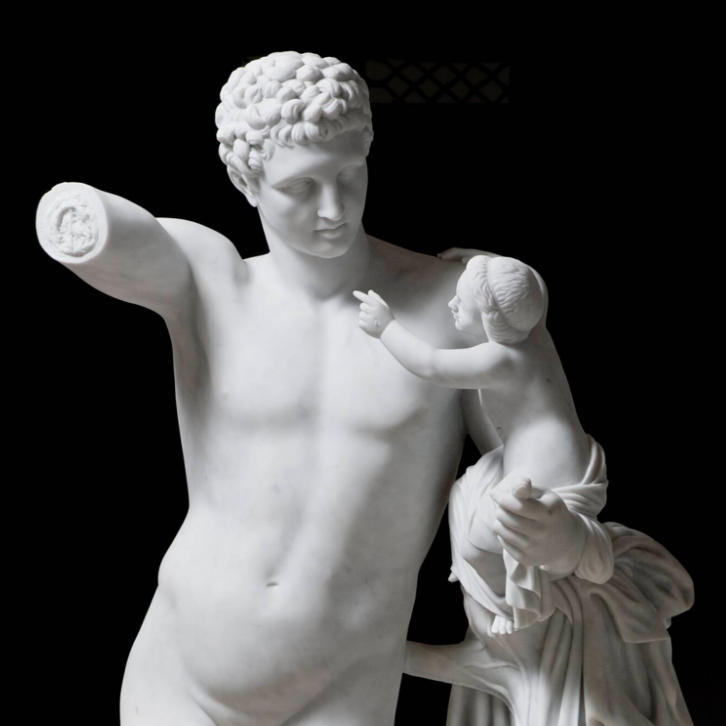
For today's episode, Søren Solkær chose Christian Lemmerz's Adam-Kadmon from 1997–1998 from the collection of the National Gallery of Denmark, Copenhagen.
“Patience is, I think, one of my strongest character traits, and I think that’s helped me a lot in my projects. Once in a while something miraculous happens and that really justifies the long wait.”
“I’m interested in what connects us as a race. And especially now, I think with all the polarity we see everywhere, I think it’s really important to make work that looks into what we actually have in common. I think we all have the same energy deep down, and I think we all have the same potential as human beings.”
“If I look at the things that have shaped my career, I actually think that it’s meant to be, because a lot of the things that have happened have prepared me for the next thing. I really believe it’s my mission to do exactly what I’m doing right now, and just make myself available to that.”
Powered by RedCircle
This conversation with Gregers Heering occurred on November 3, 2025.
00:02
Søren Solkær
I chose Adam-Kadmon by Christian Lemmerz.
00:06
Søren Solkær
On first view, the sculpture looks like an ancient Greek sculpture and the title refers to Adam-Kadmon, the primordial man in the Kabbalah.
00:16
Søren Solkær
When I see a marble sculpture, I have a lot of expectations due to its long history. Normally it's the material for the beautiful and the ideal. Lemmerz changed a lot of the details. The traditional sandal had been replaced by a high-heeled woman's shoe and Hermes' genitals had been transformed from male to female.
00:40
Søren Solkær
So this very classical reference had been transformed into both a transvestite and a hermaphrodite. On the base of the sculpture, there's a carved inscription in braille that says, "don't touch."
00:57
Søren Solkær
What I love about this sculpture is that Lemmerz seduces our senses, and the material he's chosen only to play with our intellect and preconceived knowledge. Lemmerz's wit and irony made a huge impact on me. I think this is the role of art, to ask the big questions and to expand our consciousness by speaking to all of our senses.
01:29
Gregers Heering
My name is Gregers Heering. I'm a photographer and guest host of Danish Originals, a podcast series created in partnership with the American Friends of the National Gallery of Denmark. Our goal is to celebrate Danish creatives who have made a significant mark in the US.
01:49
Gregers Heering
Today, our guest is Søren Solkær, a Danish photographer. Welcome, Søren.
01:54
Søren Solkær
Thank you very much.
01:56
Gregers Heering
I had the pleasure of meeting you a couple months back and I was in the very place you are in right now. It's a great space in Vesterbro. Can you talk a little bit about that space and what it means to you?
02:08
Søren Solkær
I am sitting here in my little studio, it's where I produce my work. I print here, I have a little showroom here. And it's five minutes by bicycle from my home, which is quite typical for Copenhagen, but it's quite wonderful that I can just jump on my bike and be at work five minutes later.
02:23
Gregers Heering
When you say you produce your own work, I should tell the audience that you are also an excellent printer of your own work, and that is no small feat in itself. I personally know a little bit about how much time goes into teaching yourself how a photograph translates as well as possible onto paper.
02:50
Gregers Heering
And it's not an uncomplicated process if you do not know what you're doing, which is why a lot of photographers are outsourcing that part of the process to people who know exactly how to do that. So maybe you can start talking a little bit about what it means to you to print your own work.
03:09
Søren Solkær
I've been printing all my own work forever since I started in the mid-'90s. I think it came out of me starting in the analog age, where the only option we had was the dark room. And I studied at a very traditional school in Prague in the Czech Republic, where a lot of effort was put into learning printing. We were even mixing our own developers and all our own chemicals.
03:39
Søren Solkær
And in Eastern Europe there was also a lot of focus on high quality photography papers. Very early, I got very interested in what different papers and textures can do to your work. Then digital hit around the turn of the millennium. That's when I switched over and we started using printers instead of darkroom, and it turned out digital had even more options for photographers.
04:07
Søren Solkær
And so for me, it was just a very smooth transition and it's a part of the work that I really love doing. And over the years I've developed more and more into finding more and more exotic papers and collaborating with paper makers in Japan and so on. So rather than outsourcing, I feel I have really full control over my work this way.
04:28
Gregers Heering
We are going to return to Prague in a minute, but when I think about Søren Solkær, I think very much about a traveling man. You've been traveling extensively throughout your life. Can you tell us a little bit about what you have just returned from and what you've been shooting?
04:46
Søren Solkær
Actually, I can't because it's a very secret thing. But I've just returned from two days in Lithuania. Before that I was in London. That I can tell you about.
04:56
Gregers Heering
And you were in London because you had an opening of your show Surface, which is a project that you embarked on back in 2011 and then you published a book in 2015. And what you've been doing with this project is following street artists making work such as graffiti.
05:19
Gregers Heering
So many artists at the time were portrayed and interviewed and shown in various media, but you set out to follow anonymous street artists. I am curious, for a project that was published ten years ago, how is it for you to look at this work again after these years? Does it change for you where it is in your heart, so to speak?
05:45
Søren Solkær
Yes. I think it's a really relevant question because back when I published this book, I had two years where I exhibited this work all over the world. It was in Melbourne, Sydney, Los Angeles, New York, Vancouver, and then up and down through Europe, Munich, Amsterdam, Copenhagen.
06:04
Søren Solkær
And at the time, I was totally absorbed in this whole art scene. I haven't exhibited this project for the last nine years, but suddenly I got an offer to come fill a really beautiful big space in the former Christie's auction house in London. There was a Banksy exhibition in the same building, and they had a spare five, six hundred square meters.
06:31
Søren Solkær
I had to spend some time with it again, going through my storage, reconnecting with the work, and then packing it, getting it all over to London, hanging it over there, lighting it.
And now talking to an audience and to journalists.
06:48
Søren Solkær
I would say I was very happy to find out that for people who don't know the work, that it is still fresh and it still holds up. And actually, I've started to really connect strongly with it again. But it did take some time for me to do so because I am quite preoccupied right now with some other projects.
07:10
Gregers Heering
And I guess that is how it is for a lot of people, who are in the professional act of creating things, that you create something, you close it, then you move on, right?
07:22
Søren Solkær
Yeah. I think it's the same for musicians who are reluctant to play their own hits. Now I've been going for three decades and I have quite a few projects behind me. I've published eight books by now, and so it's also a quite new thing for me to be exhibiting things from different periods. But it looks like I have to get used to it.
07:49
Gregers Heering
So on recent plane rides, I presume that it hasn't been as important for you to get a window seat by the wings as it used to be. Maybe you can explain to the audience what I'm referring to.
08:02
Søren Solkær
I did one photography book called Passage and it was basically the kind of photographic diary from those years when I traveled all the time. I've been based in Copenhagen the whole time I've been a photographer, but I've been working mainly abroad. So it means I've had a lot of traveling time, a lot of very long distance traveling, because I was also working in Australia, South America, South Africa, different places.
08:29
Søren Solkær
I kept a diary of the airplane wing on every airplane I got on. I would have airplane seat maps in my studio. And when I knew where I was going, I would book the seat according to this project. I would look at what time of day so I would consider sunset or sunrise. Also, if I was flying into New York, for instance, I would consider which side the view would be on of Manhattan when I flew out of New York and so on.
08:59
Søren Solkær
So I was getting more and more detailed about this project. I think for about ten years, I was sitting by the window. And I would be totally devastated if I couldn't get the right seat. These days, I'm pretty happy to be back in the aisle seat again.
09:14
Søren Solkær
I think it's also an example of the importance of long-term projects for me. In this case, I photograph something that a lot of people photograph, I think most people have photographed. And that's for me a very interesting challenge because initially you get all the clichés.
09:31
Søren Solkær
But then as you go on, after one year, you might have five or ten interesting shots, but after three years, you've reached a new level and you've gone one step further and new images start appearing. And it's almost like the longer you stay in a project, it starts giving you back just for staying with it.
09:52
Søren Solkær
And I think it's something I've learned doing many different projects. I've often had the feeling after one year that I was almost done and that now it was really good what I was doing. But then three years later I realized that that stuff from the first year maybe didn't even make it into the book. So I think that's been an important lesson for me.
10:11
Gregers Heering
And I'm so glad you're bringing that up because as a photographer myself, I sometimes feel that for most people who are not doing it professionally on an everyday basis, they have another perception of photography. Everybody can take a photo, you can take a photo with your iPhone, how hard can it be to do a photographic project?
10:32
Gregers Heering
I think what is not really widely known is that it's really the time you are investing with your craft and your soul that will give you that insight exactly as you are talking about.
10:43
Søren Solkær
Yeah.
10:44
Gregers Heering
So Søren, let's talk a little bit about your origin. I know you've grown up in the Sønderborg area. When did the big moment come where you realized there was something about photography that really caught onto you?
10:59
Søren Solkær
Yes, I grew up in a small village in the south of Denmark. Sønderborg is a bit of an exaggeration 'cause I didn't live in the town itself. It was even further out.
11:10
Søren Solkær
It came when I left Sønderjylland, the south of Denmark. I knew I wanted to go traveling and I knew I wanted to stay away for a long time when I left my parents' home. I saved up some money and decided to go to Asia with a good friend. I had saved up for say, four or five months of traveling.
11:31
Søren Solkær
Once I was out there, I came to Singapore and I knew that I wanted to buy a camera. I bought my first SLR camera and that was probably 25% of my travel budget. I knew I had to do that. I had to live on rice, peanuts and bananas for two months. And as we were approaching the day of our return, I just knew I didn't want to return to Denmark at that time.
11:58
Søren Solkær
I spoke to a lot of other travelers and I found out that I could probably go to Australia to make some money and keep traveling. I didn't have a work permit. I didn't have any money. I had probably the equivalent of US$300 when I went to Australia, and I knew they would check my funds, this was while you traveled with travelers checks.
12:23
Søren Solkær
I got my brother who just got his first job to transfer some money into my account and then get a statement and fax it to me. So I had something to show at immigration. And then someone told me if I went to Perth in Western Australia rather than Sydney, I was less likely to get checked. So I did, I went to Perth and ended up spending seven months in Australia and then traveling another five, six months after that.
12:50
Søren Solkær
My trip ended up being about a year and a half. And that's when I picked up photography. Having that camera with me just felt right from the beginning. I was rather shy. I came from a small place and suddenly I was out in the world and I realized when I had a camera, I had a key to the world and also had an excuse to just approach strangers and ask if I could take a portrait, so it was just a nice icebreaker.
13:18
Søren Solkær
And it's what I've used it for ever since, I would say, to some extent. It's been a way of opening doors and giving access to worlds and people that I would've otherwise not been able to meet.
13:30
Gregers Heering
You found out, while you were still very young, that with a camera you could have an active observing role. What do you think it is about this need to document others? What do you think is the driver for that?
13:48
Søren Solkær
I think it's changed over the years in my case. I think it started out being a way for me to feel more intensely present in a situation. It sounds strange because you're also separating yourself from the situation. But what I found was with a camera, suddenly, I would have a purpose.
14:10
Søren Solkær
I've always had this strong urge to be active and to do things. And so I think for me it was a nice way of being in a situation, that I had to do something. Later on as my photography developed, I think I started working more with photography as something where I wasn't just photographing something already existing, but I was also creating worlds myself.
14:35
Søren Solkær
So I went from an observer to being more of a director. Actually, the role of the camera has changed tremendously, I think, over the years, but very slowly. My most recent projects, I've given up the control again, so I've removed myself, no longer being the director, but trying to just connect with the thing I want to photograph, and try to capture it.
15:01
Søren Solkær
I would say now it's a little more of a meditative thing, whereas before it was more through the eyes. Now I'm involved on a more energetic level.
15:09
Gregers Heering
Yes. And that is something we're gonna come back to in a second as well. But before that, I want to stick to the origin story. So you come home from this journey to Asia and Australia with a lot of processed photos, and you knew that this was the path you wanted to continue down. Is that correct?
15:27
Søren Solkær
No, I wasn't quite convinced at that point that I could become a photographer. I loved doing it. And also, looking back at my work from that trip, it was really a young photographer's first photographs. They resemble really beautiful postcards, a lot of them. I didn't have very much knowledge about photography as a form of expression. It was quite plain actually what I came home with after that first trip.
15:55
Søren Solkær
Also, I have three siblings, they all went to university, and so I also just assumed that I would go to university. I thought I would study to become a doctor or a marine biologist. Those were my two ideas I had before I left.
16:10
Søren Solkær
I met a lot of people on my travels who told me that you have to follow your heart and I think photography at the time didn't seem like an option to me. So when I went to university after the year and a half abroad, I studied Nordic literature, because I loved books as well, and I came from a home with a lot of books.
16:30
Søren Solkær
My father was a school teacher and my mother was managing a bookshop. I grew up with a lot of books and somehow I could also see myself working with books. I never in my wildest dreams thought that I would be making books in my life.
16:48
Søren Solkær
While I was in university in Århus, I really loved studying literature, but I also found myself getting more and more interested in the visual arts. And I could see myself writing all my papers about the visual qualities of literature, how poetry related to paintings. I was trying to angle all my papers so they would somehow be about something visual.
17:16
Søren Solkær
So after two years, I decided to give photography a serious go. During those two years, I had started using a dark room in a community space in Århus where I'd met a lot of other photographers who were much more experienced than myself. And they taught me a lot of things in the dark room, but also about understanding the medium of photography.
17:40
Søren Solkær
I decided to go traveling again. I got a job because I hadn't saved up money this time because I was in university. I got a job for a guy with muscular dystrophy, who had helpers paid by the Danish government. He was studying Mandarin in university and he wanted to go to Asia, to Taiwan initially, so he could practice Mandarin. So me and another guy got to travel with this guy for five months.
18:11
Søren Solkær
We were making pretty good money, and so I could travel and work while I was saving up, 'cause when they went back to Denmark, I again realized that I didn't want to go home. I asked the other helper if he could bring our friend and employer home alone on the plane in a wheelchair. We were young, mid-20s and strong, so that was no problem.
18:38
Søren Solkær
I continued on and went to Nepal initially for two months. My younger brother had just graduated from high school and he came out and met me, and we did a lot of hiking in the mountains. After Nepal, we decided to see if we could get into Tibet. Tibet was very hard to get into at the time unless you were traveling with a group. It was very organized tourism where they could control what you'd see in Tibet.
19:08
Søren Solkær
That was not really our idea of traveling, and we also couldn't afford to join a group. We bought some fake travel papers from a travel agent in Kathmandu in Nepal. The papers said that we would meet up with our group in Lhasa, the capital of Tibet. We took a bus to the border and we were quite worried about how we'd get over the border.
19:31
Søren Solkær
But actually the two Chinese soldiers who were controlling that border post, I remember clearly there was this red and white metal bar, they were playing badminton, using it as a net. And so it was a lot less frightening than we had thought. They went through our luggage, as you couldn't bring any Dalai Lama related material in. And of course I had a book about the Dalai Lama and they confiscated that. But then they let us go.
20:01
Søren Solkær
But in Tibet, we didn't have any vehicle. So we started hitchhiking from the border of Nepal to Lhasa, which was about a thousand kilometers away. And that took about eight days. There were hardly any vehicles on the road. The roads were terrible. It was winter, it was minus 25 degrees, meters of snow. But somehow, little by little, we got closer to Lhasa and we ended up spending five, six weeks in Tibet without a permit, just hustling our way through.
20:35
Søren Solkær
This time around I knew more about photography and I had professional equipment. I had studied a lot of photography and I had more references to what other photographers had done in the past. And my photographs started to improve and to find more interesting form.
20:57
Søren Solkær
I was still in university and I could still go back to my studies at Århus University, but during this trip, I decided that once I came home, I would apply for photography school in Europe.
21:11
Gregers Heering
So not a photography program in Denmark? You knew you wanted to do it outside of Denmark?
21:15
Søren Solkær
Yes. In Denmark at the time, there were not that many options. There still aren't. The main schools were either to become a photojournalist or a commercial photographer. And neither of those were really what I wanted to do. And also I would much rather live in another city.
21:35
Søren Solkær
So when I came back, I looked into different schools in Scotland, England, Germany. And then I found a school in Prague in the Czech Republic. I went down there to look at the school and just being in that amazing city. This was in 1993 just after the Velvet Revolution, and there was so much going on down there.
21:58
Søren Solkær
Just the atmosphere in the city right after communism. And it was full of young people from all over the world and all the big musicians and theater companies, and everybody wanted to do something in Prague. So it was really amazing energy. I decided that I really wanted to go to that. That was the only school that I applied for, the one in Prague.
22:19
Gregers Heering
The Czech Republic has a huge tradition for the visual arts, including photography that goes for both photography and film.
22:27
Søren Solkær
When I moved to Prague, I didn't know that much about Czech photography. But when I found out that they had a very strong tradition for staged photography, I was totally sold. I realized, wow, you can actually create your own photographs in front of your lens rather than just walking around and waiting for something to happen. So it's photography as an art form.
22:48
Søren Solkær
They also have a strong tradition for documentary. Because of communism, there were many years where they couldn't really photograph a lot in public. So a lot of these artists would have a room, maybe a living room or a basement where they would start doing photography and they would start just building their worlds.
23:07
Søren Solkær
What was very interesting to me when I started seeing the work of these artists, is that they had very distinct photographic styles and very personal styles, like a language. And that really appealed to me because I also came from studying literature, and you could very easily see in literature that an author has a very personal voice. In the Czech Republic, I learned that that's also the case for photography.
23:33
Søren Solkær
And actually, my first big project I did down there was a project called Photographers Posed. And in this project I photographed photographers in the style of their own photography. So the subject of my project was the photographers, because I would like to meet them and it was also their work that was the subject and the whole idea of photography being a language.
24:01
Søren Solkær
I did this for quite a few years and I ended up photographing 45 photographers in about eight or nine different countries, and in 45 different styles. I would photograph them using their own equipment, and that was out of necessity because I had hardly any equipment. I made that my concept and I would use them as models and I would photograph them with one of their own models.
24:26
Søren Solkær
I would've asked them beforehand what kind of film stock they used, I would just turn up with some rolls of film and an idea, and then I would turn around the whole situation and use their whole studio and equipment to photograph them. That was a very demanding process because I had to learn so many things. I'd never used a tripod before. I'd never used lights before.
24:51
Søren Solkær
Also it was a very nerve wracking process because I was sometimes working with photographers who were world famous and who had been working for decades. And I was just this shy, but still somewhat ballsy young photographer who had the nerve to ask them.
25:11
Søren Solkær
And strangely, a lot of these photographers said yes. Even with very big stars, it worked out well. I only started having difficulties when I got to New York. I didn't have any hesitations in terms of whom I would contact.
25:26
Søren Solkær
So I would contact Richard Avedon and Irving Penn, and they were a little harder to get through to, so I didn't get those two. I did photograph Arnold Newman and Duane Michals. I had meetings with the assistants of Annie Leibovitz and Mary Ellen Mark. But it was a much tougher game for a 25-year-old to get through in New York.
25:49
Gregers Heering
Why was it more difficult there than it had been, for instance, in Europe?
25:53
Søren Solkær
I think they were much bigger stars in New York. In Paris or Prague or Germany, these big photographers, I would still meet them without any assistants or any managers. The setup around them was not so big. Later in my life, I've worked a lot in the States. And now I understand a little better why it was so hard for me back then to break through those walls.
26:16
Søren Solkær
I think when you have a studio with 20 people working for you, it's a whole different setup. It's much more commercial. And I think you are much more hard, in a way, also. You're not maybe a little less open to a young photographer knocking on your door.
26:33
Gregers Heering
And starting dragging out their equipment —
26:39
Søren Solkær
Yeah.
26:40
Gregers Heering
Søren, your wonderful balance between being humble, maybe a little bit shy, but with this great drive and tenacity to get things done. You tell the story in a compelling way. Do you agree that to be able to tell the story is important for the work you do?
26:57
Søren Solkær
Yes, I definitely think that you have to be good at explaining to people what you're doing, because I think storytelling is a very important part of many art forms. In an ideal world, you would have somebody telling the story for you. And I do work with galleries in some parts of the world, but there are also parts of the world where I don't have a gallery.
27:19
Søren Solkær
At the moment, I am my own gallerist in Denmark. It's a pretty small place. And after having worked here for so many years, people do know where to find me. I don't do a lot of hard selling, but it's definitely a great advantage to be able to explain to people the thoughts behind your process and the deeper meaning behind what you're doing.
27:40
Gregers Heering
Do you have an opinion about whether art should or can be separated from the artists, or do you think they go together?
27:50
Søren Solkær
I know a lot of art where I don't know much about the artist, and I do think that that art should also be able to stand on its own. I think really it depends on the art form a lot too, because we can still enjoy a lot of very old art where the artist is long gone.
28:05
Søren Solkær
And I think some of my projects, like the one I'm exhibiting right now in London, there's a lot of anecdotes behind those works, because the whole process of doing that was a crazy adventure and a crazy chase after these street artists all around the world. I think the work really gains a lot from hearing the stories, or at least, it grows a lot.
28:30
Søren Solkær
In terms of some of my newer work, there are no backstories or anecdotes involved at all. I could easily send them to a museum in Japan and people would get an experience without meeting me.
28:43
Gregers Heering
Do you, at this point, believe that Søren Solkær has a very specific style as a photographer? I personally really like the range and the variety in your work. To me that says something about a driven artist who's not afraid of thinking outside of what you've done before. So I'm curious about how you see your own style. Is it specific or is it open?
29:10
Søren Solkær
If you had asked me ten years ago, I probably would've said that I felt I had arrived at my style. I was very interested in photographing people and also very interested in lighting and location and creating moods, a more cinematic approach to photography. But what happened next was totally different.
29:33
Søren Solkær
And the thing is I never tried to come up with my next project. I just try to be open and the next project always just arrives. And at that time when I started photographing flocks of birds after photographing portraits, it was actually a big shock to myself. And I thought it would be career suicide.
29:58
Søren Solkær
But I am trying to be a very open person and artist, and I'm really trying to listen to whatever comes to me. It's taken some very surprising turns, actually, especially the last eight years, where I've started working more with nature and with spirituality.
30:17
Søren Solkær
I think it's such a beautiful thing that photography can keep developing and follow wherever you're at in your life. When I was younger I thought, oh, I will always be photographing musicians or artists. I couldn't really imagine anything else, but I'm really so grateful now to how many new areas that I can explore and research through photography.
30:45
Gregers Heering
We will return to the more spiritual work in a second, but we have to talk a little bit about your music portraiture, because that really put you on the international map, your great portraiture of musicians from all around the world.
31:00
Gregers Heering
Just here in the States alone, you've been photographing The White Stripes, Gnarls Barkley, Metallica, R.E.M., Foo Fighters, Franz Ferdinand, the list goes on. It's quite amazing. A lot of the bands that you photographed back in the day, they have a huge comeback now. Think about Oasis alone, for instance.
31:20
Søren Solkær
I found it really exciting and fascinating. But I think one of my biggest strengths about doing that job is that I had respect for the artist. I was never starstruck, well, maybe with Paul McCartney or someone like that, or at least it was very strange to suddenly see someone like him through your lens. When you work with artists of that caliber, I think it's important that you meet up as yourself and that it's an equal collaboration.
31:50
Gregers Heering
If you were to go back and photograph any of these people, is that something you have any interest in at this point? Or is that also a door that was closed behind you, a chapter that was well done and you moved on?
32:08
Søren Solkær
Actually, I don't think I would be that interested, to be honest. I feel a little bit like the airplane wings, that I've done it, and I got some amazing opportunities, because I worked for some really big record labels and big magazines at the time, and I got really good access and I got to photograph many of these people in really exciting locations.
32:31
Gregers Heering
How have you managed to stay afloat as an artist by following your heart with these long projects?
32:39
Søren Solkær
I think because I did my studies in an art institution, that was always how I saw myself, that was my identity as a photographer, somebody who did personal work. And I think as a result, I've always been doing personal work and working on exhibitions and books.
32:58
Søren Solkær
Even those years where I was doing more commercial work and when my kids were growing up and I had to provide for a family, I was so passionate about my own projects, I didn't really have a choice, I would always devote time to them as well.
33:16
Søren Solkær
And as a result, I've had a pretty continuous output of photography books and exhibitions around the world since the '90s, and that's made it a little easier for me now to pursue my art career. I would say maybe 90% of my work now is my own work.
33:39
Søren Solkær
For me, it's been a natural thing to do for three decades now. And I feel really fortunate that I can make a living from traveling and exploring and playing with things that really interest me.
33:51
Gregers Heering
Most people would say, you're living the dream, man.
33:54
Søren Solkær
I feel like I am. I'm very fulfilled.
33:57
Gregers Heering
That is so wonderful and so inspiring to hear. So let's go back to the spiritual side of things here. Your beautiful project, Black Sun, which is about these formations of starlings.
34:13
Søren Solkær
The project Black Sun reaches back to my childhood. When I was ten, I was out on the west coast with my parents and I saw a starling murmuration. At that time, I saw a huge flock of starlings being attacked by a sparrowhawk, and as a result, they defended themselves by making these amazing, big, beautiful black shapes, like calligraphy in the sky.
34:41
Søren Solkær
It was the wildest thing I'd ever seen when I was ten. It made a really deep impression on me. But I forgot about it. I wanted to get away from that part of the world and I wanted to be in big cities and I wanted to travel. And it wasn't until I think 2017 or '18. I was just finishing a 25-year retrospective book and exhibition at a castle north of Copenhagen.
35:09
Søren Solkær
I spent a whole year going through my portraits from 25 years of working in that genre. And my girlfriend said to me while I was doing it, you should really consider doing a project that's not portraits, 'cause this is full circle now, and you are making the book and going through everything you've done so far.
35:27
Søren Solkær
And as she said that an image came back to me from when I was ten, these birds that I'd seen appeared. And I knew what it was, but I was like, it's summer now, so they're not here. I knew that they're there in the spring and autumn, it's a migratory bird, they're only there for a few weeks.
35:47
Søren Solkær
In the fall, I set aside one week for that project and I went down south to the Wadden Sea in the southwest of Denmark. I went in my car and I knew the area where the birds were, I thought. So the first night I drove around looking for them and I couldn't find them.
36:05
Søren Solkær
I knew there were some bus tours from the nearby town of Tønder, but I didn't want to go on those because it was not cool. But on the second afternoon, I thought, I have no idea actually where these birds are. So I bought a ticket for this bus, and I was by far the youngest person on the bus. I was there with a lot of old age pensioners.
36:25
Søren Solkær
We were driving through the landscape, the marshlands, and sure enough, the bus driver knew exactly where the birds were. I had bought the trip where you got a little chair and a cheap glass of champagne while you were watching the birds. It was definitely not my idea of a photography project.
36:44
Søren Solkær
But then the next night, I knew where they were, so I drove out there again in my own car. Nothing much happened the first five, six nights. I was like, okay, now I've tried it and I was ready to go back to Copenhagen to my city life. I had one final night and on that night, the seventh night, a lot of birds came in, like the other nights, just floating around above me before roosting in the reed forest.
37:14
Søren Solkær
Suddenly out of the corner came a falcon and it attacked the birds. And then it went crazy and they started making those shapes that I had seen as a little boy, and I couldn't believe it. It was so exciting. I got some great pictures, some that are still, say in my top ten or top 20 of that project after now having photographed them for seven years.
37:43
Søren Solkær
I had to go back because I had some business in Copenhagen, but then the week after I was back there, I just wanted to see that once more. I did see it one more time and suddenly I had seven good pictures and I kept coming back until they disappeared. I came back in the spring again, and did some more.
38:01
Søren Solkær
And then the next autumn, when they left Denmark, I had done a lot of research and I followed the birds. I started following them along their migratory paths down to the Netherlands, to Italy, to Spain, and up to England and Ireland. And that became my favorite thing to do for the next seven years.
38:24
Gregers Heering
I'm sitting here with the book, by the way. It's a beautiful book. And we are back at this theme again about how much time goes into these things. You've been consistently going to these different places, having only a short timeframe, having to stay up all night and be on the lookout for that explosion you're talking about. It must have changed your relationship with patience.
38:49
Søren Solkær
Patience is, I think, one of my strongest character traits, and I think that's helped me a lot in my projects. Because actually with this project, most of the time nothing happens. Once in a while something miraculous happens and that really justifies the long wait. Once I had seen it, I just wanted to see it again and it became an obsession.
39:14
Søren Solkær
When I was a kid, I loved fishing, I would go fishing almost every day. I didn't mind going out early in the morning and then staying out all day for 12 hours. So it was a reconnection, I think, to myself as a little boy, and I really love that part of it as well, reconnecting with nature and reconnecting with my own patience.
39:35
Gregers Heering
You were in the Far East, you were in Tibet, doing these things that are all grounded in spirituality. You've also done a series called Souls, maybe you can talk briefly about that series in a minute.
39:50
Gregers Heering
But my point is that this whole thing about taking the time inside wisdom seems to mean a lot to you and actually has meant a lot to you throughout your journey as a photographer. Can you talk a little bit about why that seems to be a recurring subject in your work?
40:10
Søren Solkær
Yes. I think spirituality has played a huge role, not not only as a photographer, but more just as a human being. When I was in my 20s, I came across an Indian yogi in Copenhagen. I went to a lecture in a public library. And during this lecture, I got this spiritual experience.
40:31
Søren Solkær
I suddenly became body-less when this yogi looked at me for a while. And it made a huge impression on me. I ended up going to India to a mountaintop in Rajasthan to photograph yogis and to meditate as well. I ended up going out there eight times to this mountaintop.
40:55
Søren Solkær
And I did a project called Souls, where I photographed yogis doing open eye meditation. It looks like a portrait, but they're not actually looking in the camera. They're more looking either inside or beyond the camera. So I've had that interest for many years. And then it has come back to me in different forms and projects with nature and birds over the last years.
41:24
Søren Solkær
And more recently, I have started photographing spiritual people again. I have started a project called One where I travel to different parts of the world and basically I'm looking for people in different societies and religions who try to change the world through spirituality.
41:46
Søren Solkær
It can be artists or it can be a religious leader. It can be someone living in a cave in Bhutan, or it could be someone very famous living in New York. I've done parts of this project now in India and also in Bhutan. And I just went to Japan also to photograph a monk and I photographed a very famous didgeridoo player in Australia.
42:07
Søren Solkær
This winter I'm hoping to go to Ethiopia in January and hopefully the Amazonas later on, maybe in March, April, to photograph shamans. It's things that mean a lot to me in my life now that I photograph because it means I spent my whole life studying these things and connecting to some very powerful people. So it seems very meaningful for me to do this now.
42:33
Gregers Heering
If we go a little more into the philosophical aspect of it, for you, is it about seeking answers?
42:40
Søren Solkær
I'm not seeking specific answers. I'm actually more interested in the energy that's the foundation of the human being beyond language and beyond religion and nationality. It's also why I call the project One because I'm interested in the human spirit, the human soul or the human consciousness. I'm interested in what connects us as a race.
43:10
Søren Solkær
And especially now, I think with all the polarity we see everywhere, I think it's really important to make work that looks into what we actually have in common. I think we all have the same energy deep down, and I think we all have the same potential as human beings. And so that's the potential that I'm exploring right now and probably for the next many years. I'm hoping that this will be a project that can last the rest of my life.
43:41
Gregers Heering
That is really beautiful and so interesting as well. How do you approach a monk in Japan from Denmark and ask if you can come and take his picture?
43:50
Søren Solkær
I had a big museum exhibition last autumn in Japan and that got me connected to some people out there. And I actually asked the director of the museum, who are important powerful spiritual figures in Japanese culture right now? And she connected me to this incredible monk that lived in a little temple up on a mountain.
44:16
Søren Solkær
He was known as the enlightened hiker. When he was a little boy, he watched on television a monk that in the 15th century, had climbed the same mountain, 48 kilometers, 1,000 days in a row. And he said to his mother, that's what I want to do.
44:35
Søren Solkær
You walk for 16 hours every day, and you do that 1,000 days in a row, and then you do it in this amazing white outfit and straw shoes. You come home, you wash your outfit, you sleep for four hours, and then you do it over again and again and again.
44:54
Søren Solkær
There's no room for your ego, you have no time for yourself, really. It's full dedication. He managed to do this and he now lives in this little temple, a beautiful, blissful man, that I spent a full day with and photographed, also interviewed him. He didn't speak English, but I had an interpreter with me. I want to find these people who have great discipline and really dedicated their lives to their spiritual development.
45:25
Gregers Heering
This path as a photographer, do you think it's a choice or do you think it's something that is unavoidable at the end of it all?
45:33
Søren Solkær
If I look at the things that have shaped my career, I actually think that it's meant to be, because a lot of the things that have happened have prepared me for the next thing. I really believe it's my mission to do exactly what I'm doing right now, and just make myself available to that.
45:49
Gregers Heering
I believe I'm right in saying you have two daughters, right?
45:52
Søren Solkær
I do.
45:53
Gregers Heering
And how do you try to instill these insights and values in them?
45:59
Søren Solkær
I've made it very clear for them that they should take their time. That's what worked for me. My oldest daughter just had three gap years —
46:07
Gregers Heering
Like you?
46:08
Søren Solkær
Like me, with lots of traveling and trying out different things. And after thinking that she wanted to join the art academy or the science school, she actually just felt that she had to go to nursing school. So that's what she's doing now and really, she's super happy about it and it makes so much sense for her and also for her personality.
46:32
Søren Solkær
I'm trying to not put any pressure on them and also talk to them that the only important thing really is to find something that you're really passionate about, then it's not so important what it is.
46:44
Søren Solkær
They've grown up with it. They've seen me since they were very little, pack my suitcases and go, and then later on in life, they've sometimes come along. They also came for the opening in London. And they know a lot about what I do. I think they also find it inspiring to see that I do something that I love to do and I hope despite having been away a lot traveling, it can also be an inspiration for them.
47:10
Gregers Heering
Your life, I think it's fair to say, has been full of adventure. And it is so full of adventure that you're also a member of the Adventurers' Club of Denmark (Eventyrernes Klub). What is that all about? What do you adventurers do in the Adventurers' Club?
47:25
Søren Solkær
It's a very old club that I was accepted into five years ago. It was founded in 1938 by the great Polar explorer Peter Freuchen, who was a Dane who traveled a lot, especially to Greenland. He wrote books and did talks. He was actually world famous for what he did. There's a very big portrait in the Adventurer's Club of him taken by Irving Penn for American Vogue, and he's a huge man with a big fur coat and only one leg, quite an impressive figure.
47:59
Søren Solkær
We are about 100 members, all men. The women have their own Adventurers' Club. And it's a mixture of scientists, artists, explorers, mad men. There's a lot of mountaineers, people who do crazy things, travel the world in very unusual ways. And we meet once every two weeks. There's always a lecture. And then we have this amazing old clubhouse in Nyhavn in Copenhagen where we have a butler who serves dinner for us.
48:32
Søren Solkær
And a lot of great conversations. Everybody in the club has amazing stories and areas of expertise. Most have written many books and so it's just a really wild and exciting place to be. I've really come to love this group of men. And there's a lot of older men also. If you become a member, you become a member for life, so you also know that many of these people you will know for the rest of your life.
49:04
Søren Solkær
I'm only five years in, and at the age of 56, I'm one of the younger guys in the club. We are trying now to also get some younger members. It's very exciting because we have some very different political views, some are wealthy, some have no money. But we all have one thing in common: we love adventure, we love traveling and love dedicating ourselves fully to living this life.
49:31
Gregers Heering
And have you taken the portraits of these guys yet or is that in the pipeline?
49:37
Søren Solkær
It's in the pipeline. Actually, I am thinking about building a small studio in the club, inspired by the lighting of Irving Penn. And I want to make a little corner where we can do video because there are so many incredible stories that need to be recorded, and then also do portraits of everybody.
49:56
Gregers Heering
Okay. I wanna talk to you about the new project that you're working on because it's really fascinating.
50:03
Søren Solkær
I'm working on a new project where actually it was inspired a little bit by the end of my second starling book. I did two Starling books, one called Black Sun, one called Starling. In the second book, I experimented a lot more, and I did a lot of very close-up photographs of a starling feather on an electron microscope.
50:23
Søren Solkær
And what I found was that when you go really close to something, it becomes much bigger. So if I went 10,000 times closer to a feather, it suddenly looked like the moon or a river delta or a plant. And I started getting interested in how things are interconnected and how things repeat themselves on all different scales.
50:47
Søren Solkær
And I found this quote in a book written by the Dalai Lama, called The Universe in a Single Atom. And it goes something like, inside every atom there are vast oceans of worlds. So they had the understanding that everything exists even on the smallest level.
51:06
Søren Solkær
And then I met a colleague in the Netherlands while I was photographing starlings, somebody who was also very passionate about that. And after a couple of years of having met him, every time I was down there, he took me to his studio and he was photographing crystallized amino acids. And it was incredibly beautiful and I knew immediately that I wanted to start working with something like that.
51:34
Søren Solkær
So over the last year in my studio, I've built a little lab where I could produce crystals, and then I've made a little macro photography station and started experimenting. And now after a lot of work, the results are starting to look quite amazing. And it's the first time that I have work that I can do in a very small space and have, like a painter, a studio practice where you go into the studio every day and you refine your work.
52:05
Søren Solkær
And it's so amazing that I can just come home after eight hours and then I've done two new pictures. I really find it extremely fascinating, this work. And again, like the birds, it's just nature performing wonders and I'm just making the effort to capture it.
52:23
Gregers Heering
You were kind enough to show me a few samples and I'm very excited to see more of that work. You have, despite all this international work you've done, pretty much for the whole time had your base in Copenhagen.
52:37
Gregers Heering
I do want to ask you, is there anything you believe that Danes as a whole could be better at on an international level? I'm referring to the many journeys you've been on, the many cultures you've seen, the wisdom you have acquired.
52:52
Gregers Heering
If we leave all the good things that are going on in Denmark and in Copenhagen for a minute, and you can see where there are still some opportunities for Danes to be better, I know it's a huge question, are there things that come to mind?
53:07
Søren Solkær
The thing that always strikes me when I come home and see the Danes, see many Danes, it's probably the same thing that time after time qualifies Denmark as the happiest place in the world, is this thing about thinking that this is it — this is the best place, we are best at most things — which, I think, is a big misunderstanding somehow.
53:31
Søren Solkær
I think Danes could be much more open to the fact that most of the world is much better at certain things that the Danes are not very good at. We have a very sound economy here and everybody's pretty well educated and our country is a pretty manageable size. But I think Danes could be a lot more open to other cultures. I think there's a tendency towards thinking that we are really doing things right. And I really don't agree with that mindset.
54:06
Gregers Heering
That's a great answer. Søren, you have been amazing, you are amazing. Thank you for your patience and your openness. Thank you for participating in this episode of Danish Originals. I really appreciate it.
54:19
Søren Solkær
My pleasure.
54:22
Gregers Heering
For today's episode, Søren Solkær chose Christian Lemmerz's Adam-Kadmon from 1997–1998 from the collection of the National Gallery of Denmark.