
Back in Denmark on business, Viborg-born, San Francisco-based Danish former soccer player and market manager for Joe & The Juice CHRISTIAN MATHIASEN shares his thoughts on working in the Danish people-centric food and beverage company, where juicers are hosts and customers are guests. Christian talks about arriving in 2023 as the youngest person ever to be sent to the US by the company, and his role in establishing the culture as part of the post-COVID rebirth and revival of SF.
Photographer: Stephanie Hopkins
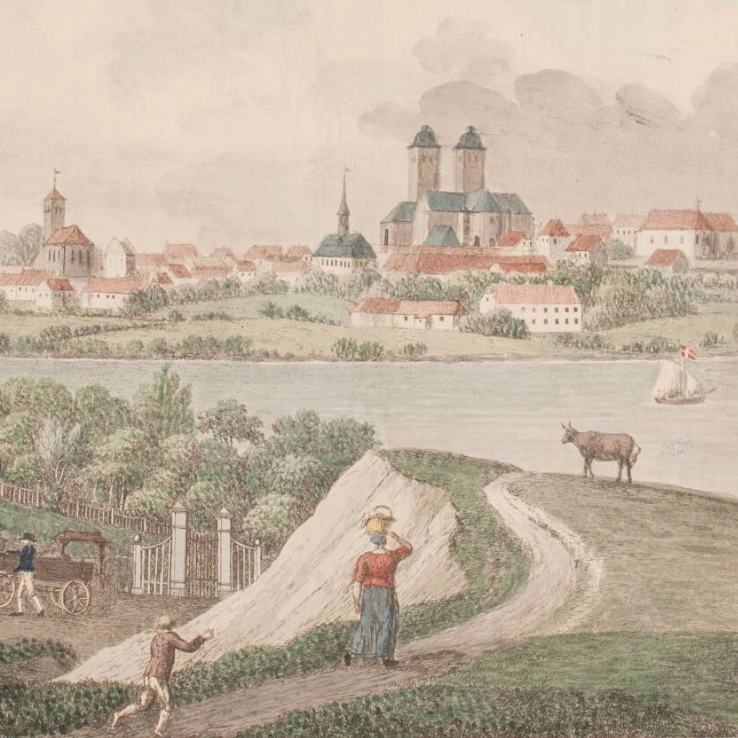
For today's episode, Christian Mathiasen chose Søren L. Lange's Viborg, or Viborg, from 1822 from the collection of the National Gallery of Denmark, Copenhagen.
“When you hear somebody’s age, some people have an opinion about you based on your age. Some people make you feel that you need to perform better because you are younger. A lot of it comes from how you treat other people, how you listen to them, and how mature you present yourself.”
“I think us Europeans have a tendency to be very direct in our language when it comes to professional work activities. Coming to California, your approach is very different. You need to be really good at building healthy professional relationships first before you start to set demands on the people that you’re working with.”
“As a [soccer] captain, the responsibilities — that you not only take for other people’s performances but also for them as human beings, the values that you learn in a sports’ world with people that are very ambitious and also worked really hard — I definitely have taken those with me.”
Powered by RedCircle
This conversation with Christian D. Bruun occurred on November 7, 2025.
00:02
Christian Mathiasen
I've chosen a picture from Søren L. Lange called Viborg from 1822 of the southern part of the Viborg lakes called Søndersø with the old cathedral in the background. It is the place that I grew up, and I got baptized in the cathedral. My parents got married here as well.
00:25
Christian Mathiasen
I think the place that will always mean the most is the place where I grew up with my parents, where my siblings got into the world, and I had a safe childhood with a lot of great people around me.
00:39
Christian Mathiasen
You remember when you went to that bakery when you were six years old. When I started running on the side of soccer, Søndersø was the lake you ran around.
00:48
Christian Mathiasen
Despite all those beautiful memories, that is a past chapter, but the feeling of being back here brings so much happiness.
01:04
Christian D. Bruun
My name is Christian D. Bruun. I'm the director of Danish Originals, a podcast series created in partnership with the American Friends of the National Gallery of Denmark. Our goal is to celebrate Danish creatives who have made a significant mark in the US.
01:20
Christian D. Bruun
Today our guest is Christian Mathiasen, a Danish market manager for Joe & the Juice. Welcome, Christian.
01:28
Christian Mathiasen
Thank you a lot, Christian. Pleasure to be here.
01:31
Christian D. Bruun
You are 24 years old and a rising star in your company. We are very excited to learn everything about you, Christian. I'm here in my home in California. Can you share with our listeners where you are exactly?
01:46
Christian Mathiasen
I am right now back in Denmark, funnily enough, and not in California. I just arrived this week at my parents' place in Viborg, where I grew up, and I have a lot of meetings at the Copenhagen HQ. I think it's always a pleasure to come back and see friends. Some of them study, some of them work. When you live nine hours' time difference away, you need to maximize the time that you spend in Denmark in the best way possible.
02:13
Christian D. Bruun
Exactly. I want to talk about Joe & The Juice. I moved to the US before Joe & The Juice was founded. And I remember the first time I came across it in 2016 in Soho and on the Upper West Side of Manhattan in 2018, I was very surprised to see that a Danish brand had made it to the US and it seemed to be doing really well. There were a lot of them around.
02:36
Christian D. Bruun
The truth is, it wasn't an obvious Danish sounding brand like Lagkagehuset, or Ole & Steen, as they are known here in the US. Can you give us a brief history of how the company and the brand name came into existence?
02:50
Christian Mathiasen
We got founded in 2002 by Kaspar Basse in Copenhagen, where he got a little segment of a clothing store on Ny Østergade. And the name of Joe, a lot of people actually think that it is a person, but Joe, a cup of joe, is an old American slang for a cup of coffee, or a cup of Americano.
03:13
Christian Mathiasen
Joe & The Juice stands for coffee and juice. And then below our old logo, we have the little sentence that says "coffee, juice, and much more," which essentially has developed into our sandwich segment.
03:27
Christian Mathiasen
And we came to the US in 2015 at 67 Spring Street in New York. We just had our ten-year anniversary party for that store. We expanded to the West Coast in 2017 in the San Francisco Bay Area, and then in LA in the beginning of 2018.
03:47
Christian D. Bruun
And always some pretty significant locations. I remember the first one in LA is on Melrose.
03:53
Christian Mathiasen
Yeah, exactly. Melrose is definitely one of our flagship stores on the West Coast. It's one of the places to really have good brand exposure.
04:05
Christian D. Bruun
Exactly. Kasper Basse, the founder, I know he has a manifesto and he's very interested in young people in the development of the company. Tell us a little bit about that.
04:15
Christian Mathiasen
So, Kasper could not understand why there was not a healthy fast food place where you could get really healthy food, healthy drinks. And he could not understand why there was not a place where a lot of young people could develop and grow compared to the normal university and education system.
04:42
Christian Mathiasen
He had the dream of creating this place where people get the best leadership education. And that has really been the core part of our company where our overall vision as a company is to become the first truly people-centric global food and beverage brand.
05:04
Christian D. Bruun
I see.What is the vibe and philosophy of Joe & The Juice?
05:08
Christian Mathiasen
One of the things that I mention a lot going around to the stores, if I feel that the vibe and the energy from the team is a little bit down, is "It feels like a Starbucks in here." We don't want to become this traditional espresso coffee house, we want to be special compared to our competitors.
05:27
Christian Mathiasen
And what does that mean? It means that we obviously want to perform on all the key fundamentals: it's always very clean stores, very good service, great food and beverage. The only thing that allows us to play upbeat music and to have that vibe in our stores is that our basics are in place.
05:48
Christian Mathiasen
We all know the feeling of going into a place where you can see that the people working there do not maybe actually want to be there. We really want to make this feeling that for our juicers, they can have fun with each other when they are at work.
06:03
Christian Mathiasen
We don't have this service script of what an employee needs to say to the guest. They can choose what they want to say themselves because we believe in every single employee's personal identity. We don't call the people coming in customers. We call them guests.
06:22
Christian Mathiasen
We really see it as inviting them into our house and giving them an experience like we would do personally if we invited our friends to our house on a Saturday night and we needed to host a dinner for them. We have our products that are also unique in terms of the health aspect of it. We want our guests to leave with this feeling of relief and that they had a break from their everyday life.
06:48
Christian D. Bruun
And the music, it's a very big part of the experience. The first time I walked by the store in the Copenhagen Airport, I do remember it was very loud and, but it was full of people. It's not a place you go and maybe sit and have a quiet conversation. There's a certain upbeat vibe to it. Where did that idea come from?
07:07
Christian Mathiasen
Obviously the music needs to be leveled on the right volume, so it also signals the atmosphere of the day. And especially during lunch, it will be this upbeat atmosphere. And every time that you have entered a Joe & The Juice store, you might have seen different pictures on the walls.
07:24
Christian Mathiasen
All of those are taken by the juicers in the store, those pictures are a way to express themselves. And that actually goes for the music as well, that all our playlists are created by juicers. It is this idea of really putting the employee in the center and having them feeling that they have an influence on everything that goes on in our stores.
07:50
Christian Mathiasen
There are morning playlists that are more suitable for the morning traffic, the volume goes very much up during lunch and then falls down towards the afternoon and evening. I hear a lot from people that they can really resonate with the music, with what Joe & The Juice is about.
08:06
Christian Mathiasen
And I think that's the ultimate achievement in creating a place, a community, not only a youth community, where this experience is actually something that resonates with this kind of music.
08:18
Christian D. Bruun
It's interesting to see how you can take the brand and then individually the juicers in each store can help set the mood and also take away a little bit of the uniformity of a big brand. It's interesting to see how much trust you place in the people working there. I'm impressed with how far this has come and what guys are doing.
08:36
Christian Mathiasen
And I think that also comes to light in my career, at a young age getting handed a lot of responsibility because there are people believing that you can handle the responsibility and that you can actually support the business. And I think that is truly the incredible thing about Joe & The Juice.
08:55
Christian D. Bruun
So tell me about your journey to Joe & The Juice.
08:59
Christian Mathiasen
It goes back to 2020, just after the peak of the COVID. I was a teacher at a school in Viborg. A friend of mine asked me if I wanted maybe something different, if I wanted a job in Joe & The Juice. I had already planned out my life. I needed to go to the military and then I should start medical school in Copenhagen two years after. So everything was in order.
09:26
Christian Mathiasen
I started in the beginning as a part-time juicer, and one thing stood out to me, these people that I worked with were super nice people. And then I went full-time, and we all know the feeling of becoming really good at what you're doing. After four months, the store manager asked if I wanted to manage the store that we had in Silkeborg. I was like, oh yeah, that could actually be pretty fun because I really enjoyed working with colleagues that were similar age. I learned how to manage a food and beverage store.
10:00
Christian Mathiasen
After a few months, I moved to a bigger location in Bruuns Galleri in Århus, and I really started to feel, okay, this is actually something I want to do, maybe for a year or more. I met a guy in the company called Frederik Fredsted, who had been in the company almost since 2008, and has been a part of establishing the brand, expanding in the Nordics, London, et cetera.
10:27
Christian Mathiasen
He became my mentor, he could see the potential in me. I remember this quote that he told me, "Joe is what you make of it." And I have really taken that with me since, because I decided I'm really gonna go for a shot of this because I could see that there was a possibility to travel abroad and get a lot of life experience from that.
10:50
Christian Mathiasen
After a few months, I got asked if I wanted to move to Oslo. At that time I was 21. I had never been to Oslo. So I thought, let's do it. Oslo was very tough. You went away from all your safe surroundings with all your friends, parents close by, you live in another country. Norway is a little bit the same as Denmark, but you're a lot further away from home. It's not Danish that gets spoken around you.
11:18
Christian Mathiasen
It's a different culture in different senses, and getting out there, living alone, not really knowing anyone in the beginning was definitely a big challenge. I went up there, managed eight locations in the Oslo area as a 21-year-old getting handed the responsibility of 70 people.
11:38
Christian Mathiasen
And that made me grow up very young. It was not as cool to work for Joe & The Juice in Norway as here. It was also the first time in my life working with people that are not as committed and as ambitious as yourself.
11:55
Christian Mathiasen
All my life I had been surrounded by people where there were no 50%, there were no 70%. Either you did it 100% or you would fail and you did not do it. We needed to create an environment where people felt that they had a sense of belonging and growth to have them go that way. I think Norway was the hardest period with the amount of hours that needed to be put in.
12:22
Christian Mathiasen
But I don't regret it for one single second, given the things that we created and how we really made it able to define what Joe & The Juice was in Oslo from being a very under-performing market to where we had created a super strong company culture. We succeeded, which is something that I'm obviously super proud of today.
12:42
Christian D. Bruun
How did the people in Norway think of a 21-year-old coming up there and telling them how to run their business?
12:50
Christian Mathiasen
I think when you hear somebody's age, some people have an opinion about you based on your age. Some people make you feel that you need to perform better because you are younger. A lot of it comes from how you treat other people, how you listen to them, and how mature you present yourself.
13:10
Christian Mathiasen
Perception is reality. If they see you in a different way, that's the reality because they need to support you. And I think for me, one of the big tasks was how do you remove that perception of being young? It obviously comes from working hard, first of all, but also presenting yourself in a way that makes them feel that you support and empower them.
13:36
Christian Mathiasen
And by doing those things and always being that support function, they will never really feel that you're 21. When people asked me how old I was, I typically gave them an answer of, you should not know that, or I'm old enough to be here. And then when they found out, they were like, wow, we thought you were 28, 29.
13:56
Christian Mathiasen
And I think that is one of the fun things, and that still happens in California. I was by far the youngest person that has probably been set out in a very long time. And when I got to California, I was the youngest person ever to be sent to the US.
14:12
Christian D. Bruun
So let's make the jump to California. How did you go from Oslo to California?
14:19
Christian Mathiasen
I actually had a period in between Norway and the US where I got the offer to be a part of our Paris expansion where I spent ten months in France, which was a completely different challenge than Norway. The language barrier was one thing.
14:36
Christian D. Bruun
How's your French?
14:37
Christian Mathiasen
Not good. I was just back in Paris this summer. I learned the basics, how to host an interview, how to do smaller presentations. I started to understand quite a bit, but the quick talk between other people around you was still difficult.
14:53
Christian Mathiasen
In Norway and Denmark, the people and the employees at Joe & The Juice are typically from the younger generation. Our demographic in France, the people that worked in the food and beverage industry were different. So the experience of building the culture ended up being different in Paris.
15:13
Christian Mathiasen
Then you had the language barrier with a market where our stores are probably some of the busiest in the world, and building that up from only being three stores in the beginning to six stores when I was there, and now today, I think there are 11 stores in Paris, was definitely a challenge in terms of not only onboarding a lot of people, but also securing stability, securing that people could learn, grow, and develop in a metropole like Paris, where the demand for labor is so high as it is.
15:47
Christian D. Bruun
So then your next step was California. How did that come about?
15:50
Christian Mathiasen
At some point I got an email with a job post of regional manager in San Francisco. And I remember I told Fredsted that I wanted to try and live in the US at some point. Originally he had signed me up for Miami. I started to speak with the people in Denmark about how the US was, how California was performing as a market.
16:17
Christian Mathiasen
I'd heard that it was a big struggle, that it was a big project, that the quality of the stores were a lot lower than they were in Europe. I was also very interested in this being the right step for my career. I'd been in Paris for ten months. I did not have an apartment signed in Denmark. I did not have a specific plan. I was still young. If there was a time where I should have the US adventure and experience from the US, it was now. So I took that job in San Francisco being the regional manager there.
16:51
Christian D. Bruun
Tell us about the first time you arrived here. How did you get settled? How did you find an apartment?
16:57
Christian Mathiasen
I landed on a Thursday afternoon in February 2023, and the first thing was my boss on the West Coast took me to In-and-Out, and I felt, ah, this is the America in the movies, right? I had two months' accommodation in an apartment. Then a friend of mine, Axel, and I could find a room each in a bigger house close by a fellow colleague from Joe & The Juice that moved together with me to SF. We had each other when we came here, and it meant a lot.
17:31
Christian Mathiasen
But I had not heard about how San Francisco had recovered from COVID, and I was in shock and it made me a little scared, far away from home. The first six months in SF, I hated it. I was ready to move back to Europe, but I signed two years and I did not want to quit. And I did not want to just give up because it was a little bit tough, and I think today really happy and grateful that I didn't.
18:02
Christian D. Bruun
What was so different? What was the city going through and how was it different from where you came from?
18:08
Christian Mathiasen
Now I have a bigger understanding of what was going on in SF. At that time, we as a city still experienced a massive issue with the homeless population. We had very high crime rates, and a lot of storefronts were shut.
18:26
Christian Mathiasen
I came to manage stores in the Financial District of San Francisco where everything you heard around you was people saying it's never gonna be the same, it was so much better, the pre-pandemic, and all of that negativity. And the stores being old and slow because there were not really any people on the street.
18:47
Christian Mathiasen
I lived on Fillmore Street at that time, close to Geary, which was an area that was a little challenged by high crime rates. And for me, coming from my upbringing, from being in Paris, Norway, Århus, and Copenhagen, it was just a very big change of how you see society and some of the things that we were dealing with.
19:11
Christian Mathiasen
It was a tough time and I did not feel the city was something that was for me to live in because I think at that time when I came to the US, I was still under this impression of, this is just a place in my life, this is not the career that I still want to do, this is still a part of my gap years before I do something else.
19:32
Christian Mathiasen
And with that thinking in mind, and then you came to that, it made it a little bit easier to feel, this is maybe not what I wanted to be. But then obviously a lot of things started to turn out for the better.
19:45
Christian D. Bruun
It is good to see the city is coming back from COVID. I mean, a lot of cities were hit hard. I've been in San Francisco many times and it is a beautiful city and I feel it is coming back in a very good way. Earlier you mentioned that the quality of the stores in the US were different from what you'd seen in Europe. Can you talk a little bit about that?
20:05
Christian Mathiasen
All the stores were from the pre-pandemic, so at least four or five years old, and a lot had limited opening hours because they did not have staff. The cleanliness was not at the level that we wanted it to be. And essentially a lot of the basics were not of the standards we wanted to have in Joe & The Juice.
20:27
Christian Mathiasen
And coming into that change of environment was not about opening stores, it was about which doors should we close because they don't drive growth. And that was given to our operational struggles, but also the city that recovered a little bit slow after COVID. Today, it's a completely different case. But all of those factors weighed in.
20:49
Christian Mathiasen
That was not the Joe & The Juice that I knew, that was not Joe & The Juice that we wanted to create or be known for. So we obviously started this full process of, okay, we have these 12 stores in the Bay Area. How do we build up leadership? How do we build up a recruitment structure? How do we build up better facilities and essentially the whole infrastructure around the business to best support the stores that we had?
21:18
Christian Mathiasen
And then together with some amazing people I'm extremely grateful for to this day coming into the company, building top class stores across the whole West Coast. These people coming in, building the right basics, developing great talent, finding great talent really contributed to that.
21:38
Christian Mathiasen
We today are a completely different business than we were three years ago. We have developed a lot of new tools. We have developed a lot of new infrastructure. I have never been more excited about the future than right now as we are embarking on this great journey ahead of us and this already great journey that it has been so far.
22:00
Christian D. Bruun
There's also been a big effort, politically, to make it seem as if California is going under, like the whole world is leaving to move to Texas, which of course isn't true. It's still the world's fourth largest economy.
22:15
Christian Mathiasen
I think it's definitely great to see San Francisco being so much better as a city. One of my good friends is the mayor's (Daniel Lurie) right hand. There are some really good initiatives taking the city in the right direction. And I think for me also having been a part of the rebirth of the city actually means a lot, as a business driver being in charge of multiple units to give back to the community.
22:42
Christian Mathiasen
And I hear a lot of people talk about San Francisco is this and that, and it's always so many homeless, et cetera, and it's made me really eager to also prove a lot of people wrong about the city. And I also see that in the stores that I'm running, if I run them better financially but also performance related, within my own company, I can change that feeling that a lot of people had developed about San Francisco in the previous years.
23:11
Christian D. Bruun
Tell me, Joe & The Juice, is it a franchise model? What is the business model for all the stores that you are opening?
23:17
Christian Mathiasen
Currently in the US it's 100% corporate owned and that includes on the West Coast, the market in San Diego, LA, SF, and Seattle. On the East Coast, we have New York, Miami, Washington and Chicago. New York, Miami, together with San Francisco, are the three biggest markets that we have in the US.
23:39
Christian Mathiasen
In the future, in the US it might be that if we open in a new state that it is a franchise model, but we work really strongly with the idea of running all the stores in the US ourselves. The Middle East — Saudi Arabia, Dubai, all of those markets, they are franchised.
23:57
Christian Mathiasen
The same with Mexico, which is opening in less than a month. That's a franchise market. Globally, we have a very healthy structure between franchise and corporate ownership. But in the US we are a corporate owned structure.
24:09
Christian D. Bruun
I see, interesting. Earlier you described the environment in each store and how each juicer creates and sets the atmosphere. And it occurs to me that even between Denmark and Norway, there's a big difference in how people socialize and how people are.
24:25
Christian D. Bruun
So coming to the US must have been an even bigger jump because Danish people are, compared to Americans, not known to be extroverts. I can imagine that model fits the US really well. Is that your experience?
24:39
Christian Mathiasen
I think it has become now. In the beginning, it's all about giving people the tools to be able to express themselves. We also did not have the proper infrastructure to make that successful expansion. When the basics were not in place, people did not really care.
24:57
Christian Mathiasen
Imagine if you go to a place and you're not really proud of what you're a part of — I think you have seen that in a lot of different food and beverage companies. To see Joe & The Juice as more than just a job, was something that needed to be built. Back in the days we did not learn how to create the culture and to articulate it in the right way for all Americans to understand.
25:20
Christian Mathiasen
But I think today we have been able to express how Joe & The Juice should be and how we want it to be that creates a belonging and engagement from all our amazing American employees and guests.
25:31
Christian Mathiasen
I think us Europeans have a tendency to be very direct in our language when it comes to professional work activities. Coming to California, your approach is very different. You need to be really good at building healthy professional relationships first before you start to set demands on the people that you're working with.
25:52
Christian Mathiasen
That learning was a very big thing for me. In California you often work with people that have a tendency to be a little bit more sensitive towards those things when it's not their own business. Another thing is the highly competitive business culture, where you do everything you can to actually get your competitor down.
26:15
Christian Mathiasen
And that pressure in that sense is definitely something that I found as a big difference compared to my early stages in Oslo, Paris, and Denmark. My biggest goal every single day is to create a better working environment for our juicers that can then provide better experiences to our guests.
26:34
Christian Mathiasen
And I think we really have created an environment where we don't see anyone as a boss. But we see them as a leader compared to a lot of American companies. And I think that is something that we have brought, which has worked really well and actually also made us one of the leaders within our industry in the US.
26:58
Christian D. Bruun
What is the number one selling item in your region, which is Northern West California, and how does it compare to Denmark?
27:06
Christian Mathiasen
For a couple of years, what made us really popular in the US was the TikTok trend with our tunacardo sandwich, that sandwich by far being the best selling sandwich that we have on the menu. We have a new smoothie called Trust Your Gut, which is essentially very good for your gut health.
27:06
Christian Mathiasen
And what we have seen is that, particularly on the West Coast, we have by far the highest sales of the Trust Your Gut across LA, SF, and Seattle, where it is double digit percentage higher than it is in France and in Oslo, for example. And it signals a lot of us also being very much on brand on the West Coast, having a very health oriented guest segment that really cares about their wellbeing.
27:57
Christian Mathiasen
In Denmark, Power Shake is still by far the best selling item that we have. In the US we almost do not sell any Power Shakes, particularly in our stores on Melrose or in the Stanford mall.
28:09
Christian D. Bruun
That's very interesting, and what do you attribute that to?
28:12
Christian Mathiasen
On the West Coast, people are very health oriented. So, what are the nutrients, what are the vitamins? How much protein do you have in your shake or your sandwich and what does it consist of? Are the fruits really healthy? Do we add anything else than the fruits, et cetera?
28:30
Christian Mathiasen
And that kind of attention to detail of what you put in your body, you do not see that much in a lot of other markets, which I think really proves that we are hitting the right segment, especially in LA. And I think that is just a bullish sign of our expansion plans, that we definitely have a big place to fill here on the West Coast.
28:54
Christian D. Bruun
Joe & The Juice have expansion plans in the coming years. Can you tell a little bit more about the future of the company?
29:01
Christian Mathiasen
We are aiming to hit more than a thousand stores worldwide by 2028. On the West Coast, we will severely expand in our Los Angeles, Orange County, San Diego, and Seattle markets. We have right now a pretty small store base, but have the possibility to build a really strong footprint across the West Coast.
29:27
Christian Mathiasen
The US in general is the biggest market. We will have by far the most store openings in the upcoming three years. And compared to the other corporate owned markets, more than 50% of the store openings will be in the US. So it's significant. In the US we will be 250 stores by the end of 2028.
29:50
Christian D. Bruun
It's very impressive. Joe & The Juice is also focused on sustainability and technology. Can you tell us a little bit about that approach?
29:59
Christian Mathiasen
One of our ground pillars in the company is sustainability, and we want to give back to the world and leave as little as possible a footprint on our environment. A lot of locations are using paper cups. It's recyclable plastic in a lot of other places. We try always to be very innovative with our tech systems to minimize the use of paper, but also in our development of smarter lids for the juices, paper straws instead of having plastic straws.
30:37
Christian Mathiasen
So all of these small things, as we grow as a company, we are very invested in changing and optimizing all these things with the newest technology ongoing to ensure that we do not leave a bigger mark than before because we always try to be innovative in our business.
30:56
Christian D. Bruun
You were born in this millennium in central Jutland. Can you describe your childhood and growing up? Do you have siblings? And tell us about your parents.
31:05
Christian Mathiasen
I was born in 2001 in Viborg, grew up with my dad in the military and my mom working as a nurse at the hospital. I have a little sister and a little brother. There's three years in between all of us. We started living in the central part of Viborg, then later moved a little bit away from the central part in a bigger house with a big garden.
31:30
Christian Mathiasen
I went to public school at Overlund Skole. Overlund is one of the suburban areas in Viborg. Very calm and nice upbringing in a place where everything moves a little slower, very safe biking to school. I was very interested in sports, playing soccer from when I was six years old.
31:49
Christian D. Bruun
Let's talk about soccer. You played with Viborg FF. Was that your original career path? What was that like?
31:57
Christian Mathiasen
Already from an early stage, soccer was something that I really loved. I tried playing badminton like my dad, but I never felt that was my thing. Also today I'm not the best at throwing anything, so clearly that was not the career path for me.
32:13
Christian Mathiasen
When I was six years old, one of my best friends asked one day, hey, we have our first soccer practice, do you want to come? And I remember coming back to my mom at home and saying, I really, really wanted to go. My mom drove me to the first soccer practice, and that was at Overlund GF (Gymnastikforening), which was a very small club in my hometown.
32:34
Christian Mathiasen
And instantly I started falling in love with soccer. I started playing with Overlund, grew up in the U8/U9, and when I was ten, I got offered to move into the bigger club Viborg FF. And in the upcoming years I went to a few different clubs.
32:52
Christian Mathiasen
I was also close to going to FC Midtjylland. If you are from the area of Viborg and Midtjylland, you know they are not best friends in soccer. But I met a coach in Viborg FF called Kenneth, someone that believed a lot in me, and always gave me a lot of feedback, and I could really sense this feeling of belonging to this place.
33:14
Christian Mathiasen
So when it started to be soccer at the elite level at U13, I started in Viborg FF, and played through all the youth ranks in Viborg FF where we traveled around the country playing against clubs from Zealand, the Copenhagen area, Funen and so on, and also won the division two years in a row, which was something we were super proud of.
33:37
Christian D. Bruun
Wow, that's impressive. I see. What does Viborg FF stand for?
33:41
Christian Mathiasen
It stands for Viborg Fodsports Forening, which essentially is the big team here in Viborg. We used to be a very big handball city with the women's handball team, and Viborg has really become this soccer city as well, where Viborg FF is the place that really gets a lot of people gathered on the weekends for the Sunday games.
34:03
Christian D. Bruun
So it must have been a big deal for you to be doing that well and also be part of the pride of the city, right?
34:09
Christian Mathiasen
I remember playing in the youth leagues and going to the games on the weekends and it was definitely something that I was extremely proud of. It is a very competitive environment. As a captain, the responsibilities — that you not only take for other people's performances but also for them as human beings, the values that you learn in a sports' world with people that are very ambitious and also worked really hard — I definitely have taken those with me.
34:39
Christian Mathiasen
Back then it was the soccer career that I was really invested in, but it came with a lot of sacrifices. You started to go to the school parties later, you didn't go in the beginning. It went really, really well with soccer in Under 16, Under 17. But when I started to be 18, I was a little bit late to grow in height and in size.
35:03
Christian Mathiasen
I started to pick up a lot of injuries, and I felt unhappy going to practice every day. I felt I was not a part of the team any longer, the way back felt very long. I had a very serious knee injury, and I returned to the field and picked up another injury right after, and both of those were year-long injuries.
35:29
Christian Mathiasen
In Denmark, when you grow up and play soccer at a high level, you have a surrounding with friends that are athletic, that all play sports at a high level. At seven, eighth, ninth grade and high school, I was on a sports line, which essentially meant that I was only going to class with people that had a sport as well. It was not necessarily soccer, it was also swimming, handball, et cetera.
35:54
Christian Mathiasen
So everyone that you surround yourself with are people that are high achievers, very disciplined. And during the second injury, I started to do more things with friends outside of this professional athletic world. I started to play tennis, paddle tennis, and started to pick up interest within the business world.
36:16
Christian Mathiasen
I could start to have a sense of belonging to both worlds. It started to be a natural feeling of you didn't stop playing soccer, but playing soccer at a lower level. I graduated high school in 2020 from Viborg Katedralskole.
36:32
Christian D. Bruun
Wow, that's impressive. What is your mantra for going through life? What is your advice for young athletes in Denmark and for young people in general?
36:44
Christian Mathiasen
I think always be humble and remember where you're from, but also be ambitious in the sense of believing in yourself. My advice is actually just learn as much as you can. You can be born with talent, you can be born being very good at something, but have a really high level of self-awareness.
37:09
Christian Mathiasen
Learning from the people around you, taking the best pieces from all the people that you meet on your way in your career, and put them in your backpack. It will eventually give you a lot of other people's best skills for you to use to create the best version of yourself.
37:27
Christian Mathiasen
And despite all the setbacks that you might have in your life, always be very authentic and believe in yourself. Never change yourself in terms of what you believe in and what you see for yourself. Because when you start to change that with yourself and start to lose yourself in everything you're doing, you start to lose the engagement.
37:50
Christian D. Bruun
You just have to trust the unknown, right? Because you don't know what's gonna happen when you move to Paris or come to the US. So just dive into the deep end of the pool and figure it out. Right?
37:59
Christian Mathiasen
Exactly. And always when you try your very hardest, you might fail, but oftentimes you don't. And if you fail, what is the worst then? And I think especially being young in whatever industry, you have so much room to fail. And professional growth is about making mistakes. If you never make mistakes, you're not getting challenged enough.
38:24
Christian Mathiasen
And being at a young age, you have many years ahead of you in whatever that you are doing. Learn a lot of things when you're young to set yourself up for success later, but also never stop learning no matter how old you are, because the day that you stop trying to challenge yourself, the day you always take the safe choice, that's the day you stop developing.
38:48
Christian Mathiasen
And that's the day you choose your own ceiling, in how much you can become. Definitely trust yourself and also trust the path, trust the process, and I'm sure you will have great things ahead of you, because the worst thing is always worse than you not trying.
39:06
Christian D. Bruun
That is good advice.
39:08
Christian Mathiasen
Also, it's important, in whatever industry, to always keep a personal goal together with your business goal. So you never feel that just because it didn't work out with the business that you are big failure, but that you also have something in your life that you're working towards and have the balance between those two all the time really helps you to be more focused, to be more efficient and in general to be more happy.
39:36
Christian Mathiasen
As a manager, you lose the right to have a bad day. So for you to always stay on top of yourself and your performance, it is very important to have a very good work life balance, despite that your work weeks sometimes get in the high sixties in terms of hours. Right now, I am training for IRONMAN on the side. I have half an IRONMAN in Dallas in March, and then I have the Copenhagen IRONMAN next year as well.
40:04
Christian D. Bruun
That's great. And my final question to you, Christian. What is next for you? We know that you have your hands full through 2028. Joe & The Juice is expanding here and other parts of the world. Are you interested in staying in the US? Did you fall in love with San Francisco? Are you gonna stay here for a long time or return to Denmark? What are your plans?
40:28
Christian Mathiasen
I've lived abroad for almost five years and what you call home, which is Denmark, is not really home any longer. San Francisco is now the place where I have lived the longest alone. I have an American girlfriend, I have American friends, and I've built my own life, together with having a job, which you love, you're very invested in, and you really see the possibilities in the future.
40:56
Christian Mathiasen
And feeling the positivity with some of the new political initiatives — bringing a lot of events back to the city, people returning to the office, a lot of people coming back to SF, which again will be this major hub for technology and AI. As of right now, I see myself staying in the US. I have fallen in love with the culture, with the people, with being a part of Joe & The Juice in the US, and I don't see myself leaving.
41:26
Christian D. Bruun
That's great. Thank you so much, Christian, for being part of Danish Originals. Thank you for being here.
41:32
Christian Mathiasen
Thank you, Christian. It was a pleasure being here and nice chatting with you.
41:38
Christian D. Bruun
For today's episode, Christian Mathiasen chose Søren L. Lange's Viborg, or Viborg, from 1822 from the collection of the National Gallery of Denmark.