
Vesterbro-born and Beachwood Canyon, Los Angeles-based Danish tv and film colorist FREDERIK BOKKENHEUSER recalls his path from Denmark to LA as a drummer in 2007. He talks about the creative and technical aspects of his work at Picture Shop, the diversity of projects he encounters, the evolving post-production technological landscape, and the thrill in working alongside directors, directors of photography, producers. Lastly, as a Dodgers fan, he discusses his passion for baseball.
Photographer: Thomas Hjorth
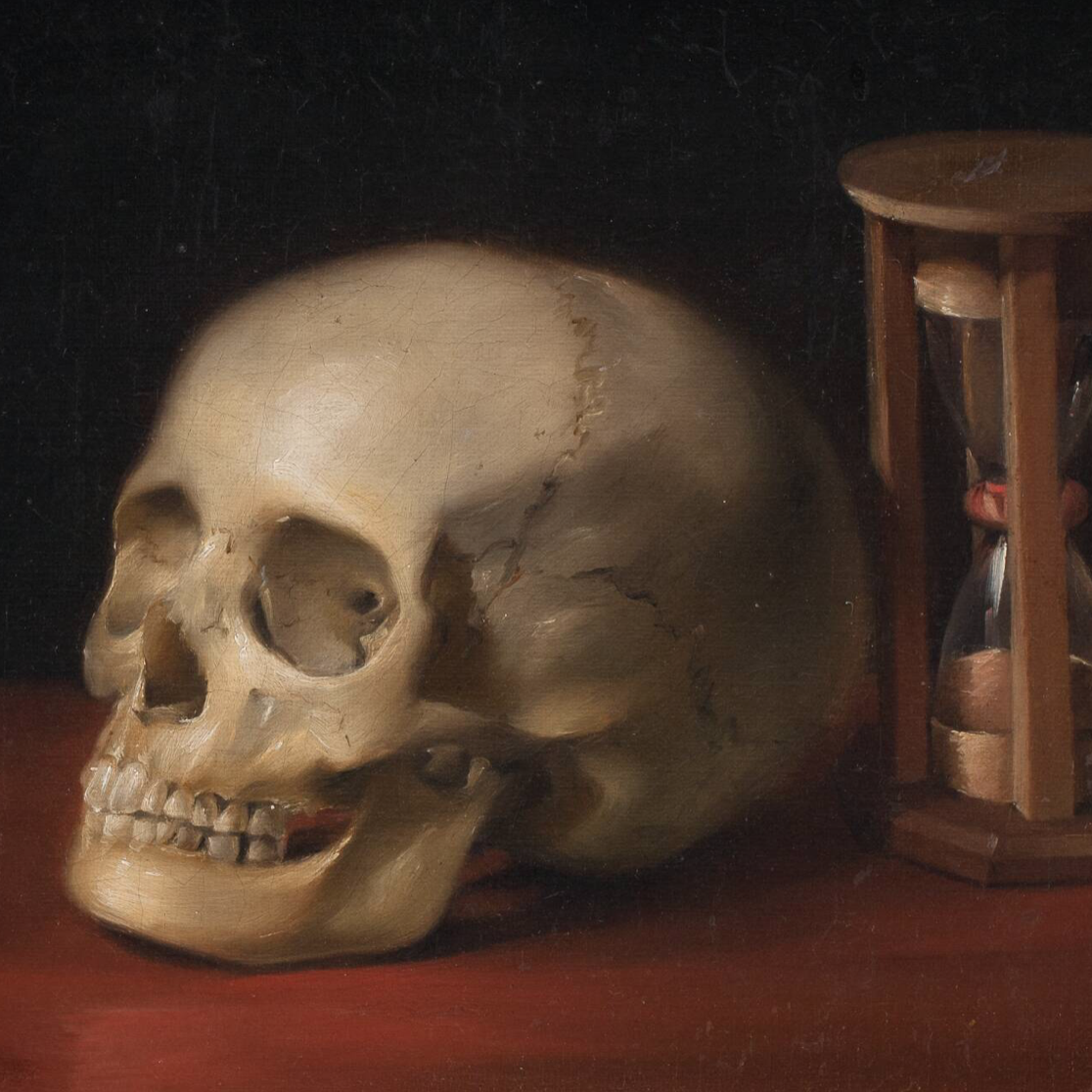
For today's episode, Frederik Bokkenheuser chose C.A. Jensen's Dødningehoved og timeglas, or Skull and Hourglass, from 1714–1814 from the collection of the National Gallery of Denmark, Copenhagen.
“I sit with directors, producers, DPs, and they come in and we decide what we want to do together. If people are feeling something, that’s what they’re feeling. There’s some technical stuff and I’ll keep the guardrails on, but really there’s no right or wrong to how you want your film to look.”
“I was never the best drummer in the world, but I showed up on time and I was prepared and those things will get you very far. Everybody’s like, oh, talent. I’m like, yeah, but hard work. And that’s something I got from my grandparents that just work really hard and see what happens.”
“I identify as Danish very much so, but a Dane that has completely left Janteloven behind. I’m good at what I do. I am not afraid of being proud of what I’ve done in my life, which I think Danes should stop being so scared of because we are very good at stuff.”
Powered by RedCircle
This conversation with Tina Jøhnk Christensen occurred on July 9, 2025.
00:04
Frederik Bokkenheuser
The piece I've chosen is Skull and Hourglass by C.A. Jensen.
00:11
Frederik Bokkenheuser
It's a skull next to an hourglass on a table. It's very dark and ominous. The motif is heavy.Your days are numbered, but make the best out of the days you have here. I am a firm believer in living each day with as much joy and optimism and happiness as you can because we never know how long we have.
00:41
Frederik Bokkenheuser
I like the darkness. I like the deep shadows. I like the warm tones of the table. How the light falls out into complete darkness behind the hourglass, it's a very strong image, something I could have colored myself in my job.
01:00
Frederik Bokkenheuser
When I work with people, often references are what brings us together on a project. It's like we all know what tri-tip tastes like, but not until we taste the same one that's the same marinade, then we know what we are talking about.
01:18
Frederik Bokkenheuser
This is an image I would use as a reference on a palette I really like.
01:29
Tina Jøhnk Christensen
My name is Tina Jøhnk Christensen, and I'm the host of Danish Originals, a podcast series created in partnership with the American Friends of the National Gallery of Denmark. Our goal is to celebrate Danish creatives who have made a significant mark in the US.
01:45
Tina Jøhnk Christensen
Today, our guest is Frederik Bokkenheuser, a Danish colorist. Welcome, Frederik.
01:51
Frederik Bokkenheuser
Thank you. Thanks for having me.
01:53
Tina Jøhnk Christensen
We are very happy to have you. Your title is interesting, a colorist, and I will return to that and hear more about what a colorist really does. But I want to start by talking about the city that we are in. We are in Los Angeles at the moment. We are sitting across from each other at my dining table and outside, the sun is shining from a blue sky, which is often the case in the city.
02:18
Tina Jøhnk Christensen
It can be a very seductive city because of this and its beautiful surroundings, such as the tall palm trees. So I would like for you to start by describing your city. What is Los Angeles to you? How would you describe it, Frederik?
02:33
Frederik Bokkenheuser
Oh, fun. Well, Los Angeles has a reputation for actually being a really ugly city. To me it's super beautiful. I can drive down Sunset Boulevard and not see the strip malls and the homeless people, but I can see the palm trees, I can see the diversity, and I can see the opportunities in this city. And that to me is important. There are so many layers in this city.
03:06
Frederik Bokkenheuser
I feel it's a very organic city. When you first get here, I don't remember the correct number, but there are so many people landing every day with a dream of making it. And this city is a tough client. You land here and it's let's see what you got. And then when you've been here for six months, it's, all right, you made it six months.
03:28
Frederik Bokkenheuser
Look around the corner, go into this strip mall, that's probably the best sushi you've ever had. And you would've never found it. And the city continues. It's almost like you hit your marks in, wow, you've made it to a year. Let me show you the best venue that you didn't know, and so on and so forth.
03:49
Frederik Bokkenheuser
And it has everything. And the longer you are here, the more it opens up to you. It embraces you in a way that's very interesting to me. Whatever you like, it has it and it has it in spades, which I think is super inspiring. I always take my friends hiking when they're here. That's just the visual beauty because it is a super beautiful city as well.
04:15
Tina Jøhnk Christensen
What is your favorite hike?
04:17
Frederik Bokkenheuser
It's up around the Hollywood sign.
04:19
Tina Jøhnk Christensen
Griffith Park?
04:20
Frederik Bokkenheuser
Yeah, Griffith Park. I can walk out my door and I'll be up at the Hollywood sign in 20 minutes and it's just fantastic.
04:27
Tina Jøhnk Christensen
What happens when you tune in to the homeless, Frederik? It's not always easy. So what happens when you do that?
04:36
Frederik Bokkenheuser
I get super sad and I think deeper about it and I go, man, why is there no safety net in this country? That's one of the things I do miss about Denmark. It can be people who actually would have had a fine life, but there's such a high percentage of them that have underlying mental problems and there's just no network.
05:05
Frederik Bokkenheuser
And also there are people that straight up just lost their jobs and are living on the street. It's not all mental problems and drugs. They're also people living out of their cars because they can't afford an apartment. And that really bums me out. And I hope that there's some kind of solution, but it doesn't seem the future is too bright in that sense. It's tough to see. I don't know.
05:33
Tina Jøhnk Christensen
You made the big step of moving to Los Angeles in 2007. You were about the same age that I was when I made the move, about 30 years old — which is young, but not very young. What made you make this step at that age? What made you pick Los Angeles?
05:50
Frederik Bokkenheuser
Oh, man. So I have been playing drums since I was seven. I had been working at my dad's post house since tenth grade, so I was probably 16. And I had made a pretty good stride at both careers, especially the film career.
06:12
Frederik Bokkenheuser
But music was also going pretty well, and I was just like, I wanna tour the world as a drummer. Even though I had a good career as a colorist. I had bought an apartment, it was financially safe, it was all those things. I felt an urge to see the world and tour as a drummer.
06:30
Frederik Bokkenheuser
I figured nobody would come pick me up in Copenhagen. I recorded an album in 2005 in New Orleans with Christina Groth and Chief 1 as producer, who's a dear friend — I did all his recordings for several years. The engineer of that studio went, man, you are really good at drums. Move to New Orleans, we will take you in here, you'll have sessions and you will be picked up for a tour.
06:57
Frederik Bokkenheuser
I was like, alright, that's how that dream starts. Perfect. A month later, Katrina hit, so it goes without saying, it wasn't New Orleans. Later I called them and I was like, all right, I'm ready to move. Where should I move? And they were like, well, you have three options: New York, Nashville, and LA.
07:17
Frederik Bokkenheuser
We think you're too nice for New York. You're gonna be fed up with country and Christian music in Nashville. Move to LA. You are perfect for that city. And I was like, alright. And I bought a ticket. I had never been to LA. I had very few connections here. So it was a big step.
07:39
Frederik Bokkenheuser
And I will also say it was tough. I sat alone, I lived with a guy who was a porn director and an editor. Sometimes he shot at the house. It was wildly interesting.
07:52
Tina Jøhnk Christensen
That can be noisy.
07:53
Frederik Bokkenheuser
It can be noisy. He also had quite the drug problem. And it was in a rough neighborhood at the time. It was Atwater but in 2007. So it was gunshots at night and the ghetto birds. He was Filipino, so he talked to the Filipino gangs about like, I was cool to be there. And so it was very, very different from living a very safe life in Denmark.
08:18
Frederik Bokkenheuser
And the phone didn't ring for the first six months. I had one friend over here and I was like, can you please call my phone to see if it works? It rang, it did, but nobody called me. And it was super lonely and I was about to give up. But then as I said, LA happened and it was like, try to look over here. And I got my first little tour.
08:42
Tina Jøhnk Christensen
How did you manage to not go down mentally in that period where nobody called your phone? How did you keep that spirit alive? That I'm gonna do it, I'm gonna make it happen with all the screaming in the background.
08:54
Frederik Bokkenheuser
Yeah, that's a good question. I just very much responded to the energy here. I bought a car. I drove around and I went out and I watched music every day, went to all the venues in the city, and found, all right, there's so much stuff happening here. I'm a better musician than a lot of these people who are actually gigging. I think there's a way in.
09:20
Frederik Bokkenheuser
I guess I've always been pretty stubborn and had a pretty strong work ethic. So I would also keep practicing. And all of a sudden, when the ball started rolling, it started rolling pretty fast, actually.
09:34
Tina Jøhnk Christensen
We'll talk a bit more about music later. Today you work in Burbank, which is very close to where we are in Glendale. Basically, it's on the other side of the mountain where the Hollywood sign is that you talked about before. Which part of the city do you call home now and what made you settle here? I assume it's not Atwater.
09:55
Frederik Bokkenheuser
No, it's not Atwater, even though it's become very, very nice. It's a really cool area now. I'm on Beachwood, actually on Beachwood Drive.
10:04
Tina Jøhnk Christensen
Can you see the Hollywood sign?
10:06
Frederik Bokkenheuser
When I walk right up my garden gate, I can. Unfortunately, I also think TripAdvisor says this is the best address to take pictures. So there's so many screaming people right outside my door. But I'll take it. We moved to Beachwood Canyon in 2009, and I just love that area. It's pretty central.
10:26
Frederik Bokkenheuser
For the Danes listening, LA has the size of Zealand, so it's a quite massive area and we are pretty much in the center of that. So it's 15 minutes to most places. Depending on traffic, that could also be an hour and a half, but —
10:43
Tina Jøhnk Christensen
Did you say 15?
10:45
Frederik Bokkenheuser
15, 30.
10:46
Tina Jøhnk Christensen
You are exaggerating.
10:47
Frederik Bokkenheuser
I'm exaggerating.
10:48
Tina Jøhnk Christensen
Because that is not true, to all the Danes listening. It's at least 50 minutes. Okay, so.
10:56
Frederik Bokkenheuser
I'm 15 minutes to work, that's all. And without traffic, it's about 30 minutes everywhere. And we are close to music, we are close to restaurants, we are close to hiking. I think it's a very well located area and it's just quiet and beautiful.
11:13
Tina Jøhnk Christensen
You can walk to Birds and La Poubelle —
11:15
Frederik Bokkenheuser
I can, and I do.
11:17
Tina Jøhnk Christensen
— two very good restaurants on Franklin. Your workplace in Burbank is called Picture Shop. You do coloring. What kind of a company is Picture Shop, and maybe it's the right time to explain what a colorist does. It has something to do with color, but what is it that you do?
11:35
Frederik Bokkenheuser
I'll start with what the job is. The easiest way of explaining it is if you think of your Instagram filter and how you can change the color and mood of your photos and videos there, that's what I do, but in a pretty extreme way.
11:59
Frederik Bokkenheuser
I work very closely with directors and directors of photography for film and producers to set moods, to set vibes, to go in and really determine how the film or TV series feels. And we can really skew it in many directions.
12:19
Frederik Bokkenheuser
And it seems basic, but if you do something that's a cold tone and is dark and desaturated, it feels cold and lonely. And conversely, if it's warm and colorful, it feels nice, and you can really help underline the feelings of a piece by helping the color.
12:42
Frederik Bokkenheuser
There's also technical stuff in there. There's understanding color spaces and formats and boring stuff like that. So it's also a pretty technical job. And then there's also, hey, the sun went away, can you make these two sides match and make sure that nothing stands out when you see a scene or a film?
13:03
Frederik Bokkenheuser
So it's very creative, but at the same time pretty technical. And it really speaks to me. I thought for the longest time I was going to be an editor when I was a kid. But that seems very boring to me. No disrespect to any editors. I just don't have the patience for it in that sense. I go through many projects a year where an editor maybe sits on one, maybe two if they're lucky.
13:29
Frederik Bokkenheuser
And I like the diversity in it. And there's never two days that's the same, because everything looks different and it's super inspiring. And Picture Shop is a company that approached me. I was at a smaller shop. They were a small boutique at the time. And that really drew me in.
13:49
Frederik Bokkenheuser
And then shortly after, they bought a bunch of companies and became the biggest post-production house in the world. That was a twist I didn't see coming. We bought a place called Technicolor, which many people will have heard and seen.
14:03
Tina Jøhnk Christensen
Yes, goodness. I didn't know that.
14:05
Frederik Bokkenheuser
Yeah, it was wild. So the fun thing you were mentioning, Los Angeles and the sun and blue skies. I sit in a dark room everyday.
14:13
Tina Jøhnk Christensen
Yes.
14:14
Frederik Bokkenheuser
You can't have light when you do what I do. So it's a room without any windows. And a lot of times I sit in a theater as well, if we do theatrical work. So that's the description, I think.
14:23
Tina Jøhnk Christensen
Very good. You have worked on many movies and TV series. There's a long list of American movies, documentaries, and TV series on your CV. To the Danes, Børnene fra Sølvgade might stand out, it's a Danish children's movie. But for you, which titles stand out in terms of what you managed to do personally as a colorist?
14:44
Frederik Bokkenheuser
I would say for the Danes, I'm actually gonna be very un-Danish and say how proud I am of this.
14:51
Tina Jøhnk Christensen
We are in the US.
14:52
Frederik Bokkenheuser
We are in the US. I did a series that actually I think most Danes will know more than anything, called Jul på Vesterbro, which is an advent calendar in 24 episodes. And I did all the work on it. It's Anders Matthesen who is playing all the roles. So I did all the compositing. I put him together in the scenes with himself.
15:14
Frederik Bokkenheuser
I graded 24 episodes and came up with a look. And that series, when I see that right now, I don't understand how we did it. Because it was in 2003, maybe. And the technology was different than now. I'm very proud of how we managed to do that. It actually holds up, which is wild.
15:36
Frederik Bokkenheuser
In more recent times, I worked on a series for Netflix called Archive 81 for nearly a year. It was just a creative dream and it also seemed we could just do what we wanted. I worked very closely with the showrunner Rebecca Sonnenshine, who just loved my approach to stuff.
15:58
Frederik Bokkenheuser
It was a lost footage show, so there was a lot of recreating old formats, every tape format, every film format. And I think my upbringing in film and at a post house really gave me an edge there. Most of these formats are something I've held in my hand at some point.
16:17
Frederik Bokkenheuser
So it was just a really, really fun, creative undertaking and a very fun journey. Unfortunately, the series got canceled as it happened, but it was creatively really fun. But everything is different.
16:31
Frederik Bokkenheuser
I just did a film that I don't know if I think it's particularly visually my best work, but it's just a really good film. It's called Prime Minister. It's a documentary feature about Jacinda Ardern, the New Zealand Prime Minister. And it's an extremely rare insight to the center of power and how you can approach that.
16:56
Frederik Bokkenheuser
It's a beautiful film. I think it may have a chance in the upcoming Academy Awards and whatnot. It's a very good film. And it's refreshing to see that you can be in power with empathy and grace, maybe as a stark opposite to how this country is run right now.
17:15
Tina Jøhnk Christensen
Yeah, let's not get into that. But I think we feel the same. What are the closest teammates in Picture Shop when you work on a project? Or are you mainly left alone to do your part of the job? You just mentioned you work closely with Rebecca, so there must be people overseeing it. But do you have people sitting beside you or team players who are close to you?
17:39
Frederik Bokkenheuser
In the company, not really. I have an assist who is the smartest kid ever, so I use him for very specific questions. And he loves that. He's also studying computer science on the side. He knows I'm very self-sufficient with everything.
17:59
Frederik Bokkenheuser
That's one of the things working in Denmark, where you have to be like a Swiss Army Knife, where over here it's way more, you're good at one thing. There are many colorists here who don't know how to cut in a VFX shot or add a graphic. They only know how to color, which is totally respectful and I get that.
18:20
Frederik Bokkenheuser
But in Denmark you have to know how to do a little bit of everything. And so my assist knows that I'm very self-sufficient, but he helps me on super specific things where it gets very nerdy, but he's really good at that.
18:34
Frederik Bokkenheuser
And then we have a color scientist, who has won several Academy Awards in the technical field that I can rely on for any color sign stuff. It gets pretty nerdy pretty fast. But on a daily basis, I work unsupervised a lot, and then I sit with directors, producers, DPs, and they come in and we decide what we want to do together.
18:58
Frederik Bokkenheuser
And it's a super fun world. If people are feeling something, that's what they're feeling. There's some technical stuff and I'll keep the guardrails on, but really there's no right or wrong to how you want your film to look. And I'll just be your helper. And I obviously will have creative input, but it's fun that there's no real answer to any questions there. It's very inspiring.
19:24
Tina Jøhnk Christensen
It's good to know you're not sitting there in the dark all alone by yourself all the time. What is the working environment in general compared to in Denmark?
19:35
Frederik Bokkenheuser
My experience working over here is very similar to Denmark. It's very free. I don't clock in, I don't clock out. I have a bunch of stuff I need to do, but it's on my own time. And it's wild how free and open the environment is. It is really like, how do you feel creatively? And they're very good at that.
19:58
Frederik Bokkenheuser
My main bay is my own room and I have a bunch of action figures and a framed skateboard. I have a big Copenhagen poster. I have all this stuff basically that I'm not allowed to have at home, but —
20:14
Tina Jøhnk Christensen
Your wife, I assume.
20:15
Frederik Bokkenheuser
Yeah. So it's a little creative oasis. And they are okay. There are some people who don't like making out their rooms, they're very straight. And mine is — we spend so much time there, I wanna make it like a living room where people feel welcome and it should feel nice and soft. That's the idea, at least.
20:36
Tina Jøhnk Christensen
You started in the industry in Denmark in the mid-'90s, working at the time when we still had videotapes, I assume.
20:45
Frederik Bokkenheuser
Yeah. Yeah.
20:46
Tina Jøhnk Christensen
How has your job changed since then?
20:50
Frederik Bokkenheuser
The technology and the advances that have happened since '96, so what is that? I can't even do the math. That's 30 years. It is pretty remarkable. I remember we got a hard drive at one point that had one minute of realtime playback in Standard Definition (SD). And it was so expensive.
21:14
Frederik Bokkenheuser
I remember looking at it going, we have arrived, what would we ever need other than this? And now, it's important to remember, when you say Standard Definition (SD) to High Definition (HD), it's not twice as big, it's four times bigger. There's four Standard Defs within an HD image. When you go 2K to 4K, it's not twice as big, it's four times bigger.
21:39
Frederik Bokkenheuser
There's four 2Ks in the 4K, and the same with 8K. There's four 4Ks inside an 8K. And so if you do the math on pixels, it's massive. And I'm now barking at my engineering team if I don't get real time playback on 8K files. And that's just for a feature film. So hours and hours and hours, and it's just crazy.
22:03
Frederik Bokkenheuser
I don't know, I think 200 terabytes is my immediate storage, and you're just like — I couldn't even have made that up when I was starting and everything had to be laid down to tape. It's pretty fantastic how that development has been and how you've been a part of it.
22:25
Frederik Bokkenheuser
The fun thing is, red is still red, and blue is still blue. That has not changed. And the sensibilities of a director of photography or a director has not changed. We can just do more. But the work is very similar, which is fun. It's just a little easier getting there.
22:45
Tina Jøhnk Christensen
It sounds like it's been revolutionary.
22:48
Frederik Bokkenheuser
It has.
22:49
Tina Jøhnk Christensen
Let's go back to when you were a child. You started drumming when you were seven years old. How did this career start out in Denmark? How did the seven-year-old develop as a drummer?
23:02
Frederik Bokkenheuser
I wanted to start earlier. My first memory of wanting to be a drummer, I was probably four or five. And I was tall enough to reach the record player and could put on albums and especially Zenyattà Mondatta by The Police stood out. And on the back of that cover, there's all these photos of the band.
23:25
Frederik Bokkenheuser
And Stewart Copeland, to me, was just the coolest dude I had ever seen in my life, and I wanted to be him. And little did I know that he's also one of the greatest drummers to have ever lived. So I went, Hey Mom, I wanna start drumming. And she was like, alright, cool.
23:43
Frederik Bokkenheuser
There's no musicians in our family. It's all very blue collar. Being a good socialist, she called the federal music program and went, how do we get you into the state school here? And they were like, he can start when he's seven, you can't start before.
23:59
Frederik Bokkenheuser
And she asked me two years later, are you still interested in this drumming thing? And I was like, yep. And I started with Karst Smit, who was a crazy Dutch teacher who came to Denmark in some illegal money transfers and ended up here.
24:14
Tina Jøhnk Christensen
And is he still alive? I'm not sure he wants you to talk about that.
24:18
Frederik Bokkenheuser
Rest in peace. But he was a fantastic teacher. And then, just playing, playing, playing, and had my first band when we were 14 and we had long hair and playing extremely loud. And we started gigging. One thing led to the next and all of a sudden it became a career. I guess there's enough hours put into playing that you could do that.
24:45
Tina Jøhnk Christensen
And you also went to school — Niels Ebbesen Skolen and Rysensteen Gymnasium in Vesterbro, which is Central Copenhagen. At the time it was a blue collar area in Copenhagen. What were your school years like and what were you daydreaming of becoming when you were in school?
25:03
Frederik Bokkenheuser
I never thought I was gonna work in the film industry. My dad was in the film industry and it was never something that I was really driven towards. And the school years were just something that had to end as fast as possible.
25:19
Frederik Bokkenheuser
I was not a particularly good student, but I very much appreciated the camaraderie and the people there. Still to this day, a lot of my dearest friends are from Denmark. That was something I was looking forward to, going to school was seeing my friends. The actual schooling, not so much. I was dreaming of becoming a drummer.
25:43
Tina Jøhnk Christensen
Now we are jumping from seven-year-old to very much later. How did you end up in New Orleans? You mentioned before that was your door opening to the United States. How did you end up there?
25:54
Frederik Bokkenheuser
I was in a band called Twoface. They had a rehearsal space out in Vanløse, and next door to us was this producer who's pretty well-known in Denmark called Chief 1. He came from the hip hop world, but was really producing a lot of pop music. And we became fast friends and I was in his studio band.
26:20
Frederik Bokkenheuser
Everything he produced, for I don't even know how many years I played drums on. That is everything from the winner of Stjerne for en aften, a Danish talent show, everything. And I was just in his studio band and he was at the time with a girl called Christina Groth, who some people know as Stina Stina.
26:40
Frederik Bokkenheuser
She was in the Sound of Seduction back in the day. And I was in her band as well. And her second album, he wanted to do it in New Orleans. He traveled over with the whole band and it was a fantastic experience.
26:54
Tina Jøhnk Christensen
So talk about New Orleans. I've been there a few times. I love the city. What was your impression of the city? You went before Katrina, which changed the city forever.
27:03
Frederik Bokkenheuser
I very much love New Orleans. There's music everywhere in that city. For people who don't know the US, it's a state that's pretty conservative and you get into this city and it's just completely open and liberal. And everybody is welcome and there's just music on every corner.
27:24
Frederik Bokkenheuser
There's amazing food on every corner. And it's all these old Victorian houses everywhere. And it looks fantastic. And you can also feel the Voodoo magic there. I've since been very lucky to be back there many times on tour, and I have friends there and it's a special place.
27:43
Tina Jøhnk Christensen
As a musician, did you visit some of the legendary places? Snug Harbor and Preservation Hall?
27:50
Frederik Bokkenheuser
Yeah, I did. And I've played basically all the venues there. But when we were there recording, we also went to the Apple Barrel, which is off Bourbon Street. It's where the locals would go. We ended up jamming and sitting in on jams, and that whole thing was pretty spectacular, and pretty fun to experience back then as just a Dane coming in.
28:11
Frederik Bokkenheuser
And then I've since been back several times and I have friends living there. It's a wild place. They don't have locks on the doors for the bars because they just never close. You should be prepared for a long night there.
28:23
Tina Jøhnk Christensen
It's a very unique city and it used to be a French and a Spanish colony, so it's got a completely unique atmosphere.
28:32
Frederik Bokkenheuser
Again, the food there, the Creole cooking, is pretty, pretty spectacular.
28:36
Tina Jøhnk Christensen
It really is. So when you moved to the US, you continued both careers. We've talked about you being a colorist, but you also went on tour with people like Chris Pierce, Tristan Prettyman, Greg Laswell, and Ryan Adams. How close did you come to feeling like a rockstar?
28:57
Frederik Bokkenheuser
When I was touring with Ryan, we were treated very nicely. We stayed at very nice hotels. There were fans outside. You started getting recognized in LA, where people would be like, oh, we love your music, and yada yada.
29:12
Frederik Bokkenheuser
But honestly, when I grew up, I spent a lot of time with my grandparents. My parents got divorced really early. My grandmother and grandfather were the most blue-collar, hardworking, down to earth people you can find. They kept me grounded. So I was never carried away by all the hoopla.
29:34
Frederik Bokkenheuser
My granddad was a blacksmith from Helsingør, a shipyard. This was about work ethic and being a good person, the two things that have been really hammered into me as a child and still. I was never the best drummer in the world, but I showed up on time and I was prepared and those things will get you very far. Everybody's like, oh, talent. I'm like, yeah, but hard work. And that's something I got from my grandparents that just work really hard and see what happens.
30:04
Tina Jøhnk Christensen
So the kind and down to earth rockstar.
30:06
Frederik Bokkenheuser
I'm trying.
30:08
Tina Jøhnk Christensen
Talk about touring the US. We talked about New Orleans. You've been to many places. I saw on your Instagram that you went to Wrigley Field in Chicago. I met Sammy Sosa there once when I was there as a young reporter. What were the most exciting stories you have from your tours?
30:26
Frederik Bokkenheuser
I've been to all 48 lower states. I've been to Australia, I've been to Asia, I've been everywhere in Europe. Not unlike my work now, every day was different and I really love that about touring. I think that's probably a common theme in my life that I don't like being static and stagnant. The journey was my favorite part of it.
30:49
Frederik Bokkenheuser
I always very much love going back to New York. I very much love going back to Chicago. These are cities I hold very dear. But it was also fantastic to play at a place where maybe there weren't that many shows and people are just super stoked you're there to play. And the audience were really into it because it's not every day there's a tour.
31:13
Frederik Bokkenheuser
Whereas the big cities in the US, they're so spoiled with great shows that the audiences can be a little tough sometimes to crack. Whereas some of the smaller cities you would get just an amazing experience.
31:24
Frederik Bokkenheuser
And I would say, when I toured the smaller tours and we would drive ourselves, just driving through this country is a wild experience. It is so big. It really is fun as a Dane when you start going in a van and just, okay, let's drive. And you come home and you've done 25,000 miles in a couple of months and that is heavy. This country is vast. And that really blew my mind when I first started.
31:52
Tina Jøhnk Christensen
We cannot compare it to where we are from. We cannot. It's just impossible. Like you just mentioned that LA is the size of Zealand, which is basically maybe one fourth of our country, I'm just guessing. This is not fact, but it's small, Denmark is very small.
32:11
Tina Jøhnk Christensen
When I mentioned Wrigley Field before, maybe I should explain that it's a baseball field and Sammy Sosa is a baseball player. Maybe the Danes won't know this because baseball might not be the top of the Danes' list.
32:23
Frederik Bokkenheuser
I love baseball so much.
32:24
Tina Jøhnk Christensen
You do?
32:25
Frederik Bokkenheuser
Yeah. I love it so much. I'm a huge Dodgers fan, a huge baseball fan. I have been a Dodgers fan my entire life.
32:33
Tina Jøhnk Christensen
Before you moved?
32:34
Frederik Bokkenheuser
Before I moved, I was playing softball in a Danish group. Two times a year we would play softball with a bunch of journalists and producers. And one of the people who ran our little club used to live in LA and jokingly would say that the LA Dodgers was BBK78's sister club and there would be a bunch of Dodgers swag.
32:56
Frederik Bokkenheuser
I have a picture of me at seven or eight in Dodgers gear, when the Dodgers won the World Series in '88. I, in the spring of '89, saw Kirk Gibson's legendary home run on VHS. So I don't know if that was a weird sign, but I've always been a Dodgers fan.
33:16
Tina Jøhnk Christensen
That seems to be a weird sign. That must have been your in, to LA.
33:20
Frederik Bokkenheuser
I think so. And then one really fun thing about touring is whenever we would have a day off, I would go watch baseball, if possible. And sometimes it was at smaller stadiums and sometimes it was Major League. There's Triple-A, Single-A, Double-A, there's smaller leagues as well, for the Danes listening. But I would try to always go watch games. It was fun for me to go to stadiums around the country.
33:42
Tina Jøhnk Christensen
I wanted to ask you, where would you go in LA to listen to live music?
33:48
Frederik Bokkenheuser
It depends. Again, LA has everything. Every scene has a place here. I was very, and still am, involved in the singer songwriter scene, there is a venue here called Hotel Cafe. It's a fantastic venue that has so many great artists come through. I do think my favorite venue in the city, and I don't know if that's predetermined because I love Guns N' Roses so much growing up, but the Troubadour is just —
34:19
Tina Jøhnk Christensen
Legendary.
34:20
Frederik Bokkenheuser
It's legendary. And I'm not a big believer of a room having soul. Having played many different rooms, I don't know if I believe much in that, but the Troubadour has a special soul and I've played it many times. You walk in there and there's a vibe, you can't deny it. And whenever I see a band I wanna see, and I see they're playing at the Troubadour, I make an effort to go there and see them play.
34:45
Tina Jøhnk Christensen
So I understand that your wife decides what happens in the interior of your home, at least. Do you have a soundproof room in your house where you can play your drums?
34:57
Frederik Bokkenheuser
No, I do not. And I will also say, we are very much in line on what happens in the house —
35:05
Tina Jøhnk Christensen
I'm joking!
35:05
Frederik Bokkenheuser
—except for when I bought an Axel Foley action figure that got vetoed. Our house is filled with Danish design. My family makes furniture, and we have a bunch of that in our house.
35:17
Tina Jøhnk Christensen
And what are we talking about now?
35:19
Frederik Bokkenheuser
It's called Brdr. Krüger Trædrejeri and they make the Kay Bojesen monkey, which is very famous. They also got approached by Noma when they moved locations, to make chairs and tables for the restaurant. So the current restaurant has Brdr. Krüger chairs, called the ARV chair.
35:40
Frederik Bokkenheuser
We have those chairs in our house, which are very classic Danish designs. Extremely beautiful to my eyes, and luckily also my wife. So we have a lot of Brdr. Krüger woodware in our house.
35:52
Tina Jøhnk Christensen
Nice. And your wife is not Danish, I know she's American. So there's a lot of speaking English in your house. Do you think in English or in Danish?
36:04
Frederik Bokkenheuser
I think in English. The accent does stick like tar though.
36:08
Tina Jøhnk Christensen
So you think in English with the Danish accent?
36:10
Frederik Bokkenheuser
Yeah, exactly. It happened fairly fast actually. My dad makes fun of me. He's like, when you speak Danish, you start sounding really old. You use expressions that nobody says anymore. And I was like, what's wrong with pudevår and fadebur?
36:29
Tina Jøhnk Christensen
I'm not sure how to translate those words.
36:31
Frederik Bokkenheuser
Well, pillowcase and pantry.
36:35
Tina Jøhnk Christensen
Pudevår?
36:37
Frederik Bokkenheuser
Yeah, that's "pillowcase."
36:38
Tina Jøhnk Christensen
Really?
36:39
Frederik Bokkenheuser
Yeah.
36:40
Tina Jøhnk Christensen
Okay. Well, I don't even understand that. Thank you for translating those to me.
36:44
Frederik Bokkenheuser
No problem.
36:45
Tina Jøhnk Christensen
Are you at this point American and Danish? How do you identify?
36:51
Frederik Bokkenheuser
I identify as Danish very much so, but a Dane that has completely left Janteloven behind. I'm good at what I do. I am not afraid of being proud of what I've done in my life, which I think Danes should stop being so scared of because we are very good at stuff.
37:17
Frederik Bokkenheuser
And I think that's one of the things I probably tried to run away from when I moved here. But I think that I'm extremely Danish, probably more Danish now than I was when I lived in Denmark. Patriotic is a word that's tough to say these days, because it has a really bad sound to it. But I'm very proud of being Danish.
37:40
Frederik Bokkenheuser
I'm not an American citizen, but I'm very proud of living here and I am very inspired by living here. When Americans flex, it's very interesting and it's very strong and it's very inspiring and I am super drawn to that. But man, Danes are also really good and we shouldn't be afraid to acknowledge that.
38:07
Tina Jøhnk Christensen
And my final question to you, because we are out of time. Where do you see yourself when you retire? Where would you like to grow old and live the rest of your days?
38:17
Frederik Bokkenheuser
I would like, and luckily my wife too would like, to retire in Denmark. That's the plan. I have a few more things I want to do before.
38:28
Tina Jøhnk Christensen
You are a young man, I'm sorry.
38:30
Frederik Bokkenheuser
And so does she. We both have careers going at a pretty high pace right now, which is fun. And we got some accomplishments that need to happen. Maybe in, I don't know, 15 years or so, it's time to go home to a nice place to grow old, I would imagine. I don't see myself growing old in LA but ask me in 15 years and maybe I would be like, yeah, I'm never leaving. Who knows? Who knows?
37:59
Tina Jøhnk Christensen
Alright, on that note, who knows, thank you so much Frederik, for being part of Danish Originals. We appreciate you being with us here in Glendale.
39:07
Frederik Bokkenheuser
Thank you for having me.
39:12
Tina Jøhnk Christensen
For today's episode, Frederik Bokkenheuser chose C.A. Jensen's Dødningehoved og timeglas, or Skull and Hourglass, from 1714–1814 from the collection of the National Gallery of Denmark.