
On Art: Season 12

James Turrell
Aftershock
Installation
2021
Copenhagen Contemporary, Copenhagen
© James Turrell
NOTE: The image above is intentionally blurred as it is rights-restricted. Please click on it to be taken to SMK OPEN.
S12E4. Peter Kreiner
I've chosen James Turrell's Aftershock. At first, when you enter it, you watch it from outside and you think, "Wow, is this two-dimensional?" until you realize you can actually enter it. So it is a three-dimensional installation where you yourself need to be a part of it, you need to immerse yourself into it. The way he works with light, he's messing with your perception and how things look and how they feel. No matter what you had in your mind when you entered it, you will stop and you will be completely taken to a new place. Whatever that place is, I don't know, that's up to you. The reason why it speaks so much to me is it shows how the world can be seen in so many different ways and approached in so many different ways. And also just by changing the way it works with the lights, it can completely turn things upside down for you. It is something that really gets under your skin, in a good way. It's fantastic and I love it.
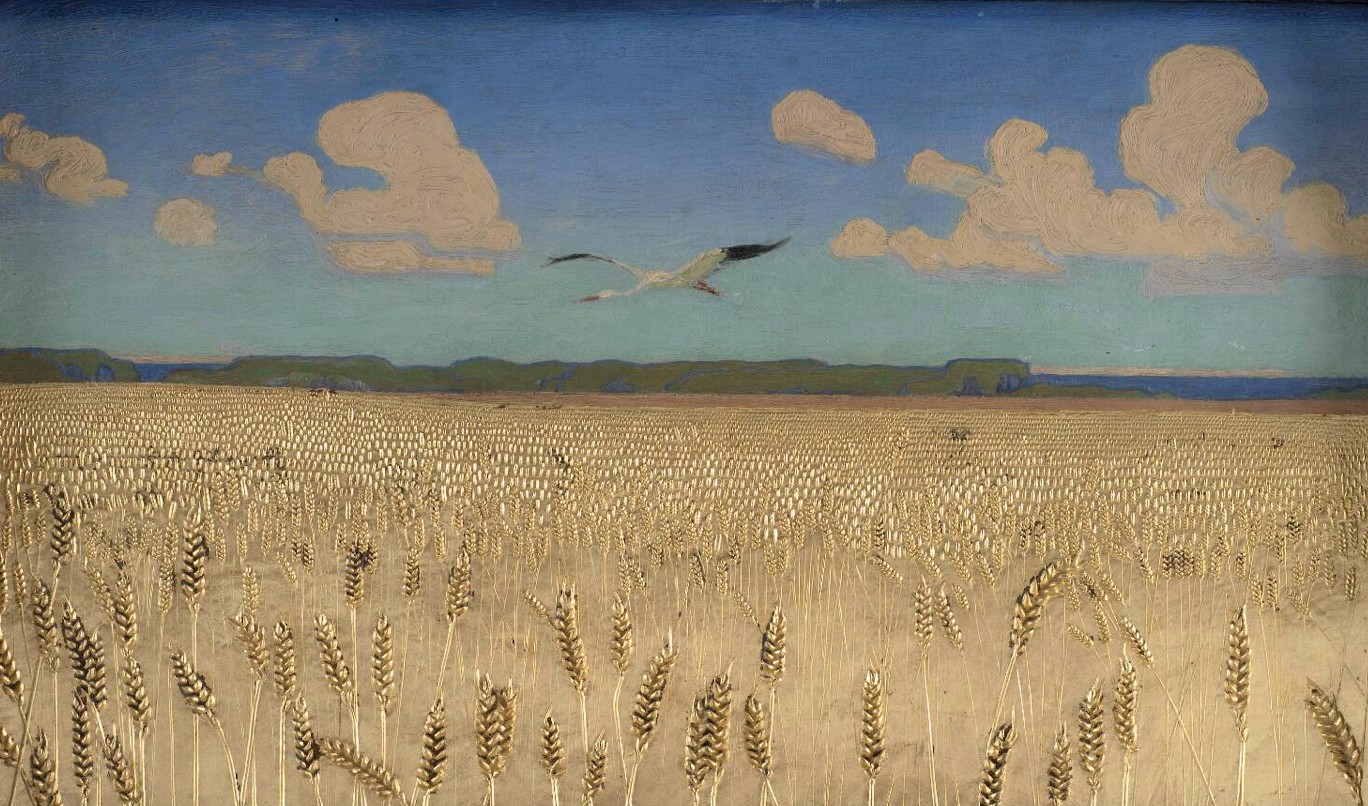
Harald Slott-Møller
Danish Landscape
Oil on canvas
1890
Statens Museum for Kunst, Copenhagen
S12E3. Karen Hansen
I picked a landscape by Harald Slott-Møller from 1891. This image absolutely just spoke to my heart because it's everything from my childhood and what I grew up with. The light is just beautiful. It has the really warm feel of rye. Then you see the stalk right in the middle of the image, and then it has above that, in the distance, the rolling green hills and the water. And then of course, which is very well known, the beautiful clouds in Denmark that totally change all the time and are just going over the sky. As a kid, I so remember what the sounds are when the corn is just almost ready to take in and you can hear the whoosh that goes through the field when the wind hits it. And it's just like being back there. I just wanna go lay in the middle of it and hear all the sounds that's there.
Richard Serra
Equal
Forged weatherproof steel, 8 blocks
2015
The Museum of Modern Art, New York
© Artists Rights Society (ARS), New York
NOTE: The image above is intentionally blurred as it is rights-restricted. Please click on it to be taken to SMK OPEN.
S12E2. Josefine Opsahl
I have chosen Equal by Richard Serra. It consists of massive 40-ton forged steel boxes, stacked in pairs. Two blocks are placed on top of each other, each of the four stacks is different, and the feel of the metal and the surface of each of them is different. They're symmetrical, but at the same time asymmetrical. I get hit by this feeling of weight and strange lightness. It strikes me, what is time and timelessness, ancient and contemporary? The blocks are both earthy and celestial. In this piece of minimalist art, your body plays just as important a role as the blocks themselves. It takes me inwards, and at the same time, I can look to myself from a different universal height or dimension, with a calmness next to these massive metal blocks. The title Equal. The installation invites me to melt away everything that I think I am to be pure bodily materials, and thereby I'm equal to any other body who would stand here. My ego is not important anymore. When we strip away our idea of culture, of differences, and we look to our shared ancient roots and biology, we're the same. This piece calls me back to material, it's about resonance between your body and these masses. It's a counterpoint to the virtual reality that takes up increasingly much of our time and focus. It's a completely mystical work. I need to go there and be in the middle of this piece.
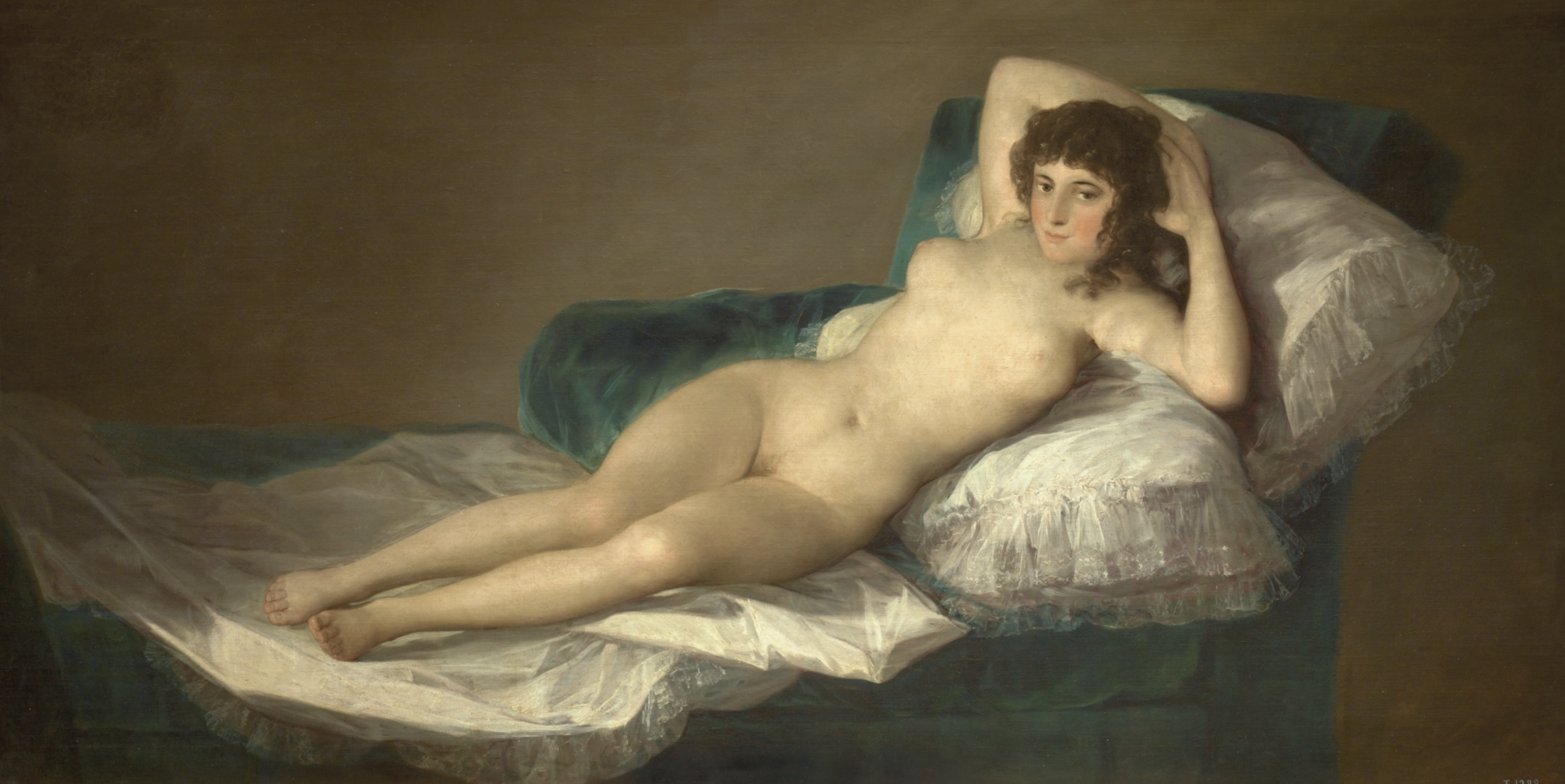
Francisco de Goya y Lucientes
The Naked Maja
Oil on canvas
1795–1800
The Prado Museum, Madrid
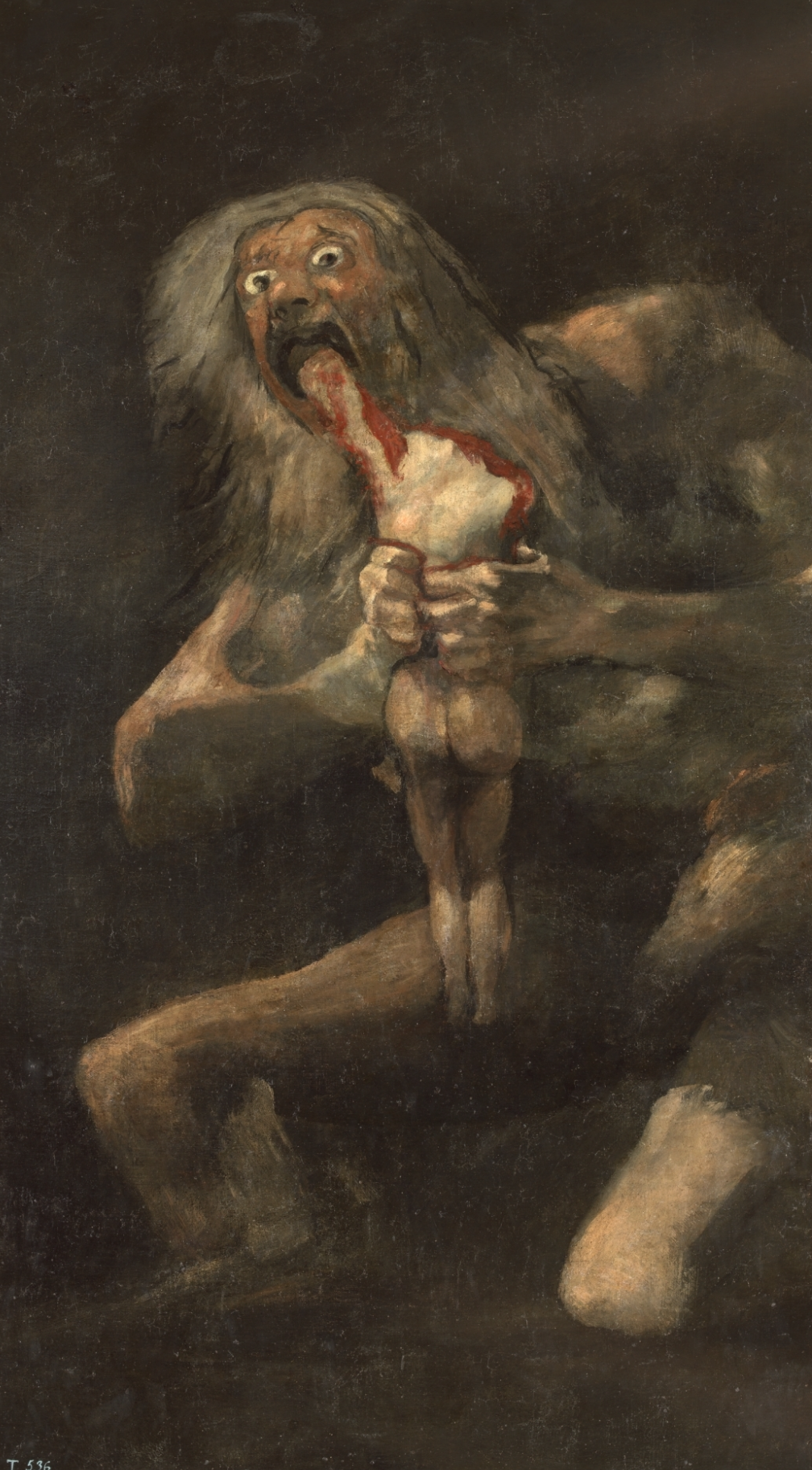
Francisco de Goya y Lucientes
Saturn
Oil on canvas
1820–1823
The Prado Museum, Madrid
S12E1. Vibeke Holst-Andersen
I chose two pieces of art, both by Goya: The Naked Maja, and Saturn. The first one is Maja painted while he was doing well in social life, a young man, highly regarded as a painter. It's beautiful, romantic, realistic also. Fast forward 20 years later, Goya was sick, deaf, and impacted by war. He was alone and lonely. He painted in his house very, very dark paintings. Among others, of Saturn eating his own son. Oh, God, it's so terrifying. But it's also very impactful. During that period, he turned from Realism into starting the movement of being a Surrealist. When he painted in his house these dark features, it was not something he saw and painted, it was from his inside. That was later known to be the ancestor of Surrealism. The transition that a person can go through in 20 years and change completely, it made a big impact on me, I will never forget. I have always been blessed with good mental health, and I have struggled to understand what is depression really like. And that is where art comes in. That painting really showed me.