
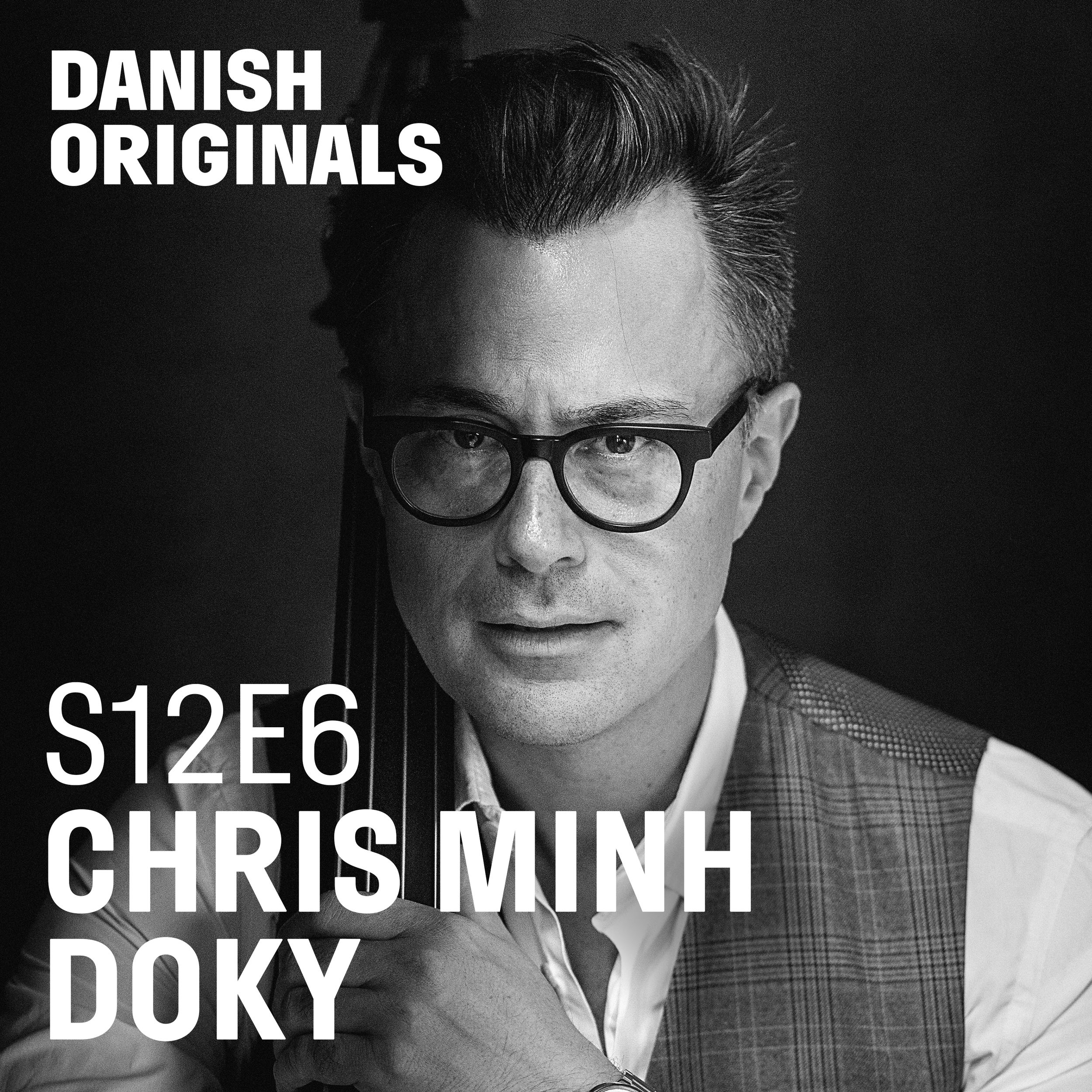
From his home in Østerbro, Copenhagen-born French-Vietnamese-Danish jazz bassist, composer, and band leader CHRIS MINH DOKY shares his journey that included a multicultural musical upbringing, becoming the house bass player at Copenhagen's La Fontaine at 17, and moving to New York at 18 to be closer to the music he loved, which resulted in a 30-year stay. Chris talks about discovering Miles Davis and the improvisational language of jazz that lends itself to superimposing on other genres.
Photographer: Camilla Winther
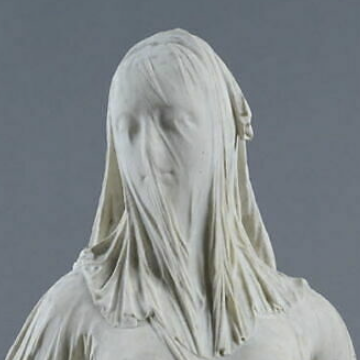
For today's episode, Chris Minh Doky chose Antonio Corradini's Femme voilée (la Foi?), or Veiled Woman (Faith?), from 1800, from the collection of the Louvre Museum, Paris.
“The way I love to play music and the way I’m musically brought up as a musician is we play together, deeply together, and that can only happen if you let go and give in to everybody you play with. And essentially that means also letting go of your own ego, because you are at the service of everybody else.”
“A lot of times, especially in jazz and rock and funk, people always say that the drums are the heart of the music. But I would also say that the bass is the lungs, it makes the music breathe. And for your lungs to work, they have to work with the heart. So the bass points where you go harmonically.”
“When I moved to New York, I was 18 years old. I was very conscious and observant of the jazz tradition and the historic tradition that created jazz and the cultural tradition that created jazz. I was very privy and conscious of what that was. And after getting into the scene, it became the air I was breathing, it became a part of me.”
Powered by RedCircle
This conversation with Finn-Olaf Jones occurred on July 15, 2026.
00:00
Chris Minh Doky
A lot of times, especially in jazz and rock and funk, people always say that the drums are the heart of the music. And I go, yeah, I agree, but I would also say that the bass are the lungs. It makes the music breathe, and for your lungs to work, they have to work with the heart. So the bass points where you go harmonically. They direct, they do the direction. They can change a chord, which is one note, but you're also part of the rhythm. So I cannot think of a cooler position in the band than the bass.
00:41
Finn-Olaf Jones
My name is Finn-Olaf Jones, and I'm a journalist, businessman, and mountaineer, and guest host of Danish Originals. Our goal is to celebrate Danish creatives who have made a significant mark in the US.
00:53
Finn-Olaf Jones
Today's guest is Chris Minh Doky, arguably one of Denmark's greatest jazz exports. Chris is a groundbreaking bassist, composer, and bandleader whose work is known internationally in records, concert halls, television shows, films, ballets, and even church hymns. Welcome, Chris.
01:10
Chris Minh Doky
Thank you so much. Huge pleasure to be here.
01:14
Finn-Olaf Jones
Right now I'm sitting in my house overlooking LA. Where have we reached you today?
01:18
Chris Minh Doky
Actually I'm in my Danish home in Østerbro in Copenhagen.
01:22
Finn-Olaf Jones
It looks like an inspiring place. From what I can see here on my camera, it looks like a classic jazz player's home there. I see a lot of books —
01:30
Chris Minh Doky
You can't see my grand piano, my basses, and my wall and all that stuff. It's my desk where I compose and everything, so yeah.
01:38
Finn-Olaf Jones
It looks like we caught you in the middle of a very packed calendar here.
01:42
Chris Minh Doky
Sure.
01:43
Finn-Olaf Jones
You've been touring a lot. Where are you heading to?
01:46
Chris Minh Doky
I go on the festival tour, I start on Monday. And then I will be on the road until about mid-August. Then I go to New York to do some work. And then in September, I'm gonna finish the first couple of tunes for my next album that comes out next year. And then I go on a Europe tour again with Mike Stern's band as a special guest in October. And then I go back out with my own band again in November. And then in December, I'm gonna be working with the ballet again.
02:20
Finn-Olaf Jones
Wow, you have a very busy schedule. I'd like to start out with a very, very broad question, which I know you've answered a few times before. It's something that's been kind of a lifelong curiosity of mine, having grown up partially in Denmark.
02:32
Finn-Olaf Jones
I gotta say, the most soulful jazz acts I've ever seen have been not in places like Chicago or New Orleans, but in the Montmartre nightclub, the jazz club in Copenhagen, or random places all over Denmark, like my little town of Holtug, which has a population of 250 people, where locals would regularly get together and play incredible jazz out there in the Danish countryside.
02:53
Finn-Olaf Jones
So what's going on in Denmark that the average Dane seems to intuit and know jazz probably better than the average American?
03:00
Chris Minh Doky
I'm not quite sure if I totally agree, because it is American folk music, jazz is. But I think Denmark has a special relationship with jazz, as does France, in particular Paris, just like Copenhagen. And I think it goes back to the '50s and '60s, where a lot of the legends of the US jazz scene came over to Europe to tour, and a lot of the musicians didn't feel the pushback, social pushback as much in Copenhagen and Paris as they did back home in the US.
03:36
Chris Minh Doky
So a lot of great musicians settled in Copenhagen, if not Paris, and we're talking Dexter Gordon, and we're talking Stan Getz, Quincy Jones. I could go on. So many jazz legends settled in Copenhagen. And having all these musicians living in Copenhagen, '50s, '60s, and especially the '70s, of course, attracted a lot more musicians from the US, and the level of jazz that Danish people were exposed to rose to an incredible level.
04:14
Chris Minh Doky
All the jazz greats living, seriously living, here and interacting with Danes and establishing families here — Ed Thigpen got a whole Danish family here — and that made not only the love of jazz spread, but also the education. For so many Danish musicians, you couldn't have gotten a better education hanging around all these musicians, and that spread all over Denmark and all over the Nordics.
04:41
Chris Minh Doky
So in my view, and I'm not the only one thinking this, it is because of all these American legends moving to Copenhagen.
04:50
Finn-Olaf Jones
Yeah, but I'm amazed at a place like the Danish countryside, which is about as far away from New Orleans as you can possibly imagine, you have these tractor drivers and hairdressers and all that, who can pick up an instrument and master it and seem to have this down. I'm living in LA right now, and I gotta tell you, I find it challenging to find good jazz concerts here.
05:09
Finn-Olaf Jones
I know we have some great jazz clubs, but on a random night in Copenhagen, I find it much easier to grab a good jazz session than a random night here in LA.
05:17
Chris Minh Doky
When I play in LA, I usually play at Catalina's or now Blue Note has opened up too. Blue Note is more like an R&B place, they got some jazz too, but Catalina's great. And Vine Street Bar and Grill, is that still around?
05:29
Finn-Olaf Jones
I don't think so. I mean, we have Vibrato —
05:32
Chris Minh Doky
Yeah, sure.
05:33
Finn-Olaf Jones
And The Baked Potato.
05:34
Chris Minh Doky
Right. The Spud.
05:36
Finn-Olaf Jones
Yeah, then we have some small bars here in the San Fernando Valley. But it's funny, 'cause it's hard work. Whereas on a random night in Copenhagen, you'd probably find half a dozen venues where something's going on.
05:46
Chris Minh Doky
Oh yeah.
05:48
Finn-Olaf Jones
And Montmartre, of course, is still the great club. I believe you and your brother have something there too, don't you?
05:52
Chris Minh Doky
Actually it's my brother. He's always been really into the whole business side of it, and he actually reopened the Montmartre. Montmartre had two locations. There was the original one where all the legends played back in the '60s and '70s. That closed and became a hair salon.
06:08
Chris Minh Doky
And then it opened at another location. It was a bigger venue where Miles Davis and everybody played. And that closed after a couple of decades. And then my brother, he found the original smaller club, and he managed to actually reopen it with the same decor and everything.
06:27
Chris Minh Doky
He went from that and opened another club that was more like a US club, a kind of loungey jazz club called The Standard. And that lasted for a couple years. And now he opened yet another club called Epicurus, where actually I just played with my brother for a whole month. It's one of the most beautiful clubs I've ever seen. There's 70 seats, and I played there for a month, so it feels like a day gig. It's a beautiful club, for sure.
06:57
Finn-Olaf Jones
You were from a very musical family in general, right? You weren't even destined to play jazz. I believe you started in classical piano, right?
07:04
Chris Minh Doky
Exactly. Yeah, there was always music in my family. My dad, he was from Vietnam, and he was from a posh family in Hanoi. And there were only two things you could be. You could be a doctor or a lawyer. But part of the upbringing is you had to play an instrument.
07:21
Chris Minh Doky
And my dad wanted to be a classical guitarist, and all the kids got sent to Paris to get their education. And then in secrecy, he went to the conservatory. And actually, while becoming a doctor, he became a classical guitarist. And my mom, who was from Denmark, won a singing contest and got a record deal with Philips and got on the charts back in the '50s as a singer.
07:44
Chris Minh Doky
So they were really into the music thing and they met in Paris. And while my dad was studying, they were playing clubs and restaurants and stuff. So the music thing was strong. And then my brother, my six-year-older brother, found out really early he wanted to be a musician. He was 13 years old.
08:01
Chris Minh Doky
I remember he said, "Yeah, I wanna be a musician." And I didn't think any of it. I was into music. I was playing classical music, but it was just for the fun of it. And then by accident, I stumbled upon the boys' marching band in Tivoli. In Danish it's called Tivoligarden. It's the marching band. And back then it was only for boys, and I was playing classical percussion, and I was horrible at it. I was 13 years old or something.
08:29
Chris Minh Doky
And then they were gonna do A Chorus Line, and there was a bass part in there. And the musical director was asking the orchestra, "Does anybody play bass?" And I had one because I'd been to some school thing where you have to experience working in a shop, and I worked in a music store, and they gave me a bass they couldn't sell, an electric bass.
08:49
Chris Minh Doky
So I said, "I have one if anybody wants to use it." And they said, "Well, you're gonna play it." I said, "Okay." So I sat down and learned how to play that part. I asked my dad how to tune an electric bass.
09:02
Chris Minh Doky
And then I started gymnasium, and every morning — we have something called morgensang where the whole school gathers and we sing together and we get notes from the teachers and stuff. And every day, this friend of mine would ask if somebody played bass. And I did the same thing. I walked up to him afterwards saying, "Hey, if you want to use my bass, you could do so."
09:22
Chris Minh Doky
He said, "No, you're gonna be in the band." And I said, "Okay." And then we started playing a bunch of funk stuff, stuff I was really listening to, Earth, Wind & Fire, James Brown, The Police, and all that stuff. And I got really into it. And then, his name was Nicholas, he gave me an album one day and said, "I wanna play some jazz in the band."
09:40
Chris Minh Doky
I didn't have anything against jazz. I was more into funk and R&B, all that stuff, and classical music. And I was like, jazz, that was something my brother played, and whatever he did, I didn't wanna get into it. But he said, "Well, check out this album." He gave me a Miles Davis album. And I remember it clearly. Miles looked so cool. He had that blue suit on with a dotted tie and everything.
10:02
Chris Minh Doky
And I went home and I listened to it, and it completely blew my mind, and I wanted to know more about this jazz stuff. I sat down and tried to figure out what it was, and I got lost and everything. When it started, it was like somebody hit me on my head with a huge sledgehammer 'cause I'd never heard anything so amazing before.
10:21
Chris Minh Doky
And sonically it sounded so good. It swung so hard, and it was like walking into a painting and walking around in the painting, and I was completely blown away. And I remember sitting down trying to figure out what the hell Ron Carter was doing, the bass player, and I loved his sound, his acoustic bass sound. I still do. And I tried to figure it out, and it was so hard.
10:46
Chris Minh Doky
I got lost, but it sounded so natural. So I got really into it, and to make a long story short, I needed to figure out what this jazz thing was, and we weren't playing enough jazz in the band to satisfy my thirst to figure this kind of music out. And at this point, my brother had long moved to Boston to go to Berklee College of Music, so there was no help there 'cause he had left already.
11:13
Chris Minh Doky
So I was trying to figure out how this whole jazz thing works, and I wanted to get a taste of how the hell is this done. And I loved my electric, but I couldn't get that acoustic sound, so I begged my parents for an acoustic bass, and they looked at me like I was on crack or something. But I must've done something right because for my 17th birthday, an advanced gift for my 17th birthday, they gave me an acoustic bass, a Chinese plywood bass, and I was in heaven 'cause I could start to figure out that sound.
11:48
Chris Minh Doky
And then I looked for people to play with and I realized that in my neighborhood there was a rehearsal space where the jazz musicians of Copenhagen were jamming and practicing at night. And I would go up there to listen, and they were really nice to me and said, "Hey, do you wanna play some?" And I learned a lot.
12:08
Chris Minh Doky
And I've been so lucky in my life, it's unreal. I didn't realize how lucky I was because I had a funny name, Oky-Doky. And long story short, there was this, well, it's still there, a legendary jazz club in Copenhagen called La Fontaine. And it was run by a Danish legend called Finn Ziegler, and where all the legends would go and play. Every musician, even Springsteen, would hang out there late at night when they're in town.
12:34
Chris Minh Doky
But anyways, that place was legendary, and when I thought about that place back in the day, everything would turn into black and white. And what happened was, the bass player there one night got ill, so he couldn't play. And Finn Ziegler called all the bass players he had on his list, and nobody was available. And he got really desperate. He called everybody.
12:56
Chris Minh Doky
He even called the Danish legend Niels-Henning Ørsted Pedersen, not that he thought he would do the gig, but maybe he had a student or somebody he knew. And he didn't. And then Finn asked him, "Well, what the hell am I gonna do? I need a bass player tonight." And he said, "I heard about some young kid up at this rehearsal place, his name was Oky-Doky something."
13:21
Chris Minh Doky
And then Finn Ziegler looked me up in the phone book, and he called me, and he said, "Is this Oky-Doky that plays the bass?" I said, "Yeah." "You're playing with me tonight at La Fontaine." And I'm 17. It's a stroke of luck. It was like winning the lottery. And of course I said, "Yeah."
13:38
Chris Minh Doky
And I went in there, and it was 11:00 pm to 4:00 am, and I was in gymnasium. And I played, and I remember during the break, I was just sitting on stage looking at all these legends and all this stuff going. I said, "I'm gonna tell my grandkids this one day." And then after the gig, I went home and I forgot to get paid, but then I said, "Oh, fuck it," you know. I should have paid them for letting me play there.
14:02
Chris Minh Doky
Then he called me the next day, and I thought he called me to tell me that he forgot to pay me. No, he didn't. He called me to tell me that his regular bass player was gonna be on sick leave for quite a while, and he'd asked the other guys who it should be, and they said, "Get the Oky-Doky kid."
14:19
Chris Minh Doky
I became the house bass player at La Fontaine when I was 17, and that was playing from 11:00 pm to 4:00 am, Tuesday through Saturday, and I had to go to school too. So that was kind of rough. My grades slipped, and I was in my final year of gymnasium, and I needed to stop because otherwise I wouldn't make it for medical school.
14:42
Chris Minh Doky
I stopped playing, and pretty quickly I realized something was wrong. And I thought it was gonna go away, but it didn't. And I realized that I needed to play music all the time. In fact, so much that there wasn't time for anything else. And what does a person do that plays music all the time?
15:02
Chris Minh Doky
Well, he's a musician. And then I went, "Well, that means I can't be a doctor." I gotta be a musician. And it wasn't like a eureka feeling. It was like, "Fuck." All my life I thought I was gonna be a doctor, and now I had to be a musician. I didn't think about how I'm gonna make a living. I just wanted to play music all the time.
15:21
Chris Minh Doky
So I went to my parents and I told them, "Listen, the thing you always believed about me all my life, that I'm gonna be a doctor: not true. I'm gonna be a musician, too." So they weren't thrilled, but they saw kind of what it is. I made a deal with my parents that I would get the best grades I could so I could go back to medical school, but then they would be okay with me to lean into this music for a couple years.
15:46
Chris Minh Doky
And when I got that blessing from them, I said, "Okay, I'm gonna move closer to the music I love," and that was the whole Miles Davis thing and jazz, and that was New York. So I moved to New York when I was 18, and I got totally involved with kids my age playing jazz. I played the streets and played little clubs and didn't have any money.
16:09
Chris Minh Doky
And then to make a long story very, very short, shortly before I turned 21, I was about ready to go home 'cause it was getting too rough. I didn't have any money and stuff. Then the phone rang and it was Mike Stern from Miles Davis' We Want Miles band, and he asked me if I wanna join his band.
16:28
Chris Minh Doky
He had heard me, and I said yes. I went from playing little clubs under the street for 20 people for $10, to playing all over the world, touring. I got endorsement contracts, record deals. And then I branched over to doing rock 'n' roll stuff, too. My stint going to New York to get closer to the music ended up being 30 years in New York. And later on I established myself as a solo artist.
16:56
Chris Minh Doky
All the people that brought me up musically were in that era, musicians from the Miles legacy bands and so on. So I owe Mike Stern and Mike Brecker and Randy Brecker and Scofield, all these people, I owe them so much. And I owe New York and I owe the American jazz scene so much for teaching me and giving me all the stuff I never thought I would be a part of. I pinch myself all the time when I realize what life I have in this music.
17:33
Finn-Olaf Jones
But you contribute a lot yourself. There is really a Chris Minh Doky sound, isn't there? You have a unique style that one can always hear.
17:42
Chris Minh Doky
Well, I'm glad and thankful that people can recognize my sound. It's not that I consciously went to get my sound, but I've always been very conscious of phrasing and timing, and the phrasing and timing, of course, came from Miles Davis, also Frank Sinatra, James Brown, and Earth, Wind & Fire.
18:02
Chris Minh Doky
One person that influenced my phrasing beyond everything was my mother, because she would always sing to me as a kid. She would sing a bunch of psalms to me and folk songs. She would sing jazz. She would sing all these psalms to me, and she would phrase them, and she had a beautiful voice, and she would phrase the melody so incredibly, and that is something I'm very conscious I have from her.
18:30
Chris Minh Doky
So in terms of phrasing, it's always been, I wanna mean every single note I play. I don't need to play a lot of notes. God knows that sometimes I actually accidentally do. But every note has to count, and I got that from my mom. And then I think I'm also lucky again that I'm deeply rooted in jazz, but I'm also deeply rooted in classical and the whole Nordic tradition. And my dad and my Vietnamese side of the family is very French, there's all this tradition.
19:02
Chris Minh Doky
So all the genres have always been music, and all the musicians that have mentored me and brought me up, they were the same way. Mike Brecker, he one day played with Stevie Wonder, and the next day played with David Bowie, and then he would do some out jazz and stuff. And it's all music. So that whole way of thinking about it and going at it, it's what lens you look at it through.
19:29
Finn-Olaf Jones
But you have played in some very unusual genres. Ballet, for instance. It's fascinating to imagine a jazz player working in something as disciplined as ballet. It seems almost contradictory 'cause one thinks of ballet as very tight choreography and jazz as improvisation.
19:47
Chris Minh Doky
That started also when I was a kid. We were in Paris a lot 'cause in the early years, my dad was working at the hospital down there, and my mom wanted to move to Denmark to have kids, and my dad couldn't get the same gig in Copenhagen, so we were going back and forth all the time.
20:03
Chris Minh Doky
My dad would take me to Garnier, the opera house, to see the ballet. And I remember the first thing I saw was Swan Lake, which is not easy music. But he wanted to show me what music looked like. And I never forget that. And he showed me the score afterwards.
20:20
Chris Minh Doky
And all those things he showed me and played for me, when I heard Herbie Hancock and when I heard a lot of my jazz heroes, it's the same stuff. I hear Tchaikovsky or Stravinsky or Ravel or Debussy, it's jazz. If you hear an improvisation by Herbie Hancock, it might as well be Ravel. So I don't see a difference.
20:42
Chris Minh Doky
And what I think is beautiful with ballet is that, of course, you can take a very classical piece and the rhythmic is very stringent, and the choreography would be too. But so is early jazz. The beauty of it is you can see the movement of the dancers, how it corresponds to the music, whether it's open and fluid or rigid and rhythmical. It's a way of expressing the source of the music.
21:11
Chris Minh Doky
I wrote a ballet last year that we did twice called Dance, Ballerina, Dance, and I'm working on a new one. And I'm actually also working on another one, a classical one that I have to deliver in three years, but I won't be starting that until sometime next year.
21:27
Finn-Olaf Jones
A classical one? What's that all about?
21:29
Chris Minh Doky
Well, I'm not at liberty to say anything other than that.
21:33
Finn-Olaf Jones
All right. Well, I don't want you to spill any trade secrets, but are you actually gonna be playing on stage? Is this something where you're gonna be accompanying the ballet?
21:41
Chris Minh Doky
Well, I need to compose it first, so we'll see. I did the libretto already, but then, I did the overture too, but we'll see when we get that far 'cause I got three years to do it. Composing is improvising and it's slow motion.
21:54
Finn-Olaf Jones
So is this gonna be an intimate ensemble or is this gonna be a full-size orchestra?
21:58
Chris Minh Doky
No, it'll be a symphony orchestra.
22:00
Finn-Olaf Jones
Are we talking about something the size of Tchaikovsky here?
22:04
Chris Minh Doky
Oh, I wish. No, I mean, he's the master. I'll do the best I can and then I'll use all the things I have to create something I believe is supposed to be said. So we'll see. We'll see.
22:22
Finn-Olaf Jones
How'd you manage to get over to Danish psalms? I know there's an album which has you as a headliner.
22:27
Chris Minh Doky
Again, I'm so unbelievably lucky. I know a bunch of psalms because my mom sang all these psalms for me, and we would talk about what the lyrics meant and all that stuff. So I have that from my childhood. But I also was always really interested in how you can take a song and focus on a part of that song, whether it be a word or a melody or a chord or something, and then turn it into something totally different. And with respect for where it comes from, obviously.
23:01
Chris Minh Doky
I always was really interested in that. And then I got contacted at one point, if I wanted to do a contemporary album interpreting Danish psalms. No, actually, the first one was lullabies, Danish lullabies. And I said, "Yeah, that sounds like fun." I was asked, "What do you wanna do?" I said, "I definitely want somebody to sing it." And then I asked this Danish singer I've been working with for many years, Søs Fenger. I asked her if she wanted to do it, and she said yeah.
23:33
Chris Minh Doky
So I arranged all these things and she sang it. And that album is called Lullabies, Vuggeviser. That got a lot of attention, that album. And then a few years later, I was called by the head of the church Vor Frue Kirke. And he asked me if I was interested in doing a mass. And I said, "Yeah, that sounds like fun."
23:54
Chris Minh Doky
And long story short, we ended up doing one every year for 15 years, and I wrote my whole mass that has been used in other churches in Denmark now. But where I took these psalms and redid them as they were contemporary songs, I took the melodies and put them in a context of today.
24:14
Chris Minh Doky
Because a lot of these songs are really, really old, and the symmetry of these songs are different than they are today. But if you just listen to the melodies, they are beautiful melodies, you can change the symmetry without changing the melody, and it can become whole new songs. And that's the album I did, that's the one I headlined.
24:31
Chris Minh Doky
I wanted to have different singers on here. And that one is called Danske salmer, which is Danish psalms. And so the whole church thing has also been really inspiring, working with choirs and also working with symphonies and stuff. I like that side of orchestration because it's kind of like another instrument, so that's something I enjoy working on too.
24:54
Chris Minh Doky
I had the fortune to work many years with Ryuichi Sakamoto from Japan, and he taught me so much in terms of orchestrating and using the tradition and the colors from jazz, but also from different cultures, and how you can superimpose that on a symphony orchestra or choirs.
25:14
Chris Minh Doky
This whole thing about being open to what it is and creating something new out of it, it's like cooking food. It's all about the ingredients. You respect the ingredients, and when you combine them, it becomes the sum of all the great ingredients.
25:33
Finn-Olaf Jones
So other things you've been involved with are television and movie soundtracks. Can you talk a little bit about how you got involved in all that?
25:40
Chris Minh Doky
I've gotten a couple calls to do some soundtracks, but unfortunately, the last two calls, the deadlines were too close to some tours I had and some other stuff, and so I couldn't do it. But I hope to be doing some more soundtracks. I really enjoy writing for moving pictures and stuff.
25:00
Chris Minh Doky
In general, I love any opportunity I get to create music where I take myself out of the equation. I mean, when I write for myself as an artist and when I do concerts, it's about what do I wanna say on the bass and yada, yada, and all this, and what do I wanna say with this composition.
26:21
Chris Minh Doky
Which is great, it's fun and everything. But it's really, really nice, for example, when I do the church masses or I do soundtracks for movies or TV, I am at the service of the music and what the music is supposed to say, and it's got nothing to do with me. I'm just a vessel, and I love being out of the equation.
26:45
Chris Minh Doky
And that's what I love, again, coming back to jazz. When I play with other musicians, you can kind of say there's roughly two extremes of how to play the music. Either you play together like a dialogue and you react to one another and you listen all the time, and I call that playing together.
27:06
Chris Minh Doky
Or there's the opposite, which is everybody plays their role and we start at the same time and we end at the same time. That's playing simultaneously. I'm not saying one is better than the other, but that's not really interesting for me. So the way I love to play music and the way I'm musically brought up as a musician is we play together, deeply together, and that can only happen if you let go and give in to everybody you play with.
27:40
Chris Minh Doky
And essentially that means also letting go of your own ego, because you are at the service of everybody else. And that's what's so great about playing with other people. You let go, that you serve the music. You can kind of say you're an agent of goodwill for everybody else. And if everybody thinks the same way, it can only be great.
28:03
Finn-Olaf Jones
It almost sounds like you're talking about a muse, which is something I've heard other artists mention, a creative presence that they actually speak to. I don't know if that's part of your creative process or not. Do you have a muse?
28:16
Chris Minh Doky
Well, I can feel your train of thought there in terms of when you go into that creative space where things happen. I have another approach. I think when I go into it, if I have to write something, whether a book or music, or I have to go in and play something, I think I go the opposite direction.
28:33
Chris Minh Doky
I try to make myself completely empty and blank. I've found for me, that's where most of the time good stuff happens. Because if I go in with a thought or an ambition or an idea, even if it's a great one of any of those, that kind of spoils it for me. And I'm not saying that one is wrong and one is good. I'm just saying what works for me.
29:03
Finn-Olaf Jones
You've had so much exposure to other instruments. I've been curious as to whether you've ever been tempted to go to something else other than bass.
29:11
Chris Minh Doky
Oh yeah. I still love playing the piano. And it's so funny, when people always ask, "Why did you start playing the bass?" When I talk to a lot of my bass colleagues, we all more or less have the same answer. It's the only thing there was left! But anyway, I love playing the bass.
29:27
Chris Minh Doky
And what I love about playing the bass, you are equally part of the heartbeat and the rhythm of the music as the harmony, and I cannot think of a better place to be. And what I love about the bass, too, is the range where I solo in, it's the range of where my voice is.
29:48
Chris Minh Doky
So I'm lucky that I happened to stumble on the bass because I cannot think of a better instrument to play. And then a lot of times, especially in jazz and rock and funk, people always say that the drums are the heart of the music. And I go, yeah, I agree, but I would also say that the bass is the lungs, makes the music breathe.
30:13
Chris Minh Doky
And for your lungs to work, they have to work with the heart. So the bass points where you go harmonically. They direct, they do the direction. They can change a chord, which is one note, but you're also part of the rhythm. So I cannot think of a cooler position in the band than the bass.
30:36
Finn-Olaf Jones
What would you say your contribution to bass playing in jazz has been?
30:41
Chris Minh Doky
What I have contributed, or how I ended up playing the way I play?
30:45
Finn-Olaf Jones
Both.
30:46
Chris Minh Doky
I'm a result of my background and my luck. I grew up in Denmark in a multicultural family with a French Vietnamese father with all his culture and music and classical music, and my mom with her Danish Christian values and culture. And I grew up in Denmark where the bass was very prominent everywhere because of Niels-Henning Ørsted Pedersen.
31:15
Chris Minh Doky
I heard his bass before I even knew there was something called a bass. So instinctively, I knew a bass was in tune, and I knew a bass could play a melody. And then I was lucky that I spent so many decades being brought up by all my heroes that gave me that whole American tradition where the bass is a rhythm instrument, whereas the bass in Denmark and in the Nordic countries is more a melodic instrument.
31:47
Chris Minh Doky
So the traditions I have grown up with, I'm simply a result of that. And I don't know if I do different than other people that might have been in the same situation. But I've been fortunate to have such great mentors and heroes helping me develop my voice and having a family and cultural background that gave me so much of that depth too, and I try to honor it and live it as good as I can.
32:23
Finn-Olaf Jones
Jazz is constantly evolving, and it has changed lots in the 30 years since you started out in New York. How would you say you fit into the whole evolution of jazz since then?
32:34
Chris Minh Doky
When I moved to New York, I was 18 years old. I was very conscious and observant of the jazz tradition and the historic tradition that created jazz and the cultural tradition that created jazz. I was very privy and conscious of what that was. And after getting into the scene, it became the air I was breathing, it became a part of me. So in the beginning, it was something, "Huh, is this the way it is," and it became "the way it is." You know what I mean?
33:13
Finn-Olaf Jones
Jazz has so many different styles, and I'm curious if there's any particular style that you think you fit in particularly well with?
33:22
Chris Minh Doky
For me, jazz is a language, and that language can have many different accents. I totally respect and love the tradition of the different eras of jazz. And the reason why I keep coming back to jazz is because what jazz has is improvisation. It's free-flowing. You are exploring in real time, and that doesn't mean it has to be necessarily Ornette Coleman free jazz.
33:54
Chris Minh Doky
It's like the bigger vocabulary you have when you speak, the more precise and more freedom you have of expression, and it's the same thing with jazz. In order to improvise, in order to express yourself freely, it takes a lot of practice and studying to have a vocabulary.
34:14
Chris Minh Doky
And that's what I love so much about the freedom of jazz because you can superimpose that on so many other genres. Just because you know ten words doesn't mean you have to say all ten. There are situations where you could just say one word. Just because you have a vocabulary doesn't mean you have to flash it.
34:34
Chris Minh Doky
You have to be present at the moment and it's like Miles Davis said, "Don't play what's there. Play what's not there." And that's why the jazz mindset is so beautiful also when you play classical. I mean, Herbie Hancock did an album called Gershwin's World. He does like a Ravel piece and he starts improvising. It's unbelievable. Or even when you take Wynton Marsalis when he does his classical stuff. It gives an edge that I really like, you know?
35:01
Finn-Olaf Jones
Sibling rivalries are pretty normal, especially in the music business, and I know you have a very famous jazz pianist as a brother, Niels Lan Doky. You've played a lot with him in the course of your career, but I'm curious if you've also felt competitive with him?
35:14
Chris Minh Doky
Yes. I would say it used to be a lot worse, and I understand. I was the annoying little brother, and I can still be the annoying little brother questioning everything. I still to this day feel a little bit bad because my brother had his own domain that was jazz, and all of a sudden, oops, here I am doing it too. And so I could see and understand where I would be incredibly annoying.
35:46
Chris Minh Doky
So back in the day, yeah, we were competitive, but not anymore. We play together, but you know, sometimes it could go a while before we would play together. And we are two completely different places in terms of how we play and what we play, so there's not really a place to compete anymore, you know what I mean?
36:11
Chris Minh Doky
And then when we reunite and play as we did just now here for a whole month, that was really a lot of fun because we hadn't done it in so, so long, and we played all the old songs and stuff. But that was really enjoyable. I really enjoyed that. We had a great time and I hope we'll do it again.
36:29
Chris Minh Doky
But he's really busy with his stuff, and I'm really busy with my stuff, so it's not something that I know we're gonna be doing all the time. But when we do it at the pace we're doing, it really feels good.
36:40
Finn-Olaf Jones
Both you and your brother have been knighted, and I'm not sure if it was at the same time or not, but I assume you're allowed the same distance from the Queen at the table protocols. But that must've been a really cool thing. What was it like?
36:52
Chris Minh Doky
It's a huge honor. But when it happened, it was so funny. I remember I was on the road in Europe, and there was a number that kept calling me, and I didn't know the number, so I didn't pick up. And then after a while, after a couple of days with that number calling me all the time, I saw it was from Denmark.
37:08
Chris Minh Doky
I picked up, and I said, "Yo, what's up?" And they said, "Yes, hello. We're just calling to see if you would accept a knighthood." And it was in April, so I went, "Is this April Fools' or what?" They said, "No, sir. We ask if you would accept a knighthood." I was like, "Uh, okay." I was like, "What the hell?"
37:29
Chris Minh Doky
And still, I was like, "Somebody is pulling my leg." But no, it was real. And I got knighted. I gotta say, I'm really, really proud of that, whether it's merited or not, I don't know. It's not for me to decide, but it's something I'm proud of.
37:46
Finn-Olaf Jones
So I know it's a huge honor to have been knighted in Denmark, but I also know you've had a lot of interesting honors in the US, including being nominated for an Emmy. I also believe you were invited to play for President Clinton when he was in the White House.
38:00
Chris Minh Doky
It's funny. When we're talking about the honor of being knighted, that was pretty incredible. But also, back in the '90s, I was invited to play for the President of the United States, Bill Clinton. I was playing with David Sanborn's band, whom I played with for a couple years. It was actually broadcast on TV. That was a pretty big honor too.
38:20
Finn-Olaf Jones
I know he loves playing the saxophone. He sometimes joins bands. Did he join yours in The White House?
38:25
Chris Minh Doky
Clinton, he was supposed to play with us, and we got in there and we stayed at the Watergate Hotel. There was this Secret Service guy picking us up to take us to The White House. We were on stage, waiting for Bill Clinton and Hillary Clinton to arrive and Al Gore and Tipper Gore to arrive.
38:41
Chris Minh Doky
The Army band starts playing the national anthem. And then I see the president and the vice president walking up, and they come up on stage, and I realize for them to get to the podium where Bill Clinton was supposed to say hello to his guests, they were all passing me, because I was in the way.
39:00
Chris Minh Doky
My position on stage was front, and Sanborn's on the side. And I remember, I was so shocked. I was like, "Wow, there's the president." And he shook my hands. And I blurted out, "How are you doing?" It was just so out. And then after, we played this vamp forever, he was supposed to come up, and after three minutes, he didn't move.
39:18
Chris Minh Doky
Sanborn came, "Okay, we're moving on." And after our set, we were standing there going, "Wow, this was a trip. Alright, let's go." So we started to go, and then somebody ran over and was like, "Oh, no, you can't go. The President would like to say hello to you." So we were led into this room in The White House and after a while, the Secret Service came in and the band was standing there.
39:39
Chris Minh Doky
And then here's Bill Clinton. He comes in, and he's carrying a six-pack, and he threw us some beers. And we had a talk and he was really, really cool. And at that time, I hadn't signed with Yamaha yet, but I was still playing a Japanese electric bass called ESP. So he's like, "You know, son, why are you playing a Japanese bass? You should be playing a Fender."
40:01
Chris Minh Doky
I was living in Hell's Kitchen in New York. I lived in this highrise, and the doorman was always angry. And two weeks later, he buzzes up, "There's mail for you." "Why don't you just leave it down there? I'll come pick it up then." "No, I'll come up."
40:14
Chris Minh Doky
So he came up, and there was a letter from The White House. There was a picture of me and Clinton with his signature, "With best wishes." And I have it on my wall over here. So that whole thing was a total trip.
40:29
Finn-Olaf Jones
Wow! So Chris, in 30 years' time, how are we gonna look at the legacy of Chris Minh Doky? How are you evolving? What is the future?
40:39
Chris Minh Doky
That's a good question. I hope it'll be something different still, because wouldn't it be sad if 30 years from now you look back and I've been doing the same shit for the next 30 years? I hope I will discover some new stuff. I hope I'll keep evolving. That's why I keep practicing too. Some people ask, "Why do you keep practicing?" Well, I think I'm improving, so you know, there's still hope.
41:07
Finn-Olaf Jones
Alright, Chris, thank you for being at Danish Originals. It was such a pleasure speaking with you, and we really appreciate you being here.
41:13
Chris Minh Doky
Oh, thanks. Well, it's fun for me too. Thank you so much for having me.
41:16
Finn-Olaf Jones
Thank you.
41:19
Finn-Olaf Jones
For today's episode, Chris Minh Doky chose Antonio Corradini's Femme voilée (la Foi?), or Veiled Woman (Faith?), from 1800, from the collection of the Louvre Museum in Paris.
41:33
Chris Minh Doky
I chose a sculpture by Antonio Corradini, and it's called Femme voilée (la Foi?).
41:40
Chris Minh Doky
It's this woman that has some sort of fabric covering her entire body and over her face. It's all done in marble, and it looks unbelievably real. When I look at this, it humbles me incredibly that somebody can take essentially a stone and make it so lifelike and beautiful. It blows my mind.
42:04
Chris Minh Doky
And it reminds me of music, because music is wavelengths. It's sound, and sometimes it can move you, and sometimes it can make you cry or laugh, but sometimes it's just noise.
42:18
Chris Minh Doky
After seeing this from many years ago, I got obsessed with this theme. This is beyond skill. Everybody can learn to carve in stone. But to make it this incredible, it's something else. And that's the same thing when I hear Miles Davis or Herbie Hancock or Tchaikovsky.
42:39
Chris Minh Doky
It also inspires me, not only musically. This short trip we have here on Earth, whatever we're given or wasn't given, we gotta get the best out of it, no matter what. When I see this sculpture, it shows me what life can be if you really do your best.