
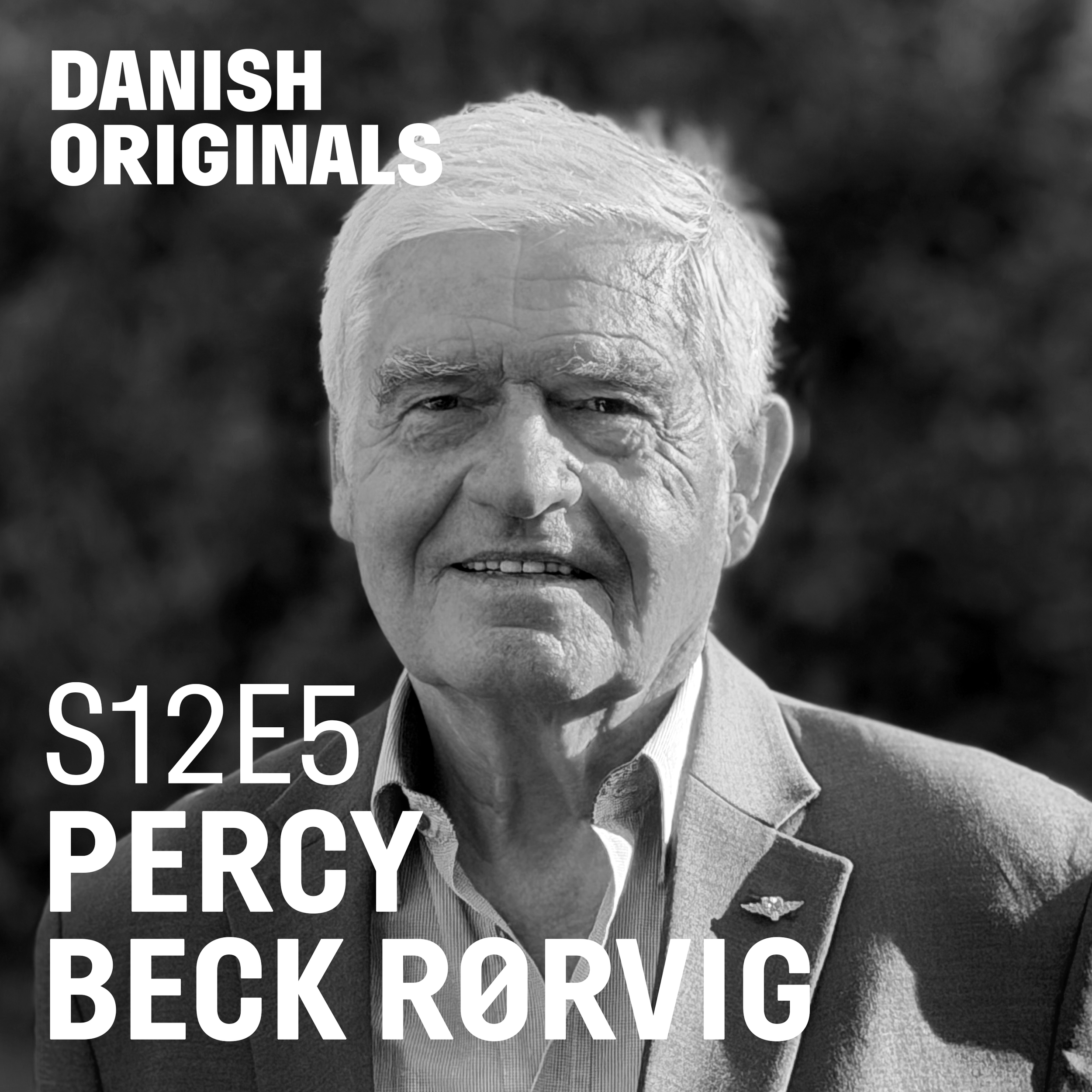
From his home in Hornbæk, northern Copenhagen-born, retired Danish pilot, airline captain, and businessman PERCY BECK RØRVIG recalls living in Manhattan at an early age, joining the Danish Air Force at 18, starting a 30-year long career at Scandinavian Airlines at 24, and piloting the CPH-JFK route for years. Percy calls New York his second home, having lived there for several periods. And he talks about the businesses he took up along the way, borrowing from lessons he learned as a pilot.
Private Photograph
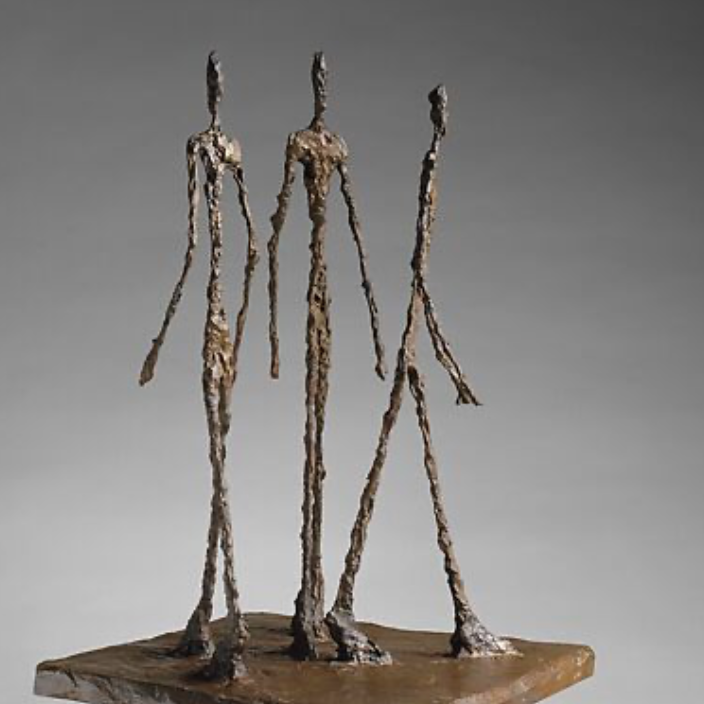
For today's episode, Percy Beck Rørvig chose Alberto Giacometti's Three Men Walking II from 1949 from the collection of The Metropolitan Museum of Art, New York.
“I have to say, my childhood was only up until 18. Because I went to the Air Force, and that was tough, of course. At that time, everybody had to go into the forces for basically two years, 24 months. I said, if I have to go to the service to become a soldier, well, if I could learn to fly, that would be fun. So I applied, and I made it through the nail hole, the needle hole.”
“I thought I had my Air Force, and with the Starfighter and now with SAS for some years, that would be the ultimate end of my career if I could do the Space Shuttle program. So I applied and got a very nice letter back from NASA that said, Well, everything looks great and really nice, thank you. But you don’t qualify, you’re not a US citizen.’”
“When you have your last flight, you can choose your crew and your destination. I said, ‘Look, New York is my second life, so it has to be New York.’ And I could choose my crew, which was really nice. And my son Philip came along on the last flight as well. So he was sitting behind me in the cockpit, and a video played when we came in.”
Powered by RedCircle
This conversation with Christian D. Bruun occurred on June 28, 2026.
00:00
Percy Beck Rørvig
I applied to become an astronaut with NASA when they had the Space Shuttle. Because I thought I had my Air Force, and with the Starfighter and now with SAS for some years, that would be the ultimate end of my career if I could do the Space Shuttle program. So I applied and got a very nice letter back from NASA that said, "Well, everything was great and really nice, thank you. But you don't qualify, you're not a US citizen." So, you can't get everything you want. But you can at least try.
00:31
Christian D. Bruun
My name is Christian D. Bruun. I'm the director of Danish Originals. Our goal is to celebrate Danish creatives who have made a significant mark in the US.
00:41
Christian D. Bruun
Today, our guest is Percy Beck Rørvig, a Danish businessman and former pilot. Welcome, Percy.
00:48
Percy Beck Rørvig
Thank you, Christian.
00:49
Christian D. Bruun
It's good to see you, and happy to be here in your home. Tell us where we are so our listeners can get a sense.
00:54
Percy Beck Rørvig
We are in Hornbæk, which is about 40 kilometers, about 25 miles north of Copenhagen, close to the Kronborg Castle, which was the old Shakespeare with Hamlet.
01:07
Christian D. Bruun
Very good. Very iconic, and it's beautiful up here. It's a hot, heatwave summer day.
01:13
Percy Beck Rørvig
That's very unusual, I would say.
01:15
Christian D. Bruun
Let's jump into it. I think anybody who heard the brief introduction will probably want to hear more about you being a pilot, so why don't we start there? You were a pilot with SAS, or to be more specific, you were with Scandinavian Airlines for over 30 years.
01:30
Percy Beck Rørvig
It was 30 years exactly.
01:32
Christian D. Bruun
30 years exactly.
01:34
Percy Beck Rørvig
Well, it was pretty much exactly. Plus three weeks.
01:39
Christian D. Bruun
Okay, plus three weeks. And then half of that was as a co-pilot, and then half was as an airline captain. Tell us about it.
01:47
Percy Beck Rørvig
It actually started when I was 18. We came back from New York, where I went to the United Nations International School, '61–'62, and got back and went into Danish gymnasium, high school. And it was too slow. I spoke fluently English. I spoke fluently German because my mother came from Germany originally.
02:09
Percy Beck Rørvig
And one of my friends from the sailing club, also called Christian, who later was a general, he wrote about becoming a pilot in the sailing club. That sounded fantastic, so I just applied when I was 18. And I got in.
02:26
Percy Beck Rørvig
So I started flying in the Danish Air Force for six years, flying school in Avnø, and then went to Canada for one and a half years in the Canadian Air Force for my training. And after six years, when I was 24, I had the pilot training and license. So I was basically released when I was 24, and then I started with SAS.
02:49
Christian D. Bruun
And what were your main routes?
02:50
Percy Beck Rørvig
At that time, the long-haul flights were only the DC-8. So basically, the first year I flew, I almost got all around the world as a co-pilot. I got to Tokyo, to Rio, to Montevideo, and to Seattle. And then we got the 747, the jumbo, in '71. And they took the youngest third pilots. Nobody wanted to fly the jumbo because it was only going to fly Copenhagen-New York for the next many years. And for me, that was perfect. New York was like my second home.
03:26
Percy Beck Rørvig
So I said, "Yes, please, let me do that." So I came on the 747 and flew in and out of New York about three times a month for about seven years. Really, my New York experience came back from when I went to school there. And we stayed, of course, at different hotels in Manhattan, and quite often we had two or three day layovers. We could do that at that time, which you don't do today.
03:51
Percy Beck Rørvig
When we came into New York after eight hours' flight in the afternoon, the first thing, you take a shower, change your clothing, and go down to the closest deli, "I would like a hot pastrami on rye, mustard and lettuce, and a cold beer."
04:11
Christian D. Bruun
And a pickle, maybe.
04:13
Percy Beck Rørvig
Yes. And then back up, sit in your bed, turn the TV on, and you have that pastrami and a cold beer, and you just relax. And then you're ready to sleep. So that was a standard procedure. I love hot pastrami. And basically, there's only one place in the world where you can get the real genuine pastrami, and that's New York. You can have it in Chicago, you can have it in LA, but it's not the same.
04:43
Christian D. Bruun
Not the same as New York.
04:46
Percy Beck Rørvig
I would say I know New York just as well as I know Copenhagen.
04:50
Christian D. Bruun
Let's go back to the beginning in Denmark. Where did you grow up and what was your childhood like?
04:56
Percy Beck Rørvig
I was born in the northern part of Copenhagen. My father was a civil engineer, he started at Carlsberg and then came to FLSmidth, and after that to Dansk Esso A/S or the American Standard Oil here in Denmark. I started my school in Bernadotteskolen in '51 in Hellerup, which was the first international school in Denmark. Really nice. For us, it was a little different from the ordinary schools in Denmark.
05:26
Christian D. Bruun
And why did your parents choose an international school?
05:28
Percy Beck Rørvig
My father, he apparently was engaged in starting that school up. My sister and I came to that school and I was there all the junior school. And then my father was later on transferred to New York in '61 for Standard Oil. It was part of his development in his business. Even though he was not a diplomat, because my sister and I had been going to this international school, we could come into the United Nations International School in New York, which was really nice.
06:05
Christian D. Bruun
Incredible. And when was this? When did you go?
06:07
Percy Beck Rørvig
'61–'62. And 52 different nations of kids, and with big relations to the UN. At that time, you could walk in and out. Not many people have been playing table tennis on the top of the UN.
06:21
Christian D. Bruun
Right!
06:22
Percy Beck Rørvig
I did it quite a few times. And they actually applied for an apartment on Fifth Avenue for us, at the corner of 82nd Street, right across from The Metropolitan Museum, close to Central Park. And there was a stable across the other side where the police had their horses. So when we were not going out of New York on the weekends, we went over and we rented horses there. So every Sunday morning we would horseback ride in Central Park for an hour. That was fun.
06:49
Christian D. Bruun
Amazing. I think that's closed now, but I do remember that it was there for many years.
06:54
Percy Beck Rørvig
Yes, you can't do that today. Nathan Milstein, a very famous violinist at that time, came to the apartment, and I played the violin as well. He actually owned the apartment. He lived in Switzerland at the time. So he came to visit us. So I have actually notes "to Percy, from Nathan."
07:12
Percy Beck Rørvig
And of course, there were a lot of music experiences. My parents loved music, so I have seen Isaac Stern, I remember, the violinist. And once I was walking down along Broadway early in the afternoon., I heard some nice music coming out of a door. And I said, oh, what's that? I went in and down the basement. And there was Stan Getz and Gerry Mulligan playing, making some record.
07:37
Christian D. Bruun
Only in New York.
07:38
Percy Beck Rørvig
Only in New York. My definition of New York after all these years I've been there, is that New York is the only place in the world where you have the whole world in one place. You have the whole diversity of all these different nations, and it's amazing.
07:54
Christian D. Bruun
And where would that come from, that you played the violin? Were your parents musical?
07:57
Percy Beck Rørvig
My mother was actually a piano teacher, educated in the Danish Conservatory. So I've been growing up with music all my life.
08:07
Christian D. Bruun
And your mother was not Danish.
08:09
Percy Beck Rørvig
She was German.
08:10
Christian D. Bruun
Tell me about that.
08:11
Percy Beck Rørvig
They met in 1936, just north of Elsinore. Her cousin came up to Denmark many years ago and lived there. They lived in a house not far from Marienlyst. On the weekends, you normally go dancing at Marienlyst at that time. They say, "Oh, we need somebody to dance with you," and, "One of my best friends in school, she has a kid brother. He dances really well." So she said, "Vibeke, why don't you get your kid brother to come?" And that's how they met, '36.
08:42
Christian D. Bruun
'36?
08:44
Percy Beck Rørvig
In 1936. And they saw each other.
08:46
Christian D. Bruun
This is before the war?
08:47
Percy Beck Rørvig
Yes. Until '39, and then they couldn't see each other, but they wrote letters. In '42, after three years, at that time, they were 21 years old. My father took the train from Copenhagen down to Ilmenau, which is south of Leipzig in East Germany. Picked her up, took her back to Denmark.
09:08
Christian D. Bruun
In the middle of the war?
09:10
Percy Beck Rørvig
In the middle of the war, 21 years old. And they got married in the church at Kronborg Castle.
09:16
Christian D. Bruun
Incredible.
09:17
Percy Beck Rørvig
So that's how that started.
09:19
Christian D. Bruun
That's a very romantic story.
09:20
Percy Beck Rørvig
Yes, that was an unusual story in a way. I was lucky having great parents.
09:25
Christian D. Bruun
So what was it like growing up in 1950s Denmark? You had siblings?
09:30
Percy Beck Rørvig
I had my sister, Anita, two and a half years younger than me. We had a great time. My parents loved horseback riding. So every Sunday, we were riding up to Northern Zealand here. From 10:00 to 12:00, we would ride, even in the wintertime, even if it was snowing, we'd go out.
09:49
Christian D. Bruun
Amazing.
09:50
Percy Beck Rørvig
I also came into the sailing club in Hellerup. That's where I got to know Christian, who later became this general, actually, forsvarschef. So I had sports and music and this very nice school. One of the teachers I had in school was called Adrian Bentzon, one of the very good jazz musicians at that time. So he was my teacher in music. I learned to play the trumpet, because of Louis Armstrong, '50s.
10:19
Christian D. Bruun
So you played the trumpet.
10:21
Percy Beck Rørvig
And later on, I switched to the clarinet, which I still have.
10:25
Christian D. Bruun
You didn't play the violin?
10:27
Percy Beck Rørvig
I still have the violin, but I haven't played it for many, many years.
10:30
Christian D. Bruun
So you didn't become Svend Asmussen.
10:32
Percy Beck Rørvig
No, not at all. I actually did two concerts on the Odd Fellow Palæet store sal when I was 16.
10:39
Christian D. Bruun
You had a very nice, safe upbringing in a very innocent time in Denmark.
10:44
Percy Beck Rørvig
Very innocent. Compared to today when I see my grandkids especially. The first time I saw television, I was 16 in 1961 in New York. As far as I remember anyway.
10:56
Christian D. Bruun
Of course.
10:57
Percy Beck Rørvig
We had books and played cards and sports and we went to school. After school, we went back and said, "Hi, Mom. How are you?" Got a little bit more to eat, went out in the street with all the kids on the street, and we played around. It's different today.
11:14
Christian D. Bruun
Sounds just like my childhood in some ways.
11:16
Percy Beck Rørvig
I have to say, my childhood was only up until 18. Because I went to the Air Force, and that was tough, of course. Then when we came back, I went to school here, 1.g, as we call it. That was boring, and it was too slow, I thought. And then my friend there had written in our magazine in the sailing club about how to become a jet pilot.
11:41
Percy Beck Rørvig
At that time, everybody had to go into the forces for basically two years, 24 months. I said, if I have to go to the service to become a soldier, well, if I could learn to fly, that would be fun. So I applied, and I made it through the nail hole, the needle hole.
12:01
Christian D. Bruun
What was the process and what did your parents think of this decision?
12:05
Percy Beck Rørvig
They didn't know.
12:07
Christian D. Bruun
Okay!
12:08
Percy Beck Rørvig
They went on vacation, and I went through the tests. And my father, he was really mad at me. Luckily, I made it. I heard when we were there, about 2,500 had applied to it and they took in 10%, 250, for testing. And out of the 250, we were 30 selected to start in the ground school. Out of the 30, we came 16 to Canada. Out of the 16, we came back, eight of us, and then four years with the fighters.
12:41
Christian D. Bruun
So you applied for the Danish —
12:43
Percy Beck Rørvig
The Danish Air Force. But the Danish Air Force and the Norwegian Air Force could not afford to have a flying school of that magnitude. So we went to the Canadian Air Force through NATO. Later on, they came to Texas in the US Air Force. But at that time it was the Canadian Air Force. And then we came back, and out of the 16, we ended up eight of us in SAS after this, six years.
13:11
Christian D. Bruun
And what was the training like in Canada?
13:13
Percy Beck Rørvig
We started at Centralia, just a little west of Niagara Falls. We flew small Chipmunks, and then language school. After that, we went to Alberta between Edmonton and Calgary for seven months in advanced flying school. That was in the old Harvard with a tail wheel, and they used that plane as a fighter in the Second World War. I was flying over the Rocky Mountains there. It was fun.
13:40
Christian D. Bruun
Must have been incredible.
13:41
Percy Beck Rørvig
AndI was 19 years old at that time.
13:44
Christian D. Bruun
Could you believe it? Did you pinch yourself?
13:46
Percy Beck Rørvig
Not really. It was reading and flying, and reading and flying, and flying and reading like that. And so we didn't do much. Weekends, just studying. And then after seven months there, we went to Gimli, north of Winnipeg, for jet training on the T-Bird, or T-33, for six months. And that was fun getting into a jet plane suddenly.
14:13
Percy Beck Rørvig
I can remember my first flight. We had an emergency. We couldn't get the nose wheel down when we came into the landing. I was saying, "Oh my God." It was a faulty indication, which is 99 out of 100. In an airplane, if you have an indication, very often it's a microswitch that's not good enough. Everything went fine. But it was fun.
14:33
Percy Beck Rørvig
So after that, I went back to Aalborg for the training flight. Same T-Bird, but we had to train about half a year for the Danish weather. It was so different from Canada to go to Denmark. And out of that, I was selected to go to the Super Sabre F-100 fighter-bomber, which were based in Karup and Skrydstrup.
14:56
Percy Beck Rørvig
I flew that for two years. And then we had the Starfighter in Aalborg, which I saw when I was on a training flight. I said, well, that would be fun to try that one, because that was really twice the speed of sound. Imagine that. And I qualified to get up there. They called it the captain's area for flying. They were older, the pilots, and I was only 22 when I got there.
15:22
Christian D. Bruun
Amazing.
15:24
Percy Beck Rørvig
That was like flying a rocket.
15:26
Christian D. Bruun
That's that famous long black plane or whatever it is?
15:28
Percy Beck Rørvig
It's actually camouflage painted. It's very pointed in the beginning, and the wings are like this table, very small. Basically, it's not supposed to fly like a bumblebee, but it does. It has a very powerful engine. And it's amazing. Twice the speed of sound, that's 2,400 kilometers an hour. And you can actually fly from here, Hornbæk, to Copenhagen in one minute.
15:55
Christian D. Bruun
Okay!
15:56
Percy Beck Rørvig
You have about 40 kilometers, 25 miles, in a minute when you're at top speed. Of course, we are not allowed to do that over land because of the sound wave. You get the big bang when you hear the sound barrier, when you hit that or go through that. But that was fun.
16:16
Percy Beck Rørvig
And then after six years, I was only 24, I finished my duty, and I applied to get into SAS. As a fighter pilot, normally you will end up flying a desk, you can't fly until you're 60. So I said, I would like to continue flying, and with SAS you could continue until you're 60 at that time. Now you can fly longer. So I joined SAS.
16:43
Percy Beck Rørvig
I must say, I've been very fortunate, and I feel very lucky. I didn't know I had the talent, but apparently I did have the talent. A lot of people when we started, "Well, he's a born pilot. He knew everything about flying," and three weeks later he was out. He knew everything about flying, but he couldn't fly.
17:00
Percy Beck Rørvig
In a car you are stuck on the ground. When you fly, you have three dimensions: up and down, forward and back, and to the sides. So it's three-dimensional, and at that speed it's quite important that you have a very good measurement of eyesight.
17:17
Percy Beck Rørvig
You know the distance. You cannot go down and then flare, as we call it, five meters above the ground and then lose the engine or lose the aircraft on the ground. You have to fly down to half a meter above and you set the wheels down nice and smooth.
17:33
Percy Beck Rørvig
From '78 to '80, I flew the DC-9, which was around Europe. So I had short haul flights. Later on, they added flights with the 747, Copenhagen-Seattle, Seattle-LA. But the flying time is so long, the same crew cannot do the whole thing. The crew had to get off in Seattle, and a crew stationed in Seattle flew down to LA, two hours layover, back to Seattle, off they went, and the crew that came in before the one flying it over took it back again.
18:09
Percy Beck Rørvig
So we actually had three crews just to make that one flight. And then we had six weeks stationed there. So that was 1980 for six weeks in Seattle over the summer. And then they leased a 747 to Nigerian Airways. So I was twice based in London and once in New York, where we flew New York-Lagos, and London, Kano, a northern city in Nigeria, down to Lagos, and back up again.
18:39
Christian D. Bruun
That must have been exciting.
18:41
Percy Beck Rørvig
That was quite exciting. It was a 747 painted with a green elephant on the back, and it was Scandinavian pilots and mechanics, the cabin crew were local Nigerians. It was interesting. And actually, was it New Year's '82? I was called out on standby, and went down there December 29th. I said, "Well, we're having a party, New Year's party in Denmark." "Well, you'll be back." I didn't come back because the morning we had to fly back, there was a military coup in Nigeria. I got back two weeks later. So that was another experience.
19:25
Christian D. Bruun
Why was Nigeria chosen at the time as a route?
19:28
Percy Beck Rørvig
We had seven 747s back in the '80s, which for SAS, was quite amazing. They leased out some of their planes, and Nigerian Airways, they wanted to lease a plane, so SAS leased one of their 747s. They call it a wet lease, with pilots. So for SAS it was a business. That's how we got into that one.
19:52
Christian D. Bruun
When you started going to New York, flying for SAS, you started making friends there, right? There's something about you bringing LPs back to Denmark?
20:01
Percy Beck Rørvig
At that time in the '70s, young guys, we went to Bonaparte. Because I was flying to New York all the time, I said to Thorsteinn, he actually owned Bonaparte, who's not with us anymore, "I can help you," because music comes up earlier over there. At that time it was records. And again, you hear some music coming out the door, "Oh, that's fantastic." So I went in and I said, "What's that music?" "They're called The Village People." So I bought a record, took it back, and showed it to some of my friends. "Ah."
20:34
Percy Beck Rørvig
So the next time I flew into New York, I went to the same store. I said, "I would like ten records of that." I was standing there paying, and the guy next to me said, "Oh, you like that record?" "Yeah. I bought it two weeks ago, and my friends in Denmark really love it, so I will bring back more." "Oh, I'm so glad. I'm one of the guys playing." So he was one of the people —
20:55
Christian D. Bruun
In the band?
20:56
Percy Beck Rørvig
Yeah.
20:57
Christian D. Bruun
Oh! Back then it took six months at least for music to get here. Was it like a tradition that you would bring new music back?
21:02
Percy Beck Rørvig
When I heard something really good, yeah. For the discotheque, I only bought the 45s because they used the 45s in the discotheque for the disc jockeys.
21:12
Christian D. Bruun
I just remember Tordenskjold — right there on Kongens Nytorv, right on the second floor?
21:16
Percy Beck Rørvig
Tordenskjold came a little later. Bonaparte was the first one, and then they had Pussycat below. OnGothersgade, almost at the end of Borgergade.
21:28
Christian D. Bruun
Oh it was there. I see.
21:30
Percy Beck Rørvig
That is where you had Bonaparte. Tordenskjold was on the other side by Magasin Du Nord.
21:35
Christian D. Bruun
Yes, it was actually on the Kongens Nytorv, right? I do remember seeing that. Amazing. How fun.
21:41
Percy Beck Rørvig
And then I still have several records from that time, and my nice stereo with the record player still. One of my favorite records is Getz meets Mulligan, with Stan Getz and Gerry Mulligan. I still have that record.
21:54
Christian D. Bruun
Amazing.
21:56
Percy Beck Rørvig
As pilots, we could get discounted tickets, I never got a free ticket, you could not with SAS. And in '74, I was standing in line with SAS in London. And a guy standing next to me looking at my bag, I had my flight bag because it's quite comfortable to have more things in it. He said, "Who do you fly for?" "Well, I fly for SAS." "Then you get the seat in front of me because there are available seats." And Richard, he flew for Pan Am at that time, based in San Francisco.
22:27
Percy Beck Rørvig
And he was on his way to Copenhagen. He was on his way to see an exchange student from Denmark they had way back in Roskilde. He had some time. I said, "Okay, come with me." So I took him up to my house and said, "Have a shower after the long flight, and we can have a beer, and then I'll drive you to the station." So that's how I met him.
22:47
Percy Beck Rørvig
Richard Passey became one of my best friends. He lived in Novato, just north of San Rafael, half an hour north of San Francisco. And I went there on average at least twice a year for visits with the family. My whole family's been there. They've been here visiting me in Denmark. He died about four months before Lena and I got married, in '05. Got cancer one year after he retired. It's a really sad story.
23:18
Percy Beck Rørvig
We had a lot in common, we were quite equal. I love to do things. I've built a boat, I've built houses, and Richard's the same way. And flying planes. And we had the same history in the forces. He was in the US Navy when I was with the Danish Air Force, and then in civilian flying. He was like a brother to me. He was one and a half years older than me. And Claire, his lovely wife, is also dead now.
23:45
Percy Beck Rørvig
His son John, we have good contact with him. Way back in Iraq, he was on the carrier flying the Hornet and the Super Hornet at that time, which I also have flown in a simulator in LA after I retired. That was exciting. I've even landed on a carrier twice.
24:06
Christian D. Bruun
In a simulator?
24:08
Percy Beck Rørvig
In a simulator.
24:09
Christian D. Bruun
That's incredible.
24:10
Percy Beck Rørvig
But I did it. He retired from the Navy, and has his own plane flying around, a six-seater. I've been flying with him.
24:16
Christian D. Bruun
Oh, that's great, the flying tradition goes on.
24:19
Percy Beck Rørvig
Yes. Of course, in New York when I was flying in and out, there were some of the old friends we had, also from my parents. There was a Danish guy, Einar Buhl, he was the president of Patek Philippe in New York at that time, and he was like a Danish godfather in New York. And we got to know him because his big brother was also at the same Dansk Esso with my father before we came over there.
24:47
Percy Beck Rørvig
So that was how we got to know him. And some of the people who worked for Patek at that time. So I know the second president, Werner Sonn, and then came Hank Edelman. His father was a watchmaker and he was my age.
25:06
Christian D. Bruun
And is this how you got into the watch business or how did that come about?
25:09
Percy Beck Rørvig
Actually not. That was with a friend here in Denmark whose grandfather started a company with spectacles, and they also got the agency for Casio. And then his parents sold it to Mr. Rodenstock in Munich. And they said, "Okay, everything that has nothing to do with glasses, out." So, my friend Jens Henrik called me and said, "Percy, we have to get it out, but I can't do it." So I said, "Okay, I'll buy it out, and then of course you will be a partner later on." So that's how that started.
25:47
Christian D. Bruun
So you started exploring other things.
25:50
Percy Beck Rørvig
Then I did a little of this and a little of that.
25:52
Christian D. Bruun
Tell us more about that.
25:54
Percy Beck Rørvig
Flying in and out of New York, that was two, three days, three times a week. So you can count the days, except there were days off. And one of my friends was in the clothing business. He says, "Why don't you come and help me? I could need an extra hand."
26:11
Christian D. Bruun
On your days off from SAS?
26:13
Percy Beck Rørvig
Yes, yes. I had to get a showroom. One of my friends got me a store in Store Strandstræde. And when the collection was over, we had to get rid of that, so I put it in the window. Girls came in. There were a lot of offices in Palægade or Amaliegade, Store Strandstræde or Sankt Annæ Plads. And then they said, "Well, couldn't you get me a dress? I need some slacks, etc." So within three months, four months, I had a fashion boutique. But then I had the fashion agency —
26:50
Christian D. Bruun
What is a fashion agency?
26:52
Percy Beck Rørvig
You have an agency for a fashion mark. There was a leatherwear in London. I got the collection, drove around to all the different stores in Denmark and said, "Would you want this and that?" We had the big fashion show in Bella Center. You have a stand there, and you make the orders, and you get a commission from the company in London or wherever it is. And after a couple of years I said, "This is too much."
27:18
Christian D. Bruun
This is all while flying to New York twice a week?
27:19
Percy Beck Rørvig
Yes. That was in my late 20s.
27:25
Christian D. Bruun
And when is the time when you got into the watches?
27:28
Percy Beck Rørvig
That was '85.
27:29
Christian D. Bruun
So that's a little further down the line.
27:33
Percy Beck Rørvig
That was further down the line.
27:34
Christian D. Bruun
So while you were a pilot, you took up another education, another career. You studied business at the Copenhagen Business School, which I guess back then was Handelshøjskolen. Tell us what inspired you to do that.
27:45
Percy Beck Rørvig
It was sort of a brevkursus. I came out of school in the first grade in gymnasium, so I never had an education except flying. I had to learn something about doing business, about bookkeeping, the laws, how does everything work. I took the whole course, but no exams. Whenever the exams were there, I would be sitting in Tokyo or New York or some other place. And of course, practice, practice, practice, you learn a lot.
28:13
Christian D. Bruun
Just to mention a few, you were involved with watches, eyeglasses, fashion, health food, commercial real estate. These were just some of the businesses you were involved in.
28:23
Percy Beck Rørvig
The thing is, when you fly, you have a great job, relatively good pay, but you also have the risk of losing your license. And then what?
28:34
Percy Beck Rørvig
When I started flying, horseback riding went down to basically nothing. Now it was not riding a horse, it was riding a jet plane, a fighter. Later, I ended up buying a horse, and then I started riding again and started this horse jumping in the arenas and hunting in the forests with the red jackets on.
28:54
Christian D. Bruun
You were part of the famous horse race in Dyrehaven.
28:56
Percy Beck Rørvig
Yes, I did Hubertusjagt probably about five, six years, until one of my friends in SAS called me and said, "Percy, you have to be careful because our insurance is what we call loss of license insurance. If you get hurt, it won't cover." So I sold the horse and bought a boat.
29:19
Christian D. Bruun
A little more safe.
29:21
Percy Beck Rørvig
And went back to sailing.
29:22
Christian D. Bruun
That's very good.
29:24
Percy Beck Rørvig
Anyway, I had no education. So I thought I needed to build up something on the side for my security. That's what basically made me do it. And also, oh, yeah, my great-grandfather, he had a big plumbing company in Copenhagen in the 19th century. He invested in real estate and bought buildings in Copenhagen. And that went down in inheritance to my grandparents, and then again to my father and cousins and brothers, sisters, and then to my generation.
30:06
Percy Beck Rørvig
My father died unfortunately at 66 years old in '87. I was basically the only one who could take over that burden or whatever it was. So I kept it going. When I was flying, I also had to do that.
30:22
Christian D. Bruun
So you had "mange jern i ilden," which in English is a lot of irons in the fire.
30:26
Percy Beck Rørvig
Irons in the fire. Exactly.
30:29
Christian D. Bruun
And is there anything about being a pilot that you could transfer to the world of business?
30:34
Percy Beck Rørvig
Number one is teamwork. In the Air Force, you were just sitting alone in a fighter. You should be able to do everything on your own: fly, navigate, communicate. With SAS, you are three pilots in the big planes, and you have to team-work Teamwork. Teamwork. Don't think you can do everything alone.
30:57
Percy Beck Rørvig
Number two, precision. Well, being a pilot, it's very important that you do the right stuff at the right time and don't fool around. I think it's the same in business. Number three, good service. What I learned with SAS and with my agencies, you're living off your passengers in your planes, you're living off your customers.
31:20
Percy Beck Rørvig
And number four, ethics. When you have a red light, don't cross it. You have a green light, okay, you can go. There are rules you have to live by. You also have to behave. You have to be a nice person. As I learned from my father, don't ever lie, you'll be caught in it. It might work a few times, but it is gonna hit you again, so don't do it. When you do business, be honest. That's ethics.
31:50
Percy Beck Rørvig
In '86, I was flying the 747 just before I went on the DC-9 to become a captain from Stockholm to New York. And an elderly guy came up to the cockpit. He had just been to Stockholm telling about his life. His name was Chuck Yeager, the first guy who broke the world's sound barrier.
32:18
Christian D. Bruun
Of course, yes.
32:19
Percy Beck Rørvig
He had his book. So I got his book. "Good luck to Percy from Chuck." He died a couple of years ago. What he's been through, my God.
32:29
Christian D. Bruun
Is he the guy in the movie The Right Stuff?
32:31
Percy Beck Rørvig
Yes. See that movie again. The bartender on the airfield they have there is Chuck Yeager himself.
32:40
Christian D. Bruun
A cameo in the film?
32:42
Percy Beck Rørvig
Yes.
33:43
Christian D. Bruun
So that is a plane that I remember.
33:47
Percy Beck Rørvig
He flew the Bell X-1 that was hanging under a B-29 prop bomber. It was released with a rocket engine, it was sitting in that thing there. And then he was dropped, and then he could fire it off, and then go up. And he flew the Starfighter like I did. Actually, in '87, I applied to become an astronaut with NASA when they had the Space Shuttle.
33:08
Percy Beck Rørvig
I thought I had my Air Force, and with the Starfighter and now with SAS for some years, that would be the ultimate end of my career if I could do the Space Shuttle program. So I applied and got a very nice letter back from NASA that said, "Well, everything was great and really nice, thank you. But you don't qualify, you're not a US citizen." So, you can't get everything you want. But you can at least try.
33:34
Christian D. Bruun
Amazing. So your last flight with SAS was also New York?
33:38
Percy Beck Rørvig
The deal was basically after 30 years, you can retire with full benefits. Unfortunately, I got divorced a couple of years before, and for some fortunate reason, I got custody over my son Philip. I was 53, a captain with SAS. He was 10 years old. So I went to SAS and said, "Look, guys, I'm in this situation right now. I need to go part-time flying."
34:04
Percy Beck Rørvig
And they said, "Well, you always stood up and came and helped us, so of course." So in the last year I just flew two-thirds of the time with 75% pay, which was fantastic because I had Philip to take care of. And when you have your last flight, you can choose your crew and your destination. I said, "Look, New York is my second life, so it has to be New York." And I could choose my crew, which was really nice. And Philip came along on the last flight as well.
34:34
Christian D. Bruun
Oh, really? Wow.
34:35
Percy Beck Rørvig
So he was sitting behind me in the cockpit, and a video played when we came in. That was amazing, and we had a great time. Went out to Greenwich Village with the crew and had dinner. But I especially remember we came into Copenhagen over Køge Bugt, landing in the northeast at zero-four left, and coming down there, and luckily, I made a good landing.
35:00
Percy Beck Rørvig
The feeling, Christian, the feeling when you landed, wow. I wouldn't say the burden, on the shoulders, but it is a responsibility to sit there up front and do that. I could say I've been flying for 36 years and always been able to walk away safely, and all my passengers as well. That was a great feeling.
35:22
Christian D. Bruun
Amazing.
35:23
Percy Beck Rørvig
And a lot of people say, "Well, are you gonna go flying in a small plane afterwards?" I said, no way. I've been professional flying for 36 years. Why go out and play an amateur? Come on, I will play golf, I will sail. A lot of other stuff I want to do in my life. So no more flying. In the back, great, I love it.
35:42
Percy Beck Rørvig
When Philip turned 12, he was born in '87, so it was in '99 when I was flying the 767, also New York, the last two years. He said, "Dad, the Concorde is not gonna fly that much more." So I got tickets from New York to London on the 21st of July '99 when he became 12. So we went on the flight there. I had actually tried the Concorde twice before. One of my very good friends, Samuel Rachlin, whom you know, was in Washington at that time also. So I took the Concorde to Washington to visit him.
36:22
Percy Beck Rørvig
But anyway, I came into the plane and I said to the hostess there, "Well, I'm a captain with SAS. And this is my son. It's his 12-year birthday. Maybe during the flight, it's possible that he could come up and see the cockpit." "Oh yes." So we went in, sat down there, and even before we moved from the gate, they said, "Look, talk to the captain, Philip. If you wanna sit in the cockpit during takeoff, you're welcome." So he was actually sitting in the Concorde cockpit during takeoff out of Kennedy.
36:55
Christian D. Bruun
Wow.
36:56
Percy Beck Rørvig
He's now 39. When he's 60, he will be one of the few in the world who has been flying the Concorde cockpit during takeoff.
37:01
Christian D. Bruun
It's good to have a dad who is an airline captain!
37:05
Percy Beck Rørvig
I've never heard any of the other pilots with SAS who have done that. But I thought I have to give him that experience.
37:13
Christian D. Bruun
What an amazing gift. Do you remind him how lucky he is?
37:18
Percy Beck Rørvig
I think he knows. Don't worry. He knows.
37:22
Christian D. Bruun
In 2010, I believe, around then, you moved back to New York. This could be called your third chapter, I guess.
37:30
Percy Beck Rørvig
I met Lena, my wife now, half a year after I retired, in 2000. She was working in a big Danish company, and I had the real estate going on, and my son. I said to Lena, "What would you say to a move to France?" And why would I move out from Denmark? At that time it was only because of the weather. I had been flying into Nice a lot of times, and the weather and the Riviera, fantastic.
38:03
Percy Beck Rørvig
We got married in '05, moved at the end of 2007, and bought a nice little boat. We lived on a 50-foot Princess yacht, and sailed around for two, three years down there. And then a Danish guy had to sell his apartment in Cannes, we had to have some place where we could have our feet on French ground, and we still have that apartment now.
38:29
Percy Beck Rørvig
Later on, I said, "How about New York?" Oh, now you're talking. We went quite a few times to New York, and a realtor showed us an apartment next to the Chelsea Market. 10th floor, a terrace, and we just fell in love. We started a company there and went in and out of New York for about seven, eight years until '18. And then we went back to France, and now we're here.
39:01
Christian D. Bruun
Wow. Here's my final question to you, Percy. For a man who doesn't stand still, what is life's next adventure? What are you doing now?
39:11
Percy Beck Rørvig
It is hard to get old. I was born in '44, so I'm close to 82 now. My brain hasn't gotten that far, but my body has, even though I try to keep up and play golf, do exercises, and stuff like that. I have a younger wife. I have a young son, grandkids. I'm here in the boat club in Hornbæk, I'm in the winter bathing society, and I have a lot of nice friends. And, shall I say, trying to stay alive and enjoy what's left. I'm very fortunate that I've had that life I had, and very fortunate I can still remember.
39:56
Christian D. Bruun
That is very valuable.
39:58
Percy Beck Rørvig
That is a very important point as well. Do I have regrets? No. As a very clever man said once, "Don't regret what you haven't done. You don't know what would have happened if you had done it."
40:13
Christian D. Bruun
That's good.
40:14
Percy Beck Rørvig
As I say to the young kids, try and do stuff if you like. Don't wait until you get too old. But do it with sense. Don't just do it blindfolded. And educate yourself as much as possible in what you're doing. Be nice to people.
40:33
Christian D. Bruun
Those are very, very good and wise words. Well, thank you, Percy, for being part of Danish Originals. It was such a pleasure talking to you about the many things you've done. A lot to learn from there. Thank you for sharing all your wisdom, and what an incredible story. So thank you.
40:48
Percy Beck Rørvig
I had a few years. Thank you, Christian.
40:51
Christian D. Bruun
Thank you.
40:54
Christian D. Bruun
For today's episode, Percy Beck Rørvig chose Alberto Giacometti's Three Men Walking II from 1949 from the collection of The Metropolitan Museum of Art, New York.
41:07
Percy Beck Røvrig
I chose Albert Giacometti's Three Men Walking.
41:12
Percy Beck Røvrig
The first time I saw them was in 1961. I was 16 years old, just a young boy. And probably I wanted things not to be complicated.
41:24
Percy Beck Røvrig
Just standing there, you have three very skinny figures — skinny legs, bodies, and very narrow heads, like they're made out of metal matches or wooden matches. And even though you have a strong wind, they won't blow around or fall down. It just gives something of simplicity and the cleanliness of art.
41:47
Percy Beck Røvrig
It's like love. You can meet many people, but there is one (at a time at least, I hope!) that really grabs you. That's it. Of course, this is a statue. With people, they use an expression called chemistry. I call it radiation, it's magnetic. Either you get it or you don't.
42:11
Percy Beck Røvrig
It's very simple, in a way. These three men just standing there — proud, clean, ethical, straight back — that's important and that's how people should look at life straight ahead.