
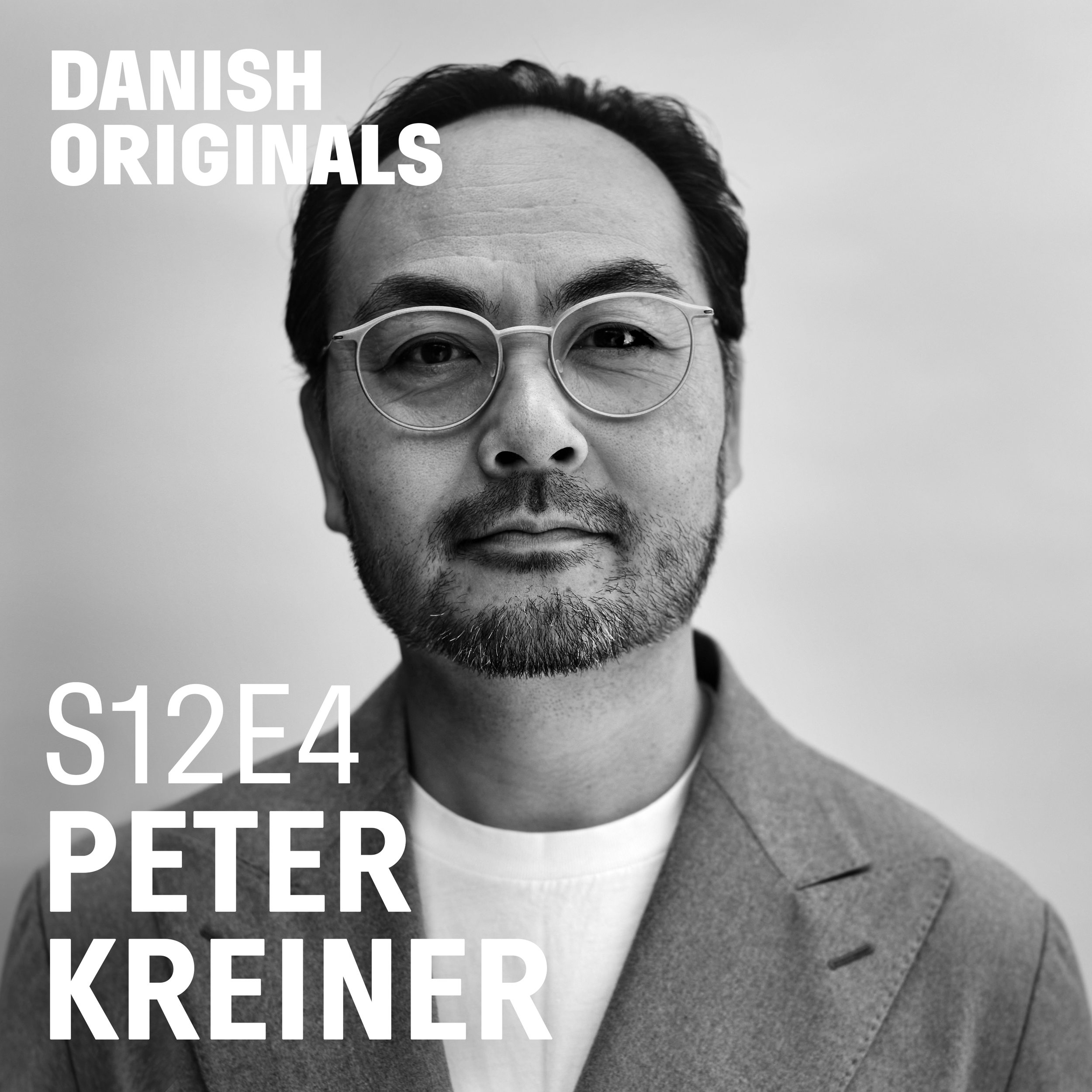
In Los Angeles for Noma's 16-week Silver Lake pop-up residency, Seoul-born, Fjerritslev-raised Danish restaurant co-owner PETER KREINER revisits his path running the influential establishment ranked #1 in the world five times. Peter shares his insights, on leading Noma with its philosophy on culinary innovation through foraging and fermentation and its approach to creating unforgettable experiences, and on expanding the Noma portfolio. And he also discusses some ups and downs along the way.
Photographer: Klaus Rudbæk

For today's episode, Peter Kreiner chose James Turrell's Aftershock from 2021 from the collection of Copenhagen Contemporary, Copenhagen.
“When we were number three the year before, on a good day, you could say you would have approximately 500 people who would log into our online booking system and try to book a table. The day after we were announced number one the first time, there were 100,000 people in one day.”
“When we win this, we also tell ourselves all the time, and also our staff, ‘Listen, we should be humble, we should be proud, and we should also remember that this is a list.’ Because the moment we start to believe ourselves that we really are number one in the world, that’s probably the first day we are not anymore.”
“We can all be set in our own ways of doing things, the way we think, the way we act, the way we behave. And I think we all need to, at times, approach the world through different angles, through different cultures. We also had the opportunity to actually bring our whole team, so we would have that collective experience.”
Powered by RedCircle
This conversation with Carsten "Soulshock" Schack occurred on June 17, 2026.
00:01
Peter Kreiner
We would close Noma at home, move the entire team to another location in the world, open a restaurant wherever it is, as if Noma had always been there. We can all be set in our own ways of doing things, the way we think, the way we act, the way we behave. And I think we all need to, at times, approach the world through different angles, through different cultures. So by doing this, we could do exactly that. We also had the opportunity to actually bring our whole team, so we would have that collective experience. Everybody would learn something, which I believe is essential, that we keep on learning new things.
00:41
Carsten "Soulshock" Schack
My name is Carsten Soulshock, and I am a guest host of Danish Originals. Our goal is to celebrate Danish creatives who have made a significant mark in the US.
00:55
Carsten "Soulshock" Schack
And today I'm very, very happy because the guest we have is Peter Kreiner. Peter is co-owner of Noma and I believe it is the number one restaurant in the world five times in a row.
01:11
Peter Kreiner
That is true.
01:12
Carsten "Soulshock" Schack
Wow. We are so honored to have you here, Peter. Thank you for coming.
01:16
Peter Kreiner
Or actually five times in total, not in a row. But over 11 years from 2010 all the way up to 2021.
01:26
Carsten "Soulshock" Schack
Impressive. You are currently here in LA and I want to hear all about that. Before we start our interview, I have to say I have a very special connection to you. And it's not food. Peter and I are from a not so fancy area in Denmark, in Jutland. And I'm from a small city outside Aalborg called Gug. And Peter, you are from Fjerritslev.
01:50
Peter Kreiner
Yes.
01:51
Carsten "Soulshock" Schack
How many people do we have in Fjerritslev?
01:52
Peter Kreiner
I believe today there's approximately 3,000 people in Fjerritslev and what used to be the municipality of Fjerritslev, what we would call Fjerritslev Kommune, that would be approximately 10,000 in total.
02:06
Carsten "Soulshock" Schack
And I have to say, the reason why it's so special to me is because I was in the Aalborg Theater and I was part of all these plays as a boy. And one of the plays, of course, was Oliver Twist, and one of the boys was Sean Kelly from Fjerritslev, and he took me up to Fjerritslev so many times.
02:24
Carsten "Soulshock" Schack
They had this huge farm up there with llamas and animals and stuff like that. So I loved coming up there. However, the first time I came to Fjerritslev, I'll never forget. We came up there, we were gonna go out, and when you go out in Fjerritslev, you go to Rio Bravo. That's probably the only place really up there.
02:45
Carsten "Soulshock" Schack
And I came in there and I was from the big city, you know, Aalborg. So I came in as a city boy. And I came to the bar and I couldn't get a drink, and I pushed people around. And I go, "Hey, excuse me," whatever. And in a matter of a couple of minutes — [slap!] And I was on the floor with a big black eye.
03:04
Carsten "Soulshock" Schack
Welcome to Fjerritslev, we don't like that attitude. So Peter, please tell us about growing up. Are you born and raised in Fjerritslev?
03:13
Peter Kreiner
Thank you very much, Carsten, and what a description of the magnificent place that I grew up in. And I actually say, I know I'm smiling and laughing here, but I had a truly fantastic upbringing up there in Northern Jutland. To go just a few steps back, as you know, I was actually born in Seoul, South Korea, but adopted by Danish parents, so I landed in Fjerritslev when I was four months old.
03:37
Peter Kreiner
I grew up in the countryside, meaning in Fjerritslev terms, that means it was actually outside of Fjerritslev, even more hillbilly. Up till I was 18, it was in that area. It was my base.
03:50
Carsten "Soulshock" Schack
Can I ask you, knowing about Denmark and those small societies, did you have any problem getting accepted or any issues with being from a different culture and looking different and all that stuff?
04:03
Peter Kreiner
Actually, I did not. In our little community, believe it or not, there were actually six of us who were adopted from Korea, and all of us with very Danish names. We were just like any other boy or girl from around the corner, so to speak. So there were no issues.
04:22
Carsten "Soulshock" Schack
Makes me so proud of Denmark. Living here in America, we're dealing with so many issues with that. That's incredible to hear.
04:28
Peter Kreiner
Yeah. So it was great. Also I would say being out there where you're so close to nature and everything. My best friend, his parents had a farm. And I spent so much time there, being out there in their garden and their vegetable garden and just picking out carrots from the ground. But also, with all the big machinery and the real hillbilly life, tractors and everything. And I loved it.
04:53
Carsten "Soulshock" Schack
Tractors too. Did you drive on tractors?
04:55
Peter Kreiner
I didn't, but my friend did.
04:58
Carsten "Soulshock" Schack
Oh, wow. Amazing. And so here you are growing up in Fjerritslev, and do you find out early on what you think you wanna do in life, or did you find some passions early on that guided you? Or were you completely clueless of what you wanna do in life?
05:14
Peter Kreiner
I wish I could sit here and tell you that I was very determined and that I, from early on, knew exactly what I was going to be. But that's not the case. I would be lying big time. I went to high school in Fjerritslev. I spent three, four months in London after high school selling menswear.
05:33
Peter Kreiner
And then I spent way too much money, so I had to go back home to my parents. And then I actually went to Aarhus, where I studied at the university down there. Back then it was called the Aarhus School of Business. So I have a general master degree in strategy and management from that institution. But —
05:52
Carsten "Soulshock" Schack
At least you knew you were not gonna drive tractors in Fjerritslev. You were aware that you had to leave Fjerritslev.
05:57
Peter Kreiner
Yes. And I'll actually come with a little anecdote relating to that. The reason we were up there was my parents, they actually moved to Northern Jutland from Copenhagen before they adopted me.
06:07
Carsten "Soulshock" Schack
Oh, Copenhageners!
06:09
Peter Kreiner
Yes, they were Copenhageners! But I can still speak with my Jutlandic accent, as you know. But my dad, he was a local vet. So he would have all the farmers as his clients. And I remember when I was, let's say, 14, 15, you start to have a job. My dad, he said to me, "Hey, son, I would like you to get a job, but please don't try and go and work with one of my clients. I don't think that would be a good idea." So I didn't do that.
06:38
Peter Kreiner
I was working at the local supermarket, handling the bottles and everything like that before I went into menswear, and before I went to Aarhus and actually started to look into business and so on.
06:49
Peter Kreiner
And somebody once told me, "Well, business school, that's where everybody goes who has got no personality." I don't know if that's true or not, but that's what I did. And I will say, it shaped me in the way that, one, I had some great friends from the time, but two, it taught me more than anything that you actually, with a sort of a generalist education, can do so many different things.
07:14
Peter Kreiner
So my friends from back then, we're doing all kinds of things even though we have the same sort of background, and I think that's wonderful and great. And in my case, I believe, one of my talents that I found early on was to try and create situations to bring people together.
07:33
Peter Kreiner
So while I was studying, I had a lot of interaction with a lot of the international students around the university. I was arranging things for them. I was a student counselor for them. But I also did the more fun things, so to speak, parties, events, et cetera.
07:49
Carsten "Soulshock" Schack
We can relate to those.
07:51
Peter Kreiner
So I did all of that. I realized, to bring people together, that was one of the things I wanted to do, and one of the things I was actually pretty good at.
08:00
Carsten "Soulshock" Schack
Interesting.
08:01
Peter Kreiner
And that I had fun doing as well.
08:03
Carsten "Soulshock" Schack
And we actually have more in common because believe it or not, I'm also educated in menswear and went to business school for menswear. Incredible, right?
08:11
Peter Kreiner
It is.
08:12
Carsten "Soulshock" Schack
So we should open that clothing store together.
08:14
Peter Kreiner
Let's do it. Let's do it.
08:15
Carsten "Soulshock" Schack
Put food in the background. Okay. So now you get to this business school, and you're in Aarhus, and how many years was that?
08:23
Peter Kreiner
The education is supposed to last five years. It took me a few years more because —
08:29
Carsten "Soulshock" Schack
Because of the partying?
08:31
Peter Kreiner
Yeah. There can be a lot of temptations when you're a young man living in Aarhus or anywhere. I'm guilty as charged. I had a lot of fun being in Aarhus. It was not a straight line. But I graduated eventually.
08:46
Carsten "Soulshock" Schack
Beautiful.
08:47
Peter Kreiner
Yeah, yeah. It had given me that way of actually finding where I should be in life, or at least I was a little bit closer to it, that's how I would put it.
08:56
Carsten "Soulshock" Schack
Especially with the partying, you're like, "This is where I should be."
08:59
Peter Kreiner
Yeah, but when you're also doing the parties and you're putting people together —
09:02
Carsten "Soulshock" Schack
You're meeting people and you're socializing.
09:04
Peter Kreiner
Yes, but also saying, "Okay, who's coming for that?" Curating, creating the space for that.
09:09
Carsten "Soulshock" Schack
Ah, you started doing that already.
09:11
Peter Kreiner
Yes, I did.
09:12
Carsten "Soulshock" Schack
Ah, now I really understand. Okay, great. So here you are, you're done finally, and what's the next step?
09:20
Peter Kreiner
Back then, I got a job in a small agency consulting company called 3rdDimension, which was located north of Copenhagen in Hellerup. And there, I was actually a salesman or account manager, as you would call it.
09:34
Carsten "Soulshock" Schack
Wow.
09:35
Peter Kreiner
I would be creating PR campaigns, events, anything that could drive and create interesting situations where we would actually, via physical experiences, create something for a specific audience or target group. And that I would do for everybody from Microsoft to Audi cars to the mobile company 3. I was part of launching that in Denmark, et cetera, et cetera.
09:57
Carsten "Soulshock" Schack
That was the number one at one point.
09:59
Peter Kreiner
It was. It was. And look, I was there for six years.
10:02
Carsten "Soulshock" Schack
Oh wow, six years.Did you find it hard to move from Jutland to Copenhagen? But you've been through Aarhus, so you're probably already kind of —
10:10
Peter Kreiner
It was okay. It was not a big problem. I will say, though, that Aarhus is significantly smaller, of course. And after my years there and doing what I did also outside the life just at university, I knew a lot of people. I was very well connected in the city. And of course, when you move to a new city, you need to build that up again. So that was a new thing. I didn't bring the same social identity I had in Aarhus. That was the difference.
10:39
Carsten "Soulshock" Schack
And were you interested in food along the way here? Are you picking all the best restaurants in Hellerup and all the best rundstykker?
10:48
Peter Kreiner
Well, actually going all the way back to my early childhood in Northern Jutland, the farm that my friend's parents had. His mother was an amazing cook. And she would always be cooking amazing food and taking all the ingredients that would come from the vegetable garden.
11:06
Peter Kreiner
My own mother was also a fantastic cook, and she would always be cooking for us at home. So I actually very early on, I liked food, loved food. I also liked to cook food myself. And when I was, let's say, eight, nine years old, and let's say my mother, she was out, then it would be me actually doing dinner for our family at home.
11:23
Carsten "Soulshock" Schack
Okay!
11:24
Peter Kreiner
Because at that point, my dad, he did not know how to cook at all.
11:28
Carsten "Soulshock" Schack
Yes. I had a similar upbringing, yes.
11:31
Peter Kreiner
So therefore, the food part has always been something close to me. Even so when I was studying, when others were on the student budget, I actually did prioritize to go out and shop groceries and good ingredients and actually cook, even if it was just for myself. I took the time to do that because I really, really appreciate it.
11:53
Carsten "Soulshock" Schack
And you have to tell the story of Noma and how it's come together and where do you meet René, the chef. Please tell us that story.
12:02
Peter Kreiner
So the thing is, being very interested in food, one of my friends from business school, he somehow got involved in this restaurant, and he was not a restaurant person at all. And Kristian, that's his name, one night where he and I actually were out, he said, "Hey, Peter, you know, there's this restaurant which has opened. Maybe you've been there a few times."
12:23
Peter Kreiner
And I had because I really loved it then. And it had a very special profile because it was a restaurant that wanted to do food based on the Nordic terroir. So not just a classical, typical French, Italian restaurant, but something different, a restaurant working within the Nordic landscape and working with a lot of limitations in order to spark creativity.
12:46
Carsten "Soulshock" Schack
And it's interesting because at that time I almost feel Denmark, we were not really a big super high-end food place. We were very good with our open bread sandwiches and certainly good hot dogs, but I don't feel, at least growing up in Denmark, I never said to people, we're really famous for food, which I'm telling people now. So it must have been one of the first, if not the very first restaurant which focused on that.
13:11
Peter Kreiner
I will say yes to that, and I agree 100%, Carsten. When both you and I were growing up, whether it was in Northern Jutland, but also if it had been in Aarhus or Copenhagen, we were not great with our own food. We had great restaurants, but what they would serve would not be based on the Nordic region. It would be, let's say, a nice French restaurant or similar.
13:35
Carsten "Soulshock" Schack
So Kristian, was he a chef? What was his approach to this?
13:38
Peter Kreiner
Kristian was on the board of Noma early on. He knew René and some of the others. So I also, on my own, came out there. And I remember the first time I really met René, now my business partner, René Redzepi, was because my father actually wanted to celebrate his 60 years' birthday many, many years ago, at Noma, and René was the one who showed us around. And we —
14:01
Carsten "Soulshock" Schack
Wow.
14:03
Peter Kreiner
Yeah. So we connected there and then later on, there was this opportunity for me to join. That was what Kristian said, "Hey, Peter, would you ever consider that?" Because with my background and with the education and everything I would bring to the table, I did not have the traditional background to be in a restaurant.
14:21
Peter Kreiner
To the extent that when I accepted the job, actually the Danish Djøfbladet, they actually wanted to write an article about me and put me on the front cover because it was so unusual that anybody with my education would work in a restaurant. But I will say, when Kristian brought the idea to me, obviously I needed to have a lot of sessions with René to really figure it out, could him and I work closely together?
14:47
Carsten "Soulshock" Schack
And at this point is the Noma restaurant open for the public?
14:50
Peter Kreiner
This is in 2006. It opened by the very end of 2003. So it had been open for two years. It was known in Denmark, but it was not a worldwide known restaurant.
15:03
Carsten "Soulshock" Schack
And it was also in an unusual area in Copenhagen, wasn't it? I remember growing up, when I came to Copenhagen from Aalborg, I remember Amager was kind of like you didn't really go there. Well, certainly you would go there to go to Christiania if you needed some inspiration.
15:20
Peter Kreiner
Yes.
15:21
Carsten "Soulshock" Schack
But besides that, Amager was really different than it is today, and I almost feel Noma was part of making Amager this new place.
15:29
Peter Kreiner
Carsten, I think the locals around us back then, they would like to consider themselves living in Christianshavn, not Amager.
15:35
Carsten "Soulshock" Schack
Got it. Okay.
15:36
Peter Kreiner
But that said —
15:38
Carsten "Soulshock" Schack
Correction. Christianshavn.
15:40
Peter Kreiner
Christianshavn. That said, we were —
15:44
Carsten "Soulshock" Schack
I'm from the hip hop period where it was called Amager, okay?
15:47
Peter Kreiner
That's true.
15:48
Carsten "Soulshock" Schack
Rockers by Choice, they were on Amager.
15:49
Peter Kreiner
Yes.
15:50
Carsten "Soulshock" Schack
So I remember Amager.
15:51
Peter Kreiner
It was for sure quite far away from everything. It was so that people who came out to dine, it was a journey. Even though when you look at it today, it was not very far, but it was a journey.
16:03
Carsten "Soulshock" Schack
It was unusual to go to —
16:05
Peter Kreiner
Very unusual —
16:06
Carsten "Soulshock" Schack
— that area.
16:07
Peter Kreiner
There was nothing happening out there except from us being there on the ground floor out there at the end of Strandgade.
16:13
Carsten "Soulshock" Schack
Oh, wow.
16:14
Peter Kreiner
And right now when you go to Copenhagen, we have all the bridges connecting across the canals and everything. That was not the case back then.
16:22
Carsten "Soulshock" Schack
I remember.
16:23
Peter Kreiner
So we were out there on our own. Well, after René and I, we had, I don't know how many walks and talks, in order to see, could we work together, could we create something together? With him also, as you can say, maybe he's a culinary super talent and restaurant man, and I could make things in the background happen, and I'll make sure that if he could think of something extremely creative and wild and new, I could probably bring it to life.
16:52
Peter Kreiner
So that was the idea we had, and we wanted to let nothing stop us. We wanted to see how far we could go and what we could create, but of course, still remembering that we were in Denmark, so we were not necessarily shouting too much about it.
17:05
Carsten "Soulshock" Schack
Just like when I entered Fjerritslev, you learned that, yeah, that doesn't work in Denmark.
17:09
Peter Kreiner
No, it doesn't, it doesn't really. But a lot of hard work, a lot of, also, thinking that typically when you say, "No, you cannot do that," you say, "Well, maybe we can. Why not?
17:19
Carsten "Soulshock" Schack
So when do you start seeing that what you're creating here is something special? Did people just start booking and lining up outside the restaurant, or how did you feel the first smell of, we're maybe doing something special here?
17:32
Peter Kreiner
We were entering the list of the so-called "50 Best Restaurants in the World," which was a small list, and the list also grew when it comes to reputation and recognition.
17:43
Carsten "Soulshock" Schack
So at that time, that list wasn't as —
17:46
Peter Kreiner
No, it grew also around the early, early days.
17:50
Carsten "Soulshock" Schack
Making the Top 50 must have been wow for you guys.
17:53
Peter Kreiner
It was. And I'll say, I remember the year where we actually entered the Top Ten. It was actually as number ten, and then to number three, and then to number one.
18:04
Carsten "Soulshock" Schack
Wow.
18:05
Peter Kreiner
And I will say that was a big change going even from number three to number one.
18:12
Carsten "Soulshock" Schack
Now you're number one. Yeah. And what year is this?
18:15
Peter Kreiner
We are number one the first time in 2010.
18:17
Carsten "Soulshock" Schack
Oh wow. And how big is the place at this time? Is it the same first location?
18:22
Peter Kreiner
It's the same first location.
18:23
Carsten "Soulshock" Schack
And how many tables and seats?
18:25
Peter Kreiner
We have room for 45 guests.
18:28
Carsten "Soulshock" Schack
Oh, so, small.
18:29
Peter Kreiner
And then a private dining room on the upper floor where we could seat up to 16 guests. That was it. And at the same time, we shrunk the number of guests we would have in the restaurant, because early on we also had a large banquet room where we could seat 150 people. We closed that because it didn't actually match. It was a great product we had there, but it was not the same as in the restaurant.
18:53
Carsten "Soulshock" Schack
So you and René really worked together on monitoring what is working, or was it just luck, would you say, that the food connected with so many people? Were you very involved in, if it doesn't work and people don't order it, we need to change it, and so the menu stayed exciting?
19:10
Peter Kreiner
When it comes to the food, I can take absolutely zero credit for it. It's 100% René. And René, of the two of us, was obviously the restaurant person, the creative mastermind when it came to that world. And then what I would contribute was to connect the dots around it, and also to see…
19:28
Peter Kreiner
'Cause remember, back in those days, by the way, my office was 100 meters away from the restaurant in a little barrack. I had entered into a job where I'd taken a significant pay cut. Instead of my office in Hellerup in the other company and then to Noma, it was a not very glamorous thing, but we loved it all. I loved it all.
19:52
Peter Kreiner
And I will say, what we wanted to do was something where we could try and lift things up in new ways. And by also thinking, "Can we try and think of new ways of actually approaching creativity but also obviously everything we did?"
20:11
Carsten "Soulshock" Schack
Yeah. And did Denmark have anyone other than you guys on that Top 50? I know they didn't have a number one before you guys. But there wasn't really any restaurants in Denmark that was —
20:20
Peter Kreiner
There was other amazing restaurants, but there was —
20:23
Carsten "Soulshock" Schack
Yes, there was Kong Hans, I remember.
20:25
Peter Kreiner
Yeah, that was, and is still, an outstanding, fantastic restaurant. But no, there was not anyone else that was this international big name as we were back then. There is today.
20:39
Carsten "Soulshock" Schack
Okay, so now you're number one, and I'm sure the guest list and the phone calls must start getting pretty intense.
20:44
Peter Kreiner
To give you an example, when we were number three the year before, on a good day, you could say you would have approximately 500 people who would log into our online booking system and try to book a table. The day after we were announced number one the first time, there were 100,000 people —
21:03
Carsten "Soulshock" Schack
Oh my God.
21:04
Peter Kreiner
— in one day.
21:05
Carsten "Soulshock" Schack
Are you kidding me, Peter?
21:07
Peter Kreiner
I'm not kidding you. That was as crazy as it was.
21:10
Carsten "Soulshock" Schack
So you walk into the office the next day, and you just are overwhelmed with over 100,000 people trying to get —
21:18
Peter Kreiner
But they try online. Back then, we were a small team. I was heading the admin, the PR, the sales, but I was also handling the IT. And I must say, I had ensured that our IT provider back then, that they would be able to handle something which would be up to 20 times as much as our previous normal capacity. Well, it could handle up to 10,000. But when they hit 100,000 —
21:41
Carsten "Soulshock" Schack
Oh my God.
21:42
Peter Kreiner
There was nothing we could do.
21:44
Carsten "Soulshock" Schack
So what do you do as this young company, you're number one in the world, and you can barely get all these people in?
21:50
Peter Kreiner
No, we can't. And that is, you can say, at the end of the day, having a restaurant, going all the way back to some of the things I learned early on, it's about being in the business of making people happy, creating experiences which people will remember forever. That is what we are in it for. We want to make you happy when you enter.
22:09
Peter Kreiner
And now we're in a position where we actually started a new relationship with people, being the people who want to come and dine with us, saying no. "We're becoming the Dr. No's." And that was not the way you actually want to be.
22:21
Carsten "Soulshock" Schack
It's actually almost against your philosophy.
22:23
Peter Kreiner
Exactly. But at the same time, there's nothing really we can do about it, because we also want to be very strict, with what also brought us there, our approach, being very democratic, and also respecting all the people who had tried to book. So we wouldn't just put in an extra table or something.
22:41
Peter Kreiner
Because if we did that, then it would actually not be the same experience. And we wouldn't cramp anybody around the table. If we say, "Look, there's room for four around this table," then there's room for four, there's not room for five.
22:54
Carsten "Soulshock" Schack
Wow.
22:55
Peter Kreiner
Because then you'll not —
22:56
Carsten "Soulshock" Schack
Yeah. It's not the same. And they would feel unhappy. Their experience wouldn't be as pleasant. They wouldn't be going, "Oh my God, I just ate at the number one restaurant in the world."
23:04
Peter Kreiner
Exactly. By the way, Carsten, I think it's important to say that when we win this, we also tell ourselves all the time, and also our staff, "Listen, we should be humble, we should be proud, and we should also remember that this is a list." Because the moment we start to believe ourselves that we really are number one in the world, that's probably the first day we are not anymore, because we need to constantly try.
23:28
Carsten "Soulshock" Schack
This is really something I can relate to because when you grow up in Jutland or in Denmark in general, actually, but in particular in Jutland, this whole thing we call jantelov, which is, "Don't think you are something special or more than me," is negative in some way. And one of the reasons why I left Denmark was I just had such grand dreams and ambitions that people literally thought I was not well.
23:55
Peter Kreiner
Yeah. I can imagine.
23:57
Carsten "Soulshock" Schack
And my friends in Aalborg, my family, everybody, "You are absolutely crazy." But what I did find out when I came over here, especially being white and entering a world of R&B and hip-hop that had a much more cultural depth than I thought. I just thought it was music. And I realized when I came over here, oh, it's so much more.
24:17
Carsten "Soulshock" Schack
The humbleness that we grew up with actually helped me because I had no problem being humble. I was used to it, and it helped us get up to work with 2Pac and Whitney. We never walked out the studio and stuff like that saying we're the shit. We were really, really aware, and I think that's part of growing up.
24:36
Carsten "Soulshock" Schack
Enough about me! So here you are. This restaurant must be becoming too small with this amount of people wanting to get in. What was the next step for Noma?
24:45
Peter Kreiner
For quite a few years, we stayed there.
24:48
Carsten "Soulshock" Schack
You just had people wait on the waiting list.
24:50
Peter Kreiner
We stayed there.
24:51
Carsten "Soulshock" Schack
You got 45 seats and another 16 and that's it.
24:55
Peter Kreiner
You laugh about it, but we had a ton of offers landing on our desks, "Do you want to do this, do that? Do you want to open new Nomas everywhere in the world?" We simply also just said no to that. Not interested. Thank you very much, but —
25:12
Carsten "Soulshock" Schack
Was it hard to say no? Because the money and the prestige, and I'm sure the companies that's contacting you are major big players in the food industry.
25:20
Peter Kreiner
They were, they were. It would've been some amazing opportunities, but for us in that moment, it was more important that we actually were true to where we came from.
25:30
Carsten "Soulshock" Schack
Wow.
25:31
Peter Kreiner
And that was actually also saying, "This is how we do things, and what we do." We stuck to that.
25:37
Carsten "Soulshock" Schack
Wow, I love that. I can really relate again so much. With music, I only wanted to do hip hop. Once we became successful, we could work with anyone, and we didn't want to, so I can relate. But tell me, when Noma then starts becoming the Noma in Copenhagen we know now, you move location or you build a new place, right?
25:57
Peter Kreiner
I think in all of this, we all have our ups and downs, and one of the real down periods we experienced back then was in 2013. We had a case of norovirus, Roskildesyge, which entered the dining room and hit our guests.
26:15
Carsten "Soulshock" Schack
Oh my God, I did not know about this.
26:18
Peter Kreiner
And that actually became quite a big news story which traveled the world.
26:23
Carsten "Soulshock" Schack
Did it come from you guys, or was it just a virus that was around in Europe?
26:27
Peter Kreiner
Norovirus is something that's incredibly contagious, once you get it inside, and we managed to track it down to some blue mussels we had been serving.
26:37
Carsten "Soulshock" Schack
Ah, there it is.
26:38
Peter Kreiner
And what happened was, I needed to be on Danish national TV, and of course apologize. And we were actually also being attacked by some of the press who were saying, "Hey, why didn't you — you should almost have sent out a press release saying that this has happened."
26:50
Peter Kreiner
Our point of view was: Look, we are in direct touch with those who are affected by it. That's number one. Number two, we are actually in the business of making people happy, as I said before, and we were doing the complete opposite. This was devastating for us. This was so sad.
27:05
Peter Kreiner
And back then, I remember, we told people, "Look, we can, of course, refund you, or we can actually book you in again." But you know what? The vast majority actually wanted to come in again.
27:19
Carsten "Soulshock" Schack
Which I find incredible. What you're telling me, which I've never heard before, would absolutely shut down a restaurant for good. If you were the one that started a virus somewhere, I can't imagine. It is incredible you got through that. Just with being honest and upfront with people —
27:35
Peter Kreiner
I think we were being honest upfront as much as we possibly could, going through it. But then in this year, 2013, what also happened, without those two incidents having any connection, we lose the number one spot. We've been number one in 2010, '11, and '12. This in '13 … and I know those two things are independent.
27:56
Peter Kreiner
The reason why I know that, is because the norovirus thing was in February, March. All the votes for the list, they were turned in in December. And the list was publicized in April. But obviously, people would put two and two together and think, "No, no, those two things are directly related." So this was that year where we all said, "This is a —"
28:21
Carsten "Soulshock" Schack
The first time you were meeting a crisis.
28:23
Peter Kreiner
A real crisis. After feeling almost like we could walk on water, which of course we could not, we were hit by that. So going all the way up then to the next year, the following year, 2014, we actually re-win the number one spot, and I will say that comeback —
28:41
Carsten "Soulshock" Schack
Wow.
28:43
Peter Kreiner
— was unbelievable.
28:44
Carsten "Soulshock" Schack
Yes.
28:45
Peter Kreiner
I remember René and I celebrating in London with a bottle of champagne. It was fantastic, and it felt like this comeback really was the thing. And that's when he said, "Look, we need to also keep on moving. We cannot stand still. And now because we have re-won the number one spot, this enables us, allows us to say now we can do some real changes again." Not because of something negative, but because of something positive.
29:14
Carsten "Soulshock" Schack
And the fact that you went off the list and came back as number one really confirms —
29:18
Peter Kreiner
We went down to number two.
29:20
Carsten "Soulshock" Schack
Okay, okay!
29:21
Peter Kreiner
Hahahahahaha!
29:22
Carsten "Soulshock" Schack
But — terrible!
29:24
Peter Kreiner
Exactly. There is a difference, mentally there, actually psychologically, there is.
29:28
Carsten "Soulshock" Schack
You want to be number one. I get it.
29:31
Peter Kreiner
Even though as I said before, we never really believed ourselves we're number one, but still, there is something psychological about that. But —
29:38
Carsten "Soulshock" Schack
Yeah. I really wanna get to this new place you're building that we know now as Noma.
29:42
Peter Kreiner
Correct.
29:43
Carsten "Soulshock" Schack
When you said, "We're gonna make a change," was let's get a new place?
29:46
Peter Kreiner
That is when we start talking about it, saying let's actually try and see how we can move things up. And not on that evening, but soon after, René also brings the ideas of how we can change the approach to the food and everything. And that is all born in those early days in 2014 after we re-win the number one spot.
30:08
Peter Kreiner
And we do all these changes, change the way that we approach things, change our location, and really change, shake a lot of things up. This is also around the time when we start to rethink, okay, can we now say yes to everything? We start to do more restaurants and more places, not called Noma, but other places. So there in 2014, '15, and the years to follow, a lot of things started to take place.
30:34
Carsten "Soulshock" Schack
And this whole thing you're so famous for, that you're doing all the fermenting and all this stuff. Did you do that at the other location as well, in the smaller location? Or was that something now you expanded into almost having a laboratory in the restaurant?
30:49
Peter Kreiner
We have always, or not always, but in even the later years of Noma 1.0, so to speak, we did have a fermentation lab. But then in the new Noma, of course, we would build a larger and better facility for the fermentation. The original idea and ambition for Noma 2.0 was to see if we could have floating garden fields outside in a big lake, which is in front of the location we found.
31:17
Carsten "Soulshock" Schack
Wow.
31:18
Peter Kreiner
But that was not possible.
31:20
Carsten "Soulshock" Schack
What a crazy cool idea, though. The ducks took all the stuff away.
31:28
Peter Kreiner
We're not growing that much ourselves, actually. But we have a lot of foragers, and we forage ourselves. So it's also going out in the wilderness, in the wild nature, and finding things there to actually serve. But we wanted to shake things up, and it was also a way for us to keep rethinking ourselves.
31:46
Peter Kreiner
And this is around the time, back in '14, we also started thinking, okay, maybe we should also start to travel. Maybe we can try to approach the world in a new way. And that's when we start these Noma residencies or pop-ups.
32:01
Carsten "Soulshock" Schack
Pop-ups, yeah.
32:02
Peter Kreiner
And with the idea being that we don't just go for a few days. We would close Noma at home, move the entire team to another location in the world, open a restaurant wherever it is, as if Noma had always been there.
32:16
Carsten "Soulshock" Schack
Again, if I was on the board, I would have said, "Who's the crazy guy who came up with this idea?"
32:22
Peter Kreiner
Yeah. And that's a good question. And I will say the one who did come up with it was, I will say, that was René.
32:28
Carsten "Soulshock" Schack
But it's expensive, and you're shutting down the restaurant, but I'm sure you're still paying the rent there. You can't just leave that. So now you're moving the operation with a lot of extra expenses away from Noma, safe and quiet and perfect, to a new place while you're keeping the restaurant place and paying for that as well.
32:47
Peter Kreiner
Correct.
32:48
Carsten "Soulshock" Schack
Wow.
32:50
Peter Kreiner
Yes.
32:51
Carsten "Soulshock" Schack
Well, was it just because you wanted Noma out in other areas than just in the Nordic setting?
32:59
Peter Kreiner
We can all be set in our own ways of doing things, the way we think, the way we act, the way we behave. And I think we all need to, at times, approach the world through different angles, through different cultures. So by doing this, we could do exactly that. We also had the opportunity to actually bring our whole team, so we would have that collective experience.
33:23
Carsten "Soulshock" Schack
So they would experience it as well.
33:24
Peter Kreiner
Everybody would learn something, which I believe is essential, that we keep on learning new things.
33:30
Carsten "Soulshock" Schack
Before we go to the pop ups, because of course we're gonna talk about pop ups since you are here in LA. But I just wanna dig into Peter Kreiner from Fjerritslev.
33:39
Peter Kreiner
Yes.
33:40
Carsten "Soulshock" Schack
Standing here in this new location with a waiting list that's God knows how many years. You're the number one restaurant in the world. Were you overwhelmed by this? Were you like, oh my God, were you grabbing your arm and pinching yourself? Or was it just a natural growth that you just end up really being number one in the world? It's a rare thing for a restaurant to achieve that.
34:03
Peter Kreiner
I think we've been so good in actually telling everybody, including ourselves, to stay calm, stay humble. That said, of course it's crazy. It's completely nuts.
34:16
Carsten "Soulshock" Schack
I'm sure some of the names that are contacting you, all of a sudden you're dealing with some celebrities all over the world.
34:22
Peter Kreiner
All of them.
34:23
Carsten "Soulshock" Schack
I remember my personal story. I had Harry Styles call us to get into Noma because he couldn't get in, and I had to call you and say, "Peter, it's Harry Styles. Can you please get him in?" And you actually ended up making a special VIP place for him.
34:37
Peter Kreiner
No comment. No comment. But as I've also told you, you were not even the only one who reached out to me around him. There were other people also who did the same.
34:46
Carsten "Soulshock" Schack
But you didn't have room. So there's nothing you really can do. If someone wants to walk in and they have a big name, again, because you don't want to not give them the right experience, you're not just putting a table up. You want to make sure you can give them that Noma experience, but you must say no to some people who do not like being said no to.
35:06
Peter Kreiner
We certainly have said no to a number of people in the world who are not used to receiving a no. Yes, we have.
35:13
Carsten "Soulshock" Schack
Was it hard to balance that? Were there people getting upset? Was it stressful to deal with that?
35:18
Peter Kreiner
Some got upset, some understood it, some respected it, but of course hoped that there was something we could do. But it was a part of how we were set up, what we believed in. So, that was the way we worked. That was the way we operated.
35:33
Carsten "Soulshock" Schack
And I love hearing that story, it's not like, now we're famous, so now it's hard to get in. You actually had this philosophy from the beginning. If you couldn't give people that experience when they walked away, and they said, "Oh my God, this was really something special," you didn't wanna give them a seat if it wasn't available to make that presentation for them. So it's really rooted in your philosophy of how you wanna run a restaurant.
35:59
Peter Kreiner
Very much so. Staying true to actually who we are, it can be said as simple as that, even through the success. And also, you said, yes, of course, it's crazy to think about number one in the world, and that's also why I say again, how can you even say that? How can you say what is the most beautiful place in the world, for instance? Isn't that hard?
36:19
Carsten "Soulshock" Schack
That's almost impossible.
36:20
Peter Kreiner
It is impossible. And I'll almost say this is the same because it's so based on your own personal preferences. Is it the local neighborhood restaurant where you like to go every second week? Maybe for some, that is the best restaurant in the world. And for others, it's that destination you travel to across the world, which is also what a lot of people ended up doing or end up doing with us, and they travel for it.
36:45
Carsten "Soulshock" Schack
So I believe actually the restaurant before you guys was El Bulli, that was actually the number one in the world, and had this whole reputation you couldn't get in, and it was this special place. Did you guys take over from El Bulli after they were number one? Did you take over the number one spot?
37:03
Peter Kreiner
We actually did.
37:05
Carsten "Soulshock" Schack
It must have been a shock to them.
37:06
Peter Kreiner
I remember it was back in 2010, as I said before, we were number one the first time. And the year before, and the many years before, it was El Bulli. They were number one. René and myself, we were sitting at the awards ceremony in London in 2010 just behind Ferran Adrià, huge legend behind El Bulli and his colleagues, and we had just a few restaurants left, and they say, "And number two…," and then they say El Bulli.
37:33
Carsten "Soulshock" Schack
Oh my God, Peter, that must have been crazy.
37:34
Peter Kreiner
And here, I still get goosebumps —
37:36
Carsten "Soulshock" Schack
I get chills from your story!
37:39
Peter Kreiner
— when I'm thinking about it now. We were actually holding our hands and thinking, "Oh, Jesus. Wow."
37:45
Carsten "Soulshock" Schack
Because you didn't know you were number one, you just know that someone was number one, and you hadn't been mentioned yet.
37:51
Peter Kreiner
We actually knew we were number one there. Because we're the two only restaurants in the room which have not yet been mentioned.
37:59
Carsten "Soulshock" Schack
Oh my God.
38:00
Peter Kreiner
So it was absolutely crazy.
38:04
Carsten "Soulshock" Schack
That trip on your way back home must have been a lot of fun. Hopefully a lot of champagne bottles.
38:10
Peter Kreiner
We had a lot of fun, we had a lot of fun. And I think that was the first year also when a lot of people looked and say, "Okay, what happened there?" So this is 16 years ago today. 16 years ago.
38:21
Carsten "Soulshock" Schack
Wow. Wow, that's crazy. Let's move into these pop-ups because currently you are in LA. And I remember you calling me about this. I remember you had been in Kyoto, and I think you were in Mexico as well.
38:33
Peter Kreiner
We've been in Tokyo in '15. We were in Sydney, Australia in '16, Tulum, Mexico in '17, and then '18 we opened the new Noma, the Noma you know today, further out at Refshalevej. And then in '19 we were —
38:51
Carsten "Soulshock" Schack
Can I just interrupt and say, since we know all the seats of the original restaurant, how many seats now in the new Noma Copenhagen?
38:59
Peter Kreiner
The number of seats is more or less the same. 44 seats in the main dining room and 20 seats in the private room.
39:06
Carsten "Soulshock" Schack
See, that's again where if I was on the board, I would've said, "Let's make that 200 seats." What's your decision there to keep it the same?
39:13
Peter Kreiner
The same as it was before. That is, what is it that we actually can do also, on that level, and making sure that everybody has the experience we want them to have.
39:23
Carsten "Soulshock" Schack
Wow, I'm really impressed with staying so connected to the roots of the restaurant. With all that success, most other people, you even see Nobu and all these other restaurants expanding like crazy. But you felt, "We can't deliver the same thing as what we deliver now if we expand too much," which I think is incredible.
39:44
Carsten "Soulshock" Schack
Okay, let's move on to the pop-ups. So you are letting me know all of a sudden that you're coming to LA, and I was so excited to hear you were coming over here.
39:54
Peter Kreiner
We had an idea that we wanted to go to LA. But of course, there's a lot of things that need to fall in place.
40:00
Carsten "Soulshock" Schack
Tell me about this experience, because I remember also saying to you, I've been over here for 30 years. LA is a different kind of beast. And what I mean by that, talk about not having a Jante Law, there is probably no place in the entire world with less Jante Law. It's all about who I am, and what I do, and what I drive, and all this stuff. What I mean is people are very privileged over here.
40:20
Carsten "Soulshock" Schack
And it's a really interesting city with extreme wealth. If you look at California, it would be the richest country in the world if it was a country. But it also has an incredible lower income and a lot of people, 13 million. It's a very complex city. I remember I was trying to show you, you should do it here, you should go there, but all of a sudden, here you are, and you chose to be in Silver Lake.
40:44
Peter Kreiner
For us, it's always about, of course, going to a country, having all the respect for that. In this case, a specific city. And over here, also specifically, the state of California. And I would say, when we looked at it and when I mentioned to you the first time, Carsten, it was long before it was, you can say final.
41:04
Peter Kreiner
Because we need to have a magical place. We need to be able to do it when it comes to how can we get people over here? How can we find housing? It becomes a large operation. And then what really attracted us to Los Angeles was, you're so right and you know it better than me, because obviously you live here permanently.
41:25
Peter Kreiner
But what really for us was the thing about Los Angeles is the fact that when you are here, you feel that the world is everywhere around you. You have large populations from the Thai population, the Armenian —
41:43
Carsten "Soulshock" Schack
Latinos, massive, yeah —
41:44
Peter Kreiner
... you have it all here. And that is something very, very rare. So you can find some of the best food from so many different cultures in this city.
41:54
Carsten "Soulshock" Schack
Very true.
41:55
Peter Kreiner
And that is inspiring, and that is special. On top of that, the weather is nice. Those were some of the things that really, really attracted us to coming here.
42:04
Carsten "Soulshock" Schack
And one other thing I found so fascinating also is when you do this, Peter, you don't just travel, you and René, and find local people. You bring all your own employees with you. How many people came with you to LA?
42:17
Peter Kreiner
To LA? We brought a total of 130 people over here.
42:20
Carsten "Soulshock" Schack
Oh my God.
42:22
Peter Kreiner
And that is including family members, so partners, spouses, and children.
42:26
Carsten "Soulshock" Schack
And other restaurants would probably not do this just because it costs so much. Is that the same thing you were talking about, giving them an experience as well, that they can take with them, the employees?
42:36
Peter Kreiner
And for ourselves as well. It's trying that and then taking a deep dive into it and trying to be and live and operate here. That is a very special thing and a privilege. Let me also say that, a huge privilege for us. So in that sense, traveling the world and exploring it through the lens of food, that is special.
42:54
Carsten "Soulshock" Schack
Part of growing the restaurant. And I remember taking you to the Lakers game when everything was settled in, you were ready to go, and the buzz in the city was at its highest. I could not get my... I just turned off my phone, just, "Can you help me get into Noma?"
43:11
Carsten "Soulshock" Schack
Because you actually sold out in under three minutes. It was just everybody was excited. We went to the game. You were one big smile. You were telling me everything. And then I have to touch the sore little subject, because it was such a big shock for me as well.
43:28
Carsten "Soulshock" Schack
The New York Times comes out with this article about the chef René being abusive to the employees, just an overall extremely aggressive and negative article just two, three days before your opening. What a coincidence. With all this at stake, with all these people coming over here in this city, how did you deal with that?
43:53
Peter Kreiner
Obviously, that was a big shock for us as well to see such an article with some allegations where some of them, they are complete lies, not true at all. The one thing that is true, and which we've been open about as well, is yes, there has been yelling in the kitchen of Noma, and René himself has said that.
44:16
Peter Kreiner
So dealing with that, of course, and seeing how that happened just a few days before opening, that was a big shock for us. But it's still great to be here. It has still been a very, very positive experience, and also to welcome all the guests because the guests, they were still here.
44:33
Carsten "Soulshock" Schack
I'm really, really happy to hear it's been a good experience. It is a very special city to me. I keep saying I'm gonna go back to Denmark. I think I've said that maybe for 40 years.
44:44
Peter Kreiner
Yes, you have.
44:46
Carsten "Soulshock" Schack
So Noma, here you are, you're gonna go back to Copenhagen now and reopen the restaurant, which I just find is the most incredible, fascinating way of doing business. What's the future for Noma? Do we have anything you wanna enlighten us with? What's coming up?
45:02
Peter Kreiner
It's super exciting what's coming. When we open on the fifth of August, we will actually be operating with 12 seasons of Noma, which is a new thing we haven't done before, so it'll be a much more ever-changing menu.
45:16
Carsten "Soulshock" Schack
Wow.
45:18
Peter Kreiner
It'll be fun, it'll be inspiring, it'll be a new experience for all the guests coming. Then also what we have done is we have actually promoted some of the amazing senior leaders we already have into new roles, with Annika de las Heras as our new CEO, we have Mette Søberg, who is a superb creative talent, she's the new lead when it comes to the test kitchen. And then we have Pablo Soto, who has been our main head chef for a number of years, he'll be the executive chef.
45:54
Carsten "Soulshock" Schack
Wow.
45:55
Peter Kreiner
So moving forward. But then in addition to that, we have new projects which we are already working on. And some of them, I can say, will be outside the world of a restaurant, outside the four walls of a restaurant.
46:08
Carsten "Soulshock" Schack
Wow.
46:09
Peter Kreiner
And that I'm looking forward to being able to tell you more about later.
46:14
Carsten "Soulshock" Schack
Absolutely. I can't wait to do that. Thank you so much for coming today. And I can't even tell you how much I appreciate this. Peter, this has been such a great talk, and thank you so much for coming to Danish Originals, and tell your story. That is just one of the most incredible stories I have ever heard.
46:31
Carsten "Soulshock" Schack
And we wish you all the best with Noma, and I can't wait to come and eat some more of this great food you are making and hear some more about what you guys are gonna venture into.
46:41
Peter Kreiner
Thank you so much, Carsten. It's been such a pleasure to be here on Danish Originals, and I hope that there will be many more things that maybe I'll even qualify to come back in X number of years and tell more new stories. But thank you.
46:53
Carsten "Soulshock" Schack
I love that. You will always be welcome!
46:57
Peter Kreiner
Thank you.
46:59
Christian D. Bruun
For today's episode, Peter Kreiner chose James Turrell's Aftershock from 2021 from the collection of Copenhagen Contemporary in Copenhagen.
47:10
Peter Kreiner
I've chosen James Turrell's Aftershock.
47:13
Peter Kreiner
At first, when you enter it, you watch it from outside and you think, "Wow, is this two-dimensional?" until you realize you can actually enter it. So it is a three-dimensional installation where you yourself need to be a part of it, you need to immerse yourself into it.
47:28
Peter Kreiner
The way he works with light, he's messing with your perception and how things look and how they feel. No matter what you had in your mind when you entered it, you will stop and you will be completely taken to a new place. Whatever that place is, I don't know, that's up to you.
47:46
Peter Kreiner
The reason why it speaks so much to me is it shows how the world can be seen in so many different ways and approached in so many different ways. And also just by changing the way it works with the lights, it can completely turn things upside down for you.
48:04
Peter Kreiner
It is something that really gets under your skin, in a good way. It's fantastic and I love it.