
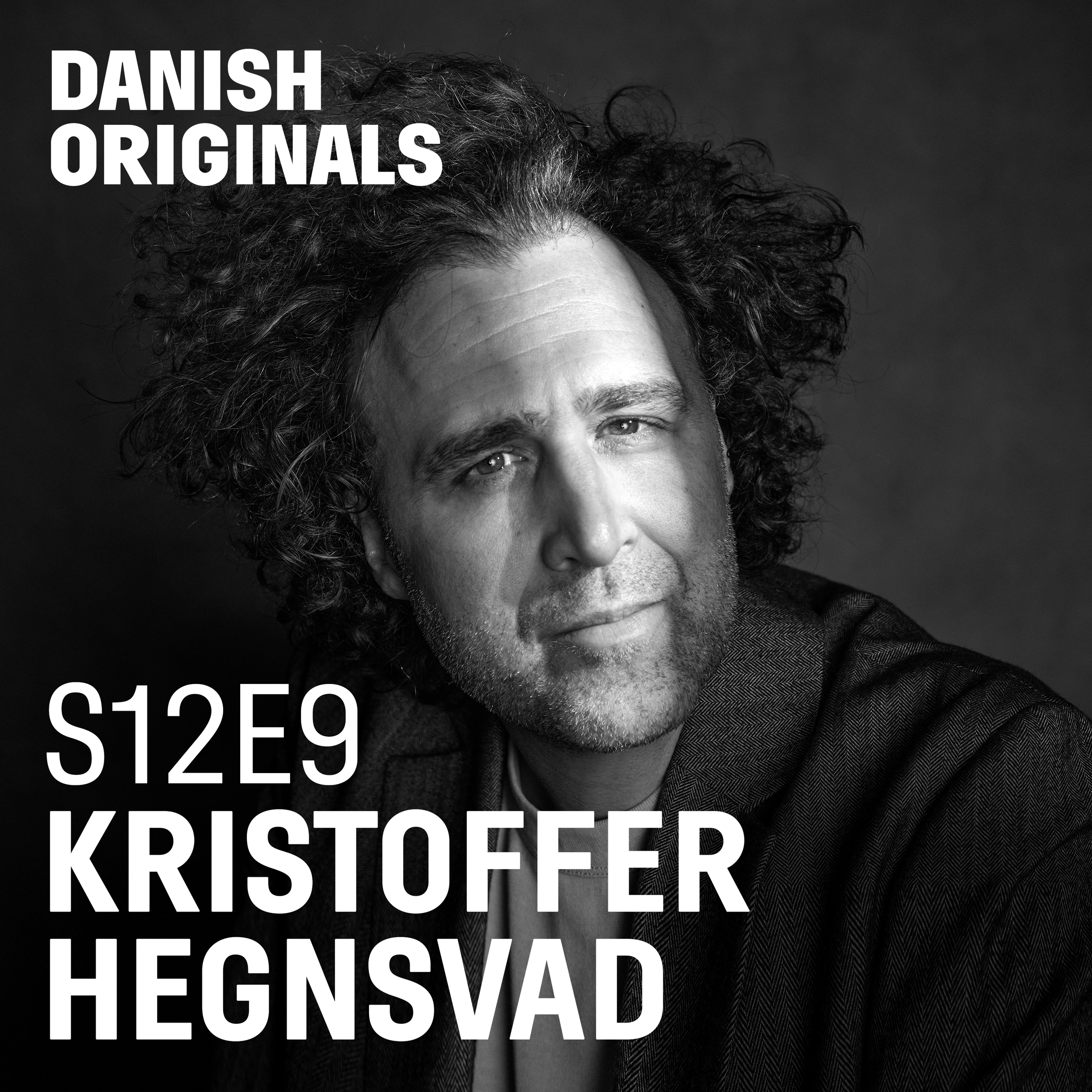
From his office in Holmen, Århus-born, Gilleleje-raised, Copenhagen-based Danish director of the National Film School of Denmark KRISTOFFER HEGNSVAD shares his thoughts on the school's role in training students from its nine departments to achieve their artistic best and to work collaboratively. He revisits his work as a filmmaker, film critic, and author, his three iconic documentaries, and discusses the potential of mainstream American films to be catalysts for public cultural conversations.
Photographer: Ken Hermann
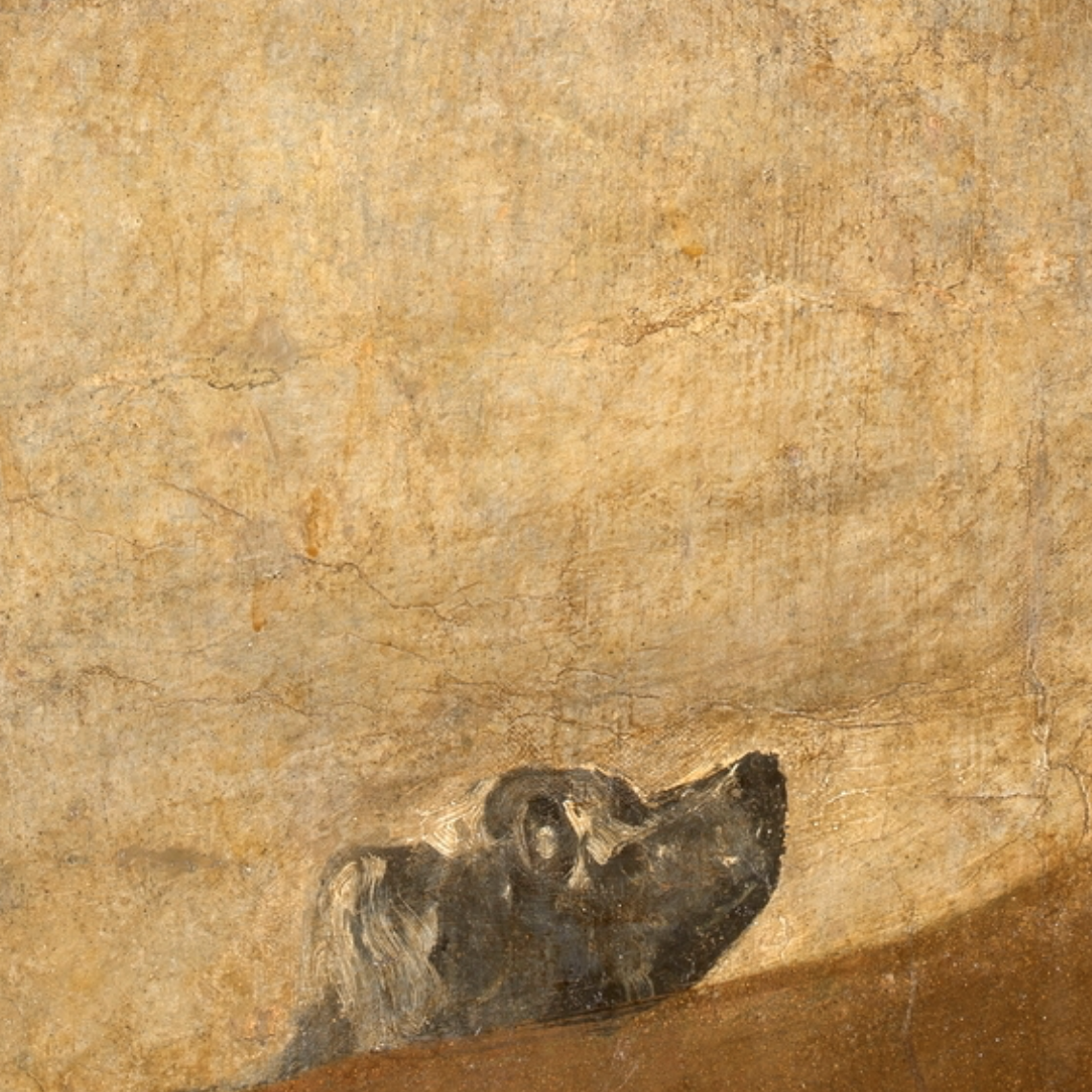
For today's episode, Kristoffer Hegnsvad chose Francisco Goya's The Drowning Dog, from 1820–1823, from the collection of the Prado Museum in Madrid.
“You will always be under pressure when you have to deliver artistically, because either you draw on something of your own personal experience, or you try to show and achieve something new. That’s at the core of what art is. So you will be exposed, and then at the same time you have to work together.”
“You have to inspire courage in artists. I think that is the main goal. That is the most necessary tool that they can get, their own courage and being persistent about it.”
“You have to be very interested in film to explore the European tradition now or even films from Eastern European countries or the former Soviet Union, or Africa, South America, and Asia. So we are all in American culture and all in American film.”
Powered by RedCircle
This conversation with Tina Jøhnk Christensen occurred on August 20, 2026.
00:00
Kristoffer Hegnsvad
You have to inspire courage in artists. I think that is the main goal. That is the most necessary tool that they can get, their own courage and being persistent about it. At the core of artistic work is that we're asking them to bring out something from their own experience to tell something about the human condition, which will expose themselves, so we have to teach them how to tolerate or deal with exposure. Or you venture into trying to invent something completely new or some kind of new, to be able to fail, which is also very daring.
00:38
Tina Jøhnk Christensen
My name is Tina Jøhnk Christensen, and I'm the host of Danish Originals. Our goal is to celebrate Danish creatives who have made a significant mark in the US.
00:49
Tina Jøhnk Christensen
Today, our guest is Kristoffer Hegnsvad. He's a Danish director of the Danish Film School, a former editor of one of our large newspapers in Denmark called Politiken, and he's also an author and a filmmaker. Welcome to Danish Originals, Kristoffer.
01:07
Kristoffer Hegnsvad
Thank you very much, Tina.
01:09
Tina Jøhnk Christensen
It's nice having you here. First of all, I see you have DVDs in the background. Are you at the location in Holmen in Copenhagen, or where in the world are you?
01:19
Kristoffer Hegnsvad
I am here at the Danish Film School in my office at Holmen, where the film school is situated. It's slowly closing down for the day. The students are still buzzing around, but this will be my last thing to do for the day. And then I have a nice bicycle trip home across Copenhagen, and it's a nice and warm and sunny day here in Copenhagen.
01:41
Tina Jøhnk Christensen
You got this role as the director of the Film Institute a little while ago, and I assume that you have started making your office your own. What do you need to make your work environment inspiring?
01:56
Kristoffer Hegnsvad
As a filmmaker, it's almost a cliché, but I have images from some of the films that have inspired me the most on my walls. Right now I'm looking at Lessons of Darkness from Werner Herzog, Claire Denis's S'en fout la mort (No Fear, No Die in English), Andrea Arnold's Fish Tank, and a film that's very, very dear to me, Fallen Angels, by Wong Kar Wai.
02:22
Kristoffer Hegnsvad
They're there to inspire me and to make me remember why I'm here. And I also have some large photos at the other end of the office by the photographer Christoffer Herwig, who I traveled with and did a documentary with called Soviet Bus Stops, and a book on my travels, Last Night I Dreamed of Soviet Bus Stops.
02:42
Kristoffer Hegnsvad
I also began collecting books from my predecessors. I'm just very proud to have near me some books from Theodor Christensen, the founder of the Danish Film School. I'm a bit childish in that way. Small things inspire me, like tokens, or give me courage because every time you approach writing or any art form, you need all the courage you can get.
03:03
Tina Jøhnk Christensen
Yes, you do. Being the head of the Film School is close to being the boss of it all in the film world in Denmark. If you wouldn't mind, describe the atmosphere that you feel when you enter its doors.
03:17
Kristoffer Hegnsvad
The school was founded in '66, not originally here at Holmen. This is a more recent location. The school is now 60 years old. The location now is among other art schools. We have the theater school and the music academy right next to us, and it's a very rich and artistic environment.
03:35
Kristoffer Hegnsvad
Walking through the doors, and I'd been lecturing here before I took this position, it's always been a feeling of awe and it's an honor to be here. I hope that the students, when they're here, they slowly just cast that aside, and they're just going to school and just being themselves.
03:51
Kristoffer Hegnsvad
I treasure that feeling of being in an artistic space, in practical but also symbolic terms. It's an institution that is important, and I cherish that it can exist in the way it does, and take that with me every time I enter the door.
04:08
Tina Jøhnk Christensen
This school develops talent that go very far in the international film business and is respected very much in the United States, among other places. How important is it for you to, for instance, prepare the students for Hollywood?
04:24
Kristoffer Hegnsvad
We're a small country, but we're a very, very big film nation. We had a very strong silent film era all the way back. We're part of European Hollywood, so to speak. So film culture is very rich.
04:38
Kristoffer Hegnsvad
At the same time, the school came about in the '60s as part of that era where some of the best film schools in the world blossomed in Europe, among them the Danish Film School. I think it's good to remember why they came about. They came about because they had a fear from the past and a hope for the future. It came from a resistance point.
04:58
Kristoffer Hegnsvad
For instance, in the same period, the Cannes Film Festival came about after the Second World War in opposition to the fascist takeover of the Venice Film Festival at the time. And the German film schools and the new waves of European film schools came about in horror of how the film industry or how film as media fell into the hands of Nazis and became propaganda.
05:20
Kristoffer Hegnsvad
People don't think a lot about that, and they don't necessarily have to, but the new waves and the Danish Film School came out of those sentiments. And at some point at the Danish Film School, you've cherished that tradition, but you also leaned into a broader sense of good storytelling, which is definitely something that Americans have excelled in and that Hollywood is the story machine.
05:41
Kristoffer Hegnsvad
And I think that's part of the reason why Danish films have traveled so well for the States and even for the Oscars, because we somehow are a blend of the ideas of the European new waves and good storytelling of the American tradition. You give the students the courage and the tools to excel in their own artistic endeavors, and then they can choose how to use them.
06:11
Kristoffer Hegnsvad
And making that choice open so we don't close ourselves into a very specific or narrow-minded way of storytelling, having that broad sense that it's okay to be avant-garde and it's okay to do classic storytelling. It's methods that you can apply to whatever you want to do, but the craft of the artistic endeavor is at the core of that.
06:27
Tina Jøhnk Christensen
Alumni from the Danish Film School include Lars von Trier, Lone Scherfig, Bille August, Susanne Bier, and Thomas Vinterberg, just to mention a few. August, Bier, and Vinterberg have won foreign film Oscars and Bier and August, Golden Globes. What does it mean to Danish film and to the Danish Film School that filmmakers are recognized on this level in the US?
07:05
Kristoffer Hegnsvad
It's very important. First of all, it's always great to see Danish filmmakers travel and have success. In terms of what it means to the school, the thoughts of the Danish Film School get to travel and inspire and hopefully attract great talents to come visit here and teach and do master classes.
07:22
Kristoffer Hegnsvad
At the same time, it's a great way to break through glass ceilings. If they do dream of winning an Oscar, they can see they're actually on a trajectory that could lead them there, if they dare to venture into it.
07:34
Kristoffer Hegnsvad
You mention Lars von Trier and Thomas Vinterberg. There's a combination of things that leads back to the school. The program in the film school is structured to make small film guerrilla units that will venture out into the world and actually be able to produce right away.
07:53
Kristoffer Hegnsvad
The idea is the same, that you will venture into the industry and you have to make your own means and produce. On the other side of that story, because you mentioned those two, is also the conditions or the manifesto of Dogme 95, which is very much aligned to the way we teach at the school. As Thomas Vinterberg will say, he's just doing what he was taught at the school.
08:15
Kristoffer Hegnsvad
That is how we approach the different exercises. You set the limits, you set the assignment, and then you explore the artistic possibilities inside that manifesto or that condition or that limit that has been put up by the school and been put up by the teachers who very creatively will build those structures around the students.
08:35
Kristoffer Hegnsvad
So if you go back to Dogme 95, and it's also a very open-minded time in film, it was actually possible to do some of those things. But the mindset is the same, and it's a mindset that I think is at the core of the school and something we should be very proud of. If you look into independent cinema in the States, or worldwide, it's looked upon as something to aspire to and something to be inspired by.
09:01
Tina Jøhnk Christensen
A couple of years ago, the American trade paper Hollywood Reporter placed the film school in the Top 15 of the best global film schools in the world. It highlighted the school's focus on storytelling, in particular the screenwriting process, as the reason for its success. Do you agree that this is the main strength of the school?
09:26
Kristoffer Hegnsvad
It's one of many strengths. I think the primary strength of the school is the collaboration between the different parts of a small film crew. Or if it becomes a larger film crew, then the different leading functions of the film crew.
09:39
Kristoffer Hegnsvad
We're not teaching film editors how to edit a film. They usually already know that when they enter the school because it's difficult to get into the school. We are educating artists here, and we are educating artists on all levels and in all branches of the industry. And the core of what makes the school great is of course we also do that on the script level.
10:03
Kristoffer Hegnsvad
We're very focused on making everyone at their artistic best and collaborating under that vision by the director, using every artistic ability in the room. And I think maybe it's quite Danish to think that way and be very collaborative. It might be a small country mentality, but it created a great film nation.
10:23
Tina Jøhnk Christensen
I've interviewed quite a lot of Danish film directors and editors, et cetera, who always mention the Danish Film School as why they have come as far as they've come. And one of the things that they mention as the reason is because they learned about teamwork. That's the main thing. Maybe describe how you encourage teamwork. How does it work practically?
10:52
Kristoffer Hegnsvad
It's very much aligned with the story I told before about Dogme because they are all in different branches of the school. There's nine different departments. They are studying to become a photographer or an editor or sound designer. And they will be combined in different exercises and in different film productions.
11:13
Kristoffer Hegnsvad
So they are forced into learning. And I guess that's also how it feels sometimes, because it is very difficult to be under that kind of stress to perform on an artistic level, meeting your fellow student as a director-to-be, with something you thought of last night, and now we're gonna do this and now we're gonna collaborate and learn not only all the technical skills and the artistic skills, but also the people skills involved.
11:39
Kristoffer Hegnsvad
It will always be a high-stress production to make a film. And you will always be under pressure when you have to deliver artistically, because either you draw on something of your own personal experience, or you try to show and achieve something new. That's at the core of what art is.
11:55
Kristoffer Hegnsvad
So you will be exposed, and then at the same time you have to work together. So it is very, very difficult. Even though you might think it's very tough sometimes, at the end of it you will be very skilled at working together under pressure with artistic ideas.
12:11
Tina Jøhnk Christensen
Those talents I spoke to have pointed out, you have to speak Danish to be at the Danish Film school. You have very few international students in spite of its international success. Do you think that will change?
12:25
Kristoffer Hegnsvad
I actually have a Greek student and an Italian student, who picked up Danish to be here. So we are attracting talent from all over Europe, and especially the Nordic countries, they are very eager to apply here. But it's difficult to get in. It's high quality all around.
12:41
Kristoffer Hegnsvad
We are the National Danish Film School, and we are somehow connected to Danish film culture and the Danish film industry and deliver stories to Danish taxpayers, just to be very boring. I do think that there is a possibility and a potential for evolving part of the programs, or doing master level programs that could be international in the future.
13:05
Kristoffer Hegnsvad
It is not something that will happen just around the corner. But we are doing, at master levels, some international programs that you can participate in if you are at a very highly skilled, industry level. And that could probably, in the future at some point, make sense to have a more international approach that could be interesting to explore.
13:27
Kristoffer Hegnsvad
But it's not what we're looking at right now. At the same time, I would welcome students from the States applying and having a go at it. And it is a very convincing thing when you meet someone who's just loved Lars von Trier so much that they decide to learn Danish and apply here.
13:43
Tina Jøhnk Christensen
That is impressive. That is motivation right there. What kind of film school do you want to lead? When you retire one day, how would you like people to talk about the direction that you took the school?
13:57
Kristoffer Hegnsvad
I would like us to maintain a very, very strong tradition. It is one of the best film schools in the world. At the same time I would like us to evolve into new ways of the cinematic language. I think we have the basis to, over time, build on top of that and to see if we at the school level can develop the cinematic language, not only for our students but across all cinema.
14:25
Tina Jøhnk Christensen
I want to jump a little from talking about the film school to talking about you. You have had so many roles. You are a filmmaker, you are a film magazine owner. You created a magazine called Mifune, and you are a film critic.
14:40
Kristoffer Hegnsvad
I think that would be a stretch that I created it. I was a big part of it, and entered the ownership at some point, but I was not the ... Now we had a big debate in Denmark about who founds things. I was not, definitely not the founder of it.
14:53
Tina Jøhnk Christensen
I was about to say it's okay with me. You were part of it, so you were the owner. Danes are too humble sometimes. And you're a film critic, you are an author, and you are now also a leader. Many of the roles that you have, you take on simultaneously. They're very different roles, but they all revolve around film somehow.
15:14
Tina Jøhnk Christensen
So maybe it's time to ask you, when did you discover that this professional world of yours was going to revolve around film? When did you discover film as an art form and thought, "This is my world."?
15:30
Kristoffer Hegnsvad
I became very interested in film in my teenage years. I grew up in a small town called Gilleleje, the fisherman's village north of Copenhagen. And I began watching as many films as possible without any direction. Sometimes I would take the train from Gilleleje into Copenhagen, where if you step off the train station, a lot of cinemas would just be around 200 meters.
15:56
Kristoffer Hegnsvad
And you could take your pick, and you could actually go see a film and make it home in the evening without any problems. At some point, either I was early or the film was very short, I had the opportunity to see something that I didn't plan on seeing. I was at the Grand Theater in Copenhagen, and it was just a cool poster of a film that turned out to be Fallen Angels by Wong Kar Wai.
16:19
Kristoffer Hegnsvad
It would be cliché to say it blew my mind, but it somehow opened up my mind to the possibilities of what film could be. That film's cinematic language was explorative and tried to find its own way through its own story with different storytelling devices than I was used to.
16:40
Kristoffer Hegnsvad
And from then on, I was pretty much in love with film. I don't come from a family of artists. It wouldn't make sense for me to think, "Oh, I wanna make film." But I do remember thinking I would love to have it in my life. And I think that has been the red thread for what I've been doing since. Not always on a conscious level, and it's always been something I did playfully.
17:04
Kristoffer Hegnsvad
When I did film magazines like Mifune you mentioned, it was something I did on the side. I thought I was probably going to have an academic career. I was studying philosophy at the University of Copenhagen. That was something I did because it was so fun. And it just slowly evolved, play became work, and I just consider it a gift.
17:22
Kristoffer Hegnsvad
I had been at the European Film College when I was 19, 20, it wasn't foreign to me to write and/or direct myself, but it didn't mean I ventured into the industry afterwards. At some point, all the playfulness of being in the film world, in a broad sense, led me to also directing films.
17:43
Tina Jøhnk Christensen
You mentioned philosophy and then you went to France to study there too, right? What did you think you were gonna be at the time?
17:52
Kristoffer Hegnsvad
Yeah, some things happen on a conscious level, and some things happen on an unconscious level. I told people around me, I thought I was probably gonna be a PhD and do that academic career. Slowly, it developed into thinking I could be a part of that tradition of academics who venture into magazines and the newspaper world.
18:13
Kristoffer Hegnsvad
That's a very strong figure to pull out of thin air, but in the tradition of Georg Brandes and that strong tradition of cultural criticism. I thought that was very inspiring and a place I could see myself in. But I studied a lot of different things. I was at a lot of different faculties. And I enjoyed reading and studying very much.
18:34
Kristoffer Hegnsvad
I have small exams on various faculties, art history and literature and theology, and I have political science. So in a strict sense, I'm a bachelor of philosophy and political science, and then I have cultural studies many years later. And I also did a diploma in journalism. And it all came together at some point, and became that weird bundle that's me.
18:58
Tina Jøhnk Christensen
"That's the weird bundle that's me," that's great! What would you say were the defining moments in terms of the directions that your career took?
19:08
Kristoffer Hegnsvad
I'd been studying most of my 20s, and spent a lot of time doing film magazines, film criticism. And I somehow at some point had enough. I guess you know that yourself. It's also a tough world to be in. It's not necessarily easier to be a film critic in Denmark than a film director. It's a tough thing to aspire to.
19:30
Kristoffer Hegnsvad
And I thought, I have to figure out, late in life, what am I gonna be, what am I going to make money on? And I did what we probably shouldn't do. I quit most of my engagements, and me and my girlfriend at the time, who later became my wife, we moved to Buenos Aires.
19:46
Kristoffer Hegnsvad
It's a very defining time for me. We just signed the lease in Buenos Aires, and I got two job offers in Denmark that somehow meant I should have gone home. And one was to be a part of Politiken, one of Denmark's biggest daily newspapers. They were trying to build up a new film magazine.
20:04
Kristoffer Hegnsvad
And at that time, that could have been a dream job, but I'd just signed that lease, and I'd committed to actually unplugging myself. But they were very generous, and they decided that the door was open for me when I came home in eight months." So that turned into where play became work and still playful. I could sustain myself doing what I loved.
20:24
Kristoffer Hegnsvad
At the same time, I had the feeling that it wasn't enough, and I began seeing what I thought was what I wanted to do. I began writing what became a major work for me on Werner Herzog. I tried to write the book that I thought was missing out there.
20:41
Kristoffer Hegnsvad
Either you were stuck in an academic world or journalistic approaches or you were doing what I would call the director's, the artist, approach. And I was all of them, and I wanted that book to be there, and I wanted to explore it. It also became a kind of film school for me to make a deep dive like that into the work of Werner Herzog.
21:01
Kristoffer Hegnsvad
I do remember sitting in Buenos Aires and having an idea for a documentary film that I wanted to make. I wrote to an old friend of mine, a photographer, and said, "We haven't done this for ten years or something like it. Would you want to venture into this with me?" And that was Peter Alsted, who I later founded the production company Empty Chairs with.
21:22
Kristoffer Hegnsvad
I'm not 100% sure that it was the same idea that we were talking about when I was in Buenos Aires, but we ended up doing a film called LAAMB in Senegal. It took years to make and which was a late film school for me. I was already older than people when they got out of Danish film school. So, that took some years to make and picking up all the stuff I needed to learn.
21:43
Kristoffer Hegnsvad
And it all happened simultaneously. One of those three things would have been enough. When I worked at Politiken, I had some years where I either was in the editing room in the morning or I wrote in the morning, and then I was doing my full-time job at Politiken, and then I would enter the editing room in the evening. I wouldn't be able to write after a day, after ten hours at Politiken. I did those three things simultaneously.
22:08
Kristoffer Hegnsvad
There's a lot to be said about producing and directing. The skill set is very different from being an editor at a newspaper. But there's something about how you combine the skill sets under pressure that is very similar. The struggle is that the documentary could last for years and a newspaper will be a month-long project if it's a very big thing. The duration of it is different, but the way you combine the resources of the most skillful people in the room is very similar. For me, at least.
22:41
Tina Jøhnk Christensen
And then, how do you utilize your experiences to guide your students in the process of navigating and preparing them for what you know is out there?
22:53
Kristoffer Hegnsvad
You have to inspire courage in artists. I think that is the main goal. That is the most necessary tool that they can get, their own courage and being persistent about it. You sometimes, and we do that very much, try to put methods into all these things, give them a toolbox to have methods about something that is very difficult.
23:15
Kristoffer Hegnsvad
But at the core of artistic work is that we're asking them to bring out something from their own experience to tell something about the human condition, which will expose themselves, so we have to teach them how to tolerate or deal with exposure. Or you venture into trying to invent something completely new or some kind of new, to be able to fail, which is also very daring.
23:40
Kristoffer Hegnsvad
I hope people will come out of the Danish Film School and be able to dream or wish higher and fail faster and move on, and to have the courage or the boldness to actually dare and to venture into things or stick by your ideas and then be persistent about carrying that vision all the way.
24:00
Kristoffer Hegnsvad
Because it doesn't matter if it's writing or if it's filmmaking. In those two artistic expressions, it can be what makes or breaks you if you can actually just stick by it and show up every day. It's a weird combination of all the romantic ideas and the romantic words about what art is, and then at the same time, building the structures and the mythology around it so you can do it again and again, even if you don't really feel like it that morning.
24:31
Tina Jøhnk Christensen
I'm gonna put you on the spot a little bit. You did a podcast with Nicolaj Kopernikus, and it's called The World's Best Movies. I could not help but notice that both of you Danish men use a ton of English words. It was a lot. There is so much talk in Denmark currently that English words are appearing in the Danish language. As someone in an elite position in a Danish institution, does this bother you, or is it just a natural way for language to develop along with the other cultural things in general?
25:06
Kristoffer Hegnsvad
Absolutely doesn't bother me at all. These kinds of discussions, I've had a lot in the newspaper world. I've never been interested in strict grammar or in what I would call the cleanliness of language. I think language should evolve. I think what we're trying to do with language, and ultimately what we're trying to do with poetry, is to somehow connect our inner feelings with the material world, and somehow to stick words and concepts on the world that is not one to one.
25:37
Kristoffer Hegnsvad
And if you get too stuck in what's right and wrong, you will have lost the poetry of what we're trying to do. I know that there's a lot of different opinions on this, and if you just write a single article in a Danish newspaper, you can be sure that there will be people who have all different kinds of views on what you should do and what you should say and how you should do it. And I've always been very open-minded in that sense.
26:01
Tina Jøhnk Christensen
I could tell! It was a lot. And I'm very focused on it myself because as a Dane living in America, I don't want to sound as if I bring all the American language to my Danish. So I was like, okay, it might be okay.
26:16
Kristoffer Hegnsvad
I think when you do it, you're probably so used to an English-speaking American world. I don't think the way the youth today would use English words in Denmark is really English or American. I think they're Danish ways of applying those words in a Danish context. I don't really remember what we did or said in that program, but I don't think necessarily the way we used the English words would be proper English.
26:45
Kristoffer Hegnsvad
So I think that's how language evolves. I do think it's good that there are some conservatives out there who are trying to preserve the language, 'cause it creates the friction that is good for how we evolve language. And then again, I believe we had a discussion about an American film, so —
27:01
Tina Jøhnk Christensen
We did, and that's my next question. You mentioned Showing Up, a movie by Kelly Reichardt. It's the best film in the world, you said, but you also used a disclaimer and said it's rather impossible to name the best movie in the world, and it depends on where you're at or who asks you.
27:21
Kristoffer Hegnsvad
Yeah, I had set up some criteria for myself to choose.
27:25
Tina Jøhnk Christensen
I noticed that. You are very good. But you chose an American film, and that makes me ask, are you yourself a fan of American films? I know this is a very broad question. And as a film critic and a film specialist, what would you say is the main thing students at your film school can learn from American filmmakers? It might be an impossible question that I'm asking you.
27:52
Kristoffer Hegnsvad
I do think it's an impossible question. But I do love American cinema very much. When I was in my teenage years, when you pick up what films you like, I don't think American culture was at its highest in Denmark in that sense. I think it was more proper to have liked other films. It was the time of Pulp Fiction or the "slacker" movies of Richard Linklater and in a broader sense, it is American cinema that is defining what the best films in the world are for a broader audience.
28:23
Kristoffer Hegnsvad
You have to be very interested in film to explore the European tradition now or even films from Eastern European countries or the former Soviet Union, or Africa, South America, and Asia. So we are all in American culture and all in American film. And I think in that sense, a generation before me at Politiken, for instance, you would take a stance on the Oscars and think that is not good culture.
28:51
Kristoffer Hegnsvad
I don't participate in that distinction. I think the Oscars has also evolved a lot or changed a lot in recent years. But I just see it as what people would call mainstream and the middle ground of the film world. That's where everything collides. That might not necessarily be the taste of a young film student in Europe, but that's where the public conversation is, and that's something I take very seriously.
29:19
Kristoffer Hegnsvad
For instance, I'm very happy to see that Christopher Nolan's film has such traction. Is it a film that I like very much? Not necessarily. But I see it as a gift to the art of film that we are in the center of our cultural conversations. We can talk about war and politics and climate and all these big issues. When we turn to art, we are at the very center.
29:44
Kristoffer Hegnsvad
So that means there's a possibility for two things. Either it is to interpret, that's the analytic in me, interpret where are we, what's going on, why are we seeing these kinds of films, what does it say about us, and what's the possibility in it? As a filmmaker, you can look at it and say, if you have so high hopes for yourself that you can, if not change the world in a broader sense, just a little bit, this is a playing field that's actually in your art form.
30:13
Kristoffer Hegnsvad
You can be the best sculptor or other kind of art form, I appreciate all art forms. But as an industry and as something placed in the industry, I think it's a gift that American films on that level exist. And then you can challenge it, and you can try and see — I'm not talking about European films here, I'm just talking about American independent cinema — then you can challenge that and see what you could work on. But we are at the center of the conversation if we want.
30:40
Tina Jøhnk Christensen
And an old Greek gentleman's work has sold out because of it, right? That's incredible. You've made three documentary films. The first one is shot in Senegal. It's named LAAMB. Am I pronouncing it correctly?
30:54
Kristoffer Hegnsvad
Yeah, LAAMB. It's in Wolof, so it's impossible to pronounce properly.
30:58
Tina Jøhnk Christensen
Okay, your main character's looking for a way out of poverty, which in this case, is wrestling, a huge sport in this country. How did you end up making this film about a wrestler in Senegal, of all places? What spoke to you about this story? I was fascinated by the magic. That was my, "Oh my God, I wanna know more about the magic."
31:23
Kristoffer Hegnsvad
Me as well. Ideas come from different places, but a lot of the time in terms of my films, it's a singular image that keeps staying with me. I saw a still photo of a Senegalese wrestler doing those magic rituals before a fight. And it just stuck with me. Our theory of why images stick with you are not very strong. But that would be, in a theoretical sense, what Roland Barthes would call a punctum or a third meaning. That's something that scratches your eye.
31:58
Kristoffer Hegnsvad
I saw an image I couldn't wrestle my way out of, and I wanted to explore it. And at the same time, I ventured into the documentary field because the documentary field had changed a lot from the late '90s and onward. When I went to school, documentaries were something I considered extremely boring. And something happened that made space for artists in a different way.
32:24
Kristoffer Hegnsvad
And I thought that was something I could see myself in, 'cause there was no point in me going and doing pure journalistic work. I wanted to do something else. At the same time, as a late bloomer in filmmaking, that is also a door you can actually enter, you can do it by yourself. You can produce and direct by yourself. And then we just went ahead.
32:43
Tina Jøhnk Christensen
And you went on to make a film about someone with big aspirations for her life in a very, very different way from your character in Senegal. Ellen Brennan is an American woman who finds joy and perhaps meaning in life by flying high in the sky, literally. What did you take away personally from the way that she's orchestrated her life around flying, and what drew you to her?
33:09
Kristoffer Hegnsvad
Again, it was a specific image of her on a ledge. She's a wingsuit flyer, which is an elaborate form of base jumping where you jump from buildings or mountain ledges. And then you fly for a couple of minutes before you pull your parachute, but you fly almost horizontally.
33:29
Kristoffer Hegnsvad
The flying suit looks like a superhero costume, more like a flying squirrel, a combination of that. It looks very strange for an eye who's never seen it before. And I was just very curious about that eye, and it also resembled something very existential. It almost has that feeling of that romantic wanderer in a Caspar David Friedrich image or something.
33:50
Kristoffer Hegnsvad
It's someone standing there and making a choice to jump or not to jump. It was an image sent to me by the photographer Peter Alsted, who met some guy who sewed some of the costumes. That was the image that stuck with me, that existential image on the ledge.
34:04
Kristoffer Hegnsvad
And Ellen Brennan, she's American, she's clocked as the fastest flying woman in the world. She went away from Utah where she was living and working as a nurse, but now she was living in the French Alps, and probably most of the time just hiking around, but with this suit.
34:22
Tina Jøhnk Christensen
Your movie is very calm and she's very calm, and the image that stuck with me is her lying on the ground laughing.
34:29
Kristoffer Hegnsvad
Yeah. I wanted to represent the opposite of what was expected. I actually spoke to a lot of people in the environment who liked the film very much. I would have suspected that they thought it was very strange, but some of them actually thought it was closer to resembling what they did than what they usually see.
34:45
Kristoffer Hegnsvad
I wanted to say, hey, we're not gonna do any image that is already there. We wanna create new images all around. So instead of an adrenaline-pumped, techno music clip of people flying and high-fiving and all that testosterone-based extreme sports imagery, we wanted to really push it down on a different level.
35:06
Kristoffer Hegnsvad
And I went to visit Ellen and had conversations about this and said, "This is what I wanna do. If you don't wanna do that, I'm completely fine with that, I'm just going home. And I'm gonna do new classical compositions on the score. There's not gonna be any heart-pumping music. We're gonna have slow conversations. We're not gonna venture into those places where everyone else has ventured."
35:32
Kristoffer Hegnsvad
Not that there's a lot of documentaries about this sport, but there's a lot of Red Bull imagery. I had a vision of how I wanted to represent her, use her as a storyteller, and she was okay with that. She trusted me, and in that trust we told something that was true for both of us. And in many ways, she has a different way of being in the world than I have.
35:58
Kristoffer Hegnsvad
She didn't care too much about how she looked at the end of the film and the premiere and stuff like that. She was actually being true to that life that she chose. At the same time, she was okay with me coming and saying, "I see you as a modern day Henry Thoreau or a flying form of Friedrich Nietzsche or all those things."
36:16
Kristoffer Hegnsvad
She's like, "Okay." And she's very bright, so she connected to it, and we talked about it. That is how I work, which is not in a strict journalistic or objective fly-on-the-wall style of documentary filmmaking, but is something that is explorative and not hybrid necessarily in its final form but hybrid in its method.
36:39
Kristoffer Hegnsvad
So I'm still very thrilled with that film. It was a very great experience. I think you can love being on set and you can love being in the arts. But something that's very true to doing documentaries is the travels you do together are there no matter what, and that is something I cherish very much.
37:00
Tina Jøhnk Christensen
And talking about travel, the third film is called Soviet Bus Stops. I assume that you took time off from work at Politiken because that must have been a long trip. You went with a friend of yours, called Christoffer Herwig, on a road trip where he was, as a photographer, exploring bus stops around the former Soviet Union.
37:24
Tina Jøhnk Christensen
And you would think when you hear this, this is super mundane, what the hell were those guys doing? But it's not. It's actually very interesting because it tells you something about a society where you were not allowed to express yourself, where you find ways to do it. What did you learn about this trip with your friend, and how did you get involved with him to do this?
37:49
Kristoffer Hegnsvad
Now everything gets into that weird bundle again. When I was a kid, I traveled with my parents for a summer vacation to Greece, and I fell in love with Greek mythology. After high school, I had two trips I wanted to make, and one was across the States, which is just explorative, big landscapes and the film culture, and I traveled from coast to coast.
38:13
Kristoffer Hegnsvad
And I went to Greece, not with any mission or quest in mind, but just because of my love for Greek mythology. I traveled there for some time, and then I got admitted into the European Film College. I must have been 19 at the time. And that cost a lot of money, probably all the money I had saved up for that trip in Greece. I went down to the hostel I was staying at and I applied for work, any work. And I ended up being a bus driver for some time in Greece, just to stay in Greece.
38:48
Kristoffer Hegnsvad
At some point, I ventured on with the Greek ferries, and there I bumped into Christoffer Herwig, and he was very old, I thought, very mature. He was probably 22 or 23 or something. And he was a very, very experienced traveler at that point already. And he was traveling just with his camera and we ventured on to travel around the Middle East together.
39:13
Kristoffer Hegnsvad
And then somehow became very good friends. So more than the subject of the Soviet bus stops, I initially fell in love with the main character, and became friends with him. And it's not like we had a lot to do with each other in the coming years, but I would follow his travels from a distance. He would be working as a photographer in different conflict zones or humanitarian crises and stuff like that.
39:36
Kristoffer Hegnsvad
At some point, the imagery that came back in our conversations or in our emails was Soviet bus stops. And like you probably thought, it was like, "That's a little bit weird." And he just stuck by it. He thought he had found something, which turned out he had. It's one of the issues where it's good that there's an outsider coming in.
39:57
Kristoffer Hegnsvad
Then again, he traveled all over the former Soviet Union, so a lot of traveling. And he did that for ten years. I was just following on the side without thinking more of it than that's what he did sometimes in between normal jobs, and took these photos of these... it's not just bus stops.
40:15
Kristoffer Hegnsvad
Of course, there were hundreds of thousands of bus stops in the former Soviet Union, but what was special is that there were a few hundred or maybe a little bit more that stood out, that didn't follow any design manual or anything in a very controlled design. And it's called minor architecture, and it was so minor that somehow in the rural areas someone dared to actually express themselves in ways that you weren't allowed to do in the Soviet Union. And he's been traveling around for a long time finding those.
40:46
Kristoffer Hegnsvad
And when he was slowly closing in, trying to actually stop this madness or hunter's, collector's syndrome of this project, he invited me, as he had done several times before, on a trip. This time, it was pretty much all around Belarus. And just before he wrote that email, I had lost some very good friends and some people dear to me. So I was in shock or in a state where it felt okay to just travel around Belarus.
41:16
Kristoffer Hegnsvad
I traveled around with him for what I realized later became the end of his project, Soviet Bus Stops, because then he collected it in a book. And we had such a good time, and I said, "If you ever do this again," because we thought he was done, "I'm gonna write a book about this. This is insane. This is interesting." I said, "If you ever do it again, I will follow you with a camera."
42:40
Kristoffer Hegnsvad
And then his photo book became a bestseller in Brooklyn and Berlin and all around the most hip places in the world, they just started buying this book. And he spent, I think, 12, 13 years making it. And then the publisher called him and said, "Could you make another one?" And of course he couldn't. But there was a desire to see more spaces, and people were starting to contact him and saying, "Hey, there's more bus stops here."
42:06
Kristoffer Hegnsvad
And out of spite, I think, he really had left out Russia for the book. And they say, "Okay, we can do this." And then we decided to do it. And I followed him on a road trip, a very intense road trip, because it was on a tourist visa. We had 30 days across Russia, and with pretty low-tech equipment so we could skip it if we were arrested.
42:34
Kristoffer Hegnsvad
And I initially thought that was gonna be the film, and we were gonna be traveling across Russia. And then sometimes it happens that even though you had an idea and you thought it would make sense, it didn't really. We didn't come back with a story. And he behaved differently on camera, and didn't know what was happening in Siberia. You know, the ways of documentary filmmaking are difficult.
42:57
Kristoffer Hegnsvad
But then, we were persistent. We didn't give up, and we began to explore a different kind of story that in the end became the film Soviet Bus Stops, not with the same long road trips as in Russia, but with different short bursts of shooting in the former Soviet Union. But it took some years.
43:18
Tina Jøhnk Christensen
It's very fascinating. It sounds boring as hell, but it's quite amazing.
43:23
Kristoffer Hegnsvad
Thank you.
43:24
Tina Jøhnk Christensen
We have talked about all the different roles that you have had, but my final question to you is, in the future, Kristoffer, which roles would you like to add to the list? What would you like for it to be?
43:41
Kristoffer Hegnsvad
I don't really work that way.
43:43
Tina Jøhnk Christensen
I knew you were gonna say that.
43:46
Kristoffer Hegnsvad
I don't think I've ever imagined I would be sitting in this office. It was something that slowly came about. This is probably a lie, like everyone says they're a little bit shy and not ambitious, but things have just grown out of combinations of interests and me insisting that they can exist together.
44:03
Kristoffer Hegnsvad
Hopefully I will be in this office for a long time, and I think it combines a lot of things. There's a lot of storylines that have found their combination here. I do hope it's something that is necessary for me, and it's also when you talk about what can you bring from your own experiences when you talk with the students, it's necessary for me to be true to that need for expression.
44:25
Kristoffer Hegnsvad
And that is something I have made clear to myself. At some point I need to find my time and my way back to doing something on my own again. But not right at the moment. And at some time I will probably find my way to write in the mornings again, because that's a little more accessible than actually going to Siberia for a weekend.
44:47
Tina Jøhnk Christensen
You think? Alright, Kristoffer, thank you so much for being part of Danish Originals. We really appreciate that you took your time to be with us.
44:57
Kristoffer Hegnsvad
Thank you so much for having me.
44:57
Tina Jøhnk Christensen
Thank you.
45:02
Tina Jøhnk Christensen
For today's episode, Kristoffer Hegnsvad chose Francisco Goya's The Drowning Dog, from 1820–1823, from the collection of the Prado Museum in Madrid.
45:14
Kristoffer Hegnsvad
I've chosen The Drowning Dog by Francisco Goya.
45:18
Kristoffer Hegnsvad
It's a weird image. It's the image of a dog, or the head of a dog at the bottom of a large vertically composed painting. Initially I adore the colors, the shades of earthy tones. But it's the curious attitude of the dog, the dog's stare, that attracts me. I think it's a very daring composition, where so much of the main motif is blocked or what we see is decentralized.
45:44
Kristoffer Hegnsvad
It's probably a very boring explanation. It was a mural not meant for public display. What we see is not the full image but what was transferred to canvas. That mistake or that coincidence — it leaves the image open.
45:58
Kristoffer Hegnsvad
Originally, the dog might have been staring at two birds or a figure that is no longer in the image. But the result is very inspiring to me in terms of framing or mise-en-scène. It's not always how the work came about that is what resonates later on.
46:15
Kristoffer Hegnsvad
It's an artwork that has literally traveled with me for a very long time, in the form of a bookmark I bought after I saw it the first time. It's very dear to me, and it's been a reference point and a source of inspiration.