
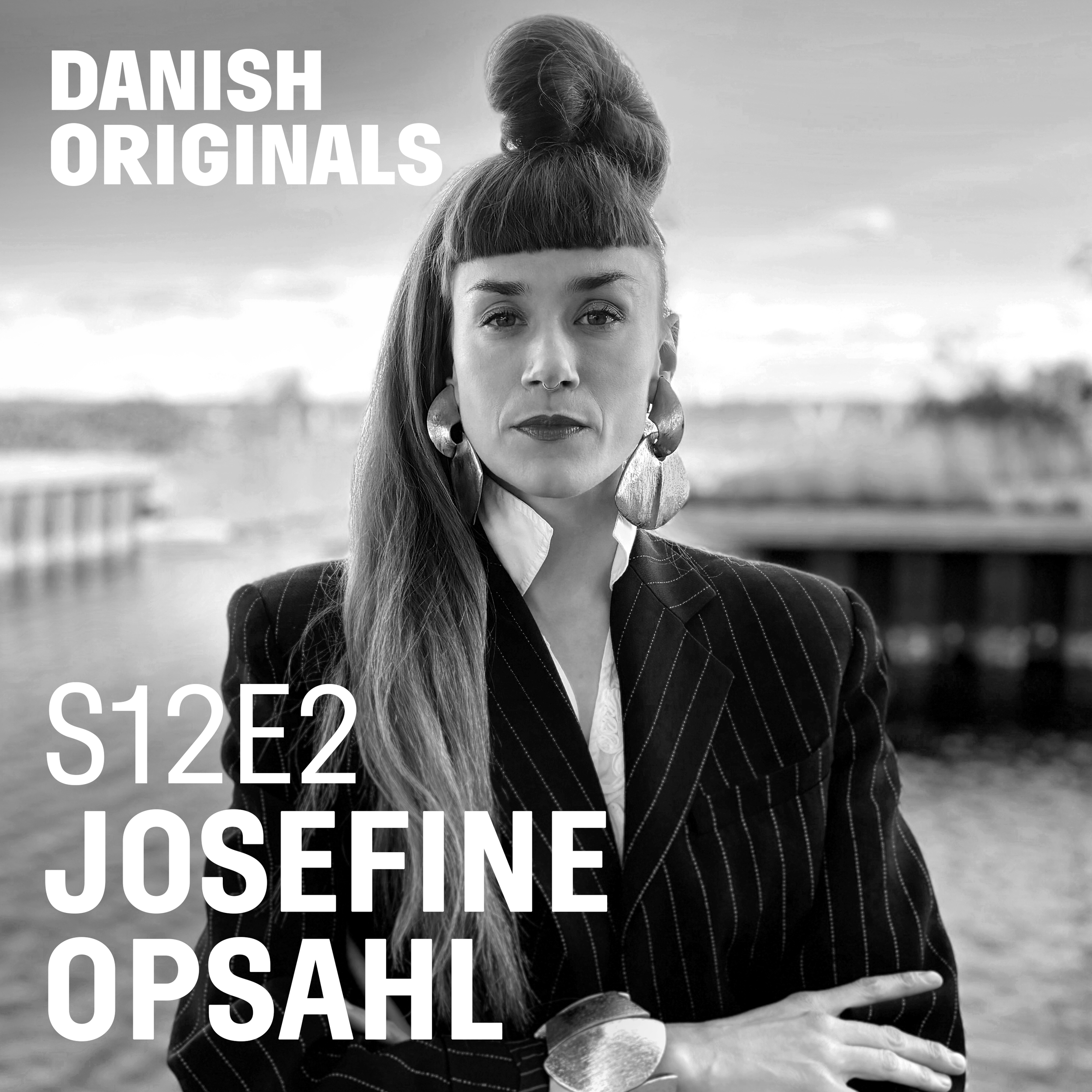
From her studio in Copenhagen, Lyngby-born Danish composer and cellist JOSEFINE OPSAHL talks about her dual roles as a classical music composer and a cellist who performs with live electronics and sound design. She elaborates on performativity, the forces of life that are at stake in her music, and her breaking down genre boundaries and dissolving physical ones. And Josefine traces her creative journey through her albums Atrium, Cytropia, and her HANDS Concerto for Solo Cello and Orchestra.
Photographer: Tomas Kaerup
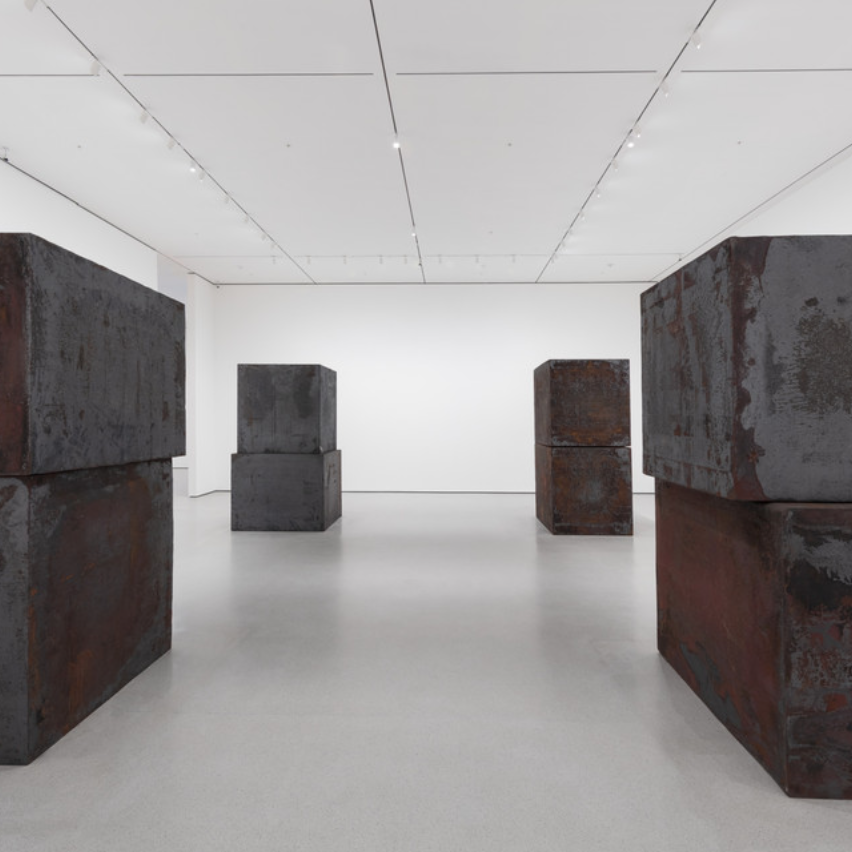
For today's episode, Josefine Opsahl chose Richard Serra's Equal from 2015 from the collection of The Museum of Modern Art, New York.
“I think dealing with yourself so closely as you do with an instrument, a non-digital instrument, these natural materials, every day trying to sync up your body and your breath and your mind and your emotions, I think that meditation and every day seeking new possibilities, also shines into your way of living.”
“An ambition for composing for me is to create art that people throughout time would re-imagine and revisit and gain new thoughts, pieces that make them ask questions and inspire them to maybe do things slightly differently, think differently about the world, and make it a better place eventually.”
“I love the bursting into applause or the yelling in the middle of a piece or that more alive, live feeling. I’m not a great fan, not when I perform solo, of the classical way of waiting until a movement is done, then applauding. I love when I can boil up an energy and when it feels like we’re creating together.”
Powered by RedCircle
This conversation with Gregers Heering occurred on May 8, 2026.
00:01
Josefine Opsahl
I love the bursting into applause or the yelling in the middle of a piece or that more alive, live feeling. I'm not a great fan, not when I perform solo, of the classical way of waiting until a movement is done, then applauding. I love when I can boil up an energy and when it feels like we're creating together. That's where it all makes sense on another level to me. Also because then it feels like I evoked something in the audience.
00:31
Gregers Heering
My name is Gregers Heering. I'm a photographer and guest host of Danish Originals. Our goal is to celebrate Danish creatives who have made a significant mark in the US.
00:42
Gregers Heering
Today our guest is Josefine Opsahl, Danish composer and cello performer. Welcome, Josefine.
00:50
Josefine Opsahl
Thank you very much.
00:52
Gregers Heering
So Josefine, I first of all want to express a personal gratitude to you for your beautiful music, which I've listened to on repeat recently, initially as preparation for this conversation. It's quickly grown into something much more personal as it's provided me a space to grieve and heal in connection with losing my beloved mother only a few weeks ago.
01:16
Gregers Heering
So I've been thinking a lot about the close relationship between the human condition and art making. I don't think I'm wrong when I say that most good art comes initially from a place of suffering, although that's a very fine balance as it has to be pure and not forced.
01:36
Gregers Heering
When I listen to your music, it certainly has a darkness to it. It's also full of nuances that blossom into hope and delight. Can you talk a little bit about how or if that correlation between suffering and pain plays into your creation process when you compose and perform? Just to start on a light note.
02:01
Josefine Opsahl
Thank you very much for the beautiful introduction, Gregers. I'm super happy to hear that you've been diving into my music and found these spaces for healing and contemplation. Suffering and darkness and healing potentials are significant points to my music and my art making.
02:21
Josefine Opsahl
But I'd maybe take it up a step. I think my music comes from asking a lot of questions to the world. And in certain situations in your life, you find yourself asking even more questions. Say you lose someone: Why this? Why am I here? Why do I need to suffer? Why do I seek love? Why do I find it difficult? These questions about being alive.
02:42
Josefine Opsahl
That is what I seek to process in my works always, and that's probably why you sense this longing. All these strong forces of life are definitely at stake in my music. It should matter what we do while we're here on this earth and how we make an impact on the communities and the societies we together shape.
03:07
Gregers Heering
Wow, beautiful. There's so much to get into with that. And I've been watching your energized and beautiful performances of "Core" and "Solar" from your newest album Cytropia. You're a powerful performer. When you perform, there's a lot more going on than just playing. There's the way you dress, and obviously, amazing lights. When you look at this woman on stage with her cello, who is that person you're seeing?
03:38
Josefine Opsahl
I'd begin by saying oftentimes I feel more like myself when I'm that character. And usually I don't pull a strict line between being that, that you see on stage, and who I am in my personal life. We're pretty much the same. I might emphasize qualities of myself by the way I dress, by the way I perform. Also, I'm all of a sudden with a cello. I'm not with a cello in all my private life a lot of the time. I'm not carrying it around all the time.
04:08
Gregers Heering
It's a big instrument.
04:09
Josefine Opsahl
It's a big instrument. So in a way, I think also having all these questions around the world and what it is to be alive, I find it extremely inspirational and revitalizing to embody extra big powers in the world somehow, made of something from space or something like an ocean, playing with dissolving my physical boundaries.
04:33
Josefine Opsahl
That's also what my cello playing has always been about a little bit, tuning your body to be able to do things that are incredible to be able to tune and train your body to do. Body, mind, emotions at the same time, wrapping yourself around this instrument and all of a sudden evoking musical worlds and emotions within yourself and in other people.
04:56
Josefine Opsahl
That has always been a quest for me, and somehow when I really hit the zone, it becomes a complete bodily, mindly, emotionally, and visual performative entity. It's really even more who I am than what I am when I'm private, in a way. I just unlock forces in myself that are absolutely just there to begin with.
05:22
Josefine Opsahl
So it's not a mask I take on or a persona I try and become. I just let myself shine through completely as I am, contextualized in some space or in some costume and sometimes with a theme of some sort.
05:37
Gregers Heering
That's very clear from watching you perform. I don't know you personally, but I can obviously feel that you are very authentic and sincere in the way that you behave on stage, and it's a place you seem extremely comfortable in as well.
05:57
Josefine Opsahl
Absolutely.
05:58
Gregers Heering
How did you get there? Do you remember the first piece of music or even sounds that burned themselves into your soul and made you realize that this is something you wanted to do or pursue?
06:08
Josefine Opsahl
I would say tides turned when I got my first violin. I'd been playing a little bit of recorders in school. My grandma bought me one, but it never really resonated so well with me. It was fun to play around with, but nothing more than that.
06:23
Gregers Heering
Is it in Danish a blokfløjte?
06:25
Josefine Opsahl
Blokfløjte, exactly.
06:27
Gregers Heering
Okay!
06:28
Josefine Opsahl
Then I got my first violin, and I had no idea what I would think about it. We borrowed this violin at some music school. And my parents were like, "Maybe you wanna try this out." It was a very bad instrument, nothing special. And I grabbed it, and started playing along with all my dad's vinyls he would spin on a Friday night.
06:47
Josefine Opsahl
Just jamming and figuring out the tactility of it, how your fingers and your positions there with one hand and the other one carrying the bow, coordination, the strength, you could feel you were building slowly, and you could play so quickly. Maybe I wasn't that quick in the beginning, but it felt like I could advance very quickly. It was a little game I played.
07:12
Josefine Opsahl
And music just did something to my body and soul. My parents didn't feel they should put me in musical classes early on, but when they put on music, I would dance like crazy, and they almost couldn't stop me. When I was around 12, I was a bit tired of the violin, and then one day I encountered a cello closely, and I fell completely in love. I felt something that was extremely passionate and wild.
07:40
Josefine Opsahl
When I'd played the violin for four years at that time, learning all the scores, all of a sudden it just felt so much like school. So much, aah, you need to be able to do this, to do that. And I just needed something more wild. And in the cello's sound creation, and the whole thing that it's like another body that you need to wrap yourself around and figure out how to control.
08:02
Josefine Opsahl
It's pretty massive pieces of wood and very thick metal strings and some rough materials that you need to tune your body to be able to deal with and make beauty out of. That instrument just had the depth and the rawness and sensuality that was somehow super intriguing to me. From that point, I didn't really look much back.
08:28
Gregers Heering
And where did you grow up, and were you born into a musical home?
08:32
Josefine Opsahl
I was born in Lyngby, north of Copenhagen. When I was starting school more or less, my parents built their own house, outside of Roskilde, so, middle of Zealand. My mother played the accordion when she was small and on a very, very high classical level, the advanced accordion.
08:54
Josefine Opsahl
And then she got injured in her arm. She had this Russian teacher who would force her to quit anything else but playing at that point, and maybe her injury was her escape from a pretty strict accordion world. Her parents would tell her, "Study something safe." So she went for law, and she was a lawyer for a little time.
09:18
Josefine Opsahl
But then she realized that she missed music so much that she quit everything and then started playing the harp at the age of 30 when she had gotten me and my brother. So a complete renewal of lifestyle and all that. The narrative in my family has always been that music is somehow the best, the most beautiful, and if you feel like going for it, you should really do it.
09:46
Josefine Opsahl
On the other hand, my mother always had these, in a way, traumas or bad experiences with the very classical school, how brutal, competition-wise, it is or can be to your mind, on your body. So she advised me to not really go that way.
10:04
Josefine Opsahl
My intuitive musicality was pretty much about inventing my own music and playing along with these vinyls, a very broad artistry that was creative and performative and so much else. But for many years, I studied classical cello and composition very much in the classical sense because I felt there are tools I need here.
10:26
Josefine Opsahl
It was not especially a mental or mindly decision. It was much more intuitive: here's a way I can stand on the shoulders of what my ancestors developed, and I can get ahead with greater speed if I study this thoroughly, and then I'll come back and find my own way on the other side of the academy.
10:47
Gregers Heering
I'm curious about these vinyls of your dad's that you were playing along to in the very beginning. What were you playing along to?
10:54
Josefine Opsahl
So that was stuff like tv-2. And Supertramp, and Kliché. Stuff like that. Sometimes, ABBA. Not classical stuff, not jazz stuff, much more popular stuff. Which was amazing because the whole house would jump up and dance to it because everyone fancied it and loved it, and it was my parents' kind of sound.
11:23
Gregers Heering
When did you then decide to take it so seriously that you went to, what is it called Det Rytmiske Konservatorium? What is it called in English?
11:34
Josefine Opsahl
Oh, the Royal Academy of Music.
11:36
Gregers Heering
Okay. When did transition into it just being something you were studying on your own to actually getting accepted into the academy?
11:47
Josefine Opsahl
Already when I was 15, I applied for this MGK musical basis course that I integrated with high school at Sankt Annæ Gymnasium in Valby in Copenhagen, which is preparing you for the academy. So from 15, I was pretty sure I wanted to head in that direction. Then I was a bit in doubt for a couple of years.
12:11
Josefine Opsahl
I really wanted to go for music, but then I figured out how conformist the classical view on it can be. There were so many disciplines that I was forced to go through, like orchestra playing, which is extremely beautiful. I just found it really hard to find my voice and my musicality sitting in a big cello group.
12:33
Josefine Opsahl
I suffered in the hierarchies and if I had a great idea, I couldn't share it if I wasn't the first cellist. And ear training, playing piano, good, good things, but they just forced you to think about music in a specific way. And also, they didn't really embrace if you were a creative player in classical music. In jazz, it's completely natural. In pop music, rock music, it's completely natural that you write and you play.
12:58
Josefine Opsahl
In classical music, since Beethoven, who took composition to another level, the world started to divide the roles: you need to do either/or. Some people thought that you wouldn't be able to really accommodate both things: to be able to compose like Beethoven or beyond, and to play the scores of him and everything that came after.
13:21
Josefine Opsahl
So the classical music world separated the composition of music from being a performer. Before then, it was completely natural. You couldn't think of a composer who didn't play, because how would you know instruments? How would you try it out? How would you have fun with your friends if you couldn't play an instrument yourself?
13:41
Josefine Opsahl
So it's a strange artificial division to me. And that's one of my goals, and what I embody is definitely also this fusion once again of those two characters. You can be a composer and a classical performer. Moreover, I also cross boundaries with genres and performativity and with creating art that is more like art pieces or installations. I cross many boundaries.
14:08
Gregers Heering
Yeah, for sure. If we leave your journey for one second here and go back to the way you perform. You are alone on stage, it's just you and your cello, and you're using this device that is by your feet where I believe you can record tracks, and then you can overplay these tracks as you perform live.
14:26
Gregers Heering
And that is really what speaks to what you were just talking about. You're not a classical performer in the classical sense. There's this electronic aspect to it that makes it so fresh and original. Can you talk a little bit about how you perform live? What goes into it?
14:44
Josefine Opsahl
Absolutely. Maybe I will start back to the academy once again, because while I was studying there and I was getting trapped a little bit in how conformist classical music can be and studying it can be, it became my guilty pleasure to, at late night, find my little looper.
15:02
Josefine Opsahl
That's what it's called, a little electronic device where you can record yourself over and over. I'd find it in my locker when everyone else had left the school. I would stay, I would pull this out, I would plug myself into a sound system, and I would have so much fun. I would free my sound up on my cello, so I connect my cello with a little microphone.
15:23
Josefine Opsahl
That's the basic version of it. I can record, I can loop, I can make one little soundscape, and I can improvise or do whatever on top, and I can do that several times. It was like a meditational space and a healing space for me as well, healing whatever had been going on during that day of school.
15:44
Josefine Opsahl
Oftentimes you'd be told you're not good enough, or you would think, "I'm not good enough. I'm not fast enough. I'm not learning the pieces fast enough. I didn't love my last performance." A lot of negative feelings quite easily arise when goals are so high, as they are in classical music. The amazing part is that you seek to transcend your physical boundaries somehow and be as good as your teacher and even better, every single day.
16:13
Josefine Opsahl
And of course, you have a lot of bad days where you feel I didn't really make it today, and maybe not the next day as well. But then I had this little space for myself where music was about something else. It was for me, and I could dwell in all kinds of sounds with no one telling me, "That's a bad sound. That's not the best technique you're using here. Your bow arm looks weird." or "The sound that comes out is not the most beautiful."
16:39
Josefine Opsahl
But that's not the point with art, and it has never been to me. Perfection is not the goal. It's a tool. And in that space with myself late nights, I strengthened that inner intuitive feeling, and that made me able to, I think, go through the academy, and still be standing tall as both a classical capable cello player and a full-blown artist somehow.
17:06
Gregers Heering
I remember seeing you accepting this very esteemed award in Denmark from the now King and Queen. It was called the Crown Prince Couple's Stardust Award, and you did a very beautiful acceptance speech where one of the things you mentioned is your dedication to perfection and keeping up with perfection. What is perfection to you and is there ever such an end station as perfection in your mind?
17:37
Josefine Opsahl
Everyday you get up every day and you try to become the best version of yourself. That's more what's at the center of it. It's not some objective decision around what is perfect and now you're perfect. You'll never make it there, and that's not the point. But strive always for getting closer to who you are, and by that being more able to contribute to society, to be a good person, to be able to care for others.
18:08
Josefine Opsahl
And that is not especially only concerned with being an artist. I think dealing with yourself so closely as you do with an instrument, a non-digital instrument, these natural materials, every day trying to sync up your body and your breath and your mind and your emotions, I think that meditation and every day seeking new possibilities, also shines into your way of living.
18:35
Gregers Heering
You have kept yourself free in a certain sense throughout your education and your studying and not getting too caught up in things, as you're talking about, in classical music and these very highly competitive musical environments. There are movies that come to mind. I don't know if you've seen "Tár," for instance, or "Whiplash.
18:58
Josefine Opsahl
I have.
18:59
Gregers Heering
Do these movies hit reality to a certain degree?
19:03
Josefine Opsahl
They absolutely do. Very much. But the people studying music are very different. We have different goals and what we're told and taught resonates differently with what we're made of, what kinds of people we are. So some might be driven as far as some of these characters in the movies. Some might have these late-night sessions with themselves and their looper and somehow heal whatever was broken during the day, and they make it through, and grow from the challenge.
19:34
Josefine Opsahl
And some aim for something completely different. They don't wanna be the best. They just wanna be very good and take part in, for instance, orchestra playing. That also takes an extremely high level of performativity and musicality. The role as Tár does in the movie, is a special character. I might be pretty similar actually.
19:53
Gregers Heering
To her? You're similar to her?
19:54
Josefine Opsahl
Yeah, I'd say in the way she has definitely set very, very high goals from the beginning, and she's multifaceted as an artist. Thinking about classical music, she has obtained a position in the movie, when we meet her, where she is both a composer and a conductor. So she is bridging fields that are usually not bridged in classical music. She's already transcended some of the boxes. There, I can definitely look to her and be like, "Yeah."
20:24
Gregers Heering
I should tell the listeners that we're talking about the movie "Tár," which has Cate Blanchett in the lead character of Tár and it's an excellent movie. I've seen it several times. Please go on, Josefine.
20:36
Josefine Opsahl
And I think another point to why we could maybe be similar. I think when you survive in the system of classical music, it's because there's something there you cannot let go of, something you just need to seek. You crave maybe also the challenge. And when you land there somehow, like I do when I get to compose and play and make new synthesis, and Tár gets to conduct and compose and inhabit different roles and somehow get accepted, as we are, we've crossed so many boundaries and broken the usual boxes.
21:14
Josefine Opsahl
And when we're allowed to still stay there, stand tall in the field of classical music, we've built a strong platform where we're already quite a lot ourselves. I think the people who get very lost in classical music are if you never transcend just the perfection or just the goals your teacher puts for you.
21:35
Gregers Heering
There is a scene where she's speaking to, I forgot what his function is, but he's second in command, and she refers to him as a robot because he's so into the roadmap and the blueprint of how to do things, but he doesn't have his soul along with him, right? I guess that's what you're talking about.
21:55
Josefine Opsahl
Yes. And if it didn't fit with classical music, I think Tár and I would fight for a long time to create that platform where we would fit in anyway. But if the soul didn't resonate with classical music, we'd go somewhere else in the end.
22:12
Josefine Opsahl
Because the soul, when you've found that spot in yourself, has to express itself, so you wouldn't confine yourself and put yourself into the box in the end that they would tell you to. And many get lost there. They spend their whole life trying to fit in that box, and that's not a pleasant place to stay, and that breaks you.
22:32
Gregers Heering
I think this is fascinating because of what you've accomplished already at a very young age, you've been playing all over the world, you've won awards, the list goes on and on and on.
22:42
Gregers Heering
Every artist is dealing with this balance between constriction, ambition, and freedom, just to avoid what you're talking about, locking yourself into a box. You gotta blow up the house from time to time. How do you feel ambition has changed for you since you set out?
23:02
Josefine Opsahl
I would say, my ambitions were more secret earlier on when I hadn't achieved so much yet. I'm the kind of artist who, as you point to as well, loves to blow things up once in a while. I need friction, and I need challenge, and if something gets too comfortable, I need to move on somehow.
23:22
Josefine Opsahl
And it's very intuitive, and I can't really tell when it's happening or what's gonna happen. At many points throughout my career and my studies maybe mostly, I wasn't so good at speaking about my ambitions because would you dare to if it feels like you're putting something extremely big out there, and you have this feeling somehow that you could go this far, and you would wanna do this, but what if it doesn't match reality?
23:45
Josefine Opsahl
And now I'd say it's way easier for me, maybe not to the full depth of it, but definitely, I've built another belief in myself, and it's clearer to me how mechanisms work in the industry as well. So it's a complete other map to be looking at when you try and figure out where you could go and where you wanna go and what new walls you wanna break down.
24:12
Josefine Opsahl
Ambitions often resonate with something external, making it to that concert hall or to have a piece performed with this orchestra. Ambition can also be what you want for yourself and your works. And a very beautiful thing about composing is that it's very much an internal job you're doing when you're composing a piece. You're confronting yourself every day on many levels.
24:37
Josefine Opsahl
But in the end, it's gonna be put out there. It's gonna be very external. If the piece doesn't demand that I'm the soloist, then it's gonna be handed over to someone else. And it's out of my hands how the music would sound, what it would mean. And I think that's extremely beautiful also because it resonates into both the time and the timelessness of composing or creating art.
25:01
Josefine Opsahl
Some of us, when we're performing it ourselves, we are tied together with it, and it's gonna be my performance of it and my expression and my body doing it on stage and my exact interpretation. But a human lifespan is pretty short. And I've grown up encountering all these beautiful masterpieces by Bach, Beethoven, Stravinsky, and these are all people who are dead.
25:25
Josefine Opsahl
We do our best when studying their pieces to make the music come to life as they wished for. At the same time, it's never really about that. Art is about the people who can mirror themselves into it now, who can get new impressions of society themselves, relations, life and death, all these things. It's always a living thing.
25:45
Josefine Opsahl
So of course, an ambition for composing for me is to create art that people throughout time would re-imagine and revisit and gain new thoughts, pieces that make them ask questions and inspire them to maybe do things slightly differently, think differently about the world, and make it a better place eventually.
26:09
Josefine Opsahl
But somewhere there you need to leave your ambition because I cannot force anyone to get this out of my music, especially when I'm not here anymore. You can hope you can meet the piece you're working on every day with love and wish that this will be valuable to others now and in the future, but you never know.
26:28
Josefine Opsahl
And that has changed since I was younger because then you wanted all kinds of cool people to play your music and say cool stuff about it and all that. But when you go deeper in it, and maybe also when you've satisfied some of your external ambitions, you start to care more about the longer-lasting vitamins in it.
26:50
Josefine Opsahl
And you think more about what it means to even devote yourself, devote so much time of your life into creating this. Because what I do definitely also makes you sacrifice a lot of other things.
27:05
Gregers Heering
Obviously one doesn't get to the point you've reached without a really huge commitment of drive and passion. And there are sacrifices to all choices in life. What are some of the sacrifices that you have encountered?
27:21
Josefine Opsahl
I definitely, already quite early on, had to do less social things. Already in high school, I did social stuff with the people I studied with, and we played a lot of music all the time. But the time that didn't have anything to do with music was very limited.
27:39
Josefine Opsahl
I would say it's absolutely worth it, also because you gain so many beautiful people, and you meet on a completely different level when you can play music together. It's this universal language, of not just meaningful things you put out, but emotion. And to be able to breathe together in music is like you make friends for life on such a deep level.
28:01
Josefine Opsahl
So don't get scared out there. Absolutely play your music, and go for it. And that social aspect is definitely very prominent still in my life. I'm 34, I don't have a family, I have a partner, I don't have kids, I'm not looking into having kids. It doesn't feel like a big sacrifice at the moment because my passion lies in music and creation. My creativity is well used there.
28:32
Josefine Opsahl
But many of my friends who didn't take the path that I did, they're building their families. And their weekends, they spend going to their summer vacation house, going to the beach. It's other values, kids, or pets even, that are important to their lives.
28:50
Josefine Opsahl
And also there, it makes me rather different around my friends, because I'm not there. So the things we can talk about are not completely their life and not completely my life, but somewhere in between. So as I grow older, I absolutely grow further and further from how most people build their lives.
29:14
Josefine Opsahl
And that is a sacrifice somehow because your connection points are just not as inevitable or naturally there anymore. So you need to fight more to keep that alive. And then I'm super busy and traveling a lot, which makes it hard to really nurture those connections. But then I get to meet artists and other people like me all around the world, and we're not that different at all in the end.
29:40
Gregers Heering
I can relate to what you are talking about. I'm a late dad. I have a five-year-old. I just wanna say that there's also a model to start later with all that, it's not black and white.
29:51
Josefine Opsahl
Good to hear.
29:53
Gregers Heering
Are you based in Denmark or Berlin at the moment?
29:56
Josefine Opsahl
I'm based in Copenhagen but going a lot forth and back to Berlin. My whole setup of label and agents and most of that is there. But I have a super amazing apartment and studio in Copenhagen, so it's a perfect place when I'm not on tour. It's a very good place to concentrate, I'd say.
30:16
Gregers Heering
Okay. I am not up to speed on everything that's going on in the music world, but it seems like you belong to this wave of Nils Frahm's, Agnes Obel, and other musicians fusing electronics with very competent analog playing.
30:32
Gregers Heering
And I was wondering if you see a heightened interest from people, even younger than yourself, in — now I call it classical music, I know it's not the classical sense of classical music, but — this type of music, in the midst of all the social media and short attention span world we live in?
30:53
Josefine Opsahl
I absolutely do. And it's some good connection lines you're laying out there. I've actually been working pretty closely with Nils and his setup recently, and we did a concert together in VEGA.
31:07
Gregers Heering
Oh, amazing.
31:08
Josefine Opsahl
Yeah, we share a lot of ideas about how we also care about the electronics to not be this artificial digital extra bit of the musical field. He's amazing with finding these analog old instruments and mixers and all his equipment is super analog and super old and German.
31:33
Josefine Opsahl
And sometimes he even insists on traveling with his own PA system. So he would go to VEGA and he'd maybe check out their speakers, but in the end he would play on his own sound system to make the music physical, to give it that analog body.
31:49
Josefine Opsahl
That's also very much what I'm doing and presenting instrumental music that dares to dwell for a long time in soft nuances, then peak, then build for a long, long time. Following these pretty classical spans of emotion and dynamics really attracts so many people, but also young people.
32:10
Josefine Opsahl
And I think why it's working is exactly this craving for something that's both way more, maybe, demanding and gives you peace at mind and in your body to immerse yourself in for a long time. Because the world we're living in is so digitized and so much about, as you're saying, short attention spans, flashy colors, flashy sounds.
32:33
Josefine Opsahl
Everything is so artificial and it has to peak within the first minute or something, or Spotify wouldn't even think about it. And actually, we absolutely need the complete opposite, and we need experiences in a concert hall together. We need to feel the other person sweating next to us and feeling the sound waves, moving our bodies, so it's not just some random sound coming out of an iPhone when we play stuff out loud.
33:03
Josefine Opsahl
The physicality of being committed to something together and daring to go on a long emotional journey together with that artist right there, is super important to our society right now, and it feels like young people are drawn to it, and that's amazing.
32:21
Gregers Heering
I'm so happy to hear that. When you talk about wanting to be putting something out there that can help make this crazy place better for us, what are some of the big topics that are channeled through your music?
33:34
Josefine Opsahl
What is very prominent to my latest album Cytropia is this transcending the boundaries of what we think is human and analog and the cello, and what is electronic and digital, and made of a complete other sci-fi world. I strongly believe that it's in dialogue, and it's in new synthesis, and it's when we dare pose questions and dare not know but still move forward, that we grow as human beings and as a society.
34:07
Josefine Opsahl
The solution is never to jump back into how things were. I think we definitely, in our time, lack connection with nature, with our bodies. Our society is very much about brains. The computer being this super brain, AI being super, super brain, consisting of everyone's brain throughout the time the internet has been there.
34:32
Josefine Opsahl
And if we lose tradition and body and the connection with nature, everything else is just artificial. And we can't exist as human beings if we don't remember our roots and biology. We're not that different. Our brains evolved, our societies evolved, but we're not that different from that first man who walked on Earth.
34:55
Josefine Opsahl
In my whole setup, I visualize how we need to dare go new ways, how we need to dare cross boundaries, how we need to dare invite new technology in, not to invade us, not to take over, but we can use it to our advantage. I wanna fight fear. I wanna fight for dialogue, fight for diversity, fight for that we can coexist.
35:21
Josefine Opsahl
And it applies to so many levels, you know, social and political, artistic, environmental. I'm an embodiment of all those values that I wanna put out there. When I compose pieces, I usually have a very strong concept coming from a question to the world. I carefully select orchestration, maybe I add performativity to push an orchestra's boundaries.
35:46
Josefine Opsahl
I play with the traditions and norms and values in the spaces. So if you dive into each of them, I've done operas and ballets and a lot of symphonic pieces lately, and all of them have a kind of headline and a theme that they investigate in all aspects somehow.
36:06
Gregers Heering
You've done two solo albums. We have talked about the latest one, Cytropia. To me, Atrium from 2022 is a little bit more experimental maybe. I don't know if that's the right word, but they're very different. So maybe you can talk about the contrasts between the two of them.
36:27
Josefine Opsahl
I would say Atrium, my first solo album, is definitely more experimental, more demanding for the listener.
36:36
Gregers Heering
Demanding. Exactly.
36:38
Josefine Opsahl
It's not necessarily very soothing, it's not an album that tries to bring you somewhere in your state of mind. It more investigates the materials I'm working with. And that album features my very first full compositions for electronics and cello. And it was a very important thing to me to stick with pretty long tracks and sometimes very classical developments, but then also really go for breaking what you would expect sound-wise.
37:10
Josefine Opsahl
So I go for a heavier distortion, more rough cuts, more roughness. And I think it was a break with the culture I was brought up in where everything had to sound nice, and you couldn't be that rough. And to me at that point, electronics was also very industrial. I searched for that very different sound world and how can I go into a dialogue with this medium and still leave the two aspects to really come through as what they were to me at the time.
37:46
Josefine Opsahl
I'd say Cytropia, the elements are way more integrated. I connected the points in another way. It has become one orchestra and there's this clear voice always leading you somewhere on top, but it is this orchestra where you can't necessarily differentiate what's the cello and what's the electronics.
38:04
Josefine Opsahl
So it's not as much about the distortion of it, it's more the unification. And thereby the two albums are super different and also articulates my travel from more of a classical player to investigating electronics and loving the new worlds it showed me.
38:24
Josefine Opsahl
Cytropia was this craving for integration, which is also definitely a yearning for our worlds to not split itself apart, to not go into wars once again, to believe that we can coexist and we can create something very beautiful exactly because there is distortion and there is beauty and exactly because we are so different, we complement each other, and we can make that work.
38:49
Gregers Heering
Yeah. Wow. You have recently written for the Copenhagen Philharmonic a piece called "Hands," and the premiere was in January 2026 in the old Danish Radio Concert Hall. Can you tell us about that piece?
39:14
Josefine Opsahl
Yes. "Hands" is a concerto for solo cello and orchestra, and it was commissioned for me to be the soloist, and Copenhagen Phil to be the orchestra. When I was asked to do this, I started contemplating over, what is the solo cello really doing there? Why is it important other than usually in the classical repertoire, a concerto is a place where you show off as a soloist.
39:40
Josefine Opsahl
What is significant to me is that we express ourselves with our hands, every single person in that orchestra evoking emotions, making sound only through using their hands, sometimes blowing a bit of air into an instrument. It's non-vocal. It's not associated with our faces. Our brains are not on display. Our words are not on display. It's our hands working together.
40:08
Josefine Opsahl
I started diving into the notion of hands through human development, and there are actually some scientists stating that it was never the brain that made us progress as far as we are now as human beings. It was actually the moment where man frees up his hands that development starts to go quickly forward.
40:30
Josefine Opsahl
That is when we start to be able to form tools, creating all kinds of helpful things to live a life, build houses, hunt more sophisticatedly, efficiently. And obviously the dialogue between hand and brain, and that echoes into my quest for calling us back to the body. Also playing a cello, you get very close to its natural materials, expressing and investigating possibilities with your hands, moving around wood, moving horse hair forth and back over these strings of metal.
41:06
Josefine Opsahl
As a counterpoint to the time we're living in, that is so important and so dear, and I wanted to emphasize the hands in this concerto. The piece unfolds as this evolutionary journey. First we are in this kind of dissolved primordial sea kind of feel. And from there, we slowly find our hands.
41:26
Josefine Opsahl
And I've created this choreography that is totally breaking the rules of working with an orchestra and how you present classical music in a space, where I ask the full orchestra to echo movements that I do with my hands. So a couple of places in the piece, everyone has to drop their instrument, the music is silence, and collective movements of the hands, which was extremely intense to sit in the middle of performing.
41:56
Josefine Opsahl
And a lot at stake. Because for many musicians, instruments can also be a little bit of a shield. We're not singing with our voices. We're playing this instrument that we were taught to play very well and right. And all of a sudden I stripped them from that, and I asked them to just express themselves through their bodies that are so performative.
42:18
Josefine Opsahl
Musicians' bodies are performative whether they want to be or not. But very few classical musicians are used to activating it, or believing that it carries a significance if they're not playing their instrument.
42:34
Gregers Heering
How interesting.
42:36
Josefine Opsahl
And it was so well-received, and the audience was crying. It was very, very, very special. And that's also what it's supposed to be, one big ritual reminding us of the significance of the body. And like diversity, to have all these different musicians' hands performing this in unity, some being confident, some being extremely non-confident.
43:00
Josefine Opsahl
It's so human. It's just like how we speak, you shape movements with your hands, you emphasize what you wanna say to the world, you do it with your hands. So it's super personal and super intimate. And to be able to bring that into a concert hall, it's so tamed what happens there usually. It's all so beautiful. I also love that part of it.
43:24
Josefine Opsahl
You put on a uniform, especially the orchestra, who can only dress in black, sometimes a white shirt. The audience dressing up in a certain way, at least in the Western classical concert hall. You sit right there, sometimes pretty stiff, and you need to sit through it, and you cannot applaud between the movements. So many rules.
43:45
Josefine Opsahl
And that sometimes creates an artificial distance between the audience and receiving the music. You're tied up in all these cultural layers that's also living in the music. But we always have the possibility or the opportunity to sense on a deeper level. And the music, the art, was always made to resonate with us on all levels.
44:10
Josefine Opsahl
And I think I enhance or help the potential for letting go of some predetermined ideas of what you would get in a concert situation. And by that, either I distort and provoke or I provoke and invite and open the space. It's never leaving norms to just stiffen up.
44:34
Josefine Opsahl
So if I can lovingly create a beautiful concerto and open the space of music and art and performance in a totally different way and have the orchestra move on stage as they never did before, I think I push boundaries and minds and bodies that little bit out of their comfort zone that makes it possible to transcend the norms for each and every individual who was there.
45:00
Gregers Heering
Great. I love it. And you certainly do, you certainly do. "Hands," can that be seen anywhere?
45:08
Josefine Opsahl
I just recorded the concerto this past week with Copenhagen Phil, so that will soon be available as a recording, and will come out as an album. But obviously that doesn't feature the visual part. That cannot go on a recording. I will perform it in Romania in November, and there are talks about me presenting at different places in Denmark. I can't say where yet, and also in New York.
45:37
Gregers Heering
Okay! We spoke early on in this conversation about how you dress when you perform. And I just wanna ask what fashion means to you when performing. Please talk briefly about that aspect of you as an artist.
45:54
Josefine Opsahl
Yes, it is very true, I care a lot about and I gain a lot of power from dressing in a specific way. I love to collaborate with other artists, and I have some amazing friends who design clothes. Some are in fashion and some are more in staged arts. They do costumes at the Royal Theatre or for independent opera companies, scenographers. I love to pick items from different places, and I love to change the way I look.
46:27
Josefine Opsahl
I think you might be able to definitely state something about my general aesthetic and what I always go for. I also love when I find a new thing, a new feature, a new color. I like to play with what that new color or new fit emphasizes in my sensation of wearing it, and what it boosts for me on stage. If I have a fluffy sleeve, it just does different things when I move that arm or the other.
46:57
Josefine Opsahl
I need to be careful with playing around with it because there are things that limit my movements. But also, dogmas are sometimes great for creativity because then the people I work with must be careful. They also need to meet me and my body, that has not just its shape but also specific physical needs, just like a dancer who has to be able to stretch without it breaking.
47:20
Josefine Opsahl
Recently I played a concert in DR Concert Hall, a solo big show, and I was wearing this plastic suit. I'd warmed up, done some video shots prior to the concert. The moment I walk in and it's gonna be one hour and a half straight up, no breaks, I sit down and it cracks all the way at the back of the pants. No one could see it, but I just felt this is not happening and how do I stay focused here? Because I know if anyone could see this, they would laugh their asses off.
47:51
Gregers Heering
How did you keep a straight face?
47:54
Josefine Opsahl
I have no idea. But actually the designer, she was backstage, super, super amazing, a designer called Stina Resting. She was looking at the monitor out there, and she was actually like, "Something happened."
48:07
Josefine Opsahl
She told me afterwards that she could tell from my face something wasn't right. But maybe the good thing was that the hall in DR is so big, and I think the light designer went for darkness in the very beginning. Probably people wouldn't be able to see my face that well. That's what I hope.
48:27
Gregers Heering
Fantastic. When you perform, and you sit on a stage and you get into your space, do you actually feel the audience? Can you feel cultural differences in audiences, depending on where you play?
48:43
Josefine Opsahl
Very, very much. Yeah. That plays a big, big role in how the concert feels for me. I can gain energy from an audience, and I can lose energy with an audience, if cultures are so different when you travel. No matter what happens, I'm always pretty self-sustained with what I'm doing, but I thrive from a great response.
49:07
Josefine Opsahl
I love the bursting into applause or the yelling in the middle of a piece or that more alive, live feeling. I'm not a great fan, not when I perform solo, of the classical way of waiting until a movement is done, then applauding. I love when I can boil up an energy and when it feels like we're creating together.
49:30
Josefine Opsahl
That's where it all makes sense on another level to me. Also because then it feels like I evoked something in the audience. I mean, you can have an amazing concert as an audience, and you're completely quiet because you're just sitting still with your emotions. That's just as great.
49:46
Josefine Opsahl
And I do sometimes get booked into series that are very classical. I love that as well because there I can really distort and evoke new feelings in the audience, because they're not necessarily prepared for what I'm bringing, but they always have great responses to it, found new spots in themselves, found new emotions. But I personally love when they respond spontaneously.
50:14
Gregers Heering
What are some of these places that you most enjoy to play in, perform in?
50:20
Josefine Opsahl
I love New York. I've been there a lot the past couple of years, and I love the energy there. I think it's so loving and caring. It's also super competitive when you talk art, when you talk music. You won't survive there unless your basics are great. But still, next to that is this extreme kindness and extreme sense of community that you very quickly are taken into.
50:46
Josefine Opsahl
And people are very open to share their experiences with you and extremely welcoming, and they always tell me, "You fit so well in here," and "You're just what I needed today." And it's so kind. Another two great places contained within South America: Argentina, Buenos Aires, amazing.
51:06
Josefine Opsahl
Brazil, but this is next level because people would literally start and dance samba to what you're doing, get up, and engage themselves fully with whatever flow they're in. Spontaneously, they just express and share their joy with you in a very outward way. With my musicality, it only inspires me to go even further and to unlock even bigger movements in my body.
51:36
Josefine Opsahl
I think that's so, so, so amazing. But also the audience has to agree that's the way they express. If one person does that in a space, it doesn't really work out that well. That creates a strange dynamic. So you have to be in a cultural field where that's when concerts work best, when there's a common energy boiled up, and you can respond to it as an artist and not feel like you leave anyone out or you're only playing for some.
52:03
Gregers Heering
Very cool. You very early on knew that you had this big love affair with music and you had big aspirations. Was it difficult for you to have that drive in Denmark? Did you feel that you had to seek out bigger metropolitan places like Berlin and all that? What would you say is amazing about Denmark and maybe what is more on the limited side of Denmark when it comes to fostering someone with your talent and drive?
52:36
Josefine Opsahl
I'm very grateful for all the opportunities I have gotten, and my whole upbringing and the security I always felt and the support from my family and my teachers from early on. And socially how things work here, that everyone is looked after and it will never go so bad, someone will always catch you, I think to grow up with that core feeling that you are cared for and you are significant.
53:05
Josefine Opsahl
I also went to a Steiner school, Rudolf Steiner school, where every kid is every morning greeted with a handshake by the teacher, looked in the eye. That kind of acknowledgement of your existence and your role in the classroom has meant a lot to me throughout my life, I think, because that was also an invitation to meet myself and trust myself. So I'm very grateful for all of that.
53:31
Josefine Opsahl
But also I've known since forever that I had to get out, and the sooner the better. And still, I always keep my suitcase not totally unpacked. If I stay for a long time in Copenhagen, I leave it somewhere with a little bit of stuff, so I'm always able to very quickly zip it and then be off to the airport.
53:53
Josefine Opsahl
I'm also considering at the moment if I should more permanently, once again, move somewhere else. You can do so many great things here, but also at some point in your career, I've already worked with so many of the big institutions here, artistic institutions, and there are so many more things I could do.
54:12
Josefine Opsahl
My ambition tells me that I need to travel soon, and also artistically to get the fuel I need. I need cities that boil with diversity. I need cities where I need to stand tall for myself, where I can show everything I am, and I can be nobody. That's also a thing I love about New York. You can totally disappear. You're still a part of the city image, but I can totally flip out of my persona, and I can dress up and down, and it doesn't matter from day to day.
54:47
Josefine Opsahl
In Copenhagen, I usually meet someone I know on the street or someone who knows me or have heard about me whenever I go out the door. And so there you carry a responsibility with you every day, and being what people hope you to be embodying even when you're private. And that just is very safe, yes, in the good sense, but also a very tight community and very small. And I think art needs fuel.
55:16
Gregers Heering
Yes. Okay. I have one and really last question. You've mentioned in several interviews and I know you perform beautifully Johann Bach music. Why is he as a composer so important to you?
55:30
Josefine Opsahl
He's written solo cello suites that most of the world knows, and that I grew up playing. And it's some of the most iconic pieces for cello ever written. I've loved bits of it, I've also hated it massively because when you take it on as a cello player, it comes with such a heaviness of how you should play this.
55:54
Josefine Opsahl
But actually the scores, there are no dynamics. It's very free movements, and they're constructed as dance movements, and they're super odd because it's like you lack accompaniment. Bach has managed to make illusions of chords ringing, although the cello can only play one note at the time. So it's pretty inventive, and he's breaking so many rules in his time, and he was considered super old-fashioned when he was alive.
56:23
Josefine Opsahl
In our time, he's seen as super innovative. And mathematically, it is pretty genius what he's doing. But the reason why I had to break it up and blow it up and make something new of it is to show that I'm willing, and I think we should all be willing to question the score. We shouldn't question the depth of Bach, we should always try and renew, and make it more accessible in the time we're living in. We should never get stuck in the old way.
56:52
Gregers Heering
You truly are amazing, and I wish you all the best on the path ahead. Thank you so much, Josefine.
56:58
Josefine Opsahl
Thank you.
57:04
Gregers Heering
For today's episode, Josefine Opsahl chose Richard Serra's Equal from 2015 from the collection of The Museum of Modern Art in New York.
57:14
Josefine Opsahl
I have chosen Equal by Richard Serra.
57:18
Josefine Opsahl
It consists of massive 40-ton forged steel boxes, stacked in pairs. Two blocks are placed on top of each other, each of the four stacks is different, and the feel of the metal and the surface of each of them is different. They're symmetrical, but at the same time asymmetrical.
57:37
Josefine Opsahl
I get hit by this feeling of weight and strange lightness. It strikes me, what is time and timelessness, ancient and contemporary? The blocks are both earthy and celestial. In this piece of minimalist art, your body plays just as important a role as the blocks themselves. It takes me inwards, and at the same time, I can look to myself from a different universal height or dimension, with a calmness next to these massive metal blocks.
58:11
Josefine Opsahl
The title Equal. The installation invites me to melt away everything that I think I am to be pure bodily materials, and thereby I'm equal to any other body who would stand here. My ego is not important anymore. When we strip away our idea of culture, of differences, and we look to our shared ancient roots and biology, we're the same.
58:38
Josefine Opsahl
This piece calls me back to material, it's about resonance between your body and these masses. It's a counterpoint to the virtual reality that takes up increasingly much of our time and focus. It's a completely mystical work. I need to go there and be in the middle of this piece.