
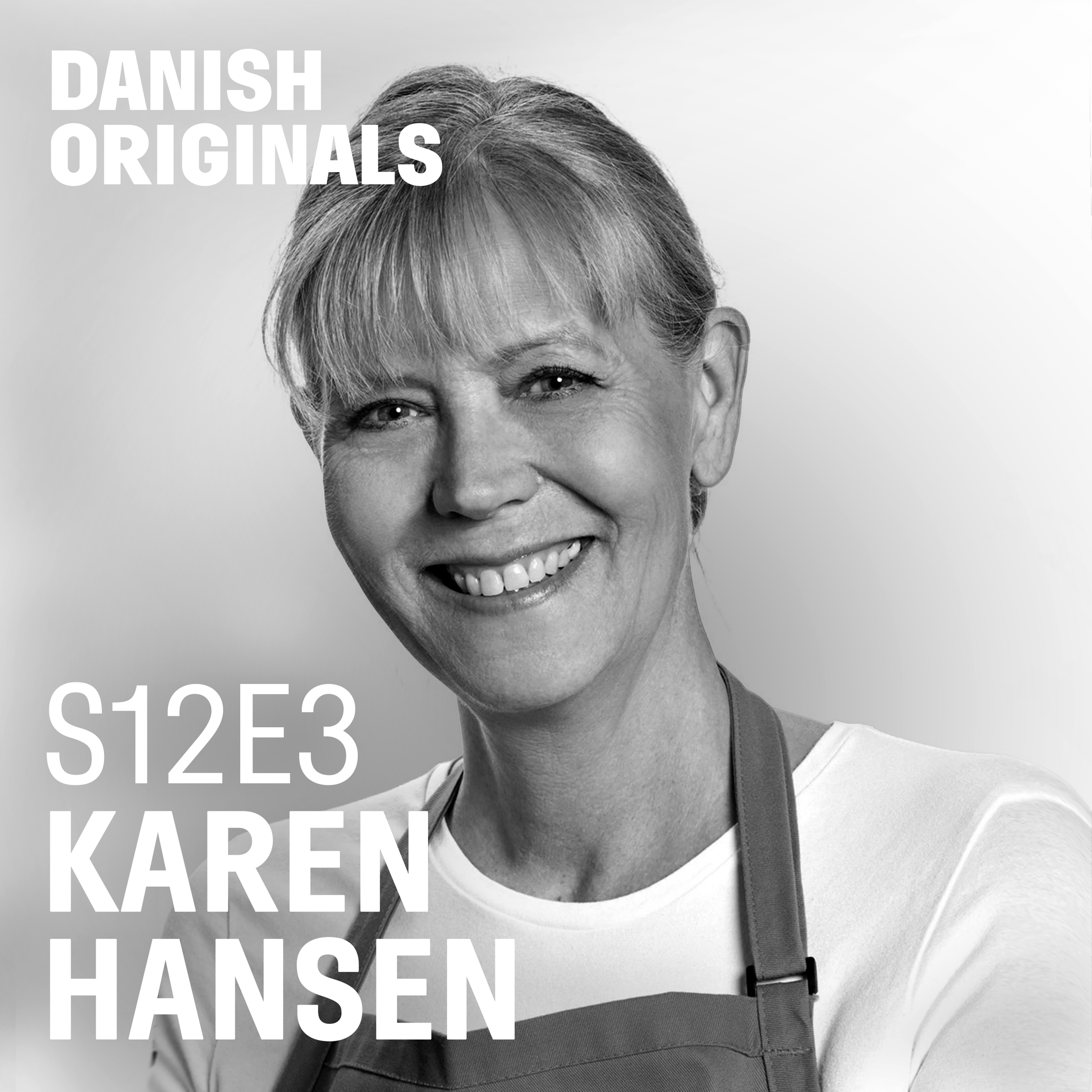
From her home in Culver City, Næstved-born, Los Angeles-based Danish bakery owner and head baker KAREN HANSEN recalls her journey arriving in LA in 1977 as an au pair to her current venture with the beloved local favorite, Copenhagen Pastry. Karen talks about being a resourceful self-starter and checking in with her instincts. And she revisits her very different prior businesses, a residential home cleaning service and a marketing service for creatives, before arriving at traditional Danish pastries.
Photographer: Sara Madsen
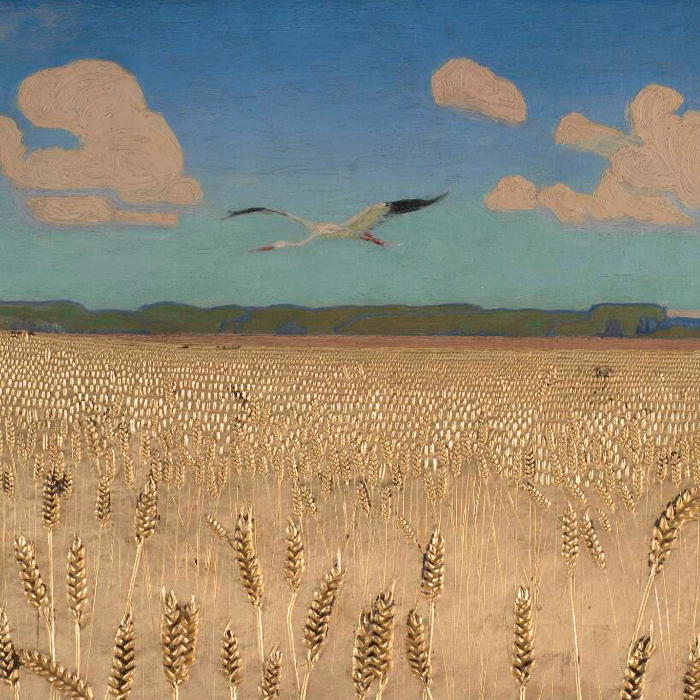
For today's episode, Karen Hansen chose Harald Slott-Møller's Dansk landskab, or Danish Landscape, from 1891 from the collection of the National Gallery of Denmark, Copenhagen.
“What I love about life is that you can take every experience, you can put everything together, and then it all comes together at the end. I’m definitely street smart. I don’t have the education, but I always follow what I think is going to work.”
“I never believe it’s not gonna work, with anything I’ve done. It might be you get to a point where you say, this doesn’t function anymore, something has to change. But then you pick up something new and you go for that.”
“The one thing I expect from my team is that they’re good to each other, and that we help each other. When we work enough, we can do something for somebody else that’s gonna help them with what they’re doing.”
Powered by RedCircle
This conversation with Christian D. Bruun occurred on April 27, 2026.
00:00
Karen Hansen
I never believe it's not gonna work, with anything I've done. It might be you get to a point where you say, this doesn't function anymore, something has to change. But then you pick up something new and you go for that. And even with the bakery, I'd never done retail. I never really wanted to do retail because you have to make people walk in your front door. And that's hard work, in a lot of ways, to do that. But never in my life have I believed that I wasn't gonna succeed with what I did. Something might not have worked, but then you just walk away from it.
00:36
Christian D. Bruun
My name is Christian D. Bruun. I am the director of Danish Originals. Our goal is to celebrate Danish creatives who have made a significant mark in the US.
00:46
Christian D. Bruun
Today, our guest is Karen Hansen, a Danish bakery owner and head baker. Welcome, Karen.
00:53
Karen Hansen
Thank you.
00:55
Christian D. Bruun
Today's your day off from the bakery and we are here in your home in Culver City. How long have you lived here?
01:01
Karen Hansen
I've lived in this home for six years and the bakery is in Culver City. So it was really important for me to live in Culver City too, because then you get to know everybody. And that has been the goal and I think I have succeeded very well.
01:17
Christian D. Bruun
And you like the neighborhood?
01:18
Karen Hansen
I love my neighborhood. I live in a place that has a lot of people living here. It's an older complex and we just have everything here. We got swimming pools, we got squirrels, we got everything. There's lots of trees and lots of places to walk. But the best thing is that when I get up at four o'clock in the morning, we also have security, so I don't have to worry.
01:42
Christian D. Bruun
So you get all the various parts of living in Los Angeles.
01:45
Karen Hansen
Everything.
01:46
Christian D. Bruun
The weather and the security and all this stuff. That's great. You're very well known in the bakery industry in Los Angeles and in California. 15 years ago, you founded Copenhagen Pastry, not too far from here in Culver City, which is on the west side of Los Angeles. Can you describe your business to us? How did it come about and what do you do there?
02:06
Karen Hansen
Well, I say a lot of times in life we take left turns and I definitely took a sharp left turn when I did this. I had a previous business that I finished and then I went to Otis for a color class. And then my business partner today said to me, he loves sweets and just knows everything that's good in LA about where to eat and what to eat of all sweets.
02:32
Karen Hansen
And he says, we could open a Danish bakery. I said, do you know what that entails? I said, that's quite a financial task. But he kept saying, no, we should open a bakery. And that's what happened. I took him to Culver City because it really was the only city that I would open a bakery in because I had worked in my 30s in Culver City with commercial photographers for about 17 years.
03:00
Karen Hansen
I knew the city very well. I knew how Culver City had developed. It has an amazing school system. So it was really perfect for a bakery because we want a community and that's what Culver City was all about. We started looking for a building and we realized really fast that we had to own a building, not lease, with all the equipment we put in.
03:27
Karen Hansen
We started in 2011. We found the building, my business partner purchased the building, and it had one good wall, that's what I say. That was it. I had some knowledge about design from Otis that I had gone to for three years for interior design. I just went to work. And for me, starting a business is really very, very exciting.
03:55
Karen Hansen
I get a book out and then I just start. I put pages in, I research everything. And that's what happened. We found a builder. It took a year to get the bakery up and running and find out what I needed for ovens, for everything. I had some really good people around me that helped me a lot with that.
04:18
Christian D. Bruun
Interesting. And you chose Culver City because you knew it already?
04:23
Karen Hansen
I didn't live here, but I had worked at the Helms Bakery building with commercial photographers.
04:28
Christian D. Bruun
Yes, of course.
04:29
Karen Hansen
I worked as an intern for six months and then I started representing a photographer. And Culver City, when I worked here, had one coffee shop, and we were really excited when that opened. One coffee shop. And I always say, they had a billiard table, so we would go on our breaks, we would go play pool. And then I saw little by little how everything changed in Culver City, and they have done a really good job. It's quite an exciting city today compared to what it was in those days.
05:06
Christian D. Bruun
Yes. I went to school here in the mid-'90s and it was all industrial. Like you said, there was one coffee shop and there was nothing going on. But then you did notice suddenly galleries started to open and there were more little cool coffee shops and things. And of course Helms Bakery was a big development with lots of restaurants and bakeries, et cetera.
05:26
Karen Hansen
The studio I worked at was at the Helms Bakery Building.
05:31
Christian D. Bruun
Which is now, I think, a big design complex, right?
05:34
Karen Hansen
Yes, but still has quite a lot of photographers too.
05:37
Christian D. Bruun
That's interesting. I know also a lot of production companies and sort of Hollywood things moved out here. And I think some Danish design companies?
05:46
Karen Hansen
They got Scandinavian Designs, I think it is.
05:49
Christian D. Bruun
Yes. You were early on in a trend that has been going on for the last ten to 20 years, I would say. Bakeries and coffee shops really started to pop up everywhere and people appreciate high quality, unique pastries. So from when you first opened till now, how has that industry developed, the clientele, your customers?
06:12
Karen Hansen
I think the exciting thing about LA is there are a lot more bakeries and they do some amazing things. Right now it's cardamon buns. We don't have cardamon buns because I don't like them.
06:26
Christian D. Bruun
There you go!
06:27
Karen Hansen
And it is my bakery, so I do pretty much what I really enjoy. And I have decided to stay really true to what we do, where it is just Danish pastries. But it's Danish pastries like when I was younger, when I lived in Denmark. Because today, even in Denmark, they're doing amazing things with a lot of new things and they invent different things and it's really exciting to see when that happens.
06:57
Karen Hansen
But in the bakery we have in Copenhagen Pastry, it's just really very traditional. And that's why a lot of people who come in that might be a little older, get very overwhelmed because it zooms them back to childhood. And my goal with the bakery, we don't change a lot. We make new things. We have new cakes, we do a lot of cakes now. But I just want the best quality every day of what we do.
07:25
Karen Hansen
I want the best spandauer I can make. And I had one yesterday and I had to go tell my team, this was the best spandauer that I have ever had. I still get excited about it because I just want the product to be absolutely solid. If you came in ten years ago and you come in today, nothing has changed. And that's my personality and that's why the bakery's that way.
07:52
Christian D. Bruun
And what about your customers? Have they gotten to appreciate Danish pastries over the years? Did they know what it was when you first opened? Obviously we know that Danish pastry in America is called a Danish, which is quite funny. And we all like to tell the story that in Denmark, they're called Vienna breads. Have you had to educate the American customer about what Danish pastries are and all the various kinds?
08:17
Karen Hansen
I think over time, yes, but what has happened, which I really enjoy, is that when you look at American bakeries and you look at a Danish bakery, the Danish bakery is not as sweet in the pastries as an American bakery will be. They add a lot of things. They add a lot of icing and more sugar, I think, to their product. And we don't. So people really have started getting the taste for not something that's overly sweet because then you can't taste the nuts, you can't taste the custard, when it's that way.
08:59
Karen Hansen
We have quite a following. And people will come in and say, I was here the first day you opened. And then, like I always say, we have our little ones, the two-year-olds, three-year-olds, and they'll come in and they'll be in a stroller and they'll point at the pastry they want, braided cinnamon or whatever it is. And then we have the ones, they'll come in and say, oh, it's that cheese? when they see the Copenhagen, we call it the Copenhagen, which in Danish, it's overskåren.
09:32
Karen Hansen
And they say, is that cheese? I said, oh no, something happened across the Atlantic! Because we don't put cheese in our pastries and people are really interested in hearing the stories when you talk about it. And my team is really good at talking to them about it, because it's been since the mid-1800s in Denmark that we have had this kind of bakeries.
09:58
Christian D. Bruun
The younger generations also want less sugar. There's a trend in the world of eating less sugar, so it all makes sense that they would come to you and appreciate it even more. Especially in California, everybody has some sort of dietary restriction.
10:14
Karen Hansen
I don't make anything specific to gluten-free or dairy-free, but we just went through our recipes and go: apple, blueberry, and raspberry, they're dairy free, coffee bread is dairy free, the kransecake and the coconut top is gluten free. Without doing anything, without changing any recipes, we actually ended up having products. And rye bread is vegan.
10:46
Karen Hansen
They do not like when I say, if they ask to have anything vegan, and I say, yes, the rye bread, that's not what they expect. No, but we do have a few things, and it seems to be just fine for them. They get excited that we at least have a few things that they can have.
11:03
Christian D. Bruun
Over the last, let's say 20 years, Denmark has become quite the food nation, which when I lived there and when you lived there, it certainly wasn't. Now it seemed somebody flipped a switch, and every bakery, every restaurant is just unbelievably high quality. Have you sensed that as well?
11:20
Karen Hansen
I think they like having something that's different. And because they get the knowledge when they try something new. And I think with the marketing that we do today, that was different from what we did 20 years ago, we have TikTok, we got Instagram, and we're quite active on both of those platforms. As long as I can get people in the door, I know that my Danish pastries will sell, because I know how good they are.
11:52
Karen Hansen
And Danes will know how fabulous the pastries are. And I get excited when I see young people, and it's the first time they're in there. I always will talk to them, ask how they heard about us, and explain everything. And it's just really, really exciting. It's so much fun to see people being interested, and I know we have sent a lot of people to Denmark on vacation because I talk about it all the time.
12:23
Karen Hansen
And have you noticed I got books at the bakery? I cannot live without my books. I always tell them, when people come in and say they want to go to Denmark, I say, okay, when you are ready, come in, we're going to do a show and tell. Because I have books from Denmark so I can show them all the different places in Denmark.
12:42
Christian D. Bruun
I see. So a lot of your customers are American?
12:46
Karen Hansen
It's known we have all the Danes, but we have a lot of Americans. Then also we have a lot of Japanese customers. And the reason is that a Japanese gentleman started Andersen and I think it's still there. And he actually took the team of bakers to Ringsted, the baking school in Denmark.
13:09
Karen Hansen
He would take them there and they would learn how to make the laminated dough. And you will see pictures at the school with many Japanese gentlemen there. And I went for ten days to Denmark and got a quick course in how to make laminated dough from one of the teachers there.
13:30
Christian D. Bruun
Interesting. We're definitely gonna go back and hear how it all started. At one point you had a second location, is that right, in Pasadena? It's no longer there.
13:41
Karen Hansen
You go with your personality and that's who I am. I love being in the back. I love being in the front. We opened a second location and financially it didn't make sense. It wasn't really the product I had issues with and running the bakeries that way. It was more the personnel and that was a little bit of a problem.
14:00
Karen Hansen
And I worked really hard and we just decided, my business partner and I, just decided it's not worth it. And then we closed that down after about two and a half years. And then went back to Culver City. And I have to say, I am just so happy at Culver City. I love that bakery. Whenever I walk in in the morning, it's just the best thing.
14:23
Christian D. Bruun
There is something great about just having that local community and you're there. And you don't always have to expand and corner the market on bakeries in California. There's something authentic about just having your place and doing well. And that's what you do. I like that.
14:39
Christian D. Bruun
I think people appreciate that too. Let's travel back in time a little bit. You grew up in Næstved. It's a town about an hour south of Copenhagen. What was your upbringing like there? What was your childhood like in Denmark? Did you have siblings, what did your parents do? What was your daily life?
14:55
Karen Hansen
My dad worked for the phone company, so we were very lucky. We were one of the first families that had a phone at home. Perks! And Mom, in her 30s, took education as a nurse's aide. And I'm very proud of her because she only had seven years in school, but went and did it and worked at the hospitals till she retired, and really enjoyed her work.
15:20
Karen Hansen
As a kid, we would go out in the middle of the fields and we would sit in this apple tree and it had the most sour apples, but we still ate them. Mom would always bake with us. I loved baking. Cooking, I've never been that interested in because honestly I didn't really like Danish food that much. Because in those days, it wasn't very exciting.
15:46
Karen Hansen
When we were teenagers, of course that was in the '70s, disco was there. That was just so much fun. And you will still hear disco music played at the bakery, and I will still be dancing a little bit because I absolutely love it.
15:59
Christian D. Bruun
And you were active at the discos?
16:02
Karen Hansen
Oh yes. Platform shoes, everything. I just find it to be one of the most amazing times in life. We had so much fun. And Næstved of course had three discotheques, which was not a lot. The military was there, the army was there. I always say we had a rotation of a lot of young men, so there were a lot of young men to dance with.
16:26
Karen Hansen
I always say I was a hippie for five minutes. I see your sweater, that's all I wore, the seaman's sweater and jeans and wooden shoes. One of my girlfriends introduced me to platform shoes and pants with wide legs, which I still wear at the bakery. My jeans have a little sway on the pants.
16:47
Christian D. Bruun
Oh, very cool.
16:49
Karen Hansen
It was really fun and it was a time in Denmark where everything seemed easier. We had all our friends, we didn't have to be afraid of anything. We just moved around and enjoyed, and would go to school.
17:04
Christian D. Bruun
Nobody locked their doors and all that stuff.
17:06
Karen Hansen
No, exactly. The key was on the outside.
17:10
Christian D. Bruun
It was an innocent '70s turning into a more international world in the '80s.
17:15
Karen Hansen
It was. I'd always worked very hard, I was very fortunate to get a job at the hospital kitchen. I had a girlfriend of mine that worked opposite weekends. We worked from six o'clock in the morning till three o'clock, and it was a really, really good learning experience.
17:31
Karen Hansen
I did that from when I was 16 till I was 18, and we had to move. The speed that I have today when I do things is definitely from those days, how to butter a piece of rye bread. Four times, that was it, and then it had to be done. But then the other weekends, I would go dancing. It was the best time.
17:54
Christian D. Bruun
And for our listeners, Næstved, an hour south of Copenhagen, by Danish terms, is quite far. But it's a very famous town especially, I think, for the military that's there, and a lot of industry at some point was also there, famous brands —
18:08
Karen Hansen
And it's one of the older towns in Denmark too.
18:12
Christian D. Bruun
And of course, the good old Bøje Nielsen, the very famous Danish entrepreneur was there, and he was in the tabloids and on the cover of all the magazines and newspapers all the time for crazy things he did. You have siblings?
18:27
Karen Hansen
I have a younger sister who's two years younger, and my brother passed away. He passed away in his 30s, in 2001. He was a baker. The interesting thing was we would always talk about, in those days, that we were gonna open a bakery in LA, and in those days it was so far from what I thought it was ever gonna happen.
18:48
Karen Hansen
But he wanted to go to America and have a Corvette. Of course it didn't happen. But he was over here many, many times visiting me when he was younger. He was a really good baker and he had a bakery in Næstved. In his 20s, he got his first bakery. And he worked in Iceland for three months. And then he went to the Faroe Islands and worked there for a couple of years.
19:13
Karen Hansen
He was having problems in school. I think there was some dyslexia going on. He started working at 14 years old with a baker. And Mom would get up in the middle of the night and drive him out there. And they started at two o'clock in the morning. He would work with this baker and it really helped him. It just gave him a foundation. And then he got his education as a baker.
19:38
Christian D. Bruun
You gotta find your own way in life. Sometimes you don't have to go the path that everybody else does.
19:44
Karen Hansen
Exactly.
19:45
Christian D. Bruun
I'm sorry he passed away early.
19:47
Karen Hansen
So, having the bakery, he certainly is in my thoughts quite a lot.
19:52
Christian D. Bruun
We all watched the TV shows on the one TV channel that we had, and we all fantasized about the United States, and California was definitely a major thing. So tell me a little bit about that. Take me back in time and those days.
20:05
Karen Hansen
On Saturday nights, my dad and I would sit and watch The Streets of San Francisco, Columbo, McCloud, and I loved those shows. When I was younger, I looked at the back of the Donald Duck magazines because there were things about America.
20:23
Karen Hansen
One thing that kind of dates me and my age, but I don't really care because I'm proud of it. There was one movie theater in Denmark that had gotten in trouble with the movie industry. It could not do any Danish movies in this little movie theater. So it got all the American movies and all the James Bond movies. This movie theater, I think, only had about five benches and all of them were wood.
20:50
Karen Hansen
It was this tiny little movie theater. They never checked your age. They would let me in and I literally would sit there with another couple of people and watch James Bond movies, the early ones. And it was fascinating. I just absolutely fell in love. And if we go back to Bøje Nielsen, he used to have a red, I think it was a Jaguar with a really big nose. And whenever I saw that one in town, I would just stop and look at it.
21:22
Christian D. Bruun
You mother, where was she when your dad and you watched TV shows?
21:25
Karen Hansen
She went to bed!
21:27
Christian D. Bruun
Okay!
21:27
Karen Hansen
And I'll tell you how I know. She came over here years later. I took her to San Francisco. And she says to me, "Karen, all these hills!" I said, Mom, did you not watch The Streets of San Francisco with Dad? And I realized at that point she was nowhere. She was already in bed, 'cause she had no idea. I knew from those days what San Francisco looked like. I just knew it 'cause I'd seen it.
21:58
Karen Hansen
America fascinated me and I didn't think I could ever go, but then I realized I actually could. My mother contacted a cousin she had in Los Angeles, and they wrote her a letter and then I came out here as an au pair.
22:16
Christian D. Bruun
Wow. So she had a cousin here?
22:18
Karen Hansen
She had a cousin here.
22:20
Christian D. Bruun
I see. So then you applied or you figured that out. Tell us about that. You must have been very excited.
22:27
Karen Hansen
I was, and I actually went to my English teacher because I wanted to make sure I didn't have too many spelling mistakes in my letter. Those days, we would send letters to each other. He was Danish and she was American. They had three children, lived in the Pacific Palisades and for me, had a big, beautiful house. It was really beautiful. And the one thing that actually fascinated me the most was the can opener, because I'd never seen anything like that.
22:57
Christian D. Bruun
Was it electric?
22:59
Karen Hansen
It was electric! Can you believe it? I bought my mom, when I came back after the first year, a can opener, electric can opener, and I paid $40 for it. She had it for many years, it was amazing. The family was really, really nice. And they liked the Danish girls, because we knew how to do things, we knew how to wash and take care of the house and babysit and everything. And then I had my weekends off that I would spend with other people and we would go see Los Angeles.
23:31
Christian D. Bruun
So you wrote this letter and now you were going to go be an au pair in Los Angeles. So in some ways, a dream come true. You could suddenly be part of all the things you had watched on television. What was it like when you first arrived here in LAX? When did you arrive?
23:46
Karen Hansen
It was in '77.
23:48
Christian D. Bruun
Okay. So arriving at LAX in 1977, take us back to that.
23:52
Karen Hansen
It was amazing. I can still see when I came out. It was very sweet. My mother's cousin, she was there with a friend of mine who is still a dear friend of mine. They were there and then the family was there. And so I, of course, went with the family. We got into this big Buick station wagon, which was like three cars in Denmark.
24:18
Christian D. Bruun
Right!
24:19
Karen Hansen
It was so big. It was a newer car. It was tan colored and it was amazing. And then the way we went home, because we went to the Pacific Palisades, we went down by Venice Beach. And you know that one square that's still there, that has the… it's very colorful, not graffiti but …
24:39
Christian D. Bruun
Oh, the murals?
24:41
Karen Hansen
All the murals. And I still in my mind see that. And then we went back up there. And my first meal in America was a banana split. As a Dane, I had never seen that much ice cream for one person.
24:59
Christian D. Bruun
The proportions were crazy.
25:01
Karen Hansen
It was one banana, of course cut in half, and three different spoons of ice cream. That was my first meal in America, and I gotta tell you, it was good.
25:15
Christian D. Bruun
Did you have a boyfriend when you were here as an au pair?
25:17
Karen Hansen
No, I didn't. We couldn't really go out that much because over here it's 21 years old and we were only 19. That was a little bit of a snafu in that one. But I spent a lot of time with a really nice group, both men and women. We were all together and we just had so much fun. We normally would go to one person's place, a really big home in the Pacific Palisades, and all just enjoy and talk and eat. And it was a lot of fun.
25:46
Christian D. Bruun
And how much time did you then spend in the Palisades before you had to return to Denmark?
25:51
Karen Hansen
I spent a year there and then I went back home and I stayed for a couple of years. And I actually bought myself a condo because in those days, they were more reasonable. And then I worked at a nursing home and I worked at a kindergarten, and then everybody kept saying, oh, you should be a nurse. And I applied for nursing school and I did get accepted.
26:17
Karen Hansen
But after three months I just said, I can't do this anymore because I just wanna go back to the States. And one night I'm sitting in my place and I am looking and I am seeing where you drive from Santa Monica down to the Pacific Coast Highway. And I cried my eyes out. I just sat by myself going, I have to go back. And after that, I decided that's it. I'm gonna figure out what to do with my life. And then I'm going back to the States.
26:47
Christian D. Bruun
That can't have been easy at that time to come here, work permits and all this kind of stuff?
26:51
Karen Hansen
We all know that was a bit of a problem. Eventually I met somebody and a couple of years into that, we got married, and I got all my paperwork.
27:00
Christian D. Bruun
I see. So you married an American?
27:02
Karen Hansen
Yeah.
27:03
Christian D. Bruun
So when you came back after being an au pair, you met your future husband. Tell us about that.
27:10
Karen Hansen
I was with some friends and Ron walked in, and me being blonde and blue eyed, I was quite attracted to somebody with dark hair and brown eyes. And he was very tall and I found him really attractive. And we started dating. I was very straight with my English. I didn't know how to do swear words, and he used to say, oh, she doesn't understand it.
27:35
Christian D. Bruun
They didn't swear on The Streets of San Francisco?
27:37
Karen Hansen
No. No, not in those days. We just had so much fun. We probably got married sooner than we would've normally anticipated. And we were married for five years and he had an absolutely amazing family. I loved his parents. Even after we got divorced, we would still spend holidays together and everything. I just became the daughter of the family.
28:03
Christian D. Bruun
So you got here and what did you do for work?
28:07
Karen Hansen
I got married, and I was staying at home. I was very fortunate in those years and we bought a house and we remodeled the house. We had a couple of golden retrievers and it was really, really enjoyable. We had a lot of friends and I had my Danish friends and he had his American friends, and in those days, we had a lot of parties. It was just nice.
28:29
Karen Hansen
We would invite people over and did the backyard barbecues and all of that. That was very American and very impromptu, you would just get together. Then the time came where I realized the marriage was just not going to last.
28:43
Karen Hansen
I had taken my real estate exam and I had passed it, but I also knew I had to make money because at that point, I was going to be on my own. I started a service for cleaning residential homes because I know what I'm good at and I'm good at organizing. And I'm very good in the service industry. I love the service industry.
29:07
Karen Hansen
I started a business that I had for about seven years where we had 100 clients in the LA area. I had three teams that would go out and I would organize everything. That was just my first venture into being my own business.
29:23
Christian D. Bruun
Amazing. So you had an American mindset in some ways, to be entrepreneurial and jumping into the unknown and see what it does.
29:31
Karen Hansen
I like making decisions. And in those days I needed to do marketing, which of course, I've never had any schooling in marketing. I used corrugated papers, and I would make these corrugated envelopes, and then I would put the flyer in there. In those days you could put it on the front door. I would take a walk every morning in different neighborhoods. I was in Studio City.
29:53
Karen Hansen
And I would, every day, get new customers. I would go out for five appointments and I would pick up four of them. And then of course, being Danish, they trust you a lot with that, which was a lot of fun. And I love seeing houses. I got to see a lot of houses, big and small.
30:11
Christian D. Bruun
Wow. And then you started a company called Fresh Lists?
30:16
Karen Hansen
Yep.
30:18
Christian D. Bruun
Can you tell us about that?
30:19
Karen Hansen
I started working with commercial photographers as an intern because I had sold my maid service, my cleaning service. I wanted to do something new. I started as six months "working for lunch" at the Helms Bakery building for a photographer. And I did the marketing, I would call for appointments, I would figure out who he should work with.
30:40
Karen Hansen
I would help as an assistant at the studio when he was doing photoshoots. And then he would allow me to do my own photography. On the weekend, I would go in there and do shooting, and I could use the power packs, everything. It was a lot of fun. But I realized my personality was not gonna work with being a photographer. It just didn't work with how I am as a person.
31:05
Karen Hansen
I went more towards the marketing part of it. I started working with one of the commercial photographers there. And I would rep him for three years, go out and sell the photography, which I really enjoyed. We did businesses, ad agencies, and design studios.
31:23
Christian D. Bruun
Amazing.
31:24
Karen Hansen
And then I would update their list all the time. I would call, because if you have a list of contacts, if it's not clean, you have nothing. I realized I don't wanna keep doing it for this person and that person. I thought I could start a company and in those days there were actually companies that would sell you a list, but it was all done on labels. I said, I could make a database so the photographers could actually have a database.
31:53
Karen Hansen
This is '92, so it was in the beginning of where Quicken had a database. There were a few databases for photographers, but I made my own. And I found Tim, who I worked with for the bakery too. We worked on a database so that photographers could purchase contacts from me and put them into their database and then I would help them do the marketing.
32:22
Karen Hansen
Most people never knew what I did because it was so different, but it was just an idea I had and I was the first person in the US that actually gave contacts on a database.
32:34
Christian D. Bruun
Amazing.
32:35
Karen Hansen
That was fun. I had no idea what I was doing, but it was again, you just put one foot in front of the other.
32:41
Christian D. Bruun
That's it. That's it. No, that's very true. And what happened to Fresh Lists?
32:45
Karen Hansen
I had Fresh Lists for about 17 years. As the industry changed a lot, there was not as much money in doing the jobs, and there was more stock photography coming in. I realized that the business was not going to grow, it was more stagnant. And it was time to do something else. I thought, what am I gonna do? I went to Otis and took a color class because I was going to find myself a new job.
33:16
Christian D. Bruun
There we go.
33:18
Karen Hansen
And people thought I was a little insane because nobody does that. I actually kept my business, still had that business, and was working that while I started going to school at Otis for interior design. And I did that for about two and a half years. I wanted to have just the knowledge, because I honestly thought I was going to be an interior designer because I really enjoy doing that.
33:45
Karen Hansen
Then, we're back to where my business partner today came up with the idea about a bakery. And that's where the left turn came in. From when I was 16, when I worked and I learned speed, then marketing, working with people through my maid service, and that's what I ended up doing.
34:07
Karen Hansen
What I love about life is that you can take every experience, you can put everything together, and then it all comes together at the end. I'm definitely street smart. I don't have the education, but I always follow what I think is going to work.
34:25
Christian D. Bruun
It's full circle? That is great. There is something about that, to have that energy and that kind of spirit of just believing and taking some chances, and seeing where it takes you. You have a sense that it's gonna work, but you obviously never really know.
34:38
Karen Hansen
Never, and I don't even know where I got that from. I never believe it's not gonna work, with anything I've done. It might be you get to a point where you say, this doesn't function anymore, something has to change. But then you pick up something new and you go for that. And even with the bakery, I'd never done retail. I never really wanted to do retail because you have to make people walk in your front door. And that's hard work, in a lot of ways, to do that.
35:07
Christian D. Bruun
There's your marketing and advertising.
35:09
Karen Hansen
And there's the marketing and advertising. Exactly. But never in my life have I believed that I wasn't gonna succeed with what I did. Something might not have worked, but then you just walk away from it and that's it.
35:22
Christian D. Bruun
And are you still working with your business partner?
35:24
Karen Hansen
He's still my silent business partner. He's pretty much my taster.
35:28
Christian D. Bruun
He'll come in and try the new goods?
35:30
Karen Hansen
He was in the other day and he gets some pastries and some things. He's a silent partner in the business and he's a really, really good business partner. I could not have asked for a person that's better. Whenever we have things we need to solve, I'll call him and I would say, I would like to do this or that. We have never in all these years had a disagreement within the business.
35:54
Christian D. Bruun
Wow.
35:55
Karen Hansen
We talked about the business plan and that was done over dinner. We always wanted a corporation that had a heart. That's what we always said. We didn't want to charge a lot of money for our product. We wanted our employees to have good terms. And pay them well. And we've succeeded in all of those ways. And we agree on that all the time, which is nice.
36:21
Christian D. Bruun
So it sounds like even though you are an American now, you have infused a little bit of Danishness into your business, treating people fairly and decent wages and all that kind of stuff.
36:34
Karen Hansen
The team that I have now is the best team I've ever had, and we are from Mexico, Sri Lanka, any religion, there are several religions in there, and ages too.
36:49
Karen Hansen
The one thing I expect from my team is that they're good to each other, and that we help each other. When we work enough, we can do something for somebody else that's gonna help them with what they're doing. And it's the thing that's never even being said. You go on to your next task and you know somebody else has done something to help you out.
37:10
Karen Hansen
It also means if they need a week off, they get a week off. We all take paid vacation in January, beginning a couple of weeks in January. We can give our full-time employees healthcare, which for me is really, really important. We do very much like they do in Denmark, we wanna make sure they're okay.
37:31
Christian D. Bruun
Good. I like that. We're meeting here in your home at 9:00 am, which I'm sure to you is a very late morning. On days when your bakery is open, what does your day look like?
37:42
Karen Hansen
Since I like being in the bakery, I go in at four o'clock in the morning Wednesday through Friday, and then sometimes five o'clock on weekends. But I have one person that comes in at four, so I sometimes go in with him at four o'clock in the morning. I just like the morning in the bakery. My job is in the morning, when I come in, I make coffee.
38:01
Karen Hansen
When I come in, we're five people that go in and we get started. We are doing everything at this point. They all know what needs to get done, so I don't really have to say anything. I'll just ask what their schedule is for the day and then they'll tell me and then we just go on and do it.
38:20
Christian D. Bruun
Do you bake everything in that building?
38:22
Karen Hansen
What we decided to do is, most places in America, they have seating, and we just decided we didn't want to do that because it is a whole different business. We have a very small retail area, you know that. But it's really nice because customers will start talking to each other because it is a smaller room. And then the bakery is really nice and big, we have a beautiful big bakery in the back and we can move around and get everything done in the back.
38:54
Christian D. Bruun
And is that unique? I feel some of the bigger chains have their things baked offsite in a more industrial way or they source the dough from somewhere else.
39:03
Karen Hansen
Everything is made there. Everything is made there. We don't get anything from the outside.
39:10
Christian D. Bruun
There's a very romantic thing that all Danes remember. When you were young and you would be out partying all night and you would come home at five in the morning and you would always stop by the bakeries and you would go to the back door and knock on the door and pay a little cash and they would give you freshly baked goods.
39:28
Christian D. Bruun
So the tebirkes in particular, straight out of the oven, it was just one of those things to fight your hangover. It's a common experience that I think all Danish young people have had. So you could actually do that at your bakery, almost.
39:40
Karen Hansen
I could. We don't do it, but on Saturday, I always make sure I'm set up early because I know they'll come early and I go out and I open the door and they can come in early. Sometimes they set the time with me and say, can we come in early? And then I say, sure, you can come pick it up early.
39:59
Christian D. Bruun
And where do you source your ingredients?
40:02
Karen Hansen
So flour comes from the Midwest, of course. And then rye comes from there too. Then our marzipan or almond paste comes from the valley up north. It comes from Bakersfield and Fresno, which is the best, so that comes from there. And then we have our flagseed and sunflower seeds and everything. We can get everything here. We don't need to go any other place except for our Danish flags, which my 89-year-old mother buys in Denmark and sends them over here.
40:34
Christian D. Bruun
Amazing. I'm holding one right now as I'm eating the kringle, what do you call it?
40:39
Karen Hansen
Kringle.
40:41
Christian D. Bruun
The Kringle. And also the kransekage, what do you call it?
40:45
Karen Hansen
Oh, we just call it Kransecake.
40:47
Christian D. Bruun
Okay, it's very good, almost pure marzipan. People may forget that Los Angeles is a desert climate, it gets really cold at night, first of all, and also gets very humid at night, especially in the winter because we are so close to the ocean. A lot of considerations to fit the climate here?
41:05
Karen Hansen
So I know when we have a day, especially in the winter when it's more humid, I can feel it. I can feel it with what we do. What we do in the bakery, we keep 70 degrees both front and back in the whole building year round, I never touch the air conditioning. It just stays that way and that really helps a lot.
41:28
Karen Hansen
But you're absolutely right. There are just days where things are a little different and especially with the morning rolls. You bake them. If it's a humid day, they gotta go in again, because I go over and I tap them on top and I know they're not crunchy. So I go to Jesús, I go, "Jesús, can we put them in for another two minutes?"
41:49
Christian D. Bruun
Amazing. So, looking back and forwards on all these things, what is next for you? Are there things on your bucket list you need to go do?
41:57
Karen Hansen
I am 68 now. I still feel that I can do everything in there. It keeps me in shape, and I can eat pastries every day, so life is really good that way.
42:07
Christian D. Bruun
Life is good!
42:10
Karen Hansen
But I really would love to, when I one day am not at the bakery anymore, I wanna travel. And I've gotten totally, utterly obsessed with van life. And I might just get a van and go either here or in Europe. I just want to go out and meet people and see things. And that's what I would like to do.
42:32
Christian D. Bruun
Any plans of returning to Denmark?
42:35
Karen Hansen
I will be in Denmark for at least two, three months when I'm not working anymore. I will be traveling around Denmark because there are so many things I have to see because most of my time for all these years that I've gone back, I always visit Mom and Dad and we didn't get to see a lot of things. I don't want to miss anything in Denmark.
42:56
Karen Hansen
I've never been to the museum in Ebeltoft, the glass museum, and I love glass. Somebody came in that actually worked there, to the bakery, so I'm pumping him for information. So I get my little trips in the bakery because I always ask people, I get knowledge from there.
43:15
Christian D. Bruun
Some news from home.
43:18
Karen Hansen
I know, but one day I will be traveling.
43:20
Christian D. Bruun
I see. This has been such a fun conversation with you, Karen.
43:25
Karen Hansen
Oh, this was fun!
43:26
Christian D. Bruun
And I'm so happy to hear all the fun things you've gone through in life and fearlessly jumping into things. A pleasure talking to you. Thank you for being on Danish Originals.
43:35
Karen Hansen
A pleasure talking to you, and thank you.
43:40
Christian D. Bruun
For today's episode, Karen Hansen chose Harald Slott-Møller's Dansk landskab, or Danish Landscape, from 1891 from the collection of the National Gallery of Denmark.
43:53
Karen Hansen
I picked a landscape by Harald Slott-Møller from 1891. This image absolutely just spoke to my heart because it's everything from my childhood and what I grew up with.
44:07
Karen Hansen
The light is just beautiful. It has the really warm feel of rye. Then you see the stalk right in the middle of the image, and then it has above that, in the distance, the rolling green hills and the water. And then of course, which is very well known, the beautiful clouds in Denmark that totally change all the time and are just going over the sky.
44:33
Karen Hansen
As a kid, I so remember what the sounds are when the corn is just almost ready to take in and you can hear the whoosh that goes through the field when the wind hits it. And it's just like being back there. I just wanna go lay in the middle of it and hear all the sounds that's there.