
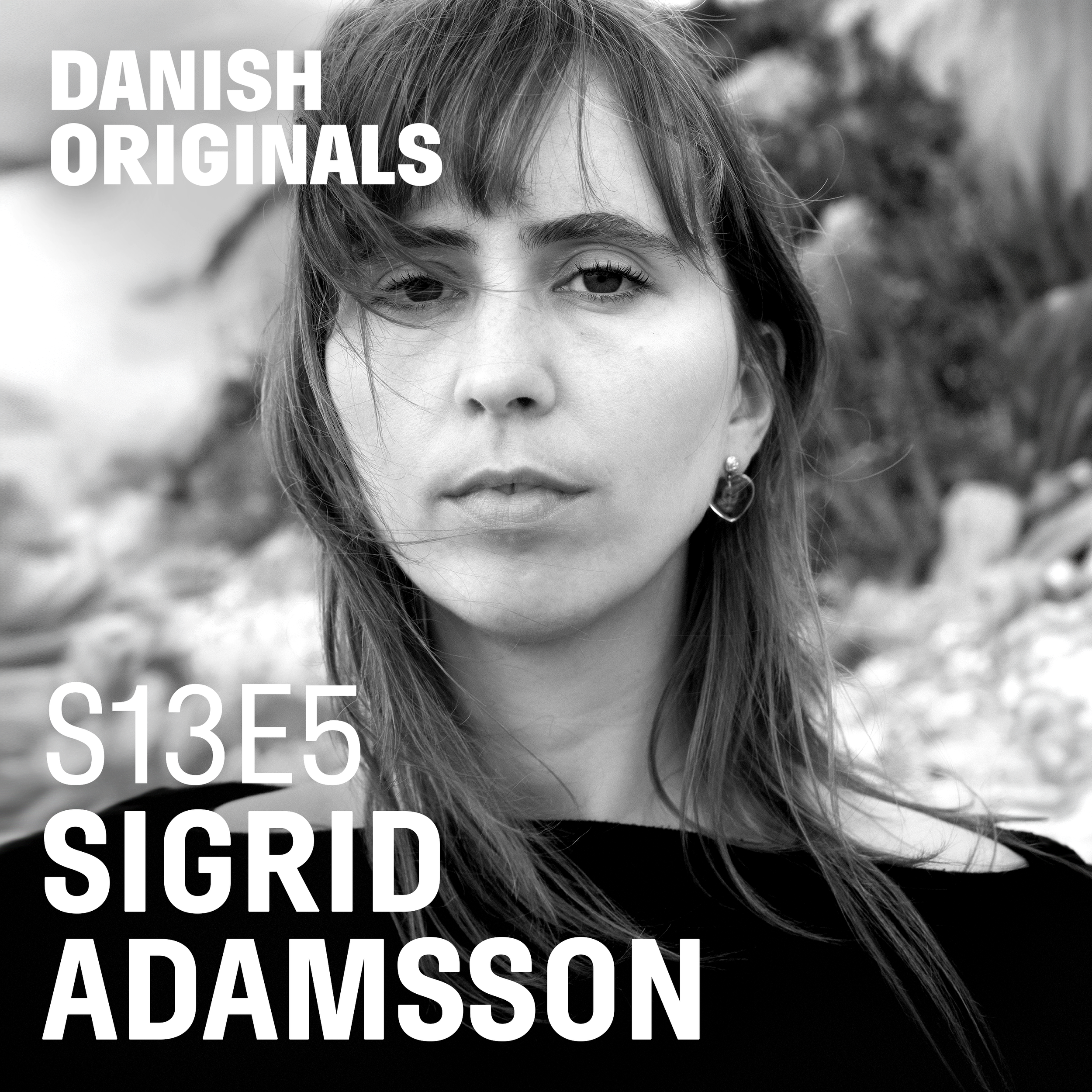
From her home in Chinatown, Hjørring-born, New York City-based Danish-Icelandic novelist, literary critic, and translator SIGRID ADAMSSON talks about her critically acclaimed debut novel Skyerne (Clouds). With foreign editions in production, she ruminates on the book's key themes of youth, female friendship, intimacy, mental illness, grief, and loss. As a new graduate of New York's Columbia University School of Journalism, Sigrid also shares her thoughts on the stories that interest her.
Photographer: Carolina Ahrenkielm
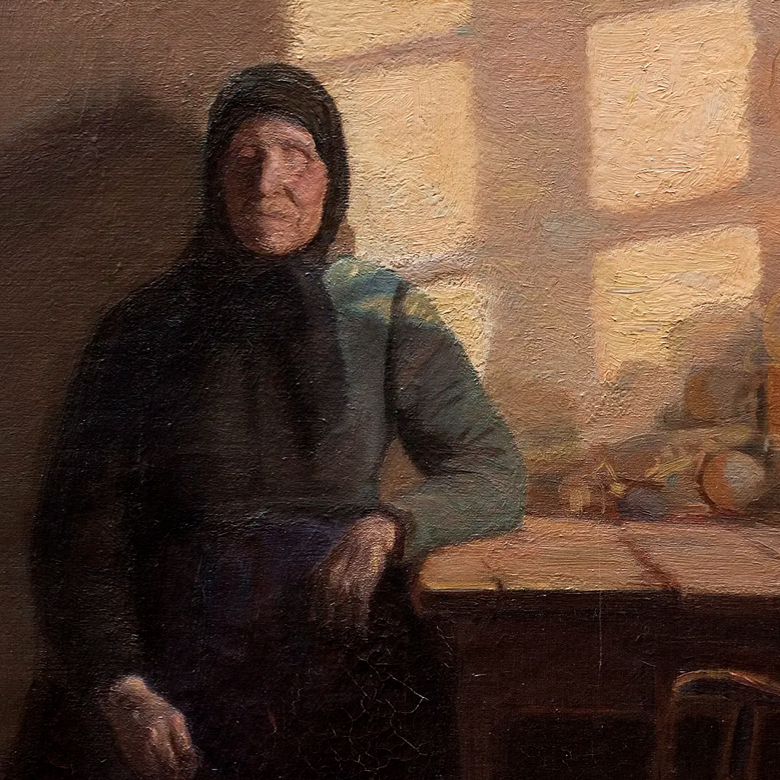
For today's episode, Sigrid Adamsson chose Anna Ancher's Solskin i den blindes stue, or Sunshine in the Room of the Blind, from 1885 from The Hirschsprung Collection in Copenhagen.
“As a writer, as an author who writes fiction, who has to create these worlds, I think being a little unspecific about myself or almost uninterested in my own experiences and more turned out towards the world, fits my personality.”
“I’m hopeful, but I cannot help but be hopeful. Me being hopeful is not necessarily an indication that everyone should be hopeful, but I am. I am. And I think about hope a lot, and I think it’s a huge privilege to dismiss hope and to just say, there’s nothing, nothing to fight for. Hope is a great political motivator, I think. I believe that.”
“I think sometimes I look at other people in other areas of art. Some of my friends are musicians or painters or conceptual artists, and I find that if I can’t express things with language, it’s almost like it doesn’t exist for me. I’m really trying to challenge myself with that, but that’s always what it’s been like. My mind has just been saturated with language my entire life.”
Powered by RedCircle
This conversation with Gregers Heering occurred on September 30, 2026.
00:00
Sigrid Adamsson
As a writer, as an author who writes fiction, who has to create these worlds, I think being a little unspecific about myself or almost uninterested in my own experiences and more turned out towards the world, fits my personality. And this intellectual culture, the fact that in the US, you've had this tradition of literary journalists or journalists or critics who also write fiction, whereas I think my experience of Denmark is that you are more fenced in, you are either/or. I think to me, writing in all kinds of ways are all connected to each other. I don't wanna wear a hat that says "fiction author." I want to just write on my own terms, and I feel a big freedom to do that here.
00:51
Gregers Heering
My name is Gregers Heering. I'm a photographer and guest host of Danish Originals. Our goal is to celebrate Danish creatives who have made a significant mark in the US.
01:03
Gregers Heering
Today's guest Sigrid Adamsson is a Danish novelist, literary critic, and translator. And Sigrid Adamsson has, at the beginning of the year, published her first novel. It's called Skyerne, which translates to "The Clouds." It's a marvelous book that blew me away. And I don't remember the last time I read a novel twice in a row.
01:31
Gregers Heering
When literature is really good, it actually creates a presence on its own. It opens rather than takes away space, and we're so used to things taking away our space these days. The book has garnered critical acclaim in Denmark, and has already been picked up by several foreign territories and is in the process of being translated.
01:55
Gregers Heering
Sigrid Adamsson has recently completed her Master's in Journalism at Columbia University in New York, and that is where, at least I believe, we find her today. Sigrid, a huge welcome to Danish Originals. We are really excited to finally have you with us today.
02:13
Sigrid Adamsson
Thank you so much. I'm so happy to be here.
02:17
Gregers Heering
And Sigrid, I'm sitting here in Echo Park, Los Angeles, the home of the Dodgers, and it's sunny, sticky, and weird weather outside. Please tell us about your setting, and I believe it's a little after 6:00 PM at night, and how your day has been.
02:32
Sigrid Adamsson
I'm sitting here in Chinatown, and it's a beautiful day, perfect weather. We just had, I believe they call them nor'easters, a really big storm over the weekend. But now the weather is just perfect, kind of crispy and sunny. And I have been at home writing, had a very quiet day.
02:51
Sigrid Adamsson
I just came back to New York after a book tour in Denmark in August and September. So I've actually spent my time since I came back to New York establishing a little writing routine and settling into my new apartment here in Chinatown. I was writing and went for a run. It was a beautiful run over the Manhattan Bridge.
03:14
Gregers Heering
Awesome. And your book tour in Denmark, I am super excited to hear what you have learned from that. But let's first talk about this book. And if you will allow me, I will give a quick summary of the book, and then you can always correct me or add to it.
03:30
Gregers Heering
It's a story about a friendship between two young women. I presume that they are in their late 20s, early 30s, and they are on the verge of transitioning from young adulthood to adult adulthood. They go out, they party, they take some party drugs here and there, they date, they smoke joints on Sundays, and download on their lives. They feel extremely comfortable when they are together.
04:01
Gregers Heering
There is a lot of love between them, as there are in profound friendships. Life itself doesn't really become real for them until they download with each other what they've experienced. There are many things where they connect and look at the world and feel things in the same way. But also, as with friendships, they are kind of like an odd couple in that they're also very different, especially when it comes to their inner lives.
04:26
Gregers Heering
And this book concentrates on these complex feelings that a friendship also is about. The things we can say to each other, but certainly also the things we can't say to each other because we don't know how, really, to articulate it.
04:42
Gregers Heering
And this is what you do so magnificently through the use of your language in this book. And then that whole thing is shaken up when one of them falls ill. It's an invisible illness that most of us would probably refer to as depression. They are simply known as A and O, like the letters A and O.
05:02
Gregers Heering
A falls ill to this mental condition. And that really throws their friendship into a different mode, if you will, because suddenly they are seeing things in each other that they may not have been aware of before. It's like there's suddenly a barrier that comes up in how they interact with each other.
05:25
Gregers Heering
We are being told this story through a really interesting kind of narrator or narrators that simply refer to itself as "we." But let's park that thing about the narrator there for one second, because I wanna stay on the plot first and foremost, and get this conversation going by bringing up something I believe I read in Weekendavisen, where there was a review of the book.
05:50
Gregers Heering
And there's a line that says, "Clouds is written by an old soul hidden in a young skat." And skat means "honey" in Danish. And when I read that, I was like, "I can relate to that." The question is, can you, Sigrid?
06:08
Sigrid Adamsson
I actually love that quote from that review, because it really encapsulates what I tried to do. I've also jokingly said a lot of times that I wrote a book about young women or girls, but I wanted it to be a book that men would read.
06:22
Sigrid Adamsson
And when I say that, I'm being cheeky about the fact that a lot of the time, experiences about young women and especially these kinds of performative urban characters that A and O definitely are, they go to art shows and they say "skat," they use a lot of slang, and they are sort of aware of their youth in that way. I think those kinds of stories are often deprived of universality, questions about life and death.
06:48
Sigrid Adamsson
It seems very difficult to combine those two things, you know? You can definitely say that the narrator in this story is the old soul, right? I use this narrator to speak on behalf of this ancient human collective soul. Or maybe it's a cosmic narrator. So I do relate to that. But I will also say, they say write about what you know, write about familiar scenery.
07:13
Sigrid Adamsson
And I definitely, these two women, they have been talked about in reviews and in different kinds of commentary as sort of very young, very typical of our time, very Copenhagen, in the year 2026. And I think a little bit of that, maybe 10%, surprised me because I was like, okay, I guess I really wrote about a world that I know, this kind of social scene. And people are finding it almost like a caricature. But what can you do?
07:46
Gregers Heering
I certainly feel you got me hooked. Not only am I older than you, but I'm also a man. And I contacted you, actually, after I read it, because my mom was dying at the point where I read it, and it soothed me, although the subject matter, this fairly young friendship between these two women, didn't really have anything to do with what I was going through.
08:07
Gregers Heering
I think it really has to do with this space that opens up in your book that is somehow soothing, and a lot of that has to do with the language you're using, which we'll come back to.
08:17
Gregers Heering
I wanna stay for one second about what you just touched on, that there is this consuming hunger in the novel, that on one hand is talking about warmth and love, and then on the other hand, it is also reaching out into the territory of darkness and death.
08:35
Gregers Heering
What was the catalyst for you to decide that this was the book you had to write right now? And was it something that had been brewing for a while, or was it an explosive force that made you do it?
08:49
Sigrid Adamsson
That's a good question. I think on the surface level, I did experience loss in my own life. Two of my friends lost their lives within a year.
09:01
Gregers Heering
I am sorry.
09:02
Sigrid Adamsson
Thank you. I felt I couldn't really write about these friends. I didn't wanna write sort of an autofiction, I didn't wanna write about myself, and I felt I definitely couldn't capture these friends in this book. There were a lot of feelings within this sort of experience of grief that I wanted to convey.
09:18
Sigrid Adamsson
There's definitely in my novel criticism of, you just said it before, the fact that I don't mention the word depression, although there is definitely depression in this novel. It is very much a depression novel in my view, but I didn't wanna use any clinical language. I felt the experience of drifting into depression or becoming seriously ill with depression, whatever language we use, I have that experience myself, but I also have people close to me, many people.
09:47
Sigrid Adamsson
Definitely not just among those I have lost. It was an ongoing theme for me. And I think I really wanted to convey the dignity and the love and the life, almost a kind of power within even the people who are very seriously depressed. It was many things at once.
10:06
Sigrid Adamsson
I also watched Lars von Trier's film Melancholia. I had never watched it before, but it instantly became my favorite movie of all time. And I think that depiction of depression, also a film where they don't really use this kind of clinical language… To put it shortly, he, Lars von Trier, has these two sisters where one of them has serious depression and the other one is thriving and she has a normal life with a husband and a child.
10:31
Sigrid Adamsson
And then at one point, the depressed sister can't really do anything. She's extremely debilitated by this illness. But then suddenly there is this apocalyptic threat to the world, and what you see is that the moment this threat of everything being annihilated arises, this depressed sister almost starts to thrive because suddenly her depressed mind is actually corresponding to the world around her.
11:00
Sigrid Adamsson
And I think this kind of inside/outside, these questions, he doesn't really answer these questions, but he poses questions about what even is depression. And that was one reason why I wrote the novel, but there are so many of these many little triggers, I think, after each other.
11:18
Gregers Heering
And I think also, what is one of the many engaging thought experiments in the book, are the people who are depressed possibly seeing the world more clearly and more purely than the rest of us?
11:31
Gregers Heering
Is it in fact the rest of us, and now I'm talking about people not experiencing depression, are they actually living in some sort of reality that doesn't exist, and the depressed are actually seeing it more as the reality it is? I guess that's a question, that's up the alley of what you're talking about right now, right?
11:51
Sigrid Adamsson
Absolutely. That's a good point, that is one question that I wanted to pose again and again. The focus of the book is this girl, A. To me, she's the protagonist, the friend experiencing her friend getting very ill. And then she goes through a kind of reckoning about how do we actually support each other when we're sick or any kind of sick, really?
12:14
Sigrid Adamsson
How do we actually get close to the people around us when they are suffering and when they are unable to control what's going on with their lives? I think one of the things that A is trying to learn in this book, like you just said, she's asking herself, and also the narrator's asking these questions. Is it clear-sightedness or is it a blindness or something she can't see, O, when she's depressed?
12:41
Sigrid Adamsson
And I think the novel really wants to say, "You know what? Maybe you can't understand. There is no handbook. There is no clear answer. Why don't you just look this terrible fact in the eye, which is that your friend is suffering so much and you can't really do anything?"
12:58
Gregers Heering
Going back to the narrator or the narrators, referring to itself as "we," you get the feeling that it's someone watching from above that can also zoom in. I remember the first time I read the book and read the first chapters, it felt to me there are very concise, very defined camera angles as to what we see. It can be close-ups of hair or skin or the surroundings and how they're being perceived by A and O.
13:29
Gregers Heering
But this force can also enter into their bodies and into their minds and pull out some of the things that are going on within them that they can't necessarily articulate or understand themselves. The narrating voice takes you into this indefinite zone between these sensations and emotions and thoughts. It gets to the place where we live and think and act and where reality is not given, but comes into being as we go along.
14:03
Gregers Heeringc
Also, the boundary between who is seeing and what is being seen is in flux because although the narrator or the narrators have almost an all-knowing quality, it also has limitations. It has things that it hopes for and it wants that it can't get, just as the characters A and O do.
14:29
Gregers Heering
And that brings in a very interesting dynamic between whose side we really are on here, as we go through the story. So can you please talk a little bit about how that type of narrator came up? Was it something you experimented with a long time before it came into shape, or did you know immediately that was the voice of the narrator?
14:52
Sigrid Adamsson
I knew immediately that I wanted to tell this story. I think even the voice came before the story, in a way. I will not spoil the entire novel, but in the end you figure out what's going on with these voices or this narrator. And I think like you said before, there is a lot of light and a lot of darkness in this novel, and I found that it's also about grief.
15:13
Sigrid Adamsson
It's about dealing with life and death. And I was like, why do we always deal so much with death when we deal with life and death? These two need to come together in a way. And sometimes when I was writing it, I imagined it as almost like the darkness and the light meeting in the middle and just going up against each other and battling each other. I just thought that in a story about all this darkness, the light has to be there as well.
15:39
Sigrid Adamsson
A living human who's grieving, can't really tell the story of the light. It's not really visible to them, and in depression, it's certainly not. So I wanted a wiser soul, someone who's a little bit at a distance of these things that are going on and are not in the immediate presence of these characters —
16:01
Sigrid Adamsson
— This immediate presence where they think about all this immediate anxiety and depression, and also good things, about the party situations that I also very intentionally placed there. The escapism of partying and going to clubs was equally important as other kinds of aspirations in life. But I think I needed a narrator who was placed a little bit at a distance, because I also imagine it as a cyclical thing.
16:30
Sigrid Adamsson
What is the narrator? It is many things at once. I think many people who read my novel come to me with different interpretations, but one could be that it is something to do with the human soul, but probably really, to me, it's not really magic or even necessarily kind of a metaphysical point.
16:48
Sigrid Adamsson
It's more an extra layer of A's consciousness or something. When she is faced with really difficult situations and grief, these narrators step into place and they tell the story from beginning to end because sometimes, certain things are just too difficult for humans to talk about. So it was almost like a mediator for all this difficult stuff. I think so.
17:13
Gregers Heering
I also wanna pick up on what you said before that you wanted to write a book that men could relate to. The men in the book, I don't think I spoil anything by saying that the two men that appear are love interests of O, and they do affect her as an affair or a short relationship can.
17:38
Gregers Heering~
But aside from that, men don't really take up a lot of room in the book. And the people that seem to concern our main characters, whether it's colleagues or someone they think is either cool or not cool, it is only other women.
17:53
Gregers Heering
So I am really curious. Of course, it's a decision of yours, but in all the discussion going on right now about men and matriarchy and the way younger people date and maybe they don't date at all, in this book, these two girls, they want to have their romantic relationships and all that, but they really do feel quite satisfied just in their friendship.
18:19
Gregers Heering
So I'm really curious as to what you feel about what's going on right now in your age group and generation in the relationship between men and women. It's a huge question. If you could maybe just briefly give us a few points in that.
18:38
Sigrid Adamsson
Absolutely. I do have a few points on that, and I think it's a good question. One point, I'm gonna start very unseriously with a meme. They say the internet belongs to the girl these years. There's just a lot of meme culture, a lot of discourse that is centered on basically this, female friendship.
18:56
Sigrid Adamsson
And I'm quite critical towards that. I don't want the world or the internet or anything else to be owned by one gender at all. But one of these girl's memes, not the TV show Girls, but these very girl-coded memes, is something about when a man goes to therapy and comes back and tells you stuff that you and your girlfriends were talking about when you were ten or something like that. It's the female friendship.
19:19
Sigrid Adamsson
And I think also it's about male authors getting to write about these universal experiences, and that's great. My entire childhood, I thought that great authors were men, and I did get to read some amazing novelists. But then gradually, I can't really believe why we even culturally have this.
19:39
Sigrid Adamsson
I will also say I grew up in a very matriarchal family. So in my family, men are these great fun characters. We love them, but it's the woman who owns the house. She owns the house and she makes the money and she la la la. And men can pick up the kids a little early and cook and it's very Scandinavian.
19:56
Sigrid Adamsson
I think that this friendship that I'm showing, I wanted to show that even as girls own the internet or whatever, which they don't obviously, even if there is a lot of empowerment around women these years, I think still the young woman is seen as such a visual object, so entangled in all this performativity.
20:14
Sigrid Adamsson
And I just wanted to say, any person on this earth is a living human being and no one can escape these kinds of existential questions. And I think my characters are actually quite, in the beginning, sort of arrogant, they are estranged from nature, and with that also questions of death and their own mortality.
20:33
Sigrid Adamsson
I found it interesting to really let them just be these two girls. But then again, all this closeness, they can understand such complex things about each other, and they can discuss and think about any sort of question that arises.
20:48
Sigrid Adamsson
But I think also, you said about what's going on with the world in general, I just talked about my book now. A lot of men have come to me after I published this book and said to me that they are so jealous of the friendship that these two women have. They would also love to spend a Sunday, like you said, downloading with a friend.
21:06
Sigrid Adamsson
And I'm not trying to say with this book that friendships can be better or even close to the same as romantic relationships. I think romantic relationships, and I think this novel also tries to show that they are reckoning with that as well, that romantic relationships can be so defining. Like they are fate, they determine your future in so many ways, whether or not you have them. The partner, the romantic partner, or multiple partners that you end up with during your life, can be so defining.
21:37
Sigrid Adamsson
But it's a totally different sphere of your life. Whereas this friendship clearly, like friendship in general, and especially this kind of closeness that I'm showing between these two characters, can be so meaningful throughout life and can provide almost a family structure in your life.
21:54
Sigrid Adamsson
I have always had these female friendships and also friendships with men, but mainly female friendships. When I go to the hospital, the hospital calls my friend and not my mom. So that's what it's always been like for me, and I really understand if men are envious of that because it is extremely valuable.
22:14
Gregers Heering
You have an Icelandic dad and a Danish mom, and you actually went to Iceland to write this book.
22:23
Sigrid Adamsson
I did.
22:24
Gregers Heering
And what was the reason for Iceland?
22:29
Sigrid Adamsson
I have this relationship with the country that I've had since I was a small child, spending every summer or every other summer there at my grandfather's house. He passed away in 2019, but up until that, I guess I was around 25 or 26 maybe. I would spend a lot of time even alone as a grownup at his house.
22:51
Sigrid Adamsson
And he was just an extremely well-read person. He just loved reading. That's all I saw him do. He spoke Danish and he could read Danish and I think English and German. He was very self-taught. And I don't know, I think there was always a space there where I would go there for maybe two, three weeks, nothing would happen except the sound of the clock on the wall, and then me and my grandfather would sit and read.
23:18
Sigrid Adamsson
And I think throughout my life, this kind of extreme quiet, extreme almost introspection, but it not being about myself. I would be anonymous to myself, and I would just have all this space. He passed away a while ago, but I still go back and I can't really explain it.
23:37
Sigrid Adamsson
It's like there is this open landscape that is so familiar to me, but always also strange and uncanny almost, these black, lava deserts. And I just really get so quiet inside and I start writing. I don't know. I spent a while there, while I was writing this book.
23:59
Gregers Heering
I shouldn't spoil anything, but certainly towards the end of the book, I believe I can feel that you've been close to nature.
24:07
Sigrid Adamsson
That's a good point. I am writing about these very urban characters, but I wanted this urban, very modern scene to be juxtaposed with almost a return to this kind of nature religion that we had in the North and that we still have. And in Denmark, and in Iceland, Christianity came in and replaced the old Norse beliefs. We believe nature to be full of these souls and gods to play a part in our lives.
24:37
Sigrid Adamsson
I spent some time researching this while writing this novel. We call it superstition now or whatever, but in Iceland, we didn't get rid of all this belief in the fact that there are sort of beings in nature. Nature is full of life, and nature is not created in this kind of humanoid gods perspective. It is its own sort of being.
24:56
Sigrid Adamsson
I'm not at all against any religion, and I am definitely brought up as a cultural Christian, but I just feel, why shouldn't that be able to coexist? It always has existed alongside this old Norse nature, these beliefs. In many places there were these beliefs that there were several gods, so the tree that you saw when the wind was rustling, some god was doing something and you had to be in a pact with nature, you had to think about making nature happy.
25:27
Sigrid Adamsson
With Christianity, the message was, "No, no, no, there are no gods out there. Everything that exists, the entire universe, everything on Earth, is created in God's image. So the tree is not representing anything. It is God. Everything is unified.
25:45
Sigrid Adamsson
And again, not everyone bought that whole story. We kept seeing nature in the north in these different ways. And I did go on many walks while I was writing this novel and I don't wanna sound too sort of hoo-hooey or whatever, but I think I just experienced the strangeness of nature in a different way than I had done up until then.
26:07
Sigrid Adamsson
It was almost like I was in this codependent relationship with nature and that these landscapes where there are no humans to be seen, were just something very alive and real on its own, even without me looking at them. Something like that.
26:22
Gregers Heering
It's certainly something I can super much relate to, and I've also read about Shinto in Japan that also believes that there is a spirit in a rock as much as there is in an animal or a human being. So it's truly fascinating stuff. Another thing I thought about as you were talking is Kristian Leth's Den vigtigste bog i verden, I'm not sure you have read it. It's a really interesting story about the becoming of the Bible.
26:49
Sigrid Adamsson
Not yet, but I would love to.
26:50
Gregers Heering
I wanna hear about your book tour because now we know about your book and what it's about and what has been going through your mind. I think it's so fascinating you come back to Denmark now with a book under your arm and you're meeting readers. Can you tell me a few of the highlights, including what surprised you on this tour?
27:16
Sigrid Adamsson
So the book was published in January, and then I just went straight back to New York, and then all of this stuff happened in the meantime. It has been sold to publication in 11 countries and these were calls that I took while I was at Columbia. I had to leave class to take a call about, you know, Norway wants to publish it. And I'm like, "What does that mean? Do I say yes?" All this stuff.
27:37
Sigrid Adamsson
But I also think it was great in a way, because I think when you release a book, at least I want to be able to let it live on its own and stop being an authority on it. Suddenly the readers are the authorities on what's going on and how they perceive it.
27:50
Sigrid Adamsson
I will say, it was incredible getting back to Denmark, which started with the Louisiana Literature Festival, which is this beautiful international event with all these authors that I'm a huge fan of. I just came there with my little book, but then it was this entire community of authors from all over the world.
28:11
Sigrid Adamsson
And I think immediately I was very surprised just at how much I feel connected to people. I can't really explain completely, but because I just stuck my head in the ground as soon as my book came out, I kind of let it live in Denmark while I was over here. I couldn't believe the feeling I had when people started reacting to the book, and it would be people whispering to me while I was signing books that they had also lost two friends, and I would just become really emotional at certain points.
28:38
Sigrid Adamsson
But then also, I think, just people being so smart. This is just my book, and the book knows what it knows, but then all these people reading it and reading things into it and that was an incredible experience because, like you said, I wanted to create a space with this book. I wanted to create something that people could step into and experience things, and it was quite honestly, magic for me, that I could see that people were just having all these different experiences.
29:07
Sigrid Adamsson
That was a huge surprise to me in a way. And then, I also experience it for the first time when I'm talking about it on the tour. There was one time when, I will not name her, but a Danish pop star or singer, someone I have been a fan of since forever. She's one of those people who shaped my youth intensely.
29:29
Sigrid Adamsson
She came up to me at a book event and asked me to sign my own book, and I was really shocked and had to tell her, "Wait, I'm a fan of you." And then I wrote some really strange message to her about her being a voice in my head or something. That was a highlight for me personally, just because I thought it just became so strange that my book was out there in that way.
29:55
Gregers Heering
We hear so much about young people not reading and less and less readers, and you tell me if it's right or wrong, but I feel that there is a little bit of a wave coming back thanks to people like you and that it's becoming cool again to read. It makes sense as a backlash to all this technology and AI and screen time and all that.
30:17
Gregers Heering
So, briefly, outside of Louisiana and the bigger festivals, when you got out to the smaller towns in Denmark, what was the demographic? Did you see a mix of young and old? Who were your readers?
30:31
Sigrid Adamsson
I know that there are a lot of, let's say, older readers in Denmark especially, who often turn up to these events, but who also form book clubs. The Danish journalist and author Amalie Langballe wrote a great piece in Weekendavisen, sort of an ode to that demographic. So I just wanna call out and say I went to an amazing event in Jutland, definitely all the same age group, let's say above 60 probably. They were just so amazing and engaged.
30:57
Sigrid Adamsson
At most events, there are a lot of young people, down to high school students coming to tell me that they were writing their high school projects about my book or that they had gifted it to their friend or something. I think something happened to this book where I think it came out to a broader audience of young people than I had ever expected it to be possible.
31:18
Sigrid Adamsson
My brother is a chef in a small town in Denmark, and he told me that he just came out one morning and his assistant in the kitchen, this young woman, was like, "I never read books, but I'm reading this book right now." And he was like, "That's my sister's book. That's so strange." So that kind of stuff makes me happy.
31:33
Sigrid Adamsson
I think that in general, they say that book sales are up in Denmark, but it is increasingly just like in the US, a smaller and smaller pool of people that actually read. My book feels like a different story just because it's had this life on social media, and I think it started to become this mouth-to-mouth thing where people told each other about it.
31:56
Sigrid Adamsson
And people always, when they come and ask me to sign my book, they are always like, "This is for my friend. I already read it myself. I'm gifting it to a friend." So this kind of gifting, "women gifting it to other women" thing has really been prominent.
32:12
Gregers Heering
All right. You were born in Hjørring, a small city in Denmark?
32:16
Sigrid Adamsson
Town. You can call it town.
32:18
Gregers Heering
Town. And then your journey goes to Copenhagen, and did you already know at that time you were gonna be writing? And I wanna get to the choice of New York, where you are now, because that's a bit of a journey.
32:32
Sigrid Adamsson
When I was 19, I finished Danish high school or gymnasium. Everyone was taking gap years, traveling to Southeast Asia or something, but I just wanted to get to Copenhagen, basically. I wanted to be independent. I had studied math and physics in high school, so I was not really on a path to study literature.
32:51
Sigrid Adamsson
I always tell this story because it's the one I remember clearly where I was ending my time in high school and I thought, I'm gonna be a doctor at some point, and I'm gonna do the sensible thing. And then I sit at this literature exam, and I just leaf through a book where there is an excerpt of a Tolstoy novel, War and Peace, and I'd never read that book at that point.
33:13
Sigrid Adamsson
And I just opened it, I read it, and I'm so moved. I was always a big reader as a child, and I forgot about that during high school. I haven't had this feeling the entire time I was in high school of this flow that I get into when I read like that. So I started studying comparative literature immediately after high school because then I got a stipend from the government and I could live by myself and study in Copenhagen.
33:36
Sigrid Adamsson
And then during my Master's, I went to Boston University for one semester. And this academic culture in the US blows my mind completely. We are in smaller classes. These professors are constantly pushing me to do my best, to do things I didn't think I could do. And as competitive as the US might be in some ways, it was just such a gift and I was so happy to be there.
34:04
Sigrid Adamsson
And that made me dream of New York. I kept going to New York while I was in Boston on little trips, and I just couldn't believe it. I don't know how these places pick you, but there is something about New York that is very aligned with what I want to do, and who I am as a person. You could just completely disappear, but also be surrounded by people.
34:25
Sigrid Adamsson
When I'm here in New York, it feels people really drift in and out of the city from all over the world. There are of course people who have lived here for decades or generations. The Danish novelist Mikkel Rosengard, who's lived here for 15 years, he describes New York as almost a hall of mirrors. No matter who you are, you can find a mirror. No matter what you want to do, there is a mirror for you here in New York.
34:48
Sigrid Adamsson
And I kind of love that. When I take a walk in Chinatown, my shoulders just fall down. I just disappear into this human ocean. Compared to Denmark, New York people are up in each other's business. People really will ask you questions. They will ask how you're doing, not just "How are you?"
35:05
Sigrid Adamsson
This summer I had this foot injury and I was humping down the street looking like a crazy person, and this maintenance guy who was standing in the street was really concerned and he kept asking me questions, he really displayed genuine concern. And I think that is the social glue of the city.
35:22
Sigrid Adamsson
As a writer, as an author who writes fiction, who has to create these worlds, I think being a little unspecific about myself or almost uninterested in my own experiences and more turned out towards the world, fits my personality. And this intellectual culture, the fact that in the US, you've had this tradition of literary journalists or journalists or critics who also write fiction, whereas I think my experience of Denmark is that you are more fenced in, you are either/or.
35:56
Sigrid Adamsson
I think to me, writing in all kinds of ways are all connected to each other. I don't wanna wear a hat that says "fiction author." I want to just write on my own terms, and I feel a big freedom to do that here. So the short story of how I ended up in New York was that I knew people who had gone to Columbia and had all kinds of experiences, but mainly, it was a crash course in classic, serious journalism.
36:25
Sigrid Adamsson
And I chose the arts and culture concentration in my MA program obviously because I wasn't really interested in doing classic reporting in that way. I wanted to expand on what I was already doing. So I applied, and then I got in, and I was like, "I guess I'm going." And now I'm here.
36:48
Gregers Heering
And again, congratulations on completing your Master's in Journalism at Columbia. It's not everybody they allow in there, so that's very, very cool. I am really curious about your age group and even younger people, how they're perceiving journalism these days. What is your take from your friends and the people you know well? Where do you see all that going right now?
37:10
Sigrid Adamsson
I am a notorious optimist, but even I can't deny that journalism is under extreme pressure. I can't speak for my age group, but the Danish author Emma Holten has also written about her concern about AI, about a younger generation not aware of the fact that journalism also takes editors.
37:30
Sigrid Adamsson
Journalism takes research and a lot of "wasted work," and I think the rigorousness of actual proper journalism, actually going out into the world and talking to sources, figuring out what's really going on, and also constantly checking your own biases.
37:49
Sigrid Adamsson
Speaking of, we saw there was a big journalism scandal in Denmark, which I've been thinking a lot about, which was that, during the election in Greenland, most Danish media reported on the election as if "This election is going to be about Greenland's relationship to Denmark."
38:06
Sigrid Adamsson
And it turned out in the end, it was about Greenland's relationship to Greenland and its people. Its people didn't wanna talk about Denmark, but that's just what Danish media thought because they are in Denmark. These kinds of things happen all the time, and I am fascinated by it, and I have so much respect for the work that journalists do, and the work that editors do.
38:24
Sigrid Adamsson
And we see now, in Denmark but also over here, AI steps into these media houses and starts to do the copyediting sometimes. And there's just a lot of concerning things going on, but I can only say that I'm happy to pay for proper journalism.
38:40
Sigrid Adamsson
And also, one thing that journalist Maya Tekeli always says, do not find your journalism on social media. Do not find your news. You can find the stories there, but she's like, do not find your news on social media, find them through actual media. And of course, that is a very threatened position.
38:57
Sigrid Adamsson
Everyone over here in the US just talks about how the business is dying, the business is dying. But on the side of the consumers and the readers, I think journalism is really proving its importance these years, and especially its importance as watchers of the powerful, the politicians. I think a lot of people are seeing that and feeling how important that is.
39:22
Gregers Heering
So you're hopeful.
39:24
Sigrid Adamsson
I'm hopeful, but I cannot help but be hopeful. Me being hopeful is not necessarily an indication that everyone should be hopeful, but I am. I am. And I think about hope a lot, and I think it's a huge privilege to dismiss hope and to just say, there's nothing, nothing to fight for. Hope is a great political motivator, I think. I believe that.
39:44
Sigrid Adamsson
For me, I like to find stories that are probably not always so fitting for a, say, New York Times audience, but maybe a mix. In the US there are so many magazines, and there is a lot of culture on the street, in the cities, around these magazines, readings and gatherings of people who are dedicated to not just literature, but the kind of journalism where you write a 10,000-word story on some obscure political movement somewhere, whatever. And I think that kind of media culture is creating a lot of talented writers, here and beyond.
40:22
Gregers Heering
So Hjørring and Copenhagen and Iceland and Boston and New York. How do you feel about this thing referred to as home at this point in your life?
40:35
Sigrid Adamsson
That's a really good question. I think about it a lot. I actually wrote about it while at Columbia, about this drifting thing that I'm doing. I think I've always moved around a lot. My father also lived in Copenhagen when I was a child, for a few years while I was living in Hjørring. So always moving from A to B, was my experience.
40:56
Sigrid Adamsson
But it doesn't make me sad. I talk to author / writer friends about this all the time, that to be able to write and get into this headspace of writing for months, it is really important to be able to see the world anew. And I think we can all do that in different ways. But the way that I like to do it is to be a fish out of water in a way.
41:18
Sigrid Adamsson
But I said to people close to me just now when I was at the book tour, I think that was my first experience in many, many years of being lonely because I was visiting their very rooted, wholesome lives. They are all having children. I'm 32 now and in Denmark we have very cheap childcare, and it's a great place to have children, so my friends are really churning out babies.
41:42
Sigrid Adamsson
And when I was there, I felt lonely and I was hungry to go back to New York, because this is where I'm choosing to live right now. Probably not forever just because it's also a tough place to live. But I guess I have several homes. I feel really at home in Iceland. I miss it intensely if I don't go there. And I feel at home in Copenhagen in some ways.
42:03
Sigrid Adamsson
I didn't really think this through, but moving to New York for a year of course means that now I'm going to miss New York when I leave. I didn't really think about that. So I guess I keep putting down roots in all kinds of places in the world and that means I have to keep moving around.
42:20
Gregers Heering
I want to talk to you briefly about your work as a translator. And I have a really nerdy question to start out with. I believe the British publisher that's gonna publish your novel…
42:31
Sigrid Adamsson
Sceptre.
42:32
Gregers Heering
They refer to it as Clouds and not "The Clouds." Is that intentional? 'Cause to me, as a reader of the book, it actually makes quite a difference.
42:42
Sigrid Adamsson
Me too. It is intentional. And I did not make that decision. The translator, Hazel Evans, has translated the book. A few details are still being fixed, but otherwise it's already translated. I said to Hazel, "Because I'm a translator myself, I don't wanna pretend I'm the authority on this translation. You have done comprehensive work on this novel. You have found its voice in English."
43:03
Sigrid Adamsson
I asked her, "Why is it not called "The Clouds"? That is actually the meaning in Danish. I think you're right, it has a meaning that relates to the story, which I will not reveal. I can't remember her exact reply. Maybe her argument was that it's just a clearer, more beautiful title, in terms of just how it sounds.
43:21
Sigrid Adamsson
When I thought about it some more, actually, I'm not sure if it makes a huge difference for the book or how you perceive it. So there were many, many of those decisions. And it's been really fun to go through the book with her because I have been on the sidelines through the entire process.
43:38
Gregers Heering
Did you ever consider translating it yourself?
43:43
Sigrid Adamsson
I think even before it came out, I think I tried to. Or maybe a little while after it came out, before it was clear that it was going to be translated by someone else. I just sat down and I was like, what will this sound like in English? And it was awful. It sounded crazy.
43:59
Sigrid Adamsson
I had never seen English sentences sound so clunky and just impossible. And the style I write in Danish is quite specific. In terms of language and rhythm and the melody of the language, it's a very specific sound. And then trying to translate that was way beyond my pay grade.
44:19
Sigrid Adamsson
But also, that is actually something that we literary translators often say, that you are not supposed to translate from your own language into a foreign language. You're supposed to translate from the lesser-known language to your own, because that is the one you know, and it is most important that you can master that language that you translate into. So I was never about to do it myself, no.
44:42
Gregers Heering
I would just like to round out by going where we started and to say that the language in this book is some of the most beautiful language in Danish I have read in a while. I think it is impeccable.
44:55
Sigrid Adamsson
Thank you so much.
44:57
Gregers Heering
And before this conversation, I pictured you as someone who wanted to write since you were seven and you'd just been absorbing anything with language and words your entire life. It's actually interesting to hear you've been trying out different things like math and science in high school. My question to you is: what is language to you, why is it important to you?
45:17
Sigrid Adamsson
That's a good question. It always has been. I think sometimes I look at other people in other areas of art. I see visual artists around me. Some of my friends are musicians or painters or conceptual artists, and I find that if I can't express things with language, it's almost like it doesn't exist for me. I'm really trying to challenge myself with that, but that's always what it's been like. My mind has just been saturated with language my entire life.
45:48
Sigrid Adamsson
And something happens when I read, and that is an experience. I can't remember the first time I had that experience, but something happens when I read certain things where I feel I'm almost co-creating it, or there's this third space between me and the book. And there is just nothing that makes me happier. Nothing. There is nothing more important to me, and I don't know why. It's always been like that.
46:12
Gregers Heering
I can relate very much to that. It's not only a mental need, but also a physical need. If you don't do it for a while, you just feel off.
46:20
Sigrid Adamsson
Absolutely. And especially during my 20s and my entire young adulthood, I have always felt this continual creation, that I need to be doing something with language. If I drift too far away from it, something inside me just kind of dies down. I really need it.
46:41
Gregers Heering
What is next for you, Sigrid? Are you working on something already? What is gonna be your next major focus, away from all these things you have already going on?
46:52
Sigrid Adamsson
I have a very strict rule that I don't tell anyone, and I mean anyone in my life, what I'm writing, if I'm writing fiction. But I am definitely trying to carve out some time to get into a writing routine around fiction. So starting a new project, and then also writing nonfiction.
47:12
Sigrid Adamsson
One thing that Columbia definitely proved to me was that it can be very gratifying for me to have a practice of writing nonfiction as well. And keeping in mind I had some great experiences in the past year. So, freelancing.
47:26
Sigrid Adamsson
It's a quiet life, I will say that. A writer is someone who is alone a lot, and I'm really starting to feel that. Maybe I should do some kind of community work here in New York to connect to the real world. But, writing and living life on the side.
47:43
Gregers Heering
Okay, Sigrid Adamsson, thank you so much for being with us on Danish Originals. I hope you got something out of it. I certainly did. And wishing you all the best with your next endeavors, and thank you for taking the time to be with us.
47:57
Sigrid Adamsson
Thank you so much. This was so great.
48:01
Gregers Heering
For today's episode, Sigrid Adamsson chose Anna Ancher's Solskin i den blindes stue, or Sunshine in the Room of the Blind, from 1885, from The Hirschsprung Collection in Copenhagen.
48:14
Sigrid Adamsson
I have chosen Sunshine in the Room of the Blind by Anna Ancher from 1885.
48:20
Sigrid Adamsson
This painting of a local blind woman, it's very simple, it's very banal. Anna Ancher captured the outside world coming in with the light, as well as the quiet introspection of this woman. It is painted in Skagen, a town in the most northern part of Denmark, where I grew up.
48:39
Sigrid Adamsson
For many years, it just simply didn't feel possible to create art because I didn't even know what it looked like. I didn't know any artists. I didn't know any writers or authors. I didn't even know any journalists.
48:52
Sigrid Adamsson
With this specific painting, I think it's just where I grew up. I think it's about the rooms that I started creating in myself, quiet places where not a lot of stuff happened. This is a room to let your thoughts drift completely, and let things go on that you can't really explain.
49:10
Sigrid Adamsson
It's the opposite of being a young person in a big city where you're always creating stories and explaining, and you're being rational. This is a room where rationality does not come first. Rather, all these sensations and feelings are at the forefront.
49:26
Sigrid Adamsson
Anna Ancher is a touching character because she's from the same quiet, empty landscapes with beautiful light that I'm from. Her story and her strength, traveling all over Europe with this art and finding a way of expressing herself, is very inspiring to me.