
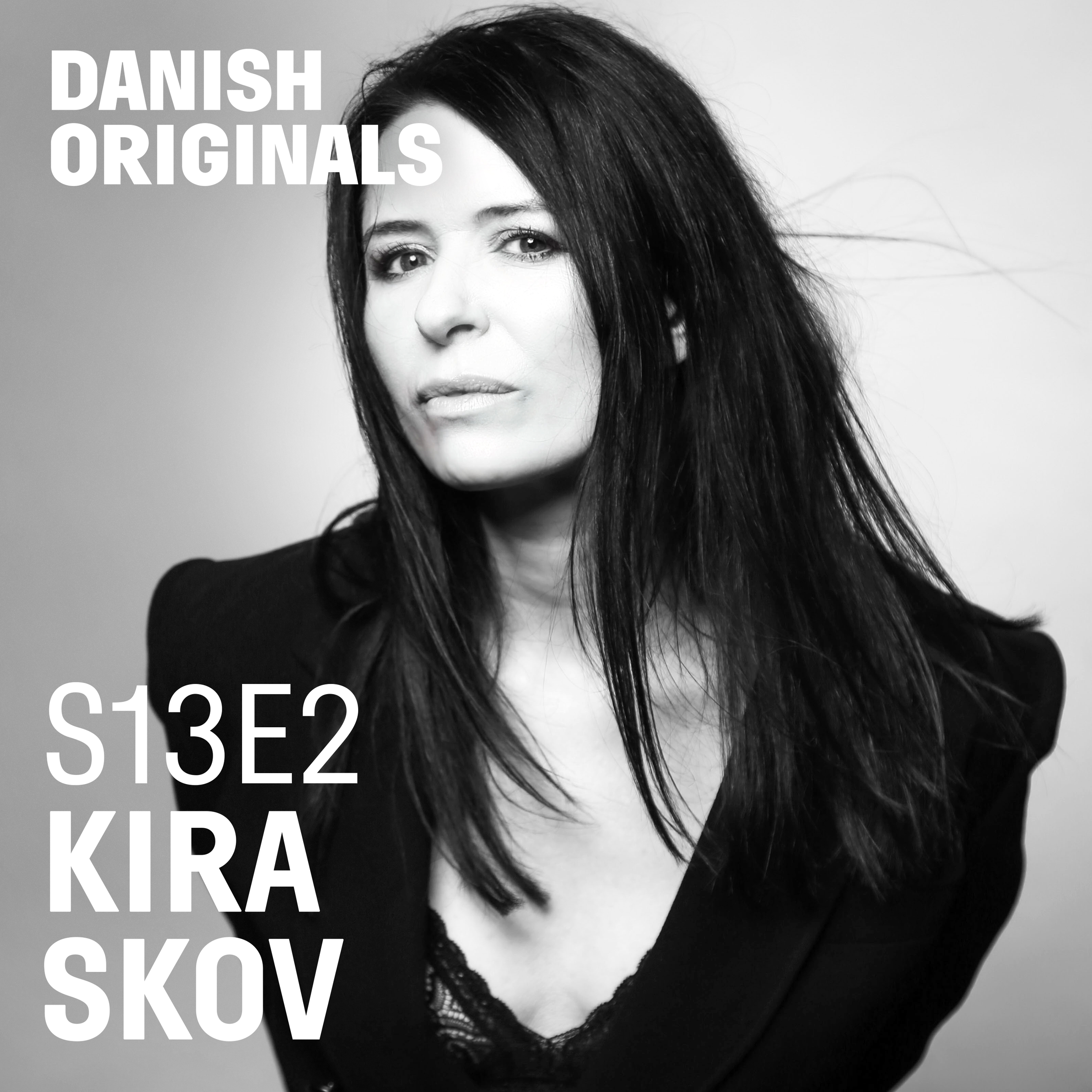
From her home in Copenhagen, Rødovre-born, Danish singer-songwriter KIRA SKOV talks about her deeply personal new memoir Liv forladt about music, life as a musician in 1990s Los Angeles and London, and the silver lining in loss and grief. Kira talks about musicians who have inspired her, her spirit animal that accompanies her in her writing, the detrimental 2017 sudden death of her husband and collaborator Nicolai Munch-Hansen, and putting behind her relationship with people with addiction.
Photographer: Rita Blue
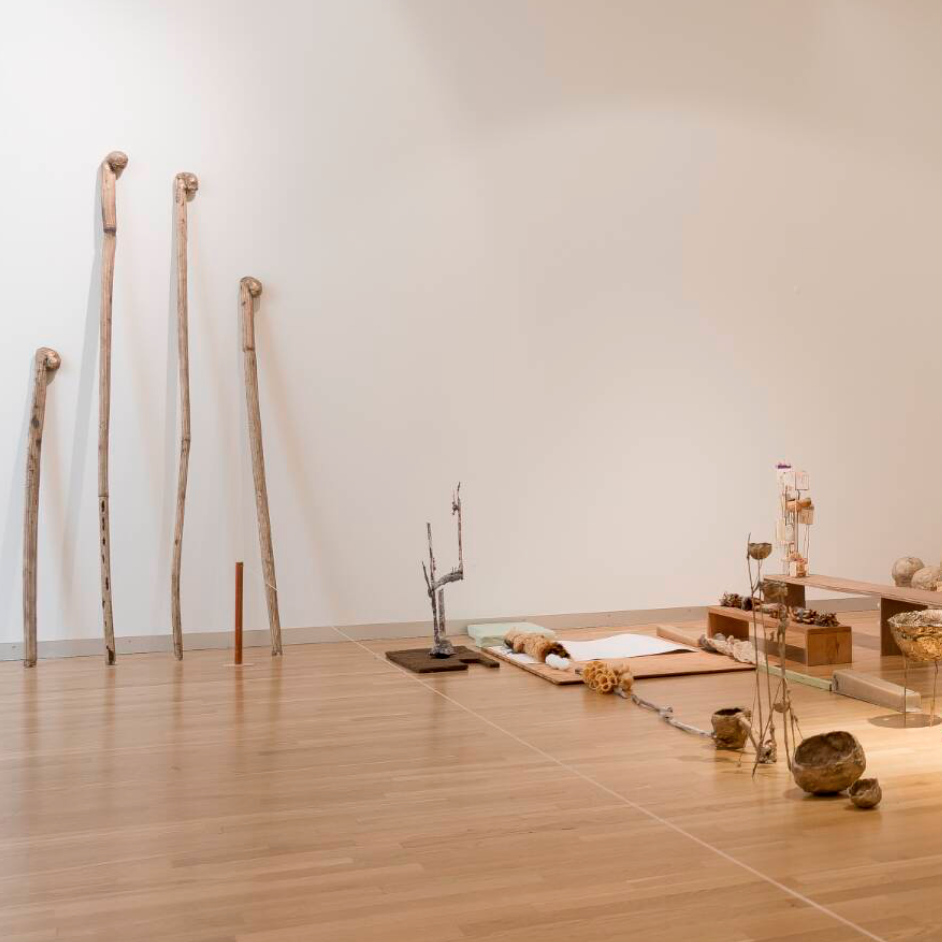
For today's episode, Kira Skov chose Emil Westman Hertz's Nine of Wands, from 2016, from the collection of the National Gallery of Denmark in Copenhagen.
“When you lose the life that you thought you were gonna have, everything I imagined I was going to do in the future was lost, all of that was gone, it helped me to create a new future or something tangible. It was something that I could do. And my craft became my rescue, in that sense.”
“I lived in the Hollywood Hills, and I lived in the backseat of a car, sleeping up on Mulholland many nights. And we lived in Pasadena and in Silver Lake. And we were around. So quite formative years, when you’re between the ages of 17 and 22. I grew up, in a sense, very quickly.”
“When you grow up with substance abuse of any kind and those kinds of dysfunctional relationships, it’s very common that you seek a relationship that resembles that, trying to save the original version.”
Powered by RedCircle
This conversation with Gregers Heering occurred on September 2, 2026.
00:00
Kira Skov
I think it's a very classic codependent trait, if you've grown up with a parent who has had … My dad was an alcoholic, and it only progressed, it got worse and worse throughout his life. So when you grow up with substance abuse of any kind and those kinds of dysfunctional relationships, it's very common that you seek a relationship that resembles that, trying to save the original version. It took me a long time to choose differently.
00:38
Gregers Heering
My name is Gregers Heering. I'm a photographer and guest host of Danish Originals. Our goal is to celebrate Danish creatives who have made a significant mark in the US.
00:50
Gregers Heering
Today's guest is Kira Skov. She is a Danish musician, singer-songwriter, composer, and now also an author. Kira, it's so nice to finally have you on. Welcome.
01:03
Kira Skov
Thank you.
01:04
Gregers Heering
You and I, we go way back, about a week when we tried to do this the first time. And I remember having just asked my first question, and I was like, "Wow, she really takes a long time to answer her questions." And then it turned out that I had frozen up because here in LA, as it happens every year when the heat really hits, I was suffering from a power outage when everybody's using their ACs on full power and also charging their cars.
01:37
Gregers Heering
But I do remember that as I was looking at this frozen window and I saw that room you were sitting in, which had grayish walls and a Warhol-ish print on the wall, it was nice, it was modern, but it was somehow not what I anticipated your home to be. And then it also turned out you were not at home. You were actually in a hotel room in Tønder, Jutland.
02:02
Kira Skov
Yes.
02:03
Gregers Heering
Why don't we start with you telling us what you were doing there and what has transpired in the week since we saw each other last?
02:11
Kira Skov
Well, I was performing at this quite legendary festival called Tønder Festival. It's a folk, bluegrass Americana festival where artists come from all over the world. And it's not like being in Denmark at all, actually. There's a lot of Canadian musicians, a lot of American musicians performing there every year.
02:34
Kira Skov
And usually when people play there, they rotate between stages. There's a lot of you, you get matched with other musicians, and you do co-performances with people that you don't usually play with. There's no other festival like it in Denmark. And I haven't really been to a festival like that anywhere in the world, to be honest.
02:56
Kira Skov
So it's quite unique, celebrating a very American music tradition — bluegrass, country, folk music, which comes from the States. We were celebrating Kris Kristofferson this year, actually, who is kind of the archetypal, you know what I mean, American free spirit songwriter.
03:22
Kira Skov
And we were meant to celebrate him after his passing, which has now been quite a few years. But then Corona happened, and then, every year something came in the way. I think I've been there not celebrating him for one festival actually prior, since the close down. So it's been a long time coming, but it was nice.
03:44
Gregers Heering
So you had a good experience?
03:46
Kira Skov
Yeah, we had a good time. Yeah. It was good.
03:49
Gregers Heering
And did you play a mixed bag of your songs or did you have a specific program that you played?
03:57
Kira Skov
Well, this year I was actually just there for that celebration, so I only played Kris Kristofferson tunes. When the guy putting it together initially contacted me, I was like, "If I'm gonna celebrate Kris Kristofferson, you gotta let me sing 'Bobby McGee.'" Janis Joplin interpreted this song written by Kris Kristofferson, which I listened to a lot when I was 13 years old. It was kind of my whole beginning of singing. And so that was one of the tunes.
04:31
Gregers Heering
Okay. It looks like you are in what must be home. I see some beautiful furniture in the background. I see some prints on the wall. I see a beautiful chandelier. Tell us about your setting, where you are, and what it feels like right now.
04:50
Kira Skov
Yeah, I'm sitting in my living room and I'm by myself, which is nice, of course. It was the only way we could pull this off, I think. If my son was at home it would be different. But yeah, it's my home and I also work here a lot. I have lots of instruments here.
05:07
Gregers Heering
There's a piano and there's a lot of books. Coziness. So I was obviously trying to joke before. I don't know you personally, but this resonates a lot more with the energy I get from you. I have to admit, I don't know how you've flown under my radar, but I have really enjoyed catching up with everything you've done since I found out I would get the pleasure of talking to you today.
05:32
Gregers Heering
And I remember on purpose not reading your bio, and just listening to your music, and I had so many images and references. Your voice and your music is obviously unique, but there was so much coming to me, so I was like, "Oh, I'm gonna have all these smart references that I can tell you that I'm seeing and hearing."
05:53
Gregers Heering
David Lynch and Janis Joplin and so many really amazing artists. It's very cinematic. It's very sensual. It's very magical realism. There's a lot of folk and mythology. And then I read your bio, and I realized, okay, you have already written about all that, the great artists that have also inspired you over time. It's exactly what I was hearing.
06:19
Gregers Heering
And I got almost dizzy seeing the immense amount of output. So many, I think, 15 plus, maybe 20 plus at this time, albums. You have had your band Kira & The Kindred Spirits. You've worked with some of the most amazing voices, both within the Danish music scene, but also the international music scene.
06:43
Gregers Heering
You have grown up internationally as well. I was just like, okay, if we're just gonna go through that one by one in this conversation, it would be a lot. So I'm just telling the listeners, go check out Kira's website because there's a wonderful bio there.
06:58
Gregers Heering
Instead, I was thinking we should actually talk about this book you have that is coming out that sounds really exciting. In Danish, its title is Liv forladt, which translates into "life left" or "having left life," but it's actually a play on a Danish saying. So maybe you can talk first and foremost about why you chose that title, and maybe you can do a better job than I to explain what it means in English.
07:27
Kira Skov
Yeah. I've also wondered how I would actually translate it into English because it's a difficult one. Obviously, it explains or refers to the fact that I've lived many lives already. I've left many lives behind and lived in many countries and started over many, many times, throughout my life since I was very young.
07:50
Kira Skov
But also in the Danish saying, there's something called, you know, alt forladt. It means all is forgiven. I've lived, most would say, a fairly dramatic life when I was younger, in particular, and lived through some very challenging relationships and experienced some great losses too. And I guess the title then plays on the fact that I lived through that, but I also forgave most of it.
08:18
Kira Skov
Do you know what I mean? I forgave most of the difficulties, whatever difficulties I had to endure and the wrongdoings towards me. Also, as a young woman, it was challenging. If you read the book, then you will understand, I think.
08:32
Gregers Heering
Yeah. I would love to read it. I'm actually a book nerd, and I've been keeping an eye on that publisher, Gutkind, I think is how they pronounce it, a Danish publishing house that is releasing really good titles, they have a really good roster of authors. Was that a deliberate choice of yours to approach them, or did they approach you? How did that work?
08:55
Kira Skov
Yeah. The book has been on its way for a while, and I've been speaking with lots of different publishers over these past years. And it just felt right somehow. There's a lot of women working there, and we had a nice connection. And I think, also because of my story, I didn't want it to be a tabloidish approach to promoting the book. And I know some of the very commercial publishing houses would maybe take a different approach to a story such as mine, you know?
09:33
Gregers Heering
Well, it sounds very dramatic, Kira, what we are about to read about. But I thought since this is early in the conversation, it would make sense to maybe just super overall follow the bigger sections of the book, so to speak, so we can get a better understanding of who you are and where you're coming from.
09:53
Gregers Heering
You wrote something really interesting on your website announcing this book coming out. You wrote that in the writing process, fabeldyr, a spirit animal, is the closest translation to that, this being, however we imagine it, sitting on your shoulder and guiding you a little bit through this writing process. I don't know if it was guiding you or trying to talk you in and out of it, but do you still have that spirit animal around?
10:18
Kira Skov
Yeah. I think that this spirit animal first emerged when I was trying to write about grief and about the loss of my husband, Nicolai Munch-Hansen. My husband passed away nearly ten years ago, and he died from an overdose and it was very sudden and very shocking for all of us.
10:45
Kira Skov
Me and Nicolai were very close collaborators in music, we just had this musical language which was ours and very unique. We had of course his children. So our lives were so entangled. We were not only husband and wife, we were also of course parents.
11:05
Kira Skov
And I think when I was trying to explain or talk of grief, it helped me at first to give it some physical form, to give it some physical shape. And I developed a relationship with this animal which was quite horrid at first, it was quite scary. I was very afraid of it, but we were stuck with each other. We were stuck, literally, in a house that I imagined us being in, which was this horror house of grief, in a sense.
11:41
Kira Skov
And then as we are there, the longer time I spend in that space with the animal, the more my relationship with this totem animal or spirit animal changes and it becomes milder over time. And it also changes shape when it's resting. It's almost like a little kitten, it's very sweet and furry, and then it reemerges as a very intense, monstrous being.
12:15
Kira Skov
But over time, we develop a relationship and I think I tame it somehow. And I came to realize that I could not really go on now, living my life without it. So I develop a form of love for my grief state, as you might put it. And this was how it started. And then as I dive deeper into writing, the animal just kept appearing in all these other periods. So it was an invention, a way for me to verbalize, articulate something that is hard to find a language for somehow, if that makes sense.
13:00
Kira Skov
So sometimes it was also a protector. Sometimes it was there to remind me of something that I didn't feel like seeing. It was very stubbornly there to remind me. It also represents angst and anxiety and fear. It shows up in the book at first when I'm a child, that's how it developed. It appears just around the time of my parents' divorce when I'm ten years old.
13:31
Kira Skov
And then it keeps appearing throughout my life in the book. And by the end of the book, we're tied to each other, and we find a way of living with each other. And it's in a way now a necessary and almost beautiful relationship I have with that animal.
13:51
Gregers Heering
Yeah. And does the spirit animal have a name?
13:54
Kira Skov
No, it's just called The Animal.
13:57
Gregers Heering
Okay. And it doesn't have, now, a little bed next to your bed, where you are petting each other a good night?
14:04
Kira Skov
No, it doesn't, it doesn't. But it will remain now. I think. Anyone who has grieved and lives with a loss knows that over time, in a way, you come to appreciate that pain that comes from grief that you have to revisit from time to time. It's also your connection to the ones you lost and left behind.
14:32
Gregers Heering
Yeah. I'm so sorry for your loss. I know you have spoken very publicly about your loss, and you've also made an album in tribute to your late husband. How was it to create that album?
14:46
Kira Skov
The album The Echo of You, I wrote all the songs on that album in the nine months following Nicolai's passing. And it was strange because I'd been working and collaborating with this producer called John Parish, who's done almost all the records with PJ Harvey. He's a brilliant producer and a great friend, and we've done six or seven albums together now.
15:14
Kira Skov
I contacted him and I said to him, "I think somehow intuitively, having a destination somewhere in the future that I'm working towards would help me. Maybe we could agree on recording a record in December." And Nicolai passed in February, the 20th of February, 2017.
15:39
Gregers Heering
Okay.
15:40
Kira Skov
He came to the funeral, of course, but I think I contacted him two months after Nicolai's passing and I said, "I don't know if I'm gonna be able to write anything, and I don't know what it's gonna be or if anything is gonna appear. But I just feel that I need a destination out in the future that I can work towards."
16:01
Kira Skov
When you lose the life that you thought you were gonna have, everything I imagined I was going to do in the future was lost, all of that was gone, it helped me to create a new future or something tangible. It was something that I could do. And my craft became my rescue, in that sense.
16:24
Kira Skov
I think I was very fortunate to have that form of expression because obviously I was in pieces and it was very hard to function in so many ways. I was just keeping it together, of course in the first year following. But every time I sat down to write, the songs would just almost appear. It was as if they came, just dropping into my lap. And it was a very powerful experience, in a way. They were very simple songs as well.
16:58
Kira Skov
I think the record is one of my best albums, and could sound as if it would be a very heavy, dark album. And of course there is an aspect of that, but I also think there's a lot of celebration of love and also reminiscing in a very beautiful way. And I think the songs are very unpretentious as well, because I think you become just totally unengaged and you don't care about what anybody thinks when you're in that state.
17:33
Kira Skov
It becomes very pure, in a sense, because sometimes you can have all that you measure yourself by. You can imagine what other people might think, or was it better than the last thing you made. You know what I mean? You have all this that drives you somehow, and all of that just evaporated and wasn't important anymore. And I think they made for a very beautiful album that I'm very proud of.
18:00
Gregers Heering
I spoke to, on this podcast, Josefine Opsahl, I think you know the Danish cellist. And one of the first questions was also what role pain and suffering means and plays in the process of creation.
18:14
Gregers Heering
And she said something along the lines of what you're saying, that yes, it is a place that has a lot of richness for creation, but it also comes out in the end as a positive thing, as hope. Because otherwise it can get, as you say, pretentious and just dark for the sake of being dark.
18:31
Kira Skov
I think it hopefully transcends it, and becomes something more. But I do also think that, a topic in the book, that when I was younger, I think I was very fascinated with the whole mythology around what you had to go through as an artist. You know what I mean? And all the artists I admired, they had either died young or they went through so much.
18:58
Kira Skov
And in a sense, I obviously felt a kinship or was drawn towards those types of artists. But I also think that a part of me thought that that was what it was gonna take to make something of importance. And I think I feel maybe a little bit differently around that now. I don't romanticize pain in any way anymore. You know what I mean? I think I had my share, so now I search for something else.
19:31
Gregers Heering
I'm thinking about your music again, and already your early work, it does have that, for lack of a better word, that cinematic, dark, but also sensual, warm, it's what a lot of great music has. So what I'm trying to get at is you've been doing this since you were 17, I believe. So I'm wondering, it cannot be a new feeling to you, to enter a space of mystery and darkness, maybe, and to suck out these juices that are important in the creation of the music.
20:09
Kira Skov
Well, certainly not. It's no news to me to seek nourishment from that. But I now choose something else. You know what I mean? I think maybe I also have a full bank account of grief. You know what I mean? I have enough, I can live off of that.
20:27
Gregers Heering
But it's not like we should expect you to make happy-go-lucky pop songs from now on.
20:32
Kira Skov
No, I doubt it, I doubt it. I've never been afraid of melancholy in music. Since I was a child, I was always very fond of these melancholic tunes and the drama of classical music and those sad songs. You must know "Der var en lørdag aften" and those old Danish folk tunes about sitting, waiting. You know what I mean? Those were so enchanting to me, those songs, already as a child.
21:04
Kira Skov
So I've always been drawn towards that music. It's beautiful. I think melancholic minor music is beautiful. But my son actually asked me, and I also write about this in the book. One time he asked me when he was smaller, he's a teenager now. He was like, "Mom, why do you always write such sad tunes? And you're not a sad person," he said. That kind of logic of a child. And then he said, "I get a lonely feeling when I listen to sad songs."
21:36
Kira Skov
And then I realized, oh, that's interesting 'cause for me it's the opposite. I feel, oh, I'm not alone. When I hear other people expressing that, oh, there's other people out there that go through something similar. I'm not alone. That kind of feeling. So that was an interesting reflection that came from a conversation with a small child.
22:02
Gregers Heering
And I think it's something that is ingrained in our history and our culture, in the Nordic countries. There is a term called Nordic melancholy. And I feel the same way as you do. I don't think it's about darkness. I think that's where a lot of the interesting stuff is. That's where I can reach out and relate to things on an emotional level, that kind of music and that kind of art and all that.
22:27
Gregers Heering
You come across as very Danish, but you also have this international thing about you that is not so Danish. At 17 you found out that this is what you wanted to do, and then you've been living in London, and you've been living in LA. How did that come about, and how did it affect you?
22:49
Kira Skov
I was 16 just turning 17 when I met this man on a Tube station in London. I was just on a short little one-week vacation with a friend, and it was my first time in London. And I'm standing on Ladbroke Grove tube station, and this man is also standing there. In fact, I'm sitting down, I'm barefoot sitting in a dress. It was a really hot, early summer day.
23:16
Kira Skov
And this man is standing with a guitar on his back, and he's wearing this long black robe, and he's very dark-skinned, with loads of jewelry, and long dreadlocks. He looks like a modern-day Jimi Hendrix. And then he draws a little drawing, and he passes it to me. And he asked me and my friend if we wanted to join him. He was going to play some music in his garden.
23:41
Kira Skov
And we're like, "Yeah, why not?" We're in London, and so we decided to get on the Tube with this stranger. And it turned out that the garden he was referring to was Hampstead Heath. It's a beautiful big park of wild fields and forest in North London. And we went there and hung out, and then we went to where he was staying in this flat, and we were playing music.
24:06
Kira Skov
He had an amazing voice. He was a songwriter. Obviously, I was already singing, and I was busking at the time in Copenhagen as a teenager. I already knew I wanted to do music, so he was a dream come true, this guy. He had everything. And he was from Flint, Michigan.
24:25
Kira Skov
So I don't know if you're familiar with Flint, Michigan. It's a little town close to Detroit. It was where General Motors had their headquarters, when he was growing up. A very hardcore poverty-stricken community, Black community, that he grew up in but with a strong musical tradition.
24:46
Gregers Heering
Motown, right?
24:48
Kira Skov
Yeah, Motown was coming out. So it was very much that kind of soul, you know what I mean? Music was just a language that everybody spoke. But he grew up in a very difficult family constellation. His dad was a pimp and had left them and the mom was working two jobs. His brother was in prison for gang-related murder already at 16.
25:12
Kira Skov
So he had gone to London. Well, prior to that, there was a long story, but he had reinvented a whole new persona. He was originally Anthony, now called Eve, and he spoke with a British accent. He had just taken on this whole personality, which was very different to... Oh, I don't know what he was.
25:34
Kira Skov
He was so many things. But, I was very young, obviously. I was just 17 when I ended up going with him to Los Angeles. To cut that story short, I ended up being with him for five years in LA, and then leaving there, going to London for another three years. It was a very hard education I had growing up with him, in a sense.
26:00
Kira Skov
He was much older than me, and he was damaged, and he damaged others. I learned a lot, but I ended up fleeing from him because there was a lot of abuse, physical abuse as well. I had to get away. I had to literally flee. Everybody in the band ended up making a great escape to get away from him. So it was very dramatic. My first five years in the world was a hard learning process.
26:33
Gregers Heering
So there was one life right there.
26:35
Kira Skov
That was one of them. And lots of lives lived within that one life as well. We lived both in London, where we squatted in houses. We squatted a big piece of land, built our own houses. And then in Los Angeles as well, we lived all over. I lived in the Hollywood Hills, and I lived in the backseat of a car, sleeping up on Mulholland many nights. And we lived in Pasadena and in Silver Lake. And we were around. So quite formative years, when you're between the ages of 17 and 22. I grew up, in a sense, very quickly.
27:15
Gregers Heering
And then when you came back to Denmark, it must have changed your outlook, quite dramatically, on home.
27:23
Kira Skov
Well then when I left him, I moved back to England, started a new life. That's another story. I was gone for eight years, and when I came back, I released my debut album in my own right with my own songs with Kira & The Kindred Spirits. And we had quite an instant success, maybe I would say.
27:46
Kira Skov
It was very, very well received. And we built an audience quite quickly. Also, I think because at the time when I got back to Denmark, there wasn't a lot of music that sounded like the music that I was doing. Because I was shaped somewhere else, you know what I mean? I grew up somewhere else musically.
28:07
Kira Skov
So all of my inspiration came from being in America and listening to American music, English music. So it was quite different to what anyone else was doing from my generation.
28:24
Gregers Heering
You have also made a tribute album to Billie Holiday —
28:27
Kira Skov
That's true.
28:29
Gregers Heering
— who you mention is one of your great influences and also a lady with a complicated life.
28:34
Kira Skov
Yeah.
28:36
Gregers Heering
How is it different to make your own interpretation of someone you admire's songs versus having to create your own?
28:48
Kira Skov
Well, obviously you have to have a lot of respect when you try to interpret somebody like Billie Holiday, you know what I mean? She was the greatest of all times.
29:02
Gregers Heering
Why was she great?
29:03
Kira Skov
If anyone could connect light, love, darkness, grief, all of it, it's all one with Billie Holiday. She transcends any one emotion and that's why you can listen to Billie Holiday at any time. You can listen to Billie Holiday when you are in great pain, if you're grieving, if you're heartbroken. When you're at your happiest moments you can listen to Billie Holiday. It would never feel wrong to listen to Billie Holiday somehow, you know?
29:36
Kira Skov
I discovered her when I was 13, her music, and she's been with me ever since. I've been playing so many concerts with that material and with jazz musicians as well, which has been amazing to be able to every once in a while leave your own universe and then you're just in that space and I love it.
29:57
Gregers Heering
Do you remember one song, one artist, one moment that sparked your conviction that you wanted to be a singer-songwriter? And where were you, by the way? Where did you grow up?
30:14
Kira Skov
I grew up in Copenhagen. My parents were divorced when I was ten. My mother, we'd been moving around a bit but then she was living in the suburbs but quite close to the center of town. My dad moved into the center of town. And I remember very clearly, as a child, I was very obsessed with classical music and that was all I listened to.
30:39
Kira Skov
I loved Mozart and Vivaldi and Beethoven and I also played the flute. Then when I was eleven years old, my mother had a boyfriend and we had a difficult relationship. I didn't really like him much, but he had the positive function in our lives that he brought a lot of music into my life and into our home.
31:03
Kira Skov
He listened to so much different music. So I was introduced to all this rock 'n' roll music. It was Dire Straits, Frank Zappa, Talking Heads, The Rolling Stones. When I was eleven, we went to see Prince play on his Lovesexy Tour and he was playing at the stadium in Copenhagen. And it was just insane.
31:31
Kira Skov
That was for me, eleven coming out of Rødovre, the suburb, and I was always feeling I didn't really fit, I didn't really belong, in Rødovre. And then it was an epiphany. Standing there I was like, "Okay, you can do that. I'm gonna do that." I just fell in love with Prince and was obsessed. Coming into my teens he was my first crush.
31:55
Kira Skov
I used all my money buying all his records and then around the age of 13, I discovered Billie Holiday and Led Zeppelin, Janis Joplin, Aretha Franklin, all the old soul singers. I was very interested in all the music that I could gather. Also, you mentioned David Lynch. I always used to go to sleep listening to the Twin Peaks soundtrack when I was a teenager. So yeah, that's when it started.
32:25
Gregers Heering
It's funny, I think I remember that Prince, he was obviously in Copenhagen many times, but I think I remember that one specifically because I'm the youngest of four and at least my oldest sister was going to that concert, and I was not because I was just too small, I think.
32:41
Kira Skov
Oh god!
32:42
Gregers Heering
I don't remember what year it was, but I had a lot of FOMO, fear of missing out, already on that one. And obviously now he's gone, I never got to experience him live. So that's a pity.
32:53
Kira Skov
He made a mark for sure.
32:55
Gregers Heering
And then I know that here in the upcoming days you are going to play David Bowie songs as a tribute. He would have turned 80, is that correct?
33:05
Kira Skov
Yeah.
33:07
Gregers Heering
Another David.
33:08
Kira Skov
Another David.
33:09
Gregers Heering
What does Bowie… where is he in your universe?
33:12
Kira Skov
He's a very great personality. He's made a tremendous mark on me as well, and of course, on anyone who likes rock 'n' roll and great songwriting. He's one of those iconic figures. So yeah, we are several Danish artists that are celebrating him. We're playing eight concerts in DR's concert hall. It's hard not to love David Bowie.
33:37
Gregers Heering
And he also left us a little too early. A lot of them unfortunately did.
33:42
Kira Skov
Yeah.
33:43
Gregers Heering
It makes me wanna go back to the little bit of the darker subject, but I think it's important, and you're so wonderfully open, so I'm gonna take super advantage of it. We're all dealing with grief. I recently lost my mom, and I think every time someone disappears, there is this vacuum where they start to take on a new life in yourself.
34:47
Gregers Heering
I think it was Anders Thomas Jensen, the Danish screenwriter, he said many clever things, but one of them was that it's only when people die they first start to live. And I think it's quite beautiful because at least to me it's true. The people I've lost in my life, they still exist, but they exist in a new and different space, which I'm sure you can relate to.
34:25
Kira Skov
Yeah.
34:26
Gregers Heering
In going along with what a big theme of this conversation has been about, going on these adventures and learning a lot, but also hurting yourself and then getting sucked into something else, and being an artist and also knowing that you are sometimes taking chances and involving yourself in things that may hurt you, but you need them at the same time.
34:49
Gregers Heering
I was wondering, with the loss of your husband that you've been so open about, he dies from an overdose. Has there been blame on yourself following that? Because now I'm also thinking, with this person you spoke about earlier that you met in the UK and took you to the US and all that.
35:05
Gregers Heering
I'm trying to get to this thing about souls, that you may consciously or subconsciously try to save but have not really been able to save. Without sounding like a psychiatrist here, but is that a theme in your life?
35:20
Kira Skov
Oh, most definitely, yeah. I think it's a very classic codependent trait, if you've grown up with a parent who has had… My dad was an alcoholic, and it only progressed, it got worse and worse throughout his life. So when you grow up with substance abuse of any kind and those kinds of dysfunctional relationships, it's very common that you seek a relationship that resembles that, trying to save the original version.
35:55
Kira Skov
It took me a long time to choose differently. You know what I mean? And I think Nicolai's death very much marked the end of that era for me, that it became very clear to me that the drama does not in that regard interest me at all anymore. I just wanna have a nice time in a relationship, you know what I mean?
36:20
Kira Skov
I just don't need it anymore. I've spent so many years dealing with that. So I think in a way, that was the gift I got from that loss. And of course when somebody passes, and in the way that Nicolai did, it was a very dramatic time leading up to his passing. He was taking these pills, and they made him these Benzos, and they made him psychotic when he was combining them with alcohol.
36:49
Kira Skov
And so we were at a stage where I was getting help, I was trying to get help. And it was just too late. It was literally that week when we set everything up, and then he passed. So of course, I've had to ask myself a million times, what if I'd done this differently? What if I hadn't pushed him away?
37:09
Kira Skov
You try to relive the way you imagine that final moment of his life to be. You revisit that over and over and over for a very long time as if that should be able to change the outcome or something. It's a weird thing 'cause I wasn't there. I wasn't the one finding him either. So of course, there could be blame. You could blame him, I could blame myself.
37:41
Kira Skov
There's many circumstances that you could blame if you found that that was helpful. But I don't think that I got any sense of relief or peace or comfort from anger and blame in that regard. I had to reach for something else in myself. And that was, I think, forgiving myself, forgiving Nicolai, but also, I think my heart had to expand, in a sense.
38:13
Kira Skov
I think that that's definitely available as one outcome of great loss, is that in order to contain that, you have to grow. You know what I mean? So it also makes you capable of maybe loving a little bit deeper or maybe forgiving or being more empathetic, I think, towards other people's shortcomings and mistakes.
38:40
Kira Skov
Of course, not all the time. You know what I mean? That's everyday life. You get annoyed. You know what I mean? But still, I think what I've found was the only thing that could get me through the worst part of it. So, yeah.
38:57
Gregers Heering
Yeah. I have no idea how old or how young you are, but you have this completely undeterminable age about you. You have an amazing aura and a lot of life in your eyes, and I just think it's really inspiring to hear you talk about this because it must also really mean, and you're saying that, but you're prioritizing to take care of yourself.
39:17
Gregers Heering
You're prioritizing to surround yourself, although you can't 100% control that, with a more positive mindset and maybe do more things that are doing you good rather than the opposite. I think for the listeners, that would be really valuable if you would share just a few of the things that you are doing outside of your music to stay healthy and to stay happy.
39:38
Kira Skov
I think I've become very connected to trees over the years. It's definitely a growing interest for me, my sense of connection to old trees. As I get older myself, it's almost the first thing I notice when I come to a new country or new city. I connect with the trees. I think I found a lot of nourishment and nurturing from being in nature, having gone through something difficult.
40:11
Kira Skov
I had friends in the years following, well, in the year, like that year of magical thinking as Joan Didion said. Within the first year I was invited to come down south in Spain with all the white houses and that eternal sunshine. And I couldn't imagine going there, you know what I mean? I just wanted to go into the deep woods of Sweden or the Highlands of Scotland.
40:37
Kira Skov
I went there so many times, and I really found that there was a lot of healing in that nature there. It's quite rustic and rough as well, but so beautiful and you find your place. You're such a small, little piece in the great puzzle, you know what I mean? That offers that sense of belonging and also a perspective. So that's one thing.
41:04
Kira Skov
And then I practice yoga and of course, music for me. Also, good food, nice wine. I enjoy life as well. It's not like I don't allow myself that. Luckily, I don't personally really have tendencies for addiction, but I've been very drawn to people that have, so that's been my drug, I think.
41:28
Gregers Heering
Yeah. I really share with you and relate to you with the trees and nature and all that, and it reminds me of something I wanted to quickly bring up, which is the late Swedish director, Ingmar Bergman.
41:42
Kira Skov
Yeah.
41:43
Gregers Heering
He said that to him, when the darkness outside fell, that to him was when the world of love opened up, that's where all the love was. Whereas in the bright daylight, that's where all evil was. What you're saying with these white houses in Spain and the harsh sunlight, to some people that is all they want, and for some of us it's almost evil, you know?
42:10
Kira Skov
Yeah, I couldn't imagine myself being there at that time, for sure.
42:16
Gregers Heering
Okay, the trees, these things that mean something to you. When you then decide to allocate time to enjoy them, are you taking a walk or are you photographing them or drawing them? How do you experience it?
42:31
Kira Skov
Well, I go and I walk amongst them and I sit beneath them and I draw them sometimes. And I love seeing people's photographs of trees and I enjoy them as much as possible. I try to touch them, connect with them. I definitely feel there's great healing to be found around old trees.
43:00
Gregers Heering
Yeah, old wise trees.
43:02
Kira Skov
You can't plant an old... Yeah.
43:06
Gregers Heering
My last question to you for today. Where have you landed in Denmark at this point versus the bigger world outside? Are you still drawn to the thought of spending time internationally, or are you at this point in your life content with being in Denmark?
43:23
Kira Skov
Yeah. I think there will always be a part of me that resides in those places where I spent my youth, you know? So when I come back to visit Los Angeles, there's a part of me that I connect to. It's in the scent — magnolia trees and the heat and the concrete. There's so many scents of Los Angeles that reawaken something in me.
43:48
Kira Skov
And the same goes for London. And also just traveling. I've traveled all over the world. I think I will always travel. I'm lucky I get to travel with my music as well, so that brings me around.
44:00
Kira Skov
But I'm also quite content living here, with Morgan, my son, and my boyfriend Silas. And Morgan is growing up, so I think when he's left the nest, then I might reconsider where to grow old. You know what I mean? Maybe I don't need to decide.
44:19
Gregers Heering
Because there is still a connection between place and creation, right?
44:23
Kira Skov
Yeah, it's very distinct. You can tell being in California, those songs that belong to California, you know what I mean? It's like when you drive through the canyons and you listen to Joni Mitchell and you listen to The Doors and some of Neil Young's tunes when he lived in Topanga and stuff, it just belongs there.
44:44
Kira Skov
You know what I mean? It's the sound of that part of the world somehow. Beach Boys as well. I think some of that was also instilled in me. I can draw on that in my songwriting still.
44:58
Gregers Heering
Kira, I'm so thankful for your openness. And I wanna tell the listeners that again, Kira has a book coming out, Liv forladt, it's called in Danish, on Gutkind Publishing, and you're also selling tickets for your David Bowie shows on your website. Thank you so much for joining us today.
45:17
Kira Skov
Thank you.
45:22
Gregers Heering
For today's episode, Kira Skov chose Emil Westman Hertz's Nine of Wands, from 2016, from the collection of the National Gallery of Denmark in Copenhagen.
45:39
Kira Skov
I've chosen Emil Westman Hertz' Nine of Wands, which contains lots of different pieces.
45:46
Kira Skov
He works with organic materials: wax, cones, wood. Very raw, very spiritual. There's something very haunting about it. There's also something about the cycles of life and something very ancient in the expression of it. You couldn't pinpoint a time period that it was created within. It transcends time. It could be hundreds of years old, and it could also be very modern.
46:18
Kira Skov
Emil passed on half a year before Nicolai, my husband. They grew up together. My whole house is full of pieces by Emil. He left a great body of work behind considering he was only 38 years old when he passed.
46:35
Kira Skov
I have a personal connection to Emil's work. We both went through a great illness and I think the both of us used that as a creative tool. There's something about death being very present, close by. In that sense, I've always been very drawn to his work.