
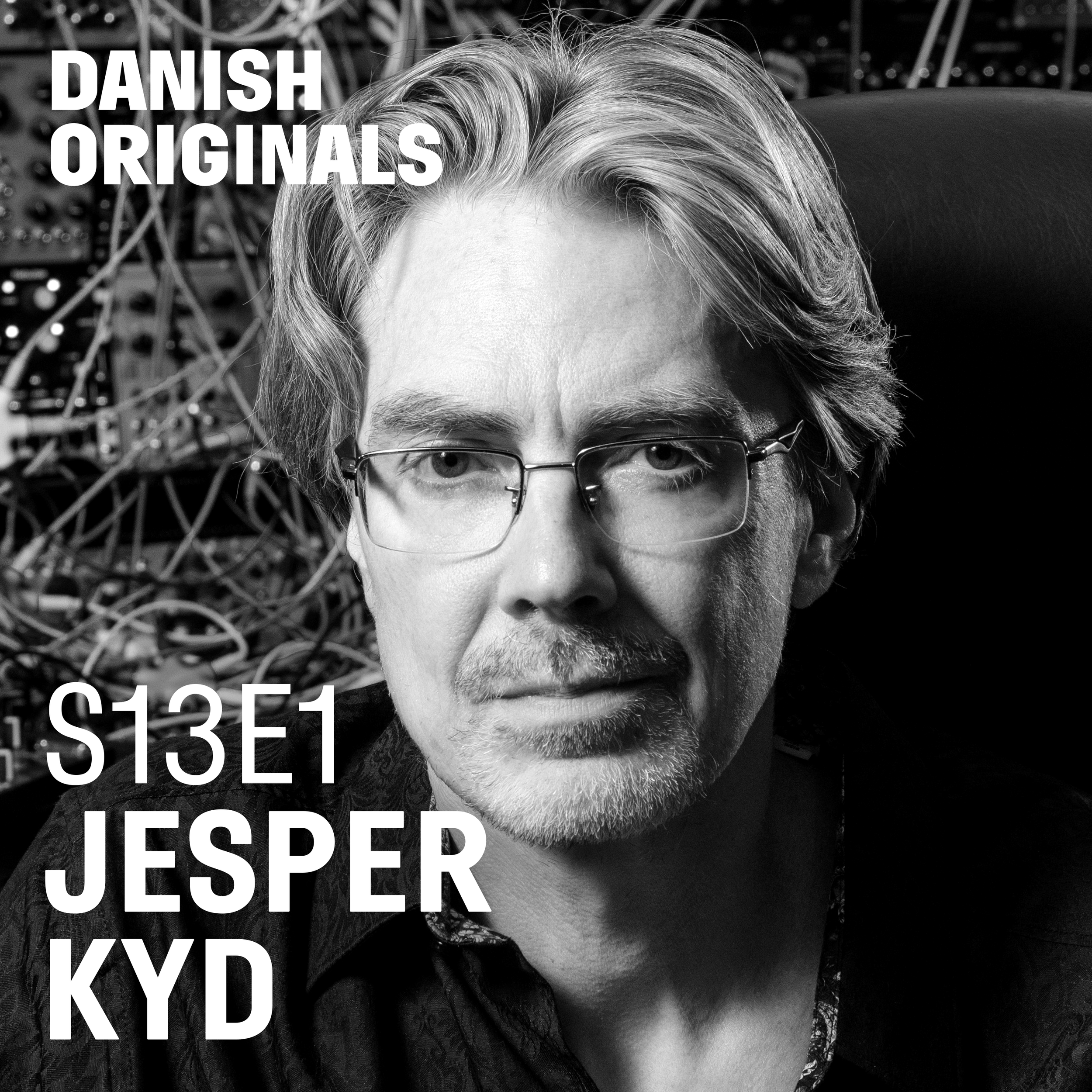
From his home studio, Hørsholm-born, Burbank, Los Angeles-based BAFTA-winning Danish composer and sound designer JESPER KYD recalls his part in the European demoscene in the '80s and '90s that took him to Boston, New York, and eventually Los Angeles. Jesper revisits his hit franchises Hitman, Assassin's Creed, and Borderlands, and shares thoughts about his more current ventures in film, animation, and live concerts. He also explains how being a composer is being a problem solver.
Photographer: Ben Bentley
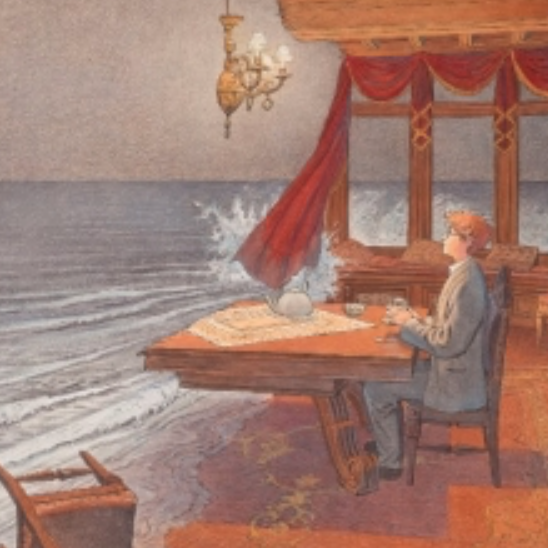
For today's episode, Jesper Kyd chose François Schuiten's "The Theory of the Grain of Sand" from the series Cities of the Fantastic, from 1992–2009, from the collection of the King Baudouin Foundation in Brussels.
“The foundation of a game is the gameplay. But once you start putting in the music, I feel it’s my responsibility to invent what this world, this new world that’s been invented here, should sound and feel like. That gives me enormous creative freedom, I feel.”
“Being ignorant to something actually can be a good thing in a few cases. And I think being ignorant to what you’re supposed to do when it comes to art can be really interesting because then something completely new and fresh gets created where you didn’t follow the chosen path.”
“There are higher and higher expectations from the video game industry on production design, and that means we are given a live budget to achieve things. And so I am always on the lookout on how to come up with something new, and we’re definitely doing a lot of recordings in odd places.”
Powered by RedCircle
This conversation with Christian D. Bruun occurred on July 31, 2026.
00:00
Jesper Kyd
Being ignorant to something actually can be a good thing in a few cases. And I think being ignorant to what you're supposed to do when it comes to art can be really interesting because then something completely new and fresh gets created where you didn't follow the chosen path. If I had gone to school and if I had studied and learned how to compose, my music would have sounded very different. But I only studied what I found interesting. That means I studied only a little bit here and a little bit there and a little bit there, and if I'm suddenly called upon to do this sound, I have no idea how to do it, then I study that very intensely, and suddenly I can add that to my bag of tricks. So my bag of tricks is only made of things I'm really interested in, instead of having everything in there.
00:47
Christian D. Bruun
My name is Christian D. Bruun, and I'm the director of Danish Originals. Our goal is to celebrate Danish creatives who have made a significant mark in the US.
00:57
Christian D. Bruun
Today, our guest is Jesper Kyd, a Danish composer and sound designer known for his soundtracks for international hit games such as the Hitman series, Assassin's Creed series, the Borderlands series, among many others. Welcome, Jesper.
01:13
Jesper Kyd
Thanks, man.
01:14
Christian D. Bruun
It is really fun to be here with you today in your very impressive studio. Lots of synthesizers and mixers and all kinds of keyboards in here. Maybe you can describe where we are and what everything looks like.
01:29
Jesper Kyd
Yeah. We are here in my writing space. I am a big fan of analog. I'm a big fan of physical equipment. I try to use a lot of equipment from the '70s and '80s. I feel the aesthetics of these and also the philosophy behind these instruments was very different.
01:51
Jesper Kyd
There was a search for the ultimate sound back then. And you had, of course, composers like Vangelis and Jean-Michel Jarre and Mike Oldfield, trying to break new waves and introduce new sounds that people hadn't heard before, and they used all these analog keyboards and equipment to achieve this. And I'm fascinated by that, not that I do that kind of music.
02:13
Jesper Kyd
Obviously, I work in film and video games to create modern music, but I find that whole idea of trying to find the ultimate quality behind a product very interesting, 'cause today, the focus seems to be more on mobility and price point. And so the equipment that's made today, everything's put on a chip and it's put in a package that's sold as cheap as possible, and it's very far from the kind of philosophy I like.
02:39
Christian D. Bruun
It is interesting because when you think of computer games, you think of, obviously, computers, and you think of anything that fits inside a small machine, and you walk in here, and you have all this analog equipment. So I guess there's a tradition going from the history of synthesizers to the history of computer game music?
03:00
Jesper Kyd
In my head, it adds together like this. So there was a time where video games were creating music based on a chipset inside the machine, and that chipset is what gave you the limitations. So for example, the computer I started making music on was called the Commodore 64.
03:19
Jesper Kyd
It had three channels, meaning it can only play three sounds at the same time, but it also had an analog sound chip inside, which was the first time that a computer or video game machine had an analog chip inside, so it could make fantastic sounds.
03:37
Jesper Kyd
But then, we move on to something like the Sega Mega Drive's Sega Genesis, which has an FM chip inside, which means you can do six channels of FM. Now, FM is different from analog, it's frequency modulation. And then at some point not long after, we arrived at the point where the Sega CD came along and the PlayStation 1 came along, and the Sega put out the Sega Saturn.
04:01
Jesper Kyd
Now, these machines could stream the audio off the CD that was in the console, meaning that suddenly there were no limitations on the music. You could just create CD-based music, and that's the same as any CD you put in your CD player. There are no limitations on what you actually create in your song and whether it ends up on vinyl or tape or CD.
04:24
Jesper Kyd
There are no limitations anymore. Suddenly it's just another medium. So when all those limitations of the limited channel went away, everything became unlimited. We could record with symphony orchestras and a game could now have a symphony play back the score.
04:38
Christian D. Bruun
So there is a common history of the development of computers, to a certain extent, and how these very early games started. I also played around with the Commodore 64 and the Amiga and the Steinberg sequencing program Cubase and MIDI and all that kind of stuff. So there are the very early computer beeps and things that, as you said, a computer can generate inside, like an old-fashioned PC, and then this new generation.
05:07
Jesper Kyd
And I just wanna interject that that's very interesting because the music style that was invented on the Commodore 64 is now referred to as SID music or chip music or SID tune. Now that has become a whole music style. SID is S-I-D because the Commodore 64 had a SID chip inside of it. That was the name of the chip.
05:27
Christian D. Bruun
I see.
05:27
Jesper Kyd
So this is a music style now that is out there, where people use Game Boys or all these other kinds of old school consoles to create that kind of music that has a very unique sound to it. Commodore 64 music is difficult to explain to someone who's never heard it. But that music style is still around today, and people are still making that kind of music.
05:49
Jesper Kyd
And it's just so interesting that out of those limitations, a new music style was born that is a subculture now, that people still make music in. And the same happened with the Commodore Amiga as well. That had four sample channels, no analog synthesizer, just sample, so they could play four samples at once.
06:08
Jesper Kyd
And that music started out as trackers, the music programs we would use on the Amiga. And so tracker music is also something that's still around today. So these two computers introduced all these limitations and created a new music style that to this day people are still writing in. I find that fascinating.
06:26
Christian D. Bruun
And I'm sure it's probably also coming back as something incredibly cool and vintage and all that.
06:32
Jesper Kyd
And there's updates to it too. I like the way tracker music is written. That's where I really kind of had my break in the demoscene, even though I did a lot of Commodore 64 music. But on the Amiga, it's kind of when we helped make our name for ourselves. So I wrote a lot of tracker music, and even today there are people who are putting out new trackers in 2026, where they are taking what we currently have technology-wise and fusing that into a tracker environment.
07:00
Jesper Kyd
So it's very interesting to have grown up, 'cause of course I was a teenager when I worked with the Commodore 64 and Amiga. And it's just so interesting to see how the history of that, it's lived on.
07:12
Christian D. Bruun
Can you tell us a little bit about samples that you just mentioned for the tracker?
07:15
Jesper Kyd
So if it has four sample channels, that means you can play four samples at once. And what made the Amiga so interesting is it was the first machine that used samples. So instead of having to painstakingly try to create a percussion with only an analog sound chip, where maybe you could have white noise for the snare, and you could have some very short noise sounds, t-t for the hi-hat, and you did your best to kind of create a bass sound, but it still sounded like a distortion, there's no cleanness to that.
07:46
Jesper Kyd
But anyway, you could kind of emulate something that gave a drive, a pulse, a percussion, but it sounded very abstract. But when sample came around, I remember sampling some CDs, and you can go, oh, there's a track from whatever. I would go through all my CDs and look for little spaces where a snare drum was played without any other instruments on top.
08:07
Jesper Kyd
So if that snare drum was clean, pshh, I could go in, I could sample that, and now I had that snare drum, and I could use it in my music. And that's what sampling is. You go in and you look for all these little bits and pieces of music, and then you start making music with it.
08:24
Jesper Kyd
So, the Amiga, suddenly you could also just sample Michael Jackson's "Thriller" for ten seconds and just make a little demo, and then it would just loop that ten seconds. So there were some interesting things that happened. You could get very lazy because you could get things to sound very good very fast. But we were all about trying to create our own original music, of course. That was the demoscene, that was the spirit of the demoscene.
08:44
Christian D. Bruun
Let's go back in time a little bit, because being a composer for computer games today is not uncommon, but in the mid-'80s it was very uncommon. You grew up with the evolution of computer games and music. It wasn't like you went into an industry, you were part of growing that. Take us back. How did you start? How did you even become a musician, and where does it all begin?
09:09
Jesper Kyd
I just remember sitting at a piano and playing the piano, pretty much going all the way back. We had a piano at home, and wherever I would go with my grandparents or my uncles or aunts or whatever, every person in my family had a piano. I'm not sure if that's a Danish thing or what, but it was just kind of like a piece of furniture you needed to have. It's like having a couch or something.
09:33
Jesper Kyd
Everybody had a piano. Sometimes I would find myself playing the piano when we were on long vacations with grandparents. But I think that's how it started. I was entertained by sitting and playing that, and I also studied classical guitar and sang in a choir and started note reading and stuff like this.
09:50
Jesper Kyd
But I think I realized a lot of that stuff wasn't that interesting to me, and I didn't really wanna learn how to perform on a piano. I had a piano teacher for a couple of years, and the only thing I was really interested in was to figure out how music was put together. What are all the chords? What do the chords make you feel? Oh, if you play it this way, that makes you feel that, and this makes you feel this, and if you play these three chords in a sequence, that makes you feel this.
10:14
Jesper Kyd
That to me was extremely fascinating, how just hitting a few what felt like random notes on a piano could somehow make you feel something. That connection between hitting something on the keys and getting an emotion inside of you, I thought was fascinating. What is this? This is some magic. There's some black magic right here that's happening, and I wanted to explore that.
10:36
Jesper Kyd
And with the Commodore 64, I got one when I was 13 for Christmas and wasn't really sure what to do with this thing because computer games were very difficult to find in Denmark. Very few places had them. Maybe a few places had a few games. They never had the ones you wanted, and the games were incredibly expensive too.
10:52
Jesper Kyd
Back in 1985, computer games were £25. Not only that you couldn't find them anywhere, there was no internet. So I was like, "How do I use this computer? What do I do?" So I saw an ad in a newspaper, and it was like, "Hey, you pay me some money, I send you some discs." And so they would send me some discs, and that's how I was introduced to demos.
11:11
Jesper Kyd
I was like, "Oh, there's demos. What are these things?" And so a demo is basically a five, ten, 15-minute music video where the programmer or programmers are showcasing their ability to program. So they can be like, "Oh, we're gonna show you five sprites scrolling around the screen in a circle," and it's like the Commodore 64 had a certain amount of sprites it could do, let's say.
11:36
Jesper Kyd
And then if somebody said, "Oh, I figured out how to do six," and everybody was like, "Oh my God, how did you do this? It's only supposed to do five." And then a demo comes out and it's like, "I did six." And everybody's like, "Holy moly! What do we do? How did you do that?" So there was all this forward thinking about how to get the most out of these computers and for it to do things that it's not supposed to do.
11:56
Jesper Kyd
And then you had the graphic artist who would do these great logos, and they would have pictures in there that they would showcase, and it's the general design aspect of it. And then you have the composers who would do the music. And so throughout this ten-minute demo, you would have music. And so that's the demo, those three elements.
12:14
Jesper Kyd
And then the fourth element is called the swapper, who is responsible for getting the demos spread out in the world. So a swapper would have 1,000 contacts or something, and he would send them out to all these different other demogroups, and then they would send them out to other demogroups. So it got spread out into the world that way.
12:32
Jesper Kyd
Or they would use bulletin boards, which was the old internet days, and they would put these demos up there. That's how it was usually spread to countries like America, 'cause it was so far away. So Denmark had one of the most active and best demoscenes in the world. It was a really active place. Germany, Sweden, Finland, there were a lot of great demoscenes, but Denmark really was one of the top demoscene countries.
12:56
Jesper Kyd
So that's what I started out with. I started receiving these demos and suddenly I received a music program, and there's no manual, there's no nothing. It's just, here it is. And you could play back some tunes that someone had made, and I thought it sounded incredible. And this was much better than the kind of stuff you could buy in a store.
13:14
Jesper Kyd
I remember my dad bought a music program back in the day, and it was just so basic, and it was so uninspiring, and the end result was so mid. It was no good. It was called Electrosound. It really wasn't very good. But the stuff that was made in the demoscene was always very cutting edge. They always programmed that stuff straight to the CPU in assembly code, right to the edge of what's possible.
13:37
Jesper Kyd
So I started making music with that. It was great 'cause suddenly I didn't have to sit at a piano and play one thing at a time. I could actually put a bassline in there, and then I could hit play and it would play back my bassline. And then we wouldn't have to play anything. It just suddenly I had put those notes inside the music program, and it would now play it for me when I hit play.
13:56
Jesper Kyd
That was great. So that was an early version of sequencing. And then you could put a melody in there. You could put some arrangement in there. You had three channels, and then you started to learn little tricks on how you can make it sound like there's four and all that kind of stuff.
14:08
Christian D. Bruun
And this is all done through the keyboard on the computer. How did you play it?
14:11
Jesper Kyd
The Commodore 64 is basically a computer keyboard that's raised a little bit because it has the motherboard underneath the keyboard. So it basically looks like an old school keyboard. And so what you would do is you could either hit record, and then you could hit some of the actual keys on this computer keyboard, and it would record those. Or you could just hit a function that said 'activate' and then whichever keys you touched, you responded to a different note.
14:37
Jesper Kyd
Do you know what I mean? So you could make these sequences. You could hear the sound when you pressed the sound down on the key. So it was very old school, but it worked. And so I started. I did hundreds of tracks. I made a track a day basically back then. It was so interesting because you're just learning. I had no idea how to write or to create songs or anything like that. So I taught myself, and I think a lot of people in the demoscene, we all just taught ourselves.
15:00
Jesper Kyd
We had no manuals for anything. Everything was just kind of like you're just gonna teach yourself how to do all this stuff. And so the guy who was sending me these discs, he's like, "Yeah, I'm in a demogroup, we're making demos." And I'm like, "I'm a music guy. I've made music." So he started putting my music in his demos. So that's how my first music on the Commodore 64 started going out there.
15:19
Jesper Kyd
And then I moved on to the Amiga with the sample channels, and I got together with my friend Michael Balla, who also lived where I lived in Hørsholm, close to me, and we started really becoming serious about creating art and music. And at some point there was a demogroup called Silents (Sweden).
15:37
Jesper Kyd
They asked us, "Hey, would we be Silents DK?" And we said, "Yeah, that could be cool." So we started making demos with them. And we started making demos as Silents DK. And Silents (Sweden) later turned into Digital Illusions, DICE, which is the biggest computer game company in Sweden. They basically kickstarted the whole Swedish video game scene.
15:58
Jesper Kyd
And people from our team, Silents DK, we got together with a demogroup called Crionics, which was known for some of the best programming in Denmark, and we weren't too far from each other. We were both in North Zealand up there. And we did a demo and it did really well, and we decided to make a video game company called Zyrinx, and we started making our first game.
16:22
Jesper Kyd
Now people from Zyrinx were later part of the people who founded IO Interactive, who made Hitman, which basically did a huge kickstart for the Danish game industry. But there's a lot of demogroups that came out. Remedy came out of the demoscene in Finland, Crytek in Germany, Housemarque in Finland. There's all these video game developing companies that have history in the demoscene.
16:45
Christian D. Bruun
I see. It sounds incredibly cool and underground.
16:49
Jesper Kyd
It's definitely underground.
16:51
Christian D. Bruun
Where did it take people? Was it a way to get a job in the early computer industry? How did you guys make money?
16:56
Jesper Kyd
That is actually very interesting because there's a reason why there wasn't a demoscene in America. They were more connoisseurs of what we did. In America, it was about how do we make money? How do we do software that can make money? Which is a perfectly legit way to think. But for us in the demoscene, we didn't really care about that at all.
17:15
Jesper Kyd
We just wanted to express ourselves and try to outdo each other and try to push, in my case, my music as far as I could. That was the only thing we were thinking about. But then at some point after being in the demoscene for some years, we were all thinking the same thing, "How are we gonna do a demo better than the one we just did together with Crionics?
17:34
Jesper Kyd
So we started a game company, and now we can start making money. So we started making a game with the Amiga computers. The funny thing is, it was decided that it was going to be a Sega Mega Drive, Sega Genesis game, not an Amiga game, which I thought was really interesting.
17:47
Christian D. Bruun
Explain to us the difference.
17:49
Jesper Kyd
The Sega Genesis is a popular video game console in America and Japan. It did okay in Europe, but the big markets were America and Japan, and the other machine was the Super Nintendo, Super Famicom. So those were the two big consoles at the time, and Amiga wasn't really a console. It was like a home computer that also played games.
18:09
Jesper Kyd
Those consoles were the future, and I think we all realized that the Amiga and the Commodore 64 was a very European thing. But if you wanted a more popular title, you needed to go and be on the Nintendo or Sega platform.
18:23
Christian D. Bruun
And as somebody who doesn't know as much about this as you do, so where does Atari—
18:28
Jesper Kyd
So Atari is before. The Atari is, I forget, I think it's mid-'70s or something like that, right?
18:33
Christian D. Bruun
Alright. So that's early —
18:34
Jesper Kyd
So that's pre. That's the old stuff. Yeah, I never had one of those. But I think the Commodore 64 is where things really kicked in, at least in Europe. In my eyes, that's when the video game industry was born because Atari came and the industry collapsed, and everything was gone for a few. And then suddenly the Commodore 64 came out, and you just kind of knew the video game industry's here to stay.
18:57
Christian D. Bruun
And also, I guess the Atari was not interactive at all, whereas the Commodore 64, you could actually go in and make stuff on it.
19:04
Jesper Kyd
Yeah. You just had your joystick, and that was it. But the same thing with the Sega Genesis, and it's called Sega Genesis in the US, and it's called Sega Mega Drive in Europe. I'm just gonna call it Sega Genesis from now on. But yeah, that was just a gaming console. You couldn't actually program it. There's no way. It just had an on button and a joystick. And that was it.
19:22
Jesper Kyd
So the programmers were like, "How are we gonna program on this unit that doesn't have any ability to program?" So they came up with this really weird thing where they hardwired a device. There was this device you could plug into the Sega Genesis where the games cartridge goes in, and it's something that was used to copy games. Clearly not legal, clearly not official Sega equipment.
19:46
Jesper Kyd
We were supposed to use a Sega development kit that Sega provides you, and then you make your game. But we did everything the wrong way. We used this device, and this device was interesting because it allowed the programmers to talk to the machine. So what we used that device for was the programmers could use the Amiga computers to talk to the Sega Genesis because there was suddenly a way to communicate with it.
20:11
Jesper Kyd
You could suddenly reach its chipset and all that. So everything was done from scratch. We did our own music program. We did our own 3D. All the routines, every programming trick, everything was custom-made from the ground up. So our game looked and felt very different from other games 'cause it was our own engine.
20:29
Jesper Kyd
And so guess who put out our first game? Sega! Sega bought the game, and I think this is such an interesting story, because they saw the quality of what was done and, I feel, the high level of programming and art and music and all that kind of stuff. So they were totally on board with this. And that's how we did our first game that launched and did well, and so we all moved to the US from Copenhagen at that point.
20:53
Christian D. Bruun
And when is this? What year is this?
20:54
Jesper Kyd
This is 1993.
20:57
Christian D. Bruun
Okay. Alright, so 1993, you're now moving to the US.
21:01
Jesper Kyd
Yeah.
21:02
Christian D. Bruun
Alright. Take us on that journey.
21:04
Jesper Kyd
So we moved to Boston where we stayed for a year and did our next game called Red Zone. Time Warner ended up putting that game out. Then we all moved to Hollywood for a few years. We did our two next games, Scorcher, which was Sega Saturn, and another game called Amok, which was another team called Lemon who did that game. Anyway, we all end up leaving LA and Hollywood.
21:25
Jesper Kyd
We weren't really crazy about it and we wanted to go to New York, so we ended up in New York City. At that point there were issues with these new games, Scorcher and Amok. There were issues with the payment, so the publisher didn't pay us and then there was a lawsuit and the lawsuit lasted five years and we eventually won.
21:45
Jesper Kyd
But of course after five years, people moved back home. They went back home and started IO Interactive, and they wanted me to go with them, but I would need to become an audio director and be in charge of audio, meaning I would be in charge of dialogue recordings, sound effects, sound design, music, all that kind of stuff, and I just wanted to do music.
22:08
Jesper Kyd
That was all I was interested in. So I decided to stay. I think I have more music in me than one video game score every three years, which is usually what it takes to make a game, three to five years. I have much more music in me than that. So I wanted to stay and I started trying to break into the game industry.
22:28
Christian D. Bruun
And so when you moved to Boston, it was with the same crew you had worked with in Denmark. So you guys all stuck together, Boston, Hollywood, New York, and then at some point they go back and you stay.
22:41
Jesper Kyd
Yeah. There were one or two people who went back early, but it was mostly the same crew, yeah.
22:47
Christian D. Bruun
I see. So there's a big difference between making a score and sounds for a computer game versus making a score for a film, right? Computer games are interactive and you do little bits and things that have to kick in when people choose to go in different directions or however the game plays out, you have to be able to switch tracks and all that.
23:09
Christian D. Bruun
So it's a very different way of structuring, I'm sure, and looking at composing. So tell us how that works, how it's different, and what do you do differently from anybody else?
23:19
Jesper Kyd
So, having grown up in the game industry basically, my music style was formed in the demoscene and in the game industry 'cause I was so young. I had my first video game come out when I was, I think, 17 or something. I was very shaped by the video game and what really works well for that kind of world.
23:40
Jesper Kyd
Now, of course I was also a huge fan of other composers and music outside of the game industry. That influenced me as well. But I think one of the reasons I like open world games so much — that is my favorite thing to work on in video games — that is because that music doesn't require a super modular approach to composing.
24:01
Jesper Kyd
I'm a big believer of having music be able to express itself in full, and I feel if you have a lot of five or ten seconds, little modular pieces of music, it's never really that interesting. I like a full piece of music that is able to express and make you feel things. And I think for that you need some length to the music to really get under your skin.
24:24
Jesper Kyd
And that's where open world games, which is also, I feel, the most popular game genre, that's a really good place for me to work because I can do these longer pieces of music. I can really get to the bottom of what I'm trying to express. And of course, the music style does change depending on what you do.
24:41
Jesper Kyd
So if you're in a world and you're exploring this vast open world, you would have music for that, and it's a great place to be able to express yourself because maybe all you hear are footsteps for five minutes, and then the music is what you rely on to also entertain you, at least in the audio world.
24:57
Jesper Kyd
So it's a great place to express that music loud and clear, and for people, really, to use that music to get people in a certain mood that the game wants you to feel. And it can enhance the world you're in. And then of course, if you end up in a situation where there's some suspense, now you're trying to sneak your way into this castle or whatever, then you have music that represents the sneaking, the suspense, but it's still not a ten-second cue or anything.
25:23
Jesper Kyd
It can be a three-minute cue 'cause who knows how long you're gonna be sneaking. So you're still able to go from A to Z and write this huge sneaking cue and get all your ideas in there, which is really fun. And then you can go into full-blown combat, and that could last for three minutes. And then if the combat gets really intense, well then, we need intense combat music, and that could be a three-minute cue.
25:47
Jesper Kyd
Usually they're pretty long pieces of music where you're fully able to express something that dynamically needs to stay in the same place. Do you know what I mean? Because if my music becomes suddenly super dynamic and intense, well, no, no, you can't do that because this is supposed to be combat medium, and you gotta stay on the medium.
26:07
Jesper Kyd
If you go too crazy, we got another cue for that. So it's a very interesting kind of way to work where you embrace a certain dynamic and then you stay there. But film is literally the opposite of that.
26:20
Christian D. Bruun
Right.
26:21
Jesper Kyd
'Cause you have to be able to dynamically go anywhere at any point. In one minute you can have sneaking music, you can have an action moment, you can walk into the street, there's a car coming, whatever that sounds like, and suddenly you're running, and then suddenly you catch up to someone, there's a little conversation.
26:38
Jesper Kyd
Now you're off running again. Now you're driving a car. This could all happen within one minute. And the amount of changes you have to make in the music, I realized when I started writing film music some seven, eight years ago, that this is something that I'm not able to do. This is totally not something that I've learned.
26:58
Jesper Kyd
I literally had to start over writing music for film and TV because my video game approach... Yes, some of it works, like the world-building aspect of video games. I've done maybe 100 video game scores or so, and many of them are sci-fi and fantasy and horror and all this. So I get to do a lot of world-building.
27:18
Jesper Kyd
So I'm really used to trying to come up with something new you haven't necessarily heard before. That's the world-building aspect, which is so fun to work on, right? That is something I can bring to film if I'm working on a fantasy film or a sci-fi or maybe animation or something.
27:35
Jesper Kyd
But a vast majority of films are not sci-fi and fantasy. There's a lot of drama and it's just a different genre. And realism is also another thing that's really important in film. Sometimes you want the film to feel very real. It's a drama, it's a true story or something. And these are things that are totally alien to me when I work in a video game.
27:56
Jesper Kyd
So I had to learn how to do all this, and especially the thing about jumping between all these moods really smoothly for it not to sound forced, but for it to sound natural. There's so many things, but I've been studying all this and I feel I've learned it and I really enjoy working in film because you get to work with a director. This is one of my favorite parts of working in film and TV is the people that you collaborate with.
28:19
Jesper Kyd
Video games, you don't often do that. You work with an audio director, and you have conversations with him or her about what this should be, but you don't necessarily have the direct connection straight to the founder of the whole creative vision. So that's what's so fun about film as well. You have these great conversations with directors or a producer, and you can really jam that way because you get so much feedback that's very creative.
28:49
Christian D. Bruun
It's always been so fascinating to me to think about how a computer game score comes together. Because as you said, in film, you have to be incredibly precise because the timing is the timing. Whereas with computer games, you have to also anticipate, and I think you explained this earlier, various levels of intensity or where the person is, or how it's gonna change, or if that one level is done, they've got to move on to something else.
29:14
Christian D. Bruun
So in my understanding it was that there was a huge library of sounds that sort of gets pulled in. But you were telling me, actually, when you compose for computer games, you see it more as broader compositions. Is that correct?
29:27
Jesper Kyd
Yeah. I see it just as you said, broader pieces of music. And there's so much opportunity to be creative in video games because you don't have to be, as you say, as exact as you are in film. Because if you're not very, very exact in film, you change the whole mood of the scene, the whole scene in a film just changed.
29:48
Jesper Kyd
And when you put music in a film, the film changes enormously. The whole thing is just a whole new thing. And it's very interesting. For games, obviously the most important thing is the gameplay. That is everything. If you have a horror movie, you don't really know if it works till you put that horror score in and you're like, "Oh, this is scary." But you watch it without the music, you're kind of like, "I don't know. I hope it works."
30:13
Christian D. Bruun
Right.
30:14
Jesper Kyd
I'm exaggerating a little bit.
30:16
Christian D. Bruun
No, but it's very true. You're right. You're right.
30:17
Jesper Kyd
And that's not how you feel about games. A great game score will make a game much better, sure, but at the end of the day, if that game doesn't have great gameplay, nobody's gonna play it. So the foundation of a game is the gameplay. But once you start putting in the music, I feel it's my responsibility to invent what this world, this new world that's been invented here, should sound and feel like.
30:43
Jesper Kyd
That gives me enormous creative freedom, I feel. And it's something I've been doing since the beginning when I started out with the four Hitman scores I did and all of my Assassin's Creed scores. I was trying to invent something new, so that's become what I'm known for these days.
30:59
Jesper Kyd
So when I work on a game, I'm asked to come up with something new, and I'm just so blessed to be in that position because that is my favorite thing to work on, trying to create something that surprises you or gives you an emotion that you don't get that often, because it's mixing some unusual elements together in a new way or something like this.
31:20
Christian D. Bruun
Explain to us, what is an open world game versus a first-person shooter game?
31:24
Jesper Kyd
So let's talk about it like this. So I think most people know a first-person shooter. Doom was one of the first ones, where you were in corridors, and you move around, and the camera angle is first-person. Everything you see is from the eye of the main character. Those are some of my favorite games too, by the way.
31:39
Jesper Kyd
But those games, usually they make a level and then you explore that level, and it's a lot of detail in a small environment. You can usually only go one or two ways. If you're lucky, there's two ways to get there, but usually the game nudges you along, like Call of Duty. You have to go this way, you have to go that way, and then you beat those bad guys and now you can go a little bit further.
32:03
Jesper Kyd
But it's limited in a sense that the game always tells you what direction that you really need to go. And then you have games that are open world where you, for example, let's take Assassin's Creed II, where they would recreate Venice and so you have an entire city, and the distances are vast and if you need to go over there, you can go over there in 100 different ways, because the game is open.
32:28
Jesper Kyd
It's not corridors that made it look like a war zone, but really there's still only that way and that way. If there was a war zone in an open world game, you could take every path across the field, across the grass, on a bridge over there. Whatever is in the world, you can traverse.
32:46
Jesper Kyd
And what's so great about Assassin's Creed, for example, is you can also traverse buildings, so you can also go up on the rooftops of buildings and jump from buildings and all this kind of stuff. And if you see something way out there in the distance, chances are you can go there and you can reach that point. It might take you ten minutes to get there. So that's the difference.
33:05
Jesper Kyd
With open world games, in my opinion, you can create an open breathing world, whereas with a first-person shooter, it's about giving you a very cinematic, intense experience where things constantly happen. It's maximum popcorn all the time. Open world, you can kind of sit back a little bit more and you're like, "Okay, I've learned there's some kind of cave out there, over there. I'm gonna try to see if I can find the opening."
33:30
Jesper Kyd
And then you go in there and you can explore that cave for an hour, and it's just like, wow, you find some secrets. Very different. But there is some charm to having everything more limited as well. The Hitman games are not open world. They give you a map and then you can traverse around this map. The maps are getting bigger and bigger, but it's not like a huge city-sized world.
33:51
Christian D. Bruun
Well, just to age myself, I remember very early, sounds like open world games, such as King's Quest and Leisure Suit Larry and all these floppy disc-loaded games.
34:02
Jesper Kyd
I played those games too.
34:05
Christian D. Bruun
Alright. So you are now in New York. You're working away there, and your buddies have gone back to Denmark. Tell us how the Hitman game came about and your involvement in that.
34:17
Jesper Kyd
So my friends went back to Denmark. I decided to stay in New York City. They went back and started working on what would become Hitman: Codename 47. That game came out in, I believe, 2000. So that was one of my first games that I had worked on after the whole collapse of Zyrinx.
34:36
Jesper Kyd
At the same time, I was spending all my time between composing, sending out CDs. I had a stack of video game magazines, and I wrote down all the developers, all the publishers, and I had 100 names or something. And I would get in touch with them, email, call, whatever I could do, to ask them if I could send a CD, so they could think about using me for music.
35:05
Jesper Kyd
And so I sent over 100 CDs out there, and I had some luck with some of them. And MDK2 became one of the projects that I worked on early. I also had a friend in New York, Jörg Tittel, who worked in the game industry, so he was an ally. He was able to open a few doors for me as well.
35:24
Jesper Kyd
But I had Hitman, MDK2, and then Messiah, which was one of the teams that was working, not with Zyrinx, but at the same time, one of those teams from Denmark that had come over. Let's take our first game, Sub-Terrania, which Sega put out. There was still a middleman that introduced us to Sega, called Scavenger. And their specialty was to take the best talent from the demoscene and encourage them to start making video games.
35:51
Jesper Kyd
So one of the other teams made the game called Messiah, so that came out as well, Shiny Entertainment, the publisher on that, Interplay and Shiny. So yeah, those three games came out around the same time and that was when I think my name got out there in the game industry. And then I started working on more Hitman games. I did four of them and Patrice Désilets, inventor of Assassin's Creed, was a big fan of Hitman and the music, so that's how I was introduced to Assassin's Creed.
36:22
Christian D. Bruun
And just for those who don't know, what is MDK2?
36:26
Jesper Kyd
MDK2 is from BioWare. There are a lot of rumors about what it stands for, I'm not sure now. But that was a sequel to a game called MDK from Shiny, which was a popular game at the time. And of course, BioWare was already legendary at that point, an amazing developer in Canada. So I felt very lucky to be working with them.
36:50
Christian D. Bruun
Okay, so tell us about Hitman. So when you get into that gig, is that a new level of what you're capable of doing in a computer game, in terms of playback and frame rates and all that kind of stuff? What was your approach? What did you do that started to define the way that Jesper Kyd composes computer game music?
37:10
Jesper Kyd
Yeah, Hitman was pretty groundbreaking and that was the inventor of what we called ragdoll physics. This is when you shoot a character and it flies across the room and the arms and the legs and everything physics-based looks realistic, the way they are able to interact with the environment.
37:28
Jesper Kyd
So they kept pushing and innovating. They also, I think, were the first to do these big crowd moments in video games where there would be hundreds of people and you would go around in large crowds. Nobody had done that before.
37:40
Jesper Kyd
Hitman 1, called Hitman: Codename 47, was an interesting challenge, because IO Interactive decided to use a music program called DirectMusic, which is this new program that Microsoft had put out that basically felt more like a database than a creative environment.
38:00
Jesper Kyd
It was very difficult to work in. It would be able to take chunks of audio and play it back in real time on the beat and these kinds of things, which is basically what Wwise does these days, which is another interactive music system that's popular these days.
38:16
Jesper Kyd
But it was a kind of an early version of that. So I did all my music outside of DirectMusic and then tried to squeeze it all in there in the end, 'cause it was just not a very creative environment. Cubase, for example, is so creative to work in these days. So that was the first one. I'd never done that before.
38:33
Jesper Kyd
But that's okay because that's what I had been doing when I worked on the Sega Saturn a couple of years earlier, I did chip music for the Sega Saturn using its internal sound engine. And there's so much you have to learn just for that. And of course, having done chip music, that's what I call it when you write music to the actual chipset. Otherwise, I just call it CD music, which is easy. So I've done a lot of different kinds of chip music in my day, but I'm so glad I'm not working on that anymore.
39:04
Jesper Kyd
Now everything is, like I call it, CD-based real music. But I think it was more probably on Hitman 2: Silent Assassin that the sound of Hitman was really blasted into the foundation. I remember János Flösser, who ran IO Interactive at the time. He came to me and said, "We want a symphony score. We want the Hungarian Radio Choir. We want the Budapest Symphony Orchestra. We need a requiem for the title screen."
39:29
Jesper Kyd
And I was floored because at that time, I was not listening to classical music ever. I wasn't writing any symphonic music or orchestral music. I basically knew very little about it other than I liked the Star Wars scores. I didn't really know how it was put together. So I had to teach myself how to write symphonic music for that game. And that became my entry into the world of symphonic music. And after hearing the Budapest Orchestra perform the music, I was hooked.
39:58
Jesper Kyd
I was like, "Okay, I gotta do more of this. This is really fun." Having spent all that time making electronic music, I was like, "Okay, this is fascinating." It's like you have 90 players on screen each projecting their own little sound. It's hard to explain how insane it sounds when you hear that many people perform something. It just sounds wonderful.
40:20
Christian D. Bruun
Wow. And were you always writing music? In the early days when you were on your computer and it was all up to you to create and write the music, you didn't need to explain to other people what they're gonna be playing. But now in front of a symphony orchestra, you're gonna need a score. You're going to write it down and compositions and all that. Did you know how to do that?
40:37
Jesper Kyd
No. I had no idea. And that's actually, in hindsight, a benefit, because I didn't know how I was supposed to do things, there was no limit to the length I would go to make the music. I would not go and say, "Oh, you're supposed to do it like this." No, I had no idea how to do it, so I just did it. And I think being ignorant to something actually can be a good thing in a few cases.
41:03
Jesper Kyd
And I think being ignorant to what you're supposed to do when it comes to art can be really interesting because then something completely new and fresh gets created where you didn't follow the chosen path. If I had gone to school and if I had studied and learned how to compose, my music would have sounded very different. But I only studied what I found interesting.
41:22
Jesper Kyd
That means I studied only a little bit here and a little bit there and a little bit there, and if I'm suddenly called upon to do this sound, I have no idea how to do it, then I study that very intensely, and suddenly I can add that to my bag of tricks. So my bag of tricks is only made of things I'm really interested in, instead of having everything in there.
41:41
Jesper Kyd
So of course, I had an orchestrator work with me, and it was his job to take my music, which I wrote with symphonic instruments, and take that and put it into a score and make some adjustments, like, "You should have this piccolo line play together with the flute an octave higher." "Oh, I hadn't thought of that. Okay, let's do that." It's still my music. But you need many more people involved. The team just grew. Suddenly you can't just sit and do everything in the studio and call it the final product.
42:07
Christian D. Bruun
It's gotta be a little daunting also, the first time you're standing in front of 90 people who are virtuosos of their instrument, and now you're telling them how to play and what to play.
42:17
Jesper Kyd
Thank God I didn't have to conduct, 'cause the Budapest Symphony Orchestra, they have their own conductors. But I've actually never really been interested in conducting. I like to be in the control room, and if something doesn't sound right, we can catch it right away, and I sit there with my orchestrator, and we can come up with a solution on the spot. I think that's the way I like to operate, being in real time, talking about how do we solve this issue if something doesn't sound the way I intend it.
42:41
Jesper Kyd
'Cause of course you don't really know 100% how it's gonna sound until you hear it with the orchestra. I feel that works better for me than being the conductor where everything is on your shoulders. There's no conversations happening. You're just standing there, and anything you don't like, you have to take that decision on the spot. I'm more of a collaborator.
43:00
Christian D. Bruun
So you're somebody who likes to push the boundaries, and you like to make things original and come up with new sounds and give the world something they haven't necessarily heard before. So when you do a score that you've recorded with the Budapest Symphony Orchestra, do you then take it back to your studio, and then you start adding other sound elements? Are there new layers that you put into it, and you play with that? What is your process?
43:24
Jesper Kyd
Yeah, there's a mixing process afterwards. I remember we mixed it at Danmarks Radio, that score, and we made some decisions there. Are we going to use any of my original stems? If we wanna fatten anything up or are we going to use some of my synthesizer parts? And those decisions were made in that mixing session. That mixing session was during 9/11. That was an interesting mixing session.
43:46
Christian D. Bruun
On 9/11?
43:47
Jesper Kyd
We watched it on the small TV screens, and I was like, "Yeah, that's my city. I live there." That was a special time.
43:55
Christian D. Bruun
Sounds terrible.
43:56
Jesper Kyd
We had to do what we had to do. It's a very expensive recording studio at Danmarks Radio. Anyway, side point. But these days what I like to do is I get the recordings back and then we mix it with my mixer. Often we mix it in surround sound or Atmos; Atmos is more for film.
44:11
Jesper Kyd
Or if it's for video games, stereo or quad mix is often enough. I do like to take the mix back here and add some additional elements if needed, but sometimes you want the pure symphonic performance. So yeah, there's a lot of decisions to be made there.
44:28
Christian D. Bruun
Are you somebody who goes out and looks for new sounds, and records things that vibrate in a certain way?
44:35
Jesper Kyd
Absolutely. I am definitely always on the lookout for a new odd instrument we can use to project the theme of the film. If you watch Tumbbad, the way the film opens, it has some really odd instruments in there that in the end sounds very natural, but it's not the kind of instrument that you can say, "Oh, it's that instrument."
44:53
Jesper Kyd
And I think as I work more and more, it becomes a bigger and bigger part of what I do. There are higher and higher expectations from the video game industry on production design, and that means we are given a live budget to achieve things. And so I am always on the lookout on how to come up with something new, and we're definitely doing a lot of recordings in odd places.
45:24
Christian D. Bruun
You've been nominated and you've won many prestigious awards over the years, such as the 2005 BAFTA Award for Best Original Music for Hitman: Contracts. You won a 2005 and 2009 G.A.N.G. Award for Best Cinematic/Cut-Scene Audio and Music of the Year. You won the 2018 Nile Rodgers Global Creators Awards, and many other things. How does it feel to be a kid who grew up in Denmark and now you're sitting here in Hollywood and had this incredible journey and you're still growing, you're still creating?
45:58
Jesper Kyd
Obviously I am very thankful for where I am today and the projects I get to work on, but I am also pushing myself incredibly hard to get interesting things to happen. And so I like to think that I don't really have time to take a break and think about, oh, I got to do this project or I got to do that score. Things are just so incredibly busy, and I think that's better.
46:27
Jesper Kyd
I think it's better not to overthink these things and just be like, "Oh, you have another major challenge today. You gotta figure out this theme, we need to do this with that theme." And so it's not like you sit there with a cigar and say, "Yeah, I got asked to do this theme." You actually have to solve the problem.
46:44
Jesper Kyd
And being a composer, you are definitely a problem solver every day, and you are given challenges every week that you have to solve, and it's not as... I don't wanna say fun, but it's hard. It's hard because you constantly have to solve these riddles that often the people you work with, they don't know the answer. They look to you to solve it, and then you're like, "Okay."
47:12
Jesper Kyd
You have to come up with ways to solve all these issues constantly. So you have to be okay with delivering music and failing, and they come back to you and you're like, "Okay, let's try it again." I look at that as failing forward, and if you can't fail forward, if you can't fail and learn from your failures, if you fail and that hurts your ego too much, then this is not the business for you.
47:38
Jesper Kyd
It is a tough thing to do, but it's also rewarding, of course, 'cause you can sit back at some point when you're done with a project and say, "Oh, okay, I did that. I can be okay with that."
47:49
Christian D. Bruun
I know your music, besides living inside the computer games and in the films, has also been performed in the real world. It's been played over 100 times in opera houses around the world, and in the Danish Radio Concert House, and the Music House in Aarhus.
48:05
Christian D. Bruun
Tell me about those live experiences. And also, you grew up in Hørsholm, and then you come back and you get to play in Aarhus and in Copenhagen, in these incredibly prestigious, sacred spaces in Danish music history. How do you feel about that?
48:20
Jesper Kyd
It feels a bit surreal, I must say, especially the Danish Concert House, one of the best in the world. That is just the most beautiful concert house I have ever seen. Everything inside is made of wood. It's just a place that I feel people should experience if they go to Copenhagen.
48:37
Jesper Kyd
But what's interesting about that is it's an audience of gamers who don't usually go to an opera house, and that is where you're like, "Ah, I get it." Because these are fans, where something like Assassin's Creed is incredibly important to them, or Borderlands, and you're reminded how successful those franchises are, and how those games have sold in the hundreds of millions of units.
49:05
Jesper Kyd
And suddenly you're like, "I get it. I get why we're here right now celebrating the game and then celebrating the music." So that's just such a fun thing, to be with a crowd that just acts differently, because they're very passionate. You see people crying when they play "Ezio's Family" or other music from games. They have these very deep connections with the games.
49:28
Jesper Kyd
And in a sense, I can relate. I grew up with games as well, listening to Commodore 64 music from Martin Galway or Rob Hubbard or Tim Follin or Ben Daglish or all these composers. I could keep going. And if I met those guys, or if I was in a concert where they played that music, I would be incredibly excited. It's a part of who I am, part of growing up with that. And so there are a lot of things that come into one when you have these concerts, so it's just a really rewarding thing to be a part of.
49:58
Christian D. Bruun
I love that. And especially as somebody who is trying to push the boundaries, and then you're bringing gamers into concert halls and creating all kinds of interesting overlaps between people with different tastes and different genres. I love that.
50:10
Christian D. Bruun
I want to remind you of something. So you and I, a long time ago, crossed paths and we set out on this slightly impossible task, which you pulled off. In 2007, I had asked you if you wanted to try to make a soundtrack to a newly restored version of the 1928 The Passion of Joan of Arc by Danish director Carl Th. Dreyer.
50:34
Christian D. Bruun
It's considered by many, one of the greatest masterpieces of cinema history. It's a silent movie. It does not have a soundtrack. So it's a quite ambitious and daunting task to take on, but you did it, and I think we had very little time for you to do it. Do you remember this, and can you tell us a bit about that process?
50:52
Jesper Kyd
I remember this, and I remember scrambling, and it was a one-time presentation. And so I was pulling resources from here and there trying to achieve this. Yeah, it was stressful, but which project in the end isn't? That's really how it goes. And if you are working on a project where everything is comfortable all the time, you're probably not pushing enough.
51:16
Jesper Kyd
And I like to push. I like to push things to the edge as far as like, what can we do with the music? This was a great fun thing and then to sit and watch it in the theater, that was fun.
51:26
Christian D. Bruun
And you also had to play it in front of a lot of famous Danish people and from the film world, famous directors and actors.
51:33
Jesper Kyd
Mads Mikkelsen is one of my favorite actors. I just love his performances.
51:38
Christian D. Bruun
He was there. I think it was at the American Cinematheque in Hollywood. The one thing we haven't touched upon is the ever-looming worries and wonders of AI. I know it touches everybody who is in the creative fields. Do you care about it? Do you not care? What are your thoughts?
51:53
Jesper Kyd
I don't use AI. I don't find it that interesting. I find it a bit of a hack actually. I don't know if that's the right word, but what I mean is AI can only look at stuff that's already been created and then do its own variation of that. It can't really invent something brand new. It always looks a little bit, "Yeah, that reminds me a little bit of that or a little bit of this."
52:16
Jesper Kyd
And the projects I work on are often big projects, and they are not going to want to rely on AI to save a little money. They want that human connection with the composer where they can discuss things. So I'm personally not super worried, but I can certainly see the worry. And if one day, AI is able to perform violin as well as the best violin player in the world, that's a problem.
52:43
Jesper Kyd
I also think we need to make a stand. We need to say AI should be used for the benefit for the human race. It should be used in medicine. It should be used when we're building huge construction projects, bridges, and all this kinda stuff. That's how I see it.
52:58
Jesper Kyd
It's not supposed to take away from my favorite things to compose. Why would I take my favorite thing and give it to an AI and say, "Hey, AI, if you compose this theme, I can do another five projects this year. Let's go!"? No. My favorite thing is to compose, so that's not what I'm going to give away. So I think we need to look at it that way.
53:20
Christian D. Bruun
I hear you, I agree with you, those are good, wise words. A final question for you. What is next for you? Where is Jesper Kyd looking? What is next?
53:29
Jesper Kyd
I recently did a score for a feature animation. I haven't really talked about this much, but it's with a Hollywood cast. It was incredibly fun to work on. The movie doesn't have a home yet, so we'll see when it comes out. That was my first kind of foray into animation, so that's something I'd love to do more of. There's two new films I'm working on, which I can't talk about yet.
53:52
Jesper Kyd
I wanna keep doing my video game stuff as well. I see it as 50/50. I'm a video game player, so I always think about what is the best thing right now for the score? What could be the coolest thing? What could be the most surprising thing and still work? And of course, there's a lot of interest in these concerts as well that we're apart of and I'm going to continue to also see how far we can go with that.
54:16
Christian D. Bruun
Amazing. Thank you so much, Jesper, for talking to me today here on Danish Originals. It's been super fun.
54:21
Jesper Kyd
Thanks for inviting me, man.
54:26
Christian D. Bruun
For today's episode, Jesper Kyd chose François Schuiten's "The Theory of the Grain of Sand" from the series Cities of the Fantastic, from 1992–2009, from the collection of the King Baudouin Foundation in Brussels.
54:43
Jesper Kyd
I chose this image from François Schuiten's series Cities of the Fantastic, which has been recently brought to English under the Obscure Cities name.
54:53
Jesper Kyd
What I see is an impossible situation. There's no way your house is going to be in the water like that, and he's just sitting there completely calm, like everything is fine. Of course it speaks about the environmental damage that we've been doing to Earth and the way the water rise is becoming a problem here in the US and the world, of course. But it also is very much Schuiten's style of mixing two things together that don't really go together.
55:22
Jesper Kyd
Basically, in my head, the inventors of the comic books Tintin and Asterix and Smurfs invented all of that stuff that took years to break through in America. There's so many risks being taken in comic book art. It doesn't try to conform to anything. I find it very liberating to read certain comic books.
55:44
Jesper Kyd
They're just so much out of the box, which is what I try to do with my music as well. It inspires me to push things harder and to keep reminding myself that we haven't reached a place where, oh, everything has been done.
55:57
Jesper Kyd
So that's what I get out of his artwork. I love when he combines two impossible situations together and it makes you think.