
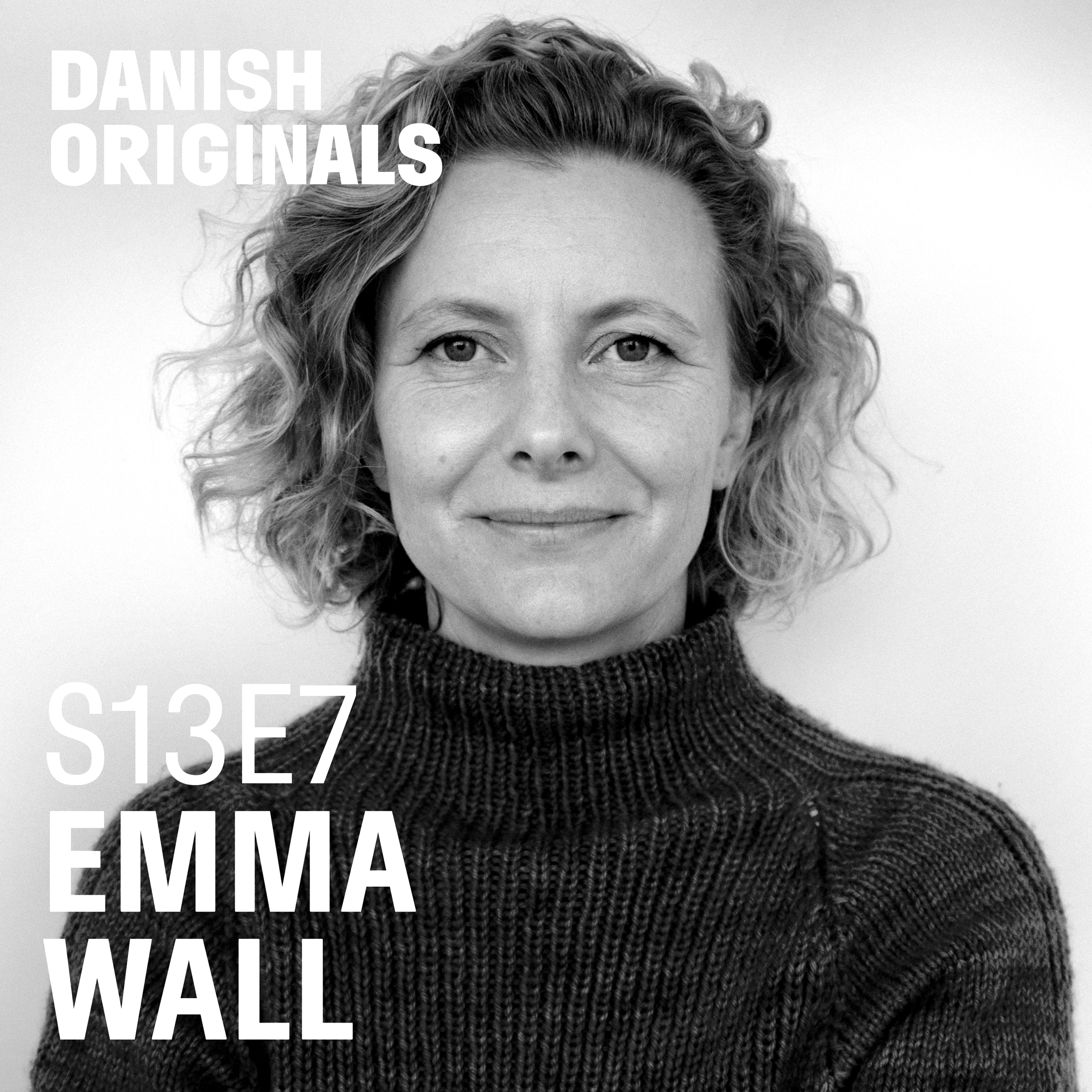
In Los Angeles to screen Just Look Up, Denmark-born, New York- and Copenhagen-based Danish child psychiatrist and documentary filmmaker EMMA WALL shares her new film about Climate Defiance founder Michael Greenberg and the power of joyful, hopeful non-violent civil disobedience as a tool to fight the climate crisis. Emma talks about transitioning careers, taking risks, uplifting ordinary people doing extraordinary things, and selecting documentary subjects based on what feels most urgent.
Photographer: Frances Tulk-Hart
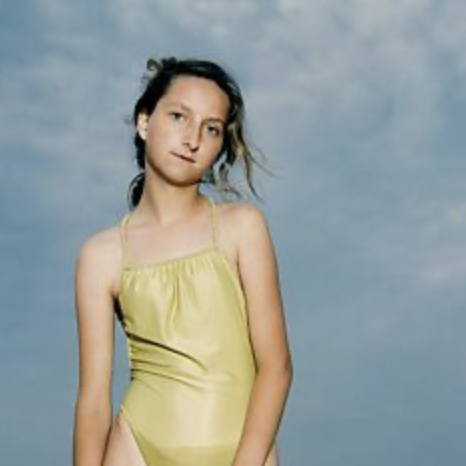
For today's episode, Emma Wall chose Rineke Dijkstra's Kolobrzeg, Poland from 1992, from the collection of The Metropolitan Museum of Art in New York.
“We’ve gotten the feedback that they come to see the film and they think, ‘Oh no, I’m going to go see a climate film. My news feed’s so depressing as it is. I live the climate crisis. Why do I want to watch it?’ And then they come out afterwards and they say, ‘I had no idea. It’s fun. It’s funny. It’s engaging, it’s entertaining, it’s inspiring. I feel activated.’”
“Dealing with mental health in today’s world and today’s medical system, I think that was where some of my strongest feelings of helplessness originated. And I look at documentary film work now as a form of public health intervention. The kind of one-on-one interaction wasn’t providing the healing.”
“Typically it feels like we’re finding people who are in these David and Goliath battles, and they’re finding their power and their agency. We want to hitch our wagon to these people and see how we can shine a light and share these stories of inspiration and possibility.”
Powered by RedCircle
This conversation with Tina Jøhnk Christensen occurred on October 15, 2026.
00:00
Emma Wall
Our hope is that we can really spread the word and share the hope. We've gotten the feedback that they come to see the film and they think, "Oh no, I'm going to go see a climate film. My news feed's so depressing as it is. I live the climate crisis. Why do I want to watch it?" And then they come out afterwards and they say, "I had no idea. It's fun. It's funny. It's engaging, it's entertaining, it's inspiring. I feel activated." And so I think this is not your normal climate documentary, and that was our goal, so we're so happy to hear that response.
00:36
Tina Jøhnk Christensen
My name is Tina Jøhnk Christensen, and I'm the host of Danish Originals, a podcast series whose goal is to celebrate Danish creatives who've made a significant mark in the US.
00:46
Tina Jøhnk Christensen
Today, our guest is Emma Wall, a Danish child psychiatrist and documentary filmmaker. Welcome, Emma.
00:53
Emma Wall
Thank you. Thank you for having me.
00:55
Tina Jøhnk Christensen
We're sitting in a big, fancy building in Century City, Los Angeles. Would you mind telling the listeners where we are at the moment and what it looks like here so that they can imagine being with us in this location?
01:11
Emma Wall
Absolutely. We're in a large conference room with a very shiny white table, probably seats around 20 people, and there's big windows that look out at very tall highrises. It's sunny, clear blue skies. We're in Southern California.
01:28
Tina Jøhnk Christensen
Normally you're based in New York and Denmark, but you do have a relationship to this city. You worked at UCLA, for instance, a while back. What is it like being back, and how would you describe your relationship to Los Angeles?
01:45
Emma Wall
I have a long-standing relationship with Los Angeles, actually. My father, who was American, was born and raised in Los Angeles, and so after I was born in Denmark, when I was quite young, we came here and lived for the first eight years of my life. So I have these faint memories.
02:07
Emma Wall
Actually, I would say, quite strong memories. But they took quite a tragic turn because we had lived in Pacific Palisades, and so when those fires happened here in Los Angeles, it was very sad to see so many of those childhood memories wiped away by the climate crisis.
02:31
Tina Jøhnk Christensen
You screened your film last night, it's called Just Look Up. Really amazing. I was among the audience members, and the film was very well received. What kind of screening was it? And when you left the building, were you pleased with the outcome of the night?
02:50
Emma Wall
Yes. It was a wonderful screening. It was our first screening here in Los Angeles, so it was really meaningful to be able to bring old friends, but also people in the documentary business, people interested in working on climate activism.
03:07
Emma Wall
It was standing room only, people sitting on the floor, which I've been told is rare in Los Angeles, because you can't get people to drive to a screening. So we were really thrilled to see the support, and the responses of the audiences were amazing. We're basically doing some select screenings here and in a few cities both in Europe and in the United States here this fall.
03:33
Emma Wall
And then we're going to be releasing the film theatrically early next year. So this is spreading the word, getting it out there, and really introducing Michael Greenberg, the star of the film, and the work he does through Climate Defiance.
03:48
Tina Jøhnk Christensen
Adam McKay directed the film Don't Look Up. It's a comedy with Jennifer Lawrence and Leonardo DiCaprio starring in it. It deals with the subject of climate change too. Yours is a documentary. Maybe you can explain the connection between these two films to the audience.
04:08
Emma Wall
We're so grateful to have Adam McKay as an executive producer on our film, and there is this relationship between the titles of the two films and the themes. We think of it as, Don't Look Up is showing us what the problem is, and Just Look Up is showing us a solution and a path forward.
04:28
Emma Wall
And it was actually because of Adam and his creative involvement that we even found our way to Michael, because he's such an incredible leader in climate activism and raising awareness about climate, Adam McKay. He introduced us to a lot of the climate activists and the people organizing non-violent civil disobedience, as a tool to fight the climate crisis. And so that was our pathway into the film.
04:57
Tina Jøhnk Christensen
It is a documentary about a group of people fighting to create awareness of climate change, as you say. Why did you choose this subject? And why show the issue from this perspective, from Michael's perspective? It also becomes a character study.
05:13
Emma Wall
Absolutely, and I'm so glad you say that, because that was our goal when we set out. My co-director, Betsy Hershey, and I, this is our second film together, and we end up approaching it based on what is keeping us up at night.
05:24
Emma Wall
Our first film together was during the first Trump administration. We followed a group of lawyers and the families that they were working with who were undocumented, families that were being separated. And the lawyers had found this really innovative way to prevent these deportations from happening at the last moment.
05:39
Emma Wall
And we knew already at that point that our next film needed to address the climate crisis. We were young mothers. We could see that ultimately, climate was also one of the main forces driving so much unrest and instability in the world that then leads downstream to migration and then these right-wing responses.
05:59
Emma Wall
And so we were climbing our way up the ladder, and figuring out, "Okay, how do we address this impossibly large topic?" And what we knew we didn't want to do was educate about the climate crisis. We don't really need any more information at this point. We always say that anyone who doesn't want to believe it at this point, probably will never be convinced.
06:23
Emma Wall
And in fact, most of the research shows that most Americans, and that's where we set the film, do believe in climate change. It's a really small, I think, 11% minority that are actual climate deniers. So we don't really need to convince anyone about the problem. I think every day, these summers and the news show us the evidence.
06:42
Emma Wall
But what I think we felt was this helplessness and hopelessness of, well, we know that there's this problem. How do we do something about it? We needed to find a human entry point to the story. We needed to find something that gave us hope, gave us solutions.
06:58
Emma Wall
Adam directed us to these groups. And they were having such extraordinary, joyful, hopeful experiences, that it was really easy to just want to enter into their world and feel that activism, that sense of community, that sense of agency. And it was what we were really longing for, and so we just dove in.
07:19
Emma Wall
And I think human stories are the only ones that we can really connect to. And so Michael, as the incredible human that he is, really just was the perfect main character to take us on this journey.
07:33
Tina Jøhnk Christensen
Maybe you can explain his character. He's also a stand-up comedian, which kind of says it all in a way.
07:40
Emma Wall
It's hard to, I think, describe Michael. And it was part of what made it so fascinating making a film with him, because we never really knew what to expect. He was always surprising us. He's a young 32-year-old man who has an incredible intellect, an incredible courage, and he has a real commitment to fighting the climate crisis.
08:04
Emma Wall
He's been doing activism for several years, and realized that one-off disruptive actions would have a momentary fleeting effect, but then it was yesterday's news. And so he founded this group Climate Defiance in 2023, really to harness the power of disruptive action of non-violent civil disobedience as we know it from Gandhi, Martin Luther King, ACT UP fighting the HIV/AIDS crisis.
08:32
Emma Wall
And he used it to channel all of that historical toolkit towards fighting the climate crisis. And at the same time, he uses comedy. He's a practicing Orthodox Jewish community member. He's part of the gay community. He loves doing stand-up comedy. He's an activist.
08:51
Emma Wall
He, to me, looks like a young Bob Dylan. And we extraordinarily got to use some Bob Dylan music in the film, so that was a real gift, for just Bob Dylan's role also in the protest movements in this country. It was wonderful being able to enter into Michael's world, and watch his unusual kind of leadership.
09:17
Tina Jøhnk Christensen
It's award season in Los Angeles. That means that filmmakers are showing their films and campaigning to be considered for one of the major awards, and especially the big one, the Oscar. Are you part of this race, and what is this race like?
09:34
Emma Wall
I don't know if we're part of that race. I would certainly hope that we would be able to receive some attention from the filmmaking community, but really I think that the race that we're most deeply involved in is fighting the climate crisis.
09:47
Emma Wall
We want to share this film with everyone, so we want to share it with people in the documentary field, as our colleagues, the people that we look up to. We have Joshua Oppenheimer as executive producer on the film.
10:00
Tina Jøhnk Christensen
Several Oscar nominations for him.
10:03
Emma Wall
And he's an extraordinary documentary filmmaker and a hero of both Betsy and I, so it was such an honor to have both him and Adam with their totally different perspectives.
10:12
Tina Jøhnk Christensen
And Signe.
10:13
Emma Wall
And Signe, of course, as a producer on the film, Signe Byrge Sørensen, who has produced several films and also those of Joshua Oppenheimer's. We feel very committed to sharing this film and to try to activate audiences.
10:27
Emma Wall
And so we want to do that with our documentary colleagues. We want to do that on college campuses. We want to do that with community organizations. We want to do that with theatrical audiences. And in the end, with streaming platforms.
10:41
Emma Wall
Our hope is that we can really spread the word and share the hope. We've gotten the feedback that they come to see the film and they think, "Oh no, I'm going to go see a climate film. My news feed's so depressing as it is. I live the climate crisis. Why do I want to watch it?"
10:57
Emma Wall
And then they come out afterwards and they say, "I had no idea. It's fun. It's funny. It's engaging, it's entertaining, it's inspiring. I feel activated." And so I think this is not your normal climate documentary, and that was our goal, so we're so happy to hear that response.
11:15
Tina Jøhnk Christensen
We've met a few times here at Hollywood events in Los Angeles, and you are your husband's wife at those events. He is Jeremy Strong, an actor, and he has been nominated for many awards. As someone who is on the outside of this, and as a documentary filmmaker, what is this world like? The world of glamour, champagne, fancy clothes. Do you feel at home in that, or is it a spectacle that's odd?
11:44
Emma Wall
I think all the things you said are true, right? I think it's both a surreal and strange environment that I can't imagine anyone feels totally at home in. But it's been extraordinary that Jeremy's gotten these opportunities to get this recognition.
12:04
Emma Wall
We've been able to go to a few different award shows at this point. And so at a certain point, as with anything, you adapt and learn to feel less frightened and overwhelmed by the cameras everywhere. And it's wonderful to see people whose work you admire, to be able to meet them.
12:20
Emma Wall
At a recent awards event, we were standing in line for the bathroom with Trine Dyrholm and the team from Girl with the Needle. I absolutely love that film and all the actors and the filmmakers involved. And so those are great moments where you get to have a really human interaction in a space that's not totally conducive to being super grounded.
12:44
Tina Jøhnk Christensen
You mention a Danish star, Trine Dyrholm, I like that. As a documentary filmmaker, do you think it is a good platform for your messages to come out, in case you get an Oscar recognition or something? Is that the ultimate goal and not the award itself?
13:00
Emma Wall
Absolutely. I think we live in an attention economy, and it's incredibly hard to get films seen in the world. We've seen the consolidation of outlets where documentaries are distributed. It's harder and harder to break through. And so I think awards are really a way of directing people's attention to documentaries that may otherwise go unnoticed.
13:27
Emma Wall
And for us, we really want to pursue all the different avenues, where we can hopefully engage people and say, "Hey, we're here. We made this film, and we'd love to share it with you. Because we have this really urgent problem called the climate crisis."
13:42
Emma Wall
And we have all the tools that we need. I used to think, "Oh, well, hopefully, we'll sort it out," like we need some kind of technical solution. But actually, we have the tools we need. We're just missing the political will, in this country in particular.
13:57
Emma Wall
And that's where disruptive action can put political pressure on lawmakers to do the things that we need to have done and which, the studies show, the majority of Americans want. And people want it globally. India, China, or the floods in Nepal. People are facing these consequences everywhere.
14:19
Tina Jøhnk Christensen
Let's turn a little bit to why you worked at UCLA and talk about your background as a child psychiatrist. You seem to have been educated all over the place: Oxford, Cornell, Columbia University in New York. Explain to us why you decided on this career path. Was it something that you dreamed about yourself when you were a child back home in Denmark? How did that career path come along?
14:46
Emma Wall
It's a good question that I ask myself still to this day, because I did take a real diversion from that, and especially having trained really in the science of self-knowing, it's really interesting to be trying to think about how you end up where you go.
15:08
Emma Wall
I don't know that it's the right answer, but I think part of it was coming from a family, on my Danish side, of doctors, public health professionals. And so that was kind of really five out of six, that's what you did. And the feeling was that it was something that everyone loves, it was such a rewarding path.
15:30
Emma Wall
And so I grew up with that idea and then found it was something that I was able to do. And so it just happened on its own, and there were times where I pushed back, and was like, "Is this something I really wanna do?"
15:44
Emma Wall
Then I discovered psychology when I was studying at university, and I thought, "Oh, maybe this is actually a path that would make sense, to combine medicine and psychology, and become a psychiatrist." And so I went along that path.
16:00
Emma Wall
Dealing with mental health in today's world and today's medical system, I think that was where some of my strongest feelings of helplessness originated. And I look at documentary film work now as a form of public health intervention. The kind of one-on-one interaction wasn't providing the healing.
16:22
Emma Wall
There's a lot of, I think, lack of healing in medicine. And especially I was a child psychiatrist, and so, of children responding to things that are, in fact, educational problems, systems problems, social problems, and they become the identified patient. The solution from my mind was not to give them medication, and I couldn't from that position really address the system's issues.
16:43
Emma Wall
And so filmmaking became a way to step out of that really challenging experience that I felt, and instead try to address social challenges from a more creative perspective, and hopefully one that could reach a lot of people, could inspire us moving collectively in the right direction.
17:09
Emma Wall
I had a couple of my psychiatry colleagues at the screening last night, so I still think fondly of those days and that work. But I think ultimately having a collaborative, creative way of addressing the same issues and observing the human condition, these positions of observation as filmmaker and psychiatrist, in a way, they're quite similar. So it's been a wonderful transition, and I had no idea I was gonna do it, so who knows what's gonna come next?
17:42
Tina Jøhnk Christensen
How was your childhood in Denmark? You mentioned that you also grew up in Los Angeles, and I know that you've chosen to bring up your own children in both Denmark and New York. Is that because Denmark gave you a good childhood?
17:56
Emma Wall
Yes, I have very fond memories of my childhood. I would say I had a lot of years here in America in the early years, but I was always spending my summers in Denmark, holidays in Denmark. My mother was Danish, so I felt culturally very connected to Denmark, and had really positive experiences whenever I was there.
18:16
Emma Wall
And so my childhood was a lot of going back and forth between Denmark and America. And yes, it probably doesn't take a psychiatrist to recognize a pattern that continues. But I do think we're gonna end up settling more in Denmark because of just how wonderful the container is for childhood in Denmark at this moment.
18:39
Emma Wall
Right now we're in New York City, which I don't think was designed for little kids. So I have just all of the most fond memories. A lot of sailing, a lot of just life in the slow lane, which is, I think, what I'm looking for these days for my own kids.
18:58
Tina Jøhnk Christensen
Was it important for you that your children speak Danish?
19:01
Emma Wall
Very important for our kids. I've always spoken Danish to them. My mother did the same for me, it is something that's such a conduit for the culture. And, so yes, I love being able to pass that on. And Jeremy has picked up so much Danish. It is a very challenging language to learn.
19:19
Emma Wall
But I'm confident that the more time we spend there, the more he'll absorb it. The problem is that so many people switch immediately into English, so it's impossible to get much of a chance to practice. But there's a lot of Danish in our household, which has always been important to all of us.
19:37
Tina Jøhnk Christensen
You traveled to South Africa and Gaza. You worked with trauma survivors and children held in detention. What drew you to these countries and those situations?
19:49
Emma Wall
Yeah. I, throughout my university and medical training, was really interested in global health, in refugee health. And so early on, I mentioned earlier that my family works in public health and these things, so it was actually my mother at the time who was working in North Africa and the Middle East. And she was based in Jerusalem.
20:16
Emma Wall
And so I would travel with her on breaks from school and would be visiting Gaza and the West Bank at a time when there was a lot less attention on the issues and the challenges that were very present at that time.
20:30
Emma Wall
So immediately on seeing what was happening there and hearing stories of the way that children were being held in detention, and at the time I was already studying psychology and child development, it felt incredibly compelling to try to understand the experiences these children were having, living under occupation.
20:55
Emma Wall
And then South Africa, I was dating a South African. And so I did a rotation at Victoria Hospital, and studied at the pediatric hospital there, which was absolutely devastating as well, to see also refugees coming there from Zimbabwe and other places, totally malnourished.
21:16
Emma Wall
And there's so many places, and it's almost endless, but it felt really important to try and go to places, where there was the least amount of support, to see if there was something I could contribute, but also really put into perspective all the things that we take for granted.
21:35
Emma Wall
I think growing up, my holidays when I was in high school were going to visit rural primary healthcare clinics in India, because that's where my mom was having her meetings, and so I would just sit in. So seeing these quite shocking medical conditions in so many places, made me feel I needed to do something about it. And I was trying in all different ways to learn and contribute throughout my time as a physician.
22:03
Tina Jøhnk Christensen
So it was almost in your DNA that you were going to travel and become part of world society, so to speak.
22:10
Emma Wall
I think so. My grandmother and her husband were both at the World Health Organization. I also would travel with them on other things to Central Asia. I had gone to Azerbaijan with them as a teenager, and so I went back and did a rotation in Kyrgyzstan as a medical student.
22:29
Emma Wall
I traveled to South Africa with my partner at the time and thought, I need to do a rotation here. And so it was how things were done in the family, and so that just continued.
22:43
Tina Jøhnk Christensen
What was the switch like to becoming a documentary filmmaker? Did it come naturally to you? And do you remember the moment where that path was started, when you took the first steps?
22:56
Emma Wall
It wasn't a switch that flipped per se. It was a gentle peeling of the onion, layers over layers. It felt more like a gradual transition. And it really, I have to say, I don't think I'd be where I am today without the teachings of Jon Kabat-Zinn who is a kind of extraordinary mindfulness teacher, who leads a lot of research. And he originally trained at MIT, and he founded a center at UMass.
23:24
Emma Wall
And as a psychiatrist, I was interested in bringing mindfulness into my practice, and then it took me on this journey of its own, which made me realize that I wasn't actually doing what I thought I was meant to do. But that was a terrifying idea. And it took frankly years to gain the courage to stop being a doctor, because there's so much need, and that's what I had grown up with. How could you stop?
23:58
Emma Wall
But there was something inside that just felt it needed to be expressed. And so I met Betsy Hershey, who's a dear friend. We actually really connected on one of these early meditation retreats where we probably talked a little more than we were supposed to on our silent retreat. We really connected.
24:15
Emma Wall
And then years went by where I would fantasize about this idea of making a documentary. And it felt more like, oh, maybe I'll do it as a hobby or a side thing. I couldn't conceive of it as a whole identity or career, because who does that in their late 30s?
24:34
Emma Wall
It felt too terrifying. I hadn't gone to film school. There was no real possibility to do it. And then we just decided to do it, and then suddenly here I am, being introduced as a filmmaker.
24:50
Tina Jøhnk Christensen
Your first film was about the Rapid Defense Network, and it's about lawyers helping immigrants stuck in a rather inflexible system. How did you get involved with this?
25:03
Emma Wall
So at that time, the headlines were just… every day we were all being flooded with these images of families huddled in Mylar blankets. There were recordings of children being held in detention centers crying. It was really a moment, this was in early 2019, 2018, where, again, going back to that feeling of helplessness. It felt horrendous.
25:34
Emma Wall
It was an egregious human rights violation that was happening in this country. And suddenly on my Instagram feed, which I try to avoid as much as possible, part of my learnings in meditation retreat. But I saw an old friend of mine from college who I hadn't been in touch with in a long time, posting the work that he was doing from these press conferences, he was one of these two lawyers.
26:02
Emma Wall
His name is Gregory Copeland. And immediately I shared it with Betsy and thought, "Look at this. Let's go talk to them." She was totally on board because we both had been feeling just that sense of there's nothing you can do in the face of this injustice. And so we went to meet them, him and his partner.
26:24
Emma Wall
And that first day was the opening shot of the film. We hit the ground running. We had no idea what we were walking into. We hadn't basically even said hello, and then there was this nine-year-old girl who's at the microphone at this press conference weeping, her father is being held in a detention center.
26:41
Emma Wall
He's the father of five US citizen children with a US citizen wife. And he was facing deportation. And so it was just immediate, we need to go down this rabbit hole. We need to follow this story. So it happened very quickly.
26:55
Emma Wall
Betsy and I, we're very much driven by just what is keeping us awake at night. And when we find someone who has found something that's working, typically it feels like we're finding people who are in these David and Goliath battles, and they're finding their power and their agency. We want to hitch our wagon to these people and see how we can shine a light and share these stories of inspiration and possibility.
27:20
Tina Jøhnk Christensen
It was also a kind of character study from that family's perspective. Do you think you have a different take on this legal system as a Dane, maybe a different perspective on what's going on with the way ICE operates in this country?
27:36
Emma Wall
It's hard to know how much my perspective is the same or different from others. I think certainly having grown up between cultures and living in other countries besides Denmark and America, you can't help but see the ways in which things are different in a place from where you were before.
27:57
Emma Wall
And so yes, certainly here, sadly, the crackdown on immigration and immigration rights is happening all over the world, so it's not a uniquely American problem. But I think the issue with ICE is absolutely terrifying in this country, and having masked law enforcement is a really shocking place to be.
28:21
Emma Wall
I feel so many people feel that way, and it's part of this division in this country where there's just a lot of people on both sides of this issue. And then there's all these families and children caught in the middle.
28:35
Tina Jøhnk Christensen
You met your husband in New York and you married at an old castle in Denmark called Dragsholm Slot, it was built in 1215.
28:45
Emma Wall
It's interesting. I know this story about the castle. I don't actually know where it came from 'cause we didn't actually get married there. So we went to that castle and stayed right before we got married. We spent a night, and I remember there was just so much history and beauty.
29:06
Emma Wall
And Jeremy actually wrote his wedding speech on the paper from there. We did get married in Copenhagen and we had an absolutely magical wedding, full of friends from different places. And it was very important for us to be married there, and two out of our three children were born in Denmark. And so, we feel, as a family, very tied to the country and all of the beautiful traditions that we enjoy partaking in.
29:34
Tina Jøhnk Christensen
Is home one place or several places?
29:37
Emma Wall
That's a good question. I think home is where we are together as a family. I think we both have to travel a lot for work. Our kids are used to traveling, and so it does feel like our home is just where we are with our children. I think Denmark feels like a particularly strong connection, and it's where we want to go back to for Christmas and summers.
30:04
Emma Wall
I also think of the whole world as home, right? We need to protect Planet Earth, our home. I was really lucky with my family being in international health, being able to see the world early on and realizing how vast it is and how varied the people are, living in different conditions, and how many places don't have the privileges that we are used to in Denmark or in the US. So I think I feel slightly rootless, but also really connected at the same time.
30:40
Tina Jøhnk Christensen
Living in both Denmark and the US, is it an advantage or disadvantage belonging to two places or many places in the world?
30:51
Emma Wall
I think I've heard lots of people who are from different cultures talk about, it's not so much that you're a part of both, you're kind of not a part of either, in a way. And so there is this outsider position anywhere you are 'cause I'm not totally Danish having lived my whole life there with two Danish parents, nor am I that in America.
31:14
Emma Wall
I also think, in a way, doesn't everyone feel like an outsider? I do love being able to move in and out of cultures and being able to see and appreciate just the variety of culture and the world, and being able to show that mental flexibility that comes from realizing that there's not just one way to do things.
31:34
Emma Wall
It's so subjective. And so I think that there are absolutely advantages, today more than ever, having mental flexibility, 'cause we're just growing so fixed in our bubbles. And so the more that we can move around and so the more inclusive we could be, I think the better. But there are trade-offs of course.
31:57
Tina Jøhnk Christensen
I'm both a Danish and an American citizen. I'm often confused about how I define myself as a Danish American.
32:05
Emma Wall
It's interesting. You hear that frequently. I've always thought of myself as Danish. In America, you hear people often say these ideas of half this and half that. And it was actually someone who was a human rights lawyer who said that there were theories that a lot of that what quarter are you or what fraction are you in America was going back to the slave trade and racial inequalities of how white are you or how Black are you.
32:33
Emma Wall
Because you don't really hear that in a lot of other countries where you're, "I'm half this, I'm half that." You're either, "I'm Danish," or, "I'm American." So I don't identify with the halves. I think that history of how we measure people is fascinating because the idea of being broken into parts, doesn't resonate with me.
32:52
Emma Wall
I feel Danish, I am American, but I think it's a particularly difficult time now to really identify with that, with so much of the movement happening in this country.
33:03
Tina Jøhnk Christensen
Yes, very much so. How would you like the future to be in terms of your career? Are you first and foremost a filmmaker, or do you see yourself venturing out? Do you have a bucket list, for instance, or dreams that you would like to see come true?
33:22
Emma Wall
I think I see myself at this moment making films, and I'd love to continue. And I think I love holding the uncertainty of having no idea what could happen. It was such an extraordinary journey to transition from one career to another, which was very hard… or I shouldn't say very hard.
33:46
Emma Wall
It was more the internal blocks, the negativity of telling oneself, "You can't do that." So being able to push through that has given me the sense of just endless possibility of who knows where I could end up. So I don't really have a bucket list other than just I'm really working on listening to what it is that feels most urgent to do, because there's so much to do in the world right now.
34:14
Emma Wall
And so I think I right now just feel totally committed to doing whatever I can to share this film, to help address the climate crisis, to really focus on saving all the lives that will be lost with each tenth of a degree that this planet heats up. And so everything that we can do to slow that progress, that's where I'm at. And it feels like a hopeful journey. I want to keep doing it as much as possible.
34:44
Tina Jøhnk Christensen
Emma, what would you say to people who wish to do a career change like you did and give them some advice? What would you say to them?
34:53
Emma Wall
I think for me, meditating was the pathway because there's so much noise in the mind and so much distraction in our culture that it's very hard to connect to your inner voice or your intuition without quieting out all of the distractions. And then once you quiet out the external distractions, there's still the internal distractions of just thinking I, me, and mine, as they say.
35:20
Emma Wall
And so it's been incredibly powerful to not only have a daily practice, but also, which I struggle with, full disclaimers, but being on a retreat where you can really just turn your phone off, dive in, whether it's three days, five days. There are other longer ones that are available.
35:37
Emma Wall
To me, that's been the most transformative to get in touch with being alive and what do you wanna do? If you're gonna die in six months, what would you want to spend your life doing and living your life that way? And so that's been the only way I've figured out how to come to those answers. So, I recommend it.
35:56
Tina Jøhnk Christensen
Silent retreats can be recommended. You might meet your new partner there too.
36:00
Emma Wall
It's possible. Anything can happen.
36:03
Tina Jøhnk Christensen
Okay. Thank you so much, Emma, for your time. We loved having you on Danish Originals.
36:08
Emma Wall
Thank you so much for having me.
36:11
Tina Jøhnk Christensen
For today's episode, Emma Wall chose Rineke Dijkstra's Kolobrzeg, Poland from 1992, from the collection of The Metropolitan Museum of Art in New York.
36:23
Emma Wall
I chose a photograph by Rineke Dijkstra from 1992. And it's one of her pretty well-known photographs from the beach in Poland.
36:33
Emma Wall
This image is of a teenage girl standing on the beach in a green bathing suit, and her position is this Botticelli-like classical sculpture, but she, in her simplicity, is quite ordinary. I really appreciate how a girl on the beach can be held up as though it was a great painting in a museum.
36:56
Emma Wall
And I think of that as well in my film work, that you can take ordinary, vulnerable, awkward young people, and they can achieve monumental things. That tension in this picture is something that is very striking to me.
37:13
Emma Wall
All of the portraiture that she did really feels like a study of these individuals, which, as a psychiatrist, as a documentarian, there's nothing more fascinating to me than just an individual in their natural habitat.
37:28
Emma Wall
And I also love the simplicity of her setup, which has these classical references that can make it feel quite grand, and yet she is this ordinary girl, in her bright green bathing suit. The honoring of the ordinary — and actually no one's ordinary, everyone's extraordinary — I love this photograph.