
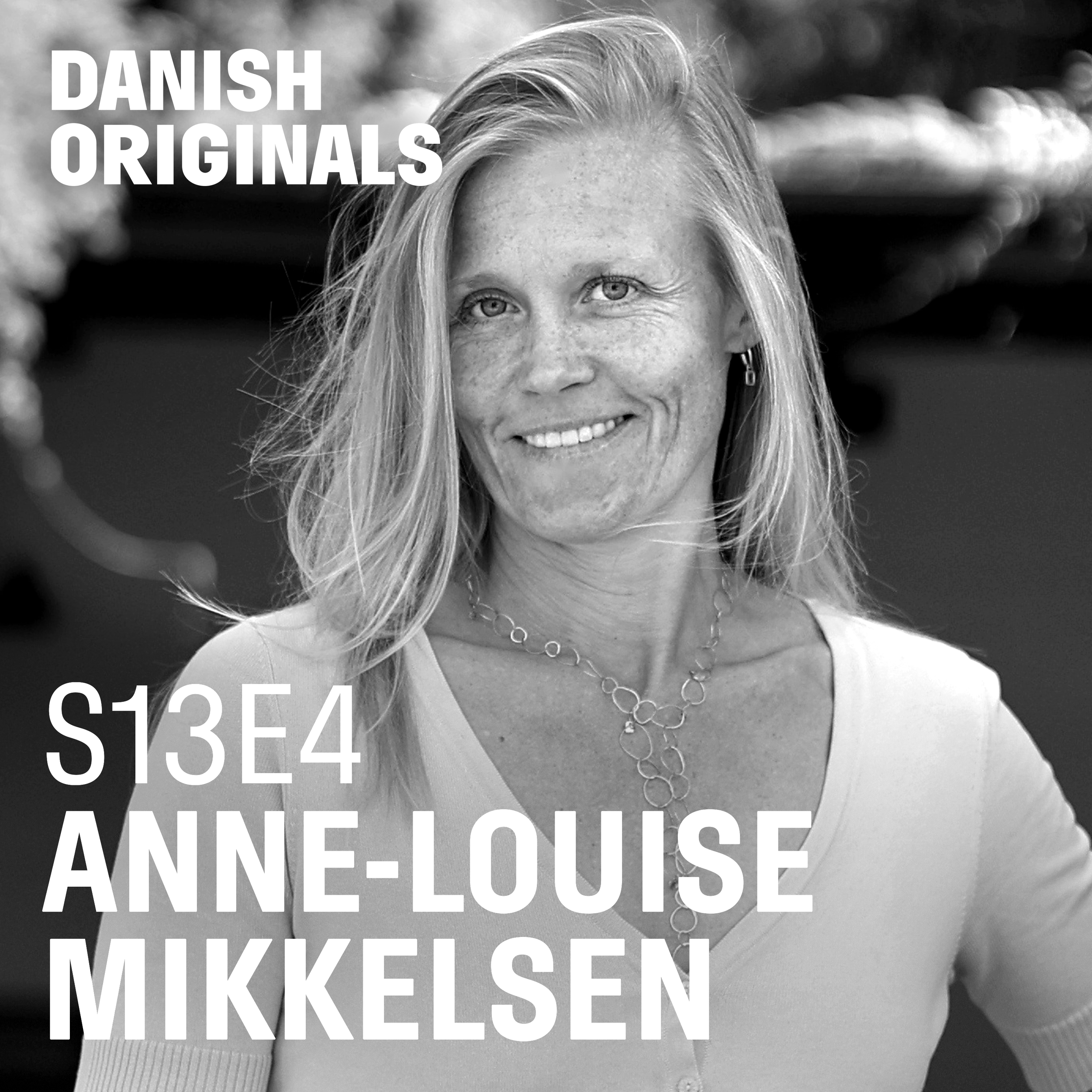
From her winery Tenuta di Aglaea in Sicily, Italy, Copenhagen-born, Tuscany-based, Danish winemaker and founder of Annacare Volcanic Cosmetics ANNE-LOUISE MIKKELSEN shares her journey from Italian wine consultant in the US to imagining and building her winery inspired by the Mount Etna terroir and founding a bio-sustainable skincare line developed from leftover grape skins from the winemaking process. Anne-Louise talks about her work ethic as a good match for Sicilian culture.
Photographer: Anne Rosted Stausholm
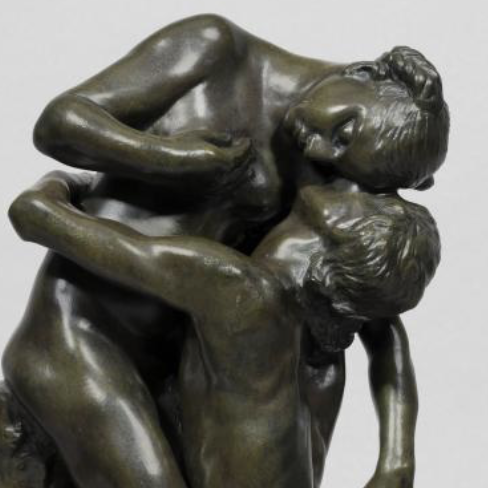
For today's episode, Anne-Louise Mikkelsen chose Camille Claudel's L'Abandon or The Abandonment, from 1886, from the collection of the Musée Camille Claudel in Nogent-sur-Seine, France.
“I’m always the one doing all the blendings, tasting all the wines. When we get too big and someone else is doing that for me, then it’s not my winery anymore. I think it’s so important to have a person behind it. You see a brand. Is it owned by a huge conglomerate or is there actually a human being behind it?”
“I don’t think I dared to dream about it being from Denmark where we don’t have any history of wine. I didn’t have anyone in the family. I didn’t know anyone, so it was not like, go see your cousin or go see a friend of ours. It was completely my own naive idea that I just left the US for Italy to start in the wine business.”
“I’m very focused on sustainability. I thought it would be interesting to see if we could close the circle, so we almost get to zero waste production, i.e., getting all the grape skins that we get rid of after fermentation in the harvest season. I found they could be used for skin protection. They’re very, very high in antioxidants. And I started developing that as a consequence.”
Powered by RedCircle
This conversation with Gregers Heering occurred on September 4, 2026.
00:01
Anne-Louise Mikkelsen
I'm always the one doing all the blendings, tasting all the wines. When we get too big and someone else is doing that for me, then it's not my winery anymore. I think it's so important to have a person behind it. You see a brand. Is it owned by a huge conglomerate or is there actually a human being behind it? The ambition is not necessarily growing in volume, but always growing in quality. We're also facing, with the climate changes, a number of obstacles that we have to deal with and see how we are going around this.
00:30
Gregers Heering
My name is Gregers Heering. I'm a photographer and writer, and guest host of Danish Originals. Our goal is to celebrate Danish creatives who have made a significant mark in the US.
00:40
Gregers Heering
Today's guest is Danish winemaker and natural cosmetics entrepreneur Anne-Louise Mikkelsen. Welcome, Anne-Louise.
00:48
Anne-Louise Mikkelsen
Thank you, Gregers. Thank you for having me in the studio.
00:51
Gregers Heering
I wanna say to the listeners, this has not come super easy. Anne-Louise has actually really made a huge effort to make this happen because there were some technical issues with the microphone or computer or whatever. So Anne-Louise, give us a quick brush up on your very kind dedication to make this happen. Where has that road taken you over the last couple of days?
01:15
Anne-Louise Mikkelsen
I'm at a north-facing slope right now on Etna, and I've come to see, I think, every single technical shop in Randazzo. I'd been directed from one shop to the next, to the third, to the fourth, basically having to give up at lunchtime and pick up in the evening, heading down to the seaside and finding at 8:00 pm in the evening a headset that would work, and then back up to the mountain and trying it on.
01:43
Anne-Louise Mikkelsen
I know everywhere to go, and that'd be for anything that has to do with phones and computers and kitchen tools and all sorts of funny things, just not headsets.
01:51
Gregers Heering
Okay. And I should also emphasize that you are in Sicily, Italy.
01:56
Anne-Louise Mikkelsen
Indeed. Well, Sicily is not really Italy. Sicilians don't consider themselves Italians, as you would think. We really have an autonomy here and a culture completely on its own. So really nothing comes easy.
02:08
Gregers Heering
I don't know an awful lot about Italy. I, as many other people, love the food and love the idea of Italy. I haven't traveled extensively there. This thing that you have to go around an entire island to get something like a computer, is it the infrastructure? What makes some of these practical matters complicated from time to time?
02:33
Anne-Louise Mikkelsen
It's a funny question 'cause it's complicated and you always have a funny, good experience finding a solution to it, actually. You always meet new people, you always meet friendliness, and I always kind of just laugh about the situation even though it can be quite stressful. We are at an island, point one.
02:52
Anne-Louise Mikkelsen
We are up at 750 meters above sea level, up on a north-facing slope. Towns are very small. Everything is terraced and there are not huge stores, and we don't need all that stuff either. I'm quite happy with it. I'd rather search another ten stores than have a huge mall in the middle of it, 'cause it wouldn't fit the place nor the nature.
03:15
Anne-Louise Mikkelsen
So it is just a bit complicated and I don't mind it, put it this way. But working culture-wise, it can be quite stressful, and for a Dane, probably it's a nightmare. So you'd really have to have a huge amount of patience and persistence in order to move ahead. Such a thing as a timeline — we set a time, we set a date — it doesn't exist.
03:39
Anne-Louise Mikkelsen
Strangely, we get things done nonetheless, but it is difficult unless you get that rhythm or lack of rhythm, I would say.
03:48
Gregers Heering
I guess it's part of the charm, as you also indicate, that it would not be very fitting with a big mall and a bunch of tech stores as we see here in the US. I'm sitting here in Los Angeles and you are in Sicily, and we are not running our video here because we wanna make sure that you are able to upload as we speak. So I am really sad about missing out on the view. Maybe you can set the scene for us.
04:16
Anne-Louise Mikkelsen
It's a very rough landscape here. We're up at 750–800 meters above sea level. And you wouldn't think that you'd have mountainous, cold climate, surroundings going south, but when we go to Etna, we have just that. So we have pine trees and snow on top of Etna. It melted during the summer, unfortunately. But years back, we actually had snow during all of the summer season as well. So there'd be snow on top of Etna.
04:42
Anne-Louise Mikkelsen
And she's smoking all the time right now. She's been quite active this summer, this spring as well. It's basically all lava rock. I'm sitting on rock right now. Etna has been in eruption for centuries, on and off. So the whole landscape here is based on that, and it's very interesting to work with 'cause it's very, very fertile.
05:03
Anne-Louise Mikkelsen
On Etna's slopes, it's very green everywhere you see. When you go down in the valley and you look across at the Nebrodi valleys and the Nebrodi mountains, it's brown. There's no green, it's just rough mountains. As opposed to Etna, which is also rough, but green. You throw a seed in the ground and it grows, which is why we are so enthusiastic about our wine here. The minerality that Etna has brought with it is what gives us extraordinary circumstances and conditions to grow wine.
05:32
Gregers Heering
Very interesting. How long have you been there? And is this what you call home at this point?
05:38
Anne-Louise Mikkelsen
I came in 2008 to Italy, and to Etna in March 2008. Classic Sicily, I got up at 4:00 am in the morning to get here with GPS at the time, one of those things you plugged in the car. And I ended up in the middle of the island of Caltanissetta, surrounded by sheep and a lot of people who wanted to help.
05:58
Anne-Louise Mikkelsen
I didn't make it here till 4:00 pm in the afternoon. I got to taste a few of the Etna wines back then, and they were not at this stage we're at right now, but definitely very, very interesting. And I fell completely in love with the island and Etna as such. I thought it was so inspiring.
06:16
Gregers Heering
And at this point you speak Italian, I presume?
06:21
Anne-Louise Mikkelsen
I didn't speak one word of Italian. And Italy is one thing, visiting and living, but if you do business in Italy and you don't speak Italian, you're lost. It took several years to learn Italian. I didn't have any background in Italian at all, so it was starting from scratch completely.
06:30
Anne-Louise Mikkelsen
The whole thing about going to Italy was starting from scratch. I wasn't that old, so you don't think too much about it. You just jump, and you don't realize how deep the water is where you jump in. But I think it's better you don't know it because or else you wouldn't have jumped, perhaps?
06:53
Gregers Heering
Okay, you do speak Italian at this point?
06:57
Anne-Louise Mikkelsen
Absolutely. Now I do, but when I got here, not a single word.
07:02
Gregers Heering
And is there a big difference between the Italian spoken in Sicily versus the mainland? Is it a dialect?
07:09
Anne-Louise Mikkelsen
It's a little bit of a dialect, but also Sicily has its own language. They have a Sicilian language that Italians wouldn't understand. You have to be born in Sicily in order for you to speak Sicilian as well. It sounds a bit like Arabic, Italian, some Greek mixed into it. I understand a few words, but that's it. When they speak Sicilian, I'm lost. Italian, yes, but Sicilian, no.
07:33
Anne-Louise Mikkelsen
Sicily is a melting pot. It's been occupied by the French, Greeks, Arabs, and so on and so forth. So it is really interesting to see also how the language and how food-wise we have developed. And we have influences also from North Africa. So the language is just a consequence of that.
07:52
Gregers Heering
Sicilians don't necessarily regard themselves as part of Italy. What exactly do you mean by that?
07:58
Anne-Louise Mikkelsen
So Sicilians, as an island, as a region, have a lot of autonomy, and that goes way back to after the war. And they have developed their own way of doing things. I think it was always a culture on its own, but they have that autonomy and mentally also an autonomy. Obviously they are part of Italy, but they are very much on their own.
08:21
Anne-Louise Mikkelsen
I had to take an agriculture exam to set up my company. The exam is a national, recognized exam. I had to do another exam for Sicilians to recognize it. They're just stubborn, and say, Do you want the paperwork? Yes or no? If you want it, take the exam. If not, no. Okay.
08:39
Anne-Louise Mikkelsen
So, they sometimes make their own rules. And it's better just to try and make things work. If you are in Italy and you're working and doing business, try to keep sight of the goal. If you get angry with all the small things you have to stumble over, all the obstacles, you're never gonna get to where you wanna go.
09:03
Anne-Louise Mikkelsen
You kinda need to go, it's not about me and my right and what should be and what they ought to do and this and that. Just keep going and get it done one way or the other. Or else you just get stuck with what should be or what is written in the law book and what supposedly is the way to go forward. If you wanna move, you have to find a solution.
09:21
Gregers Heering
Right.
09:23
Anne-Louise Mikkelsen
If you're too dang stubborn, so to speak, then you're not gonna get anywhere. And if you are wasting too much energy on being angry or upset with things not going according to plan, you're never gonna achieve anything, you're never gonna succeed.
09:35
Gregers Heering
Okay, so let's backtrack to the time where you were in the US because your link to Sicily actually comes from here. So maybe you can talk a little bit about what brought you to the US and what the link was for you to go to Italy, Sicily from there.
09:56
Anne-Louise Mikkelsen
Surely. I worked a lot with wine while I was studying in Denmark, went to France and so forth, but did a consultancy job in the US, a really interesting consultancy job in the wine business. I got to know a ton of really interesting people. When I'm done with my studies, I moved to the US.
10:13
Gregers Heering
Where in the US?
10:14
Anne-Louise Mikkelsen
I was working a lot in New York in the beginning and then moved to Nevada, Las Vegas, traveling a lot across various states, but that was my base. And being in the US there, I was still studying in the wine business. I'm a business graduate but the wine was so important to me that having done my thesis, I wrote to Gelasio Gaetani, an Italian count, and ended up visiting him in Italy.
10:41
Anne-Louise Mikkelsen
And that's how the whole thing starts, and then I end up working for an Italian company and spending 100 days a year in the US, because the US is and was a very important market for Italian wine.
10:55
Gregers Heering
And when he asked you to come to Italy, where in Italy was that?
10:59
Anne-Louise Mikkelsen
That was Tuscany.
11:01
Gregers Heering
OK!
11:02
Anne-Louise Mikkelsen
And visiting him was my first time really in Italy. I'd gone once, I think, with my parents to Rome when I was a child or something like that. But going to Italy, having to meet up with him, was a huge adventure. It was a good introduction to Italy, and it was such a good example of Italy.
11:20
Anne-Louise Mikkelsen
When I arrive, I lose my suitcase, obviously. I have to sleep over at some, I don't know, B&B, where the bathroom is shared and all sorts of wonderful things. Get up the next day. Okay, we hit the road, get in the car. We had mobile phones back then, but not really GPS that was worth that much. And he says to me, "Just meet me at 'jolly bar.'"
11:39
Anne-Louise Mikkelsen
And I go, 'jolly bar'? Okay, great. I'm heading for 'jolly bar.' Okay, we can manage. It's not too bad. We'll find the 'jolly bar' one way or the other. So I'm heading south of Florence and trying to call him, and the phone is off. I go, Off? Oh, that's not a good sign, if the phone is off. I don't know how long it can be off because he won't see that I've called either.
11:58
Anne-Louise Mikkelsen
Anyways, just keep going. And we stop at the first town, I find the 'jolly bar,' only to realize that there is not just one 'jolly bar' in Tuscany. There is a 'jolly bar' in every single small town you pass through.
12:11
Gregers Heering
Wow!
12:12
Anne-Louise Mikkelsen
But he's not picking up the phone because the phone is off. It's really worrying. Finally, he actually picks up on the phone and he goes, "Oh, sorry, there's no signal in Tuscany." Oh, great. Oh, great. So if I get lost and I try to call you and there's no signal, how am I gonna find you? Anyways, when I finally do find him, he's happy to see me. I am delighted to see him, 'cause this is Jolly Bar number eight or ten at the time.
12:36
Anne-Louise Mikkelsen
We greet each other and just get really well along. And he shows me various haciendas in Tuscany, and we're talking a lot about wine, the wine business. I did my master's thesis on wine as well. And when I'm about to leave, he says, "You need to stay here. We need people like you. You get the point. Stay. Don't leave." And I said, "Yeah, right. Talk is cheap." And that's how the whole thing started.
13:00
Anne-Louise Mikkelsen
And I flew back to the US, really amazed by my first touch of Italy, so to speak. It was in September, and September is tomato season here. And I saw these women with tons and tons and tons of tomatoes, working for a week just making tomato sauce, and they conserve that for the whole year. And one of them had prepared a tomato sauce for me.
13:24
Anne-Louise Mikkelsen
I was just supposed to heat up some pasta, throw it in, drink a bottle of wine, and I did that. Just alone sitting in this house in the middle of nowhere and full of flavor and views and just in love with the situation really.
13:39
Gregers Heering
May I ask, how old were you at the time?
13:42
Anne-Louise Mikkelsen
27.
13:43
Gregers Heering
Wow. So there you are, a blonde Danish girl finding yourself suddenly falling in love with Italy. When you were back in the US, you were traveling, learning about the business, and writing a thesis about it. Did you envision that you would eventually make your own wine? Were your ambitions different at that time, as opposed to where they are now?
14:07
Anne-Louise Mikkelsen
I didn't have any ambitions as to wine. I'd worked a bit in Burgundy, so I thought if I'm ever gonna end up in the wine business, I'll end up in France. But obviously, things took a different turn, and I just couldn't let go of the wine. I was supposed to apply for a consultancy job, but I did it half-heartedly.
14:24
Anne-Louise Mikkelsen
It was not something I really wanted to do. And going to see Gelasio in Tuscany opened my eyes, really, and I didn't know I had a chance to get in. But he wrote to me later on and said, "Listen, you have to come right here, right now. Send your CV to this woman, and I've got a job for you."
14:42
Anne-Louise Mikkelsen
And without really thinking twice about it, I end up moving to Italy at the beginning of the next year, not having any ambitions whatsoever, but basically just starting off in the industry. And I was sitting in the export department in an office in the countryside, which wasn't that exciting.
14:57
Anne-Louise Mikkelsen
But I thought just being close to the winery was amazing, and I was probably more in the winery than I was in the office, actually. I tried to kind of sneak out one day. The owner actually caught me, because they were bottling and they were bottling early in the morning. They start at 5:00 am. So I thought, okay, I could just do a couple hours before I go into the office.
15:17
Anne-Louise Mikkelsen
So I volunteered to do the bottling, and all of a sudden the owner comes, probably five minutes to 9 am, passing in his car, looking at me and being, "Mmm, in the office." "Yes, sir." And off I went to the office.
15:29
Anne-Louise Mikkelsen
Every time I had time off on the weekends, I would be in the winery talking to the cantiniere, the guy working in the winery. I like the business part of it, for sure, sales and stuff, but I was very keen on being physically in the winery, smelling, tasting, and seeing the processes. That was very, very appealing to me.
15:49
Gregers Heering
And then what happened from there? What brought you to Sicily?
15:55
Anne-Louise Mikkelsen
Gelasio said to me, "Go to Sicily. There's this tasting you wanna go to." So he basically sent me off there. I got here late in the afternoon. For me, arriving in the airport, there's a special vibe in Sicily, incomparable to anything else.
16:10
Anne-Louise Mikkelsen
There's this loose, warm air, a few palm trees. There's a whole energy, a whole easygoing way to deal with things that just got me right there. So I spent two and a half days in Sicily, got to know a few people, and started consulting on some wine projects.
16:32
Anne-Louise Mikkelsen
Meanwhile, where I was working at the time, the work environment was not good. So I resign and leave everything behind. So I don't have a car, I don't have anywhere to stay, I don't have a job.
16:47
Anne-Louise Mikkelsen
Meanwhile, I got to know all these other people, so people asking me to do consultancy jobs, and especially this thing in Sicily that I started working on. And this project develops quite a lot.
16:56
Anne-Louise Mikkelsen
I set foot work-wise in Italy in 2008. By the end of that year, I'm hired as a commercial director for a very, very big company and took on that role starting in 2009. So my whole Sicilian project, the Etna project, was very, very difficult to attend too much to, because my work as a director was very, very demanding.
17:21
Anne-Louise Mikkelsen
We were heading into the financial crisis, 2007–2008. We were getting all the waves of that, both in Europe and the US, so they were tricky years to be in the wine business. I learned a lot from it, but I, at one point in time said, okay, either we do this or we do that, I can't do both.
17:37
Anne-Louise Mikkelsen
I decided that I want, at that point in time, to dedicate myself 100% to building my own company, and that's where I actually go in and take an agricultural exam, set up the company, which also in Italian style, didn't take a week. It took, I think, five months for it to get up and running.
17:58
Anne-Louise Mikkelsen
A lot of hassle, a lot of bureaucracy, but if you wanna do it, you just keep on going. Persistence, persistence, persistence, and we got it done, despite all odds. So that must have been probably in 2013, I am with my own company.
18:15
Gregers Heering
When you say your own company, does that mean also creating your own wine?
18:22
Anne-Louise Mikkelsen
I had the work I had been doing previously with a partner. We split and decided to go our own way. I got my wine into the new company, and then I had my own vineyards. One vineyard I owned, and I think I had a few parcels rented at the time, but nowhere to do the wine.
18:38
Anne-Louise Mikkelsen
We are really far out here at the north-facing slope, so there's no industrial side. There's nowhere you can rent a space and just do your wine. So we were renting, in another big winery, their facilities, their resources, and their labor, which was a good start, but not satisfactory for me because I couldn't put my own hands on the wine.
19:01
Anne-Louise Mikkelsen
I make a protocol how I want this and this and this done, but the final touch, the real hands-on kind of thing, I couldn't do that. So I was desperate to get a place of my own, and managed to do that, with lots of difficulties, with a small place that I opened up in 2017, restored but rented.
19:21
Anne-Louise Mikkelsen
Being under my own roof was a major step, a major development, for the company, and hugely difficult 'cause I had never done a full harvest physically myself. A good friend of mine, an oenologist and very, very knowledgeable and someone I'd known from almost the beginning of being in Italy, gave me some good tips on how to get organized.
19:43
Anne-Louise Mikkelsen
Because organizing this kind of business is big. We're talking about thousands and thousands of liters of wine and grapes that have to come in and be processed, and if you do something wrong during harvest, it's gonna bite your hands for the long term. You'd have to repair something as opposed to improve something.
19:59
Anne-Louise Mikkelsen
So during harvest, you really have to be on your toes, and it goes fast, and there are a lot of logistics, a lot of management, and those are long days. And if your pump breaks down in the middle of it, you are just in a crisis. And being where we are, and especially at the time, we didn't have a laboratory close by, so we'd have to ship all our analysis to the north of Italy.
20:19
Anne-Louise Mikkelsen
We didn't have a lot of machine parts or technical people that would come and be able to repair things that would break down during harvest. So it was a really rookie start, rookie years back then for me and a number of other producers as well.
20:32
Anne-Louise Mikkelsen
So we were good at borrowing each other's equipment or helping each other when something broke down in the middle of harvest. But for me, it's really, really tough, but very, very rewarding. Hugely rewarding. And that was '17.
20:45
Gregers Heering
When you did your first harvest yourself, how much land are we talking about? I presume you were not the only one getting the grapes. How many people does it require? Tell us about the process.
20:56
Anne-Louise Mikkelsen
We do a small team and then we always ask a lot of friends of friends to help. So we have a bigger team during harvest, but it's very tricky because we can decide and change our minds at midnight due to the weather. And here, everything comes down to the weather.
21:10
Anne-Louise Mikkelsen
And Etna, she's a temperamental woman. It's not that she's erupting all the time, but the fact that we are at such a high level, the weather can change quite quickly. And heavy rain and things like that are not unusual in September and October, and we don't harvest until October, which is late compared to everywhere else.
21:28
Anne-Louise Mikkelsen
So we're already heading into a winter season. And organizing people is difficult because some of the parcels are very small. They'll be the size of a backyard. We are up on a small terraced piece of land, so a hectare is probably a very, very big vineyard here. If you go into mainland Sicily or central Sicily, you'd have 20 hectares flat out, no problem.
21:55
Anne-Louise Mikkelsen
Here, one hectare is huge. Everything else are small backyards, basically, picked separately because they are situated separate from each other. So it's very difficult logistically to organize it because they are all in different places.
22:10
Gregers Heering
But I wanna go back to that first harvest you did when everything was new, you'd just bought yourself into this place. You're relatively young from Denmark, barely spoke the language. How did you put all that together?
22:25
Anne-Louise Mikkelsen
I didn't think about it. Just went ahead.
22:27
Gregers Heering
Okay.
22:28
Anne-Louise Mikkelsen
I just tried my best and tried to communicate in all ways.
22:31
Gregers Heering
You had your friend who was advising you, but you needed people to help you collect the grapes, you needed machinery.
22:39
Anne-Louise Mikkelsen
I had a couple of employees at the time. Then where I had vinified previously, I asked him, and he gave me the address of where I could buy used equipment. That was somewhere in Tuscany or Umbria or somewhere. And it's a huge amount of traveling across and working, and also because financially we were starting from scratch.
22:57
Anne-Louise Mikkelsen
Everything had to be really used equipment and understanding how this and that worked. But if there's a will, there's a way, really. And I think because I was so passionate about it, there was also a will on the other side of the table. Everyone was really on my side trying to help and thinking it was great to be part of the team because I was so into it and just the hardest worker of everyone.
23:22
Anne-Louise Mikkelsen
And my energy, I think, spilled over on everyone else around me. And I'm a happy camper, so I'm smiling most of the time even though things get tough.
23:33
Gregers Heering
Obviously there were other winemakers in the neighborhood, but you had an intuition that this place could produce great wine. Is that correct?
23:42
Anne-Louise Mikkelsen
Yes.
23:44
Gregers Heering
And how does one determine that?
23:47
Anne-Louise Mikkelsen
Well, the first time I put foot at Etna back in 2008, where I was at that first tasting putting people together or putting the producers together, I just stuck my nose into a glass and I thought, "This is amazing. It's got such potential." And the wines weren't that good at the time or not all ones I tasted were at the quality level we're at today, but I thought that was a terroir expression.
24:11
Anne-Louise Mikkelsen
And having worked in Burgundy, I thought that every terroir in the world had already been discovered. So this was a big surprise to me, and for a grape that really expresses the terroir it's working on, it's living in the lava terroir, I thought it was extraordinary and I was convinced that we could do a terroir-oriented wine.
24:30
Anne-Louise Mikkelsen
So wine that really has such a story, it has so much to tell, and that's what this wine had the possibility to do. So I was convinced that at Etna we would be able to do wines of the territory, a wine that really expresses Etna.
24:44
Gregers Heering
And what kind of grapes are you dealing with? And is it the same type of grapes as you started out with that you are cultivating now?
24:53
Anne-Louise Mikkelsen
Etna has primarily two great grapes, Nerello Mascalese and Nerello Cappuccio. I have a little bit of Cappuccio but all Nerello Mascalese. Nerello Mascalese is a grape that expresses the terroir, first and foremost. It's not an easy grape to work with. It has fairly thin skin. It doesn't have a lot of color.
25:12
Anne-Louise Mikkelsen
We work a lot for extraction of the tannins and the color, so it's not really giving away easily. But when you treat it right and you find the formula, it is hugely expressive, both in the nose and on the palate. So that's what we're working with.
25:27
Anne-Louise Mikkelsen
White wine-wise, we don't have a lot. The north-facing slope is not historically known for that. It has a few plants planted in between the reds here and there. So there are no specific white wine vineyards here. They've been planted ever since, but historically there are none.
25:45
Anne-Louise Mikkelsen
I do a little bit of white wine as well, a mix of basically what we find in the field — Carricante, Catarratto, Inzolia, and so forth. But white is a minority grape here. Nerello Mascalese is the first and foremost, and you only find it here. You don't find it elsewhere in Italy.
26:02
Gregers Heering
How interesting. And going back again to the beginning, your first harvest, your first bottled wine, how did it turn out?
26:11
Anne-Louise Mikkelsen
Really good. Really good, actually.
26:14
Gregers Heering
How interesting.
26:14
Anne-Louise Mikkelsen
I was really happy about it. I probably made a huge amount of mistakes and got blue marks everywhere, so I looked like a disaster when I was done with that harvest, but the wine was great. I was so into what my friend had told me, so I was really keen on not making any mistakes when it comes to the fermentation, and we managed really, really well that year, I think.
26:35
Anne-Louise Mikkelsen
It was a very, I would say, delicate, elegant, very feminine vintage. I was very, very happy with it, and it was very expressive. So, super vintage, but really, steep, steep learning curve, I have to say. Physically trying to organize everything — when grapes come in and pumps are on and we're doing a pump over, everything comes at the same time and you only have two hands. That is something you can only get better at.
26:59
Gregers Heering
And how does it work? So obviously you have the grapes and they have, I guess, a certain personality, but that personality is dependent also on how you cultivate it and how you harvest it and all that stuff. But is it kind of like putting a cooking dish together where you have a vision as to where you would like for it to end up with spices and the way it expresses itself?
27:21
Gregers Heering
Do you have a vision in mind from the beginning, that you then work throughout the whole season to express? How do you put your own personality into a wine? What are some of the levers that you have at your disposal?
27:33
Anne-Louise Mikkelsen
A good question. It's a complex question. First and foremost, the grapes, they do their own thing. I do everything I can throughout the year to give them the best possible circumstances to grow properly and to mature. The maturation process, especially, is a very, very important two, three-month course, where my job is to try to understand how that individual plant matures the grape in the best way possible.
28:04
Anne-Louise Mikkelsen
It has enough leaves to it. It doesn't have too much canopy either. If it has too much canopy, it's just gonna focus on its canopy, it's gonna forget about the grapes. Does it get enough sun, but not sunburned? And so on and so forth. That's the whole pre-process.
28:17
Anne-Louise Mikkelsen
And there's one thing also. Older vines tend, if you ask me, to be more expressive of the terroir as opposed to younger wines. During the fermentation, it's important to get as much color, tannin, and flavor, smells, and perfumes out of the grape as possible. That's point one.
28:36
Anne-Louise Mikkelsen
That is how much pump over we do, how many extractions, how delicate the processes we can do during the fermentation period. There is a lot of wine coming in. There are huge tanks. In the beginning, you may have one full tank. After seven days, you may have five full tanks.
28:52
Anne-Louise Mikkelsen
And pumping over and all these processes that had to be done with every tank, it's easier said than done, but we have a protocol, and we follow that. So during fermentation, it's trying to get as much perfume and as much flavor out of the grapes as possible.
29:04
Anne-Louise Mikkelsen
After that, not until half a year later, we are having a better job at distinguishing the wine because it needs to go through what we call malolactic fermentation. Before malolactic fermentation, it's more difficult to understand how the wine has developed and how the wine is expressive.
29:23
Anne-Louise Mikkelsen
You go through malolactic fermentation, and after that, you have a keen idea of how it's expressing itself and also how the various parcels are expressing themselves. Following that, I will make a decision as to what I think will go where, so any wine that needs to be barreled, not barreled, and what the various wines this year, that specific vintage, have to say.
29:45
Anne-Louise Mikkelsen
It's been so extremely warm this year that seemingly grapes are already talking to me saying, it's about time. So I think we're heading into harvest within two weeks, which means we'll be three weeks early this year.
29:58
Gregers Heering
That is so fascinating. What have you now grown that place into? How many bottles do you produce? How many people do you have on payroll? What does it look like today, the business you're running?
30:09
Anne-Louise Mikkelsen
We're brewing around 20,000 bottles a year. It's swinging a bit. Due to climate changes, we lost all our harvest in '23 due to mildew, but we're around 20,000 bottles a year now, and I've moved out of the old facilities and built my own winery.
30:27
Anne-Louise Mikkelsen
I never even had the dream of a winery, but having been renting for so long, I didn't think it was the right surroundings for my wines to be presented. I wanted to build a winery on the pillars of sustainability with an open environment that takes in that rough nature of Etna and allows us to portray this elegance that the wines have.
30:48
Anne-Louise Mikkelsen
We end up agreeing that the architect is not good for this project. So I took over the building site. I hadn't seen that coming. I am a perfectionist, and probably my own worst critic. So where people don't attend to details the way I do, it has continuously forced me to think out of the box and compromise.
31:11
Anne-Louise Mikkelsen
And that has been the last four years, and we've just finished it more or less this summer. So we're still doing a lot of interiors and stuff like that, but we have our own winery now, with 360-degree views up on Etna. We've basically dug up a lot of lava rock. The winery beneath where I'm sitting right now is half into the mountain, and we have two floors over as well.
31:38
Anne-Louise Mikkelsen
So when it comes to facilities, to tasting, food/wine pairing, I couldn't do it in the old, rented facilities, and it was very important for me to be able to show the wines in the right kind of environment and be able to work and show people when we play with various sugar, sweet, sour, up against the wines and work with your senses, because people seem to have forgotten it in this very fast-growing world. And here we just slow down, take it easy, and enjoy life a little bit, sometimes, at least.
32:14
Anne-Louise Mikkelsen
I have some really good people, and I've outsourced a lot of work, so we focus on what we're best at. I have a main guy who also is now the one dealing. He's helping me a lot at harvest, and he sets up the team. And we've done a bit of a reshuffling this year, and that has been hugely successful and really helpful. So I think now that the kitchen is open, basically I'll see the guys for lunch and dinner every so often.
32:37
Anne-Louise Mikkelsen
My builder and all the people that I have been working with so closely for the past four or five years, they're part of the family as well. It hasn't been easy. We haven't had power for a year and nine months. We haven't had any water, and working on an emergency generator and not having any water is really complicated.
32:55
Gregers Heering
Wow. Anne-Louise, you are definitely cut out of some very special and strong material. I'm so impressed with what you've built. 20,000 bottles a year sounds to me like quite a lot. And I guess some winemakers, they wanna produce the most highly prestiged wine, and some may think in making a solid wine and about volume, for instance. Where is your ambition, and has it changed over the years?
33:23
Anne-Louise Mikkelsen
I always said to myself, because I really loved wine when I was young, when I was a student. Obviously as a student, the budget is limited. So I always promised myself to keep having wine available at a decent price, so that everyone could access this. And then you can always go higher up.
33:38
Anne-Louise Mikkelsen
I do more than one wine. So there are also wines that are more expensive, perhaps more complex. But I'd like that everyone had access to the first wine and also it's the first wine because they get to know Nerello Mascalese. It's like you need to get to know a new person.
33:49
Anne-Louise Mikkelsen
And if you really think that that's interesting, then you can always go up a higher level, finding more sophistication, wine that has been barrel-aged and so forth. But it's important at least you get the introduction and that that is available to everyone.
34:01
Anne-Louise Mikkelsen
Another thing I always said to myself at the beginning, and which hasn't changed either, is the volume. I don't wanna get to a volume where I am not physically touching, being there myself. Then I've become too big. I can't do everything now, so I have a lot more help and I have a really good person coming in, harvesting now for next two months, a really super good girl, organizing everything.
34:25
Anne-Louise Mikkelsen
So I won't be able to do all that physical work anymore. But I'd still like to be able to jump in when things are running really tight, that I'm there physically also working. Also, I'm always the one doing all the blendings, tasting all the wines.
34:37
Anne-Louise Mikkelsen
When we get too big and someone else is doing that for me, then it's not my winery anymore. I think it's so important to have a person behind it. You see a brand. Is it owned by a huge conglomerate or is there actually a human being behind it?
34:50
Anne-Louise Mikkelsen
The ambition is not necessarily growing in volume, but always growing in quality. We're also facing, with the climate changes, a number of obstacles that we have to deal with and see how we are going around this. I'm not volume-fixated, I'm quality-oriented for sure.
35:05
Anne-Louise Mikkelsen
Another ambition that wasn't there at the beginning 'cause I didn't dare to dream about it. I have made my own winery, and I can add these wine/food expressions. The winery is reflecting my lifestyle, combining training, food, and wine.
35:19
Anne-Louise Mikkelsen
I don't have time, if I don't combine it with my business. I don't have time to exercise and eat and cook as much as I love to if I don't combine it with my business. So I was part of actually developing this huge kitchen and dining facilities as well. We are entering into a new chapter now, focusing on a healthy, balanced lifestyle, which is so hugely important. So that's it. A lot of adventures ahead, actually.
35:46
Gregers Heering
Wow. It sounds like the dream. You're living the dream, although I know it's hard work, too. Do you feel you have been completely accepted and integrated in the local community, as a Dane?
36:02
Anne-Louise Mikkelsen
They don't consider me a Dane. They never figured out this thing. Dane, for them it could be everything from the north. It's just not Italian. That's it. Sicilians are not that necessarily curious as to what and where you're from and what you do. They take you as, what do I see, what do I have in front of me?
36:19
Anne-Louise Mikkelsen
You're accepted for who you are, in a sense of, how are you behaving? What are you doing? Are you a worker? Are you not a worker? You're a hard worker. They see the results.
36:29
Anne-Louise Mikkelsen
And the way I think you are acting, the way you're behaving, is either giving you respect or the contrary, and giving you help when you need it, or the contrary. And I have just about only positive relationships here. So I am accepted. It's not really that they consider you a foreigner in that sense. I'm just part of the whole game.
36:51
Gregers Heering
And do you feel Sicilian more than Danish at this point?
36:57
Anne-Louise Mikkelsen
My engineer and my technician, we work a lot together because of these projects that have taken a toll. One of them told me, "You're more Sicilian than Sicilians are." So I reckon, quite Sicilian, really. And I'm always smiling at the end of the day and we get things done anyways, so.
37:15
Gregers Heering
So it's obviously home to you now. Where is Denmark and the Dane in you, in your consciousness these days? And how often do you go back? And what is your emotional connection to Denmark at this point in your life?
37:32
Anne-Louise Mikkelsen
I have a bit of family there, lots of good friends, and those are the people I go back to see. Besides that, I am all in Italy. I reside in Tuscany, but I have my base here in Sicily, and Italy is home to me. And when I sit on a plane heading north, I kind of look a little bit forward, but at the same time look a lot forward to getting back home, to be honest with you, because the energy here is just different, and we're going at a different pace.
38:02
Anne-Louise Mikkelsen
It's easygoing. You can always ask a favor here and there. Once I actually went and realized when I'm in town, okay, my wallet, oh, shoot, I don't have money. But everyone, "Yeah, sure thing. Come back tomorrow. No worries. You can take it along." And the other day, oh, I actually don't know if I need all these things. "Yeah. Bring it back tomorrow." Okay, perfect.
38:21
Anne-Louise Mikkelsen
So, there is an easygoing way of doing things. And it's a lifestyle. You kind of have to be here to feel it, to see it, and when you've been here a little while and it gets to you, you're never going back.
38:35
Gregers Heering
I can imagine. Wine and good food, sun, and a little volcanic action. It's all you need, right?
38:42
Anne-Louise Mikkelsen
That's true. That's true.
38:44
Gregers Heering
You, in Denmark, had an epiphany you would leave, and I'm very curious about that. Do you remember when that came about and what that felt like?
38:55
Anne-Louise Mikkelsen
I studied in the US when I turned 16, and having been abroad that year, coming back to Denmark, I was mentally left. I was just not in Denmark anymore, not set for being in Denmark.
39:11
Gregers Heering
And what do you think happened? What do you think that was about?
39:15
Anne-Louise Mikkelsen
I think I was looking at things from the outside and Denmark was a very closed mindset, a very small world. And coming from the outside, being more internationally oriented, getting a lot of different inputs, listening also. Listening and being humble, I think.
39:32
Anne-Louise Mikkelsen
We're talking about how you get respected and being part of the community. Being humble is a good start because you learn, so I don't come with my ways and indicate all of my ways 'cause then, you might as well go home because here, this is not the way.
39:44
Anne-Louise Mikkelsen
So coming back to Denmark after having been abroad, it was a bit difficult 'cause there was not much humbleness. It was very, "We Danes know we do it this way and this is the way to do it."
39:55
Anne-Louise Mikkelsen
And being abroad, you learn so much and there are so many different perspectives, different ways of doing things, different approaches. Denmark was great and everything, but I mentally had just already left. So I was just looking forward to getting through with my studies and getting on the road, basically.
40:10
Gregers Heering
Where are you from in Denmark? Tell us a little bit about where you grew up.
40:15
Anne-Louise Mikkelsen
I was born in Copenhagen. My mother's side was on Jutland, the west of Jutland, farming. I have a huge respect for farmers, really such an amazing job and really hard workers. And we were there, my brother and I, every single summer, with cows and part of that rhythm in the countryside, getting up early in the morning and getting the cows out and milking them in the afternoon and all this, and I loved it.
40:39
Anne-Louise Mikkelsen
And that played a huge role to me, being fond of food, everything homemade, everything picked from the fields. And those were great times for me and something I fondly think back about Denmark.
40:54
Gregers Heering
And your brother is still in Denmark?
40:57
Anne-Louise Mikkelsen
He's still in Denmark. And funnily enough that you're interviewing me, Gregers. My brother's name is Gregers. It's not that common a name.
41:04
Gregers Heering
No, it's not that common.
41:07
Anne-Louise Mikkelsen
So, he's still there and my nephews are with him as well. So those are people I see, and then tons of friends. My brother's very fond of wine and food, so he's always happy when I come. I cooked a lot when I was younger, so I was typically the chef at my family's place.
41:23
Gregers Heering
Do you remember the moment you realized you wanted to work with wine?
41:27
Anne-Louise Mikkelsen
That was probably when I was in Burgundy. I got really hooked when I was in Burgundy. I worked for a wine importer in Denmark while I was studying, and I asked him if he could help me to get to Burgundy and try to learn some French. I was sent to one of our producers in Meursault in Burgundy and worked there, and that got me probably even more hooked.
41:50
Anne-Louise Mikkelsen
I was doing a business study. I thought, okay, you should stick to your business and follow that course. But it just stuck into me, and I think when I had finished my studies and was supposed to apply for consultancy agencies and so forth, I thought, "It's not really me."
42:13
Anne-Louise Mikkelsen
And then when I got the possibility to come work in Italy, that was it. I don't think I dared to dream about it being from Denmark where we don't have any history of wine. I didn't have anyone in the family. I didn't know anyone, so it was not like, go see your cousin or go see a friend of ours. It was completely my own naive idea that I just left the US for Italy to start in the wine business.
42:38
Gregers Heering
I guess it's also been a fairly male-dominated world, with winemakers and wineries. Have you ever had to face challenges being a woman?
42:50
Anne-Louise Mikkelsen
No, not really. I mean, women always have to work harder. I think in a number of cases, a number of businesses, we have to prove ourselves even more. I don't mind it. I think it really comes down to, again, being humble, having the right personality and the right approach, and then I don't think there is a big issue, not really a big issue to me.
43:11
Gregers Heering
Do you see more women involved in winemaking, hands-on winemaking now than from when you began?
43:16
Anne-Louise Mikkelsen
Definitely. It's not being looked at as strange anymore. It's, "Okay, it's a woman. She can do it as well." I think ten, 15 years ago, probably less common, or it would be with someone else doing the job. But really a woman winemaker, there are not that many. But for sure it's more common today than it was. We're still not a lot of female winemakers here.
43:38
Gregers Heering
And on an everyday basis, I can imagine that every day is very different, how do you see your split between hands-on winemaking versus running the business?
43:48
Anne-Louise Mikkelsen
I try sometimes to make a plan for it, but it never works. I was hoping it would be 30% in the winery and 70% on presenting and being on sales, but I'm not sure that's gonna hold. There's a lot of just admin work. Unfortunately that consumes a huge amount of time.
44:04
Anne-Louise Mikkelsen
I wish we could have someone else, and I can focus on developing the business and doing more of the physical work when it comes to doing the tasting and doing the blendings. So that would perhaps be 20% the winery, 80%, all the rest.
44:19
Gregers Heering
Do you sell the wine in Denmark and in the States?
44:22
Anne-Louise Mikkelsen
It goes to the States, it goes to Denmark as well. A lot of restaurants. Also, Distinto Vinimport in Denmark has my wines. I've worked for them as one of my first clients, actually. I worked with them from the beginning.
44:35
Gregers Heering
I want to close off the wine chapter by saying a big congratulations to you. That's amazing, what you've done. And use the last couple of minutes asking you what this natural cosmetics is about, 'cause that is something quite different.
44:52
Anne-Louise Mikkelsen
It is indeed. It was something I had been touching upon for a couple of years, and I had just parked it because we didn't have time to deal with it. But I'm very focused on sustainability. I thought it would be interesting to see if we could close the circle, so we almost get to zero waste production, i.e., getting all the grape skins that we get rid of after fermentation in the harvest season.
45:15
Anne-Louise Mikkelsen
I found they could be used for skin protection. They're very, very high in antioxidants. And I started developing that as a consequence. I've been making a line of skincare products with a company in Turin, in the north of Italy, where they basically extract antioxidants from my grape skins.
45:34
Anne-Louise Mikkelsen
Creams especially, that reflect my lifestyle. Something that works, something that is fast, and you don't have to travel around with ten products. You can just have a cream, and that's both the day and night cream, sunscreen, and off we go. I'm always busy, and I need a few products that just do the job. No perfumes, no parabens, as natural as possible. Also, with the packaging, I try to go with wood and glass for the most part.
46:02
Gregers Heering
That's incredible. And what's the name of the line of products?
46:05
Anne-Louise Mikkelsen
It's Annacare, Annacare Cosmetics.
46:08
Gregers Heering
Okay!
46:09
Anne-Louise Mikkelsen
Annacare is one of the names of my wines as well, and it was a name that came up when Filippo, my son, was small. A good friend of mine came up with that name by coincidence because it's Sicilian. That's actually a Sicilian word.
46:19
Gregers Heering
Wow! Incredible. This has been such a fascinating conversation. I want to ask the last question, which is, if you were forced to make some kind of wine in Denmark with the Danish weather conditions —
46:33
Anne-Louise Mikkelsen
Oh my god!
46:33
Gregers Heering
What kind of wine would you make?
46:37
Anne-Louise Mikkelsen
Are we talking bubbles, red, rosé, white here?
46:40
Gregers Heering
You could choose freely.
46:42
Anne-Louise Mikkelsen
Do I get help to produce it?
46:43
Gregers Heering
Yeah.
46:44
Anne-Louise Mikkelsen
I would try to make a white Burgundy-style wine.
46:51
Gregers Heering
And why?
46:52
Anne-Louise Mikkelsen
I think the climate may support it, not every vintage, but some vintages. I love white Burgundy first and foremost, and I think it could be interesting to find some kind of soil that would support Chardonnay to produce something more than just grape, but something a little bit more mineral.
47:15
Anne-Louise Mikkelsen
And with the climate not being overly hot, perhaps giving a possibility for a longer growing season and a good tannin structure. I think it could be interesting to try to do that. I wouldn't mind trying.
47:31
Gregers Heering
You think you would be able to do that without artificial light, with the amount of natural sunlight in Denmark?
47:38
Anne-Louise Mikkelsen
I think so.
47:40
Gregers Heering
Very interesting.
47:41
Anne-Louise Mikkelsen
I think you have longer days at certain points during the year as we have shorter days, and there's a certain point where we almost have longer days than you have. So I think it's possible. It's worth a try.
47:51
Gregers Heering
Well, I'm sure with your drive and everything, you could pull it off if it ever came to that. Anne-Louise, thank you so much for being on Danish Originals. I've been talking to Anne-Louise Mikkelsen. She is a Danish winemaker and natural cosmetics entrepreneur based in Sicily, Italy.
48:08
Anne-Louise Mikkelsen
Thank you, Gregers. It's been such a pleasure. And thank you for having me, and hopefully I'll see you in Sicily next time around.
48:15
Gregers Heering
Well, don't ask me twice about that. I'm so motivated to come and see what you're doing. I'm sure my wife would be too. Thank you.
48:25
Gregers Heering
For today's episode, Anne-Louise Mikkelsen chose Camille Claudel's L'Abandon or The Abandonment, from 1886, from the collection of the Musée Camille Claudel in Nogent-sur-Seine, France.
48:45
Anne-Louise Mikkelsen
I chose The Abandonment by Camille Claudel, also called Shakuntala, which is after a Sanskrit play, where King Dushyanta lost his memory of his beloved Shakuntala, and now has refound her, and this sculpture we're seeing is actually their reunion.
49:00
Anne-Louise Mikkelsen
Shakuntala is standing, embracing her king. He's kneeling in front of her, and she's holding his head. She's shadowing her breast, protecting herself. There's so much emotion, there's so much sensibility, and a bit also fragile.
49:17
Anne-Louise Mikkelsen
The artist's story is fascinating. She was not particularly supported by her family — her dad, to some extent, but her mother, not. And she was a woman working a bit in the shadow of men, actually, despite her being an absolute genius. She went all in 100% doing what she wanted to do. It was her passion that was the driving factor here, and for me, the driving factor is passion, or else I would never have done what I've done.
49:43
Anne-Louise Mikkelsen
I was just 16 when I saw it the first time, and it's kept with me. I've never forgotten about this.