
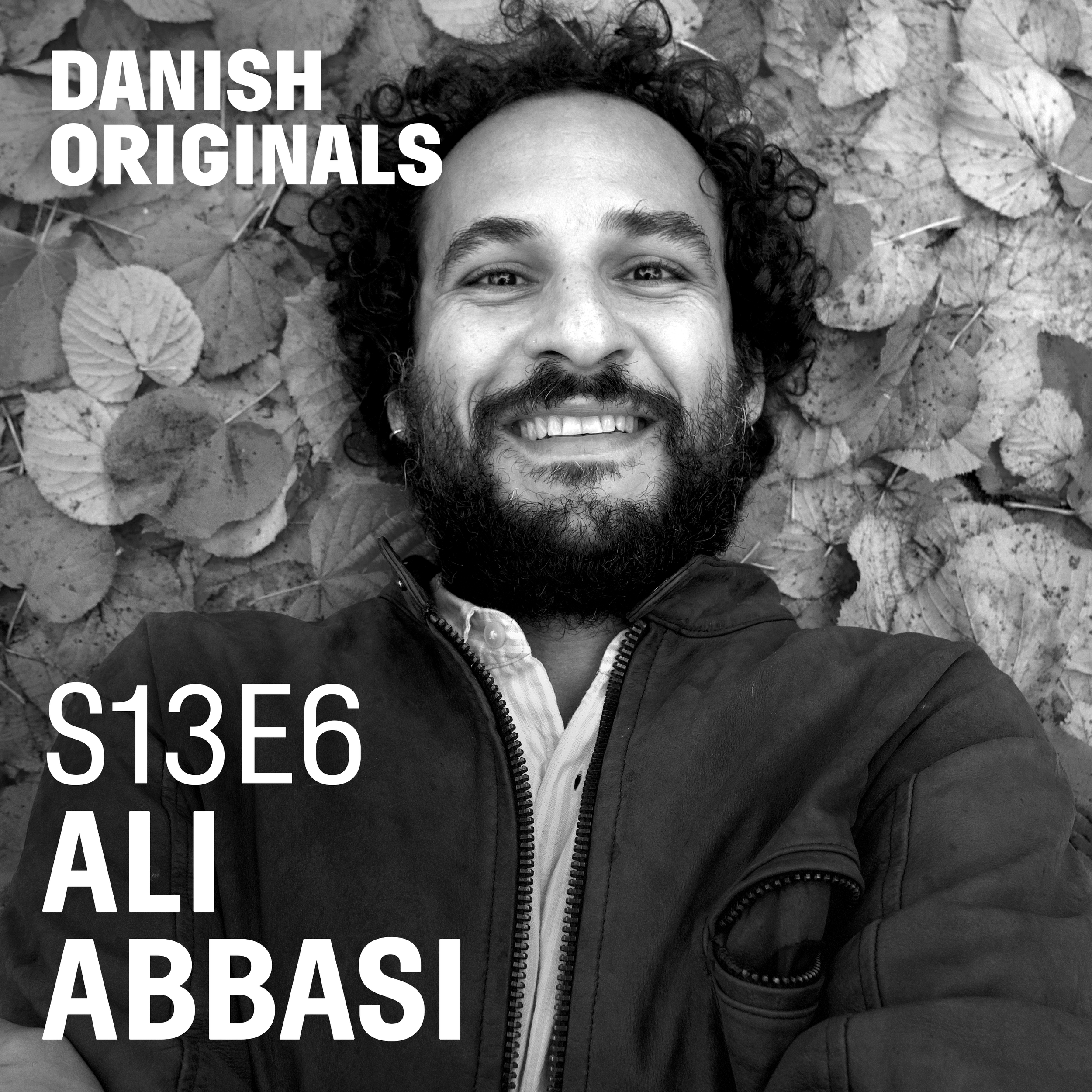
From his home in Vesterbro, Iran-born, Copenhagen-based Danish-Iranian film director and writer ALI ABBASI describes the censorship in both the making and the distribution of The Apprentice (2024), his film about the early career of Donald Trump and the power levers of the American system. Ali shares his skepticism towards the changing political world systems in the US, in Denmark, in Iran, and in filmmaking, and describes what he sees as a necessary rupture and realignment in his work.
Photographer: Sun Hee Engelstoft
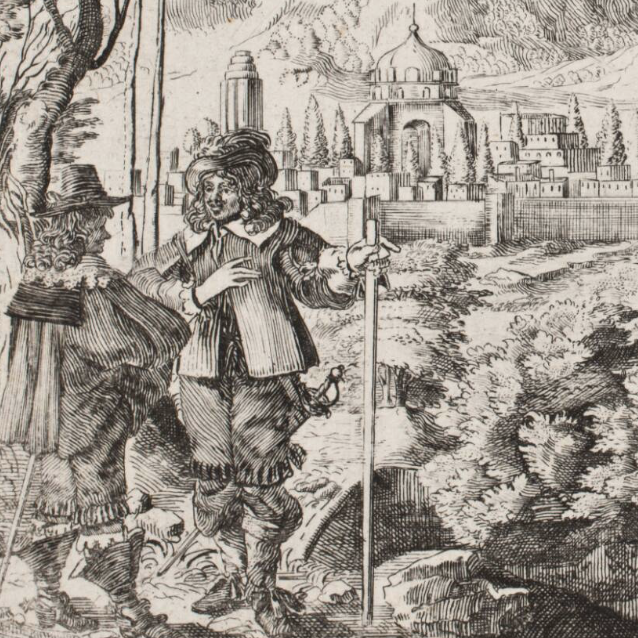
For today's episode, Ali Abbasi chose Soltanieh i Iran or Soltaniyeh in Iran by an unknown Danish or German artist, from 1647, from the collection of the National Gallery of Denmark in Copenhagen.
“I don’t mind controversy. I actually like controversy. And part of my career is to poke my finger at things that I know would annoy people and annoy powerful people and whatnot. And for a person like me, it’s especially important to feel, okay, the floor is not gonna just open up and swallow me, if I did the wrong move.”
“I believe in human beings even if they’re fucked up, even if they are in dark places, even if they are serial killers, and even if they are assholes, I still think they’re human beings. And I think maybe that insistence on all of us being human beings is probably one thing that every time I do a story, that would come through.”
“I’m someone who’s very sensitive to what’s happening around me, and there are so many changes right now. The nature of work, the nature of creativity, the nature of money, everything is changing around us. I think it would be strange for me to think, ‘Oh well, I keep just doing my movies.’”
Powered by RedCircle
This conversation with Tina Jøhnk Christensen occurred on October 11, 2026.
00:00
Ali Abbasi
I'm not a religious person. I'm interested in politics, but I'm not affiliated with any party. I think the only thing I have strong feelings about is human beings. I believe in human beings even if they're fucked up, even if they are in dark places, even if they are serial killers, and even if they are assholes, I still think they're human beings. And I think maybe that insistence on all of us being human beings is probably one thing that every time I do a story, that would come through.
00:33
Tina Jøhnk Christensen
My name is Tina Jøhnk Christensen, and I'm the host of Danish Originals, a podcast whose goal is to celebrate Danish creatives who have made a significant mark in the US.
00:45
Tina Jøhnk Christensen
Today, our guest is Ali Abbasi, a Danish-Iranian director. Welcome, Ali.
00:51
Ali Abbasi
Thanks for having me, Tina. This has been in the making for, what, a couple of years now?
00:56
Tina Jøhnk Christensen
It's been a while since we last saw each other. It was in 2025, so as you say, it was a while ago. And we had our photo taken on the red carpet at the Oscars, where you were being celebrated for The Apprentice. We are very, very happy to have you. What are you up to now? What are you working on at this moment?
01:17
Ali Abbasi
How much time do we have?
01:20
Tina Jøhnk Christensen
All the time in the world.
01:22
Ali Abbasi
I remember that day. I also remember that when the ceremony was over, for some reason our car didn't arrive and we wanted to go have dinner and they had closed that street ending at Kodak Theatre. So we had to walk in these shiny shoes and the suit and all for 20 minutes, in a very empty street. So that's what I remember from that night.
01:49
Tina Jøhnk Christensen
And Hollywood is not the most glamorous of areas, so it's kind of surreal to exit something like the Oscars and then walk around there, I assume.
01:57
Ali Abbasi
I remember the first time I came to Los Angeles, it was with my classmates. We were doing a study trip from the film school, the Danish Film School, as our last year, and everyone wanted to go to Los Angeles. I wanted to go to Korea, actually, so I was angry. I was like, "We were gonna go to Los Angeles anyways."
02:19
Ali Abbasi
We ended up at, I think it was Sunset Boulevard, and one of us wanted to buy a pair of shoes, and we went to one of these huge shoe outlets. And I thought about it, "Oh, this is Sunset Boulevard from the movie Sunset Boulevard, and they're selling $20 shoes."
02:38
Ali Abbasi
This is, I think, the charm of Los Angeles in a way, that it's so trashy and glamorous at the same time. It's sort of been my life since the Oscars maybe as well.
02:51
Tina Jøhnk Christensen
Well, you were lucky you were not wearing high heels like most of us, the women. So, back to my question about what you are up to now.
02:59
Ali Abbasi
I realized gradually that during the time I was making the movie, the world really changed. And it has become, or became, very different from the world in which I was doing The Apprentice or preparing The Apprentice.
03:20
Ali Abbasi
And I had a bunch of projects that I was thinking of doing after, and I had some offers and whatnot. And I had this feeling that I can't just go back to business as usual, because the world is not business as usual. So I spent a lot of time actually thinking about what I wanna do.
03:38
Ali Abbasi
I also felt I ran out of steam or inspiration for this part of my life. It was like, okay, the part of me that read certain books or saw certain pieces in museums and whatnot, I already made those movies. So, if I wanna make new stuff, I need new fuel and inspiration.
04:00
Ali Abbasi
So, I've been doing a lot of thinking. And I started from scratch again. I threw out a bunch of stuff that I had, because I felt, like I said, it felt we're in a time of rupture and I wanted to connect to that energy. So I did that.
04:20
Ali Abbasi
And I also maybe learned a lesson doing The Apprentice and being in the American system, and specifically, actually, with everything that happened, the legal stuff that happened around the movie and the distribution problems and all that. And I was like, I don't want to end up in this complete lack of control again.
04:44
Ali Abbasi
And fundamentally, I see myself as a European filmmaker. So I'm like, why is it that I'm not working from Europe and in Europe, actually? So it was also a bit of realigning my way of thinking, which is, I don't need to be so… I don't have to be so focused on working and thinking in terms of Hollywood and the US.
05:11
Ali Abbasi
I could also be doing that actually from a European perspective. So that was also a bit of a realignment that I've been doing, and I've been trying to set up my projects in a way that feels more European and feels more true to me in that way.
05:24
Tina Jøhnk Christensen
So let me ask you, because the listeners might not know about this film, The Apprentice, which is a film about the early years of the now-president in America, Donald Trump. It's about his formation years, how he became who he is. And you had some issues. Can you talk a little bit about what that experience was from a European perspective, from a Danish or Scandinavian perspective?
05:53
Ali Abbasi
Tina, as you know and as you're familiar with, in Europe and especially in Scandinavia, we have a proud tradition of freedom of speech, which sometimes can be annoying, sometimes some assholes can also use it. Freedom of speech is not always for nice people to do nice things and say nice stuff.
06:12
Ali Abbasi
It's actually mostly for people you don't agree with to say stuff you don't agree with. And I think as someone who's worked here, I took it for granted also because there's this thing with the United States, at least on paper, that there is this freedom of speech and it's amended in the Constitution and all that.
06:34
Ali Abbasi
And frankly, the movie we did, The Apprentice, obviously it is a political movie in that it is occupied with a part of the life of a political figure. But The Apprentice is not really about Donald Trump. It's more about a relationship between a young Donald Trump and his mentor, Roy Cohn.
06:55
Ali Abbasi
And in the bigger context, it's really about how the power levers on the American system worked and work still. So in that way, we didn't make the movie to affect US politics or nudge the election in one way or the other. And I don't think we could, and I don't think we did.
07:13
Ali Abbasi
And all that said, it came as a shock that basically during every part of the process of making the movie, people tried to stop us, people tried to censor us, people tried to force us to change the script and change the scenes and drop the scenes and add things that would make Donald Trump look better or less critical and whatnot.
07:40
Ali Abbasi
At the same time, there were also a lot of people who thought that we were trying to make money out of Donald Trump and we were too nice and too soft and too friendly to him. And that conversation itself was fine. But then what this all led to was that we almost came to the point of not being able to release the movie at all, not only in the United States, but in the world.
08:04
Ali Abbasi
And we had to fight, and then we were lucky that the producers, they really fought. I did my part, or tried. And then we found some people that eventually helped us get it out. But now two years later, I can tell you, not in a satisfactory way.
08:21
Ali Abbasi
Still, sometimes I talk to people, strangers, and they ask me what I do, and I say, "Oh, I did this movie." And they're like, "Oh, that sounds great. Where can I see it? Where did it come out?" And you would think a movie which is partly about one of the most famous people on earth would get more exposure, could get more exposure.
08:43
Ali Abbasi
In fact, it did in many other countries, but not in the United States. And I think that experience, I can't call it anything else than censorship. I think that really shook me. I wasn't expecting it. I was expecting people to love or hate or whatnot, but I wasn't expecting corporations to turn us down.
09:05
Ali Abbasi
All these platforms, YouTube, Meta, Facebook, Instagram, I don't remember, TikTok. I don't remember exactly all of them or some of them, but they all turned us down. We could not even advertise the movie because they were like, "This is political content."
09:20
Ali Abbasi
So in that way, looking at it from a European perspective, you think this is nuts. This is crazy. This is unbelievable. This goes against everything and anything that you've heard about this system. And it just makes you more cautious.
09:36
Tina Jøhnk Christensen
When I spoke to you back then and interviewed you about your film, there was a lot of interest from us, from the Golden Globe website. We printed an article and we were interested in your film. And there was a lot of media attention too.
09:51
Ali Abbasi
You're absolutely right that there was a lot of media coverage, and actually I'm so happy because I think without that we would be completely buried. I don't think I'll ever do a movie where there is so much broad media attention. But it was so strange that then the movie itself would not meet the audience.
10:14
Tina Jøhnk Christensen
And you also said to me that you had never been so happy to see the windmills when you got back home. Do you remember you said that? What made you so happy to see them? What made you so happy to be back in Denmark? And why the windmills?
10:33
Ali Abbasi
Yes, it's my Don Quixotic nature. Well, it's in my nature to always be slightly critical of everything and everyone. That's my way of relating to the world. I'm certainly not the person who would paint the rosy picture of Denmark and sell the books about how great hygge is or whatnot. And maybe during this conversation I would get into things with this country that worry me, as we speak.
11:03
Ali Abbasi
But I do think that there are still, thankfully, principles that the government and the public generally adhere to, and they not only adhere to when it suits them, but they do it all the time. And I think that is comforting, especially for someone like me. I don't mind controversy. I actually like controversy. And part of my career is to poke my finger at things that I know would annoy people and annoy powerful people and whatnot.
11:39
Ali Abbasi
And for a person like me, it's especially important to feel, okay, the floor is not gonna just open up and swallow me, if I did the wrong move. I just remembered how uncomplicated things can be in Denmark. When you have a problem with someone, you write them an email, they answer back, you talk.
11:59
Ali Abbasi
And I was like, same thing in Hollywood. Any misunderstanding can be so extremely infectious. I was thinking, even if we did the same movie in a Danish context, if we did it about, I don't know, the Danish Prime Minister and her early life as a teenager, and she would hate it, and she would just go on in the media and say, "I hate it."
12:17
Ali Abbasi
And then someone says, "Oh, fuck you." And then someone says, "She's right." That would be it. And I miss that actually. I miss that transparency.
12:28
Tina Jøhnk Christensen
I get that. Speaking of Denmark and location, today we speak online. Would you mind telling the listeners about your location? Describe it to them so they can imagine being in the room with you.
12:42
Ali Abbasi
The location is my bedroom, so it doesn't get better than this. It's in the bedroom with Ali Abbasi instead of in bed with Madonna. Probably would be more fun in bed with Madonna. But, I live in a part of Copenhagen which used to be a rough neighborhood. It's called Vesterbro.
13:06
Ali Abbasi
And now it's anything but rough. It's gentrified and all the brothels turned to galleries and nice restaurants and all the working class apartments turned into gentrified housing for young, upper middle class families. And it's a very different vibe, but it still has some of its charm and roughness.
13:27
Ali Abbasi
And what I like about it is also that it's very close to this canal that goes through Copenhagen. And this is a special place for me because one of the most important things for me with Copenhagen is I can swim, and I do it year-round, and I do it in that canal. So that is for me a big part of my identity living in this city.
13:56
Tina Jøhnk Christensen
You swim every day. also in the winter. I want you to tell the listeners who are not Danish and who don't know about the weather in the winter, talk about the temperature of the water at that time, and why you do it.
14:11
Ali Abbasi
I actually started doing it during the pandemic. I was bored and I was sad and I was half depressed because two weeks before the prep of my movie started, everything stopped. So I literally had packed my bags and they were waiting for me to travel. I was just trying to figure out what to do with my life as everything is on hold.
14:33
Ali Abbasi
And then incidentally, I saw this video with this guy from South Africa who was an outdoor swimmer, and that specific video was him swimming between the icebergs in Greenland with no gear whatsoever. And I'm like, if this guy from South Africa does it… it was a different thing if the guy from Finland did it.
14:56
Ali Abbasi
Okay, a guy from South Africa does it. I can also do it. I started during the pandemic and I got addicted to it. Right now, it's 13 degrees Celsius. And in a month it would go down to maybe five, six, and in December it would go around freezing temperature. December would be freezing.
15:21
Ali Abbasi
And that's where the real fun is, because you have this thing with your body, it's the balance of your pain and pleasure system. And sometimes, not always, if you endure pain, you're rewarded with pleasure. And this is definitely one of those ways where when you are in the freezing water, something happens.
15:51
Ali Abbasi
I don't know exactly what happens, I just like the way it happens. And it takes away all your worries and your stress and all that. It's a natural antidepressant, painkiller, relaxation, everything. And it's such a big part of me living here because you also connect to the city in a different way.
16:16
Ali Abbasi
After I start swimming here, every time I go to a city which has a river or a dock or whatever, I can see that possibility. Maybe I won't do it or whatever, but you suddenly discover a new possibility of connecting to a city, which is by water.
16:36
Tina Jøhnk Christensen
You said to me about the windmills two years ago, do you still have the same feeling? And it's been two years. Do you still feel happy in Denmark? And will your next project be made here? Will it be European or Danish? What kind of project will it be, you think?
16:56
Ali Abbasi
The way it works for me with being in Denmark is I'm always really happy to come back, especially if I've been in a place which has been a bit chaotic or intense, and it's so nice, even landing at the airport in Copenhagen. You walk on those nice wooden floors and everything seems to be okay. And you're like, okay, maybe the world is burning and there's chaos and war, but here is okay.
17:26
Ali Abbasi
And I do appreciate that. But then if I'm in that for a bit too long, then I would start to be a bit claustrophobic because then that calm and that hygge and all that, it starts to get to me.
17:44
Tina Jøhnk Christensen
I know. Because the world slows down, right? It becomes just slower. And at some point you want it to be faster.
17:51
Ali Abbasi
I think you want the balance of feeling safety and security and calmness and all those great things. But I think too much of that and you will bury under a truckload of cotton. That's a feeling at least. I don't honestly know what my next project will be.
18:13
Ali Abbasi
I'm working on a few things, but I do know that they would definitely have a big European component if they are specifically set right here in Denmark. I don't know. I actually haven't shot anything professionally in Denmark, which I thought was funny in a way. I've been living here for almost 20 years.
18:34
Tina Jøhnk Christensen
That's interesting. That should probably be the next thing then.
18:39
Ali Abbasi
I think that it's time for me to bring out that one Danish movie I have in me.
18:45
Tina Jøhnk Christensen
Yes, exactly.
18:47
Ali Abbasi
The golden egg.
18:48
Tina Jøhnk Christensen
And I wanted to return to LA just a little bit and talk about award season. We were mentioning Donald Trump and political campaigns are part of the American political system. Campaigns are also a big part of having a movie in the run for a Golden Globe or an Oscar. I was wondering, what is the vibe of Los Angeles for a filmmaker during this time? What is it like to be part of it, Ali?
19:14
Ali Abbasi
I've tried it a few times with different movies and it's been very different. The first time I was there with Border. I was this guy who nobody knew and it was exciting and it was quirky and it was cool. That was sort of the vibe. And it was very positive, but also, people didn't really know much about it.
19:34
Ali Abbasi
And then I came back with Holy Spider, which was a very different movie. It was way more dark and heavy, and the political climate and what happened in Iran was very serious and heavy. And what I remember from the time was I basically was a political activist. I was mostly thinking in terms of politics.
19:54
Ali Abbasi
Yes, we were doing events and whatnot. But I was so focused on the political side. And I also felt that Los Angeles is not a political place and people are not excited to talk politics with you. Even when we came back with The Apprentice, that was still the case. There was no avoidance of talking politics, but compared to other conversations I've had in different places, this was way more about everything else.
20:22
Ali Abbasi
And in a way, I appreciate that because as part of what I do, going into controversy and everything, it can also be tiring to only talk about that. It would've been tiring only to talk about The Apprentice as a movie about Donald Trump and not a movie which has a certain rhythm and a certain way of editing and a certain way of storytelling and whatnot, which is the movies.
20:47
Ali Abbasi
With the campaign style, I've gotten maybe a bit more used to it, but I still find it a bit bizarre that people go and literally campaign for votes, and that there are all these political considerations. Political, not in big politics, but movie politics and who to invite and all.
21:05
Ali Abbasi
And part of it is fun, but honestly I also find part of it silly sometimes. And it takes such a long time. As a filmmaker, you can be tied to this for months. I would say, though, one really nice thing about it is that you sometimes meet incredible people.
21:24
Tina Jøhnk Christensen
Yes.
21:25
Ali Abbasi
I've met some of my heroes. You just enter the room and this person I look up to is sitting there and wants to watch my movie. I've met people who I've had great conversations with. And in that way I think those screenings and events could be very fun as well.
21:45
Tina Jøhnk Christensen
Maybe it's time to talk about those two movies, Border and Holy Spider, to give the listener an idea of how different your movies are. Border was, I don't know how to describe it really, but it was about trolls, a love story, and about being different and being accepted and finding each other.
22:03
Tina Jøhnk Christensen
And then Holy Spider is something very dark and probably a little critical, well, very critical, of Iran, and it's about a serial killer who murders women with a religious motive behind it. Maybe you can describe what your films are about and how they fit into your CV, so to speak, as a filmmaker.
22:28
Ali Abbasi
I try to avoid talking about how they fit into my CV because I think the part of filmmaking which is fun is taking up a subject or a story or a relationship, whatever that is central, and try to the best of my knowledge and abilities to express that.
22:51
Ali Abbasi
And since it's a long process — it took me maybe, I don't know, three, four years to develop Border. It took me another more than ten years to develop Holy Spider, from the time we started working on it. The Apprentice took five, six years.
23:10
Ali Abbasi
And in those times, as a human being, you change. By the time I was making The Apprentice, I was not the person who started it. And therefore, I think, for me it's natural that as I change and as the world around me changes, my expression changes too.
23:30
Ali Abbasi
In fact, I think it's very interesting with some of my colleagues or other writers or artists who throughout their lives, they have this expression that is not constant but is very similar. If you look at Giacometti, you would see that there are different eras and times in his life, but there's an overall expression.
23:56
Ali Abbasi
And I think early on in my life, I decided that I don't wanna find my Ali Abbasi expression. I would rather go all in on the subject matter's premise. Therefore, Border was a fairy tale, which, like you said, it's about being lonely, being different, being an outsider, which in a way everyone feels.
24:21
Ali Abbasi
It's a human condition to feel like an outsider somehow, and therefore I felt that it has to be approached that way, as a fairytale, and done in a way that would reveal the emotional truth of that.
24:38
Ali Abbasi
Holy Spider was a completely different project and a story which came out of my frustration that a very important story and a very significant story about Iran and the time I lived there was never told, because it was too controversial for the regime, and it was too dangerous in a way.
25:03
Ali Abbasi
And as you mentioned, it is based on a real story of a guy who was killing prostitutes, or sex workers, in one of the most religious cities in Iran. And he was doing it allegedly with religious motives, but I think like all the other serial killers, you have a sort of official reason and you have your other reason, which is you enjoy killing people somehow.
25:31
Ali Abbasi
He ended up killing, I think, 16 or 17 girls, in a space of a year before he was incidentally caught. And then when he was caught, there was this very strange reaction that some right wing conservative part of Iranian media and establishment, they were like, "He's a hero because he's been cleansing the streets, actually."
25:53
Ali Abbasi
And I thought that is a very significant story, not only because it's a serial killer story, because of the number of people he killed, but because of that very inhuman, strange reaction that they had to give him a medal. And honestly, I waited many years for someone else to do that movie. And then, I ended up doing it, even though in a way it didn't fit my CV, you know? It didn't fit my —
26:22
Tina Jøhnk Christensen
That's why I'm asking. Your movies are so different.
26:26
Ali Abbasi
With The Apprentice, I remember it came to me… I was coming to the US and at the time I still was an Iranian national. I hadn't decided to apply for Danish citizenship, and this was probably ten years ago. And it was very difficult because that was the first Trump presidency, and he teased some of the same themes. It was a travel ban, and it was very difficult for me to get into the US.
26:57
Ali Abbasi
And then they approached me with the project and I thought, okay, as a joke, it would be great to do this movie because I would do it on Zoom. I would not get into the US. I would do a Zoom movie about the president that doesn't let me come in. And then, as I looked into it, I was like, ah, this is a story about how power works in America.
27:18
Ali Abbasi
And actually it's an interesting thing for me because as someone who grew up in Iran, we've been very much affected by the US and these decisions as today, you know. And it would be interesting to do a story about that. I didn't think this would connect the dots somehow.
27:39
Ali Abbasi
One thing that I've been noticing with my own work: I'm not a religious person. I'm interested in politics, but I'm not affiliated with any party. I think the only thing I have strong feelings about is human beings.
27:52
Ali Abbasi
I believe in human beings even if they're fucked up, even if they are in dark places, even if they are serial killers, and even if they are assholes, I still think they're human beings. And I think maybe that insistence on all of us being human beings is probably one thing that every time I do a story, that would come through. That is one thing I notice myself.
28:19
Tina Jøhnk Christensen
I think there's one thing that you can see that you're interested in, and that's political systems. And you looked at the American system up close. What would you say you noticed?
28:30
Ali Abbasi
Generally, I like systems. I like to study systems, as someone culturally very European, even though I grew up in Iran. And in Europe, we have this more left-leaning, maybe Marxist, maybe structuralist tradition of thinking. If someone does something, if someone robs a bank or is nasty to someone or does something good, it's not only an individual choice, it's not only that person's mom that is important, it's a system that that individual grew up in that is equally important, if not more important.
29:08
Ali Abbasi
And that way of looking at people as products of systems, I think is a way I really bought into. And that is also the way I look at America as a system or as an empire or as a political system. In the US, the prevalent narrative is a narrative of individuality — "I came here with two cents in my pocket and worked myself up and against all odds became a self-made millionaire."
29:35
Ali Abbasi
Yes, but you wouldn't become a self-made millionaire if the government would not have certain policies, and if you didn't find the right way of doing it in a system, and the system was not already prepared for you. So I'm not saying any of that is mutually exclusive. You can both look at a person as an individual and as a product of a system.
30:00
Ali Abbasi
But I think It's interesting to look at America as a system. I think America is, for me, first of all, an empire, which means it's not only a country, and therefore some of the considerations that you have in a country like Denmark, are very different in America. When you think about the American president, it's very difficult to compare with the prime minister of Bulgaria.
30:28
Ali Abbasi
They are fundamentally two different jobs. An American president is leading an empire, and empires have their own logic. And you cannot run an empire on compassion and empathy alone. It has not been possible in human history. I'm not saying this necessarily as a criticism of the United States, it's just a fact that I think you have to bear in mind, because sometimes you go, why is it that the US military is so big? Why is it that they have all these bases? Why is it that they're spending their money?
31:00
Ali Abbasi
The other thing is, in a way, America is a strange hybrid country. Yes, it's a first world country, but it also has some aspects of a third world country that for me are very similar to Iran. The way political corruption works, for example, the way you can, if you have enough money and enough power, buy your way through things.
31:24
Ali Abbasi
No matter how wealthy you are, you cannot do certain things in Denmark. Certain things are not possible because the whole system, the whole judiciary, the whole people would turn against you and it would not be possible. But this is not the case in the US, and in that way it reminds me of Iran, where there are rules, there are regulations, there are all sorts of things, and then there is a reality, which is: who do you actually know?
31:55
Ali Abbasi
How much influence do you have? And at the same time, there's something that I love about America, which is, it feels still open and it still has this mythological possibility. I don't necessarily believe in the American dream or the land of opportunity, that's not what I'm talking about. But even the landscape, even the cities, even the city of Los Angeles, could look any way in 50 years. It could be completely transformed.
32:27
Ali Abbasi
You don't feel that with Copenhagen. You feel, okay, Copenhagen is the way it is. It almost feels like some of it was done by H.C. Andersen, the time of fairy tales, and it's not gonna be touched.
32:40
Tina Jøhnk Christensen
That's true. You were born in Iran, you also lived in Sweden, now in Denmark, and you have a Danish passport, you are a Danish citizen. How do you identify yourself?
32:53
Ali Abbasi
It's a good question and a complicated one. And honestly, after thinking about it for many years, I've come to the conclusion that it does not have a constant one answer. That answer changes throughout my life. I came to Denmark to study at the Film School, and I always had this thing that I'm not gonna stay for long.
33:20
Ali Abbasi
I felt more connected to Sweden when I entered, but then I came here and I stayed, and all my friends and the people who work in the industry, this is the world I am with and from. And then I have a family, I have a kid, and at some point I'm like, okay, I feel Danish enough so that I can call myself also Danish and I can apply for Danish citizenship and feel there's a loyalty and a contract between me and this country that I can respect.
33:54
Ali Abbasi
And it was like that for a while. And I have to tell you what has happened in the past couple of years. I've become a little bit disillusioned with this contract. I think this disillusionment may have started with the war in Gaza and then Israel and America's war with Iran and a number of other things politically that has really shaken my belief in the Danish system.
34:22
Ali Abbasi
Now, this is not to say that Denmark is waging war, but I think I was expecting Denmark to behave differently. Also I think the same goes for my disillusionment with the whole social democratic way of thinking or the political sphere, which was one of the reasons I came to Scandinavia. Because I felt I believe in social democracy, I believe in freedom of speech, I believe in international solidarity.
34:54
Ali Abbasi
And now I feel those things are turning into other things. Even in Denmark, freedom of speech is under threat. International solidarity feels very outdated and feels like there are only some older people who believe in it, and it's politically a liability to talk about it.
35:12
Ali Abbasi
I think we are very critical of the US government, and not least because of all this involvement with Greenland. And generally, Europeans have been critical of American right-wing politics. But when you actually look at Danish politics, look at Swedish politics, look at French politics, it's enormously affected by MAGA and by Trump.
35:38
Ali Abbasi
And you could argue that the whole trajectory of this country politically has gone from let's have an open, transparent, and liberal society for everyone with their differences and whatnot, to a version of "Make Denmark Great Again," and a monoculture that is, "Oh, this is how we are, and if you don't like it, if you're different, then leave."
36:04
Ali Abbasi
I think that's very unfortunate. I think also it's very unfortunate that Denmark and Danish politicians and society are not more firm in condemning atrocities and genocide and war where it happens.
36:21
Ali Abbasi
I think we're very good at spotting atrocities in Ukraine. But we don't talk as much about the school children who were pulverized by some American missiles in Iran because they had outdated information.
36:38
Tina Jøhnk Christensen
And on a cultural level more than political, Ali, how does that make you feel as an Iranian man too? Your family, I assume, are still there, you still have friends in Iran.
36:51
Ali Abbasi
I'm in a very strange situation in that regard because I have huge problems with the Iranian government. I can't go back. I know that I have a thick file there, in the judiciary, and at the moment I set foot there, I would probably end up in jail and all that.
37:10
Tina Jøhnk Christensen
And so does the lead in your movie, Holy Spider.
37:14
Ali Abbasi
That movie was very costly for a lot of us. At the same time, yes, the government is shitty. I don't believe in it. I dislike it. I hope it changes. But there are also 90 million people. You can't just punish 90 million people because the government's bad and you dislike the government.
37:35
Ali Abbasi
You cannot go and bomb the bridges and hospitals and everything. My dad is there right now, he lives there. When he's talking about shortage of medicine and all that, I'm like, I don't think this is the right way of doing anything. So I am very torn. I don't think there would be a scenario where I start supporting the Iranian regime, but I just cannot see how this is a good idea on any level.
38:02
Tina Jøhnk Christensen
No, it's very hard to agree that war is the solution for anything, actually.
38:07
Ali Abbasi
I think that is the sad part of where we are right now, the point of time in history where it feels even the most pacifist nations and political systems, Denmark, Sweden, Europe, we agreed on that, actually. We agreed that war might become the solution, or the only solution. And now we're spending hundreds of billions of dollars to arm up.
38:39
Tina Jøhnk Christensen
Let's go back in time a little bit. You left Iran in 2002, and you moved to Sweden to study architecture. Why did you pick Sweden and why architecture? Because we know you did become a filmmaker.
38:53
Ali Abbasi
Yes. Later in my life I did, yes. I had a short stint in Germany to study German philosophy and German, and then incidentally, I visited my uncle who lived in Sweden at the time, and quite honestly, the most rational way I can explain this is that I just thought Sweden was very exotic.
39:18
Ali Abbasi
It would be, for me, the equivalent of going to Sweden would be for a white guy from Sweden to go to Morocco and hang out with Bedouins and drink camel milk and say, okay, how exotic can this get? Because everything was very distinctly different. I ended up in the north of Sweden, where it's basically dark four months a year.
39:38
Ali Abbasi
Like I said, Sweden for me was the land of social democracy and welfare state, and as Sweden called themselves at the time, the humanitarian superpower. And I bought into those things, actually, I did.
39:53
Ali Abbasi
I am a bit more skeptical now, some years older, but I thought, I wanna try to live in a society where I don't wanna feel bad about going and having a nice meal because people would die in the streets because they cannot afford to have something to eat. I wanna try to go to a place where the inequalities are somehow under control, and I bought into that ideal.
40:21
Tina Jøhnk Christensen
How did you then decide to become a filmmaker, go to the Danish Film School and switch careers?
40:28
Ali Abbasi
I started studying architecture as a sort of compromise between me and my family, because at the time they were like, "As an artist, you just wanna smoke weed and be lazy." And they didn't really believe that art or movies is a career. And I was brought up actually as a very dutiful person, so I couldn't just say, "I'm gonna do what I want."
40:54
Ali Abbasi
I think I settled on architecture because it gave me enough artistic impulses, but it was also a real job. And I was interested in architecture. As I was studying architecture, what I really did was study movies. The way it happened was I went to the architecture school, and then after the lunch break, I would go watch movies at the Swedish Cinematheque.
41:17
Ali Abbasi
And usually I would watch four movies a day. And I did that, I think, for a couple of years, or three years maybe. So I watched a lot of movies, and that was really my education. As I was getting educated as an architect, my real education was happening after, which was in the theaters.
41:39
Ali Abbasi
And I think there came a point where I was like, "I have to be honest with myself, and I'm probably gonna end up as a mediocre architect and gonna be bitter, and nobody's gonna be happy." Or I give it a try, because there is a reason I'm watching four movies a day. There's a reason I'm writing my thoughts as a script. There's a reason I'm thinking about this.
42:02
Ali Abbasi
I took a sabbatical year from the architecture school. I went back to Iran, and I shot two short movies from scratch. I had no idea how you do a movie. I found this guy who was a cinematography student at the university, and he helped me as my DP/producer/how you do things.
42:25
Ali Abbasi
And I realized that even if I have no clue how you make a movie, I have an intuition, I have this idea that I come through it. I applied to the Film School, and even if I couldn't really speak Danish, they got me in and I think that ball started rolling. I could have had a very different career.
42:47
Ali Abbasi
I honestly think that the person there who is now my really good friend and mentor, Jonas Wagner, who used to run the film directing department, I don't know exactly what he saw, but I think he saw something there.
43:02
Ali Abbasi
Even at the Film School, I was a little bit of an odd person. My background, my abilities, I wasn't really educated in filmmaking. I didn't get up into the industry as, I don't know, an assistant of a director or an intern or anything. I knew a lot about movies by watching movies, not by working in the industry. My background was pretty strange in a way.
43:27
Tina Jøhnk Christensen
Is it sometimes an advantage being the odd one out?
43:31
Ali Abbasi
Maybe. Maybe it is. I think also I was very lucky it was the time it was, because this is the early 2000s, and I think people were interested in outsiders, and people were interested in another person's culture, another person's perspective, blah, blah, blah. I feel if I was to redo this all now, and I came out as the outsider and the weirdo or the person who wouldn't fit in, I would probably not get the same interest or treatment.
44:06
Ali Abbasi
You know what I mean? Now it feels our whole culture has shifted a little bit more. We wanna find our own tribe, and we wanna stick to it. So, I don't know.
44:18
Tina Jøhnk Christensen
Does language matter when you make a movie?
44:21
Ali Abbasi
I did make a movie in Danish, almost, which is my first movie, Shelley. That is partly in Danish, partly in Norwegian, partly English, partly Romanian. So there were a lot of languages there. It's difficult because you're asking a person… my daily life is, I speak five languages daily.
44:42
Ali Abbasi
I speak Danish with my family. I speak Farsi with my parents. I speak English with my friends. I speak Swedish with some other friends. For me, this is the normal thing to do. And then I'm aware that for a lot of people, that's not their everyday life. So I don't experience this as being strange or fragmented, but I think if you look at it that way, it's a specific way of living and doing things.
45:13
Ali Abbasi
I think the only rule I have for myself, when working with languages, is I won't be able to make a movie in a language I don't know. I've turned down a few French projects even though I love the projects because I just don't speak French, and I would be mortified and I think it would be wrong for me to work in a language I don't know. So I have to keep to those I know.
45:38
Tina Jøhnk Christensen
Ali, still a very young man, so it's maybe an odd question to ask you, but what do you still want to achieve? What's on your bucket list? I have a feeling that you're not gonna be only a filmmaker, not that being a filmmaker is not a big deal. But I have a feeling there's so much in you that we could see you venture out and become something else too. Where will we see you in ten years, you think?
46:09
Ali Abbasi
Thank you. There was a time when people said I'm a younger person, and I was like, "Yes, I am." And now I'm like, "Thank you."
46:17
Tina Jøhnk Christensen
Well, you're younger than me. That's why you are very young.
46:20
Ali Abbasi
That's true. I think you're right in that my approach to filmmaking, and back to the whole CV question, I don't ever think of filmmaking as a job or career, because I think that's a bit dangerous for me. It works for some other people, but for me, it's a lifestyle. It's like being punk or goth or whatever, and now I'm in movies.
46:45
Ali Abbasi
And I think I would always be afraid of the day where I'm like, "Oh shit, I haven't done movies. No, I need to do another one," instead of thinking, "Okay, I have this thing that is really important to convey or say or express, and therefore I'm making a movie about it." So I don't have the same loyalty to, I don't see myself, I have to make movies.
47:14
Ali Abbasi
If I have something important to say that can be expressed in a good way in this medium, I would love to do it. Obviously, I love the medium, I love the people. But if not, I don't feel I have to do it and I have to waste everyone's time.
47:31
Ali Abbasi
And also I feel I'm someone who's very sensitive to what's happening around me, and there are so many changes right now. The nature of work, the nature of creativity, the nature of money, everything is changing around us. I think it would be strange for me to think, "Oh well, I keep just doing my movies."
47:54
Ali Abbasi
So yes, I think in ten years, most definitely I would also do something else, that I feel would capture what I feel is important or worth expressing. I think I also feel that we're in a place that I'm not the only one changing. I think the medium, the movies, motion pictures, are also changing very drastically.
48:23
Ali Abbasi
And I think this is a change that is different from the other changes that this medium has gone through. Because it's both changing in the formats, it's a change in the expressions, it's a change in how it meets its audience, and also it's a change in what is the position of film as a medium in the public consciousness and popular culture.
48:48
Ali Abbasi
And I think those things are drastically changing. And I think that one of the things that I promised myself is that I don't wanna go back in time. I'm not saying that in a dismissive way of, oh, it's bad to do movies about the past or write books about 1600. But I feel my calling is to address the life we live in, try to capture that.
49:15
Ali Abbasi
And in a way I think art for me is more like milk. You get it and you have a few days and it would go bad, it would expire. It would become cheese. It would become something else. And it's okay. I'm aware that if I do a movie about 2026, it would feel very 2026 in three years and therefore be very outdated. But I would love to run that risk because I think I wanna capture the complexity of what we're in right now.
49:48
Tina Jøhnk Christensen
So you won't spend an hour looking at the cheese that is Mona Lisa at the Louvre?
49:56
Ali Abbasi
Funny you mentioned that. I was in the Uffizi Gallery some months ago in Florence, and it was so interesting exactly on the point you said. I was looking at some of Leonardo da Vinci's paintings and sketches, and in the same room, there were some other artists that I can't tell you who they are because they're not as famous.
50:19
Ali Abbasi
But I do remember that I was looking very closely at the brushstrokes and the texture, and I was like: "Huh, this painting beside it, it's almost better, and I have no idea who this guy is." And I think that is how the world works. That yes, in a way, I think Mona Lisa is cheese. It's that one thing among many.
50:44
Ali Abbasi
And there was a time that it was art. There was a time that it was super relevant, and it was in the public consciousness as art. And then it became a museum piece, and then emoji or Instagram updates and all that. And it has a life, the life continues. But I think that you cannot expect the Mona Lisa to stay art for 600 years. I think that's not how it works, really. And that's okay.
51:20
Tina Jøhnk Christensen
The story is just different, and maybe relevant in a different way, right?
51:24
Ali Abbasi
Absolutely. And that's what I'm saying. It has its own life. It lives a life. But do I think that as an art piece, I have to look at the Mona Lisa to get inspired and find the truth about my life? Probably not. And that's completely okay because it was at the time, and it still has a life. It just doesn't have a life as an art piece.
51:47
Ali Abbasi
And I feel maybe that's how movies are gonna work, that maybe this is not a medium that is gonna be relevant for the mainstream audience everywhere all the time. Maybe the release of a movie is not the biggest thing that happens in the world anymore, maybe they don't have the biggest budget and the biggest theaters and the biggest festivals, but maybe that's okay. Maybe it's okay to be the opera of the 21st century.
52:21
Tina Jøhnk Christensen
All right. On that note, thank you so much, Ali, for your time with us on Danish Originals. We truly appreciate you being with us.
52:32
Ali Abbasi
Thank you for having me, and thank you for your patience throughout the years.
52:36
Tina Jøhnk Christensen
You're very welcome.
52:41
Tina Jøhnk Christensen
For today's episode, Ali Abbasi chose Soltanieh i Iran or Soltaniyeh in Iran, by an unknown Danish or German artist, from 1647, from the collection of the National Gallery of Denmark in Copenhagen.
52:55
Ali Abbasi
I chose Soltanieh in Iran by two unknown artists, one of them Danish, one of them German, from 1647. "Soltanieh" comes from "sultan," the king. So, the kingdom of Iran, or the kingdom in Iran, if you wanna be very specific.
53:15
Ali Abbasi
In the foreground, there are two Renaissance-clad Westerners. And in the background, there are some elements of Iranian or Islamic architecture, or places that could have been Iran at the time, but they're not specific enough.
53:30
Ali Abbasi
And looking at the date, it tracks with the first time a Danish-German delegation went to Iran or Persia at the time. Think about it, you would travel for almost a year, and then during that year you would pass a lot of different cities and villages, so that specific city is just one little piece of your trip. What kind of details would they remember?
53:57
Ali Abbasi
I started thinking about my own memory of coming to Scandinavia. If I wanted to do a piece of work called The Kingdom of Denmark, how would I frame it? How would I try to describe Denmark in one picture for someone who's never been here and has no idea? And would I put myself in the foreground? Who is this really about? Is this about me or is this about the place I want to introduce?
54:25
Ali Abbasi
Was this piece commissioned by, say, the Danish state because they wanted to know more about Iran? What were the circumstances around making that piece? It's a mysterious one, and I like that mystery.