
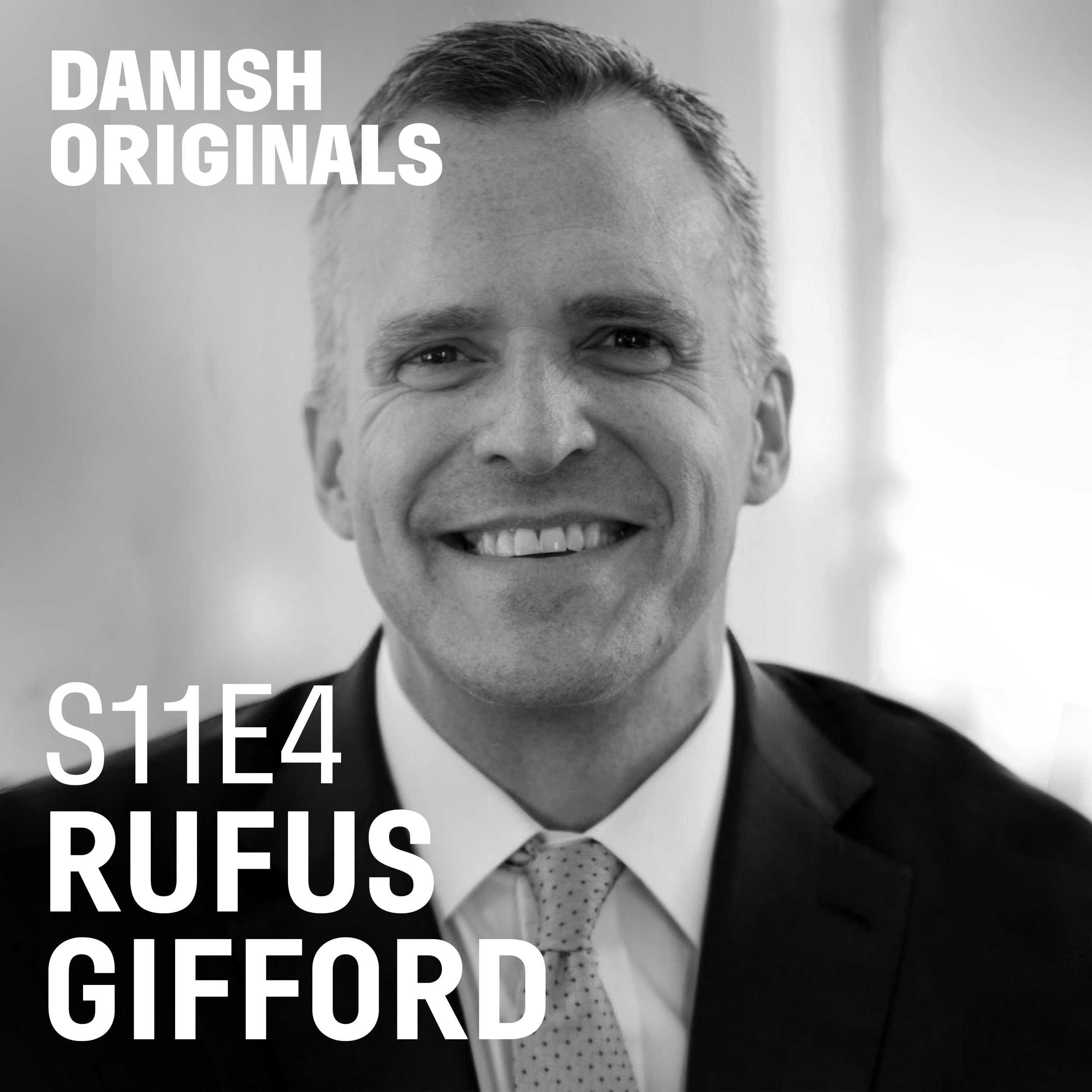
From his home in Concord, Massachusetts, New England-born former US Ambassador to Denmark RUFUS GIFFORD recalls his start in politics, his ongoing connection to Denmark, and his work under Barack Obama and Joe Biden. He describes the current problematic chapter in transatlantic relationships, exemplified by the tensions with Denmark and Greenland, the MAGA movement in the US, and his passion to help elect a transformational US leader in 2028 in the post-Trump world order.
Photograph Source: Rufus Gifford
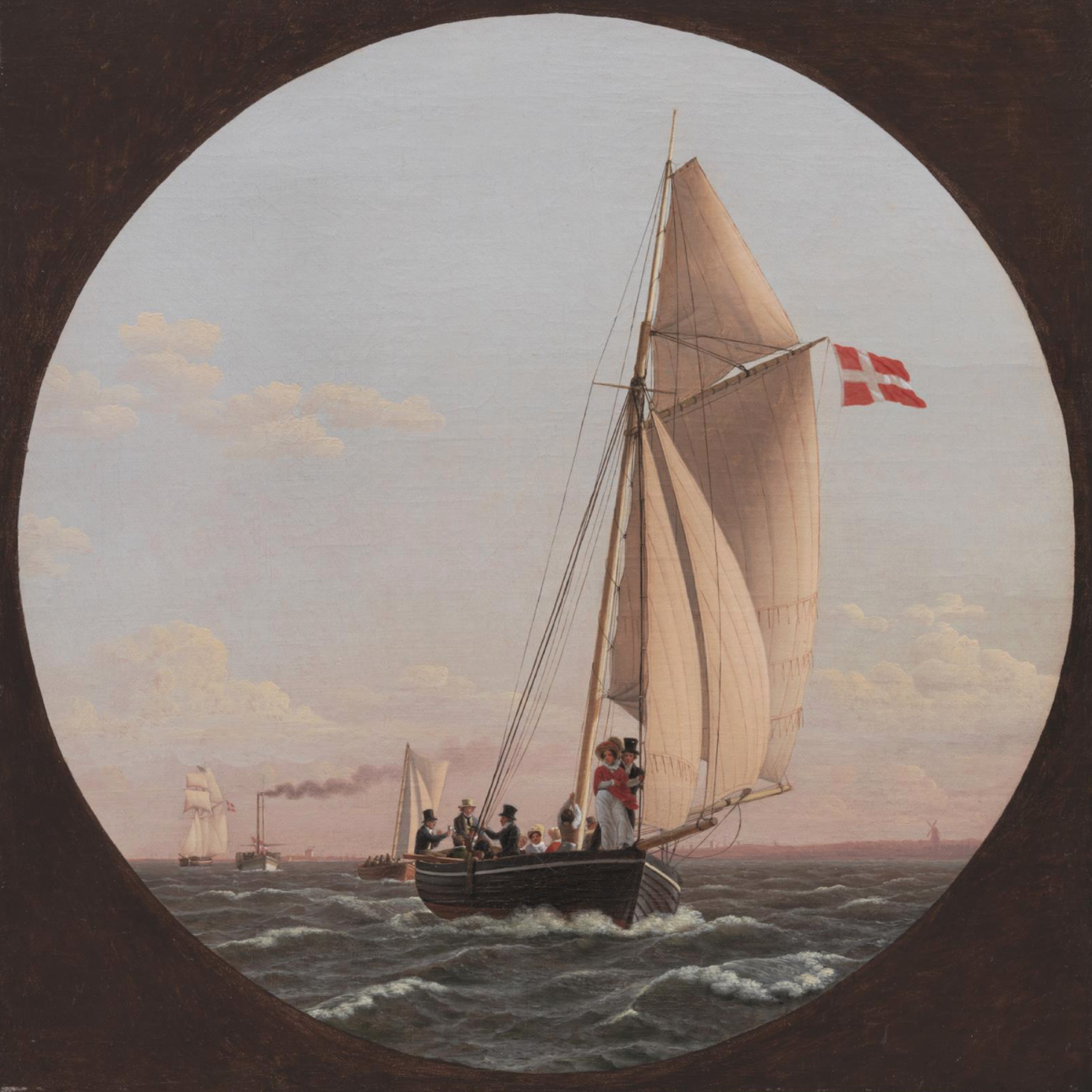
For today's episode, Rufus Gifford chose C.W. Eckersberg's En sejlads til Charlottenlund or Sailing from Copenhagen to Charlottenlund from 1824 from the collection of the National Gallery of Denmark, Copenhagen.
“The United States without friends is not nearly as significant a geopolitical player as we are with friends. And that is what’s at risk right here and right now. That’s what Greenland represents. It’s what the tension with Denmark represents.”
“What keeps me going is doing whatever I can to make the world better. And I haven’t always been able to figure that out. Or it’s taken a little while, whether that is fighting for a political issue, or where I really get my passion from, actually, electing political leaders that can change the direction of the world. That’s really what drives me.”
“In the short term, I want to send MAGA as a political movement into the annals of history. I want to destroy them. I believe that it is fascist, it is authoritarian, and an America governed by that philosophy is bad for the world. And certainly, I would argue, bad for me personally, but not nearly as bad for me as it is for others. And so that is my ambition right now.”
Powered by RedCircle
This conversation with Nicolai Rottbøll occurred on March 18, 2026.
00:00
Rufus Gifford
The United States without friends is not nearly as significant a geopolitical player as we are with friends. And that is what's at risk right here and right now. That's what Greenland represents. It's what the tension with Denmark represents. I do think this is a very, very, very problematic chapter in transatlantic relationships. It is not just Transatlanticism, it's actually impacting every relationship right now that the United States has relied on over the years. So all of our good friends trust us less. And I think that is heartbreaking. And trust takes years and years to earn, but it can be broken like that. So the post-Trump world will be defined, in my mind, by how we build that trust back.
00:48
Nicolai Rottbøll
My name is Nicolai Rottbøll. I'm a founder and sustainability expert and guest host of Danish Originals. Our goal is to celebrate Danish creatives who have made a significant mark in the US.
01:02
Nicolai Rottbøll
Today's guest is Rufus Gifford, former United States Ambassador to Denmark, political strategist, and someone who has played a unique role in strengthening the relationship between Denmark and the US. Rufus, welcome to Danish Originals.
01:16
Rufus Gifford
Thank you, Nicolai. Delighted to be with you, very happy to be here.
01:19
Nicolai Rottbøll
I'm so happy to see you. And because we are online, start by telling us where you're calling from.
01:25
Rufus Gifford
The answer to the question is Concord, Massachusetts. I was in DC until the 2024 election, but then came home. So, with Stephen and the dogs, this is home, Concord, Massachusetts.
01:35
Nicolai Rottbøll
Isn't that the place where people say the entire story of the United States started?
01:40
Rufus Gifford
That's right. The birthplace of democracy, Nicolai, that's what we say here. We're a little biased. Yes, so the Battle of Lexington and Concord was what began the American Revolutionary War. It's where the first shots were fired. The rebels, what we called the Minute Men, the folks who were rebelling against the British monarchy, fired on British troops here for the very first time, just over 250 years ago. We celebrated that last April. And then this year, of course, is our country's 250th anniversary. So it's a pretty extraordinary time.
02:09
Nicolai Rottbøll
It's coming up. And I can say I've actually been there. It's a pleasant, wonderful town.
02:14
Rufus Gifford
What's so funny is lots of, especially Europeans, they think when you look at the US, if something is a hundred years old, by American standards, that's very old. But there are houses on the street that I live in that are from the 1600s. It's even old by some European standards. It's a lovely town with lots of history and lots of culture.
02:32
Nicolai Rottbøll
Exactly. Before we start going into everything, what is life like right now? What are you spending most time and energy on these days?
02:42
Rufus Gifford
The answer to the question is figuring out how to survive in this new world. And how do I do that? So, a few different things. I have started my own business. The federal government, in my mind, is such a mess. I'm doing a lot of work both with governors and mayors in advance of the midterm elections, and with philanthropy, in particular in the climate space.
03:01
Rufus Gifford
I'm busy. It's good. I'm working from home, so it's a very different life than what I've had in recent years and less chaotic. I get to be home with Stephen and the dogs, and there's something very nice about that. Yet I'm still on the road quite a bit — New York and DC and the West Coast. And as I think a lot of Danes know, I tend to be back in Denmark every few months. I've got another couple of trips planned this year, so that's great as well.
03:24
Nicolai Rottbøll
We've all noticed that. And what do you say when people tell you, welcome back, when you enter the Copenhagen Airport? And what do you say when people say you are equally Danish as you are American?
03:34
Rufus Gifford
Nicolai, it's such an honor to me. It's hard for me to articulate how much my relationship and Stephen's relationship with Denmark means to us. And I tell this story, very often I'll land at Copenhagen Airport and it'll be seven o'clock in the morning and I won't have slept and look terrible, and I'll keep my sunglasses on.
03:53
Rufus Gifford
And I walk up to the immigration counter and hand my American passport over to the immigration officer. And he or she has, so many times now, stamped my American passport with a Danish stamp, handed it back to me and said, welcome home. Especially in these times. That happened when I was there in October. It happened when I was there in January.
04:11
Rufus Gifford
And I think where the Danish and American relationship has gone since then, just how hard it has been, how strained it has been, self-inflicted on the part of the Trump Administration, of course, and to be welcomed and accepted and appreciated by Danes, it means the world to us. And obviously I try to give back.
04:28
Rufus Gifford
You can never take away that personal connection you have with a place and a people. I think it's here for good. If you think about it, I've been gone, I left Denmark just over nine years ago. And to still have the connection that I have with Denmark and vice versa is such a meaningful and special thing to me.
04:47
Nicolai Rottbøll
Amazing. So I want to come back to all that in a minute. But to understand how we got there, Rufus, let's maybe start at the beginning. So share with us, tell us, where did you grow up, what kind of childhood did you have?
05:05
Rufus Gifford
I grew up in a town called Manchester, Massachusetts, north of Boston. It's about 45 minutes from where I am right now. I was the third of four kids. I have two sisters and a brother. My dad was a very successful banker in Boston. My mom stayed home, raised us. We were what you would call a traditional American family.
05:23
Rufus Gifford
We were upper middle class, and had a good life. I would say we were quite sheltered. It was a very suburban lifestyle. This gorgeous little town reminds me a lot of Denmark actually. Beautiful beaches —
05:34
Nicolai Rottbøll
I've actually been there. It's wonderful.
05:36
Rufus Gifford
This whole area. There's something about growing up in northern climates where there's a similar sensibility. There's an appreciation for the sea, the ocean. The food is different of course. Culturally, I feel we have more in common with Scandinavians than we do with a lot of parts of the United States.
05:51
Rufus Gifford
When I was in my early teenage years, and I realized I was gay, it was still a very different time growing up in the '80s, and I really needed to figure out who I was and to define myself in a different way. So after college — I went to a school called Brown University — I wanted to be anything but a banker and my dad was a banker, and people in Boston knew who he was and me as his son.
06:12
Rufus Gifford
I wanted to figure out how to pave my own road and navigate my life in a different way. So I moved to LA to work in the entertainment industry. It was an incredibly important decade for me. I got to LA when I was 22, and stayed until I was 34. In the later stages of my time in LA, I was working in politics, which I'll get to in a second.
06:32
Rufus Gifford
I failed. I fell on my face a bunch of times. What I went to LA to try to achieve, I didn't achieve. I worked in movies. I worked for a producer in a very junior way, never made more than, say, $40,000 a year. And this was during the Dot.com boom in the late '90s and early 2000s where I had friends making millions of dollars and living a great life.
06:52
Rufus Gifford
I just felt like I was going nowhere. So in 2004, I quit my job and decided to volunteer full-time on the presidential campaign. A guy by the name of John Kerry was running back then. He was the Democratic nominee. At the time, I didn't think anything could get worse than George W. Bush. Oh God. And now, I think we'd all welcome George W. Bush back.
07:13
Rufus Gifford
And I called my parents and said, Hey, I wanna spend the next eight months working on this presidential campaign. I think I have enough money saved up to do it, but will you support me if I need a little bit of help? I think this could be my dream. And they said yes. And what was special about it is that it was just a few short weeks after I started that I was actually hired on the campaign.
07:35
Rufus Gifford
I think people are constantly trying to figure out, who are we, what defines us? What makes us want to get out of bed in the morning? And that's what this choice was in 2004. I realized that when my alarm went off at six o'clock in the morning, or seven o'clock in the morning, and actually, maybe my alarm didn't even have to go off because I was excited to get up and go to work.
07:56
Rufus Gifford
And that was different from anything I had experienced before, including in the entertainment industry. And after we lost in 2004, I started my own business as a political consultant. And that was a few years, and I made a name for myself.
08:08
Rufus Gifford
One of the most important moments of my life was in January 2007. I met Barack Obama at a reception in Washington and went up and shook his hand and probably had a ten-second conversation with him. But it felt like ten minutes. And in that moment, I said, I wanna work for this guy and I wanna work for his presidential campaign.
08:26
Rufus Gifford
He had not decided to run for president yet, or he hadn't declared. So I had to wait for his call, but he called a few weeks later. And that led to ten years of working on both the campaigns and then of course, in the government for what was a really transformational administration. Amazing, amazing chapter in my life, in world history, and feels just so, so, so different from where we are right now.
08:49
Nicolai Rottbøll
We all remember those days. You met Barack Obama before he was somebody the rest of us knew. So maybe also explain to us, what was your first impression? What really made you believe in him enough to become deeply involved in his campaign, and ten years later, finding yourself still working with him?
09:05
Rufus Gifford
Nicolai, it's so hard to explain 'cause I tend to respond to what my heart tells me to do more than my head. I don't ignore my head, of course, but when I get inspired by something, it's hard for me to back down, it's hard for me to say no. The story is actually quite stressful. There were three candidates in the 2008 race on the Democratic side that were considered front runners.
09:27
Rufus Gifford
One was Hillary, second was Obama, and the third was a guy named John Edwards. So I actually started the 2008 campaign working for John Edwards. I did one month working for John Edwards. I found him to be a terrible person and I didn't want to work for him any longer, so I actually quit in about the middle of December of 2006. And there was a lot of talk of Obama running.
09:51
Rufus Gifford
Hillary offered me a job to run California for her campaign. And obviously California is the most important state in the country. And I met with all of her people, talked to all of her senior people. And in fact, the same day I was back in DC right after January of 2007, I met with the person who would be my direct boss on the campaign, said, we need you to come. I said, okay, just give me a few days.
10:15
Rufus Gifford
And that same day was the day that I was at one of my political heroes Teddy Kennedy's Senate office. And Barack Obama, who was a young senator at the time, walked in. And there was just something — when you see a transformational leader walk in a room, all eyes go to them, there is something magical about the way they present themselves.
10:38
Rufus Gifford
And we were in a fairly dark time in American history. We were in the tough slog of the Iraq war, and a lot of folks, in particular young people, and I was young at the time, had really lost faith. And he felt like someone who could transcend that to me. And so after that, I told Hillary no. And I waited for Obama to call, which he did.
11:00
Rufus Gifford
But I'll tell you, I was just having this conversation with my dad, who I said everything I said. He's my best friend and mentor and all that in the world. And I said, I think I'm going to quit Edwards, turn down Hillary, and Hillary was by far the front runner right now, and go work for Obama.
11:16
Rufus Gifford
And at the time, the idea that the United States of America could elect a Black guy with the middle name Hussein, no one thought we could do it. So my dad thought I was stupid, but I just felt I had to do it. And obviously it was an amazing, amazing ride. That 2008 campaign, you can't compare it to anything else.
11:34
Nicolai Rottbøll
You already answered my next question, but anyways, let me ask, was there a moment in these early days where you started working with Obama and you thought, this is history unfolding in front of my eyes?
11:46
Rufus Gifford
You don't really believe all of it is real. A lot of 2007 was very, very hard for that campaign, Nicolai. We were very much the underdog. Hillary was the favorite to win. We ran a smart strategic campaign and ended up winning the primary, but there were some dark days.
12:03
Rufus Gifford
There were a few moments. The first was when we won the Iowa caucuses, which was in January of 2008, which was the first time people actually woke up and thought, oh wow, this is possible, with our history on race and slavery, this idea that we could elect a Black guy, a biracial guy, white mother, Kenyan father.
12:24
Rufus Gifford
It was the walking definition of the American dream, but also very counter to what obviously we see firsthand today of the racist underpinnings of the United States that wouldn't allow us to do this for years and years. So the Iowa Caucus was a huge moment.
12:39
Rufus Gifford
After that, I remember the Democratic Convention that year in Denver, and it was the first time that we had to move the acceptance speech outside. And we did it at a football stadium where the Denver Broncos play, just because there were tens of thousands of people who wanted to be there and be part of it. And I remember watching people crying and thinking, oh man, this actually could be possible.
13:04
Rufus Gifford
I still get goosebumps even right now thinking about election night in Chicago. I was very well connected in the campaign and there with Oprah and all the celebrities. And they're crying, understanding this remarkable journey that the US has been on for so much of our history. And we really did break down walls in that election.
13:23
Rufus Gifford
And I remember the inauguration, and especially Black people, just in tears and never, ever believing that this is possible. Nicolai, I think about this every day now, this idea that the United States is still a land of opportunity, and for us to get past this horrific chapter in American history, we have to remember that. What Obama gave us was hope, and Donald Trump tries to steal that from us.
13:56
Rufus Gifford
And we have to remember that to do the impossible is part of what makes the United States of America, the United States of America, including during the darkest of times. Obama was a transformational leader in that moment, and I was lucky enough to be a part of that movement. We're going to need someone equally extraordinary, if not more so, in 2028, 20 years later, to beat back what I think are these authoritarian, at best, tendencies of MAGA in this country. And so we're gonna need it again.
14:30
Nicolai Rottbøll
In 2013, you became the United States Ambassador to Denmark. What did Denmark at that time represent for you before you arrived and how did you prepare?
14:41
Rufus Gifford
So, the first thing was I felt enormously unprepared to be an ambassador. I wasn't a diplomat. I was a 38-year-old political staffer at the time. I was not the kind of person that a president would appoint to be an ambassador in Europe. Typically they're much older, old school political supporters. I was not that.
15:03
Rufus Gifford
And it was a shock, truthfully. I did want to continue to serve in the Obama Administration in the second term, 'cause I'd just helped him win his reelection. But I never thought I was gonna be an ambassador. I thought I'd get a job in DC. And so when they asked me, it was one of those moments that I'll never forget.
15:20
Rufus Gifford
I remember where I was. I was at The Hay-Adams Hotel and I was sitting with the then Deputy Chief of Staff at the White House, a very close friend of mine who'd worked with me on the 2012 campaign. And we were actually talking through what supporters wanted to be ambassadors. And she turned to me in that room and said, the President thinks you would make a great ambassador, Rufus.
15:43
Rufus Gifford
And I was like, what? My name wasn't on the list that we were going over. In fact, I had people slotted for Denmark. And so at that moment, your world turns. I will say this, I've tried to plan my life over and over again. And every time I plan my life, something happens that changes my course.
16:03
Rufus Gifford
And I think that's a wonderful thing. You always wanna have a plan. You always want to have direction, but you gotta have flexibility. 'Cause if you put all your focus on one thing and then you're disappointed if it doesn't happen, you close the door to opportunities that are gonna present themselves that you never imagined could present themselves that are better.
16:21
Rufus Gifford
And that's how I view that, and I haven't even answered your question yet. So that conversation, I think, was on November 30, 2012, and I arrived on August 30, 2013, which is just the American system. It's what, nine months? And so to prepare, there's all sorts of excruciating things you have to do in the US connected to vetting and Senate confirmation, which took forever.
16:43
Rufus Gifford
But during that time, I also was able to get briefed. I wasn't allowed to talk to Danes, just 'cause you're not representing your country yet. So I couldn't talk to Danes, but you can talk to Americans. And so I did all the briefings at the State Department and the White House and the Pentagon and all the organizations that do work with Denmark. I took Danish lessons, which was hilarious. Jeg taler flydende Dansk.
17:05
Nicolai Rottbøll
Wow, wow.
17:07
Rufus Gifford
Of course. Selvfølgelig. I just think it's hilarious. You Danes think it's the funniest thing in the world when any American speaks Danish.
17:13
Nicolai Rottbøll
It's amazing. Going all in!
17:16
Rufus Gifford
I really only remember certain things now. You have to speak very slowly for me to even understand 20% of what you're saying.
17:24
Nicolai Rottbøll
But that's because Danish is the most impossible language in the world, so I'm really impressed.
17:29
Rufus Gifford
You don't say any of the letters. If you say the letters like the Norwegians do, I might understand it a little bit better. At least the Norwegians say the Ds.
17:36
Nicolai Rottbøll
At least they actually pronounce the words.
17:40
Rufus Gifford
Regardless, so I prepared myself as much as I could, but it was the difference between being book smart — I was very well prepared for all the facts, I knew everything about the relationship, but I didn't know anything practically about the country.
17:52
Rufus Gifford
My grandparents loved Scandinavia, so that's my dad's parents. Their house was full of Danish furniture, they loved Danish design. Did I really know that as a kid? Not really. I do remember seeing photos. My dad traveled to Stockholm and Copenhagen multiple times during his childhood because his parents loved it.
18:11
Rufus Gifford
I had never been there other than when I was very young. My parents lived in London for a couple of years when I was a baby, and that's the only time that I had ever been to Denmark. So I really didn't know much of what to expect. Vikings, Hans Christian Andersen, renewable energy, progressive values, these kinds of things.
18:26
Rufus Gifford
It's all based on stereotypes, so you don't really understand the people until you get there. My philosophy always is to dive in head first, and just try to jump into the culture, try to make sense of people by embracing their culture, which I think was the work of ambassadors. And it just shocked me when that was a new thing.
18:50
Rufus Gifford
'Cause it's so obvious to me. You're moving to another country, you're a guest. And I was a guest in Denmark, of course, representing the United States and in a very privileged place as ambassador. Why wouldn't I want to learn the language, experience the customs, eat the food, and travel to every corner of the country? It was so logical to me. And that happened fairly quickly. It was an extraordinary three and a half years of my life.
19:14
Nicolai Rottbøll
When you just arrived, I saw you in the Confederation of Danish Industry. You gave your first speech there.
19:20
Rufus Gifford
What was it about?
19:21
Nicolai Rottbøll
I don't even remember. Actually I wrote a report as a consultant back then about Storm Sandy in New York. We were to present business opportunities between the two countries. And you were opening. And I remember it was the first time people met you and you took the room.
19:36
Nicolai Rottbøll
My analysis back then was wow, the guy seems to be himself and he's there, he didn't learn the speech by heart. And that made an impression on the Danes.
19:46
Rufus Gifford
I'll tell you why I do that. You said I wasn't reading words that other people wrote. I work off bullet points usually. Depending on the speech, sometimes I will read it, depending on how formal it has to be. 90% of the time, I speak from my heart with a framework of what I wanna say.
20:02
Rufus Gifford
I have lived my life by a quote from Maya Angelou, which I probably learned ten years ago, 15 years ago, which is, people don't remember what you say, they don't remember what you did, they remember how you make them feel. This goes back to your point. You don't remember what I was talking about, but you remembered, I hope, that I was trying to connect with the audience, I was trying to put my heart on the table to talk about an issue.
20:31
Rufus Gifford
If it was Dansk Industri, it was probably about free trade. So probably not a particularly personal topic, but in my mind, you still had to connect. You always have to connect with the audience you're speaking to. And that's not to diminish the substance of your message. I think they'll only remember the substance of your message when it's connected to humanity and connected to heart and soul.
20:54
Rufus Gifford
And I hate listening to speeches where I know the person didn't write it. You can tell immediately. And you can tell, one, they didn't write it, and two, they don't really care about the words they're saying. And that drives me nuts. I have to care. Obviously, there's lots of things in the world that I have to do that I don't care about, but I don't do them well.
21:14
Rufus Gifford
And by the way, I've screwed up real badly with this philosophy. Sometimes I'll go into a room and just work off bullet points. Sometimes it goes poorly, sometimes I'll lose my train of thought or it'll go on too long, it'll meander, go off topic. If I know the audience and if I feel very comfortable with the subject matter, I don't have any problem doing that. And it's a much, much, much more effective way to communicate, in my mind.
21:38
Nicolai Rottbøll
Definitely. And to build connections and bridges between people.
21:42
Rufus Gifford
This drove the embassy crazy. There were probably 40 different ministers that I met with over the course of my tenure because of elections and government changes. I think I had five foreign ministers that I dealt with, five Justice Ministers I think as well.
21:55
Rufus Gifford
When I met with the ministers for the first time, I always wanted to get their personal cell phone number before I left. Their staffs and my staff hate that because they want to control the communication. I knew that I could create a more robust relationship between the United States and Denmark if I personally, Rufus, had a good personal relationship with the minister.
22:21
Rufus Gifford
Now, the minister in Denmark always came in with their wall up and delivered their talking points beautifully. And so I had to always figure out a way to break that wall down. I would always, before I walked into the meeting, go to my Danish embassy employees who knew these politicians better, to tell me about what she or he likes.
22:43
Rufus Gifford
What did they do as a kid? Do they play handball? Are they a marathon runner? Do they love Greenland? Whatever it may be. I would always bring that up. I would always try to connect with them as a person. Do they have a dog? And then I'd show them photos of our dog we had there.
23:00
Rufus Gifford
I remember this one very senior level Danish minister. I know how much she cared about investing in youth political parties because I was briefed by my embassy staff. And I told her that. And you could see the formality melt. I would give her my business card with my personal cell phone written on it, and she of course, gave hers right back to me. That allowed me to do the kind of work in Denmark that I needed to do.
23:24
Rufus Gifford
We live in a world that is increasingly inhuman and driven by technology and whatnot. We need to remember to connect as human beings. And that is what diplomacy is. You can't remove humanity from diplomacy. It is an imperfect art and science and that is everything about what humanity is. And that's always what I tried to bring to the table, when I was engaging with my Danish counterpart.
23:48
Nicolai Rottbøll
Fantastic. I, myself a Dane, moved, by the way, from your hood in Denmark in Charlottenhund to Boston. And what I noticed when I landed here was the openness — the neighbors coming over and welcoming you and so on.
24:01
Rufus Gifford
Did they bring you food?
24:03
Nicolai Rottbøll
And they brought food, by the way, and phone numbers et cetera.
24:07
Rufus Gifford
Oh, that's so funny.
24:08
Nicolai Rottbøll
When you compare Danes and Americans — what were the biggest cultural differences, for that sake, similarities that you noticed when you were coming in? What surprised you most? And today, if you were to describe a Dane and an American, how would you describe the two?
24:25
Rufus Gifford
It really would depend on what part of the country we're in. I'll talk about where I'm from. I would say Massachusetts, New England, I think we have a very Danish sensibility. We're considered what they call Yankees. We are not ostentatious. We actually hate bragging. We never wore clothes with labels on them. We tried to dress really simply.
24:45
Rufus Gifford
I'll say it, it's the opposite of Donald Trump, that's how I grew up. The idea of putting gold anything in your house would've been completely unthinkable. I remember when someone in my hometown, it's a wealthy town, bought a Jaguar, it was such a scandal in the town. Everyone had to drive Buicks and Chevys, even if you made a lot of money. It was just part of the sensibility.
25:03
Rufus Gifford
It's a less extreme version of Jante Law. Who does he think he is, driving a Jaguar, showing it off in our face? I actually thought it was funny how there were these cultural similarities. And by the way, I think some of the ways we grew up is stupid and it is changing. You say you live here now. It's very different from the Yankee sensibility from the '70s and '80s and '90s.
25:25
Rufus Gifford
And I'll say this too. Two ambassadors before me, Jim Cain, a good friend, loves Denmark, did a great job as Bush's second ambassador. He told me before I got there, just so you know, I made amazing friends in Denmark, but it took a really long time. Danes will seem very cold when you first meet them, they won't be open or friendly. And I never felt that.
25:45
Rufus Gifford
But then, he's from North Carolina, so he's from the south. In the south they invite the mailman in for dinner; we do not do that. And in the south you have eight million friends and here you have five friends and you'll die for them. But it takes a long time to work your way into a friendship with someone from Boston, a real friendship.
26:04
Rufus Gifford
And that's Denmark too. Some of the closest friends in our lives are from Denmark. It took years. There was nothing shallow about those relationships. They're very grounded. And so I loved that. And it felt very familiar to me. Obviously Americans are all the stereotypical things.
26:22
Rufus Gifford
I will say it this way. The hardest few minutes of our events in Denmark, at our house at Rydhave, the Ambassador's Residence, was the first 20 minutes. Danes are so bad at working a room and being social. After you've had a few glasses of wine, it's fine. You all can talk to each other. It's all good.
26:37
Rufus Gifford
Not all Americans, my husband hates that stuff, but Americans tend to be slightly better, walking into a room and having those conversations and just being open. And that would be true really anywhere you are in the country. I could talk about this all day long, by the way.
26:51
Rufus Gifford
I think the biggest difference is societal differences, things like public trust and things like that, which are huge, huge, huge. I always joke with Danes 'cause I think you're so annoying as it relates to taking credit for stuff. You'll say something like, oh, the country rescued the Jews and sent them to Sweden in World War II. And that should be the end of the story.
27:12
Rufus Gifford
But what Danes will say is, Oh, we didn't really do that, and some people did, but then they made a lot of money off of it too, so we're not as heroic as you think. I'm like, oh my God, just take credit, you don't need to qualify all of the good things you did. Everything Americans have done, it's not altruistic, there's always a backstory.
27:32
Rufus Gifford
We take credit for things that maybe we don't deserve. Donald Trump is the worst of this, but Danes don't even take credit for stuff when they actually deserve the credit. And that's connected to Jante Law and all that. And I know this perhaps better than almost any American. You have built an extraordinarily special culture and society that you should be proud of.
27:53
Rufus Gifford
I also hate, considering where I grew up, the braggadocious, again, Donald Trump style, I'm always right, I'm always the best. I hate that stuff, which feels very American these days. But you can still take credit for the extraordinary culture that you have built, which took a lot of courage and a lot of political will in very difficult times. I'll brag about Denmark all the time, even if you all won't.
28:19
Nicolai Rottbøll
It's funny, it reminds me of this joke about when an excited Dane celebrates something, he would go, it's not too bad.
28:25
Rufus Gifford
I love it. I do a lot of speaking events, and I was doing one in Jutland recently. If you get to rural Denmark, it's even more extreme. And there was the most hilarious story. This didn't happen to me, it happened to the guy who I was with. He's an entertainer. He thought the day had been absolutely terrible 'cause no one had laughed, and he was from Copenhagen. And a guy came up to him afterwards and he said, that was the best night I've had in such a long time. You were so funny. I almost smiled once.
28:56
Nicolai Rottbøll
Oh my God.
28:58
Rufus Gifford
I love Jutland in that way. They will be inherently a little skeptical of which I appreciate.
29:03
Nicolai Rottbøll
Fantastic. You also got married in Copenhagen. Tell us about that.
29:08
Rufus Gifford
I'll say it's the best day of my life, October 10, 2015. We were planning to get married in Boston, it would have been in the fall of 2013. We had a venue and everything. But because I was going through this process of becoming ambassador, we just postponed the wedding.
29:26
Rufus Gifford
And for no other reason that it was just too logistically complicated if I was arriving in Denmark and then coming home and getting married. It was too much. So we decided to postpone it. And over the course of our first year in Denmark, we thought, why don't we get married here? It's an amazing place.
29:40
Rufus Gifford
At the time, I didn't know that Denmark was the first country in the world to recognize same sex unions. I didn't know that Copenhagen City Hall was the site of those unions. And on top of that, this was 2015, which was the year that same-sex marriage became legal in all 50 states.
30:00
Rufus Gifford
So it felt like an opportunity for us to tell a little bit of a diplomatic story, in that Denmark in 1989 legalized same-sex unions. This was 2015, so 16 years later, the United States has followed countries like Denmark, who took a bold, world-leading step, which they got mocked for in many countries in the world, including my own.
30:26
Rufus Gifford
And there's no way Stephen and I could have been married in Copenhagen, were it not for countries like Denmark and the Netherlands and others who had taken that step before us, and took that risk. And so I wanted to highlight that too. It was important for us to do that, grounded, of course, in our relationship, but to thank you guys.
30:45
Rufus Gifford
And I think that's back to what I was saying before. At that point, I had been there for a little over two years. I had learned so much from the country, and it felt important for me to give back, considering how much I felt you had given to us. And so that's why I wanted to try to highlight that story.
31:01
Rufus Gifford
And of course, it was a huge story in the US press as well back then, considering no gay ambassador had ever gotten married like this before. We didn't even think about it really that way, but it was a big deal.
31:14
Nicolai Rottbøll
Amazing. I think we all still also remember the whole thing. And you guys even decided to write a cookbook, I remember. Where did that come from?
31:22
Rufus Gifford
This is the one where I continue to be mocked. If my siblings were on the call right now… I remember when I first posted it on Instagram, a photo of the cookbook, my little sister, whose name is Jessica, she's like, oh my God, this has gone too far now, we need to walk this back. Somebody who knows something about this needs to come to Denmark and talk about how ridiculous this is.
31:43
Rufus Gifford
Again though, this was about trying to do diplomacy differently. I should say, I didn't make a dime of money off of any of that. Neither did Stephen. This was an embassy project. So the idea behind it was to use — the diplomatic term is soft power — which is the opposite of hard power. Hard power is obviously military whatnot.
32:00
Rufus Gifford
Soft power is cultural influence and humanity. All the stuff that of course I tried to lean very aggressively into when I was ambassador. And the thing about food. There are a few different things in every culture, and this doesn't have to be just national culture, it could be a city, it could be a region of a country, whatever. It matters to experience your food, your language, your holidays, your customs.
32:26
Rufus Gifford
It's so personal. And so the idea behind the cookbook, which actually I think came to us from the embassy, we said, let's do this. I spend half my life talking about military engagement and transatlantic trade. That gets a lot less coverage than a cookbook and anything I posted about our dog or our wedding.
32:43
Rufus Gifford
Which is fine, and that's just the world we live in. It just is what it is. You just have to accept it. You can't force people to listen to stories that they don't wanna listen to. But you sell a cookbook and you talk about the foods that I love, the foods Stephen loves. I might not be the best in the kitchen, just so we're clear.
33:01
Rufus Gifford
It's slightly disingenuous, which is what most of the personal critics of mine and the cookbook have to say. But I think the food in it is delicious. It's just usually not me cooking it. So I don't want anyone to believe that I'm the one who tends to cook all the stuff there. Sometimes I do. I'm good at the grilling part. I'm good at that. But beyond that, not so much.
33:21
Nicolai Rottbøll
Moving the topic a little bit, when you were Ambassador to Denmark, Greenland was already on the geopolitical radar, but it feels it's getting even more attention these years. That was a mild way to put it.
33:36
Nicolai Rottbøll
As someone who has been to Greenland more times than most Danes, you've been with the Sirius Patrol, you've been meeting young people, scientists, fishermen, you went to kaffemiks, I believe. So you know Greenlanders. So maybe to start, tell us about what Greenland means to you.
35:55
Rufus Gifford
So Greenland was always very unknown to me. Obviously, I had not been there before I was ambassador. But it was extremely intriguing to me, this very large island that was so close to us. You see it on maps, photos take your breath away, but you don't get it.
34:11
Rufus Gifford
I arrived at the very end of August of '13, and I took my first trip to Greenland in, I think, early October of 2013. And so the first impression you have is one, you're just at the mercy of the weather. You're at the mercy of the elements and whether it's a storm that comes through and just grounds your flights —
34:31
Rufus Gifford
I've been stuck at the airport in Kangerlussuaq for days. And usually they would take care of me, but there would be people sleeping in cots. Americans and most Europeans are very uptight about things like that. It's this idea of, when can I get home? When can I get home?
34:44
Rufus Gifford
And people there, you just gotta keep your impatience in check, 'cause it's just gonna be what it's gonna be. And we'll get you home as soon as we can. And I appreciated that. It allowed me to relax a little bit. This is a departure from the topic, but you do have to reset the way you think about the world when you go, because the temperature extremes are real, the culture is so rich, everything hits your senses.
35:08
Rufus Gifford
Obviously the sights are gorgeous, but the smells, the sounds, obviously the temperature, all of it, it can't help but leave an impact on you. And whether that is the first time you see an iceberg, which I had never seen before, all of a sudden you land in Ilulissat and there's hundreds of icebergs that you've only heard about throughout your childhood.
35:32
Rufus Gifford
You finish dinner and you walk outside and you see the Northern Lights dancing across the sky. I'm getting goosebumps right now thinking about the first time. And I was there with my American friends who had never seen them either, and we were just yelling, screaming about how beautiful this is. It's magic.
35:48
Rufus Gifford
And the Greenlanders, of course, who see them all the time, just laugh at us, not laughing at us, but loving the fact that people are experiencing this and Americans are seeing this for the first time. It takes your breath away.
36:02
Rufus Gifford
So I've been there nine times, all different parts. And then you start to meet the people. And I think this is what has driven me crazy — we can talk about Trump and Greenland — but the way that native people, when I say native people, obviously there's the Inuit populations, but also the Danish populations that have in essence lived there most of their lives, if not their entire lives, and are certainly part of the culture now as well.
36:25
Rufus Gifford
I've learned so much in those settings as well, from their appreciation for their land, for their country, how they want to protect it. And it felt to me, different, frankly, from native populations that I've worked with in the Americas or in the US. And it culturally feels very different from continental Europe, from most of the United States, but so rich and special in its own right, and should be protected as such.
36:53
Rufus Gifford
And then of course you had the Sirius Patrol. These are Danish soldiers in very uninhabited parts of Greenland on the East Coast, in the winter, which is just, again, the most beauty I've ever seen in my life and the most uncomfortable I've ever been in my life. Just because I think it was minus 30 when we were out there in February of 2016.
37:14
Rufus Gifford
But so exhilarating. I'll never forget it, it sticks with you. And I'm going back in May, which I'm so excited about and I haven't been in a very long time. So I'm very much looking forward to going.
37:25
Nicolai Rottbøll
Amazing. I'm sure they're looking forward to seeing you again.
37:28
Rufus Gifford
Who knows? I'm a lot older now. They won't recognize me.
37:31
Nicolai Rottbøll
And I know you even named one of your dogs after one of the dogs from the Sirius Patrol.
37:35
Rufus Gifford
That's right. Svend is a very Danish name and we spell it the Danish way, not the Swedish way., I always have to tell people that. He has a D on the end. And he's named after one of my PET guards, actually, which is funny. And Odin is in part named after the head dog on the sled team that I was on in 2016.
37:56
Nicolai Rottbøll
Amazing.
37:57
Rufus Gifford
If I could turn the camera around, I could show you all of the Danish stuff that is all over my office.
38:04
Nicolai Rottbøll
Amazing. You were part of the Biden Administration where you were Chief of Protocol. Explain to those who don't know what that is. What does that mean?
38:15
You are the primary liaison between foreign governments and the Biden Administration on the non-policy side. So in essence, any engagement that the President, Vice President, First Lady, Secretary of State has with their foreign counterparts, we oversee that engagement.
38:32
Rufus Gifford
Sowe do all the state visits, any visit of a foreign leader to the White House. We work with the foreign embassy in Washington and the White House. We plan out the whole trip and make sure everything, all of the deliverables that both sides want are met. And then we do all the outbound trips. So I traveled with President Biden all over the world, anytime he was abroad.
38:53
Nicolai Rottbøll
So it must have been a lot of traveling, obviously, but it was exciting times, of course.
38:59
Rufus Gifford
It was amazing. I think about one trip we took with President Biden. We flew around the entire globe. So we flew from DC to Egypt for the COP. Then we went to Phnom Penh, Cambodia for the ASEAN Summit. Then we flew to Bali, Indonesia for the G20. And then we flew back to DC from there. So we flew over the Pacific, stopping in Guam and Hawaii along the way.
39:21
Rufus Gifford
I saw the world in a way I'd never dreamed I'd get to see the world, flying on Air Force One and going to countries I'd never been to before. It was personally really amazing. And the work was fascinating as well. Of course, there are different leaders now, but at the time I think I met virtually every leader in the world, with the exception of Putin and Kim Jong-Un. But I'm happy about those two, leaving out those two. I think all the rest of them I met though.
39:46
Nicolai Rottbøll
It's quite a bunch. We all know how the election went in '24. We are living in a different time now, let's call it a changing geopolitical landscape, rising tensions between major powers, and a debate about America's role in the world. So my question really is, how do you view the current American administration's approach to global leadership and alliances?
40:09
Rufus Gifford
Oh, how much time do we have, and can I get a bottle of tequila for this conversation, Nicolai? The first thing is, you mentioned '24. I do think it's important for me to acknowledge that Democrats made big mistakes in '24. Obviously, I wish President Biden hadn't run, knowing everything we know now.
40:26
Rufus Gifford
I don't know if anything would've been different, but it is very hard as someone who's part of the leadership of that campaign to try to process everything that happened over the course of those months, especially the summer into fall of 2024. It's heartbreaking, but we'd probably need a whole other show to talk about it.
40:43
Rufus Gifford
So how do we think about the changing geopolitical landscape? The thing about Trump, and obviously, Denmark and Greenland are specific passions of mine, which has allowed me to talk a lot because people don't really understand it. But it represents something so much bigger, Nicolai. And that's why I think it's really resonated with people.
41:02
Rufus Gifford
It's not just about Donald Trump wanting Greenland, it's about Donald Trump destroying these alliances that have kept the world peaceful and prosperous for decades and decades and decades, alliances that we have relied on, just as you have relied on. And to watch the manner in which Trump himself, but also his administration, Vance, his cabinet, and congressional Republicans, have really just over and over again, insulted, called Europe dying, worthless —
41:34
Rufus Gifford
By the way, he says the exact same thing about people who think the way I think. So I don't take it personally as you shouldn't either. It's hyperbole, it's exaggerated, it's stupid. He says one thing one day and one thing the next. But the fact of the matter is that you deserve better.
41:48
Rufus Gifford
And I am here and I speak as loudly as I possibly can about this because I think it's actually vital for Europeans to hear from Americans, like me, that there are still a lot of good Americans who believe that sure, let's modernize relationships, let's make sure Europeans do increase their defense spending.
42:12
Rufus Gifford
I don't necessarily disagree with every one of Donald Trump's policies. I can say unilaterally though, I disagree with every single one of Donald Trump's tactics. And that is what has been so corrosive in this climate as far as I'm concerned.
42:24
Rufus Gifford
And I say this all the time, the United States is the richest country on earth with the most powerful military. But the United States without friends is not nearly as significant a geopolitical player as we are with friends. And that is what's at risk right here and right now. That's what Greenland represents. It's what the tension with Denmark represents.
42:46
Rufus Gifford
And by the way, it's not just Denmark, it's Canada. Spain, he's been insulting all week long this week. And now he has nothing good to say about the Germans, the French, the UK, after you all rightly, in my mind, rejected support for his Iran war, which is a war of choice that you all weren't consulted on. Allies were not treated the way allies should be treated.
43:07
Rufus Gifford
So, a long story short, I do think this is a very, very, very problematic chapter in transatlantic relationships. It is not just Transatlanticism, Nicolai, it's actually impacting every relationship right now that the United States has relied on over the years. So all of our good friends trust us less. And I think that is heartbreaking.
43:28
Rufus Gifford
And that's the word, trust, which is my favorite word, being put to the test here. And trust takes years and years to earn, but it can be broken like that. So the post-Trump world will be defined in my mind by how we build that trust back.
43:42
Rufus Gifford
I'm not just talking about our foreign partners, I'm talking about the trust of American populations that have lost faith and trust in our institutions, in our political leadership, in our corporate leadership. And somehow we've gotta build that back. I'm excited to be part of that, by the way, but it's gonna take a lot of political leadership in order to get that done.
44:04
Nicolai Rottbøll
I think we are observing what happens right now. And I think your point about reminding as many as possible about hope and the majority of the American population.
44:13
Rufus Gifford
This part is really important, Nicolai. I believe MAGA is dead as a political movement. Look at the way Trump's numbers are collapsing. Extremist opposition parties, which is what MAGA represents, are really good politically, it's easy to run when you're running against the establishment, but they have a very difficult time governing.
44:33
Rufus Gifford
That's what you're seeing here, and this is what you see with most extreme political parties in Europe as well. Unless you take control over every institution that exists in the country, it is very, very hard to govern. The Orbán model has worked for a number of years. It doesn't seem like it's gonna be working for very much longer. Fingers crossed.
44:50
Rufus Gifford
The truth is, I do find that far right and or perhaps far left as well, doesn't really work very well as governing principles. And I think MAGA is starting to learn that right now. They don't really seem to have this ideology anymore. And Trump can't, for the life of him, explain why we are in Iran with any consistency.
45:11
Rufus Gifford
They may say one thing one day, and then the next day it's in a whole other justification, the length of which is confusing. And then we're in this with Israel, but Israel may be giving a different answer from what the Americans are giving. It is impossible to have faith in what is happening when your political leaders can't give you a straight answer.
45:29
Nicolai Rottbøll
I am really impressed with all you're doing, how you even defend Denmark and Greenland, et cetera. And it leads me to my next question. Having worked in politics and diplomacy and campaigns and public service, working day and night, traveling the world, what is the underlying motivation to keep you going?
45:48
Rufus Gifford
Oh gosh. It's a great question. I thought about what I wanted to devote my life to. I decided at one point in my life I am not going to have kids. A lot of people think about their legacy as being their family and their kids. And I think about that, too, my extended family. What I landed on was that I want to do everything I possibly can with my voice and my actions to make the world a better place.
46:11
Rufus Gifford
There were times where I thought I would change, honestly. Before the 2016 election, I thought that we were going to stay in Europe. Our plan was to move to London, get jobs, and just enjoy our European experience a little bit longer with Hillary Clinton as president. And so much of the progress of what I'd been fighting for to make the world a better place politically, our work was done.
46:32
Rufus Gifford
But then when we had these MAGA insurgents in the US, as we have had since 2016, I realized that I needed to keep fighting. To answer your question, what keeps me going is doing whatever I can to make the world better. And I haven't always been able to figure that out. Or it's taken a little while, whether that is fighting for a political issue, or where I really get my passion from, actually, electing political leaders that can change the direction of the world.
46:57
Rufus Gifford
That's really what drives me. I will have to be in it through 2028. I always say it's going to be my last presidential campaign. But I can't sit on the sidelines for this one because '28 is going to be so important for the world, of course.
47:10
Nicolai Rottbøll
Where do you get your energy and how do you recharge your batteries?
47:14
Rufus Gifford
I run as often as possible and work out as often as possible, even though I might not look it all the time. I try to stay healthy. I do try to rest, I do try to rest my head. I love stupid reality TV, which I watch as often as I can.
47:31
Rufus Gifford
I live in two extremes. One is a very, very intense, very political world. And then the other is lying on a couch with a drink and my dogs watching some stupid television show for a few hours in the evening or on the weekend, or sports or whatever, and just feeling far away from the world. I still doomscroll from time to time.
47:48
Rufus Gifford
I'm hosting an event tonight for a senator we need to win in November, named Sherrod Brown, who's running in Ohio. I'm hosting an event for him tonight here. I still do all that kind of work as well.
47:59
Nicolai Rottbøll
I found this old quote from your time in Denmark. You said, no matter what you are doing, you always have to allow time to laugh, smile, and have fun. So why is it so important to remember that part?
48:10
Rufus Gifford
Nicolai, I think this is the most important thing in the world. Even when you're doing some of the most important work, you have to find joy in those moments. And even when you feel like joy is impossible, and even in times like right now where it's so hard to find joy, you have to. Because you'll drive yourself crazy if you don't.
48:31
Rufus Gifford
I always try to create those moments. I always try to find joy in a tragic situation, in an issue that just seems impossible to solve. I try to bring a lightness with what I say and do into a situation that just feels heavy. And I don't know that I always succeed, but I firmly believe it and I get that from my dad. My dad always wants to bring a sense of humor to a situation, 'cause it really does matter.
48:58
Nicolai Rottbøll
Never forget humor and a good laugh, right? Because it energizes ourselves and people around us, right?
49:04
Rufus Gifford
Yes, sir. Indeed.
49:06
Nicolai Rottbøll
Looking ahead towards '28 and beyond, how do we motivate the young people in the US, globally, and so on, to lean into politics, public service, to be motivated citizens, with all the horror going on?
49:20
Rufus Gifford
It's hard. We're also living in a time in the US where most economists will tell you, there'll be less wealth in the next generation, which has never happened before in US history. And so who knows what's gonna happen? But there is a sense, there is a heaviness associated with the younger generation right now.
49:35
Rufus Gifford
If you look at the American dream in its very basic nature. The idea behind the American dream is you graduate from college, or even if you don't go to college, you work hard, you buy a house, you start a family, you build your own life. And that's harder and harder for young people right now.
49:51
Rufus Gifford
So you have got to try to figure out how to inspire the next generation to care and make them feel that political leaders, corporate leaders, whoever it may be, have their back to a certain extent. We always felt that way. I had disagreed with my political leaders a lot, but I felt when I was growing up in the '80s and '90s, as hard as society was, and there were lots of challenging elements of society that I was personally faced with and otherwise, it now feels very bleak.
50:20
Rufus Gifford
When you graduate from college, a really smart kid who's 21 years old has to move back in with their parents' and can't find a job. There's something very demoralizing about that. And I still think that our politicians — I won't speak to Europe on this 'cause I don't know enough about it — but our politicians here don't spend nearly enough time talking about wealth creation and societal movement for young people considering how hard it is and how expensive it is to buy a home and get a good job.
50:47
Rufus Gifford
Especially now where so many jobs are going to be replaced in the era of AI. So this is only going to get harder and you don't see real political solutions on the table that are going to help. There's so much work that needs to be done. And I really do think political leadership matters here in a huge way.
51:06
Rufus Gifford
And this is why I say Obama in '08 or Zohran Mamdani's campaign in New York this last fall really resonated with young people because it felt like someone was fighting for them in a way that they hadn't felt before in their lives. And somehow that's what I'm thinking about '28 and the leader that's going to be our hopeful eventual president. That's what I'm looking for, someone who can speak to the next generation that way.
51:29
Nicolai Rottbøll
When you look back, you came from Hollywood, you went to the White House working with Obama, you lived in Copenhagen, you were part of the Biden Administration. You do what you do today. What's the next big dream or project that excites you the most right now?
51:44
Rufus Gifford
There's still so many parts of the world that I want to go to that I haven't been to. I've obviously been lucky enough to travel to a lot of the world, but I've never been to China. There's still a whole bunch of countries in Asia and Africa that I've never been to. I've never really spent time in the Middle East. And I look forward to that. And I keep putting it off, because Americans aren't very good at taking vacations, as you probably know. I do want to experience things that I've seen and dreamed of but never gotten to do.
52:10
Rufus Gifford
As it relates to personal ambition, in the short term, I want to send MAGA as a political movement into the annals of history. I want to destroy them. I believe that it is fascist, it is authoritarian, and an America governed by that philosophy is bad for the world. And certainly, I would argue, bad for me personally, but not nearly as bad for me as it is for others. And so that is my ambition right now.
52:37
Rufus Gifford
And the practical way you do that is by winning the elections in '26, and then again winning the elections in '28, but also over the course of that time, having a conversation with the American people as to why all this matters so much. So that's part of the public outreach that I do as well.
52:54
Nicolai Rottbøll
Fantastic. And my final question for you. Imagine we meet, I hope we do, 20 years from now. What do you hope the world looks like 20 years from now? And maybe on top of that, more importantly, what role do you hope you played in shaping it?
53:11
Rufus Gifford
So what is that, 2046? I'll say the US first. I hope that we've reinvested in this essence of checks and balances, meaning that the Constitution, which has kept the country propped up for 250 years, exists in the same way that it exists today, but with greater powers associated with the two branches that have been essentially dismantled in part by the Trump Administration.
53:38
Rufus Gifford
So I hope that, but that's a very technical thing to say, because I hope that we have embraced the future, meaning AI technology, whatever technology looks like in 20 years, which I can't pretend to know. But at the same time, grounding ourselves in the humanity that has made the West a global force. And I'm not saying we haven't made mistakes, but largely, we have been a force for good around the world.
54:06
Rufus Gifford
And we have to ground ourselves in humanity despite the fact that technology is going to really take over our lives in a way that we've never anticipated. It is so important to me that you don't divorce those two and how you do it, I don't really know, but it will require government regulation somehow. Because unchecked AI, unchecked technology actually could literally be the downfall of civilization in many ways.
54:32
Rufus Gifford
That's my answer to the question. Obviously I hope for a strong transatlantic relationship and all those kinds of things, a foreign policy that I'm sure will look quite differently in 20 years, but still grounded in the values of transatlanticism that have made so much of the world peaceful and prosperous.
54:45
Rufus Gifford
As it relates to what role I play, I would like to be able to say that I helped elect, as I have, at this point, two different presidents, Obama twice, and then Biden, a third president who will be a transformational leader in his or her own right. And I can say that I did absolutely everything in my power to right this great historic wrong of the twice elected Donald Trump.
55:11
Rufus Gifford
And to peacefully fight with every fiber of my being in order to ensure that those American values are stood up and protected. And in closing, helping chart that course and not just winning in '28, but helping build back what we have lost in the eight years of the Trump Administration, the important work of earning your trust back.
55:35
Rufus Gifford
I have a lot of Danish friends who are skeptical that it will ever come back in the same way. And maybe they're right, but I sure as hell am gonna try. Because I think the relationship is too important not to give everything to it. And that's what I'm gonna continue to do.
55:47
Nicolai Rottbøll
Thank you so much, Rufus, for taking your time to share your story, your reflections, with us today. And thank you for being a Danish Original.
55:57
Rufus Gifford
My pleasure, Nicolai. Of course, of course, of course. Yes, sir.
56:06
Nicolai Rottbøll
For today's episode, Rufus Gifford chose C.W. Eckersberg's En sejlads til Charlottenlund or Sailing from Copenhagen to Charlottenlund from 1824 from the collection of the National Gallery of Denmark.
56:19
Rufus Gifford
I chose C.W. Eckersberg's Sailing from Copenhagen to Charlottenlund.
56:25
Rufus Gifford
It's a nice, beautiful, windy day, the Danish coast in the background, a nice, main sailboat going from Copenhagen up towards Charlottenlund.
56:33
Rufus Gifford
So the view that I woke up to every morning when I was ambassador, was a view of the Øresund. I looked to my right, I could see Copenhagen. I looked across, I could see Sweden. I looked to my left, I could look up the coast.
56:44
Rufus Gifford
Although I don't know that I ever actually sailed from Copenhagen to where I lived in Charlottenlund — I tended to be in an armored vehicle surrounded by security guards — as someone who grew up on the sea, who grew up sailing, who grew up on boats, that was such an important part of my time there.
56:59
Rufus Gifford
Anytime I look out over the sea, I exhale. Even though the elements are hitting you in the face, there's such a peace associated with the sea to me. This painting just summed up everything so beautifully for me, it feels like a homecoming.