
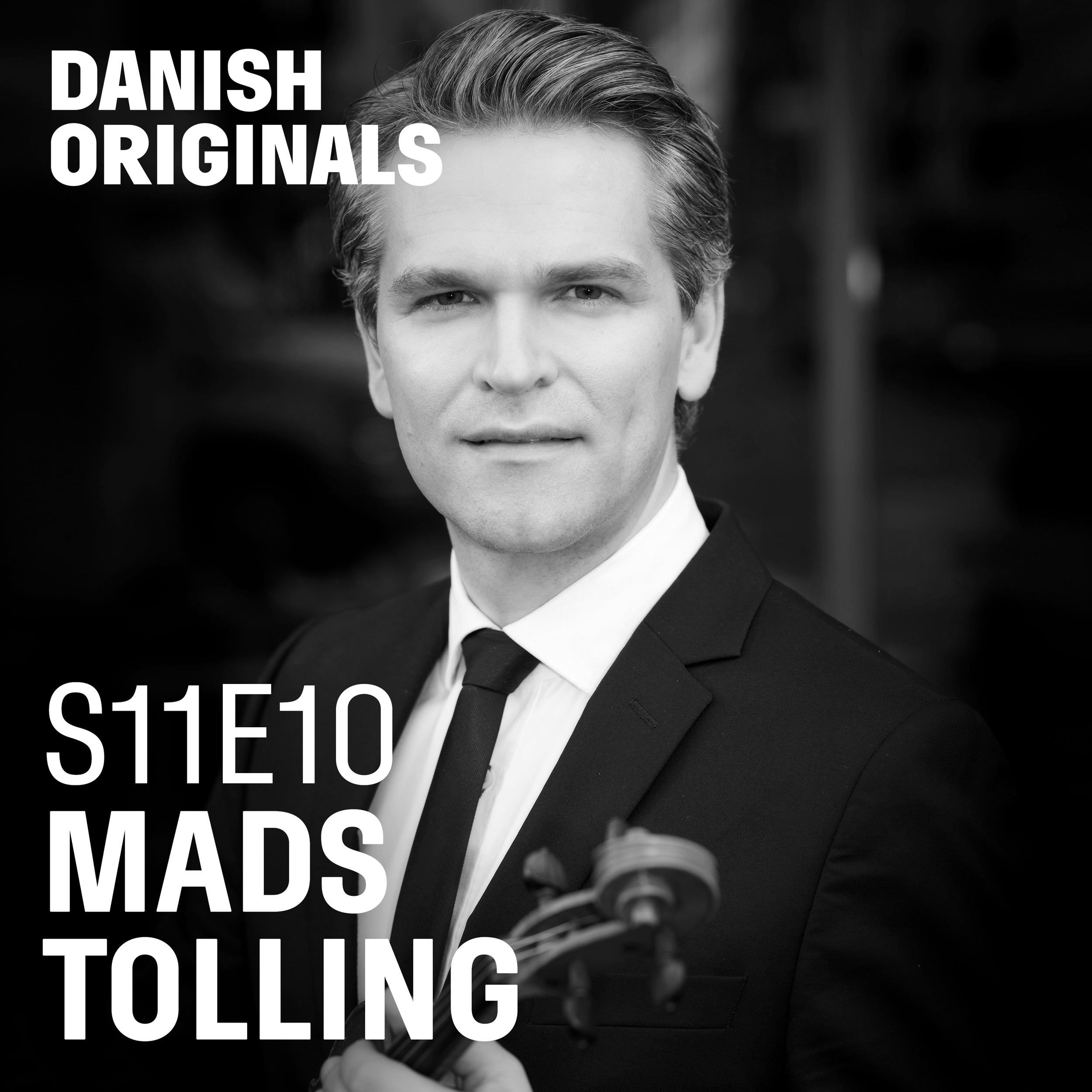
From his home in the Bay Area, Hellerup-born, two-time Grammy-winner Danish-American violinist and composer MADS TOLLING shares highlights of his career playing with bands and leading his own groups, the Mads Tolling Quartet, and Mads Tolling & The Mads Men. At his core a jazz violinist, Mads credits his training at Boston's Berklee College of Music, and talks about blurring musical boundaries, exploring different genres, and reaching new audiences, both as a musician and a composer.
Photographer: Karolina Zapolska
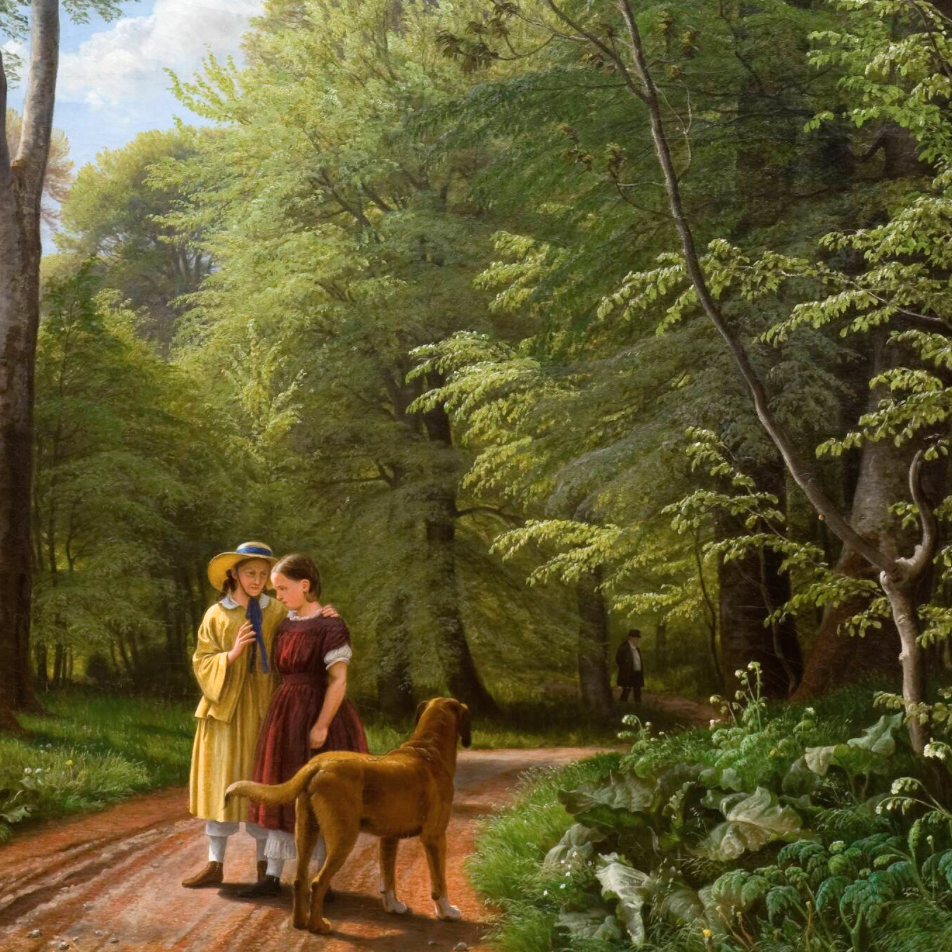
For today's episode, Mads Tolling chose P.C. Skovgaard's Bøgeskov i maj. Motiv fra Iselingen, or A Beech Wood in May near Iselingen Manor, Zealand, from 1857 from the collection of the National Gallery of Denmark, Copenhagen.
“So it definitely changed from being more of a hardcore jazz thing to being more of a how can we bridge the gap between people that are interested in jazz, but also not just interested in jazz, and lure in people that may come from a different place. And that became a little bit of a calling card for me.”
“I love to play complex music, and we all get off on that. That’s because we have studied this kind of music, we’ve done it for so long that we’re at a level where we can hear things that a lot of people maybe can’t hear. But that doesn’t mean that you shouldn’t connect with people, all people, through the music that you play. So that’s always been my goal.”
“And I don’t think there’s any better way, even with words, to connect with people in such a fast way, in such a universal way. And we were talking about, oh, this genre is not popular, this genre is more popular. Really what it comes down to, is music is music.”
Powered by RedCircle
This conversation with Christian D. Bruun occurred on April 14, 2026.
00:01
Mads Tolling
The kind of music that we play is very advanced and can be a little intimidating. So you have to make it palatable for the people you're playing for, and you gotta connect with them, whatever that means and whatever that takes. I love high art. I love to play complex music, and we all get off on that. That's because we have studied this kind of music, we've done it for so long that we're at a level where we can hear things that a lot of people maybe can't hear.But that doesn't mean that you shouldn't connect with people, all people, through the music that you play. So that's always been my goal.
00:36
Christian D. Bruun
My name is Christian D. Bruun. I'm the director of Danish Originals. Our goal is to celebrate Danish creatives who have made a significant mark in the US.
00:46
Christian D. Bruun
Today, our guest is Mads Tolling, a Danish-American violinist, composer, and two-time Grammy winner. Welcome, Mads.
00:54
Mads Tolling
Thank you, Christian. I really appreciate it.
00:56
Christian D. Bruun
It's really good to have you. I'm particularly excited about this interview as I'm a big jazz fan. We are both on the West Coast today. I'm speaking from my home in Los Angeles. Can you tell our listeners where you are?
01:11
Mads Tolling
I'm actually up in Northern California in a place called Albany, which most people don't know about unless they live in the Bay Area, but it's right next to Berkeley. So I can, from my house, see the UC Berkeley campanile. It's a lovely area up here.
01:26
Christian D. Bruun
Very nice. We'll get to how you landed there. You have a very busy schedule. Can you tell us a little about your tour schedule this year?
01:35
Mads Tolling
It's always in flux. In the last few years I went on these long tours with Bob Weir, because I was part of his group the Wolf Bros with The Wolf Pack. We would go on these six, seven-week tours. This year it's a lot more scattered. I have a few gigs out in Cleveland, and then I'm going to Solvang, the Danish village, down close to where you are, and with Pink, the pop singer, here in May.
01:59
Mads Tolling
I hop a lot around, there's some stuff on the East Coast in the summer. Being a musician can be quite a changing experience from week to week. You're going out and playing gigs around the country.
02:10
Christian D. Bruun
Tell us a little bit about the music that you play and the styles you perform.
02:14
Mads Tolling
At my core, I would call myself a jazz musician, which is probably also why you end up doing a lot of different things because you can dip your toes into waters that are a little bit different. Yet they come from a place where you know how to improvise and come up with your own parts, and you can be creative with the music.
02:31
Mads Tolling
I went to Berklee College of Music in Boston and that set me up for my career going on after that, touring at an early age with Stanley Clarke and joining Turtle Island Quartet. Most of my life in the last 22 years or so have been spent playing jazz or touring out in the world, going a lot to Europe.
02:52
Mads Tolling
It's an ever-changing life and you also adapt with trends in music on a macro level and try to pick up influences and integrate that into your music. So it can be a lot of fun. Me and a pianist and accordion player that I'm starting to work with named Sam Reider, we're doing a rehearsal today. He's played a bit with a musician from Venezuela, so he has some music from there.
03:16
Mads Tolling
That country's very rich rhythms and traditions go way back. And then we integrate some of the Danish folk tunes that I've played, like "I skovens dybe stille ro" and "Marken er mejet," some of these folk tunes. Juxtaposing completely different types of cultures and music can be really fun.
03:36
Mads Tolling
And I think that's also what music has come to in 2026. The boundaries are definitely more blurred and it's about making connections with what you like, what you can contribute with the people you play with. And we're always trying to find those connections.
03:53
Christian D. Bruun
That's great. Can you briefly tell us who Bob Weir is?
03:56
Mads Tolling
So Bob Weir's one of the frontmen in The Grateful Dead. He, together with Jerry Garcia, led that for 28 years or so. And he unfortunately passed away just in January, but he used to live in the Bay Area. For the past six years, we would have a band and we would play mostly around the US. We played Red Rocks and Radio City Music Hall, some really iconic venues. And I had a great time and I definitely miss him.
04:25
Christian D. Bruun
What an incredible thing. You've played with a lot of great musicians. Bob Weir must be up there?
04:31
Mads Tolling
I think it's also what The Grateful Dead stood for and what he stood for, which is an inclusion of styles. He's not really a jazz musician himself. But when Jaco Pastorius was pretty strung out and trying to come back, Bob Weir played with him and did some things. He did a number of things with Billy Cobham, another great jazz musician.
04:51
Mads Tolling
The Grateful Dead had Miles Davis open for them. So there's a lot of connections. They would go and check out Stockhausen's music. A lot of people don't think of some of these connections between rock 'n' roll bands of the '60s and '70s and modern classical music and jazz.
05:08
Mads Tolling
But there are definitely a lot of connections and I think that's also what happened when Bob was putting this band together. He was really looking for improvisers and guys that had a foot in jazz and weren't necessarily super Grateful Dead fans. He was looking for something different.
05:26
Christian D. Bruun
I love that. That sounds like an incredible experience. You are a jazz violinist first and foremost. Is that correct to say?
05:36
Mads Tolling
Yes, if I was gonna mention one star, that would be it.
05:40
Christian D. Bruun
You started playing violin as a child around six years old, I believe. And you learned it through the Suzuki method. Maybe you can tell us a little bit about what the Suzuki method is and why you chose the violin.
05:54
Mads Tolling
The story I always tell is I heard a voice whisper in my ear, "Mads, why don't you play the violin?" And that was my mom. She chose the violin for me. My parents thought it would be a good idea. I think they had heard from a friend that it would heighten your concentration, your ability to learn and do well in school.
06:14
Mads Tolling
I was six years old. I just remember playing the violin and going to lessons and practicing. I was using the Suzuki method. And it was created by this guy from Japan named Suzuki who I got to meet when he was 90 years old. And I was about seven years old at a fiddle camp in Sweden.
06:33
Mads Tolling
You basically learn by ear. You're not reading anything, you're listening to these recordings or your teacher plays these tunes that are mostly from classical music, but also originals by Suzuki himself, then you play it back. So you're basically imitating your teacher or the recording you're listening to.
06:53
Mads Tolling
There's this set number of pieces that are part of the Suzuki repertoire and there are eight or nine books and you go through book one to nine. And that can take years. Some people do it for seven, eight years. I did it for about four or five. It was a good way to learn at that age.
07:09
Mads Tolling
It's pretty standard. There are teachers that are certified in that technique around the world, all over the world actually, especially for violin. And there are also groups that meet so there's a little bit of a community aspect, which is really important when you're playing. I found learning how to play anything, you need other kids your age that are also going through the same thing.
07:31
Mads Tolling
My parents were not musicians, but they were music lovers. And my mom's a good singer and always enjoyed singing in church and that kind of thing. My dad dabbles in the saxophone. So he was more of the jazz aficionado in the family, I would say, out of the two. So between the two of them, I had a nice supportive situation, that's for sure.
07:52
Christian D. Bruun
You and your sister played together and even performed together when you were kids. Can you tell us a little bit about that?
07:59
Mads Tolling
One of the first photos I have is actually us playing the streets of Copenhagen with the walking street Strøget. We would go out and busk, especially in the summertime. We had a big circle of people around us when we would do that. And it would be quite the thing. You see these eight, nine-year-old kids, up there playing their violins. She was five, I was six. She actually plays in a bluegrass band, American music, ironically, in Denmark.
08:23
Christian D. Bruun
And where did you grow up in Copenhagen?
08:25
Mads Tolling
I grew up in Hellerup, a suburb of Copenhagen, it's a little bit north of the city. It was very safe and secure. We had a really lovely childhood. I went to a very musical high school, Sankt Annæ Gymnasium, which is out in Valby. That really helped me get to the next level, because what I didn't have so much in Hellerup and Tranegård, where I went to middle school and elementary school, was the community.
08:55
Mads Tolling
Sankt Annæ, on the other hand, had all these musicians and we're all trying to do the same thing, learning together. And so that was a great time. And I went to a special program called MGK (MGK), which was a conservatory preparation course. Sankt Annæ was one of the schools that conducted that. It was not easy to get in, and that led to the next thing of really getting into jazz at that point.
09:23
Christian D. Bruun
And how did you get introduced to jazz, and particularly American Jazz?
09:28
Mads Tolling
It was actually my dad. When I was 14 years old, we went on a trip around the world for seven months. We started in China and we ended in New York. We went to all kinds of places. I think it was in Thailand, my dad picked up a bootleg tape of Miles Davis, I think it was called The Essence of Miles Davis.
09:46
Mads Tolling
It had some recordings of Birth of the Cool, and it had "Autumn Leaves" with Cannonball Adderley, some of the real iconic Miles tracks. And when I listened to that, that just totally blew me away. I just loved the sound of it. And I was 14. So, at that point I was a total classical nerdy kid and I didn't really know where to get started and all that.
10:11
Mads Tolling
A couple years later I re-bumped into jazz again. I was listening to The Beatles and Michael Jackson, whatever else. But then my teacher at that time at Sankt Annæ was playing a recording of Stéphane Grappelli, Joe Pass, and Niels-Henning Ørsted Pedersen and they were playing live at Tivoli Gardens, "It's Only a Paper Moon."
10:36
Mads Tolling
And when I heard that, a light bulb turned on inside my head because I realized, aha, there's a path for me to actually play this music. And that became a path towards where I'm at today, learning the style of music, learning the swing and the feel, getting all that stuff dialed in. So that became the beginning of that journey when I was 16.
10:59
Christian D. Bruun
Amazing. Most people don't think of the violin and jazz as the first thing that comes to mind. You think of classical music as something very organized and very serious. Not that jazz isn't serious, but in a different way. It is interesting you mentioned your sister playing bluegrass, and so there is this crossover of this classical instrument into a lot of other genres of folk music and bluegrass and jazz, et cetera.
11:24
Christian D. Bruun
And of course we, growing up in Denmark, all had the fantastic Svend Asmussen who was perhaps the world's most famous jazz violinist, would you say?
11:34
Mads Tolling
I wouldn't say the world's most famous. In the US, I feel you say his name and most people don't really know. They know Grappelli or they know Ponty, Jean-Luc Ponty. Svend, certainly in Denmark and also in Sweden, was so iconic. He just decided to not go to the US so much. He wasn't as interested in that.
11:53
Mads Tolling
I actually did a number of tribute shows, over 100 at this point, where I would go all around Scandinavia and play his music with guitarist Jacob Fischer who was part of Svend's group for about 20 years. Needless to say, I love Svend, I love his style of playing and he was very important in the world of jazz violin, one of the main guys, because he did stuff so early on.
12:19
Mads Tolling
He also lived to be 100 years old. Back in the '30s and '40s he was playing incredibly hip things on the violin that rivaled Charlie Parker in terms of the swing and the hipness of the music that he played. He was, very early on, just a natural in that and really got it. I agree he should be known by everybody because he's so amazing at what he did.
12:41
Christian D. Bruun
I guess as a Dane, one knows him well. And I was just re-listening to "June Night" the other day, and it's an iconic Nordic sound or Danish sound, that song. You cannot hear that and not think of Svend Asmussen and those times. Actually, I saw him when I was, I think, ten, in concert also and was blown away.
13:00
Christian D. Bruun
And also this idea that a violinist was playing popular and jazz music was just something I had not expected. And of course he also famously played on the Shu-bi-dua songs and all that kind of stuff. So he definitely spread his wings everywhere you could say.
13:16
Mads Tolling
For me too, when I first heard him in concert, I was probably 15, 16, right around that time where he started picking up jazz and it left a big impression on me. Also, he was just a natural entertainer, making jokes and stuff.
13:30
Mads Tolling
He was just such a larger than life personality. It was 2016, when he turned 100, so that's ten years ago now, that we recorded an album called Celebrating Svend Asmussen with Jacob Fischer and the quartet there, and it turned out pretty well.
13:47
Christian D. Bruun
That's great. You met Svend Asmussen?
13:49
Mads Tolling
The full story is when I was at Berklee College of Music, I heard him in concert. I didn't meet him at that point, but then I called him, actually, after and asked if he gave lessons. I looked him up in the phone book. He said, I don't teach, but I would advise you to listen to Stuff Smith, who was another great jazz violinist who had this swing and feel. And so I did.
14:09
Mads Tolling
Years went by. I got a call from another jazz violinist, Bjarke Falgren, and he said, Hey, I'm going to brunch at Svend Asmussen's house. Would you like to join me? And I said, sure thing. I'm home for the holidays. So I did.
14:24
Mads Tolling
When we saw him there, Svend was not in a good place. He had actually just lost his wife. He didn't really want to jam or anything or play, but he was saying, you guys are the next generation, you can have my sheet music. So he gave us both a bunch of his originals and some arrangements and things he'd been working on, also classical études and stuff. So I have this huge stack of his music to this day.
14:49
Christian D. Bruun
Amazing.
14:50
Mads Tolling
That was amazing. And a couple times we went to brunch out there in his house.
14:54
Christian D. Bruun
The legend. I love it. What was the jazz and the live music scene like in Copenhagen at the time and in Europe in general? Why did you choose to go to the US to study?
15:06
Mads Tolling
The scene was good. I remember going to Copenhagen Jazz House and seeing Chick Corea and we went and saw Dave Sanborn and Svend Asmussen as I mentioned. So I definitely got exposed to some great international jazz musicians at that point. So the scene was good.
15:22
Mads Tolling
I was gonna go to the Rhythmic Conservatory. But at that point, I just got an opportunity to see something different. I went to Paris, did an audition for Berklee, and I got a scholarship, and I ended up going to the US. It wasn't that it wasn't good in Denmark or anything, I just wanted to see something else. And that's how it happened.
15:41
Christian D. Bruun
And how did you apply to Berklee? How does one do that in Denmark?
15:45
Mads Tolling
Berklee's a very savvy place and they have their tentacles out everywhere in the world. They have international scholarship auditions. And now they have schools, and I think they have a school in Spain and they have satellite schools in Asia as well. So they had a scholarship audition in Paris. I went down to Paris and got a scholarship. It was pretty straightforward.
16:10
Mads Tolling
I remember going to Boston when I was 20 years old to start my studies and I didn't know anybody in Boston. I had this landlady who had a big old house outside of Boston. And that was the beginning of the US chapter of my life, I guess you could say.
16:26
Christian D. Bruun
And how did it feel to arrive in the US? I'm sure it was something you had been anticipating for a long time, and also the US obviously is the birthplace of jazz and popular music in some ways, in most of our minds.
16:39
Mads Tolling
It was interesting. You take in all the new experiences and you're on your own. It's like you're kind of your own man at that point, when you're away from your parents and you're just trying to figure everything out yourself. So that was good on that level.
16:52
Mads Tolling
And then of course, Berklee was incredible. Everybody comes through there. Jean-Luc Ponty, who is another one of those jazz violinists, came through my school and had a chance to play for him and jam with him. And that led to the next thing after graduating even. I was studying with Joe Lovano, George Garzone, some of these really fantastic individuals who are so renowned in the jazz world.
17:17
Mads Tolling
You could say had I done a different path staying in Copenhagen, it would've been great too. It's always how life goes. You can't be in two places at once. But I definitely had a great time and a great time of growth for sure.
17:29
Christian D. Bruun
When you were there, was it a lot of performance and playing together, or are you studying music theory? What is the balance of those things?
17:39
Mads Tolling
It's a lot of jamming and performing, and there are a lot of ensembles that you can take. That's mostly what I was interested in. Again, it was about finding that community where you're meeting other people who are in similar shoes as you are, trying to grapple with this really hard style of playing, which jazz is.
17:57
Mads Tolling
So that was great. I think I was just going to get the diploma, but then I realized I should really get a bachelor's degree because it's helpful going forward. And it became very helpful for getting a green card. It was a good balance. I ended up doing a lot of interesting things. I did Afro-Cuban ceremonial drumming, Batá drumming, Brazilian drumming.
18:15
Mads Tolling
I focused on things that were going to make me better as a musician, not just playing the violin. Growing up in Denmark, I'd always done this thing called eurythmics, where you're basically tapping one rhythm and then clapping another up here and then singing something. The whole point of that is getting more independent with your limbs and getting freer.
18:34
Mads Tolling
Especially when you're talking about jazz as having a solid foundation and feeling the time really strongly and being able to play over that groove and that beat. It's all about loosening you up. As a violinist, you're so square and stiff and you've been in this very regimented place where you're playing the right notes and all this stuff, and jazz is much more about opening you up, and not being so tense.
18:56
Mads Tolling
Nothing should be about that anyways. But a lot of times the performance practices and the way you practice classical music can make you a bit tense, I feel. So it really helped me to loosen up, so to speak, some of those special classes I did over there.
19:11
Christian D. Bruun
I feel jazz is one of those things when you look at it, you think it's all improvisation. You think it's a very free style of music, but beneath it is also a very, very intricate structure. And it can be very theoretical. It can be very intellectual as well.
19:28
Christian D. Bruun
I'm working on a documentary about the Miles Davis Second Quintet, which is of course, the ultimate improvisation band. And one of the things we learned from talking to great jazz musicians is that there is something in playing together and improvising together, that first of all you have to know what you're doing.
19:47
Christian D. Bruun
You have to have a certain basis of the structure of what you're doing, and then be unbelievably skilled and listen to other people so you can pick up cues and do your own thing and make sure that you then communicate where you are taking it so they can take it somewhere else. And it's an incredible thing.
20:03
Mads Tolling
I agree with that completely. When you look at the expression of jazz and the joy of playing it, it can lead people to think, oh, it's just guys playing off the cuff and having a good old time. You realize what goes into getting to that place where you understand form, you understand harmony, you understand functional harmony — it's a very serious study.
20:24
Christian D. Bruun
At some point you joined Stanley Clarke's band. Tell us about how that came about.
20:28
Mads Tolling
It came about exactly from that experience meeting Jean-Luc, because he came to my school. He could see I was still getting my sea legs in this style, but I was getting pretty good and I could hold my own. And when you're looking at jazz violinists, there's not a lot of people doing that, especially if you look at 2001, there were even fewer than now probably.
20:48
Mads Tolling
Stanley Clarke was looking for a band to put together for a number of tours back then, 2003. And I was about three months from graduating Berklee, and Ponty had given my name to him. So he reached out to me and we had some nice talks and I sent him my demo tape from when I auditioned for the Monk Institute around that same time.
21:12
Mads Tolling
And I was playing "Moment's Notice" and "Nica's Dream" and some of these great standards and Stanley came from playing with Joe Henderson and playing with Stan Getz. So he really got what I was doing. So that led to me starting to tour with him and getting on the road. And that was a gig that lasted a good seven years.
21:35
Christian D. Bruun
Incredible. And what took you to the West Coast?
21:38
Mads Tolling
I graduated in 2003 and I think a couple weeks before graduating, I got a call from a very famous string quartet called Turtle Island String Quartet that I knew of before. I had listened to them in Denmark and I was a big fan of their music because what they do is they take the setup of a string quartet, two violins, viola, and cello.
22:01
Mads Tolling
But instead of playing Mozart, Beethoven, and Haydn, they actually play Jimi Hendrix and Miles Davis, John Coltrane, and modern jazz quartet kind of stuff. So it was a group that was right down my alley, I guess you could say. And what they needed was a violist. The violist had left the group, so they were auditioning people for that position.
22:23
Mads Tolling
And as you know, I'm a violinist, not a violist. They asked me, hey, do you have any experience playing viola and are you interested? And I said, oh, yeah. I played viola before, even though not really at all.
22:34
Christian D. Bruun
What is the difference, for those who don't know?
22:36
Mads Tolling
So, the difference between a violin and viola, besides the viola burning longer, some good viola joke, it's lower, it's deeper, it's bigger. The bigger the instrument, the deeper the sound. So it has a C-string, which is a fifth below the lowest string of a violin, which is the G-string. So viola is like the middle texture of the string quartet between the violins and cello. So it's a very important instrument.
23:01
Mads Tolling
And I had about two weeks of learning this instrument before the audition happened, and the audition was basically playing at a festival in Germany, I think it was in Bremen, Germany, and a gig in Mexico. So two very different locales. But I was determined to do this.
23:20
Mads Tolling
Also, the other thing that you have to do is you have to learn a clef. So you're playing an Alto Clef, which is not Treble Clef. Most high pitched instruments are Treble Clef, violin, flute, and so forth.
23:32
Christian D. Bruun
I don't know what that is. So can you explain it to those listening in?
23:36
Mads Tolling
So when you read music, you're reading from a clef. You have these little dots on a piece of paper that tells you where to put your fingers. The Treble Clef, which is for a very standard instrument, the piano or guitar. That's mostly Treble Clef. So they're putting their fingers based on the dots, based on the Treble Clef. And then you can have the Bass Clef, which is the lower clef. And so the left hand and piano is Bass Clef. Those are very standard.
24:04
Mads Tolling
But Alto Clef is not standard. That's a different way of reading. So it's almost like you have to, in your brain, adapt to reading this clef and like anything new, you have to really get used to that. So perhaps the hardest thing was just wrapping my head around reading this clef. I got all these arrangements with Turtle Island Quartet that they had been sending me, and they're not easy, they're pretty intricate, there's a lot going on.
24:28
Mads Tolling
I was riding fingers like a beginner, like something you would do when you're eight years old. That's what I was doing. And it worked out. Lo and behold, I did the audition. They asked me to join and then I actually said no because I had gotten into the Monk Institute at the time so that I was going to do that.
24:46
Christian D. Bruun
Tell us about that. What is the Monk Institute and how did that happen?
24:50
Mads Tolling
The Monk Institute moves around the country. And at the time that I was auditioning for it, it was at USC in Los Angeles. And so I had been invited, I got through the initial stages, which by the way is not easy. Furthermore, if you're a violinist and you have the application in front of you, there's no "violinist" option to check.
25:12
Mads Tolling
So I had to write in the application "violin" and then check next to it. So that was interesting. But they liked what I did. I went to the audition and played in front of Herbie Hancock, Ron Carter, and Terence Blanchard back in spring of 2003. I was accepted into the program. They have a new crop of seven to ten students per two years. So it's a very exclusive program.
25:36
Mads Tolling
I was going to do that and I started the program and it was a great program, but I also realized, hey, I have an opportunity here to continue touring with Stanley Clarke and Turtle Island Quartet, which are some of the top groups in my field. Maybe I should do that.
25:52
Mads Tolling
It was a struggle to figure out what the right move was. I ended up leaving the Institute and joining Turtle Island Quartet at the time, and devoting more time to Stanley Clarke as well. So that's how it all came about. That was an interesting time in my life for sure.
26:09
Christian D. Bruun
Pretty impressive, to have to make a choice, to either go on the road with these famous, talented people or go on maybe the most prestigious jazz program in the country.
26:17
Mads Tolling
And that was called the Monk Institute at the time, named after Thelonious Monk, the jazz pianist, and now it's called the Herbie Hancock Institute because they changed the way they're doing it a little bit, I think. But it's still moving around. I think it was New Orleans at one point.
26:31
Christian D. Bruun
So now it's at UCLA and of course with our good friend Dan Seeff running the Institute, and he and I are the people producing that Miles Davis documentary that we talked about earlier.
26:44
Mads Tolling
That sounds amazing.
26:45
Christian D. Bruun
So you actually won two Grammys for Best Classical Crossover Album with Turtle Island Quartet. Can you talk a little bit more about that? And what is a classical crossover album?
26:58
Mads Tolling
So when people think of a classical crossover album, they probably would think of Yo-Yo Ma playing the music of Stevie Wonder, or something like that, which is a classical musician crossing over into something else. And so it gets a little bit confusing because that's not really what Turtle Island is doing.
27:20
Mads Tolling
We're all jazz musicians and we all know how to improvise, not that Yo-Yo Ma is not capable of some of those things, but he's mostly a classical musician who crosses into something else. I think the reason why we got those Grammys and it made sense we were in that category is we're still a string quartet.
27:37
Mads Tolling
And when people think of a string quartet, right away, it's gotta be something to do with classical music. And certainly, you are playing chamber music and there are elements of what we're doing in the arrangement that have classical commutations and sounds to them, so I totally get that.
27:52
Mads Tolling
But to give an idea of what it is we were doing, the first Grammy we won was for an album called 4+Four, which was definitely a crossover because we were playing with a group called the Ying Quartet, which is a classical string quartet that have their residency at Eastman School of Music.
28:10
Mads Tolling
We were doing a pretty diverse program. Some originals by Milhaud, we were doing The Beatles. We were doing this in a string octet, four string players with Turtle Island Quartet, and then four string players with Ying Quartet coming together doing this collaboration.
28:25
Mads Tolling
And we were recording this on Telarc, which at the time was an independent label that later got bought by Concord and had a very famous recording engineer named Jack Renner, a celebrity recording engineer who recorded the album. So it became a big deal, and I think fit the Grammy category really well. This was, by the way, 2005.
28:45
Mads Tolling
And then the second album we won, in 2007, we recorded an album called I Love Supreme, The Legacy of John Coltrane. And that, as you can tell, was playing John Coltrane's music and the founder of Turtle Island Quartet, David Balakrishnan, had arranged the whole I Love Supreme, a four string quartet.
29:03
Mads Tolling
So all those highly intricate, really dense types of improvisation that were part of A Love Supreme, which you can't really imagine, how were you gonna do that for string quartet? Well, he did it, he made an arrangement that pulled all those things together and it was a re-imagining of that original recording for string quartet.
29:22
Mads Tolling
And then on top of that, we did "My Favorite Things," "Moment's Notice," and "Naima," some of those classic Coltrane tracks for four string quartet, and that also won us a Grammy. So that's to give an idea of what classical crossover is. It's taking material that you would not expect for a certain instrumentation, like a string quartet, and putting it into a new light.
29:46
Christian D. Bruun
It's very impressive and congratulations on those two wins. How long did you play with Turtle Island Quartet? Are you still playing with them?
29:55
Mads Tolling
I played with them for about eight years. I still sometimes do stuff with them. We're gonna play a gig in Cleveland here in May with Terrence Blanchard. So I still occasionally will play with them, but not a whole lot. It was a really nice stint in my young career.
30:13
Mads Tolling
You also see how an organization like that is run from inside. Turtle Island is an institution at this point. It's been around for a long time. And it's booking agents, publicists, managers. How do you run a group? And for me who had no experience doing that, but has some entrepreneurial interest and I'm ambitious and like to do stuff on my own, it was a great learning experience to be part of that and see how things run.
30:41
Mads Tolling
I mentioned playing the viola. I got the position as violist, but then one of the violinists left. So I was able to, for the last four years, play violin. So that was also cool. I returned to my roots that way.
30:52
Christian D. Bruun
Oh, I see. And did anybody ever catch onto the fact that you had to switch to viola in two weeks or however long you took to practice?
31:03
Mads Tolling
I think after the fact, I kind of said, I probably didn't know a lot about the viola before this. I guess we call that a white lie.
31:09
Christian D. Bruun
And it worked out.
31:11
Mads Tolling
I didn't want to say no, I have no idea what I'm doing, don't hire me. I wanted to at least make a good showing.
31:16
Christian D. Bruun
That's how you do it too, right?
31:18
Mads Tolling
I think I told my landlady, it's just a math problem. You gotta work it out.
31:25
Christian D. Bruun
Amazing. You did work it out and very successfully. And I guess that primed you to then start your own quartets. And tell us about that and the kind of music that you play there.
31:35
Mads Tolling
In 2008 or 2009, I started this group, the Mads Tolling Quartet, and the first album was called Speed of Light, which was just a trio, not a fully fledged album. The album after that really made a bit of a splash. It's called The Playmaker and it was a project where I had my quartet, but also invited special guests, including Russell Ferrante from the Yellowjackets, Stanley Clarke, I had Stefon Harris on the vibraphone, so had some really great musicians to play with me on that occasion. And that led to some good things.
32:08
Mads Tolling
I was on NPR's Morning Edition and The Washington Post reviewed it. And that was also an album where I had some originals. The whole point of calling it The Playmaker was actually making the connection between making plays in music and making plays in sports. I'm a big fan of sports and watch that a lot. And the cover is I'm out on a soccer field playing my violin stuff. That was my first real recording.
32:32
Mads Tolling
And then after that, to tip my hat to Jean-Luc Ponty for giving my name to Stanley Clarke, I made an album of his music, re-imagining it with my band. We did a live album at a great jazz club called Yoshi's up here in Oakland, and that became a release too, that came out in 2012. So that was a band I had before the current Mads Men, which I then started in 2015.
32:58
Mads Tolling
That was right when Mad Men, the TV show, was at its height. I love that show and I also loved the music from the 1960s. It was a very rich decade when it comes to music. And there's a lot of TV shows that are really interesting. I used to watch The Flintstones and all that stuff when I was a kid growing up in Denmark.
33:16
Mads Tolling
I did an album with all these show themes from TV shows and movies: Mission: Impossible, The Good, the Bad and the Ugly, A Taste of Honey. And I did that with instrumental arrangements that added a different element to these songs. So that was a quartet, violin, piano, and bass and drums, and also something where we involved singers.
33:39
Mads Tolling
I started working with Kenny Washington up here in the Bay Area, Paula West. These are some phenomenal vocalists as well. It became a thing where I would do these different shows and have special guest vocalists join in on the band.
33:54
Mads Tolling
So it definitely changed from being more of a hardcore jazz thing to being more of a how can we bridge the gap between people that are interested in jazz, but also not just interested in jazz, and lure in people that may come from a different place and then realize, oh, it's actually some really interesting music here that I really enjoy. I didn't know jazz could sound like that. And that became a little bit of a calling card for me.
34:18
Christian D. Bruun
Interesting. And part of having a long music career is also exploring new avenues. There's a famous Oscar Peterson album where he plays Frank Sinatra songs, so there is a precedence of that being done.
34:30
Christian D. Bruun
I'm sure you watched the controversy where Timothée Chalamet said that nobody cared about ballet and opera anymore. And then at the Oscars, Conan O'Brien was joking around saying, they're just mad at you because you didn't include jazz as well. There was of course something to that. How do you find an audience and what are the audiences out there for jazz?
34:50
Mads Tolling
That's a really good point. I think he was onto something, Chalamet, with what he said, although it wasn't a very nice way to say it. And he could have included jazz. I think it is about making this music relevant for whoever is around you and whoever isn't going to be in the audience. I've done some playing and some contracting for productions where you play music from video games.
35:12
Mads Tolling
And it's maybe a video game that was really popular four years ago and this nostalgia of people remembering it, and some of them still play it and then going back and listening to the music. But now it's arranged for a full symphony. That can be really powerful for people because for the people that like that game, they go, oh my God, I can't believe that somebody wanted to do this, and somebody cared enough to make this a project for full symphony.
35:36
Mads Tolling
So for them, they feel a sense of legitimacy. On a bigger picture, those people would probably never go to the symphony hall if not for this video game. And now they see, hey, this is an inviting place that I could come back to and see music. So you have to meet people where they're at. And that's always been my thing.
35:53
Mads Tolling
The kind of music that we play is very advanced and can be a little intimidating. So you have to make it palatable for the people you're playing for, and you gotta connect with them, whatever that means and whatever that takes. I love high art. I love to play complex music, and we all get off on that.
36:12
Mads Tolling
That's because we have studied this kind of music, we've done it for so long that we're at a level where we can hear things that a lot of people maybe can't hear.But that doesn't mean that you shouldn't connect with people, all people, through the music that you play. So that's always been my goal.
36:28
Mads Tolling
It's a tricky thing to talk about because people get very sensitive about it. I get that. I just think we gotta at least give people a chance to appreciate this kind of music. And the only way they get that chance is by us letting them in and saying, Hey, it's available for you too. It's not just something I'm holding within me that you can't have, it's there for you to take. And give them a chance.
36:53
Christian D. Bruun
I think that's very important, opening doors to other genres. And also, to a large extent, Timothée Chalamet wasn't right. There's a lot of opera lovers, there's a lot of ballet lovers. And judging by the amount of jazz festivals and jazz concerts and jazz venues around the world, it's very much alive and doing very well.
37:16
Christian D. Bruun
But yes, I think to your point, it is important that it opens doors to new areas, that it's always evolving. It can be super high end and it can be of a more broad audience. And as my own pet peeve, this notion nowadays that if you don't own the entire market, then you're not successful. There are tons of people who love jazz, and that's enough. It doesn't have to be sold to every single person in the world.
37:37
Mads Tolling
I think that's right. If you look at the numbers, I think they say something like 3% are jazz fans. In America, that's ten million, that's a lot of people. That's twice the population of Denmark. So 3% is not nothing. But of course it's not Taylor Swift or somebody like that. And that will never be, because it doesn't have that mass appeal and that's perfectly fine.
37:57
Mads Tolling
So, seeing it in a relative light, you get to play in your corner of the sandbox and that's fine. That's how it is in movies too. You're gonna make a movie and it's not gonna be for everybody. It's gonna be for a small segment, and that doesn't mean that it's a bad movie or it shouldn't be there.
38:13
Christian D. Bruun
I want to shift gears a little bit. What is it about performing live that you really enjoy or maybe you don't like, actually? What is it about performing live and touring that appeals to you?
38:26
Mads Tolling
Touring can be grueling, but also it gives you an opportunity to see different places you otherwise may not see. For example, we played in Japan and we played in front of the Toji Temple and we got the whole look inside, the special tour the regular tourist wouldn't get. So sometimes you get into this amazing position that you feel very privileged that you got that opportunity.
38:49
Mads Tolling
But it can also be tough. A lot of early mornings and calls and stress around travel. It's all worth it for the experience that you get playing for people. You go to a different part of the country, a different part of the world and you play for people that you don't know at all. You get this connection with music that otherwise they would just be strangers. Now they're actually part of your special circle created for those two hours.
39:16
Mads Tolling
And I don't think there's any better way, even with words, to connect with people in such a fast way, in such a universal way. And we were talking about, oh, this genre is not popular, this genre is more popular. Really what it comes down to, is music is music. You can connect with sounds, and it doesn't have to have any words, it doesn't have to have any special style. And it's just, at the end of the day, sounds that convey emotion and convey energy and people respond to that.
39:48
Mads Tolling
A lot of times, what you have to realize as a musician, it's about that sharing experience that happens with an audience. So that can happen at random times in the concert too, not when you expect it. But it is about the back and forth and the connection with the audience and the sharing that makes it interesting to be a performer to me.
40:06
Christian D. Bruun
You also compose and you've composed for orchestras. I would like to hear a little bit more about that and how that is at the birth of the music.
40:15
Mads Tolling
I did a piece for the Oakland Symphony that was commissioned by Michael Morgan. And one of the prerequisites for doing that piece was, Michael said, you cannot be a classical composer, you can't have written for symphony before or full symphony orchestra before. And I fit that description.
40:32
Mads Tolling
I was just a jazz guy who wrote for my little group. And so I ended up writing a three movement violin concerto for Michael and the Oakland Symphony that was performed at the Paramount Theatre in 2015. A multi genre piece, it starts classical, and then it goes into a 7/8 groovy, fusion thing. The second movement is more Gershwinesque and almost like a trip down Broadway or something.
41:02
Mads Tolling
And then the third movement is a hoedown. It's a fiddle music that goes into a boogie-woogie. So, perfect for me because it goes into all these different places. So I wrote that and that was actually a piece that later got some nice play. I played that in Japan, Kanazawa Symphony. I played that with the Hawai'i Symphony and I played that around the US with different orchestras, including community orchestras.
41:25
Mads Tolling
I also wrote another piece that was based on Copeland's Appalachian Spring 13-player original orchestration. So Copeland's very famous Appalachian Spring, people normally hear with full symphony. It was actually written for a 13-player chamber group. So I wrote a piece that was going to go with that piece in concert with the Copeland, because it basically had the same instrumentation.
41:50
Mads Tolling
The one I wrote for the Oakland Symphony was named Begejstring, which is a Danish word for excitement. The second piece, the one that was gonna go with the Copeland, is named Yggdrasil, again, a Danish title because that's named after the Tree of Life in Norse mythology.
42:07
Mads Tolling
And it also took its jumping off point from the oldest song found in Scandinavia called, "I Dreamt Me A Dream," and that was the oldest notated song they were able to find going back at least 500, 600 years. So I took that very simple song da da da da da da da da da da da da da, and I brewed all these variations, all these things from that in the first movement.
42:34
Mads Tolling
And then the second and third and fourth became different. So it's a little bit about telling my story coming from Scandinavia, coming from Denmark. With that said, it is very intriguing to work in those kinds of formats. You're writing for a full symphony, that's the ultimate.
42:47
Christian D. Bruun
And what is your process when you're composing? I imagine it's very different from being a live musician. It's probably a much more solitary endeavor.
42:56
Mads Tolling
It's not so glamorous. I play the piano too, besides the violin. So I sit a lot by the piano, work out ideas, and play through something. I will typically record when I get a good idea and just brew on that for a while, because a lot of times you come up with a really good idea late at night and you're like, oh, this is really groovy, man, it's cool.
43:17
Mads Tolling
And then you go to bed and it's gone the next day. You can't remember it. So the key thing is try to record at least, don't write it down, but just record what you have. And so it becomes a kind of a jam session with yourself where you just noodle around, figure out some things, oh, I kind of like that over here, and this works here.
43:35
Mads Tolling
And so little after little you come up with the structure, or some ideas at least. That could also happen on the violin. I write very differently if I were writing for violin. The instrument will guide you, in a way, from the things that you would write and the kind of things you would hear. So it depends on how you wanna do it.
43:52
Mads Tolling
This process is very creative. It's very fun. But by far, the biggest process is actually not that at all. It's actually figuring out how you can make this work for the orchestra. How can you plan, and how can you weave these sections together where it makes sense? So there's a lot of orchestration where I'm the first to tell you that I don't know what I'm doing really.
44:15
Mads Tolling
I have the Samuel Adler book that I've read and listened to the examples, and use my common sense. For example, for the first symphony orchestra, I put this really super busy line in the oboe. I had a lot of notes playing a jazz improvisation thing, but at the same time, I also had the horns play a background line.
44:36
Mads Tolling
And that was just really difficult because the oboe is just a soft instrument and so the horns are much louder. Even though I write piano for the horns and forte for the oboe, it's just not quite gonna get there dynamically. So you figure out certain pairings that work and certain things that you can and cannot do by just doing it.
44:54
Mads Tolling
That first piece actually, I think, was considered a pretty successful piece. People in the orchestra are like, oh, this was well written, we liked it. So that gives you some hope. But I feel the second piece, I had a better idea of what to pair and not to pair. And now if I was gonna write a third piece, which I might next year, I would know even more. So you just learned from doing it, obviously. And I enjoyed the process though.
45:19
Christian D. Bruun
So it's in some ways also an interactive process. You need to go out and test what you composed in your home studio, have people play it, and get feedback and figure out what works and what doesn't work.
45:31
Mads Tolling
You're sitting by your computer, and you're listening back to Sibelius notation software. And Sibelius just sounds good and it doesn't think about where the oboe is positioned in the orchestra and all that stuff. So a lot of things you can't really tell from the computer software and it's not gonna work in real life. So you have to pick up on that and learn the hard way.
45:3
Christian D. Bruun
I see. You teach the violin as well. The New York Times has a series "5 Minutes to Make You Love Music." If I were to ask you, for somebody who wants to start playing the violin or jazz, what music would you recommend?
46:09
Mads Tolling
Wow. That's a great question.
46:11
Christian D. Bruun
Small question, I know.
46:14
Mads Tolling
There's so many to pick from. If you're gonna listen to something that was just gonna blow you away, from classical music, Mendelssohn's Violin Concerto first movement, Brahms' Violin Concerto first movement. Those two I think are just magical. I also really like Max Bruch's. So the violin concertos are just amazing.
46:35
Mads Tolling
If you've gotta listen to jazz, you might listen to Svend Asmussen play "Honeysuckle Rose" or "June Night," or Jean-Luc Ponty play "New Country" or Enigmatic Ocean, one of his fusion hits. So there's a lot to pick from. And then if you go into fiddle stars, you might listen to Mark O'Connor, somebody like that, play "Orange Blossom Special" or Michael Cleveland play "Tall Fiddler" with Tommy Emmanuel.
47:02
Mads Tolling
So those are some very inspiring tunes that I've listened to through the years. But that's the cool thing about the violin too, which is that it belongs to so many traditions. You can also listen to Indian classical music and Subramaniam and listen to all the stuff he's done. L. Shankar, with John McLaughlin, Shakti. It's vast. But five minutes of just the violin, go listen to Mendelssohn's first five minutes of the violin concerto, and you get a good sense.
47:33
Christian D. Bruun
That's great. And what is on your wish list of things to do, people to collaborate with or play with? What are you looking at for the future?
47:43
Mads Tolling
Oh boy, it's a broad question. I just want to play with people that inspire me on a national, international level. I love Brad Mehldau's music, as a current musician I love to play with, or Julian Lage. Of the older guard, Herbie Hancock and Carter, who, actually, we got to play with Bob Weir on a couple occasions. He came and played with us at Radio City Music Hall and whatnot.
48:06
Mads Tolling
I love the tradition of jazz and I love the subtleties that some of those, like Brad Mehldau, bring to the table. He's such an incredible musician that has such a distinct style of arrangements and touch and feel on the piano, everything he does. So those are the types of people I'd love to work with right now.
48:26
Mads Tolling
Some of the collaborations I'm involved with now actually include a great fingerstyle pick guitarist named Peppino D'Agostino, who grew up in Italy and now he spends his time between Italy and here. He's a great musician who writes his own music and we just have a nice collaboration. We played The Freight & Salvage in Berkeley, which is a 500 seater up here. So we're gonna keep expanding on what we're doing. It's a nice acoustic instrument collaboration, just violin and guitar.
49:00
Mads Tolling
And I love those kinds of collaborations. I also do a duo with a guy named John Arbour, who is a pianist and a type of musician who leaves a lot of space. Ed Simon is another buddy I play with from the SFJAZZ Collective, who is an incredible pianist from Venezuela.
49:18
Mads Tolling
I think the commonality is somebody you can have a conversation with musically, and you have similar loves for the type of music. Because jazz is a very wide spectrum, somebody that can have a lot of different genre influences and can draw from a lot of different influences, including classical music, including folk music, including even pop music, which John is great at.
49:43
Mads Tolling
I'm attracted to that kind of musician, and it makes it easier for me to play with because we can go in all these different places. Also, of course, being able to read and being able to quickly put something together, is a plus. I'm always looking at different things that the future can hold. I'm hopeful.
50:04
Christian D. Bruun
Very good. Thank you, Mads, thank you so much. It was an incredibly great time talking to you. And I'm glad to see that the future of jazz and violins are in good hands.
50:16
Mads Tolling
I appreciate that, Christian, and thank you for everything that you do with your series. And your movie about Miles Davis, that just sounds so exciting. Miles was the first guy that I really got into when it came to jazz. Were it not for him, I'm not sure I would be here today. So that goes back to something very fundamental for me, so very, very cool.
50:37
Christian D. Bruun
Amazing. Well, thank you so much for being part of Danish Originals.
50:45
Christian D. Bruun
For today's episode, Mads Tolling chose P.C. Skovgaard's Bøgeskov i maj. Motiv fra Iselingen, or A Beech Wood in May near Iselingen Manor, Zealand, from 1857 from the collection of the National Gallery of Denmark.
50:01
Mads Tolling
I have chosen P.C. Skovgaard's A Beech Wood in May near Iselingen Manor, Zealand.
51:07
Mads Tolling
I grew up in Hellerup and over there we have this beautiful park named Dyrehaven, which translates as "deer garden" and it's north of Copenhagen. We would go there every winter to go sledding down these hills. We don't really have mountains but more like hills.
51:24
Mads Tolling
And although this is not Dyrehaven, this is Iselingen Manor, which is the southern part of Zealand, this looks exactly like something you would see, with the beech trees, and this road that twirls around in this way. It just really reminded me of going around a summer day in this park enjoying time with my family. It brought a nostalgic feeling to me. I just love looking at the light and the colors.
51:49
Mads Tolling
And something about that it looks that way in 1857, but if you go to some of these areas now and they still look like that, they haven't changed that much. With the changing world, the way we go about everything, it's nice to have places that maybe don't change so much.