
From his home office in Gentofte, Sønderborg-born and Copenhagen- and New York-based Danish photographer JENS HONORÉ talks about his work with the Roger Federer Foundation and his books A Place to Dream (2018) with SOS Children's Village and The Right to Food (2021) with the nonprofit initiative JUNKFOOD. He discusses the importance of connecting to people, using his photography for social good, and his present focus on craftsmanship in his film The Crosses and his upcoming book.
Photographer: Klaus Clemmens
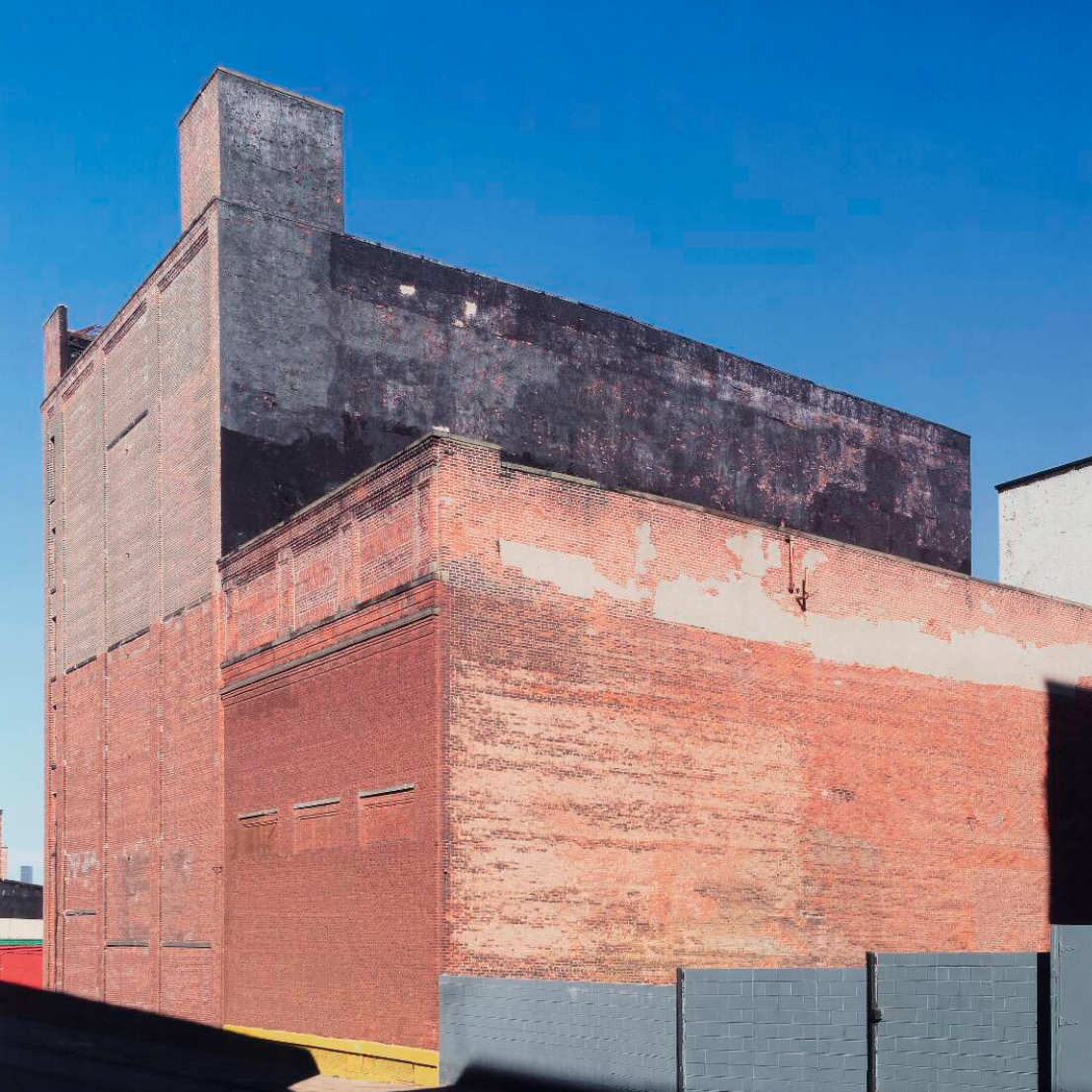
For today's episode, Jens Honoré chose Jesper Rasmussen's Dumbo Brooklyn New York from 2005 from the collection of the National Gallery of Denmark, Copenhagen.
“I think that when you get older, it is more important than ever to be able to create long-term relationships, not for the money or for the prestige, but because you can put your craft to work in a way that actually makes a difference.”
“The biggest part of my job is not the technique. I spend most of the time calming down the patient. And if you can keep the set as simple as possible, it makes it even better. Sometimes I take the chance to say, can we do this just with daylight, on just one simple lamp instead of having all the stuff, especially when you work with children.”
“If it can make the world a better place, I know it sounds so Sebastian-like from the ‘70s, but I really believe in that. I believe in togetherness. I believe in cooperations. I believe that you can use your craft in all kinds of interesting ways.”
Powered by RedCircle
This conversation with Gregers Heering occurred on March 30, 2026.
00:00
Jens Honoré
I think that when you get older, it is more important than ever to be able to create long-term relationships, not for the money or for the prestige, but because you can put your craft to work in a way that actually makes a difference.I've always been very political and I'm very interested in the work done by NGOs. And I think it's very important to support women's rights. And so by having a craft, you can actually go out in the world and you can address some of these issues that matter to you.
00:31
Gregers Heering
My name is Gregers Heering. I'm a photographer and guest host of Danish Originals. Our aim is to celebrate Danish creatives who have made a significant mark in the US.
00:43
Gregers Heering
Today's guest is Jens Honoré, a Danish photographer. Welcome, Jens.
00:48
Jens Honoré
Thank you very much.
00:49
Gregers Heering
So Jens, we are meeting virtually here. I'm sitting in Los Angeles, you are in Denmark. Can you first tell the listeners a bit about your setting, where you are, and what it feels like on this evening in Denmark?
01:04
Jens Honoré
I'm currently sitting in my office here in my house in Gentofte, north of Copenhagen, and I'm hoping for some spring soon. The winter has been really long and tough, not only here, but also back in New York, where I'm splitting my time. As I get older, I get light sensitive to the Nordic weather, which is not faring well with me.
01:24
Jens Honoré
And that's something that really surprised me when I started spending more time again back in Denmark. The first winter here was brutal. I don't know what to do about it because it doesn't get any better. It's lighter in New York, but this winter has been very cold in New York as well.
01:38
Gregers Heering
I was just about to say, the weather on the East Coast in the US is not too different from what we are used to in Denmark.
01:44
Jens Honoré
Correct.
01:45
Gregers Heering
But still, you feel a difference in the light and the vibe of wintertime in Denmark compared to the East Coast. Can you talk a little bit about how they make you feel differently?
01:57
Jens Honoré
The climate in New York is very steady, so when it's winter, it's cold with snow. We had snow every year. When it's summer, it's actually brutally hot. But I like the seasons. That's something I really thrive on. And since I'm from Denmark, I grew up with seasons and I really appreciate that also as a photographer.
02:15
Jens Honoré
I love the fall. It's my favorite season, and being in New York or New England is fantastic, even though I'm not a nature photographer. I like to use my camera as a tool to get out in nature. And sometimes I take some photos. Never use them for anything really. I had a few assignments over the years, but I'm not that kind of photographer.
02:35
Jens Honoré
So that is something I couldn't live without. But then, spending more time here, especially in the wintertime, has been brutal. And I forgot about it, all the years I was in the United States because we never went home for Christmas. I don't know what to do because you think when you get older you get more used to things, but it's the opposite. I think it's harder, by the years. So that's how it is, right?
02:58
Gregers Heering
Do you think it's not only about the temperature and the darkness? Would you say that there's different energies in these two places that affect you as well?
03:09
Jens Honoré
That's an excellent question. For sure, I do. In the 22 years I had a company in the United States, it's given me an energy about not only New York, but the country as a whole, which is quite different from Denmark. And it's very hard to compare the United States to Denmark because Denmark is more like Long Island, not even New York State.
03:27
Jens Honoré
And taking the whole country, which I've been traveling for years and I've been in most states, is quite different. Something that is making the winter a little longer and harder to survive here in Denmark is that people in Denmark are very officious. If you don't know what to do, don't do it here. And you feel it in the supermarket when you wait in line and if you don't have your money ready and stuff like that.
03:51
Jens Honoré
And that is something I really like about the United States, that it's more, at least it used to be that way, you have space to be whoever you want to be. Whereas in Denmark, I mean Copenhagen is a little different. Where I'm from, Sønderborg, which is in the southern part of Jutland, the way people are, even though now I start to go back every summer —
04:11
Jens Honoré
I go back to something called Ringriding, which is like a big kind of festivitas that takes place in Schleswig-Holstein from back when Denmark and Germany were very intertwined; they still are. And when I come back there, and even though it's more than 40 years since I moved away from Sønderborg, it's just under my skin.
04:30
Jens Honoré
And you have that saying that you can take me out of Sønderborg, but you cannot take Sønderborg out of me. And it's not a bad thing. And I'm not trying to discourage my background or anything, but there's a reason why five days after I graduated high school, I was leaving town.
04:45
Jens Honoré
Also because I wanted to do something you couldn't do there. So that's a very, very good question. And I think that moving to Copenhagen as a relatively young photographer, and that's where I started my own business back in '95, it was a more international feeling, even though the city has really changed a lot since. But I like that roominess you get in the United States. I like that.
05:08
Gregers Heering
And we are gonna go back to your journey, how you started, how you got here, in a minute. But I want to stay with this topic for just a few more minutes because I think it's very interesting. Now, do you also sense that you are attracted to different things with your camera, at least for your personal work when you are in Denmark, compared to when you are in the States? Do you feel you're pointing your lens differently in these two places? And I'm not thinking about assignments. I'm thinking about your natural instinct.
05:41
Jens Honoré
Excellent question. That is spot on. I remember when I moved to the United States, the first two years I was there, I took really shitty photos but I thought they were fantastic. At that time, I had already been to the United States many times and worked there a lot, but moving there and bringing your family and all that, and buying a house and really being as American as you can, I was so intrigued living there.
06:00
Jens Honoré
I was running around photographing, and I was attracted to these lonely spaces — the parking lots, the shopping malls. And then I look at the photos today — yeah, that's very common if you grew up in America. And I got the same sense that when I'm back in Denmark. I don't take that many photos, less and less unfortunately.
06:17
Jens Honoré
And that is on my list to bring a camera out and start taking more photos, because I always work on big projects and book publishing and sometimes I need to get back to how I used to be as a teenager, running with my camera and shooting all kinds of stuff. And it's harder for many reasons.
06:30
Jens Honoré
One of the things that makes it harder is because I feel I know Denmark so well, so why would I photograph it? I've traveled a lot and I've been to many, many different countries very foreign to both America and Denmark. So I had my lust covered, in that sense. For 25 years, I traveled 150 days a year.
06:50
Jens Honoré
So for me to come home, I didn't have that need. I had other needs. I'm a very social person. I'm a very outgoing person. I'm a father, I'm a husband, I'm a wine guy, I'm a tennis guy. I have a lot on my plate. But over the years, I am more attracted to solitude. And that's what I like about photography. It's a very one man show.
07:11
Jens Honoré
Of course when I'm on big sets and doing big advertising campaigns, it's a lot of people. But if you get back to the roots about why I got into it, I like that thing that is just you and your camera, and then there's a certain instant gratification coming home. I'm from the analog period, so coming home and developing film and seeing the result.
07:31
Jens Honoré
And I'm really trying to do that again, and I brought out some of my old 4x5 inch technical cameras or my medium-sized cameras, and I'm shooting on film. And actually, two of the books I've done recently have been photographed analog. And it really gave me another dimension I missed in my photography without actually knowing what it was.
07:50
Gregers Heering
I can personally very much relate to what you're talking about, coming home to Denmark. It's actually the place I find the hardest to get a sense of what I want to photograph or what I want to go out and do. But as soon as you are out, things happen. If we imagine that you would go out tomorrow or drive somewhere in Denmark, do you think it would be landscapes or people you would immediately try to find that feeling that you're talking about, that you felt back when you started?
08:24
Jens Honoré
I'll definitely go back to nature. My work is 90% people. It's all based on very concrete things. I'm not a street photographer, I'm not a press photographer. So if I venture out to meet people, it serves a purpose, which I like. I can't do that in all I do, but I like to create a vision before I start a project.
08:44
Jens Honoré
I'm very attracted to the west coast of Denmark in Jutland and I actually started a project, with no goal in sight, for my own sanity. It's going really well. I don't know where to go with it, but I've been photographing fish or sea creatures.
09:00
Gregers Heering
Okay, great!
09:03
Jens Honoré
On an earlier project I made a book called Alles Ret (The Right to Food), which was food for homeless people. And it was created by the chef Rasmus Munk. And I asked, where do you get your fish in all these Michelin-Star restaurants you find, especially in Copenhagen?
09:19
Jens Honoré
They came up with this place out in Rødovre and everybody from Denmark knows that Rødovre is not a very photogenic place, but they're the only place that actually sell high quality fish, but they also fish in a sustainable way. That really speaks volume to me.
09:36
Jens Honoré
I've been photographing on a 4x5 technical camera with sheet film. It's an old technique. You probably know that Gregers, before you had Photoshop, if you photographed things that were free flowing, you used a glass plate, remember that? And then you had to backlight it, so you couldn't tell the shadows and stuff like that.
09:55
Jens Honoré
So it's also for me to challenge myself, photographing in a way that I was very used to beforehand. And just because I think I know how to do it doesn't mean I'm good at it. It's like if you used to be a good badminton player and then you haven't played for 20 years, you go out and you're not that good anymore. So it's been an uphill battle.
10:14
Jens Honoré
I want to use that word, because it really was. And then also getting into the dark room. I had an assistant working for me so I haven't been in the dark room myself, which is super rewarding because you can spend half a day making one or two good prints. And getting into buying the right paper, and that's something I am spending a lot of time on, also because I have the time for it.
10:36
Jens Honoré
Even though it sounds wow, you're so holistic in your approach in photography, I'm not, because I'm so used to being hired and you only pick up the phone if it's an assignment and you go out and you do it and then you don't do it. And so I try to go back. When you get older, it's not linear, it's circular. And I circled back to when I became a photographer.
10:55
Gregers Heering
That's great. And thank you also for your honesty. It never becomes predictable, right, photography? You think you can go out and do something, it will turn out a certain way, and then there's a learning process to everything.
11:09
Jens Honoré
And it's funny to talk about because photography is a craft. So craftsmanship you learn, and once you've done that process of going from driving the Go-Kart to driving Formula One, now you have the craftsmanship to lean back on or lean into, and you can create whatever vision you want.
11:25
Jens Honoré
So if you want to photograph on this specific camera, using that film, it's a great, great feeling. I give talks to younger photographers and sometimes I see only having the digital camera is fantastic and Photoshop's fantastic, but it's also a limitation in the way you can express yourself.
11:41
Jens Honoré
I love photography, it's very tangible. But at the same time, it's not that tangible because it can go in all directions, and to challenge your craft constantly is something that keeps me passionate about what I do.
11:58
Gregers Heering
The urge to photograph, that powerful feeling inside, this fire that sometimes burns brighter, sometimes burns more subtle, it's always there, I presume. What is that urge at this point in your life and career, compared to when you started out?
12:22
Jens Honoré
Wow. That's a long span. I'm from a place in Denmark where you tread carefully and all that kind of stuff. And it's a big part of my personality, even though it doesn't seem that way. If you want to go out and do something, you need to know what you're doing. And that's why I think it took me a number of years to venture out to start my own business.
12:39
Jens Honoré
I did all kinds of catalog photography. I needed those miles in my legs, so to speak, and I needed to show to myself that I had that confidence to go out and sell myself. One thing is salesmanship and we all know that. But I don't want to be a used car sales guy. I want to have something that is solid. And the two things go hand in hand. I think you can be a nice person and you can approach people with the right desire. But what is paramount to me is that the result really speaks for itself.
13:08
Jens Honoré
I'm not a filmmaker by any stretch, but I've been working on a small documentary for a number of years with this old artist couple in upstate New York, up in Hudson Valley. It's called "The Crosses," about not how well they did as artists, how well they sold, or how much the pieces went for. It's that the journey is the destination.
13:26
Jens Honoré
I think that when you get older, it is more important than ever to be able to create long-term relationships, not for the money or for the prestige, but because you can put your craft to work in a way that actually makes a difference. And so for instance, I've never been a fashion photographer. I'm from Sønderborg, I don't know what fashion is.
13:45
Jens Honoré
I've always been very political and I'm very interested in the work done by NGOs. And I think it's very important to support women's rights. And so by having a craft, you can actually go out in the world and you can address some of these issues that matter to you, and you can address them to some of these organizations, which I did many years ago, and say, I have this idea about how to improve your brand in a certain way, and this is my approach, blah, blah, blah.
14:12
Jens Honoré
And that's been a fantastic thing to be able to make a good living on what you do, but at the same time, also be able to allow yourself to do those things without having a goal, it's all about the money. Because of all the people I went to school with and all the people who used to have a huge studio in Copenhagen, there's nobody left in the business.
14:32
Jens Honoré
You know about that, Gregers. Right? The cannibalism within our business has been severe and I think it's important that you stay true to yourself. I've just been lucky. My photography is very analog and it's very based on photographing real people, and reading the room and understanding who you're working with. And I see that's one of the few fields still left.
14:50
Jens Honoré
You look at all the other fields. I have had agents for years and all the people I used to work with, I mean, car photography is gone, still life, even fashion. The other day, I met a guy who told me some kind of fast fashion brand just did their first AI campaign. Imagine that.
15:10
Gregers Heering
But just to finalize this part of the conversation. If you look away from the business and clients for six months, do you still need to create something that is tangible like a print, or connect or experience the world through the lens of a camera?
15:23
Jens Honoré
Oh, that's a tough one. I've contemplated doing other things and actually, the funny thing on your LinkedIn page and you call yourself a storyteller, I had gone back to photography 'cause it's as simple as it is. And with that you can add on a lot of things. My foundation is that I don't have a plan B.
15:41
Jens Honoré
I'm a very emotional person, actually, somewhere in there. My photography is one of the tools to keep me sane. So my photography is not driven by email. I love to get jobs and when my agent's calling up with jobs and all that, don't get me wrong. But it's all based on my work, and I still have an urge to reach out to people where I think I can make a difference, and I can improve the brand, so to speak.
16:05
Jens Honoré
And when you're putting yourself out there, often you have the serendipity of meeting people who somehow understand what you're trying to do and see the realness in your work. And I love that. And if you're just sitting at home and think, oh, I'm so accomplished and I've done all this, and I published this book, and I know this person, then maybe you should start thinking about other things.
16:22
Jens Honoré
But I think that my field, or our field, is a great gateway to do all kinds of interesting things I'm really passionate about. So if you pull that plug, I think all the other things would come crashing down.
16:37
Gregers Heering
Your work is indeed very people driven, your advertising and corporate work, also your personal projects, which we'll speak about in a minute. Let me ask you this overall question. When you are hired or you do it out of free will to photograph a person, what is it you are trying to see or get them to see? What are you going for?
17:02
Jens Honoré
I don't think there's a certain recipe. When I meet somebody you know from the public but you don't know them in person, I of course do my homework. I really believe in homework. I think pre-production is as important as post-production.
17:13
Jens Honoré
I've worked with Roger Federer for ten years now. Not his tennis part. I did "Match in Africa," which also made money for his foundation, but it's traveling around in Africa. And it's a very broadsided assignment because he's not only a tennis player, he's a global superstar, still is, and he's bigger than ever.
17:32
Jens Honoré
And I know him now and I'm the only non-Swiss guy on the team. You never know. And I've known many celebrities and photographed many of them, but he is the real deal. So what you do, you try to read the room and I hate that expression, but you try to sit back a little bit in the beginning and just feel the atmosphere.
17:49
Jens Honoré
Also, it's not only about the person, if it's that level, it's all the surroundings. And especially in America, as we both know so well, agents and assistants. And it can become very hysterical in a bad way. And my photography is quite simple, it doesn't take a lot of lighting and all that.
18:06
Jens Honoré
All the stuff you see with Roger is done with daylight and it looks super easy. But that is the most difficult thing to do. And that's why you need to know your craft because I cannot run around with flashlights and stuff when he's interacting with children. And we go to Malawi where they don't see many Caucasian people, especially with a camera.
18:26
Jens Honoré
So if I came in with a camera and hiding, I could not get these candid moments that are so important for the foundation to show that Roger Federer is just a name, he's actually caring about the children they're trying to help. And then on top of that, you have all the presidents and the royal families and Parliament members who also want to be photographed with Roger. And I do that and it's not easy peasy, but it is what it is.
18:46
Gregers Heering
Roger Federer being the legend, how did you get that gig? How did it happen?
18:53
Jens Honoré
It's quite a funny story. I addressed them back in, I think, 2011. That was a number of years after I'd done my first book about Africa. And I was so intrigued by that whole thing. And back then I already started to work with the Austrian organization called SOS Children's Villages, which supports children in need and women's rights.
19:13
Jens Honoré
And I'm a huge tennis fan. That's the only sport I can really follow closely. Then I spoke to his father, a super nice guy. Back then it was a small organization, it was a smaller foundation. And he was still the number one tennis player in the world. And he actually stayed there for a long time.
19:29
Jens Honoré
And then out of nowhere I got an email that the normal guy they had in there couldn't come on a trip if Roger qualified for the Wimbledon finals. And I was actually back in Denmark in my summer house in Rømø. And I got this call — what, who, where? It was surreal. And I had a long talk with the CEO of the foundation.
19:49
Jens Honoré
Really nice woman, super clever at what she does, and just was very much on par with what I wanted to do with him. She really got my vision, and I guess that's what she saw in my photographs. And that's what I really like. And same with what you do with advertising campaigns. I love when people actually understand what his ability is to enhance our brand in a visual way.
20:12
Jens Honoré
I flew to Geneva and then we joined the airplane. He was just like any other guy. Back then he was still sponsored by Nike and I didn't want to look like a commercial. The first thing we did when we came to Malawi, I said, could we tone down the logos and stuff? And he was like, yeah.
20:25
Jens Honoré
And it was just like, thank you very much for having me. No, thank you very much for coming. I was like, oh. When you meet really top people, they don't need to tell you. The mid-level guy who's bumping against the glass ceiling, he's the worst guy to photograph. He's telling you, you know, I think we're done now. And I'm like, I'm here for you.
20:44
Jens Honoré
And then also to understand who you're dealing with and understand when to pull back. When you travel like that, when you're together 24/7, you cannot only be the photographer. With him sitting, talking tennis for hours in a car is fantastic. Consider: he's not a friend, but at least now we know each other and I met his family and all that, and he's a really, really nice guy. He's the real deal.
21:05
Gregers Heering
You have very strong humanely-driven projects. And one of them is The Right to Food. Can you talk briefly about what that is about?
21:18
Jens Honoré
I started to spend more time in Denmark and I worked on a lot of social projects in the United States as well. And as we have that duality now by having both citizenship in Denmark and in the United States, you can really compare. And that's one of things you can compare. The social network in Denmark is fantastic, and the social welfare program is really working well. Your tax money is put to work in a much, much better way than at least in New York.
21:42
Jens Honoré
I was intrigued to find out that because of technicalities and nonsense and silly stuff, you had a group that grew significantly since I moved to the United States and these were people who somehow fell through the cracks, mostly drug addicts, people who didn't fill out the paperwork, so you're not eligible to get social welfare and stuff like that.
22:02
Jens Honoré
And what happened was that some of these people, first of all, they didn't have a place to live, but they didn't get anything to eat. And you know, as well as I do, if you give a drug addict money, they don't go and buy a sandwich. They use it for more drugs. They're always chasing that next high.
22:20
Jens Honoré
And then Rasmus Munk had his kitchen closed during COVID and he worked with, I don't what's called in English, lawyers who work for free and they walk around and talk to homeless people to make sure that, are they okay? Because living on the fringe of society in that way is a nightmare.
22:35
Gregers Heering
Jens, sorry to interrupt you, but just briefly explain to us who Rasmus Munk is.
22:40
Jens Honoré
Rasmus Munk is the main chef and founder of Alchemist, which is deemed one of the best restaurants in the world. We are talking about a super level, high-end chef.
22:51
Gregers Heering
We are talking about Noma level here. Top of the pops.
22:54
Jens Honoré
Oh yeah. But Rasmus is from Randers. And when he saw that, he said, I wanna make a difference and I still know how to make mashed potatoes and meatballs. So they decided why not reach out to all the cooperation we have with different food stores, and even scale it up and talk to supermarket chains, and Salling Group, and FDB, and say, do you have any surplus of food that's not expired, but the shell life has come to a date, so you cannot sell it anymore? We can take that in.
23:22
Jens Honoré
And he spent a lot of time finding out how you can make food for people who have maybe only a meal a day. They have bad teeth, bad digestion. So it's very solid food, a lot of cream, because they need calories, especially in the wintertime. And that's how they started. And they started down in Kødbyen in Copenhagen, where you have the usual rooms for drug addicts, when you're fixing or you're smoking whatever you take. They serve food there.
23:46
Jens Honoré
And so I cold emailed Rasmus and this guy gets a hundred emails a day. And I had this vision to create a program about what food means, because food is the most conflict-limiting process you can do to people. And I've learned that from all my years traveling the world. You can build all the schools you want and all the whatever. If children don't get anything to eat, they don't learn anything.
24:09
Jens Honoré
If you can feed them, you are minimizing conflicts and the learning abilities tremendously. It's very cheap and it is one of the best tools. And I think to me, food is a very democratic thing. Everybody should eat. In the United States, we throw away 35% of our food and we still have a massive amount of people on food stamps and SNAP programs, and that's ridiculous.
24:33
Jens Honoré
That's where it comes from. These are people who have sacrificed everything because of their drug addiction. I wanted to take the photograph in a way that was timeless and I want it to be about food. It was a vox pop questionnaire where I was cut out, of course, in the editing. And then I asked people the same questions.
24:52
Jens Honoré
We set up a studio. We didn't have any guarantee that anybody would show up. But many of them came just after they were using whatever they're using. And they came into my little studio I had set up down there at H17, it's called, Halmtorvet 17, which is this place for drug addicts.
25:10
Jens Honoré
And I only took three cassettes of each person, three films of each person, which is this black and white thing. And I did the whole lith printing and all that. It's too technical to get into here, but I really wanted to do something to honor people and pay tribute to what Rasmus is doing. And also want to respect people because everybody they meet is just criticizing them for what they do.
25:35
Gregers Heering
And I should tell the listeners that it's a series of portraits in black and white. And each photographed person has a sound sample, where they talk about their relationship with, and right to, food. It is very moving. I think these portraits are incredibly strong. How did you build that intimacy in that little studio, and how did you get their trust and get them to open up to you in these amazing photos?
26:07
Jens Honoré
First of all, I didn't talk to them as people who were destroying their lives with drugs. They came with another purpose. It was an inviting place. We made it clear what I was trying to do. Actually, the first day, nobody showed up. The next day, one showed up. He went out on the ramp outside and told people, he's actually a nice guy, and we talked about food and he put a cloth over his head and he has this funny camera you remember from the Old Westerns.
26:34
Jens Honoré
The third day, four people came in. And then the fourth day, we had to turn people down, wait in line and stuff like that. It was crazy. And then by having these same questions, I knew I wanted to talk to the people, and I had an assistant with professional audio, so we recorded everything in high quality.
26:51
Jens Honoré
And once we were done, we came out with these tremendously interesting stories. We were just having a blast, and really in a good way, because they came back to places where they didn't live the life they do today. That one Christmas or meal they had with a father who was absent most of their life and stuff like that.
27:10
Jens Honoré
And the stories, Gregers, we heard in there, how they came to where they are today and the family background, I've seen a lot of things in my life, but it was really tough. You cannot plan this. I kind of like that because I'm a control freak, but I knew I could get the photos at least.
27:24
Jens Honoré
But then the audio came on top of that and then you can make a video. And then we made an exhibition. They had a lot of fuss about it, and the newspaper, and we were on TV, and blah, blah, blah. And then suddenly we can make a book as well. And that book, we just went all in. Everybody worked for free and it's the most beautiful book I'll give you next time we are together.
27:43
Jens Honoré
It's really high-end print. And it won a lot of prizes as well. And to emphasize that we care about you, we know how fragile you are. And then by having their own voices talking about food, it was just a gift that keeps on giving.
27:56
Gregers Heering
Very strong, very strong work.
27:58
Jens Honoré
And one last thing. So we decided to photograph the food because it is about food. Back then, they made 400 portions a day. And it's not very photogenic to photograph meatballs and mash potatoes. So what I did, I used all different kinds of produce.
28:10
Jens Honoré
And I photographed it exactly the same way as I photographed the people, just with daylight coming from one side and with the same camera, with the same film, to give that feel. So you break up the book. Instead of having all the portraits coming in a long row, you have, sometimes, a photograph of onions or potatoes and stuff like that.
28:28
Gregers Heering
For the subjects you photographed, were they ever interested in seeing the picture? Did you promise them a print afterwards or was that part not the most important thing to them, and more the experience of being photographed?
28:42
Jens Honoré
We had some of them showing up for the big opening and also for the book launch. But really, no, for them it was just a small room of liberty, of not thinking about who they are and the life they're living, but having the comfort of sitting there with somebody who don't know them and don't judge them by what they do, and just talk about happy moments in their life.
29:06
Jens Honoré
The background of those people are just devastating to listen to. But they have those brief moments of happiness. And those were the ones we tried to emphasize here.
29:14
Gregers Heering
That's a wonderful, wonderful thing. What does it mean to you, and why is it important to do these socially conscious projects next to your advertising work and your branding work?
29:27
Jens Honoré
I try to make coherent work that is connected to each other, whether it's paid or not paid. I get paid by Roger Federer, but all the work I did for SOS Children's Villages, it's free. It's my donation, 'cause I don't have that kind of money to make a dent here. But I can make an impact using my craft.
29:43
Jens Honoré
And that's what you see in the book A Place To Dream, which is actually made over 12 years. And talking about pre-production, that you have something, that you know how to do, and you cannot tell in the book which photo is 12 years old and which is brand new.
29:54
Jens Honoré
I work a lot in pharmaceuticals. And back in the days when you had a doctor on a white background saying, take this pill and you'll feel better, that train left the station many years ago. And a great gift for me is to work with these pharmaceutical companies to tell a story about how they produce the medicine that can be a part of the solution.
30:12
Jens Honoré
I work a lot with mental diseases, what you call brain diseases today, and it's super interesting to go around the world photographing people, and telling that if you take this medicine, it can be a part of the solution together with a great diet and exercise and all that, because there's a lot of stigma still connected to being depressed.
30:29
Jens Honoré
And it's all based on meeting real patients. And many times I meet people, I don't even speak the language, so I need a really good translator and that's something I spend time on. I work with AIDS medicine with Merck. What I've done there, I always was part of the casting process because these were real people who contracted HIV and all the different ways you can contract that illness.
30:52
Jens Honoré
And there's also a lot of stigma attached to that illness, how people are deemed a certain way if they live a certain way. That was important for me to get people to understand that we are here to honor them, and that the medicine you're getting is part of the solution to have an improved quality of life.
31:09
Jens Honoré
The biggest part of my job is not the technique. I spend most of the time calming down the patient. And if you can keep the set as simple as possible, it makes it even better. Sometimes I take the chance to say, can we do this just with daylight, on just one simple lamp instead of having all the stuff, especially when you work with children.
31:30
Gregers Heering
You were mentioning the book, what was it called, A Place to Dream?
31:33
Jens Honoré
A Place to Dream.
31:34
Gregers Heering
Can you talk briefly about that?
31:37
Jens Honoré
It's a body of work that is done in collaboration with SOS Children's Villages. And it came up after all the years I've been working with them, which I still do sometimes. And we decided, could we make something for the bigger donors? Today, NGOs are relying very much on those donors. I wouldn't say it's a bad thing, but NGOs rely more and more on wealthy families or companies that give them money.
31:55
Jens Honoré
And SOS is more than €1 billion budget a year. It's the biggest in that field. How do you address that? How do you tell people what we do actually matters? I came up with that idea. Could we find the money to do a really high-end book and give out to these mega donors? And that's how the book came up and it's based on some 2030 Goals in the UN in the different fields related to the work they do. The things they're dealing with are global. That's how it came around.
32:22
Gregers Heering
Okay. Alright. Let's back track. Do you remember what inspired you as a young man to do photography?
32:30
Jens Honoré
Wow. I was in, you had that erhvervspraktik — what could you call it in English?
32:36
Gregers Heering
It's an opportunity to get, I guess, an unpaid job while you are still in —
32:42
Jens Honoré
In school.
32:43
Gregers Heering
In school.
32:45
Jens Honoré
In middle school, and you get a week off to go to a place and I actually chose to be with a photographer, and that was just a fantastic week.
32:54
Gregers Heering
Who was the photographer?
32:56
Jens Honoré
He was a photographer back in Sønderborg. That's also where I took my practical part of my education. He's retired now. Back then you had photographers in every town in Denmark, and it was Danfoss and LINAK, two huge companies based back there. So a lot of industrial photography and all that. I liked the independence of being in charge of a camera and capturing whatever you wanna capture.
33:18
Jens Honoré
That's what really stayed with me. We were only five guys back in Sønderborg who went there. It was not a common thing as it is today among young people. And then I started university in Århus to study economics. And because of my background I talked about earlier about tread carefully and all that, I had that internal battle.
33:35
Jens Honoré
I wanted to do that, but at the same time, I couldn't picture myself running my own business. And the whole thing about not having a steady income was scary when you were 18, 19. I took a year off in university. I moved to Spain and I really photographed a lot and got more into it, and then was lucky enough to get into the school.
33:55
Jens Honoré
It takes four and a half years to become a photographer. Don't ask me why, but it does. And I'm very happy I did that because it fits my personality about once you start something you're gonna complete it. And then I can also postpone that whole fear about becoming self-employed one day. And then I took another three or four years working with catalog with other photographers.
34:15
Gregers Heering
Okay. You spent time in Copenhagen, and aside from your travel to Spain, when did it occur to you that Denmark was, I don't know if it's the right wording, becoming too small. You had bigger dreams, you wanted to get out in the big world. Where did the journey take you from there?
34:32
Jens Honoré
I was at a place called Schiller, which was the biggest place that ever existed in Denmark. And back then, the advertising business was big. We had Saatchi & Saatchi, McCann, Grey, and so on. And my business really took off and I had people work for me and I was photographing 200 days a year, and it was fantastic. But I also came to a point where I remember I was like, whoa, is that what you want?
34:56
Jens Honoré
Several times in my life, I had to back off a little bit and say, why did you become a photographer? And I was forgetting myself and I was always stressed. I remember when I was driving back to my house in Charlottenlund from my studio in Nørrebro, my cell phone couldn't leave more messages. At the same time it was also a time where I loved a bigger car. Next time I bought a new car, a big wine cellar. It's embarrassing to talk about …
35:21
Jens Honoré
I got the bug and then suddenly I didn't have it at all. I was lucky to start having jobs in the United States. And in the beginning, I worked a lot in Miami and loved the difference between Copenhagen and Miami. Miami is very Latin, warm, there was a certain freedom I just enjoyed. And then of course, the pay for the jobs was much better in Denmark, even though we were at the top in Denmark, which is not normal from a guy from Sønderborg to say, I had a great business.
35:47
Jens Honoré
But I kept on having that urge to make more of my own projects. I kept on saying, I need to do more of this. But then to talk about that serendipity of meeting the right people, you also had to put yourself out there, which you can't if you're always busy and running around doing commercial jobs. So, always, it's a Catch-22. I loved to photograph, but also did it in a way that it felt a little off to me after a while, after that success settled with me, and I saw you can make it and all that.
36:15
Jens Honoré
I was just like, let's stay true to yourself. Do you dare do that? And then more and more jobs in America. Actually when we decided to move there full time, 'cause I was back and forth all the time, it was crazy times, we intended to move to Miami in the beginning because that's where all the jobs were. And I had some really good friends there. I worked with a Danish art director down there, and we were just great pals and still are.
36:37
Jens Honoré
And then also I did a lot of jobs out in Phoenix, and so why not Phoenix? But then I got my first agent. She was based out of New York and she's like, what are you doing down there? Look at your work. If you want to work with me and you want to pursue what you really love, we have to go this way. And you have to put in the work and the time to get there. And so I would love you to be in New York.
37:00
Jens Honoré
And back then, you had a portfolio to show up at meetings. And with my name and my accent, being in New York was like, whoa, thank you very much for coming here. And then spending more and more time in New York and started getting the first jobs. And so New York it became, and then we took the whole family and moved over there.
37:18
Gregers Heering
And how many years did you end up spending full time living in New York before you decided to move back to Denmark? And what was the tipping point for you and your family to decide to move back to Denmark?
37:30
Jens Honoré
I was there for 15 years. My children were one and three years old when we moved there, and it was a lot of work and we could have been back in Denmark after a year if it didn't work out. And it worked out, and one year became two years, four years, eight years, and so on. We never had any plans, but we always said to ourselves that one day we would return to Denmark to introduce our daughters to Denmark.
37:51
Jens Honoré
When Trump became president the first time, it was devastating. There were many breaking points. I work with women, I have a wife and I have two daughters. And when the right to abortion went from a federal thing back to the states … I understand the frustration 'cause you only have two parties in America.
38:10
Jens Honoré
And if you live in New York, as I did and still have a place there out in Long Island, the amount of tax you pay is quite similar to Denmark, but you don't get anything for your tax money. So I understand why people are dissatisfied. And this renegade guy comes around, a TV star or whatever he was, and then he becomes a president and now it's a cult.
38:27
Jens Honoré
And it's so sad to see what's going on with America right now. People don't realize how much it's hurting the country and how much it is hurting the soft power America had. I see it in Africa and in third world countries around the world that USAID has just disappeared.
38:41
Jens Honoré
I'm really concerned because I think democracy as we see it today is under tremendous pressure. We are not going in the right direction. And today, even though we have some rotten apples within the EU, the EU is really standing up to something. We lost Great Britain to Brexit, which is also one of these protest votes.
38:58
Jens Honoré
And that's the same way I see Donald Trump as a protest vote because people are so unsatisfied. I don't know how to solve that, but there's some fundamental problems the United States is facing. With private healthcare, education, and then the two party system, that concerns me a lot.
39:12
Jens Honoré
And I don't know how to translate that into my photography. But I'm a very conscious photographer and I think if you can make it a story like The Place To Dream and all my NGO work, I can make a difference and not just give up on the world. And I think that's important to stay sane that way because just look at what's going on now. Everything is very hysterical and it's very interesting times.
39:32
Gregers Heering
For sure. I know you're still spending a lot of time here, but for your family, how has the transition been going back to being in Denmark, especially your daughters that have grown up here?
39:45
Jens Honoré
It was uphill, also with the language and writing abilities. Especially the youngest one. She spoke English many years before she started speaking Danish. She only learned it by us persisting. She's doing well now. And the oldest one, she lives in England to finish her education there.
40:00
Jens Honoré
Let me put it this way. My wife is super happy to be back. I have had a hard time, and it is an ongoing crisis for me, because I love America. But at the same time, if you start getting into the comparison thing, it is hard to do because Denmark beats America in any sense. The wealth and the way Denmark has been faring since I moved there to coming back, it's just been a success story.
40:26
Jens Honoré
We are old enough to remember how Denmark was back in the '80s. It's like, oh wow, is this the same country? And it reinforced my passion about staying vocal about the things that matter to you. And I think Denmark's a very good example of that, that you can have a democracy and you can have differences in politics without getting into fights.
40:43
Jens Honoré
My local tennis club in Northport, Long Island, we have guys who've been members of the club for 50 years. They don't talk to each other anymore, because one voted for Trump and the other for Kamala Harris. And that's what he wanted.
40:54
Jens Honoré
We just had an election in Denmark and there were 12 parties — and this is getting back to voting in Denmark was like, whoa. At least there's some consensus. You have a certain right to be looked upon and treated no matter your income and your background. And that is something you have to value a lot. And it's not a given anymore. Look what's going on in America.
41:17
Gregers Heering
Wow. Are you worried about photography as we know it in the future?
41:27
Jens Honoré
That's a good question. Wow. I would say the easy answer is yes. I think we are making the same mistake with AI as we did with the smartphone back in 2008. Now the genie is out of the bottle, you can't put it back there. I'm not so concerned about the craft itself because I think it'll find the level, and since I'm on that shelf, I feel pretty confident about the work I do.
41:50
Jens Honoré
But I think the whole thing about now you can come up with photos and videos where everything is artificial, how do you prove anything anymore? And especially, I read The New York Times and I actually also read Fox News. I don't know why I do it, but I do. And if you look at those two entities, it's two different countries.
42:08
Gregers Heering
Oh yeah, for sure. I think it's important to follow both.
42:12
Jens Honoré
Yeah. And it's such a broken system. And I've seen around the world, I've seen how China — I've worked in China over the years since I started coming there to now, I as a photographer, had to go down to get a visa to be interviewed by two officers if they might make sure that I don't want to take photos that somehow harm China. Have you looked at my website? It's blocked in China. It's not political at all.
42:33
Jens Honoré
So I'm concerned. We have a war two countries down here, Russia and Ukraine. Okay, what are you gonna do about that? And everything becomes so black and white. So I think if you want to convey any message you have, you can just sit on a computer now and call yourself a photographer.
42:51
Jens Honoré
And you can come up with all kinds of — photography can tell a story, which is fantastic. But when you get into the news cycles and you find photos that are made like fiction, I think it harms the whole business. And I don't know how to push back against it because you cannot.
43:04
Jens Honoré
Then the whole thing about everybody's photographer today. If you look at the new iPhones — I met a guy who's very big into AI. He told me the new Samsung phone already has AI built into it. So you have to go into the settings and I don't know how you stop making AI photos.
43:22
Jens Honoré
If you want to take a photo of a sunset, in the old days, you had to make three different exposures, so not only the sun and everything is black, it does that. The same with photographing people, it enhances the features you like — wrinkles to take away and bigger eyes and stuff like that.
43:39
Jens Honoré
And something that really concerns me is mental health. And I think that we have a lot of young people who are not faring well and now you create an even more perfect world that doesn't exist out there. Come on. And I think we need some kind of world society to step up, like with food security. My wife worked in that business.
43:57
Jens Honoré
All the shit you can buy in America, they put a ban on that in Europe and the EU with the same products. So it is possible to go out there. But since we have a president of the most powerful country in the world that thinks that the UN is a joke, NATO is a joke, what are you going to do?
44:10
Jens Honoré
So I think sometimes you need to helicopter off and have a bigger subject about how we can push back, in a way, but also understand, don't be an ostrich, face the problems. If it can make the world a better place, I know it sounds so Sebastian-like from the '70s, but I really believe in that. I believe in togetherness. I believe in cooperations. I believe that you can use your craft in all kinds of interesting ways.
44:35
Jens Honoré
I've been working on a project called Håndværk som livsværk, and it's about craftsmanship. I think the purpose of life is really gonna be a big struggle for this generation coming up. And I think craftsmanship is something that you can keep on involving.
44:51
Jens Honoré
I found 15 people I photographed in Denmark, who all lived in different locations within the country, and they do all kinds of different things. And hopefully we can find money for it, but it'll be published on Gad later this year. And that's something I'm super excited about.
45:08
Gregers Heering
That's an excellent idea.
45:09
Jens Honoré
I use myself as an example. When people listen to me, I'm 60 years old. They're like, what, you're still working as a photographer? It's that whole thing about using yourself as an example and you have skin in the game. I think it's important.
45:20
Gregers Heering
Absolutely. Absolutely. Good old Sebastian, a fellow Sønderborg — Sønderborgian.
45:25
Jens Honoré
That is correct.
45:26
Gregers Heering
Okay, last question, Jens. If you got the opportunity tomorrow to photograph a person, who would you want to photograph? Is there someone out there that you are dying to photograph?
45:39
Jens Honoré
Oh, you put me on the spot here. I think we lost a lot of these iconic people. And then you find out there was a history of darkness. But I was lucky to photograph Desmond Tutu.
45:50
Gregers Heering
Okay.
45:51
Jens Honoré
That was surreal because he was so nice and you felt like you were 12 years old. And I'm not a religious person by any means, but you had to do a prayer and it was just fantastic.
46:02
Jens Honoré
If you look on my website, I was lucky to work with our Foreign Minister. I've been his photographer on and off for 25 years. He used to be the Prime Minister of Denmark.
46:09
Gregers Heering
I did see the pictures of Lars Løkke and I presume most of the listeners know who he is.
46:14
Jens Honoré
The man who saved Denmark, as we call him here.
46:17
Gregers Heering
Exactly. Most recently being involved in the negotiations about Greenland, he's a very experienced and known politician in Denmark. And the pictures you've made of him are brilliant. Okay. Great. Jens, we could keep on talking, but thank you so much for spending the time with us. I will be in Denmark soon, so I would love to meet up and see you.
46:37
Jens Honoré
Okay, nice! I made a book about wine so we can open a bottle of wine and we can keep on talking.
46:42
Gregers Heering
Yes, yes!
46:43
Jens Honoré
Thank you very much for having me on. Those were excellent questions, Gregers. They really were.
46:47
Gregers Heering
Thank you. Thank you for being so honest.
46:52
Gregers Heering
For today's episode, Jens Honoré chose Jesper Rasmussen's Dumbo Brooklyn New York from 2005 from the collection of the National Gallery of Denmark.
47:03
Jens Honoré
I have chosen a piece by Jesper Rasmussen, and the title of the photo is Dumbo, Brooklyn, New York.
47:09
Jens Honoré
I'm always happy to see my field, photography, used as an art form. This photograph, it's very strong, it's very tangible, and it speaks to me because it's so lonely.
47:20
Jens Honoré
In a city like New York, with all the famous buildings and landmarks, and then you find old buildings like this warehouse, that also tells a story about a different city, where not that long ago, blue collar industry was a very important part of the fabric of the city.
47:35
Jens Honoré
And what I love about it, is it's all function and absolutely no form. So it's not beautiful. And to make it even more brutal, there are no windows doors in the building. The few windows you can see, not that there's many windows in the warehouse, it's been blinded.
47:48
Jens Honoré
I was curious about that, so I took the liberty to call up Jesper. And he told me this piece is a part of a bigger series of photographs called Off Location. To all the photos, in post production, he removed windows and doors. And it enhances this feeling of something that is lonely and abandoned.
48:05
Jens Honoré
When I started coming to America as a young photographer, these were the things I photographed. And I have many, many, many photos of factories, warehouses, parking lots and stuff like that. So that's one of the things I like about it.