
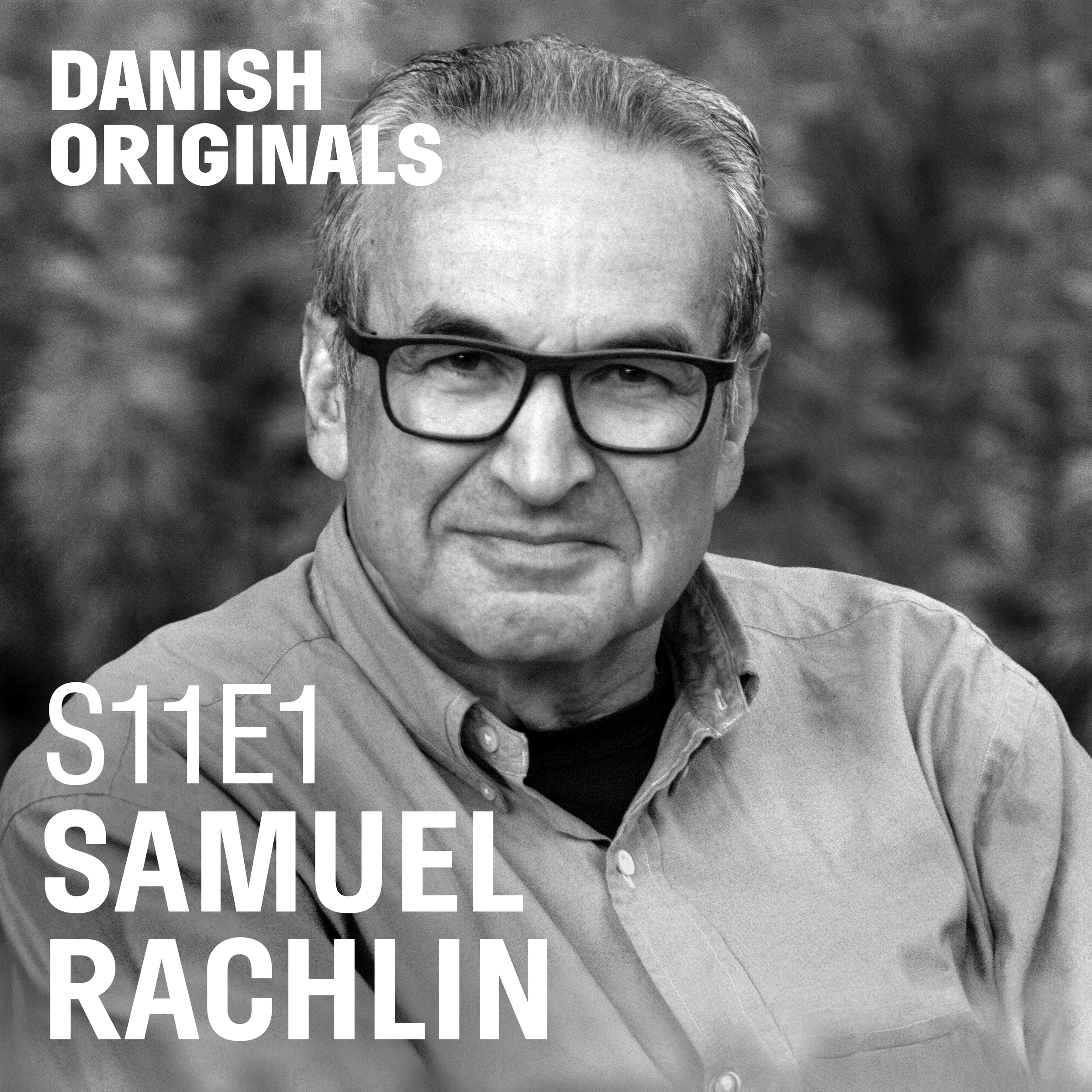
From a recording studio in downtown Copenhagen, Siberian-born Danish journalist and author of I, Putin, SAMUEL RACHLIN recalls his parents' journey back to Denmark from exile, when he was ten. He talks about his natural urge to understand Russia, discovering the US in 1976, and his roles as the first news anchor for TV2 in 1988 and first Washington Correspondent for TV2 in 1990. Returning from the US after 35 years, Samuel offers insights on the current absence of a rule-based world order.
Photographer: Balazs Veress
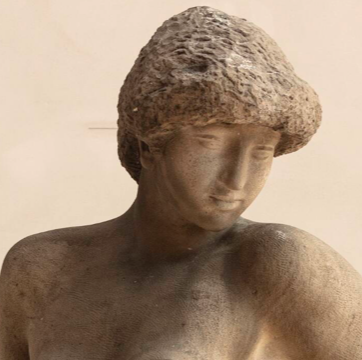
For today's episode, Samuel Rachlin chose Gerhard Henning's Stående nøgen pige or Standing Nude Girl from 1928–1929 from the collection of the National Gallery of Denmark, Copenhagen.
“I said that I felt it was my mission, but it was my professional drive and curiosity, and I felt I had been given some tools by having my background, my Russian background, my Russian studies, and my command of the language in a manner that people couldn’t hear that I was a foreigner. That opened doors for me.”
“I don’t shy away. I’m not a purist that they all should live up to the Mussolini formula or Hitler formula. Fascism is adapting to its present times, and it’s morphing according to the circumstances and conditions. So what we are seeing here and there, no one named, no one forgotten, is a version of a variety of fascism of the 21st century.”
“And I think the problem of journalists, correspondents, analysts, reporters today is that nobody has been there before us. Every generation experiences something new, but in this case, we are standing in a situation in which we have no tools to break through the smoke screens.”
Powered by RedCircle
This conversation with Asger Hussain occurred on January 27, 2026.
00:01
Samuel Rachlin
I have called them out. Fascists, modern fascists on one side, on the other side. I don't shy away. I'm not a purist that they all should live up to the Mussolini formula or Hitler formula. Fascism is adapting to its present times, and it's morphing according to the circumstances and conditions. So what we are seeing here and there, no one named, no one forgotten, is a version of a variety of fascism of the 21st century.
00:40
Asger Hussain
My name is Asger Hussain. I'm a film producer and guest host of Danish Originals. Our goal is to celebrate Danish creatives who have made a significant mark in the US.
00:52
Asger Hussain
Today's guest is Danish journalist and author Samuel Rachlin. Over a career spanning decades, Samuel has reported from the Soviet Union, then Russia, Washington, DC, and across Europe, often from the center of world-defining events.
01:08
Asger Hussain
He was the first Moscow correspondent for Danish national television and later served as a Washington correspondent, helping shape how generations of Danes have understood global power and politics. He is the author of I, Putin, Me and Stalin, and A Life Well Crafted. Samuel, it's a real honor to have you here with us today.
01:30
Samuel Rachlin
Thank you. Honored to be here.
01:33
Asger Hussain
Thank you. I'm in Silver Lake in Los Angeles. Where are you calling from today?
01:37
Samuel Rachlin
I'm calling from a studio in downtown Copenhagen, ten minutes walk from where I live near the Royal Theater.
01:46
Asger Hussain
Very nice, very nice. Samuel, where do you spend most of your days? You've been all over the world. Is your primary base Copenhagen right now?
01:53
Samuel Rachlin
I'm spending most of my time in Copenhagen and enjoying it tremendously. In the past year or so, I relocated after 35 years in Washington, DC. But in fact, I have spent, altogether, close to 40 years in the US. And then I spent seven years in Moscow and in between I came back to Copenhagen with my family in 1985.
02:24
Samuel Rachlin
Then we spent five years here before we went to Washington, DC where we stayed much longer than we had planned. We planned for a normal correspondent assignment, four, five years, six years max. But sometimes life takes its own turns and we lose track and control of our own lives. So the stay that was supposed to be of that length, four to six years, evolved into 35.
02:58
Samuel Rachlin
But now I'm happy to be back. I think my timing, as far as I feel myself, has been great, because the country I discovered in 1976 when I came to America the first time to spend a year at Columbia University and fell in love with, for better or worse, is not the same country I'm seeing now.
03:25
Samuel Rachlin
I've always seen the US with clear eyes, with its fantastic opportunities, possibilities, its beauty, and its downsides and the backyards and the less beautiful sides of America. But I fell in love with it and stayed in love through the years.
03:49
Samuel Rachlin
But when the political scene started to change after Donald Trump won his first election in 2016, and now with Donald Trump 2.0, it's a different country. So I'm happy to be back. I love Denmark. I love Copenhagen. I never fled the country or the city. Although I'm not a native, I feel at home.
04:16
Asger Hussain
And I think that's the unique point of view that many Danish people, or many Europeans share when they come to the US. They're allowed to have their own romanticized and non-romanticized love affair with the country, and have the ability to go back if the situation is right.
04:35
Asger Hussain
And you have to be clear-eyed about how you view the country. And you have that luxury, honestly, to really take a hard look at what's happening around the world and right now in America for sure.
04:48
Samuel Rachlin
All love affairs have their ups and downs and the same goes with one's relationship or views with a country.
04:57
Asger Hussain
It does. With that perspective in mind, I'd love to go back and understand where your story actually begins. Where were you born and where did you grow up?
05:05
Samuel Rachlin
I was born in Siberia, after World War II, in a tiny village in the middle of nowhere, as far away as you can come, almost. My parents had been deported. My Danish mother and my Lithuanian father, who met in Copenhagen in the mid-30s, fell in love, found a common language — it was German, by the way — married in Copenhagen, and moved to Lithuania.
05:39
Samuel Rachlin
My father was a businessman from a wealthy Jewish family. My mother came from another Jewish family in Copenhagen, much more modest surroundings and conditions. Her parents were refugees from Russia, from Belarus. They worked as tailors. They met, of all places, in Tivoli Gardens, the famous amusement park in the center of Copenhagen, through some common friends.
06:07
Samuel Rachlin
They saw each other, and they fell in love. They spoke German, as I said, with each other, and when they retold their own story, they used to say what happened to them was: verliebt (fell in love), verlobt (engaged), verheiratet, (and married). And that was a very romantic story.
06:29
Samuel Rachlin
They relocated to Lithuania. My older brother was born there. My older sister was born there. They had a happy life until history struck: World War II, Hitler, Stalin, the Molotov-Ribbentrop non-aggression pact from 1939 that divided that part of Europe between Hitler and Stalin.
06:57
Samuel Rachlin
After a while, the Soviet troops occupied — they love to say, they liberated the three Baltic states. They nationalized all private property, including all the property that belonged to my father's family. They were kicked out of their house.
07:15
Samuel Rachlin
And then when World War II started — rather, a few days before Operation Barbarossa, the code name for Hitler's strategy or plan to attack the Soviet Union and break the non-aggression pact in June 22, 1941, a few days before that happened, all the people who were considered to present a danger against the Soviet system were rounded up, arrested, and then after a day or two, put into cattle wagons and sent east.
07:55
Samuel Rachlin
No explanation, no destination. They didn't know anything. It turned out — the interesting thing about how history and politics play into a single family's lives and destinies — what happened was, it was not evacuation, it was not a rescue, it was a punishment because, as we later, many, many years later, found out, the status they got was they were socially dangerous elements, that's the paperwork that we came across later.
08:30
Samuel Rachlin
Then they became special deportees and were deported to Siberia. And that's how a few years later after the war, they ended up at what my mom called the end of the world. It was the delta of the Lena River at the Arctic Ocean. That's where they ended up, in a little fishing village where they had to work because there was a shortage of labor because of the war.
09:00
Samuel Rachlin
All men in the right age were recruited, mobilized for the army. They needed labor and they sent those people to work, almost like slaves, but they were not in a camp. They were not in a prison like other groups. It was in the same geographic area where the camps were, but they were in a different zone.
09:23
Samuel Rachlin
And that's where, after the war, I was born, not at the Arctic Sea, I was born in the south, in the middle of that area that was called Yakutia. It's a semi-autonomous, pro forma autonomous republic, the size of five times as big as France with a population less than a million people. But enormous natural resources and wealth of all kinds. Gas, oil, minerals, diamonds, gold, whatever.
09:55
Samuel Rachlin
And I was born there. My mother told me I was not a planned kid. I was an accident, she confessed, but she said it turned out to be a gift. Not many deportees got kids. Those were not the conditions to expand your families. But that's where I was born.
10:15
Asger Hussain
And mobility in the years to come, how did you make your way west?
10:22
Samuel Rachlin
I'm fascinated by the story of other families as well, because what I'm fascinated by is how the microcosmos of a family reflects the macrocosmos, the world, historic events, like it happened for those people who were deported like my parents. The paradox was they were not deported because they were Jewish. They were deported because they were socially dangerous, politically dangerous, unreliable, socially unreliable elements.
11:00
Samuel Rachlin
That was the formal label. It was a punishment, as I said before, but it turned out in their case it was a rescue. It saved their lives because two days after they were deported from that little town in Lithuania on the border with Germany, the German troops were on the very first day of the war.
11:19
Samuel Rachlin
And all Jewish families were rounded up on the first day and executed within a week, in a mass grave, just outside that little town, Kybartai, which I have visited. I have seen that mass grave. And it was just a coincidence that they were among those people who were deported and thereby saved their lives.
11:44
Samuel Rachlin
So that was a paradox and a happy story because it turned out to become a happy end. 40% of the people who were deported from the Baltic states during that period, they perished after two years from natural causes: sickness, disease, exhaustion, or froze to death, under those terrible conditions.
12:07
Samuel Rachlin
But in my parents' case, it became a happy end. I grew up there, the first five, six years in that little village on the Lena River. Then in Yakutsk, which is still the capital. That's where I started school in Yakutsk, in Yakutia, where I had a fantastic teacher, with whom I stayed in touch for many years and I learned to read and to write.
12:32
Samuel Rachlin
And then in 1956, after Stalin's death, and after Nikita Khrushchev took over, history, politics again reflected on our family's life. They could not move freely with that status. They had to register with the secret police every two weeks. And they could only move within a distance of seven kilometers from where they were registered and they had to register regularly.
13:02
Samuel Rachlin
But then in 1956 when we had moved, with permission of course, to Yakutsk, Khrushchev started the first wave of liberalization after Stalin. It's a period called, in Russian history and cultural history, the period of "thaw." The ice started to thaw and people like my family were allowed to move, not back to the place from where they were deported in the Baltic states or other places in the Soviet Union, but they could move more freely.
13:36
Samuel Rachlin
So we moved to Irkutsk. And at that point, my mom had succeeded in getting in touch with her family in Denmark. They had, of course, fled during the German occupation in 1943, as so many other Jewish families. Most of the Jewish families were able to evade the Nazi regime, the Nazi rule, and were smuggled into Sweden. And that happened to my mother's family too.
14:06
Samuel Rachlin
The Danish Embassy reopened its representation in Moscow. My father, he was fluent in Russian. My mother became quite fluent, she learned Russian. But my father read in one of the papers that the Danish Embassy had reopened its representation in Moscow. And then my mom said, oh, I wanna write to them and ask them to find my family. And that was impossible, of course.
14:29
Samuel Rachlin
Nobody among the deportees could contact a foreign embassy. But then my father asked a Soviet friend. Actually he was a manager at a place where my father worked as a bookkeeper in that village. And he was stationed there as a representative of the Soviet Ministry of Agriculture. And he went regularly on trips back to Moscow, back to the ministry.
15:00
Samuel Rachlin
My mom wrote that letter in Danish, of course, in her beautiful handwriting, but they couldn't post it. They couldn't mail it by regular mail. So he asked that guy, Yakov Ivanovich Klimov, if he could take that letter to Moscow and mail it somehow. And amazingly, he said, yes, of course I will do it, without any hesitation. He risked his life.
15:29
Samuel Rachlin
Asger, he risked everything, but he did it. He left, he took the letter. We don't know how he got it to the Danish Embassy, whether he put it in a mailbox or he went to the embassy location or whatever. But about six weeks later, my mom got a letter from the Danish Embassy. That was amazing.
15:50
Samuel Rachlin
In 1946, I think that was the year before I was born, she reestablished, gradually — she established a correspondence, they got her in touch with her family. So they learned that they had survived, that they were there with three kids now. And oh my God, that's a fantastic story. It's a miracle. And that Yakov Ivanovich was a hero, a living legend in the Rachlin family.
16:19
Asger Hussain
Did you get to speak to him or meet him again?
16:23
Samuel Rachlin
I tried to when I came back many years later as a correspondent. By then, my parents, we wrote their memoir, it came out in '82 at the time when I was in Moscow. And they described this episode. It's one of the many episodes of how the Russians outside of the Communist system, Russians as private people, how fantastic they were.
16:50
Samuel Rachlin
But I tried many years later, during the Gorbachev-Yeltsin years when I came back to Moscow for another TV station, and I had that idea that I should try to find him. And how do you do that? After all those years, I had his name and little about his whereabouts.
17:11
Samuel Rachlin
But then I heard about or learned about a TV program on Russian TV called Wait for Me, Zhdi menya. And that's a well-known concept when people are trying to find classmates or study mates or people they were in the army with or lost relatives. They had that program.
17:37
Samuel Rachlin
So I filmed an episode in Copenhagen at some famous spots — at the Little Mermaid, The Royal Theater, The Royal Library — beautiful spots in Copenhagen, and composed a video story where I told about this episode and the guy Yakov Ivanovich Klimov, and they aired it.
18:02
Asger Hussain
That is amazing.
18:03
Samuel Rachlin
And then I assumed that he had passed and he was older than my dad. By then we are talking about the '90s. But then I got a response from the TV station that they had a positive response from someone. They didn't tell me who and I should come. And at that time, I was working in Moscow for TV2.
18:27
Samuel Rachlin
So on my next visit we did a recording and the story was retold and it turned out to be his son. He had a son and a daughter. And I was very, very excited about it. And what could he tell about Yakov Ivanovich, et cetera, et cetera.
18:45
Asger Hussain
Sure.
18:46
Samuel Rachlin
My parents had passed, unfortunately, I couldn't involve them in it. I wrote an essay on this under the title "There's No Expiration Date for Gratitude."
18:57
Asger Hussain
It's a great title.
18:58
Samuel Rachlin
I wanted to tell the surviving members of Klimov's family — I didn't know if it was the kid, but that was my intention to tell the survivors what a hero he was. So I came to the studio and it turned out to be his son. I think his name was Vladimir. And we met and we talked, and I told him everything. It was filmed, of course, in the studio. But it didn't work, he didn't accept the situation, the concept. So it didn't play out.
19:35
Asger Hussain
Had he not been told the story from his family?
19:38
Samuel Rachlin
No. He didn't know. No, he didn't know the story. And it turned out the parents had divorced and it was apparently a bitter experience, not a smooth divorce. It rarely is. And he had a lot of hangups vis-a-vis his dad. And it was hard for him to see his dad being described as a hero. And he clammed up.
20:06
Samuel Rachlin
It was very sad. And then also, it turned out he had a career in some Soviet organization. He had been a party member and very loyal. He was older than me, quite a few years older. And he was suspicious of me. He thought I had a second hidden agenda, I wanted to make money on it or something. I don't know what exactly.
20:32
Samuel Rachlin
My parents' book — I found a Russian publisher, got it translated into Russian and got it published. And then there was a launch of that book at the Danish Embassy in Moscow. My sister was also in town. I had invited her to be there at the launch of the book. I invited him. He never turned up.
20:53
Asger Hussain
No, I can imagine. I can imagine. That's a fascinating story, Samuel. I am having chills just listening and trying to make sense of the whole journey. Also, the physical distances at the time. Each letter takes weeks, if not months, to get a response to, and then the anticipation of what may happen, and the way that your parents travel back, is really, really fascinating.
21:16
Samuel Rachlin
Maybe we went too deep into the past, but you take —
21:20
Asger Hussain
I was riveted, I was riveted. But I do want to just pinpoint your time in Denmark just a little bit. How much time did you spend there? At what point did that happen?
21:31
Samuel Rachlin
The interesting thing in the family was that my mom was Danish, she had married this Lithuanian guy, my father the businessmen, they spoke German, as I told you. My mom learned Russian. We grew up speaking Russian and German at home. My mom never tried to teach us Danish. I don't know why, but it never came up.
21:53
Samuel Rachlin
She read Han Christian Anderson fairy tales for us, she sang Danish songs, but we spoke no Danish. But we heard a lot, of course, and I grew up from the youngest age, I can remember, with the feeling that we did not belong there. We were not there in that strange country by our own will. I didn't understand the concept of prisoners or whatever the political implications, but I understood that we belonged somewhere else.
22:24
Samuel Rachlin
And then the miracle happened, that after that contact that I told you about with my mom and the Danish Embassy, she wrote, I think, hundreds of letters following that breakthrough in 1947 with the Danish Embassy and started applying for permission back in '46 when that contact was established, applying for permission for going back to Denmark with the family.
22:52
Samuel Rachlin
And everybody among the deportee community thought she was crazy just thinking about it. Nobody could leave that country, only if you tried to escape or flee one way or the other. But the miracle happened when we had moved to Irkutsk in 1956. A Danish Prime Minister was the first visitor who came on an official visit to Moscow after the Hungarian Rebellion in 1956, when the Soviet Union was sanctioned by the western countries, by the NATO countries, like we experience nowadays.
23:29
Samuel Rachlin
And he broke the ice by coming on an official visit as the first western Prime Minister to negotiate some trade agreements and Denmark should deliver some ships, we were big ship builders back then. And he had a meeting in the Kremlin with Nikita Khrushchev, which was quite exceptional.
23:51
Samuel Rachlin
And we know that story in detail because one of the ministers who came with him was the Danish Minister of Culture. And he took notes and later he published his memoir. And in that memoir he described how that meeting with Khrushchev and H.C. Hansen, the Prime Minister, took place in the Kremlin.
24:14
Samuel Rachlin
They sat around a table formally. And then the Prime Minister, our Prime Minister, goes, well before we start all the business talks and negotiations, I have just a tiny private matter of family reunification. And then he retold the story of my mom's family and another Danish family, and they wanted them to be reunited with their family in Denmark.
24:44
Samuel Rachlin
And Khrushchev looked at him like he was crazy, rolled his eyes and said, we don't discuss that kind of petty matters at this level. But he was not a quitter, H.C. Hansen. He was firm and insisted that this should be resolved. And eventually, Khrushchev nodded to one of the other ministers, I think it was Bulganin, and said, well take care of this. And that was it.
25:11
Asger Hussain
That is amazing. From the initial letters to the gentleman that helped you to the Danish Prime Minister, every single procedure was bended or broken or reinvented or reevaluated —
25:25
Samuel Rachlin
I tell you —
25:26
Asger Hussain
— in order to get to that one point that informed your family.
25:30
Samuel Rachlin
Exactly. Exactly. And that is again, another example of microcosmos and macrocosmos, how they meet. And sometimes, in our family's case, you can see that things not always go from bad to worse. Sometimes miracles happen and that happened in our family.
25:49
Samuel Rachlin
And we got a telegram from the Danish Embassy, a hundred words long telegram, explaining that there was this incredible breakthrough that we had gotten permission that we would get visas and that we could leave later in the year. And then in the summer of 1957, 16 years after they had been deported almost to the day, we boarded a train in Irkutsk straight to Moscow. It took about six days of train travel.
26:20
Asger Hussain
Irkutsk is in Siberia?
26:23
Samuel Rachlin
Irkutsk is sitting almost on the Baikal Lake. It's in the southeastern part of Siberia near the Mongolian border. We boarded that train, came to Moscow after six days, stayed one day, and then we were put on another train through Leningrad and to the Soviet Finnish border.
26:42
Samuel Rachlin
There is one interesting detail. My mom, after 16 years in Siberia, she didn't trust the system, over en dørtærskel, I don't know how you say it in English. She didn't believe in anything that came from the official authorities.
26:59
Samuel Rachlin
And she suspected that at the very last moment, they would make some provocation and put something in the luggage and prevent us from leaving the country. And she said, I cannot celebrate this until the moment we are across —
27:14
Asger Hussain
— in Denmark?
27:15
Samuel Rachlin
In that case, it was enough just to cross the Finnish border.
27:19
Asger Hussain
To the Finnish border. That is a story about perseverance. I am glad you shared it with us, 'cause you try to listen to it and understand, but even just imagining the scope of everything you just told us is, it's hard to grasp this moment.
27:36
Samuel Rachlin
What happened was they were stopped. Of course, like everybody, we were stopped at the border, searched by the border guards. And it took a long time. My mom was a nervous wreck. But then we crossed the border, we crossed the Iron Curtain, and that was a miracle.
27:57
Samuel Rachlin
Very few people, like Khrushchev used to say, nobody leaves the Soviet Union, only birds fly across our borders. In this case, with the birds there was a family that penetrated that Iron Curtain. And as I say, it was a miracle.
28:18
Asger Hussain
It is beyond imagination what that story must have looked like. So the Iron Curtain fell at some point and you couldn't get back to Moscow soon enough as a journalist?
28:30
Samuel Rachlin
No, it evolved in a different manner. I came to Moscow during the Cold War back in '77, during the Brezhnev rule. It took some effort to get to that point. I was ten years old when we came to Denmark. For me, it was a very easy transition. I didn't speak a word of Danish, but it didn't take me very long.
28:52
Samuel Rachlin
And I grew up in the western suburbs of Copenhagen, finished high school, and I kept speaking Russian and reading Russian literature as a kid and as a young man, and developed that interest for that country to understand and talk about it and tell about it. It was a natural urge to try to understand what that country was and to talk about it, tell people about it.
29:23
Samuel Rachlin
I graduated from the university in Russian studies, interestingly. I was drawn to it, and I was drawn to journalism. I published my first things when I was 18. I was fascinated by the profession of journalism. The first time I put my foot down in a newspaper building, when I presented an article I had translated from Russian, I was 18 years old, to an editor, and got it published.
29:51
Samuel Rachlin
It was about Boris Pasternak, the Nobel Prize winner in literature, a very controversial poet in the Soviet Union, a wonderful poet. And I was drawn into that profession from that moment and it evolved very organically. And I started working for different papers as a freelancer and then I got my first job at Danish Broadcasting in 1974.
30:21
Samuel Rachlin
And I wanted to go to an American school, an American university. I heard about Columbia University and the School of Journalism. I applied, I got admitted in 1976, and I flew to New York on my virgin journey —
30:34
Asger Hussain
— to the United States.
30:36
Samuel Rachlin
And I was a professional journalist already by that time, but I wanted to be at an American school. I wanted also to learn some of the ropes, some of the basics, of journalism. And I spent a year, I had a wonderful year, at the School of Journalism.
30:52
Samuel Rachlin
And right then, the Danish Broadcasting Corporation decided to open a correspondence post in Moscow. And I applied from New York. I got the job. And half a year later, I took off with my girlfriend, who became my wife, and I opened the first post for Danish Broadcasting.
31:14
Samuel Rachlin
And it was remarkable. I spoke Russian fluently. They couldn't hear I was not a native, it opened so many doors. And at that time, when I came to '77, the situation had softened up. It was after the Helsinki conference, the Helsinki Pact, that loosened even more than during the Khrushchev Thaw.
31:36
Samuel Rachlin
I could work in a manner that was unusual for many in the West. It was very restricted, still, but there was some space that I could exploit as a correspondent. I had a Russian crew — a cameraman, a secretary, a sound man, a driver. I had a crew. And I produced about 12 documentaries during the next few years. And in that sense, I opened the Soviet Union for Danes and made them understand what kind of a country it was. And it was very important for me because I felt it was my mission.
32:15
Asger Hussain
You actually touch on something that I wanted to ask you about. Today, we're getting news from so many different places and formats. When you are the first one, reporting from a country, a region, does that change the way you approach things or did it for you back then? Did you feel the weight of history at that time, given your own background, or did you go about it as the day-to-day mechanics of reporting?
32:38
Samuel Rachlin
I said that I felt it was my mission, but it was my professional drive and curiosity, and I felt I had been given some tools by having my background, my Russian background, my Russian studies, and my command of the language in a manner that people couldn't hear that I was a foreigner. That opened doors for me.
33:04
Samuel Rachlin
And I was in that sense, privileged. And I can reveal today, I can reveal a secret, that my method was that I didn't just want to find scoops, make scoops, the normal journalistic drive. I certainly wanted to have my own stories. I did have some scoops, but that was not the driver.
33:31
Samuel Rachlin
The driver for me was primarily to open the country and show what it was. I think it was a horrible, totalitarian system that suppressed its own people, and was, if to put it in more simple terms, a variety of fascism. But I didn't want to do it in a way that I would be kicked out, which you easily could be, like some of my colleagues were.
34:02
Samuel Rachlin
So my approach was just show what you see, just show what my hosts are proud of or want to show, if I could get access. So I did stories about bringing up children, the privileged class, as they were called, in the Soviet propaganda. My first documentary was about Russian children, how they bring up children, how children are born, how they are swaddled in the maternity clinic like mummies.
34:33
Samuel Rachlin
And how they are being in the older classes, like I was. When I was ten, I became a member of the Pioneer Organization. So I knew what it was like, and it still was the same all these years later, 30 years later. And in that sense, I was able to penetrate the cover and the protection and show what it was like. And that was more than enough.
34:59
Samuel Rachlin
And well, at the end, I started to get into trouble, and they probably figured out what my method was, and they started making things difficult for me. I got a fellowship at Harvard. And it was announced in Denmark, that after my tour, after seven years in Moscow, I would go and have a fellowship at Harvard. A Russian paper picked it up and indicated or insinuated it was a CIA sponsored fellowship.
35:30
Samuel Rachlin
So I became, gradually, a persona non grata. But it was a very productive assignment for me both professionally and socially because I got many, many Russian friends and I did really fantastic stories and documentaries. It was, I would say, the most productive period in my professional life.
35:52
Samuel Rachlin
And I enjoyed it tremendously. And I had very close relationships, both in private terms with friends, not so many in the journalist world, but I did have a few, but in the cultural sphere — theaters, literature. That was an important part of my life back then.
36:13
Asger Hussain
And you saw the beginnings of what was going to change with —
36:16
Samuel Rachlin
No.
36:17
Asger Hussain
When it went from the Soviet Union to Russia, or was that too early in those days?
36:20
Samuel Rachlin
It was too early. Gorbachev had surfaced at that time. I left in '84.
36:26
Asger Hussain
Okay.
36:27
Samuel Rachlin
I had covered the period that has gone into history as the period of the grand funerals, when one party's general secretary after the other passed. They started to die out. They were so old they had to be carried out. No one just left. They had to be carried out of the office.
36:51
Samuel Rachlin
But in that darkness of that period that was called the Stagnation Period, the Russians joked about it and said the blossoming stagnation, because it was totally frozen. So when I left, even if I had buried all these leaders from Brezhnev to Andropov to, not Chernenko, he was there when I left.
37:15
Samuel Rachlin
But Gorbachev had just surfaced and we were in a small community among foreign correspondents who had eyed him and followed him and saw him as something different. And he created a minor revolution when he broke through and he became the General Secretary in 1985.
37:35
Samuel Rachlin
But by then I was at Harvard and I followed it from a distance. And it was a very brief period, actually, it lasted only five or six years, and then it was over. A breathing hole. And then it was very fast back to the future. And then after Yeltsin, when Putin came into office in 1999, it was over.
38:02
Asger Hussain
You've written a book called I, Putin or Jeg, Putin in Danish, which is a tale of both the way that Putin came into power and how Crimea was annexed. I'd love to hear just a little bit more about this whole system of denying what's right in front of you and relaying a different truth, which I thought was very fascinating.
38:25
Samuel Rachlin
It's 25 years now —
38:28
Asger Hussain
I know.
38:29
Samuel Rachlin
Vladimir Putin has been in office a quarter of a century, and it shows how Russia's destiny is so frozen in history. You can describe it either that history doesn't want to let go, or they are unable of liberating themselves of the burden of their centuries-old history of serfdom, of totalitarianism, authoritarianism, autocracy, whatever you will call it. But that is the destiny, the historical destiny of Russia through centuries.
38:13
Samuel Rachlin
Its full history is only one storyline. And we are back at it after a brief break during the Gorbachev years. He was a miracle too, like the Rachlin family was on the micro scale, a miracle in our family's case, he became a national and a global miracle. 'Cause it became a geopolitical factor during his rule, and when the Berlin Wall came down, it was a very brief moment.
39:43
Samuel Rachlin
I wrote I, Putin in 2014 when the invasion of Ukraine, the first invasion of Ukraine, started in March 2014 and led to the annexation of Crimea. That was a precursor, that's how I saw it, and that's what I write in that book, that it was not just an attempt to annex and take back what they considered to be ours, but a precursor of what was to come. And we didn't understand.
40:18
Asger Hussain
In your book, there is an interesting quote, and I'm not sure if I remember it right. It's from the chess champion Garry Kasparov. He says the Kremlin doesn't like chess because it has fixed rules, but unpredictable outcomes.
40:34
Samuel Rachlin
That's true.
40:35
Asger Hussain
He says the Kremlin prefers no rules and predictable outcomes. Was that what you were mentioning back in 2014? Or were you witnessing in 2014 that regardless of what Russia is saying and what Russia is doing, the end goal is still going to be the same?
40:52
Samuel Rachlin
I'm a big fan of Hannah Arendt. I have quoted her prolifically over the years, not in I, Putin, but later on. And in her most important work, The Origins of Totalitarianism, she has described the concept and the mechanism that dictators and authoritarians and autocrats use as their tool.
41:20
Samuel Rachlin
Permanent instability — that is what they want, and the insecurity, the chaos, it's a kind of a political chaos theory, that helps them control the masses and seduce the masses and suppress the masses as dictators have done. She uses Stalin and Hitler as examples, but it turns out, all leaders of that ilk, with those ambitions, use that same technology to create instability.
41:52
Samuel Rachlin
And in the same trilogy of The Origins of Totalitarianism, she has that wonderful, one single sentence of how they operate: "Everything is possible and nothing is true." All dictators, all autocrats, lie. And they use the lie as leverage, as their tool, to break through anything, and they are unstoppable.
42:23
Asger Hussain
And I think we've seen that in several places in the world. We are seeing things reported on screen, on video that is being disputed in real time.
42:34
Samuel Rachlin
It plays out in front of our eyes today. And I don't shy away from saying that we talk always about what Putin has against Donald Trump. Why can he get away with all this, without Trump responding and reacting? It's an eternal question and I meet it all the time. What is it that Putin has on Trump that he can do all this, get away with this?
42:58
Samuel Rachlin
And I say, he may have something, I don't know, but I don't care about that. I think it's more important to see what they have in common. They think alike. They act alike. And they use the same methodology, the same political tools. And they share a lot of attitudes, values, and thinking. They get along much better than anyone would have expected.
43:24
Samuel Rachlin
And while Trump doesn't hesitate to punish Greenland and Denmark and other countries, he seems to be holding back, he's shying away from using the same approaches and the same toughness towards Putin. Why? Not because I think that they have some compromising material of one kind or the other. They think alike and they act alike.
43:50
Samuel Rachlin
And that's a fascinating aspect of our times today. The curse of history in my view is that we contemporaneans are always blind to what we see around us now and here. And that is very disturbing. But that is a fact. We can't see what is gonna happen just around the corner. That's one aspect.
44:18
Samuel Rachlin
The other curse is that we don't learn anything. Asger, we don't learn from history. I have developed that view and that is really the biggest frustration. We don't see that. I don't think history is repeating itself, but there are things that are circular and we recognize it from the past and we should not shy away from calling things by the right names.
44:46
Samuel Rachlin
I have called them out. Fascists, modern fascists on one side, on the other side. I don't shy away. I'm not a purist that they all should live up to the Mussolini formula or Hitler formula. Fascism is adapting to its present times, and it's morphing according to the circumstances and conditions. So what we are seeing here and there, no one named, no one forgotten, is a version of a variety of fascism of the 21st century.
45:20
Samuel Rachlin
We have seen a development from the day Putin came into office in 1999 through the 25 years that have passed, of a consistent evolution in only one direction. And then my point in I, Putin was to make a warning that this was not a finished story.
45:40
Samuel Rachlin
And in another book that I wrote later in 2016 about the history of the Cold War for a new generation, for the generations after us who did not live during the Cold War, who didn't see the Berlin Wall coming down or the Iron Curtain disappear. I objected when other analysts or writers said that we are going through another period of the Cold War back then in '16, '17.
46:09
Samuel Rachlin
What I saw was that what we were living through was a precursor of war. I wrote that in 2016, and I think what we are seeing now around us is coming through. Unfortunately, I didn't want to be proved right. But that observation seems to be holding.
46:31
Asger Hussain
It is. It's disheartening to see in real time. But I want to ask you, how would you report on this today in real time if you were moving to Washington DC or moving to Moscow as a foreign correspondent again? You're a TV news anchor. How does one go about even comprehending what's going on and looking around the corner?
46:55
Samuel Rachlin
I've been thinking about it quite a bit. I still comment on current events and affairs.
47:01
Asger Hussain
Of course.
47:02
Samuel Rachlin
I publish in Danish newspapers and magazines. I appear on television and on radio, and I think a lot about it. And I think the problem of journalists, correspondents, analysts, reporters today is that nobody has been there before us. Every generation experiences something new, but in this case, we are standing in a situation in which we have no tools to break through the smoke screens.
47:37
Samuel Rachlin
And we don't even have a language to describe. For instance, both what Putin is doing in Ukraine and what Donald Trump is doing in America, to America and to the world, whatever it is, Venezuela, Greenland. Whatever he touches, we lack tools to penetrate this masquerade, this political game, these layers of lying. And it's unprecedented.
48:14
Samuel Rachlin
We have nothing to compare it with. That's a huge handicap, and that's why I see many representatives in the media report everything as they reported in the past without being able to see that these are smoke screens, these are lies. You cannot use our tools from the Cold War, for instance, from my generation, applied to what we see today.
48:43
Samuel Rachlin
We need to rethink this whole thing. We need new concepts. We need to be much more cynical, and not shy away. The rule-based world order is gone. We are seeing a change from the old world order where there was some predictability even during the worst confrontational times during the Cold War.
49:09
Samuel Rachlin
It's unpredictable because we are dealing with powers and personalities that don't fit any forms that we used to apply in the past. And in that sense, they win over us, who are trying to break the code and trying to understand and communicate this to our viewers and listeners and readers. It's a huge, huge challenge.
49:39
Asger Hussain
I do firmly believe though, that the way you describe your family's journey and that one tiny strand can inform the greater, I do think people are trying to a certain degree. Our conversation here today, I think, is one of those things. You're shining a light on something that people should think about in a different way. And I think that is what you can do, alongside other things, perhaps.
50:03
Samuel Rachlin
We must never give up. But it's hard not to feel powerless or overwhelmed by the strength and massiveness of the political events that are coming like an avalanche, or like a tsunami. And we are very small. It's easy to feel very small against those forces that are at play all over the world, but especially between the three big, Russia, the US and China, that are coming together in a way that is intimidating.
50:43
Samuel Rachlin
And what tools do we have? The media has an important role. And then of course our politicians, they have to be steadfast and hold against the currents, but it is not easy. Our prime minister in Denmark has been in a tremendous storm. Unprecedented. No one of her predecessors has been in a situation like that. We haven't seen any more serious crisis in Denmark in terms of politics since World War II.
51:15
Asger Hussain
I saw a little picture, a little clipping somewhere on the internet yesterday that Mette Frederiksen, the Danish Prime Minister, had visited the British Prime Minister. And she had spent some time in his holiday home or some place outside of Downing Street.
51:31
Asger Hussain
And she had written in the guest book, from the Danish Prime Minister to the British Prime Minister, and she said, "We'll get by with a little help from our friends." I thought that was a very lucid and heartening thing to say in a situation like this.
51:47
Samuel Rachlin
She knows her classics. And I noticed that. You are absolutely right. And it's very encouraging to see those political leaders who are coming together. Mark Carney's — the Canadian Prime Minister's — speech in Davos, Alexander Stubb is a towering person. Vladimir Zelensky. I'm mentioning my present heroes. And our own Mette Frederiksen. They are stars and they are standing up. They're not quitters.
52:24
Samuel Rachlin
There is one interesting aspect I would like to raise. There is this cliché to describe the evolution in the transatlantic relationship. The Europeans say, now we are home alone. It makes me furious. I say, no, we are not home alone. Rather, Donald Trump is isolating America. So they would, at one point, if they continue going in that direction, they will be home alone.
52:50
Samuel Rachlin
But for the Europeans, I see this as a chance, that this is their hour. This is their chance to shine and to stand up and to rise and become a full fledged great power if we can come together as Europe, as the EU, and be a force in terms of politics, economics, military, defense issues.
53:19
Samuel Rachlin
We are powerful if we get our act together, but we cannot sleep anymore. We have slept long enough under the cover, under the wings of Big Daddy. In positive terms, we owe America a lot, but it seems that that time is over, at least for a while. Not forever, maybe, but for a while.
53:42
Samuel Rachlin
And we have to show that we can stand up for ourselves and also that we can come to the help of those Americans who we see as like-minded. We Europeans have a lot to pay back to the US in a historical context. Over the years, America has really come to the rescue of Europe, time and time again.
54:09
Samuel Rachlin
It's payback time also for Europeans to stand up and support those Americans. There is a new silent majority of Americans, who are going against the grain of MAGA, against the grain of Trumpism. Again, let me repeat myself, it doesn't necessarily have to be that we go from bad to worse. Sometimes it goes the other way.
54:42
Asger Hussain
You are living proof.
54:44
Samuel Rachlin
Thank you.
54:46
Asger Hussain
Because I'm going to take that story with me and I'm gonna tell it to more people if I'm allowed to, but you just put it out in the world.
54:53
Samuel Rachlin
Asger, I hope that it will also play out in the bigger part, that the stories of the microcosmos that I have been circling around will also play out in terms of macrocosmos when global relations are concerned, when geopolitics is concerned. And we should hope that the positive forces still can play and can survive and can be victorious.
55:23
Asger Hussain
With that, we're gonna wrap up today. And I want to end on a personal note, which I feel is appropriate given the stories that you've told us today. I probably first heard you when I was six or seven years old at night, at evening news, TV Avisen as it was called. You would call in and there'd be a tiny little picture of you on the screen where I suppose Moscow was.
55:49
Samuel Rachlin
Probably yes.
55:51
Asger Hussain
And you knew the news had started when it said that "Samuel Rachlin fra Moskva." And that was how it was done. And it is an absolute treat to circle back with you now, four decades later. And actually get to speak to you and ask you some questions.
56:08
Asger Hussain
And I hope our listeners have been as riveted as I have and emotional actually. You're not the only one here. I think these are important things to share with the world. And I just wanna say thank you one more time. It was such an honor.
56:22
Samuel Rachlin
Thank you to you, Asger. It was a pleasure.
56:26
Asger Hussain
For today's episode, Samuel Rachlin chose Gerhard Henning's Stående nøgen pige or Standing Nude Girl from 1928–1929 from the collection of the National Gallery of Denmark.
56:42
Samuel Rachlin
You have asked me to pick a piece of art from our national gallery, Statens Museum for Kunst. And I didn't have to think very long because I'm biased, since the museum in its art collection has a sculpture by Danish sculptor Gerhard Henning. And the title of the sculpture is Standing Nude Girl.
57:06
Samuel Rachlin
And I have a special personal relationship with that sculpture because I found out, or my mother told me, she was the model for that fantastic sculpture.
57:18
Samuel Rachlin
When I was a young man, she told me the story — she was modeling for it in 1928, she was around 20 years old — and asked me if I wanted to see it. And then she took me to the museum, I saw it, and I was flabbergasted. It's a voluminous, beautiful sculpture. My mother as God created her, and she was a beautiful young woman.
57:42
Samuel Rachlin
We included that story in one of the volumes of my parents' memoir and my mother reluctantly told the true story of how it happened. When my mom showed me the sculpture, which was standing outside the museum in the park, I was stunned. Wow.