
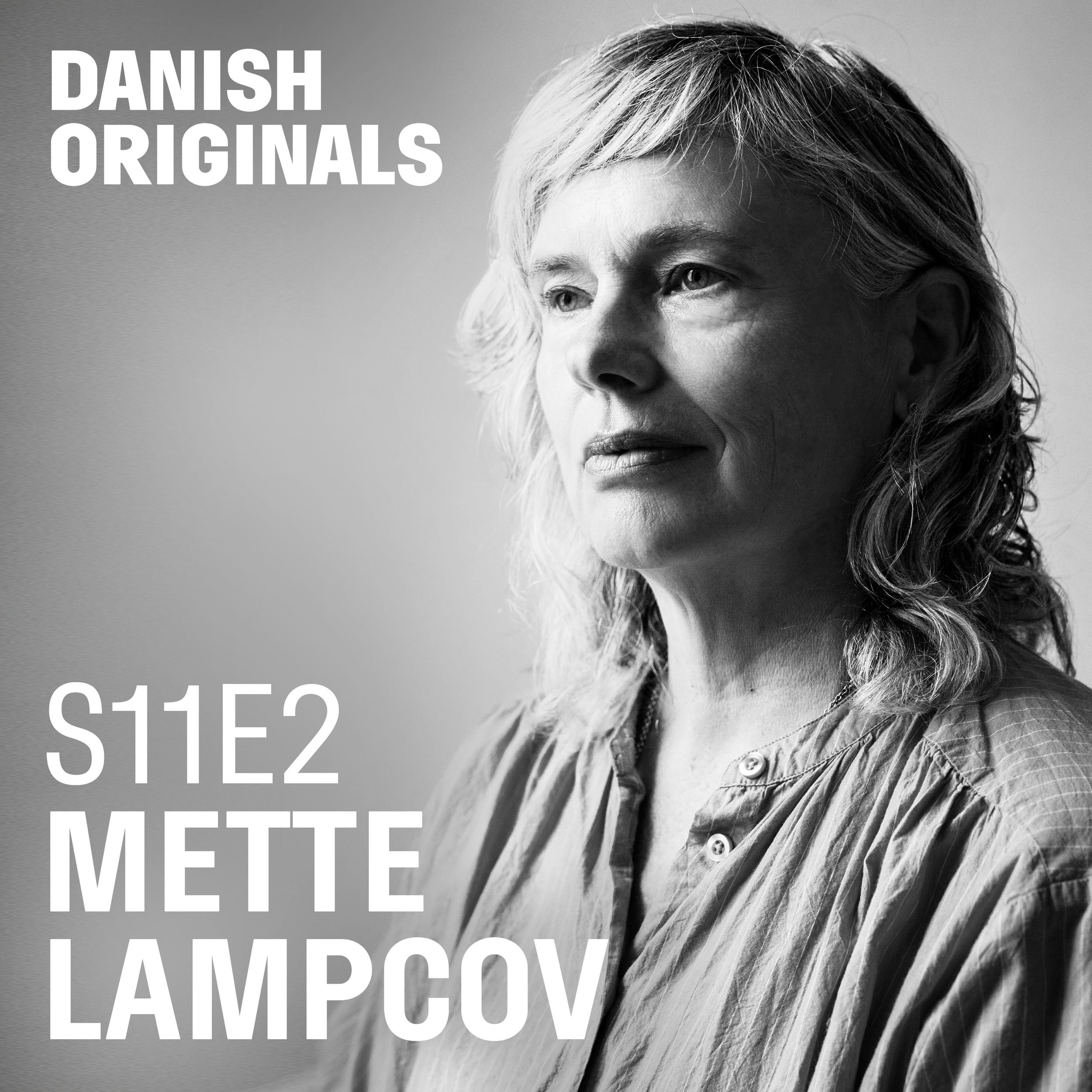
From her home in Mar Vista, Los Angeles, Ølstykke-born, Málaga, Spain-raised Danish photojournalist METTE LAMPCOV discusses her work in California documenting climate change and the work of undocumented agricultural workers. With expertise in water, forest, and fire ecology, she revisits her work on the Salton Sea and the Sequoia National Forest. Throughout, Mette shares her thoughts on the state of journalism and photojournalism, AI, and the effects of current US politics on her work.
Photographer: Bruce Lampcov
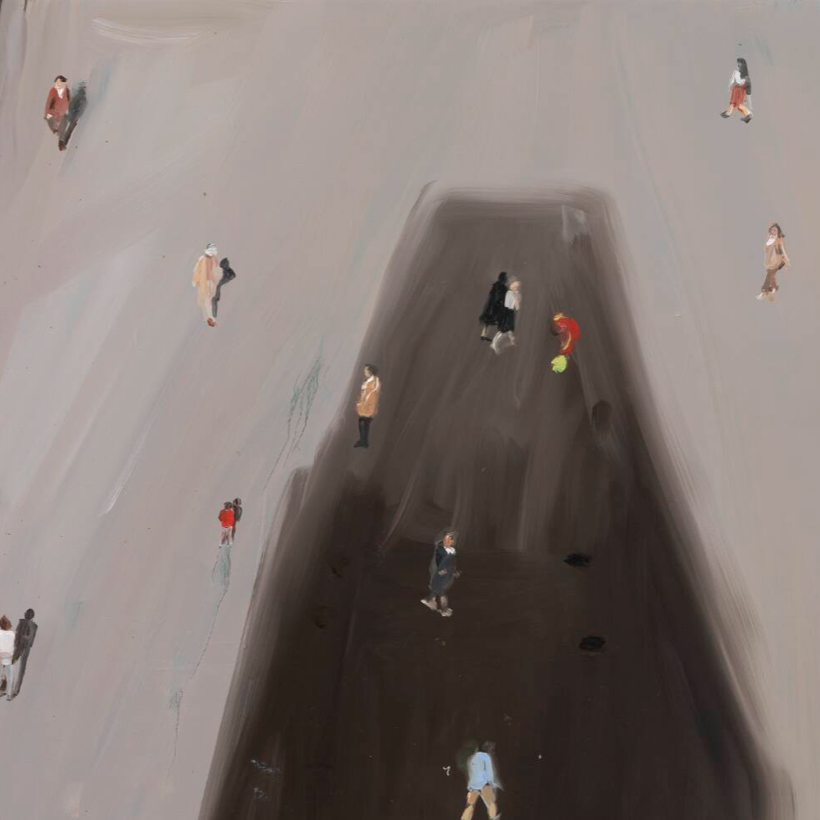
For today's episode, Mette Lampcov chose Anna Bjerger's Square from 2019 from the collection of the National Gallery of Denmark, Copenhagen.
“I felt I had spent my career working on trying to talk about climate change. And the way I’ve always thought about it, is if the publications I pitch to, allow me to tell nuanced stories and people read them enough, maybe we understand what’s going on and the real severity and reality of it.”
“I’m always interested in seeing what most people don’t get to see. And again, it goes back a bit to nuance. I’m really interested in getting into places or being in places that maybe most people might not see, or if they see it, it might not be obvious what’s happening. And so I really love that.”
“Photography and photojournalism are there to record something and to hold people accountable or prove that this one event happened or this does exist, so that moment in time with photography holds still as a moment in history. That’s why photography is so important. It stops for a moment and records a moment that we can’t remove.”
Powered by RedCircle
This conversation with Gregers Heering occurred on January 7, 2026.
00:01
Mette Lampcov
I felt I had spent my career working on trying to talk about climate change. And the way I've always thought about it, is if the publications I pitch to allow me to tell nuanced stories and people read them enough, maybe we understand what's going on and the real severity and reality of it. And now there's a government in place that's pushing it all to the side and basically saying, we don't have to care, we can just do whatever we want, we can be greedy, we can ignore everything. I felt my breath was taken away. I was kicked.
00:43
Gregers Heering
My name is Gregers Heering. I'm a photographer and guest host of Danish Originals. Our goal is to celebrate Danish creatives who have made a significant mark in the US.
00:55
Gregers Heering
Today's guest is Mette Lampcov. She is a Danish photojournalist, and we are so lucky to be in Mette's home. So, Mette, welcome to the podcast and thank you for having us.
01:10
Mette Lampcov
You're welcome. Thank you for having me.
01:14
Gregers Heering
In these times where a lot of meetings are virtual, it's an extra privilege to be here in your home. You have a lot of artworks by other people, but you also have some of your own beautiful photographs. I just want to tell the listeners that it is a manifestation of how different it is to see photography on a print in a frame versus on a computer or on a phone. It's really a privilege to see your work, beautiful and impactful, "live."
01:47
Mette Lampcov
Thank you.
01:48
Gregers Heering
I thought the first question before we get into your origin, how you got here, would be, let's imagine that money is limitless and logistics is not an issue. Where would you go tomorrow and bring your camera? What is on your mind these days?
02:09
Mette Lampcov
I think I'll always go back to where I started, in a way. My first fascination is water. I started my curiosity with photography in California due to drought, and living through a drought and wondering why there's no water, that being pretty foreign, after having lived in London for quite a while, 'cause there was enough water in London.
02:32
Mette Lampcov
If I could do something that I haven't really studied enough, it is to do the Colorado River. I would love to go down there, spend months on a boat, hiking in and out from the river, understanding the importance of that river to the west, the western United States, and the impact it has on people's lives from the food we eat to the water that comes out of our taps.
02:59
Mette Lampcov
The Colorado River provides water for a big part of LA, but it also provides water to, I think it's five states, I might be wrong, and now the river is shrinking. There's less water in it. Some states use the water in a very unregulated way. And also, water agreements have been in place that shouldn't probably be there any longer.
03:22
Mette Lampcov
So there's a lot of political stuff going on with that too. I have gone down a bit of the Green River that feeds the Colorado, and it's amazing. One of the best things I've ever done.
03:37
Gregers Heering
Is that something we can expect you to do?
03:39
Mette Lampcov
No.
03:41
Gregers Heering
Okay. And what are the implications?
03:43
Mette Lampcov
Yes, I could say, you know what? I'm gonna really study this, I'm gonna do this. But I really decided that I would work in California. I live in California, I can get in my car, I can get to certain places. I work on the Salton Sea, that's the Colorado River, but I stay in California, I work on California issues. That's my expertise, that's where I do all my research.
04:11
Mette Lampcov
Most of the work you'll have seen of mine that's decent sized stories, is my pitch, my ideas. And that comes from a lot of years of research and knowledge and connections. I believe we all should work on things we really know about, and we should not just helicopter in and pretend we know something.
04:30
Mette Lampcov
So I believe my job is to stay in California to a certain extent. Yes, if I did all the research, I had all the knowledge, I built all the connections, yes, I could go and do the Colorado. But the Colorado is a very big river that goes through a lot of spaces. And I think maybe I'm very much a photojournalist or documentary photographer.
04:50
Mette Lampcov
I like longer projects. I don't really like news, I don't really want to work in news, but my stories are connected to news. I like indepth nuanced storytelling. And so, there's no reason I couldn't do it in one sense, I would just have to free my brain of the journalist in me.
05:11
Gregers Heering
Okay. Interesting. Are you doing any photographic projects in and around your neighborhood where you live?
05:18
Mette Lampcov
No, not really.
05:19
Gregers Heering
Okay.
05:21
Mette Lampcov
No, I'd love to work in LA and do more work that's connected to LA, but right now, no. I've photographed in LA, I've had work, but there's a difference between my projects and work. And I do get called for news stories, and that's nothing to do with me. Do you know what I mean? They call me and they ask me to go out and photograph something, and it's often connected somewhat to what I do. But no, there's nothing in LA for me right now.
05:52
Gregers Heering
It's really interesting what you say, that what you do is centered around where you live, to a certain degree. You've seen a lot.
06:01
Mette Lampcov
For a while, photographers working for papers would parachute in and go somewhere and work there for four days and leave. That can, to an extent, come across as slightly colonialist, depending on what you're doing. I'm not saying it's right or wrong.
06:15
Mette Lampcov
But I decided, if I want to do this, I want to get really good and have a lot of knowledge about my area because then I have something to provide to the reader. So the editors who want to work with me, I become an expert in something and they will call me. So I made it my job to get really good.
06:34
Mette Lampcov
The way I look at it, I'm really good from around San Francisco and down, about water issues, fire, flooding. I know the Central Valley incredibly well. I know the Eastern Sierra, the High Sierra really well. I have worked with fire ecologists, with all these scientists or people. I call them, I interview them to know what they're working on, and so that makes me the person that can work in that area.
07:00
Mette Lampcov
My thing is, I want to be able to get in my car and drive somewhere in eight hours. If I have to sleep one night and drive to Northern California, that's fine, I'll do that. But I'd rather know my area, have connections, have some expertise, know where I'm going and understand it because I think that's my job.
07:16
Gregers Heering
Okay. So tell us about the first photograph you made that made you realize that this was actually something you wanted to pursue. What was the first memory of that happening?
07:31
Mette Lampcov
So that has nothing to do with any of this. The first picture … I don't know whose camera I used. I'd actually been studying fine art. Then I did jewelry design in London, got here, and I could not find a jewelry school. I wanted to do goldsmithing. And I was really frustrated.
07:49
Mette Lampcov
And then signed up for a course at UCLA in photography and I got a pretty cheap camera and played around with it a lot. And I'd always taken pictures my whole life with little point and shoots and annoyed the crap out of people with them.
08:05
Mette Lampcov
I also have been in fashion, so my mind was straight away to portraiture and fashion and makeup and stuff. I put some makeup on my daughter. I put her in a jasmine bush with lots of flowers around her, and I ended up taking this really beautiful image that I still love. And I thought, wow, this is fun. And there's a black and white image over here. It was the same day.
08:29
Gregers Heering
Yeah, I saw that. Beautiful.
08:32
Mette Lampcov
And then I took this course and my curiosity led me somewhere else. We used to live in Malibu. I would go out to Oxnard a lot and I'd see people working in the fields. And that fascinated me. So I think my next step was actually ending up in the fields where agricultural workers work.
08:48
Gregers Heering
Fascinating. And where are you from in Denmark?
08:52
Mette Lampcov
I'm from Ølstykke. It's half an hour, 45 minutes north of Copenhagen up from Roskilde. I left when I was 11, so I have very vague memories of that place.
09:06
Gregers Heering
Okay. And when you think back to that time, do you think you always had that feeling in you that you would leave?
09:14
Mette Lampcov
My parents emigrated to Spain, so I grew up in Spain.
09:17
Gregers Heering
Oh, okay. And where in Spain?
09:20
Mette Lampcov
In Málaga. I grew up in Spain and I went to a Swedish school, and then I went to an English school, and then I left when I was quite young, moved to Madrid.
09:32
Gregers Heering
Fantastic. And how many years were you in Madrid for?
09:34
Mette Lampcov
So this is a whole other story nobody really knows about me. I was modeling for quite a while, and so I lived all over the world. I would travel everywhere. So I was in Madrid, Barcelona, Hamburg, London, Tokyo, and New York.
09:50
Gregers Heering
Wow, okay. Wow. You've done a lot. And then you came to the US because of your husband?
09:58
Mette Lampcov
He had an opportunity for a job and we lived in London and I had gotten really sick of the gray weather and I thought, this could be fun. So we moved here. We ended up going to Malibu, the kids went to the local school. And I really did not like it to begin with. I really struggled with America and the culture here.
10:23
Gregers Heering
Why? Can you put a few more details in that?
10:25
Mette Lampcov
I'm pretty political and I just struggled. I struggled with not national healthcare. I struggled with education principles. When I first came here, to be honest with you, I thought I came from a society where — and I think that's where I'm still Danish — to drive around in massive cars is very ostentatious and vulgar.
10:49
Mette Lampcov
And I just thought people, the way they show money, is the bigger the car they have or maybe the jewelry or the plastic surgery. And I just found it very lacking in being a little deeper, maybe. Superficial. So it frustrated me. And it frustrated me in making friends and relating to people.
11:12
Gregers Heering
And how many years have you been in the States?
11:14
Mette Lampcov
19, 20 years.
11:17
Gregers Heering
Okay. That's a while.
11:20
Mette Lampcov
Yes. Too long.
11:22
Gregers Heering
And where would you say your relationship is with Denmark these days?
11:27
Mette Lampcov
So when I first left Denmark, we'd go back all the time as a kid. We'd go to Denmark every summer. I still had a strong connection to family and even seeing old school friends. That totally changed when I didn't live with my parents anymore and I really didn't go back a lot. I would go maybe once a year.
11:45
Mette Lampcov
Then when I had kids, I would never go, maybe every five years. But then since the pandemic, we started going back a lot. And we've been back every year and I was just there for three weeks and in fact, we are thinking of moving back.
12:02
Gregers Heering
Oh, okay. And what do your kids think of that?
12:07
Mette Lampcov
They think it's a fantastic idea.
12:09
Gregers Heering
Oh, that's amazing. And why do you think that is?
12:12
Mette Lampcov
I think the kids think that it suits us better. I miss Europe. I miss the sensibility and how people live. It's confusing. We've lived in a lot of places. I think of myself as more of an international person. I don't think I really belong anywhere. I like doing a lot of things and traveling a lot. So I would just like to maybe be based somewhere, but never be based anywhere. That would make me happy.
12:36
Gregers Heering
And your American husband, also, is excited about that idea?
12:40
Mette Lampcov
Oh, even more than me. He loves the idea of being in Denmark. He's already made lots of connections with artists in Denmark.
12:46
Gregers Heering
Okay. So let's imagine that you do go back. What do you think would be one of the first things you would throw yourself into from a photographic perspective? Have you missed anything that you would want to reconnect with your camera?
13:01
Mette Lampcov
So I'm taking a bit of a break from photography at the moment, so we can get into that.
13:06
Gregers Heering
Oh! Yes, please.
13:08
Mette Lampcov
Yes. So I think one thing about — I say photojournalist, 'cause most people, if I say documentary photographer, they have no clue what that means. I think we are very sensitive people and I get very connected to the stories I do. I really dive in very, very deep.
13:29
Mette Lampcov
As an example, when I worked in Sequoia, I was for three years back and forth to Sequoia National Park. I worked very closely with the main scientist up there and ended up doing two and a half stories in The Guardian, and then a bigger one for Sierra magazine that I actually worked on for eight months. And it was one of the biggest stories they had done.
13:52
Mette Lampcov
So when Trump got voted in again, I just gave up. I felt I had spent my career working on trying to talk about climate change. And the way I've always thought about it, is if the publications I pitch to, allow me to tell nuanced stories and people read them enough, maybe we understand what's going on and the real severity and reality of it. And now there's a government in place that's pushing it all to the side and basically saying, we don't have to care, we can just do whatever we want, we can be greedy, we can ignore everything.
14:35
Mette Lampcov
And that comes from climate to gender issues, in the sense that we can become machismo and take away women's rights and take everything away that actually gives us equality in the world and knowledge and reality, and not make fake made-up stories that have nothing to do with reality. And I come from fact and working with scientists, and I tried to be the middleman in that, or middle lady.
15:02
Mette Lampcov
I felt my breath was taken away. I was kicked. In my opinion, I felt, why am I even bothering? And I think right now, what's happened to a certain extent is the news is all about Trump and what he's doing. So cutting through that is really hard. And the reality is, I would say, people are hiring more men, and that's already been an issue a lot, that women work a lot less than men.
15:29
Mette Lampcov
And I just thought, I can't keep fighting, so I just am taking a big breather and it's really hard. It's a real struggle because my brain works totally on stories. My brain is always, what can I tell, what can I do? But I feel right now it's not worth it. So I actually do ceramics.
15:51
Gregers Heering
Oh! Beautiful.
15:52
Mette Lampcov
So that's what I do now. I've always done that.
15:56
Gregers Heering
And so even moving to a different country such as Denmark, where I believe some of these values that you care about are still more intact, wouldn't necessarily give you the motivation to feel that it's worth doing the work? I guess there would be other outputs to consider. You could make books, you could make newsletters and all that. Would the output have to be through the news media to make sense to you?
16:23
Mette Lampcov
No, not at all. And I think that's what I'm trying, what I'm processing. I think I'm trying to work out what I can do next. I never want to stop photography. I just need to take a bit of a break and breathe. For me, it's more what's next? How can I use this format that I love? To me, it's like painting. I paint with a photo, I see things, I want to tell something. It's more reassessing, how can I do something different?
16:52
Mette Lampcov
And I haven't worked it out yet, the process of maybe removing some of my journalist brain, because I think it actually limits you. And I need to free up. I need to feel freer again and go, I can photograph so many things. And I think I got used to saying, I have to photograph and tell people about tree mortality.
17:13
Mette Lampcov
Millions of trees are dying in the High Sierra, this is a massive thing, we need to talk about wildfires — the things I've learned, and pushing to do that. And my brain was so engaged in that. And my passion, I really care deeply. And I think I have to just realize there are sweeter things in the world too, softer things. Because I was very much into hard access, hard stories, and hard stories to tell people.
17:44
Gregers Heering
Do you think young people care about the news today?
17:50
Mette Lampcov
Yes. I think they do. And I think they really care about climate change, they care much more than our generation. I think young people, and I don't know, when we say young, what we mean, get too much news from their phones.
18:03
Gregers Heering
And now you won't know whether an image is computer generated or the real thing.
18:10
Mette Lampcov
I think it's pretty easy to see AI slop.
18:12
Gregers Heering
It's getting better and better.
18:13
Mette Lampcov
It is. And it's gonna get even better.
18:18
Gregers Heering
Yeah. So I want to go a little bit back to this hidden force that made you fall in love with photography, and still drives you. You just mentioned that it's something you will never give up. And as a photographer myself, I've always been fascinated by what that force might be about. You were mentioning that you annoyed a lot of people with your little cameras. What do you think that desire, that drive, that need is, to take the role of a bit of the outsider looking in?
18:50
Mette Lampcov
I'm always interested in seeing what most people don't get to see. And again, it goes back a bit to nuance. I'm really interested in getting into places or being in places that maybe most people might not see, or if they see it, it might not be obvious what's happening. And so I really love that.
19:15
Mette Lampcov
And I really love showing beauty. Often my images, when I've had exhibitions, often people say paintings, I'm like, no, it's a photograph, all the time. And I think I have an obsession at the same time with beauty, I really am attracted to try and get something together that creates something beautiful, so it draws people in.
19:37
Mette Lampcov
And you mentioned this a bit in the beginning. I think photography has something that brings us in. I think we've gotten so used to moving images and fast short videos on TikTok or Instagram or whatever media, or even in newspapers now that have converted a lot to it. There's something about just seeing an image, something that puts time still, it's taken, and it will remain there.
20:07
Mette Lampcov
And we have a bit of history. And I always think I'm probably going on a bit now that photography is always interesting as time passes. There's nothing better than looking back at a photo and going, oh, look at that moment. You record a moment.
20:21
Gregers Heering
It's a document.
20:22
Mette Lampcov
Yeah, and I love that.
20:24
Gregers Heering
I can very much relate to that. And it also seems to be a red thread that has gone through your life. You've grown up in beautiful places, you've been dealing with jewelry, you've been modeling, so that strong sense of aesthetics has been there all the time.
20:41
Gregers Heering
It was actually one of the first things that struck me when I looked at your work, that despite some of these quite heavy subject matters — fires, climate change, pollution — there is beauty in your work, and optimism, and color. I can see why some people would mistake it for paintings. I feel very uplifted looking at your work despite, again, the serious subject matter.
21:04
Mette Lampcov
I don't know if it's something that's done on purpose. So, as an example, being up in Sequoia. When I went into the KNP Complex Fire, the fire was still burning and the scientist gave me the option to go in with them, which was pretty amazing. And we went up to 8,000 feet.
21:23
Mette Lampcov
They had satellite data proving that there'd been high severity fire in one specific place, meaning very high temperature fire: everything's burnt, nothing is alive. And that's very much a sign of climate change. The fires that reach this temperature can kill sequoias, which don't die in fires normally. Because they have such thick bark, fires are natural to them.
21:46
Mette Lampcov
So we hiked in and we were in giant sequoias with fire marks up them. And we were walking an ash this deep. And it's devastating, but it was so beautiful at the same time. It was cold, it was winter, so there was thick air, but there was still a little smoke in it, but not terrible.
22:09
Mette Lampcov
There was ash obviously. The sun didn't really come through, but the trees were burned and the ground was gray. And we were walking in, I was walking behind, we all had to wear fire clothes. And it was incredibly beautiful. The thing is, devastation can look great. I don't want to say that, but it's the reality.
22:30
Gregers Heering
And I think it's the very typical trait of a photographer, to find beauty in the most tragic things or mundane things. And I should also really emphasize that I certainly didn't mean to say that your work has a forced beauty to it. Quite the contrary, it seems to be a natural part of the way you observe the world.
22:48
Mette Lampcov
Yes. I think so too. I think the whole point when you're a photographer is to be able to look through your viewfinder and try and find an image that has balance. So you're constantly looking and looking and looking at the world around you and then you think, oh, here is the square that works and the light is pretty right now.
23:10
Mette Lampcov
I take thousands of images and maybe five are nice. I'm not trying to say I take ten images and there's five great ones. I take a lot of photos when I'm out. And that is satisfying when you know, oh wow, I think I caught that. I don't check my camera a lot when I work, I just work.
23:29
Mette Lampcov
But I can't wait to get home to the computer and see, did it work out? Is it really as good as I thought? That's exciting. It's exciting to see it on the computer. And then it's even more fun when you go through your images and then you go, oh wow, I did not know this was gonna work out. And there's some hidden gem.
23:50
Gregers Heering
So you worked with some of the biggest news outlets in the world, The New York Times, The Guardian, to name a few. How did that come about?
23:58
Mette Lampcov
It's hard for people when they start out. You make connections. You have to get into portfolio reviews and you get picked. And then you meet editors, and lucky if you meet the right editors. But once you are in, that makes life a lot easier. But then, with The Guardian, I worked with them four or five times and then I never worked with them again.
24:24
Gregers Heering
For those who do not know what a portfolio review is —
24:27
Mette Lampcov
So a review is, you'll have an iPad. And you set up different projects. Normally, I have six as an example. And they can see different stories. You pick and edit each story. 8, 10, twelve images, they have to make sense. You really have to know how to do this when you go into this level of reviews and then if they like your work, they might call you. You might have to hassle them again.
24:54
Mette Lampcov
And after you do reviews, you create lists of editors. I have access to lists with every editor in the world now through my connections. And I send newsletters. So when I've worked on a couple of stories or I've done a project, I create these nice newsletters and I send them out. And often after I've sent newsletters, I then get some engagement and interaction that might lead to work and that's how that works.
25:20
Gregers Heering
In the beginning, did you knock on the doors yourself or did you contact people yourself, to get the portfolio review in the first place?
25:27
Mette Lampcov
I don't even know how people start. I have no idea. This is what happened. I did a workshop at Palm Springs Photo with a guy called Ron Haviv. He's quite a famous photojournalist and part of the guys that set up VII Photo Agency. He really liked my work. I'd photographed survivors of violence and he said, oh, you should go and do this Foundry workshop with Maggie Steber — should be great for you.
25:54
Mette Lampcov
Maggie Steber is another very well known photographer, an amazing female photographer. And that year it was in Bali. So I did that. And that's the one drawback. There is this attitude that you should be doing your own projects and flying them around the world to do workshops. And journalists make no money and you might not be making money 'cause you're not getting any work.
26:17
Mette Lampcov
So it's a bit of a screwed up system. But then I went and worked with Maggie, and I had an amazing time there. I photographed in a maternity center run by a charity. I was there for births and ended up doing some good work. And then through Maggie, I got some connection. And then I got accepted into a mentorship with Ed Kashi and James Estrin.
26:43
Gregers Heering
Mette, what is your overall idea of news and photojournalism as it goes on right now? What's your opinion about it?
26:55
Mette Lampcov
The state of journalism? Photojournalism?
26:58
Gregers Heering
Yes. Yes. That's what I'm trying to say.
27:00
Mette Lampcov
I think it depends on where you are angling the question, 'cause that's a big question. So I think in one way it's okay, if I think from the outside in, I think people are doing good work, I think there's good work being published. I think what's happening, if you look again from that really broad angle and you look at how news is presented, Trump has taken over the news.
27:21
Mette Lampcov
We read about the dictator-in-chief every day. And I guess that should be in the news. But I think what's happening in the process of him being so newsworthy and literally the insanity of what comes out of The White House on a daily basis, it doesn't allow for all the other stories that need to be told. So a lot of stuff gets missed out.
27:46
Mette Lampcov
Magazines and papers are publishing other stories, but I think if Trump were not in power and there was a more sane administration, we'd have a lot of different stories in the news. There would be space for them. Right now I think all the air has been taken out of the room and there's one narcissist filling it.
28:12
Gregers Heering
Alright, so let's go back to you and your process. Is there one project you are thinking back on today that reminds you of some of the biggest and most precious moments you've had in your work? What is one of the projects that have meant the most to you?
28:37
Mette Lampcov
Without doubt, my work at Sequoia National Park. This project started with me spending a lot of time in the High Sierra Nevada. One of the first things I did that got published was I became aware of tree mortality in the High Sierra. I don't have the exact number now because that comes out every couple of years.
28:57
Mette Lampcov
But a very large portion of trees are dying due to — it's called tree mortality, but it's caused by beetles and it's caused by drought and trees being under stress. These beetles attack the trees and kill them. They go essentially under the bark and start eating them. The trees turn orange, eventually, it takes quite a while for them to die.
29:18
Mette Lampcov
And as these droughts happen in the mountains and the trees become under stress due to lack of water, the beetles attack. And as they attack, they release pheromones, then create more attacks. So it becomes a perpetual pattern of devastation. And it's the drought. The trees essentially are weaker because there's not enough water.
29:38
Mette Lampcov
The beetles can then attack the trees. The trees can't fight back. There's more beetle attacks and it becomes a domino effect. And that's very much how I think of climate change. It's a domino effect. One thing will affect the other.
29:50
Mette Lampcov
So I was in the High Sierra Nevada doing a story on Shaver Lake where they have seen high tree mortality. As you drive up this very steep road up to Shaver Lake, you just see forest where, I would say, in some portion 70% of the trees are dead. And that of course becomes fantastic fuels for wildfires.
30:08
Mette Lampcov
And there was a fire in Shaver Lake. When I was doing another project at a dam below it, we could barely see because of the smoke. I became really interested in that and then started reading a lot of these kinds of reports. And I saw reports of this happening in Sequoia.
30:26
Mette Lampcov
And so I reached out to scientists and then I wrote a pitch. I was trying to get a grant for National Geographic, so I had to do this incredibly complicated filling out of forms — a stack of papers and film and so much work. I'd been in touch at the same time with an editor at The Guardian, and he saw it and I just started doing the work with them.
30:51
Mette Lampcov
And then it led to, again with the same information, a big pitch for Sierra magazine. That work with Sierra magazine, I worked for eight months. And over that time, the KNP Complex Fire happened in Sequoia National Park, which is one of the biggest wildfires that had gone through the park with the most devastation. So that pitch that came from National Geographic to doing that work was probably a period of two years.
31:20
Mette Lampcov
I was up in the park a lot and then I got to spend a lot of time with scientists. I was up with fire experts. It was just the most incredible experience. To me, the High Sierra Nevada is one of the most beautiful places. I could spend an endless amount of time there photographing and working. I think it has immense beauty.
31:42
Mette Lampcov
It is also where all the water we use in California literally comes from snowpacks there. And I'm fascinated by the snowpacks. Just having access to Sequoia, working with scientists, working with fire ecologists was just such an incredible privilege and experience. It's very, very, very close to me and I love it.
32:06
Gregers Heering
So tell me a little bit more about the process when you are first there with your camera, especially in the way you are building trust. One thing is with the scientists, but I'm also especially thinking about people who are vulnerable, such as undocumented immigrants. How do you manifest yourself as someone they can trust?
32:24
Mette Lampcov
Okay. First I speak fluent Spanish. I think that's obviously a big advantage. I normally reach out to organizations that work with people. I go through them and have made a lot of connections. Again, one of the first stories I did was on water contamination in an unincorporated town out in the Central Valley.
32:45
Mette Lampcov
The water that came out of the tap was essentially brown dirty water and they couldn't drink it. They really shouldn't even shower in it 'cause it had a lot of pesticides and chemicals in it. I often go out with somebody that works in the community. I try to find community organizers, agencies that work with people so I can get introduced.
33:05
Mette Lampcov
That's very much my in out there. I really connected with one family and they became my point. I knew I could go in there and use their bathroom, hang out with them. They knew a lot of people in the community, so they would introduce me to people. I would hang out at the local little taco truck. And I became friends with them.
33:25
Mette Lampcov
And then I meet people there sitting around. So it's a lot of communicating and talking and patience and trusting people, and doing things you think afterwards, maybe I shouldn't have done that. A lot of that. A massive amount of time and patience, to get close to people.
33:44
Mette Lampcov
And I think in these situations, each person has an advantage depending on who you are. I think in some situations it works being a woman, some situations might be easier being a guy. I think I had this strange advantage of being a tall, blonde, middle aged woman, who spoke fluent Spanish.
34:08
Mette Lampcov
I wasn't American. They couldn't really place me. I said I was from Denmark, so I wasn't even from Spain. They thought I was Spanish, 'cause I have a Spanish accent, but they couldn't place me. I feel in that case, I'm not a threat. I'm not the American that comes in and acts a certain way. I came from nowhere.
34:28
Mette Lampcov
I always felt that I had a massive advantage in that they couldn't place me. That was very handy. And I knew their culture had spent a lot of time with people that worked in the fields. I've been in their homes. I've gone to Quinceañeras, I've gone to parties.
34:44
Mette Lampcov
Basically, the very first thing I started, my first project, was through an organization in Oxnard. We are connected with an undocumented indigenous woman who lived in a trailer in the back of a field and her family, and I would drive out and visit them all the time and photograph them. So I got to know them really well.
35:06
Mette Lampcov
And I got some very close up, intimate pictures and my kind of photography, it's all about intimacy. It's getting very, very close to people. That was my education, spending time with her and her family in her trailer. And I was invited to birthday parties and dinners. And again, I think I had a weird advantage. I don't think they knew where I was from, but I spoke Spanish.
35:33
Gregers Heering
Did you ever integrate your own family, did you ever bring your husband or kids to any of these?
35:37
Mette Lampcov
Never.
35:38
Gregers Heering
So it was a work relationship?
35:40
Mette Lampcov
Yes. So I remain, this is, again, I go back to being a journalist. I am very in the background. I don't come dressed up fancy. I come as quietly as possible. I will actually rarely eat people's food. Sometimes, of course, they cook for me. Yes, I'll have a bit, but I make no impact. My job is to not interfere.
36:09
Gregers Heering
And then when you are done with the project, do you ever keep in touch with them or do you simply disappear?
36:15
Mette Lampcov
I was interviewed for PHOTO magazine about this, and they couldn't understand why I didn't keep in touch. That's an interesting question. I have the phone number for everybody, and I would reach out to them if I had to, but I am not there, in that instance, to create friends.
36:33
Gregers Heering
And they know that, I'm sure.
36:35
Mette Lampcov
Yes. I'm very friendly. Once, the people in the Central Valley I worked on the water story with, I went back and photographed for my own thing, a rodeo they do every summer. I dropped some gifts off for them and because in that case I wasn't working for anybody, I was there and I really appreciated their help.
36:53
Mette Lampcov
I dropped off some honey and some bits and pieces at their house and texted them. And I know I can ring them right now and I can go by. But for me, I never try and get too personal. I wanna keep it nice and easy and pretty clean.
37:13
Gregers Heering
And in terms of the technical process, you mentioned when we just got into the house and you and I had a nerdy conversation about cameras, that you would never start a project, where you are there to be introduced and get to know people, and show up with a big camera. So how does that work? Do you start with a smaller camera and then suddenly they are no longer paying attention to you being there with a bigger camera?
37:35
Mette Lampcov
It really depends on the situation. So let's say we are going to a field in the Central Valley and we are gonna photograph laborers who are picking strawberries or oranges. If I'm there with a reporter and they know I'm gonna turn up, which happens, it's a planned trip, they're there to interview people, maybe, I can bring out whatever I want. I'm not worried. I can take my R5 out and I don't even think about it.
38:01
Mette Lampcov
If I'm stopping in a field with people I don't know, first I know I have to speak to the supervisor, I speak Spanish. You cannot do that right now, 'cause they think you might be Immigration and you're documenting people and they'll recognize faces. All of that can't be done. All that work I did in those communities can't be done right now.
38:20
Gregers Heering
Which is wild, by the way.
38:22
Mette Lampcov
It's insane. I can't pitch these stories, but also very few people are interested in them. So there's two sides to the coin. Then I might go, hey, I'm here. I'm so used to going into a field and interacting with people. It depends how I feel. Sometimes people go, oh, that's a nice camera, where did you get that from, and who are you?
38:43
Mette Lampcov
If I feel any of that, I take my little Fujifilm out, and I shoot on my Fujifilm. I try and gauge the situation. Where am I? How are people gonna react? Sometimes in the Central Valley, I'm in very rough neighborhoods and it's just better to start out a little more discreet and just test the waters. And that's how I look at it.
39:04
Gregers Heering
Mette, I want to go back to when you got to America, and you started living here with your husband and you were looking for a place to learn more about jewelry design. I want you to tell the story of what it was that made you completely change your perspective, that you wanted to engage yourself with stories. How did that happen?
39:28
Mette Lampcov
It was two things. When we just got here, we were going through a drought. I didn't really understand, I just moved to California from London. The very first winter we were here, there were two wildfires in Malibu. That was a bit of a shock. I had never been through wildfires before and I was like, holy shit, what do I do?
39:47
Mette Lampcov
The radio wasn't working, phones weren't working, and you see flames coming down the mountains. We couldn't water the grass, which was foreign to me. I just got curious. And at the same time, as I mentioned before, we would drive through Oxnard a lot. It was a twofold thing. It actually started together.
40:06
Mette Lampcov
I was fascinated that why do we only have Latino people picking food in America? And then you read into it and you realize a lot of picking of food and people working in the fields come from slavery. And now people are mostly Latino or they're immigrants or pretty marginalized groups that pick our food.
40:26
Mette Lampcov
It was a combination to the very first story I did on water contamination in the Central Valley. I had by then started to apply for this mentorship with Ed Kashi and James Estrin. I was photographing that project about water contamination and that came from a lawyer that works with people in the fields that called me and said, I think you need to go out and check these people out.
40:53
Mette Lampcov
I'd been in the Central Valley probably four or five times by the time the story was pitched and got accepted. Once I had done that story, I had an aha moment. What I was hearing, speaking to people out there, they're in a water crisis. I could barely see the mountains because of the amount of smog in the Central Valley from the agriculture itself and all the traffic and trucks driving there.
41:22
Mette Lampcov
It's really hard to see the Sierra Nevada mountains. And I was on the other side where there is less water and it's drier. And I just looked at the mountains where the water comes from, the aqueduct that goes by their village or little town. I just put two and two together and thought, this is back to the domino effect of climate change.
41:43
Mette Lampcov
That water was prioritized for irrigation rather than the people. And so the people consequently were having polluted water. So now the state has to pay or give them bottled water. I could talk for a long time about that, but that was an aha moment where I went, oh, there's more to this. These two are interconnected.
42:07
Gregers Heering
So did you already know how to use a camera at that point?
42:10
Mette Lampcov
Yeah. I'd been photographing for a while then.
42:14
Gregers Heering
Who are some of the photographers that have inspired you along the way?
42:17
Mette Lampcov
Ooh, that is such a hard question. People always ask that.
42:23
Gregers Heering
I thought I was original.
42:25
Mette Lampcov
Yeah, no, so unoriginal! It's a really hard one because my inspiration comes as much from painting as photography as film. I will look in some films and go, oh, the lighting and the colors and the way this is framed is beautiful. The same with photography. Ed Kashi, who I was on this mentorship program with, I love his work. And I like him as a human being a lot. I think photographers have to be good humans to do great work.
43:00
Mette Lampcov
And I think seeing Rembrandt and understanding painting and classic painting is incredible. Goya, I mean, oh my God, catching moments. There are so many photographers whose work I look at that stop me. I am so inspired when I just go out. To me, it's just seeing and then you see people's work sometimes and you just go, oh, I love how that person sees the world, their perspective, that one thing.
43:29
Mette Lampcov
You think, oh, maybe I have to think of that next time. Why didn't I think of that? Or you look at somebody's work and you go, how the fuck did they manage to catch that? Because it is a blink of an eye. It's luck, it's being in the right spot at the right time and being really good at what you're doing.
43:45
Gregers Heering
And so going back to the big AI question. Are you worried, let's say ten years from now, photojournalism is not gonna be around?
43:56
Mette Lampcov
I have no idea. I really don't know. I think we are in a really scary position because of the current administration not being tougher on AI and creating laws and guardrails for it. News organizations should absolutely say it if they've done anything to an image with AI.
44:15
Mette Lampcov
I do wonder if actually more than anything, to be a trusted news organization, you have to use photographers that go out and take the picture and are present and witness something. Because if not, then you're lying. You can't create something fake or manmade, even if it looks similar, and then push it and say, this is what happened.
44:37
Mette Lampcov
Photography and photojournalism are there to record something and to hold people accountable or prove that this one event happened or this does exist, so that moment in time with photography holds still as a moment in history. That's why photography is so important. It stops for a moment and records a moment that we can't remove. It's there. It's proof. So fuck AI.
45:09
Gregers Heering
Okay, great. Another series that made a big impact on me was what you've done in and around the Salton Sea. So maybe you can talk briefly about where that is and why it is relevant.
45:22
Mette Lampcov
I started going out to the Salton Sea many years ago to work with farm workers, undocumented farm workers the first time, and I ended up in trailer parks very close to the sea. So if you go to Palm Springs or out that way, if you really keep going, it's all trailer parks with agricultural workers that live in pretty bad poverty, in pretty bad situations. And the salt penetrates quite far.
45:46
Mette Lampcov
So, I've been going out quite a lot and really learning more about water in California, how waters move, what it means, water laws, et cetera. So the Salton Sea is shrinking, and it has been doing so for a long time. I don't know if you've been here long enough, but I would say, five, six years ago, maybe a bit longer, if you lived in LA, for a while it stank at night of rotten fish.
46:16
Mette Lampcov
And that was actually all the fish in the Salton Sea dying off. A lot of them. It's a long story, and people can read up on how the Salton Sea came to happen because we are not gonna go into that now. But it's now majorly only fed by agricultural runoff from Imperial County.
46:35
Mette Lampcov
It means the water in the sea has really high levels of pesticides and chemicals and then it is shrinking at the same time evaporating, 'cause there's no natural flow there. The beaches that are created from the sea, they're called pliers. As an example, there's a photo in The New York Times where a dock goes in. That's where the Salton Sea used to be. Now it's two miles further away.
47:00
Mette Lampcov
In some sections of the sea, it's two miles away from where it used to be. So there's all these pliers exposed and in that sand, there's a lot of barnacles laced with pesticides and fertilizer. And there's really strong winds out by the Salton Sea, and that gets whipped into the air, and that air flows into large portions of Southern California into Arizona and New Mexico.
47:26
Mette Lampcov
And for a long time they've been complaining of high levels of asthma by the sea, but in fact, it's respiratory problems from breathing in the fine sand particles that go into people's lungs. So I've been working out there a lot. Now, none of the stories that I worked on end up in great detail about that. No, one of them did — for High Country News, it did.
47:39
Mette Lampcov
For The New York Times, it was more about restoration work they're doing out there, trying to clean the water because the New River also goes in, that goes through Mexico and has some of the dirtiest water. I think it is one of the dirtiest rivers that exists. But it's a real, major natural catastrophe and health crisis by the Salton Sea. And again, we are not speaking about it because it's mainly undocumented farm workers that live around the sea.
48:15
Gregers Heering
One last question on a completely different subject matter. I want to ask you about your opinion of the relationship between words and images. Obviously a big part of your work has been with journalists. The famous saying, a picture can tell more than a thousand words. Do you think that pictures can stand on their own without text?
48:35
Mette Lampcov
Depends on what kind of photography you do. If you're a conflict photographer and you're taking pictures — well, they didn't allow photographers or reporters into Gaza, but the incredibly brave Gazan journalists then take an image, that is a thousand words. Their bravery and their being able to document that horrific crime that's happened there, that is a thousand words.
48:55
Mette Lampcov
I think the kind of work I do needs my captions underneath. My captions can do a decent job, but obviously the story helps. Because sometimes I think one of the hardest things about photographing an issue like climate change, is that climate change doesn't have a color. It can come across at times being quite abstract.
49:14
Mette Lampcov
It's as if we have to learn to understand what we are seeing. That's actually a really important thing, creating images about climate change. We taught people how it should look. It should be a hungry polar bear, which is a problem because in California there's not a lot of hungry polar bears or around the world.
49:31
Mette Lampcov
And then the other image was a little boat on a dry lake. Not everybody's going to relate to that. We need to tell different stories and different perspectives and help people understand climate change can be something I don't really want to photograph, the price of your rice in the supermarket. It comes in many forms and shapes.
49:50
Gregers Heering
Mette, people can see your work on your website and by searching the stories in The New York Times, The Guardian.
49:56
Mette Lampcov
If you Google my name, Mette Lampcov. And then my website, www.MetteLampcov.com. But if you google like my name with Salton Sea or Death Valley or Sequoia, then the new stories come up.
50:07
Gregers Heering
Great. Mette, thank you so much for spending your time with us and being so honest as you are. And thank you for doing your work.
50:17
Mette Lampcov
My pleasure, it was great. Thank you for listening to all these stories.
50:24
Gregers Heering
For today's episode, Mette Lampcov chose Anna Bjerger's Square from 2019 from the collection of the National Gallery of Denmark.
50:34
Mette Lampcov
I was recently in Denmark, and the painting that really stood out for me was Anna Bjerger's Square. It seemed like a perfect representation of this moment in time and history.
50:48
Mette Lampcov
It's this very big, dark, ominous shadow going across a city square in a town. Everybody's walking alone. And that really gives me the feeling of how we are now. We are on our phones, we are on social media. People lack community and connection and people feel isolated.
51:10
Mette Lampcov
We live in slightly dark times, politically. I think the world is going through a moment, where I'm sure there's positive things happening, maybe somewhere, but we are also going through a time where it's scary. I really felt this painting spoke to me on what's happening today.