
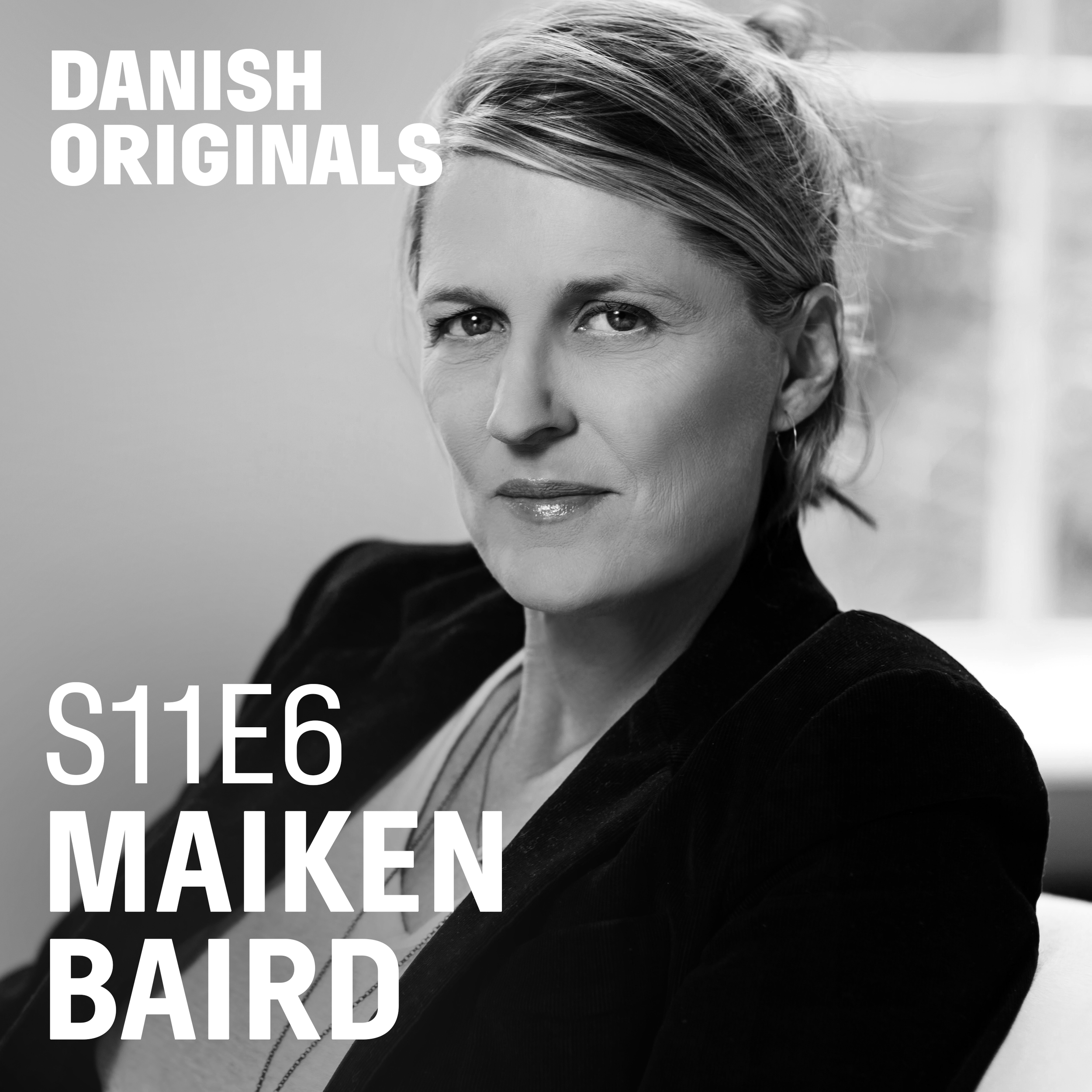
From her home in Greenwich Village, Manhattan, Copenhagen-born, New York-based Danish-Scottish documentary film producer and director MAIKEN BAIRD talks about her latest film on Palestinian American scholar Edward Said that is entirely archive-based. She revisits her iconic works, such as Client 9 (2010), Venus and Serena (2012), Oscar winner Icarus (2017), and Ghislaine Maxwell: Filthy Rich (2022), and describes the challenges in telling real stories that help us understand our world.
Photographer: Terry Gruber
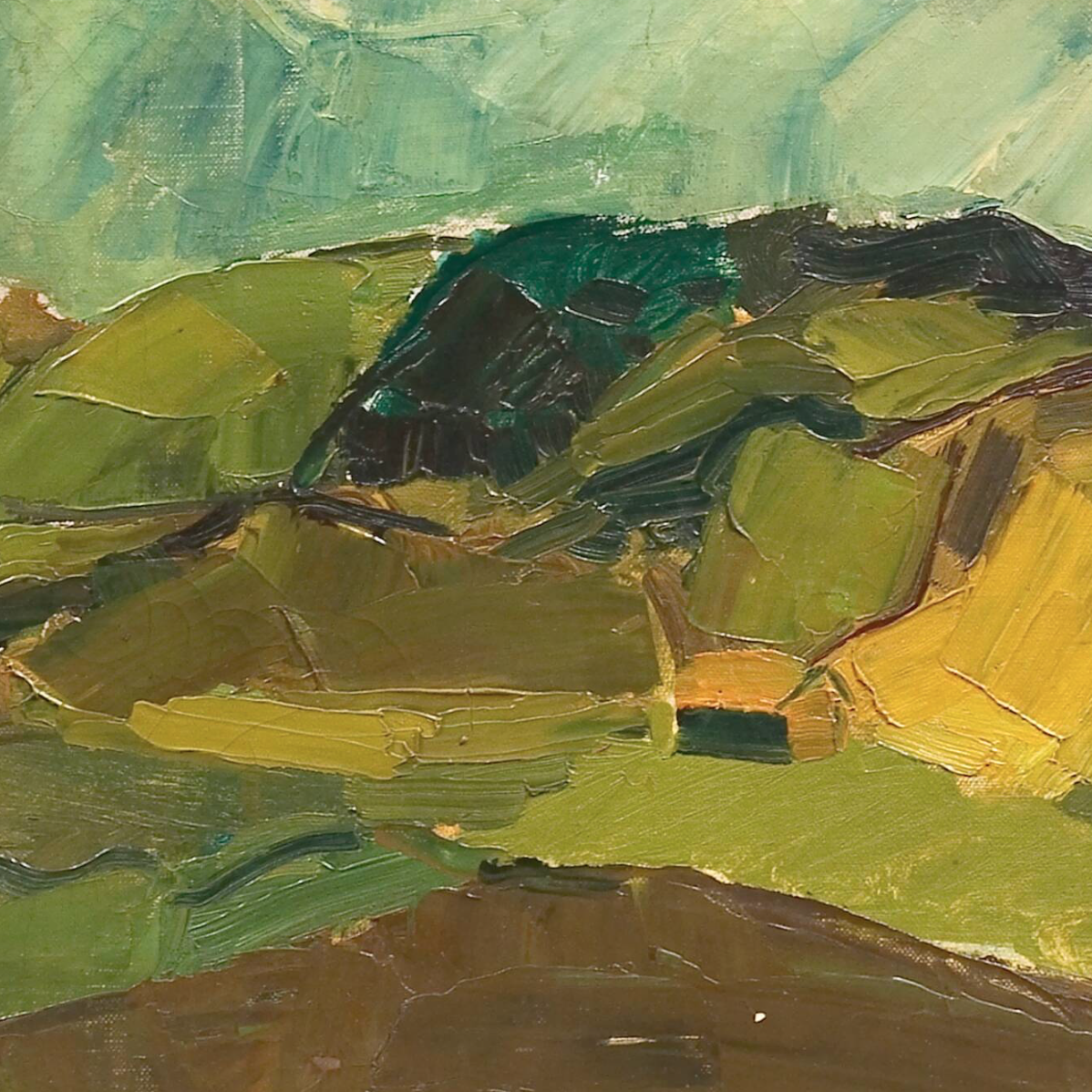
For today's episode, Maiken Baird chose Lauritz Hartz's Landskab med bakker, or Rolling Landscape, from 1927 from the collection of the National Gallery of Denmark, Copenhagen.
“It is a matter of discovery, really. It’s seeing the story for, that’s an interesting story, and then taking a leap of faith, almost, and jumping in and saying, okay, let’s find the story in that story.”
“People are really working on trying to find easier ways to reach people, and to curate and gather an audience for a documentary, almost like citizen journalism, where you’re reaching people directly versus going through platforms or streamers where they’re not interested really in hard-hitting stories in the same way, it doesn’t feel to me.”
“There are a lot of stories there that I feel have been untapped in a way that would explain a lot of our world today. And so that’s always the thing I’m trying to do is to find stories that might be historical in nature, but that help explain what’s happening today.”
Powered by RedCircle
This conversation with Asger Hussain occurred on March 26, 2026.
00:00
Maiken Baird
I think distribution is a really big, new frontier for political documentaries in particular. I think that there's a lot of resistance to subjects that I want to cover, like Edward Said or other subjects. So people are really working on trying to find easier ways to reach people, and to curate and gather an audience for a documentary, almost like citizen journalism, where you're reaching people directly versus going through platforms or streamers where they're not interested really in hard-hitting stories in the same way, it doesn't feel to me.
00:38
Asger Hussain
My name is Asger Hussain. I'm a film producer and guest host of Danish Originals. Our goal is to celebrate Danish creatives who have made a significant mark in the US.
00:49
Asger Hussain
Today's guest is documentary filmmaker Maiken Baird, whose work explores power, access, and the system behind global headlines. She started with Venus and Serena, which follows tennis icons Venus and Serena Williams at a pivotal moment in their careers, and later directed Ghislaine Maxwell: Filthy Rich, a film about the network of abuse and power supporting Jeffrey Epstein.
01:12
Asger Hussain
She was also an executive producer on the Academy Award-winning Icarus, which begins as a story about doping in sports and turned into a global exposé of Russia's state sponsored-Olympic doping program. Maiken, welcome, it's great to have you here.
01:29
Maiken Baird
Thank you. It's great to be here.
01:31
Asger Hussain
Where are you calling from today? It looks interesting in the background.
01:34
Maiken Baird
I live in New York and I'm in my home down in Greenwich Village in Manhattan.
01:39
Asger Hussain
Very nice. What are you working on right now? What am I interrupting?
01:43
Maiken Baird
I am directing and producing a film about the legendary and late Edward Said, the academic, who was a professor of comparative literature and English at Columbia University for 40 years, and whom my parents were friendly with in the 1980s in New York when we moved here.
02:06
Maiken Baird
And he's just a great inspiration to me, especially in today's world where I think a lot of people are asking the question of how did we get here with Gaza? How did we get here with Israel? How did all this happen? And I think he has so many of the answers in his wisdom and his thought basically.
02:25
Asger Hussain
How did you get into this project?
02:28
Maiken Baird
After October 7 in 2023, after a month or so, I thought, oh, where is Edward Said? And of course I realized he had passed 20 years earlier. I reached out to his family who live in New York, his wife and his daughter, to see if they would be open and willing to work together to bring him back to life, really, in a film. So the film is entirely archival and in his voice, he's narrating the film.
02:58
Maiken Baird
We're using an extensive amount of archive from the family and the estate, the Edward Said Estate, as well as the Columbia University archives, which are enormous and have an absolute embarrassment of riches. And I'm almost finished. I'll be finished, hopefully in two months, basically. I'll be finished and then releasing the film in Europe and then in the United States.
03:22
Asger Hussain
And how long have you been working on it?
03:25
Maiken Baird
I've been working on it for a year and a half. I've never made an entirely archival film before. The model really is, I Am Not Your Negro, which you might remember, came out in 2016. I thought that was so beautifully made, and really we just want to hear from Baldwin. And I feel the same with Edward Said. We are not doing any interviews, we haven't done any filming. It's really entirely archival from when he was born in 1935 to when he died in 2003.
03:54
Maiken Baird
And one of the things that we realized early on, his father and mother were both from Palestine, born and raised there, and his father had picked up an 8mm film camera in the mid-'30s when Edward Said was born and started filming him and his sisters and his life in Jerusalem, where he was raised and born, and then in Egypt and in Lebanon where they spent a lot of time.
04:21
Maiken Baird
There's this incredible archive of another time, another era. To me it felt it was more interesting to just hear his voice and his words because he was so poetic and so interesting, just a fascinating man to listen to. And then with the footage overlaying that, we just felt we didn't need to film anything. We should just use what was there and what was in the archive because it was so rich.
04:51
Asger Hussain
That sounds incredible. I want to go back a little bit. Let's rewind. Where were you born? Where were you raised? Where did you grow up?
04:58
Maiken Baird
I was born in Copenhagen in 1966 and my grandparents were Danish, my mother is Danish and we lived all over the Middle and Far East. My father worked for Schlumberger, which is an oil services company. We lived in Dubai, Abu Dhabi, Singapore, Indonesia, all over the world.
05:20
Maiken Baird
And then we landed in Paris when I was about seven or eight, and I went to French school there. We came to New York in 1980. And I've pretty much been in New York ever since, on and off. I've been back to Europe a bit here and there, but generally my home base has been New York. But yes, I have a very strange background in that I just grew up in lots of different places.
05:45
Asger Hussain
And were you always interested in film or did that come later?
05:49
Maiken Baird
I was always interested in stories, and reading, and books. But it wasn't so much film. I feel nonfiction is so much more interesting than fiction because you can't believe these stories are real life. I fell into documentaries maybe five years after graduating from college, because I was interested in true stories. I wasn't necessarily coming from the film angle, it was more coming from the kind of political activist and interested in the world angle, if that makes sense.
06:21
Asger Hussain
It does make sense. What did you go to school for?
06:24
Maiken Baird
I went to school for international relations and political science. So I did an undergraduate degree at Columbia where Edward Said was the sort of most famous professor there. And then I went to Stanford for graduate school, also in international relations. And so I was very interested in the world and what was happening. I went to work at the EU for a bit and the United Nations before getting into journalism first, and then film.
06:52
Asger Hussain
There must have been a shift at one point if you worked at the UN and the EU, huge bureaucracies, even though it's international relations. Was there a defining moment or was it a fluid gradual introduction to the world of documentary filmmaking? Was there a moment where you thought, here is something that we need to put out in the world in a different way?
07:14
Maiken Baird
The EU and the United Nations were very large bureaucracies where it was very hard to get things done and to do things that were significant and meant something. So I felt maybe making documentaries and exposing some of these things that I've exposed in these documentaries to audiences around the world might make more of an impact and be more interesting and more varied.
07:40
Asger Hussain
And you both produce and you direct as well. Did you start out with one over the other or were they intertwined from the beginning?
07:48
Maiken Baird
They were intertwined from the beginning. I think a lot of the producing that gets done in documentaries blends into directing. They're very similar. I think that it's different with fiction where directors are very separate from producers. I don't think it's the same with documentaries 'cause the teams are so small, so they end up getting blended together. But I would say I've done a lot more producing than I have done directing.
08:13
Maiken Baird
The first film that I directed was Venus and Serena. I'm a big tennis fan and I had watched them growing up, with the braids and the beads and the hair, and they were such an inspiration, I thought, to myself and so many others. I chased them for about three years, their agents and all of their entourage, and somehow finally got them to agree to do the film.
08:38
Maiken Baird
We followed them with cameras through the tennis season in 2011. We released the film in 2012 at the Toronto Film Festival in September. The film was incredibly challenging, of course, following the tennis stars around the world. That was obviously not the easiest task, but it was really fascinating and you really got to see behind the scenes of the tennis world and how it all operated.
09:07
Asger Hussain
I remember it vividly when it came out. We do get to see them in public life, we get to see them as sisters, as rivals, they support each other, and they had a certain trajectory. And then you see this film and you see the intimacy too, and you see the behind the scenes. How is that coming first from being a fan and then getting in there and pointing a camera at someone?
09:32
Maiken Baird
We'd been speaking with them, their agents, and so by the time we got there, they were very open, actually, to us filming. They lived together at the time. And for me, the interesting part was how do they seem to have this incredibly close relationship as sisters and as the greatest rivals to each other, being number one and number two in the world?
09:54
Asger Hussain
It was amazing.
09:55
Maiken Baird
Unbelievable. Incredible. To me, it's the greatest sports story of all time. It's two girls from Compton who are African American in a sport that's really not open so much to that, and were able to become, both of them, the best in the world and then having to play each other and remain best friends.
10:15
Maiken Baird
And what I found behind the scenes being with them was that it was true, they were best friends and the parents had really taught them to be that. They had made Venus pick up Serena from school when she was little, always take care of her and not let the competition and the sport get in the way of the family and the relationship.
10:37
Maiken Baird
And to me that's just the greatest way, if you want to raise children to be icons like that, make sure that you keep them close to each other, as a family, as sisters. I think it's a remarkable thing and I don't think the parents get enough credit for that.
10:53
Asger Hussain
They don't, and they come off as incredibly sympathetic too. And Serena Williams is a bit more out in the public right now with her various businesses. And she comes across as a mentor, as a savvy business woman, and always, always very sympathetic, I think.
11:08
Asger Hussain
And you talk about the parents, which is so interesting. The feature film that came out about them had that angle to it, but it was portrayed in a more, I wouldn't say cartoonish fashion, but in a way where the dad was both the one that motivated them, but he was also an antagonist in the way that it was structured. He was constantly pushing them. He was a mild antagonist, almost.
11:32
Maiken Baird
I didn't see that with him. He's an interesting man for sure, and certainly very eccentric, but I saw a lot of love there that he had for his daughters, every day picking up the balls in the mornings and while they were training. And I saw the mother too. I don't feel that Oracene gets enough credit for being the rock, the stability behind it all and always there in the stands, always supporting and being there for them. It's really an amazing story.
12:06
Maiken Baird
So those stories that I go after are the stories where I feel they've been misinterpreted and we haven't really seen the real story. And so I feel with that, we tried really hard to get behind the scenes to get the real relationships, the real family dynamic there.
12:23
Asger Hussain
It came off as unbelievable access. With that comes some responsibility, I suppose. How do you manage that responsibility and how do you maintain some distance while you also gain incredible trust from someone? And this is also a broader question in your body of work.
12:46
Maiken Baird
I think it's very important to keep it all very professional, to not fall into this thing where all of a sudden we're all best friends. I think it's very important to maintain a level of distance, but still be respectful and professional, essentially, because it's hard when you are with people on that level for that long. It can blur the lines.
13:10
Maiken Baird
I think part of the art of making documentaries is being able to get the access and the story, but not fancy yourself, like now we're all best friends. 'Cause that's not what it is. It's really more, we're doing a story that we want to bring to the world, that is really important to understand, how Venus and Serena, for example, manage all of that competition between them and how they maintain family ties and all of that. I think it's very important to just keep a comfortable distance, but still be in there. It's a balance for sure.
13:45
Asger Hussain
You mentioned story. In narrative film, we talk about finding the dramatic engine, especially when you're dealing with real life subjects and it's films that can span decades, if not longer, or months. At what point in a setup like this, do you decide what the story is? I assume you have an idea when you go in because you want to tell something that you feel is misunderstood, as you mentioned earlier, or not fully understood, maybe.
14:14
Asger Hussain
Is there a defining moment or was there a defining moment where you thought, I think I know what it is that I want to portray to the world? 'Cause you're obviously getting ten, 20 times as much footage as the public has access to.
14:27
Maiken Baird
There's so much left on the cutting room floor, especially with a film like that. But even with an archival film like Edward Said, there's a treasure trove of things that we just can't use. 'Cause it's only an hour and 45 minutes. Most of these films, I like to keep them to an hour, between an hour and 30 and an hour and 45, I think for these documentaries, is more than enough.
14:49
Maiken Baird
And I think a big challenge is finding the story when you're in there. I think as you get in and you watch or you read or you listen, you start to see, what is the real story here. And with Venus and Serena, it was clear that the mother had been very, very intent very early on in their careers that they would be best friends and that they would remain so, and that this competition would not get in the way of family.
15:16
Maiken Baird
And who knew, right? When you see them in the stands, it wouldn't be possible to know that until you interview Oracene, which we did several times, long interviews with her, which she, I don't think, had ever done before. So we really got that story from digging in and it really is a digging in thing. You are not scripting it, you're finding the story as you say, when you get in there.
15:39
Maiken Baird
It's the same thing with Client 9, when we did the film about Eliot Spitzer, which came out in 2010. I did that with Alex Gibney, that's the first film that I produced with him. And that was a story, too, as you got in there and you started interviewing people in New York and you started finding the story of who set him up and how did they find out that he was having affairs with these high-end prostitutes.
16:05
Maiken Baird
It's not until you start interviewing people and you find out what people are saying and what happened there. It is a matter of discovery, really. It's seeing the story for, that's an interesting story, and then taking a leap of faith, almost, and jumping in and saying, okay, let's find the story in that story.
16:23
Maiken Baird
It's very exciting. We hope that obviously within a year you have a story. That's the biggest fear, of course, is that you get into it and then there's really not much there. But usually there is a lot there, if it's a story that you're going after.
16:37
Asger Hussain
Well, I think, a testament to your work. Because I was looking at it, I was familiar with some of it, and I rewatched some of it. And I scribbled down this little little question just for myself, also, to address with you, which is: how does your head not explode when you're in the moment, when you're, again, and I don't know if it's by coincidence or you had the foresight.
16:59
Asger Hussain
But when you have people like Eliot Spitzer, Ghislaine Maxwell, the Williams sisters, you had the Icarus film, which you executive produced — these stories didn't finish when you were done with the camera, right? So these kept going on and they kept getting bigger and some of it was going on in real time.
17:21
Asger Hussain
So the public had a real perception of what was going on. And some of these are globally spanning, they're covered in journalism, they're covered in television, they're covered in pop culture, whether we like it or not. So, going back to that question of, how does your head not explode?
17:38
Asger Hussain
Do you occasionally find things that are very difficult to let go, but where you feel, listen, whether it's for practical reasons or even narrative reasons, this doesn't fit in here, but I could do a whole different film on that subject?
17:53
Maiken Baird
There's a lot of that, because these subjects that I tend to work on are big, global stories, as you say. There are very few people who don't know who Venus and Serena are, for example, or now, of course, Ghislaine Maxwell, it's a global story. Most people are interested in these stories, so I like to do stories that hit on global issues. There are some exceptions, like Folktales, for example. I love that film, but it's not necessarily a global issue.
18:23
Maiken Baird
But generally speaking, I tend to look at, let's make a film about this and that'll explain a whole bunch of things that we are all thinking about, like Ghislaine Maxwell, for example. How does a woman who was raised in this upper class world and went to Oxford University, how does she end up with Epstein and doing the things that she did?
18:47
Maiken Baird
It's very interesting and so you get into it and then you realize that it touches on so many bigger issues. And those are the stories I'm always looking for, where the story itself can explain a lot of bigger stories that are happening in the world.
19:03
Asger Hussain
Do you ever get hesitant? Not because of practical reasons or narrative reasons. Do you ever get hesitant because of something more fundamental inside of you, where you think, listen, either I will be in personal harm's way, if you're exposing something this big, or this is just something that is so outside of what I thought we could ever put on film?Or does that not really factor into where you go with these stories? 'Cause they're really fearless, most of them, whether you produced them or directed them.
19:41
Maiken Baird
We'll see with Edward Said. Definitely, the concern is the outrage, especially in New York, it's a very, very difficult topic. But I think that these are topics that have to be exposed. And that's just what I do. So I try not to think about what could happen, living in the fear space. I try not to do that. Obviously sometimes you have to think about those things, but I try not to do that so much.
20:13
Asger Hussain
Got it. I want to get back to Ghislaine Maxwell, but I also want to hear a little bit more about the film Icarus. Can you tell us a little bit about how you became involved and what the film is about?
20:28
Maiken Baird
Icarus is a film I didn't get involved in until about a year and a half where Bryan Fogel had been filming and doing the film himself actually. And I was contacted by a friend who's a producer in New York who told me very much confidentially about the story. And this was a first-time filmmaker, Bryan Fogel, who made the film. And would I be interested in hearing more and getting involved?
20:54
Maiken Baird
And I immediately thought it was an absolutely amazing story. Absolutely amazing. And so I definitely signed on and then helped fund as well as lend my thoughts on shaping the story and the film. It was just an amazing story. That's one of those documentary stories that you start with one thing.
21:16
Maiken Baird
You start with this idea of, does doping help, and how much does it help when you are cycling competitively, for example. Or when you're in these Olympic sports, how much does doping help, was really the thing. And then it got into the Russian doping machine, which was just an incredible inside story to this corruption that happens in sports because obviously doping is tremendously helpful for the athletes who do so.
21:50
Asger Hussain
In the right body and the right hands.
21:53
Maiken Baird
Yes, it's incredible. But it's cheating. It's totally cheating, no question about it. I didn't come into that till about halfway in, but then immediately, I was way in, 'cause I thought it was just a wonderful, wonderful documentary story.
22:08
Asger Hussain
And I think that goes to what you said earlier today, which was documentary as opposed to narrative, sometimes have stories that are unbelievable in a way where you think this could not have happened. You would not even put it in film because it's so outrageous in a way.
22:25
Asger Hussain
But yet here we are and it happened in real life and it spanned over multiple continents and goes from the story of a singular person trying to cheat on purpose and inject himself, and it gets bigger and bigger and bigger. Coming from the feature film world, it played as a thriller. You are literally sitting and you're, what is going to happen now? And I think that was very fascinating.
22:50
Maiken Baird
It was, and you hope it's this sort of documentary God shining on you. It's like, thank God, this is amazing. You couldn't even script this. No one could make this up. And that's what I love about documentary. It's this kind of unknown world of what you're gonna find.
23:05
Asger Hussain
You mentioned journalism, and you get to be a journalist in the moment, you keep digging. In the feature film world, we keep trying to find that character and that storyline. But if you are exposing things in real life and you are half a year into it or a year into it and you realize that no, we're experiencing a significant shift here that is really interesting to tap into. And I think the film did that really, really well.
23:31
Maiken Baird
There's no question that that film broke the story for The New York Times. It broke the story all over. It was a really seminal story that came out of a very simple story, which is a man who tries to dope and seeing whether that helps his cycling and it all unraveling. So Brian Fogel, hats off to him for doing that for sure, for continuing going to Moscow and there, putting himself in danger too, doing all that. I really was very impressed with him.
24:02
Asger Hussain
And the physical danger that he inflicted on himself by injecting himself on screen. And what was interesting, too, was the amount of things he had to put inside himself. You wonder, okay, so Lance Armstrong has been doing this for 20 years.
24:19
Asger Hussain
Just the bag he has to travel with, his secret stash bag, that's a significant amount of both time and effort that has to go into this every single morning or in the evening or whenever he does it, and then covering it up. Which also means that so many people in his orbit or system are well aware of this or will close their eyes or do whatever.
24:44
Asger Hussain
And that was fascinating too. Just the first time he takes out all the things and puts them on the table, you're thinking, this is quite a bit of work. It's not just you pop a pill and then you win a race. No, a lot of effort goes into this.
24:58
Maiken Baird
And there's no question that it's major cheating. You are going to perform a lot better with all of that, up those hills and on that bike. And so it's good that it's been exposed and that people understand that's what's happening because it's just not fair. It's really good that people are more aware of it now.
25:18
Asger Hussain
And for our listeners, at least those who are in Denmark and Europe, I think they remember that for the biggest bike race of them all, Tour de France, every winner from 1995 till maybe 2015 or even later, every single one of them were either exposed or came out voluntarily and said that they had been doped as winners, both number one and number two.
25:44
Asger Hussain
I think the last one, not to get too much in the weeds, was this Spanish rider, Miguel Induráin, who managed to escape all sorts of scrutiny. But after him, every single rider was pretty much exposed at the highest level. So now you think how big it is in terms of the systems that sort of keep all these things together, and that's where it becomes really wild and interesting.
26:09
Maiken Baird
It's incredible. It's really incredible.
26:11
Asger Hussain
And you mentioned that, did the story break in The New York Times at the same time, or were these things being investigated concurrently, side by side? How was that? Do you recall?
26:23
Maiken Baird
I think it was side by side that everyone was discovering this, but certainly the film helped break the story too, and so I think that's probably why the film also had won an Oscar.
26:34
Asger Hussain
That it was an amazing movie. And that brings me back to the film Ghislaine Maxwell: Filthy Rich, which is of course about how her involvement was with Jeffrey Epstein, how she was so complicit. And it's these systems around them too that allow these people to exist. And even though there are probably multiple investigations going into it, it seems to escape scrutiny up to a certain point. And then the dam breaks, whether it's a documentary or it's an enormous amount of people that come out.
27:14
Asger Hussain
The film was interesting because it tracked back some of these victims and I think we were back in the early 2000s, in 2005 and 2008. And a victim would say, well, I reported this to the police, five years later I spoke to the FBI, three years later we spoke again, and nothing seems to be happening.
27:35
Asger Hussain
And then all of a sudden there is a shift almost, and everything seems to be coming out at the same time, or at least in the public perception. Tell me how that film came to you and how you got involved in it, and that subject matter is difficult too. That was a lot of questions.
27:54
Maiken Baird
This was 2020. I was approached by Joe Berlinger, who's a pretty famous director, and Netflix, to direct that film. They seemed to think that I might be able to get some of these people who knew her, on camera in New York, because she had lived in New York, Ghislaine Maxwell, for about 30 years or so. There's a lot of interconnectedness, I guess.
28:18
Maiken Baird
I took on that project because I was really interested to understand how someone like Ghislaine Maxwell, with so much privilege and so much education, would find herself in that world and operating at that level with someone like Jeffrey Epstein. It just didn't make sense to me. And so I wanted to find out what happened there. That was something that I didn't have any understanding of, that world, because it wasn't a world that I was interested in being a part of in any way.
28:54
Maiken Baird
I was interested as a woman, too. Why would a woman do that to girls? What is that psychology behind that? And so there was a lot that I was interested in on that level. I wasn't so interested in Jeffrey Epstein, the man, or about him so much. I was much more interested in her as a woman, how and why she would do all those things that she was accused of.
29:18
Asger Hussain
Did you come away with a better understanding?
29:21
Maiken Baird
It was a really deep, dark tunnel, that Epstein-Maxwell story. We followed her during her trial, we filmed that, and we got some great interviews with people who knew her, and I got a better sense of why. But there's still a lot that I don't really understand about that story.
29:40
Maiken Baird
At the same time, so much more is being revealed. It's rated top on Netflix constantly because people are just desperate to understand more about this enormous story of so many powerful people who were involved in this sex trafficking of children. And I feel we've only scratched the surface. I feel there's so much more to be revealed. This is a global story in a big way.
30:07
Asger Hussain
I agree. I think congressional investigation aside, I think if you even just take the financial part on and you say, where did all that wealth come from on his side, at least? And then the fact that he was already arrested, it was an in-house arrest, and he was then still allowed to do business at the highest level with JP Morgan for years, until they finally said, we can't do this.
30:33
Asger Hussain
But they didn't do that because of anything other than the pressure cooker was about to blow up on this thing. And I think with her, what was interesting, and maybe we don't need that much of a bigger understanding. Maybe she just was like that. There are characters in history that are just, in a way, where it is deep and we look for motivation, but they could also just not be good people.
31:00
Maiken Baird
And damaged at a young age by her father and all kinds of trauma and damage that happened to someone like that. And then, yeah, I think there is such a thing as just plain old evil. And not much more to say about it. But I think what I didn't understand, I was blissfully unaware, I guess, was this sex trafficking of children — boys, girls — that happens all around the world.
31:24
Maiken Baird
That's an enormous industry that of course they were very, very much involved in and also many others. And that's another area honestly, that I guess maybe I just stayed away from. I just didn't realize that that was such a big industry, there's so much money involved in this industry of trafficking children. It's just so insane.
31:46
Asger Hussain
And not to compare it to doping, but again, it's not an isolated thing that you can just do between the hours of midnight and 2:00 am. It's an operation that requires the knowledge of a lot of people and there is no such thing as these things have not been reported. So the authorities that are in charge, what happens then? And I think that's still unfolding. I think we haven't even scratched the surface.
32:10
Maiken Baird
No.
32:11
Asger Hussain
All the times that the FBI investigated this or even other things, why has it not been moved on in a way they would on other things? And I think that is still unfolding and will probably take another five years to unravel.
32:26
Maiken Baird
I agree completely. I think there's so much more to the story and so much more, especially with these Epstein files that Trump's administration has released the last four months, there's so much more there. And I hope someone goes digging and does a great documentary about it.
32:42
Asger Hussain
You are tired of it.
32:45
Maiken Baird
It's a very dark — it's a dark place.
32:47
Asger Hussain
I actually wanted to ask you that question 'cause I've been fortunate most of the time to work on things that you can leave behind or put away. Sometimes you experience things, you interview people as a producer, you visit places that are difficult to experience, but you're able to compartmentalize and move on. What happens at five o'clock when you put this away in the afternoon, are you able to? How does that work for you personally?
33:16
Maiken Baird
It's a good question. It depends on the topics. Some of the topics are very easy to shut and say, okay, I am done and never watch that again. Like Eliot Spitzer, for example, or even Venus and Serena. But I think with stories that are still unfolding, I do tend to follow them. I didn't read all the Epstein files, but I still am following that story because I'm interested in what happens to Ghislaine Maxwell and that's a story that continually evolves.
33:43
Maiken Baird
The story of the doping, I keep following it, but I don't necessarily want to dig back in and reinvestigate it. I'd rather move on to other topics that, I feel, are super interesting, like Edward Said, for example. But I do hope others do and that they dig in deeper. 'Cause there's much, much more to uncover, for example, with Ghislaine Maxwell and doping in sports, I'm sure. But I like to move on and to move on onto other subjects that I think are also equally important.
34:14
Asger Hussain
I think that doping in sports is another one of those subjects that haven't even scratched the surface. If you look at the big structures, whether it's here in the US or internationally, especially for football or soccer, it's the organizations that run the World Cup or even National leagues or the Champions Leagues, they've always been half covered in controversy.
34:41
Asger Hussain
And that's because of corruption or political affiliation or doing the World Cup in a country where you probably shouldn't be doing a World Cup. These issues almost seem pedestrian compared to what would happen if you really unfolded something as deep as doping at this level because the sponsorships, the audience, it's just a whole different level of personal and economic involvement from the world actually. That is truly a global sport that touches billions of people.
35:13
Maiken Baird
I think once you have that level of money involved, in those sports or sex trafficking. It turns out this is a huge, huge industry and there's a lot of money in it. Then it just becomes a bigger and bigger story.
35:27
Asger Hussain
When you look at the documentary landscape today, broadly speaking, what excites you? That's a very big question, whether it's technology, or in terms of where people are able to go. What do you think is the next exciting chapter of the genre or this whole area of entertainment and journalism and information? Where do you see that headed?
35:56
Maiken Baird
I think distribution is a really big, new frontier for political documentaries in particular. I think that there's a lot of resistance to subjects that I want to cover, like Edward Said or other subjects.
36:11
Maiken Baird
So people are really working on trying to find easier ways to reach people, and to curate and gather an audience for a documentary, almost like citizen journalism, where you're reaching people directly versus going through platforms or streamers where they're not interested really in hard-hitting stories in the same way, it doesn't feel to me.
36:33
Maiken Baird
So there's a lot of focus that we have now on trying to solve distribution models, going straight to consumers. And so that's an exciting thing to think about and to try and develop because it's changing. It's changed a lot.
36:48
Asger Hussain
It has, and we see it in different areas. And it used to be that the gatekeeping was a result of some sort of commercial outlook. How much product is there? How much can we put on? Is it too risky for us? Does it fit our platform?
37:04
Asger Hussain
But it seems the way that the consolidation is happening in the media sector at the very, very top, is that these gatekeepers are making their presence felt very early on too, in the sense that we're not gonna support this no matter what. Is that something that I'm making up, or do see that?
37:23
Maiken Baird
No, no, I see that completely. And I think it's more and more, I think it's always been the case, to be honest, but I think now it's very clear that that is much more pronounced that it's almost like a matrix where if you don't fit into what the narrative needs to be, what the politics need to be, then you're not gonna get a deal with a streamer and everything else.
37:45
Maiken Baird
I have faith that there are other ways to reach audiences, with the internet and with social media and crowdfunding and all kinds of things. There are other ways to do it that will be successful and just as interesting. But yes, it feels very much like there's certain stories that even though people are very interested in and they're super important, they're not really allowed, so to speak, and that's unfortunate.
38:15
Asger Hussain
And I think the festivals will hopefully continue to play a crucial factor here in that it becomes an initial showcasing platform. It becomes inevitable, in a way, or undeniable, in a way, but those don't always translate into viewership in a broader sense. It helps getting the media attention and great press and the film travels and film can travel for a long time and a lot of different people can get exposed to it.
38:44
Asger Hussain
But it's definitely something that I've been concerned about at a broader level. If you see something like CBS or you see 60 Minutes, you see these blue chip organizations or outlets that are now being shaped in different ways than they were before. That goes way beyond figuring out what mandate goes where or what fits.
39:09
Asger Hussain
It's not just a rom-com versus an action film. It is we're diving into the actual subject matter and seeing if this is something that's appropriate. We'll curate what's appropriate for the broader audience. And I think that's very scary because some of those other mandates, whether it's a rom-com, people greenlight rom-coms, because people watch rom-coms, there is a cause and effect that's different there.
39:34
Asger Hussain
But this seems to be in a different way altogether that we're doing. And I think we just saw it this year with at least two political, somewhat political, documentaries too, which both won the Academy Award. So the documentary Mr. Nobody Against Putin, and then the documentary short, All The Empty Rooms. Those are both explosive in their own right.
39:57
Maiken Baird
No Other Land, too, won the Academy Award.
40:01
Asger Hussain
Of course.
40:02
Maiken Baird
So there's loopholes to this thing, but it's a struggle for sure.
40:08
Asger Hussain
You have to be slippery to get into that loophole.
40:10
Maiken Baird
You have to be creative. You have to get very creative.
40:13
Asger Hussain
What else are you looking at? What else is percolating in your mind as a subject that you would like to explore, whether you do it or you could do it in collaboration with someone?
40:25
Maiken Baird
There are so many amazing stories these days. I find the world is in such an unbelievably crazy time right now with everything that's happening. You've got Trump and you've got Iran, and you've got the Middle East and everything that's happening in America too. And I feel there's so much, but at the moment, I'm so focused on just finishing Edward Said and so I try to really be focused on that and not get too sidetracked.
40:52
Maiken Baird
But I would love to do something in Russia about the story of what happened with the czars when they were killed by the Communists. There are a lot of stories there that I feel have been untapped in a way that would explain a lot of our world today. And so that's always the thing I'm trying to do is to find stories that might be historical in nature, but that help explain what's happening today and why Russia does what it does and how we should react as Europeans and all that.
41:21
Maiken Baird
So there's a lot, but I try to really stay focused on what I'm doing because there's so much to what I'm trying to get done now.
41:28
Asger Hussain
I think that is the mind of someone who can get in and explore something very deeply. And then it's almost as if you have to open yourself up to the rest of the world again and say, all right, what's the next thing that I want to embark on? I think that's a very healthy process in a way.
41:47
Asger Hussain
And also to keep things, as you say, focused and not dilute them with other things. But for us, as an audience, as fans, we're always thinking, okay, what comes next from this person? Because I don't wanna wait another two years.
42:03
Maiken Baird
Well, I think part of it with Russia, for example, is just this thing of, you go to Denmark and Danes are terrified of the Russians and the Russian threat. And you're sort of like, wait a minute, where is that coming from? And let's get into it and see where they're really coming from.
42:19
Maiken Baird
Where is Putin coming from? Where is that story? I don't really know, but I do know that there's a big story there. I just don't quite know what it is. And I think it's important because I think we're very misguided and misled, I think, by the mainstream media in general. They're always touting something that isn't necessarily true, which people want us to believe, who are in power.
42:39
Maiken Baird
And so it's just always finding the story that isn't being told basically because it's being hidden or being censored. There's a lot of that and I'm always looking for those stories.
42:52
Asger Hussain
With that, I'm going to say thank you for your time today. It's been very generous. A great, great conversation.
42:59
Maiken Baird
Okay. Thank you so much. It was so nice to talk to you.
43:07
Asger Hussain
For today's episode, Maiken Baird chose Lauritz Hartz's Landskab med bakker, or Rolling Landscape, from 1927 from the collection of the National Gallery of Denmark.
43:19
Maiken Baird
I chose Rolling Landscape by Lauritz Hartz.
43:23
Maiken Baird
It reminds me of the place I grew up, which was in a farmhouse that my parents purchased when I was about four years old. It was up by Fårevejle and Ordrup. And it's up on a hill and it has that view of this landscape that we see in this picture. And then it also had the sea below with the water and the ocean and beaches there.
43:48
Maiken Baird
I spent a lot of time as a child there and I still go back whenever I can for summer or Christmas or Easter. And it's just a beautiful part of the world. It's very serene and very picturesque.
44:03
Maiken Baird
My grandfather, my mother's father, Carl Peter Hartz, was related to the painter Lauritz Hartz. I think he must have spent time actually up in this area in Nordsjælland, because where I grew up is exactly what this landscape looks like. So it's sort of in the family as well.