
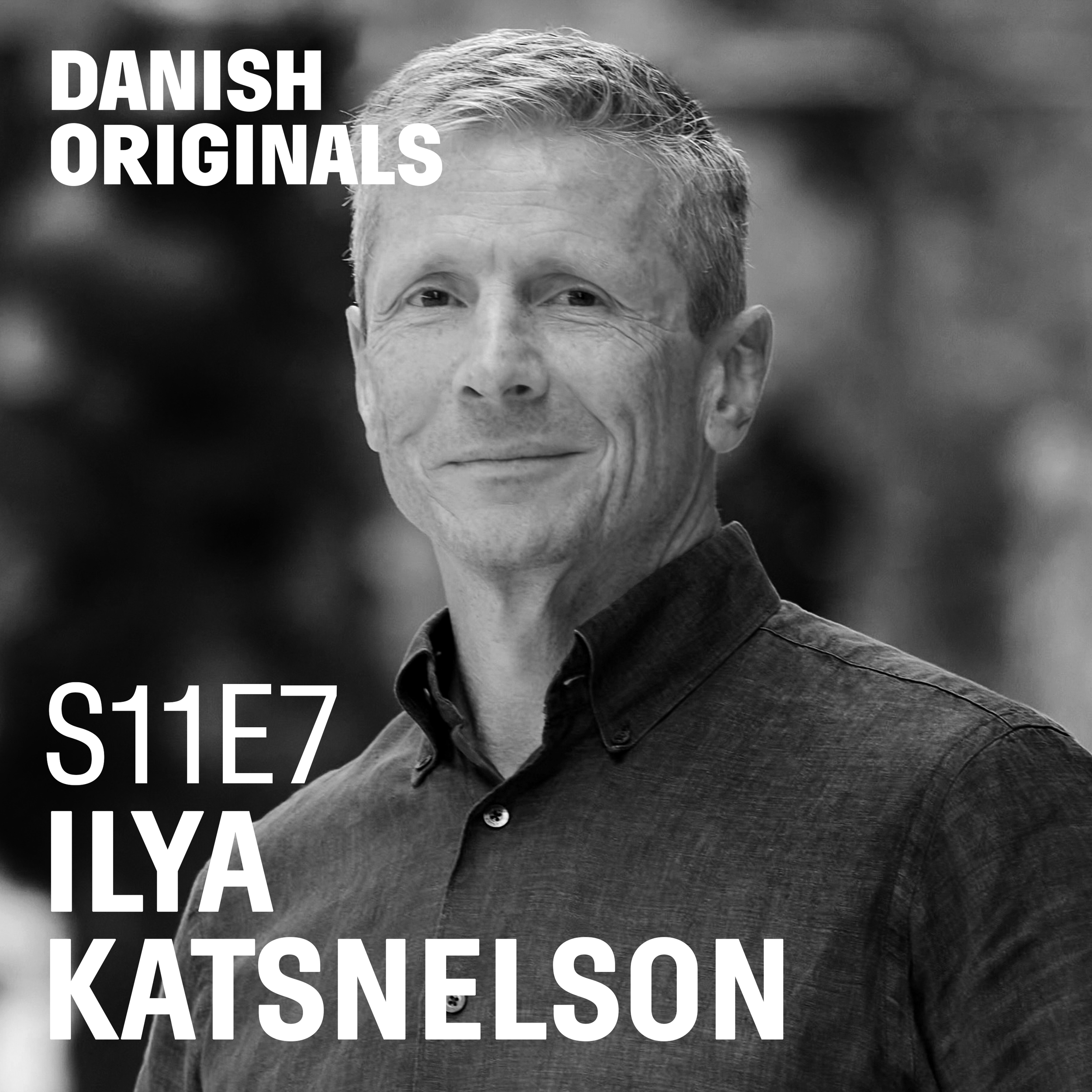
From his home in Israels Plads, Soviet Union-born, Copenhagen-based Danish American businessman and startup investor ILYA KATSNELSON recalls arriving in the US as a refugee at the age of ten, his formative years in Wisconsin, and moving to Denmark, later surviving a German maximum security jail when the Russian state issued a retaliatory Interpol red notice against him. Equally, he talks about his commitment to bringing the US and Denmark closer together through education, art, and culture.
Photographer: Davy Denke
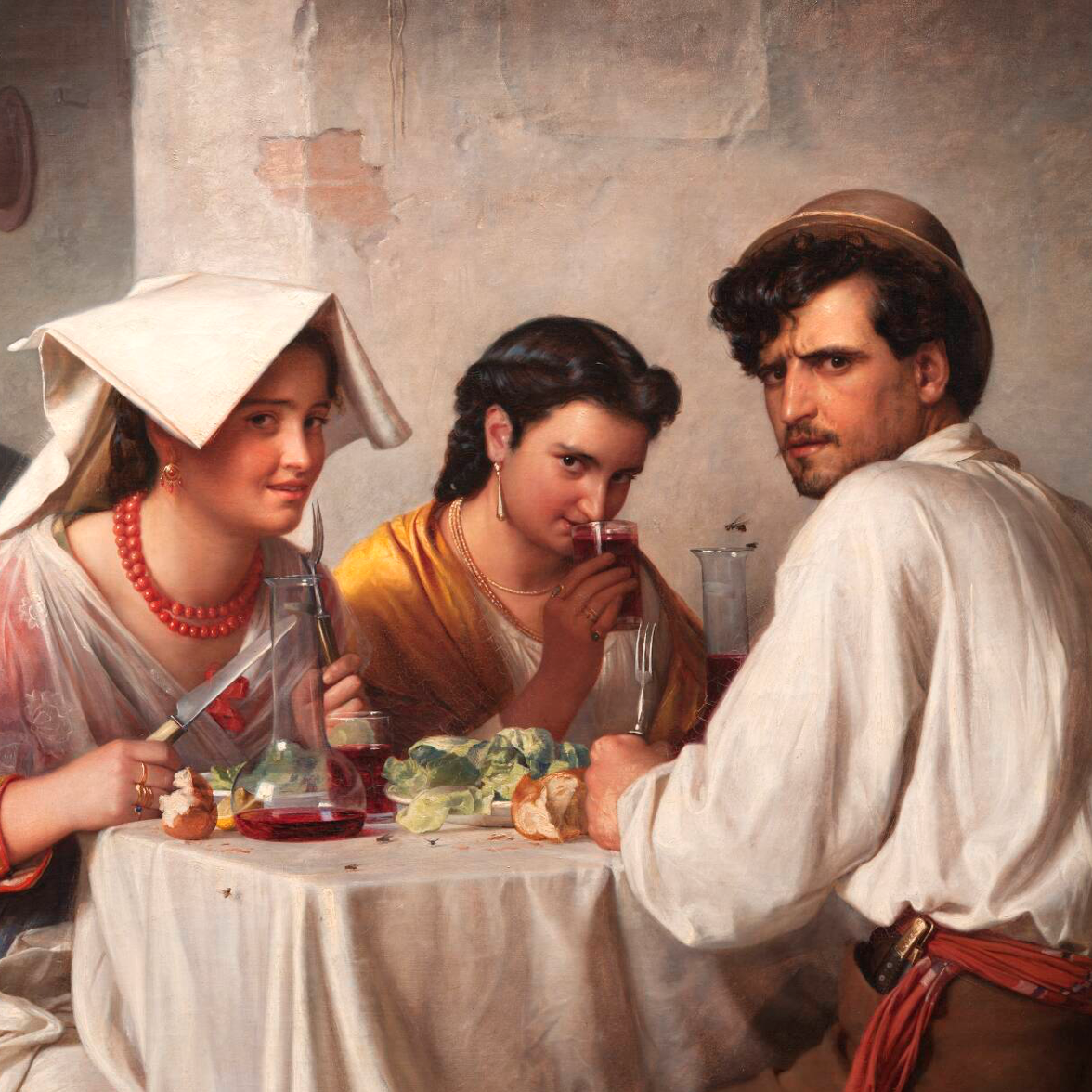
For today's episode, Ilya Katsnelson chose Carl Bloch's Fra et romersk osteria, or In a Roman Osteria, from 1866 from the collection of the National Gallery of Denmark, Copenhagen.
“There are many things that make me proud to live in this country, to be a contributor to Danish society, to the Danish budget, because of the things that this country does and does well, from the aid to Ukraine, to the steadfast support for democracy, for the incredible contributions to music, to art in general.”
“I had an opportunity to apply for Danish citizenship after 2016. Until that point, Denmark did not have double citizenship, so I would’ve had to give up my American citizenship. And there was no way I was going to do that. It would be insulting to my father.”
“I took the case, together with the UN High Commissioner for Refugees and OSCE Parliamentary Assembly to reform the Interpol system, because people who were refugees fleeing Russia would have red notices issued by Russia and they would be detained because it was pure harassment. After seven years of pursuing Interpol, they changed the rules.”
Powered by RedCircle
This conversation with Christian D. Bruun occurred on April 6, 2026.
00:00
Ilya Katsnelson
I had an opportunity to apply for Danish citizenship after 2016. Until that point, Denmark did not have double citizenship, so I would've had to give up my American citizenship. And there was no way I was going to do that. It would be insulting to my father. He passed away in '22 and I made a resolution in '23 that I would go through all the tests and I would gain Danish citizenship. I had a lot of respect for what he did for me and for his progeny, his efterfølgere, as we say in Danish, for his grandkids, who are dual citizens, Danish and American.
00:45
Christian D. Bruun
My name is Christian D. Bruun. I'm the director of Danish Originals. Our goal is to celebrate Danish creatives who have made a significant mark in the US.
00:55
Christian D. Bruun
Today, our guest is Ilya Katsnelson, a Danish American businessman and art supporter. Welcome, Ilya.
01:03
Ilya Katsnelson
Thank you. It's a pleasure to be here.
01:05
Christian D. Bruun
So great to have you here. I'm speaking to you from my home here in Los Angeles. Can you tell our listeners where you are?
01:12
Ilya Katsnelson
I'm in a sunny but very windy Copenhagen right now because it's around Easter time and typical, it's blowing very hard. Copenhagen is perfect when it's spring.
01:23
Christian D. Bruun
It is a beautiful place to be. In March of this year, you shared your story in front of 600 people at Copenhagen's Nørrebro Teater at a live storytelling series called "The Common." Tell us a little bit about what that was. How did that come about and how did you get an invitation to that?
01:40
Ilya Katsnelson
It was a very interesting experience. Before I was just a storyteller to friends, now I'm a professional because I actually got paid for being on stage, which I never expected to be a career that I would start almost at the age of 60. The idea behind this is The Moth from the United States. And interestingly, The Moth podcast was always my go-to podcast when traveling in a car with my family, because there were so many really interesting and engaging stories that they told.
02:08
Ilya Katsnelson
One of the producers from The Moth who has been living in Sweden for the last 12 years wanted to replicate the project in Europe. So this was the first attempt and I was invited through a friend who was also on stage. There was a cancellation and the producers asked her, do you know any good storytellers, to which she responded, do I ever? And that's how it started.
02:33
Ilya Katsnelson
When you are on stage, you have 12 minutes to tell a story. And I'm very grateful to the producers for guiding me, coaching me. Now, I know how the TED Talkers prepare for their speeches. To stand up on stage before 600 people and subsequently get a standing ovation was inspiring, but the best compliment I got was from my son who's a ballet dancer at the Royal Theater. He came up to me and said, Dad, now I know how you feel when you see me on stage. I'm really proud of you.
03:04
Christian D. Bruun
Wow. To get a stamp of approval from your son, that's a big deal.
03:08
Ilya Katsnelson
Should I tell you what the story was?
03:10
Christian D. Bruun
Yes. Please tell me the story.
03:12
Ilya Katsnelson
The story was quite dramatic. It dealt with my imprisonment in a German maximum security jail as a consequence of an Interpol red notice issued by the Russian State. Subsequently, Interpol ruled that the charges against me were politically motivated and instructed all member states to erase all data regarding my persona. But it took about ten years to get there.
03:35
Christian D. Bruun
Wow. That's definitely a story that I want to hear more about. Maybe we should go back in time and start from the beginning. How was your journey from the Soviet Union to the US and now to Denmark? How long have you lived in Denmark now? 40 years?
03:52
Ilya Katsnelson
35 years. I've had the privilege of living in this country and hopefully soon becoming a citizen.
03:58
Christian D. Bruun
Very good. And even though we are speaking English, I know that you're completely fluent in Danish.
04:02
Ilya Katsnelson
Thank you. It's a compliment. I feel comfortable in Danish, though when it gets to the rather intricate conversations, I prefer English.
04:10
Ilya Katsnelson
In any case, I was born in the Soviet Union and when I was about 7 years old, my father applied for an exit visa from the Soviet Union, which in 1974 was a very brave act. He, immediately, and my mother as well, our family were branded as traitors to the motherland because why else would you want to leave the Workers' Paradise?
04:34
Ilya Katsnelson
The only good thing about being Jewish in the Soviet Union was there was a slight chance that you could get out. And my father took that opportunity. I later asked my dad how long he nurtured this desire for leaving the Soviet Union. And he said, for 20 years. I said, so what precipitated that?
04:53
Ilya Katsnelson
He said when he was applying for university, they failed him on his entrance exam to the Moscow Aviation Institute. I asked him, which subject did you fail? And he said, German. I said, were you bad at German? He said, no, I was number one in my class. So what happened?
05:09
Ilya Katsnelson
They weren't letting Jews into the Moscow Aviation Institute. So instead he applied for the Moscow Tractor Institute and got into that. In his 20-year career, he had over 40 world patents. And so when we eventually did make it to the United States, he was able to get a job as an engineer very quickly.
05:32
Ilya Katsnelson
In any case, when we applied for a visa, it was rejected. So we were called refuseniks. Immediately after applying for an exit visa, both my parents were fired from their jobs. We were in this economic and social limbo — economic, obvious, and social because a lot of people turned away from us, even relatives who were afraid that if they seemed too friendly with us, they would suffer the consequences.
05:59
Ilya Katsnelson
We were stateless. They took away our passports, they took away citizenship and made us pay for it, very reminiscent of Nazi Germany. They take away your passport and you have to pay them for the health, education, and opportunities that they had provided you during the course of your residence in the country.
06:18
Ilya Katsnelson
Two years later, we were granted an exit visa. And in 1976 we were able to leave the Soviet Union. We were granted asylum by the United States, and came to America on December 16, 1976 as refugees. And for many years, we celebrated that day. Actually, this year will be 50 years. We'll be celebrating 50 years of coming to America.
06:44
Christian D. Bruun
Incredible. How old were you and how long were you in that limbo, the stateless limbo?
06:49
Ilya Katsnelson
I was ten years old. It was six months. The transition took place in Italy. We were refugees residing in Italy while our application was being vetted.
07:00
Christian D. Bruun
Oh, I see. At ten years old, you remember this time fairly vividly, I can imagine.
07:06
Ilya Katsnelson
I think memory functions as a point of reference. For a lot of people, if their life is very vanilla, they don't remember one event from the other, whereas a watershed moment… Basically, we're going to the moon. We left the Soviet Union, there was no internet, you had very little information about the outside world. My father had this dream and believed in it, and I'm very grateful to him for his vision, his perseverance, his strength of character to have gotten us out.
07:37
Christian D. Bruun
Where did you land and where did you live in the States when you first came?
07:41
Ilya Katsnelson
My father's an agricultural engineer and said, whatever you do, do not send us to New York. I'm an agricultural engineer, I can't plow Central Park. Guess where they sent us? New York City. We spent the first three months in America in the South Bronx, which, in the mid-'70s, was not the nicest place.
08:02
Ilya Katsnelson
We are talking about burnt out tenements, graffiti on trains. But my father, being an accomplished engineer, got a job within three months. And we moved to Thibodaux, Louisiana. So you can imagine my journey: Soviet Union, Italy—Rome, New York City, Thibodaux, Louisiana. If you could come up with contrasts, it would be very difficult.
08:26
Christian D. Bruun
Unbelievable. What were your expectations at the time when living in the Soviet Union? What was your image of what the United States was going to be like?
08:35
Ilya Katsnelson
For many people, the word "America" had so much significance. We of course were raised on the Cowboy movies. Those Hollywood movies were very popular, because they were so innocuous from a political standpoint. We had this perception of the land of milk and honey, land of opportunity, something very, very special.
08:56
Ilya Katsnelson
And then of course, you come to America and you face reality. You're coming as a refugee without any kind of resources. We were allowed to take out $300 per family that we could exchange. My father understood that he would have to hit the ground running.
09:13
Ilya Katsnelson
While we were in Italy, pretty much every day he would spend eight hours a day studying English. And a lot of other refugees, a very large community of people, would say to him, Leonard, relax, when you get to America, you'd have time to learn English. And my dad would always say, I don't have time to learn when I get there, I have to provide for my family.
09:36
Ilya Katsnelson
And that strength of character was a really fantastic example for me when I saw the level of responsibility that he took upon himself. It wasn't just for himself. He had two kids, myself and my brother. And his mother was an invalid. He knew that he couldn't leave her alone in the Soviet Union. He took her along, of course. So the onus of responsibility in the shoulder was quite great, and he carried it with dignity and success.
10:07
Christian D. Bruun
Incredible. And what were the first years in the US like for your family?
10:13
Ilya Katsnelson
For me personally, it was difficult, not from the language or the cultural aspect. Anybody who studies linguistics understands that the immersion of a child at that age, the acquisition of the language, is quite rapid. As a ten-year-old, within six months, I felt very comfortable speaking English.
10:30
Ilya Katsnelson
Coming from the Soviet Union in the '70s, my problem was bullying. We left the Soviet Union because of antisemitism and the Communist dogma. And here I was in school being called a Russian spy and a Communist, which was completely opposite. I wasn't Russian, I was Jewish, I wasn't a Communist. We actually were seeking the opportunities of capitalism.
10:54
Ilya Katsnelson
And that actually went on until I started wrestling in middle school, and the bullying stopped because I just started fighting back quite aggressively. That was a lot more effective than having your parents come in and having conversations. At that age, basically, if you kick somebody's ass, they back off and they tell others, don't mess with him, he'll kick your ass.
11:15
Christian D. Bruun
And I know that to this day, you're still boxing, right?
11:18
Ilya Katsnelson
I'm boxing, I ride my bicycle, I do Pilates. I'm almost 60 years old and I have grandkids, so I wanna stay in shape for them.
11:27
Christian D. Bruun
That's great. How long did you stay in the US?
11:31
Ilya Katsnelson
The total in us was 15 years from '76 to '91. After Louisiana, my father quickly got another job in the Midwest, in South Bend, Indiana. And we ended up in Madison, Wisconsin, where I spent 11 of the 15 years. That is my alma mater, the University of Wisconsin Madison. That's where I went to high school. So the most formative years of my life were spent in Madison, Wisconsin.
11:56
Ilya Katsnelson
In 1988, I won a scholarship to study at the University of Oslo. And while traveling in the Nordics, I met my wife Vibeke, and initially she moved to the United States, but after a couple of years in America, she told me, I really miss Denmark and I said, I really miss Europe.
12:16
Ilya Katsnelson
So we packed up our bags and I immigrated for the second time in my life. It was a little easier because my wife is Danish. And of course, she had family here. And I had friends through my scholarship organization. But again, I was coming into a new country where I didn't speak the language, even though by that point I spoke four languages: Russian, English, Spanish, and French.
12:39
Ilya Katsnelson
But that doesn't really help you with the Danish companies. They were seeking known entities. Interestingly enough, in '91 you had the collapse of the Soviet Union. Here I was, a fluent Russian speaker who understood the culture, had been working in trade with the Soviet Union while living in the United States. And here these Danish companies wanted to open offices in Moscow.
13:04
Ilya Katsnelson
And I would go through the interview process with some very large companies, publishing houses, consulting houses, industrial concerns, for their Moscow offices. And I would go to three, four interviews, and in the end I'd be one of two candidates and they would invariably hire a Dane who didn't speak Russian, but came from CBS (Copenhagen Business School), or Copenhagen University, who spoke obviously Danish, and again, a known entity.
13:33
Ilya Katsnelson
But nothing is so bad, it isn't good for something. I decided, well, if they don't want me, then I'll start my own company. And so with a Danish partner, we opened a food trading business, which was quite successful because the Soviet Union had a lot of issues with feeding its population. We were supplying food products — frozen meat, frozen fish, fruits and vegetables, beer, basically anything that you've consumed, I've sold. And that we did all through the '90s.
14:07
Christian D. Bruun
Those must have been quite exciting times, right? The fall of the Soviet Union and the opening up of business with the West. Was that an exciting time for you? Did you feel like you were somehow reconnecting with your old country, or it was a whole new situation?
14:22
Ilya Katsnelson
So two things here about reconnecting. As an American coming back to Russia and speaking fluent Russian, I was in my own environment. I was the cat's meow because I could understand both cultures. The Russians would trust me because I understood them. The western suppliers would trust me because I am western educated, western minded, and was very successful in building a reputation as a trustworthy business partner.
14:52
Ilya Katsnelson
That was one thing. When you talk about excitement, that's another thing. Excitement at that time was probably not the kind of excitement that you usually think about when you're thinking of business. Initially in the '90s, in exchange for our food products, we were getting non-ferrous metals that I exchanged on the London Metal Exchange.
15:10
Ilya Katsnelson
By 1993, it became extremely dangerous because it was so lucrative people were getting killed. So at one point I told my partner, I think we should get out of this business because it seems like every third person we know in this business has been assassinated. So that's the kind of excitement that we wanted to avoid.
15:29
Ilya Katsnelson
Also, dealing with the mob, the criminal gangs, having to deal with requests for bribes and corruption from the government authorities. So it's the kind of excitement you really don't want to have.
15:44
Ilya Katsnelson
On the other hand, the other type of excitement is opportunities. When you have a virgin greenfield market, you're the first mover advantage. If you are selling Danish / Greenlandic shrimp, and you're the first one on the market, you conquer the market. Or you're selling crap sticks from Korea, you are the first one on the market. Or you find pork from Brazil and you're the first one to do it.
16:10
Ilya Katsnelson
You capture a huge part of the market until the other traders pick it up. There was a lot of excitement in that respect. So excitement and opportunities.
16:20
Christian D. Bruun
And a little bit of danger. Can you explain what is the, what you call it, the metals?
16:26
Ilya Katsnelson
Oh, non-ferrous metals, so anything that's not iron. Copper, zinc, aluminum, nickel, those are non-ferrous metals.
16:35
Christian D. Bruun
I see. So very valuable metals.
16:38
Ilya Katsnelson
Yes. So when you have a product that is several thousand dollars per ton, and remember this is the '90s, so nickel at $4,000 a ton, a truckload could be worth $80,000, equivalent to about $250,000 today. That's a target for hijacking. People kill for a lot less.
16:58
Christian D. Bruun
Yes. And that seems to have only gotten worse too.
17:02
Ilya Katsnelson
Funnily enough, we were constantly being offered rare earth metals, and there was absolutely no market for it. Nobody wanted it. In the '90s you didn't have as many applications for it as we have with mobile phones. And the digital technology revolution over the course of the last 35 years has really advanced.
17:23
Ilya Katsnelson
But we were constantly being offered this. In the research institutes of the Soviet Union, they had stockpiles of it. They had no money, but they had these commodities. So what I was very good at was helping them trade their commodities, everything from cattle hides and pig skins, Casein and citric acid, metals, or any other kind of products that they had in exchange for the food. That kind of a network that I was able to develop in Europe and North America, helped me help them.
17:58
Ilya Katsnelson
By the end of the '90s, I had what I called the crisis of genre. I was getting tired of the food trading business. Basically, having learned the ins and outs of it, every problem already had a solution, there was nothing new. It was rather mundane. And I was in the process of getting divorced and I needed a change.
18:20
Ilya Katsnelson
I didn't know I needed a change, but one of my best friends who was working in Russia called me and said, listen, I think there's a really great opportunity. A very large oil tanker company is looking for a commercial director, somebody to run, commercially, their entire fleet. To which I said, listen, I've never run an oil tanker company.
18:41
Ilya Katsnelson
He said, what difference does it make? You've sold everything from ice cream to beer to flowers to meat. You can sell anything. Why not freight? I said, okay, I'll give it a shot. I met with the principals of the company and they told me basically they had three criteria: someone who speaks Russian and understands Russian culture, is western-minded, western-educated. And third is incorruptibility.
19:10
Ilya Katsnelson
My reputation at that point was something that was working for me. And they said that I fit all three criteria and they would love for me to join the project. The oil tanker company, Volgotanker, was a behemoth from the Soviet times. It was the largest inland water tanker company in the world with over 250 vessels. And it was really rundown. It was in very bad shape.
19:35
Ilya Katsnelson
We were very successful. I would say so successful that within three years we were awarded by the Ministry of Transport of Russia as the best transport enterprise in the country. But with success comes unwanted attention. And hostile takeover in Russia is very different from hostile takeovers anywhere else in the world. It's at the barrel of a gun.
20:02
Ilya Katsnelson
By 2004, we could see the writing on the wall. Putin and his kleptocrats stole Yukos' oil fields. Then they stole the refineries and it was just obvious that the next step would be the oil tankers to transport the cargo out of the country. So one day I'm called into the office of the company president. And there with him is the head of the company security.
20:31
Ilya Katsnelson
Now, keep in mind a company of 11,000 personnel, 250 ships, has to have security. Pretty much every large company in Russia has security, and that's intelligence, that's protection from internal threats, external threats. And the head of the security of the company was Viktor Ivanovich Stepin, former KGB Lieutenant General.
20:54
Ilya Katsnelson
He sits me down. He says, Ilya, you have to leave country now. I'm like, why Viktor Ivanovich, why do I have to leave country now? He says, we are about to be raided. And I didn't need to be told twice. Two days later, I'm out of the country.
21:09
Ilya Katsnelson
By that time, my wife, I subsequently remarried, was eight months pregnant. And I came home and I said, honey, we have to go back to Denmark. And she's like, oh, no, no, you go ahead. Because I was flying every second weekend to be with my older sons. I'm giving birth in a month. I'm like, no, no, no, we have to leave. And we got a doctor's permission and two days later we were in Copenhagen.
21:32
Christian D. Bruun
Wow.
21:33
Ilya Katsnelson
So what happens when you raid a company in Russia? Usually the best mechanism for the raiders, as we call them, is to saddle the company with huge tax debts. So the tax department all of a sudden comes in and says, you owe, and in this particular case, $128 million.
21:51
Ilya Katsnelson
And then you immediately issue criminal charges against the management because even though the tax charges have not yet been proven, the criminal charges are already issued and the bank accounts are frozen. And the assets are frozen.
22:07
Ilya Katsnelson
They couldn't really freeze the assets because the tankers needed to move, because the cargo had to come out of the country. Because now they owned the cargo, they stole it from Yukos, but they had to get out of the country. And they couldn't arrest the bank accounts because my bank accounts I was operating were out of Denmark.
22:26
Ilya Katsnelson
So the Danish banks weren't going to freeze the bank account. And they couldn't really charge me because I'm an American citizen in Denmark. And actually I wasn't an employee of the Russian company. I was managing a Danish company, which had a contract to run the commercial operations for the Russian company.
22:46
Ilya Katsnelson
So for the next two years, I kept the takeover raiders at bay. Now, can you imagine how that pissed them off? I mean, really pissed them off.
22:55
Christian D. Bruun
Right.
22:56
Ilya Katsnelson
They're used to taking over a company at the snap of a finger. And here I am resisting, protecting shareholder value, fulfilling my fiduciary responsibility. And they got so pissed, they issued criminal charges against me and put me on Interpol. I wasn't aware of this.
23:15
Ilya Katsnelson
I suspected something was wrong because every time I would fly to the United States, I would be taken in for secondary inspection. But I didn't know what it was all about. The Justice Department, the State Department, nobody in the US would tell me what it was, but it was because of the Russian red notice.
23:33
Christian D. Bruun
What is a red notice?
23:35
Ilya Katsnelson
So Interpol is a database for police organizations around the world. It allows any country that seeks someone's detention with the purpose of extradition to issue a red notice. And there are different kinds of notices, and I don't remember the exact color. So there's a special notice, I think it's a green one, for art objects that have been stolen.
24:00
Ilya Katsnelson
There is a special notice for missing people, so kidnapped children. There's a special notice for information about whereabouts, I know that's a blue notice, so don't arrest, but please tell us where that person is. So red notice is the detention with the purpose of extradition.
24:20
Ilya Katsnelson
In 2008 on February 29, traveling in a car after my vacation in France with my lawyer and my business partner, we were stopped just a few kilometers from Puttgarden, which is a place where there's a ferry that goes to Denmark, to Rødby. We're stopped by a police car. And after I thought it was just a routine document check, I'm detained.
24:47
Ilya Katsnelson
I'm told, Herr Katsnelson, there's an Interpol red notice on you issued by the Russians. And when I looked at it, I was like, no, this is ridiculous. Now, we knew that the Russians had tried to extradite me from Denmark previously, and it was rejected by the Danish Ministry of Justice.
25:05
Ilya Katsnelson
And my lawyer who was in the car with me is also a very close friend. He speaks fluent German, and he told the German police, listen, this case has already been dismissed in Denmark. But they were following orders. So I'm in a holding cell in a police station in Northern Germany.
25:24
Ilya Katsnelson
And all of a sudden the door opens and three huge guys in military uniforms with short barrel machine guns, face masks, balaclavas on their heads, rush in, handcuff me, put a bag on my head and lead me out the back. They put me in an armored car, and I can tell it's an armored car by the "thunk" of the door when it closes.
25:47
Ilya Katsnelson
So I'm telling them as we pull out of the parking lot, I'm nauseous. I said, I'm gonna throw up all over your car, all over this bag. So they said, okay, we take the bag off, but you have to keep your head down. No, no. Instead I'm looking around, and this is absurd. We are part of a five car convoy.
25:08
Ilya Katsnelson
There's a police car with sirens and light flashing in the front, one in the back. And between us are two armored cars. There's a helicopter overhead. And they take me to a maximum security jail. Now, at the time, there was an agreement between EU and Russia that if any side wanted an extradition of a person, they would be given 40 days to provide documentation to justify that extradition.
26:39
Christian D. Bruun
I see.
26:40
Ilya Katsnelson
I knew that I had no recourse. I could not defend myself. I could not present any kind of defense. I would be in jail in a maximum security jail until that documentation was sent and then I could present the defense. However, if they did not present the documents, I would be released.
26:58
Christian D. Bruun
This is obviously very, very serious. Were you aware at the time then even what the charges were? I'm sure you suspected what it was, but could you even find out exactly what it was?
27:07
Ilya Katsnelson
I saw the Interpol red notice, and when I looked at it, I said, oh my God, El Chapo! Organized crime, money laundering, abusive authority, fraud, just a shopping list.
27:20
Christian D. Bruun
Right, right. Okay.
27:21
Ilya Katsnelson
Exactly the same charges they presented in Denmark, which were repudiated and found to be without any basis or foundation, but they just regurgitated it. For the Germans, I'm just thinking of the resources that were wasted on this. In any case, the Russians waited for day 39 to present the documents.
27:42
Ilya Katsnelson
As soon as they presented it, and this was on purpose, they knew that there was no snowball's chance in hell that the Germans would believe them or that we wouldn't be able to defend against them. So finally we were able to present a defense. And within ten days, the German courts ruled that I should be immediately released.
28:02
Ilya Katsnelson
I should be given a laissez-passer, free passage to Germany, to get home to Denmark. It was very ironic, as I'm released, I'm in the parking lot, where my lawyer is waiting for me, and the prison pastor who became a very close friend, Burchard Bayer, a brilliant man, we're still friends, visits us in Copenhagen.
28:23
Ilya Katsnelson
He said, Ilya is the only guest of our home here who's ever invited me to his place. He is a very kind man. He really helped me deal with this ordeal. We're in a parking lot and we're saying goodbye. And all of a sudden we're approached by three plain clothed, later learned, federal police officers and two uniformed police and say, Herr Katsnelson, would you mind coming with us?
28:47
Ilya Katsnelson
And I'm indignant. I'm like, whoa. Hey, I got this laissez-passer, leave me alone. He says, no, we want to make sure that you get home safely to Denmark. I'm like, what? What? What do you mean? We want to protect you. I'm like, from whom? From the Russians, of course.
29:02
Ilya Katsnelson
I'm like, you kept me for 50 days in a maximum security jail because there was a Russian Interpol red notice and now you wanna protect me from the Russians? He goes, jawohl, genau, ja. So we get in the car and they drive me to the ferry. Hans meets us there, my attorney. And so they stop everyone.
29:23
Ilya Katsnelson
And I'm with these three federal Bundespolitzei. We come on board, they ask for the captain. Captain comes out, he says, we are federal police officers, we're armed. We are here to protect this gentleman. They had to inform the captain that there were armed people on board. I get on board and the first thing I do, I go to the buffet and get a fransk hotdog. 'Cause the food in jail was horrendous.
29:48
Ilya Katsnelson
I had a lot of stories about what was happening in that jail. Now I can laugh about it. For me it is catharsis to be able to talk about it, some sort of exorcising it. Because at the time. I was scared shitless.
30:02
Christian D. Bruun
It must have been terrifying.
30:04
Ilya Katsnelson
Just the thought of being extradited to Russia — notoriously torturous prison conditions and the corrupt criminal justice system — that just was not an option. The thing is, when I was taken in that convoy, my greatest fear was that this was an extraordinary rendition.
30:23
Ilya Katsnelson
And I was looking around, are they taking me to the airport to put me on a plane directly to Russia? And that thought, sometimes I wake up in cold sweats, and this was 18 years ago.
30:34
Christian D. Bruun
Did anybody keep you abreast of the situation while you were in prison?
30:39
Ilya Katsnelson
So initially, in a maximum security jail, I'm put in solitary confinement. They thought, like I said, El Chapo, right? But they started reading newspapers because I had been very open with my case. There were articles published about me in Denmark and the United States, and my lawyer, Hans, I am incredibly grateful to him.
30:58
Ilya Katsnelson
So, a Danish lawyer who, every week I had visitation, would drive four and a half hours to Lübeck, spend two hours with me and drive four and a half hours back. Now you know that's a true friend. It's not a lawyer, it is a true friend. So Hans was constantly updating me and I had Burchard Bayer who visited me every day, the prison pastor, spent at least two hours with me, and they took me out of solitary.
31:25
Ilya Katsnelson
By day 12, the prison director came to my cell and said, Mr. Katznelson, we know you don't belong here. There's a limitation to what we can do, but we'll try to make your stay here as uncomfortable as possible. And they did. Although still in jail, after that, my treatment was a lot more relaxed.
31:46
Christian D. Bruun
I see.
31:47
Ilya Katsnelson
Look at, at the time, my greatest obstacle was boredom. In the 50 days I was there, I read 17 books. Hans was bringing me books. I saw The Teaching Company's DVDs of contemporary opera and European art of the 19th century.
32:04
Ilya Katsnelson
They allowed me to keep the door of my cell open because I had claustrophobia. And so it was just to have the door open. I didn't walk out. I just keep the door open. So you have the guard walking past, and here I'm listening to a lecture on Wagner's Tristan und Isolde. And they're like, who is this guy?
32:22
Christian D. Bruun
Yeah.
32:23
Ilya Katsnelson
And the thing is, on the way to the ferry, when they were escorting me out, no helicopter, just a three car convoy, and there wasn't an armored car. Three federal policemen, the regular cops in front and back, like a guest of honor.
32:36
Christian D. Bruun
I can't help but think all that you went through, emigrating and moving from different countries, somehow is a little bit of a reflection on the suspension of legal systems and gray areas of things being done to people today. Have you seen the Danish Oscar winning film, MR. NOBODY AGAINST PUTIN? Did you watch that film?
32:58
Ilya Katsnelson
I did, I did. I also had the pleasure of listening to Helle Faber's interview on Danish Originals. I was very impressed. I was impressed for a number of reasons, but I'll tell you the thing that impressed me the most, the fact that they took on this project and continued with it, knowing that at any point if Pasha were to say, I'm out, I don't want it to be presented, I don't want to go public, that they would stop all the resources invested, all the money would go for naught. And they were willing to do that.
33:34
Ilya Katsnelson
And the fact it appeared to me that they spent more effort, more energy on finding ways to protect him than on the film itself, that is incredibly honorable. Kudos to them, that's very decent. That's integrity.
33:56
Christian D. Bruun
And how does that make you feel as a Danish-American with Russian roots today?
34:02
Ilya Katsnelson
It makes me very proud. There are many things that make me proud to live in this country, to be a contributor to Danish society, to the Danish budget, because of the things that this country does and does well, from the aid to Ukraine, to the steadfast support for democracy, for the incredible contributions to music, to art in general.
34:29
Ilya Katsnelson
I wish more countries were like Denmark, but I think the thing that makes Denmark stand out is because it is so different from the rest of the world. As I said, grateful and proud.
34:42
Christian D. Bruun
Right. So you and I actually met through art, right?
34:46
Ilya Katsnelson
We did!
34:48
Christian D. Bruun
We met on the board of AFSMK, which is the American Friends of Statens Museum for Kunst, the National Gallery of Denmark, an organization that helps promote Danish art and the collection of the National Gallery in the US. How did you find your way into the world of art?
35:08
Ilya Katsnelson
Oh, very interesting. I think it stems from my father. He was a big book collector. Books were very valued in Russia. And art books were incredibly rare. And so when he came to the United States, he discovered there's this thing called Time-Life Books. They have a library of different subjects and you get a subscription, and every month a book is sent to you.
35:33
Ilya Katsnelson
So he discovered that there was a Time-Life collection of art books. And every month he would get a volume on Cézanne, a volume on Renoir, a volume on Monet, a volume on Picasso. And he would sit and diligently, every evening, read about a particular artist. And I think there's over 40 books in that collection.
35:54
Ilya Katsnelson
And I picked that up from him and always enjoyed learning about the artist. But then life took its turn and I was more focused on other things. And then about 14 years ago, I'm vice president of The American Club of Copenhagen, we're invited to a meeting at SMK, the National Gallery, about a project to create an organization supporting SMK's exhibitions in the United States.
36:24
Ilya Katsnelson
And I fell in love with the idea. For me, the scholarship that brought me to the Nordics had given me so many opportunities. And the idea of cultural exchange, whether education, art, music, have always been something that I supported. And here this is an opportunity to get involved hands-on.
36:51
Ilya Katsnelson
So I immediately said, yes, I'm on board. And I became one of the founding members of the organization and joined the board and represented from the Copenhagen side, although most of the directors and members are in the United States because it is American Friends of the National Gallery.
37:08
Ilya Katsnelson
And I felt that the mission of a cultural exchange in the United States exposes the American audience to Danish art. It was right up my alley. So it was a really easy choice.
37:23
Christian D. Bruun
That's great, and it didn't just stop there. I know that you're also a founding sponsor of an initiative upstate New York at the Buffalo AKG Art Museum.
37:32
Ilya Katsnelson
That's correct. And also along the same lines was the director of AKG, during COVID 2020, he's in Copenhagen and I'm invited by friends at a gallery to meet with him, Janne Sirén. And he starts telling me about this project where there isn't a single art institution in the United States that has a permanent Nordic contemporary art collection.
38:00
Ilya Katsnelson
And he wants to create a project that will go on for 60 years, a legacy project, of bringing contemporary Nordic art to the United States in a permanent collection. And within ten minutes of his pitch, I'm like, Janne, I'm in. He goes, no, no, I have more slides. I'm like, dude, we can do the slides, but I'm in, because it just felt so natural for my idea of cultural exchange.
38:26
Ilya Katsnelson
And this project has opened up a lot of opportunities for Nordic contemporary artists to be recognized in probably the biggest art market in the world, and added considerable value to Nordic art. So, I'm very proud of that. Yes.
38:41
Christian D. Bruun
And you are about to become a citizen?
38:43
Ilya Katsnelson
I am. And like many others, my citizenship application has been postponed. It's been approved, but in Denmark to become a citizen, it is through an act of Parliament. And initially it was supposed to be in October of last year. But because of the municipal elections and the Danish presidency of the EU, Parliament was very busy. So they postponed it to April.
39:06
Ilya Katsnelson
And now we just had an election and there's a new Parliament that's going to be in session. That has been postponed as well. So they are really making me work for it. But I think everything worth having is worth waiting for. And I can't wait to experience it. But, planning a big, big party, knowing that I have gone through the gauntlet, passed all the tests and have been approved, just waiting for Parliament to take their decision. Yes.
39:35
Christian D. Bruun
That's great. Well, I look forward to celebrating. What is it about Danish and Nordic Arts that you find important to share with the world?
39:44
Ilya Katsnelson
A couple years back, SMK had a big exhibition called Beyond the Light at The Metropolitan Museum of Art and at the Getty in Los Angeles. And I had the opportunity of being there for the grand opening at the Getty. This was art that represented the Danish Golden Age from the middle of the 19th century.
40:05
Ilya Katsnelson
And having a lapel pin with a Danish and American flag, I had some of the guests of the Getty asking me, are you from the Danish side or the American side? Oh, from the Danish side. Can you explain this particular picture? What is the significance of it?
40:21
Ilya Katsnelson
And I would tell them the fact that it reflects the internalization of the national character. Because the Danish Golden Age and the democracy that we have today is a consequence of very, very difficult times that Denmark experienced in the beginning of the 19th century.
40:39
Ilya Katsnelson
The loss in the Napoleonic Wars, the loss of Norway, the economic crisis of 1813, the loss of territory were a huge blow to Denmark. The Danish society focused internally, focusing on intensive growth. In the age of empire where people were countries were focusing on extensive growth, Denmark focused on intensive growth.
41:03
Ilya Katsnelson
The High School movement, højskolebevægelse, we say in Danish, the focus on educating and literacy campaigns for the farmers that allowed the salon movement where people would create gatherings where you would have philosophers and musicians and professionals and people of all walks of lives come together and discuss ideas.
41:26
Ilya Katsnelson
All of these gave impetus to the revolution, the bloodless revolution, and the end of the absolute monarchy that resulted in 1849 with our first Constitution. So 1848 was a very tumultuous time in Europe with all these revolutions, all this bloodshed, in order to get away from absolute rule of monarchy.
41:51
Ilya Katsnelson
But in Denmark, basically, the bourgeoisie, the middle class, the professional class, came to Frederick VII and they said, we'd like to have a Constitution. And he said, okay, no problem. And we had a constitution without a single shot being fired. And so that kind of approach and the reflection in art of this Danish internalization of its culture evolved into the country that we have today.
42:19
Ilya Katsnelson
Americans would use Denmark as an example, you have Bernie Sanders and Hillary Clinton. Well, it didn't happen overnight. There's a great Chinese proverb. When is the best time to plant a tree? 25 years ago? When's the next best time? Today. So start today with your democracy. You don't wait because you know it's gonna take a while. Danish democracy is rooted very far back, and Danish art is a reflection on it.
42:43
Ilya Katsnelson
Another artist that we represented in 2019 and '20, but was curtailed because of COVID, was L.A. Ring, a painter on the transition of the 19th–20th century, who painted everyday people — the station master at the railroad, the postman, the peasants. He was a reflection of the people. So a lot of Danish art is a reflection of the country where we live, in nature, the people, and the way we view life.
43:13
Christian D. Bruun
And that is worth telling the world about and getting it out there, to inspire the world.
43:18
Ilya Katsnelson
I think so.
43:19
Christian D. Bruun
I wanted to ask you, how did your dad feel about you moving to Denmark?
43:25
Ilya Katsnelson
Initially he was saddened, but I think he also saw that I had a path that I needed to create for myself because that is what he did. I had an opportunity to apply for Danish citizenship after 2016. Until that point, Denmark did not have double citizenship, so I would've had to give up my American citizenship. And there was no way I was going to do that. It would be insulting to my father.
43:55
Ilya Katsnelson
He passed away in '22 and I made a resolution in '23 that I would go through all the tests and I would gain Danish citizenship. I had a lot of respect for what he did for me and for his progeny, his efterfølgere, as we say in Danish, for his grandkids, who are dual citizens, Danish and American.
44:17
Christian D. Bruun
I see.
44:19
Ilya Katsnelson
I thought the question you were going to ask me is how my father felt about me going to Russia and working there.
44:25
Christian D. Bruun
Yes, of course. That's the follow up question right there.
44:28
Ilya Katsnelson
Good. I anticipated that. So I called my father in 2000 after I got the offer. And he said, listen, you don't gamble with the Soviet system. I said, Dad, Dad, what are you talking about? It's not the Soviet Union anymore, it is Russia. And he said, nothing ever changes in that country. And I was dismissive. I said, no, no, it's a totally different place.
44:51
Ilya Katsnelson
And, honestly, the first three years from 2000 to 2003, before Putin really got his foothold, was a land of opportunity. As I said, we were incredibly successful because I could apply western methodology. They couldn't corrupt us. And I would get the best prices for our freight, would use the best logistical systems for our operations.
45:15
Ilya Katsnelson
But then everything turned to shit. He was prescient in his warning. He knew it was going to happen, because unfortunately the nature of that system and that mentality does not change. I think it was very difficult for him when I was interned. He wrote to his congressmen, his senator.
45:37
Ilya Katsnelson
In 2009 after my release, I gave testimony to the Joint House-Senate Helsinki Commission. And it was the same session where Bill Browder talked about Sergei Magnitsky, who at that time had been jailed. He was warning about state corruption. Sergei Magnitsky ended up being murdered. Fortunately I wasn't, but my testimony is a congressional record.
46:05
Ilya Katsnelson
I took that experience and I did something with it. I took the case, together with the UN High Commissioner for Refugees and OSCE Parliamentary Assembly to reform the Interpol system, because people who were refugees fleeing Russia would have red notices issued by Russia and they would be detained because it was pure harassment.
46:32
Ilya Katsnelson
Any country who's a signatory to the UN Refugee Convention, and almost every country is, cannot extradite a person back to the country from which they became refugees. Article 31 of the Refugee Convention says non-refoulement, so the whole purpose of a red notice is just to harass.
46:53
Ilya Katsnelson
So after, I think, seven years of pursuing Interpol, they changed the rules. If you have refugee status and the country from which you fled tries to issue a red notice, Interpol will ignore it. So that was an achievement and I feel very grateful for the opportunity.
47:11
Ilya Katsnelson
'Cause I had the resources, I had the wherewithal, I had what you call a speaker platform, and had articles published in Forbes and CNN. And ICIJ, the International Consortium of Investigative Journalists, highlighted this issue using my case as an example.
47:28
Ilya Katsnelson
So I think it was an opportunity to do something with it. And I also started supporting prisoner rights organizations in Russia and am very proud of the work that we did. Basically, anybody that we saved is a win.
47:43
Christian D. Bruun
Wow. And were you able to talk to anybody while you were in prison?
47:47
Ilya Katsnelson
I could get a daily phone call, even though it was a maximum security jail. My wife could visit me, my lawyer had direct access with me. I had a total of two visits from the US Embassy, from the consular section.
48:01
Ilya Katsnelson
Once I knew what the plan was, how are we gonna get me out, the stress level diminished, and I could focus on the sociological experiment. I was basically a journalist implanted in a maximum security jail. I could talk to people, I could — I kept a diary, 70 pages of notes, which made for very interesting reading afterwards, of course. It took ten years before I could read it.
48:26
Christian D. Bruun
Really? I'm sure it must have been traumatic.
48:28
Ilya Katsnelson
I didn't touch it for ten years. I didn't internalize the negative things. I saw it as, okay, what did I learn from this? What can I do to make life better for others?
48:37
Christian D. Bruun
Right, right. What are your bigger reflections on the world today and the state of the American dream, the state of the Danish dream, you can say?
48:46
Ilya Katsnelson
I think that there are greater opportunities for upward mobility in Denmark than in the United States, unfortunately. Not unfortunate that it is Denmark, but unfortunate that the United States has really fallen behind. Access to healthcare in Denmark, access to education, is access to opportunity.
49:11
Ilya Katsnelson
This is, I think, one of the greatest achievements of Danish society. The reduced income inequality when you juxtapose to the United States, the access to the political system where decisions about legislation are not determined by the amount of money that you can contribute to political campaigns.
49:33
Ilya Katsnelson
We just had an election where the whole election cycle was three weeks. That's it. If you as a candidate wanted to garner support from potential voters, you have to meet with them. You debate, you engage. There's no television advertising, there's no billboards denouncing your opponents. There's no dirty tricks campaigns. You are presenting your views on issues.
50:04
Ilya Katsnelson
In the United States, the presidential election cycle is gonna start right after the November federal elections this year. And it'll go on for two years. I think they estimate it'll be four and a half billion dollars that will be spent on the presidential election, which is utterly absurd. Money should not decide how people vote. But in the United States, that unfortunately is the case.
50:26
Ilya Katsnelson
The other thing that really concerns me is the approach of the current administration to Denmark, to Greenland. I think it is insulting to be so denigrating to your ally, so denigrating of the Danish contribution to America's war efforts in Afghanistan and Iraq. In pretty much every conflict the United States had been involved in, Denmark punched above its weight.
50:58
Ilya Katsnelson
And having had interaction with Danish veterans, it really breaks my heart to hear the President of the United States speak that way about Danish contributions. It saddens me because I know that the American servicemen and women who served shoulder to shoulder with Danes know the contributions that Danes made. And in fact, per capita, Denmark lost more servicemen in America's wars than the United States.
51:33
Ilya Katsnelson
I hope through the educational exchanges that I support, the art exchanges, the cultural exchanges, we can bring the US and Denmark closer. For me, I'm a member of a number of projects and organizations whose main goal is bringing our countries together, and I hate to see the administration, right now, pushing us apart.
52:01
Ilya Katsnelson
It saddens me greatly. I love both countries. As I mentioned before, I came as a refugee to the United States. Regardless of the difficult time I had starting out, I ended up getting a fantastic education. My high school, Madison West, always at the forefront of the National Honor Society, had phenomenal facilities and still does.
52:23
Ilya Katsnelson
The University of Wisconsin is one of the greatest public universities, in the top ten in the United States. I'm very grateful for the opportunities I had. I wish more people would be able to have those opportunities.
52:37
Christian D. Bruun
What did you study in university?
52:39
Ilya Katsnelson
Oh, this is really interesting. I'm a businessman. I invest in startups, everything ranging from technology to medical devices to IT. My degrees are in history, Spanish, and international relations. I tell you, those three, they go hand in hand.
52:58
Ilya Katsnelson
History. When I visit a country, if I'm in South Korea, I know their current political situation. I can talk to them and they often get impressed. How is it that this American living in Denmark knows about our latest presidential scandal?
53:14
Ilya Katsnelson
Spanish. Pretty much everywhere around the world, I find Spanish speakers. And as soon as I see an opportunity, I just start speaking Spanish, whether it's a busboy in Los Angeles or an Argentinian bartender in Copenhagen. And it's great. I love it, I love surprising people.
53:29
Ilya Katsnelson
And international relations. It's all about anthropology, cultural exchanges. Being in sales, you have to understand people. You have to understand what they need. It's not your product that you're pushing. You're solving an issue that they have.
53:44
Ilya Katsnelson
My business education came from my experience. I tell you one thing, though, in terms of education. So I got this job as the head of all commercial operations for this huge oil tanker company. And in Russia, the season for operations starts as soon as the ice melts. And that's March through November, and then the river freezes and it's hard to skate on the ice for the tanker.
54:09
Ilya Katsnelson
And so I got hired in early November. I know very little about chartering, the law of the seas. So I get a correspondence course with the Cambridge Academy in London. I got these two huge textbooks. And I, like my father, sit down for eight hours a day and I start studying maritime law, chartering contracts, and everything related to the transport of oil.
54:41
Ilya Katsnelson
And by the time I'm ready to start selling the freight in January to prepare for the season, I feel very comfortable. But it was my father's example of his work ethic that got me through that.
54:56
Christian D. Bruun
I love that. I love how he passed that on to you. And you're right, you have to be prepared and you have to put in the time. That's the road to success. Thank you, Ilya, for being part of Danish Originals and thank you for speaking with me today. It's been a pleasure. It's been entertaining and it's been educational, and I love hearing you tell stories. And as you said, maybe that is your new career. I think that would be a good thing for the world.
55:21
Ilya Katsnelson
Thank you, Christian. And I just want to underscore that I consider it a privilege to be on this program, a program called Danish Originals. For 35 years living in this country, I feel that I've contributed. But to be able to participate in this program is a cherry on top of the cake, to be considered a Danish Original.
55:44
Christian D. Bruun
Thank you so much, Ilya. Thank you.
55:50
Christian D. Bruun
For today's episode, Ilya Katsnelson chose Carl Bloch's Fra et romersk osteria, or In a Roman Osteria, from 1866 from the collection of the National Gallery of Denmark.
56:05
Ilya Katsnelson
I've chosen In a Roman Osteria by Carl Bloch.
56:10
Ilya Katsnelson
Two young ladies sitting at a table with a young man are looking at the viewer. And they're flirting, they're engaging. And the young man, he's got a knife in his belt, is incredibly stern and serious and very protective. In the background are three people: the painter Carl Bloch, the patron, Mr. Melchior, who commissioned the painting, and a third person, supposedly a friend.
56:39
Ilya Katsnelson
This painting was copied several times by the artist at the request of wealthy patrons, one of them being Alexander III of Russia, who was a very virulent antisemite. He had, in his version of the painting Mr. Melchior erased because Mr. Melchior was Jewish. I thought it quite ironic.
57:02
Ilya Katsnelson
Another thing about Bloch. His style is incredibly realistic and he was so popular that toward the end of the 19th century where you had the Impressionists and other newfangled art movements, it was, as an insult, to say if somebody was painting realistically, oh, he's like Carl Bloch.
57:22
Ilya Katsnelson
A hundred years later, Carl Bloch's paintings again became very popular. I really like that art has waves, artists get rediscovered. This painting is one of my favorites, and it always brings a smile to my face.