
From her home in Copenhagen, Fuglebjerg-born Danish arts and culture advisor FREDERIKKE MØLLER talks about her recent position with the Danish Embassy in Washington, D.C. facilitating Danish arts programming and dialogue in the US. Frederikke shares her thoughts on the changing US cultural scene under the Trump administration, and describes her current initiatives with Seattle's National Nordic Museum and her dream to work on collaborations among Nordic cultures.
Photographer: Per Sommer
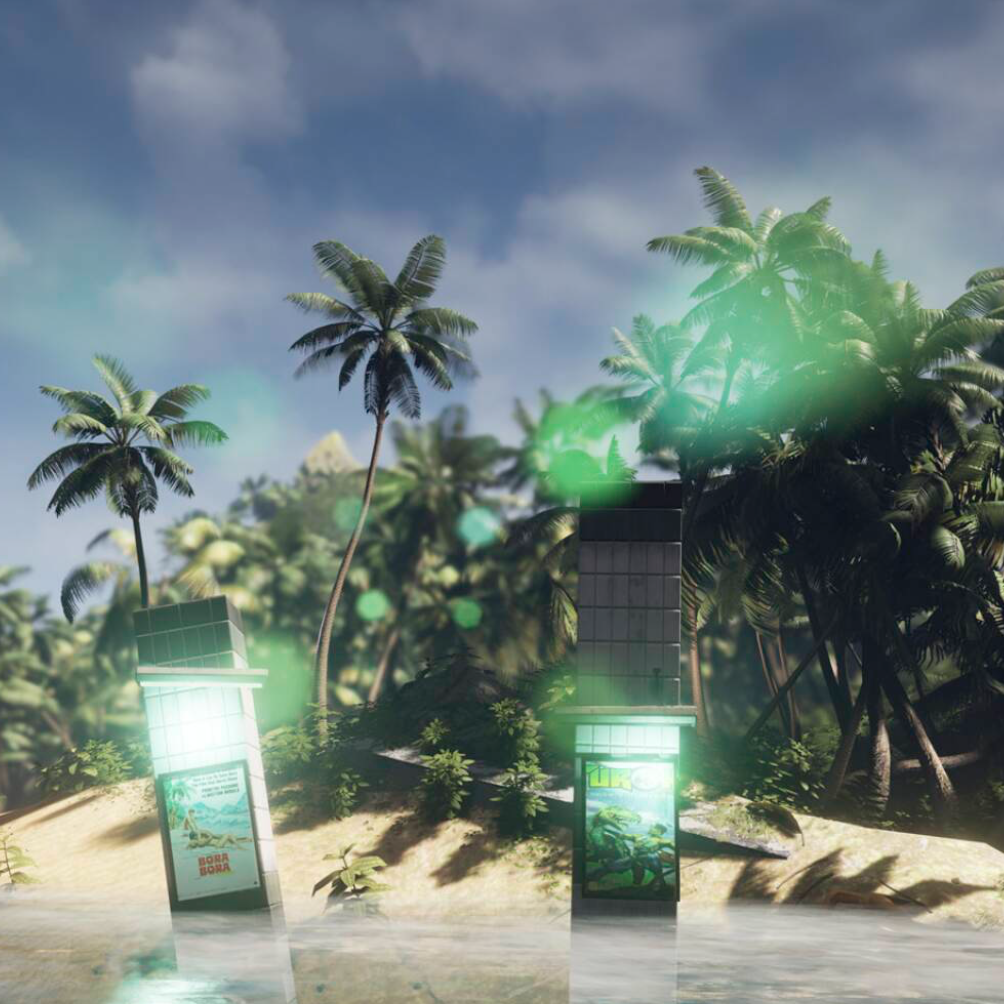
For today's episode, Frederikke Møller chose Jakob Kudsk Steensen's Primal Tourism from 2016 from the collection of the National Gallery of Denmark, Copenhagen.
“A reason for the current administration to look at culture, let’s say the Smithsonian or the grants or the universities, is because it is something that binds us together, essentially. And it shows us our history, our contemporary society. It takes up different topics from gender equality or lack of, climate change and so on. It can address difficult topics in a way that speaks to you.”
“When I was around 14, I went to see Prince, and that was huge to me and amazing. And I remember walking around this small city where I’m from thinking, oh my God, oh my God, I’ve just had an epiphany. This was the most fantastic thing. And it touched me deeply and I was blown away. That was my first meeting with a real artist, a fantastic artist, who could do it all.”
“I think the Nordic countries as a whole idea is just important. The Nordic countries are teaming up, they are getting stronger also in the cultural sectors. They want to do more collaboration together. Bringing the Nordic countries closer together and then going out into the world also with culture, I think would be so strong and I would love to be a part of that somehow.”
Powered by RedCircle
This conversation with Gregers Heering occurred on March 11, 2026.
00:00
Frederikke Møller
A reason for the current administration to look at culture, let's say the Smithsonian or the grants or the universities, is because it is something that binds us together, essentially. And it shows us our history, our contemporary society. It takes up different topics from gender equality or lack of, climate change, and so on. It can address difficult topics in a way that speaks to you. From my standpoint, I think culture and cultural diplomacy is more important than ever. I think right now actually is the time where we need to have cultural exchanges.
00:43
Gregers Heering
My name is Gregers Heering. I'm a photographer and guest host of Danish Originals. Our aim is to celebrate Danish creatives who have made a significant mark in the US.
00:54
Gregers Heering
Today's guest is Danish independent consultant, Frederikke Møller. Welcome, Frederikke.
01:02
Frederikke Møller
Thank you.
01:03
Gregers Heering
Frederikke, I was thinking of you this morning. I know that you have recently moved back to Denmark. And I was out walking our dog and I saw these little yellow flowers coming up from the ground. And even though I've been here for so many years, I haven't really noticed them.
01:18
Gregers Heering
It's such a Danish thing to be looking at erantis, these little yellow flowers that pop up and are an indication that spring has arrived in Denmark. Although they are different flowers, there are also yellow flowers here popping up, to those who don't think LA has seasons.
01:34
Gregers Heering
What I want to hear is how it feels to be spending your first spring back in Denmark, probably years after having been abroad. How does that feel?
01:45
Frederikke Møller
It feels great actually. And funny that you mention erantis, because I was walking the other day in Fælledparken, this park pretty much in the middle of Copenhagen, and I noticed the same thing and I was thinking, okay, spring is really here. We have had some snow this winter, which has been nice, I love it. But now, spring is definitely around the corner and you feel that.
02:09
Frederikke Møller
Danes love when the sun is shining. They love to go out and all of a sudden the city feels quite different. Everyone is out. Everyone is sitting outside, without sunscreen and with a beer and just talking. Because we have such dark, dark winters, dark fall, we really make the most of our spring and our summer. So you notice that people are all of a sudden outside and you feel that the city is more lively. And I love it.
02:37
Gregers Heering
And people are very kind.
02:38
Frederikke Møller
Very kind. The sun does amazing things to people.
02:45
Gregers Heering
Alright, so, Frederikke, you have a very interesting background. You've done many things working for many interesting organizations, institutions. You have spent a significant time doing your work in the US. Among other things, you spent, I believe, almost three years with the Danish Embassy in Washington. And you still have work going on in the US. But you've moved back to Denmark. What made you take that decision?
03:11
Frederikke Møller
That was family, of course, but it was also that I had a three-year contract. It was almost over. I could have been extended, but I thought, okay, I've gotten as much out of this job as I possibly could. And I do believe that. It was time to do something else. I had a great time in DC, I traveled in the US, and had a lot of very interesting collaborations.
03:37
Frederikke Møller
I have family here in Denmark and I have an old mother as well. So it was time to return. I don't think I see myself living in Denmark forever and ever, we'll see, but maybe a part-time situation would really be what would work for me and my family.
03:56
Gregers Heering
You worked for the Danish Embassy, the Foreign Ministry. You have also worked for the Danish Arts Foundation, which is the biggest foundation with taxpayer money that is given out to artists every year that are making special work. And the list goes on. I get this picture that you are a bridger facilitating Danish culture, Danish art, architecture, and design, to other cultures, especially in the US. Is that correct?
04:29
Frederikke Møller
That is exactly correct. I see myself as someone who tries to create and facilitate contacts between Denmark and the US. In this case, mostly it has been US relations. So that's what I was doing at the Embassy, trying to connect American institutions, mostly art institutions, cultural institutions, to Danish institutions. Also, for that matter, artists, designers, architects.
04:58
Frederikke Møller
I would say I'm also very interested in societal issues. So in my role as consultant now, I'm looking broader in the field of culture and also of social models, Nordic models, and doing programming around that. But totally true, I really like being the facilitator and making powerful partnerships.
05:22
Gregers Heering
And what are some of the projects here in the US that you are most proud of having been involved with?
05:30
Frederikke Møller
Quite a few and rather diverse. Based in Seattle, Scan Design Foundation is a foundation trying to facilitate Danish and American exchanges around sustainability and design, and they have scholarship exchanges.
05:46
Frederikke Møller
I pitched the idea that they bring over the "Housing Lab" exhibition, which is an exhibition made by the Danish Arts Foundation with Realdania, about how we are going to build and how we are going to live in the future when we have different family patterns and there's climate change and everything to consider.
06:04
Frederikke Møller
We brought this exhibition to the US, these six experiments in housing. And that exhibition has been in Seattle, Portland, Chicago, and DC. And Scan Design and the local partners, universities, and so on have made a lot of interesting programming around that.
06:23
Frederikke Møller
So I think having brought something over from Denmark that makes for these great exchanges and talks about, okay, so we have this in Denmark, we probably can't apply it one to one, but we can take and discuss some ideas from our local perspectives. And I really enjoy that. And Danish architects in this, they learn a lot too, how architects practice in the States. It's cross-pollinating, you can say. That's been a great thing.
06:49
Frederikke Møller
Then I've done some one-off events. I've worked with the Library of Congress, which is the national library in DC. And together with the Nordic embassies, we made this event called "Nordic Voices," where we picked writers from the different countries to talk about their literature, how it differs from the US, if it does, what kind of subject matters are important to the Nordic countries.
07:15
Frederikke Møller
I've worked quite a lot with the Kennedy Center, the national cultural institution in DC, which is now named differently. I brought some artists there, which they were really happy about, got connected to a lot of people and worked with some really nice people there. So that's some of the things.
07:34
Gregers Heering
And that sounds incredible. Thank you for your work on behalf of Denmark. What are you working on right now?
07:41
Frederikke Møller
I'm a consultant for the National Nordic Museum based in Seattle. There's a big diaspora of Nordic people in the Pacific Northwest. They tell the history of that immigration. They also have a lot of contemporary exhibitions. They have a lot of programming, and that's what I'm doing for them now, something we call the Innovation series, which started in February.
08:03
Frederikke Møller
We did a talk with an AI artist, a Danish AI artist. Next month we are doing an event on the Nordic educational system. Then we're having programming on urban planning with Gehl Architects being one of them. We're also doing a book talk on a newly published book called Nordic Capitalism, talking about what that is.
08:25
Frederikke Møller
There's a lot of interest, especially in a place like the Pacific Northwest. A liberal place, they collaborate a lot with Denmark on green solutions and so on. And there's a lot of interest in knowing about the Danish model, our society, how we handle healthcare, AI, and so on. I'm working on these programming events and they have an innovation aspect and a societal aspect, you could say. So, it's art, culture, and society.
08:52
Gregers Heering
That sounds really interesting. I know you do not see yourself as an artist that is actually creating something. In my opinion, you certainly are because without you, a lot of artists and cultural organizations may not have had their work seen here. What is it about art and culture that is important to you? What is it you see that it can facilitate?
09:20
Frederikke Møller
So I think in many ways you can say that art sends us on a whole other frequency. It talks to our emotions, our experiences, in a very different way than statistics can, for example. It connects us and it can make you see things in a different light. Art is so powerful. It's a part of our collective history.
09:41
Frederikke Møller
It's a difficult time in the US. A reason for the current administration to look at culture, let's say the Smithsonian or the grants or the universities, is because it is something that binds us together, essentially. And it shows us our history, our contemporary society. It takes up different topics from gender equality or lack of, climate change and so on. It can address difficult topics in a way that speaks to you.
10:13
Gregers Heering
I was obviously gonna get into the current climate. Denmark has had diplomacy for more than 220 years with the US. And recently with all the controversy with Greenland and tariffs, I saw here the other day that Danish exports to the US are down 26%. Is your role affected by the current climate? And if it is, how are you trying to adjust the way you do things in this climate in this fairly difficult time?
10:48
Frederikke Møller
There's a different climate right now. We see that culture is definitely high on the agenda with some changes happening at the Smithsonian, the big museum cluster in DC. I can say that when I was at the Embassy, and I left in June of last year, Greenland was already on the agenda there. I definitely felt that Danish artists and institutions were somewhat more hesitant about the US.
11:15
Frederikke Møller
Was it safe to travel, especially for some of the artists? Was it now that they should do something about the US and the US market? That has definitely been different because LA and New York are big dreams for Danish and international artists. And I've gotten the question, so what should I do? And that's up to the individual organization.
11:37
Frederikke Møller
From my standpoint, I think culture and cultural diplomacy is more important than ever. I think right now actually is the time where we need to have cultural exchanges to still be on a frequency where we can talk and exchange ideas and creativity.
11:54
Frederikke Møller
So, I'm going ahead doing the programming that I have suggested to the National Nordic Museum in Seattle. There hasn't been any hesitation from the people that I have contacted so far about doing something in Seattle. There might be, in the future, someone who says, okay, I'm not comfortable with traveling. And it's up to every individual. You feel that it's a different climate, but I do still think that it's just hugely important and maybe even more important than ever that we continue to have those bonds.
12:26
Gregers Heering
You've not just spent time in New York and LA and Washington. You actually came here as an exchange student to South Carolina. Has your perception of the States changed with the recent developments?
12:41
Frederikke Møller
I went to New York when I was 13, and I absolutely loved it. It was my biggest dream to go there. Instead of having… I can't remember the English name, a konfirmations party…
12:55
Gregers Heering
Confirmation party!
12:57
Frederikke Møller
…confirmation party, I wanted to go to New York, and so my mom took me and I absolutely loved it. I've always been very much into hip hop and that whole culture, I still am. So yeah, I've always been influenced by American culture, like a lot of Europeans. And then receiving this handwritten letter, you're going to South Carolina as an exchange student — I thought I was going to LA or New York, I don't know if I knew where South Carolina was located in the US — I didn't have the imagination.
13:25
Frederikke Møller
It was definitely an eyeopener. It gave me a whole other perspective on the US, from thinking that it was extremely liberal and very European, to seeing a conservative environment. I lived in a small city called Aiken on the border of Georgia and South Carolina. Southern hospitality has its limits. It did back then, and I think it might still. It's an experience I'll always remember.
13:51
Frederikke Møller
I can say that I have conflicted feelings towards the US. Like many Danes, it's a love-hate relationship. I believe that we have a strong relationship, it has definitely run into some serious difficulty during the last year and a half. I think it's mendable, I do, to some extent, but it might take years to regain that confidence.
14:15
Gregers Heering
What is it you see in the dynamic between Danes and Americans? What is it Americans may often find interesting about the Danes and vice versa, and where are, often, the culture clashes?
14:31
Frederikke Møller
In a professional sense but also on a personal level, having connected with many Americans and having American friends, they are pretty amazed by the Danish model, our Danish society. One of my friends said, this is utopia. Our educational system, our healthcare, the trust in society — that's some of the most striking things for Americans.
14:56
Frederikke Møller
They also think that we are very modest. And we are definitely not the ones who are saying, I'm so good. We admire that Americans are not embarrassed to say, Hey, I'm really, really good at this. In some ways, we can compliment each other.
15:10
Frederikke Møller
In New York, where I've visited a lot of times and lived for shorter periods, I have a sense of freedom. There's a sense of, it's okay if you're in Central Park and do a waltz by yourself. No one will blink an eye. I love that. We don't quite have that vibe in Denmark. You might find it in Berlin, but that vibe for me is very New York. And I love it.
15:33
Gregers Heering
One of the things that I have heard, and I've been here for more than 20 years, is that there is often an opinion from Danes that Americans are superficial or they don't mean what they say. I don't necessarily agree with that because I often see that as curiosity.
15:53
Gregers Heering
We as Danes are not used to actually being that open and also what you say, that we are not used to talking about ourselves, especially what we are good at. So is there something to learn there for Danes?
16:08
Frederikke Møller
That's a very good point. I hear that all the time, Americans are superficial. What we see as superficial is actually in America, common courtesy. For example, if you go into a Whole Foods, they ask, so how are you doing today? Or if you are in the South asking, honey, how are you doing? When you are at Trader Joe's or whatever, they don't want your life story and that's okay, but they acknowledge you and you say, Hey, I'm doing okay, how are you?
16:33
Frederikke Møller
And it's a nice courteous exchange, and I really enjoy that. So when I returned to Denmark, I was, okay, people are actually pretty rude, you know? We notice each other in the US and that feels different here. So, is that superficial? No, that's not superficial. It's a way to go around each other and acknowledge the existence of someone.
16:54
Frederikke Møller
I have an event at the Nordic Museum next month about the Nordic educational system. When we enter first grade or even kindergarten, we follow that same class until we leave for high school. That's not the same in the US. They team up with different kids throughout their school years as far as I know. That makes you an expert in getting to know new people all the time.
17:16
Frederikke Møller
I have deep friendships in Denmark. I also know a lot of Americans who have deep friendships that go way back. It's an easy thing to put us in those boxes. I don't think they hold water, actually, in reality.
17:30
Gregers Heering
Well said. I wanna go back to this thing about art because I can obviously see you on the screen here, and when you talk about art and what it can do, you light up. When was the first time in your life that you discovered or had a moment where you had the feeling of the power of art?
17:48
Frederikke Møller
When you say that, I'm thinking about, oh, paintings or da da da. But I'm gonna say another thing. When I was around 14, I went to see Prince, and that was huge to me and amazing. And I remember walking around this small city where I'm from thinking, oh my God, oh my God, I've just had an epiphany. This was the most fantastic thing. And it touched me deeply and I was blown away. That was my first meeting with a real artist, a fantastic artist, who could do it all.
18:21
Gregers Heering
Where did you see him perform?
18:22
Frederikke Møller
In Parken. I was in the front row, a very skinny 14-year-old. And the next day I had blue ribs because I was totally in the front. It was just amazing.
18:33
Gregers Heering
That's incredible. I can totally understand that. Take us through your journey in broad strokes. How did you get involved with art and culture, and how did you end up where you are today?
18:45
Frederikke Møller
I am from a little town called Fuglebjerg, and I went to high school in Slagelse. I have a master's in modern culture. So I always knew that that was the direction I would take because that was very interest-based. So that's what I studied at the University of Copenhagen.
19:00
Frederikke Møller
I started out as a project manager in Wonderful Copenhagen, which is the tourist organization of Greater Copenhagen. And that quickly became an international thing for me. I promoted Copenhagen mostly to the international press. I had people on press trips, like The Guardian, Vogue, and Elle, and all kinds of magazines and newspapers, and took them to Fashion Week and to Noma and all of those places.
19:31
Frederikke Møller
Then I've also had jobs that weren't that international. The Danish Arts Foundation was and is great. That was not very international, not in my seat. I was the head of communications. It was about getting the word out on the amazing things that the Danish Arts Foundation supports and that it's all around Denmark and not just a thing in Copenhagen that some people want you to think.
19:56
Frederikke Møller
When I was at the Arts Foundation, I was always somewhat restless. I saw this position at the Embassy in DC and I thought, okay, I want to go back because after high school, I was at CNN in Washington, DC. I had an internship there for five months. I was pushing papers for Larry King and Jesse Jackson.
20:16
Gregers Heering
Wow.
20:17
Frederikke Møller
I wanted to go back to DC. As a young person there, it was exciting, but mentally I wasn't in a wonderful place when I was in DC. So I was like, I want this to go full circle and I wanna go back and have a good time. And that's exactly what happened.
20:33
Gregers Heering
Wow, that's amazing. I want to go back to the Danish Arts Foundation for one second, because that is an example of a big privilege we have in Denmark. It's a lot of money that it donates every year to artists. Are they solely supporting artists in Denmark or are they also supporting Danish artists abroad?
20:57
Frederikke Møller
They also have some international ways of seeking funding. For example, a Danish artist wants to go abroad, and they do all of the time. They can support travel. They also have artist residencies. They've had one in Santa Monica. I don't know if they still have it, but they had one in Seoul, in different places. There's plenty of opportunity within the Danish Arts Foundation to seek funding to go abroad.
21:23
Frederikke Møller
Also another thing is at the embassies, you can actually seek funding from the Cultural Ministry and the Ministry of Foreign Affairs to do different artistic projects in the country you want to go to. And that can be the US or Australia or the UK. Institutions in Denmark can seek funding for international projects.
21:44
Frederikke Møller
You could say that the Danish Arts Foundation, which has around DKK 500 million every year to distribute, is one of the only foundations that I know of that gives funding for international projects. Of course there's a Novo Nordisk Foundation and so on, but I'm thinking mostly about the ones for the arts. It's quite a unique thing. Also that the Arts Foundation gives to a very broad spectrum, from design, crafts, architecture, film, visual arts, performing arts, music of course.
22:15
Gregers Heering
That is absolutely incredible because although here in the US there are numerous grants and sponsorships you can apply for, to have a central, public, government controlled foundation that supports the arts the way the Danish Arts Foundation does, is unique and a good example of some of the systems that are really working in Danish society.
22:39
Frederikke Møller
And also, yes, it is funded by the state, but what's unique is the political "arm's length" principle. The people who review the applications and give out the funding are people from the environment themselves. It's not politicians, it's people who know what they're doing. It's musicians, performing artists, and so on. It's not a political decision. It's from a professional viewpoint.
23:07
Gregers Heering
A contrasting example here could be what happened to the Kennedy Center, where President Trump interfered and used political power to influence or infiltrate that organization. And now it's closed down, the official explanation being renovation. Can you talk a little bit about that situation?
23:32
Frederikke Møller
This was beginning to happen when I was still at the Embassy and now it's been rolled out even more, I think, with the Smithsonian, also other places, mostly in DC. The administration wants to view their exhibits, their texts to their paintings, and so on. That's a very different environment.
23:51
Frederikke Møller
And for the Kennedy Center, it had a really great international department. Those people are of course not there anymore. There's a whole other focus. You see in the US all of a sudden, for example, the Kennedy Center, that got taken over politically. Now it's mostly the administration and the people they have hired who are in foot step with this.
24:15
Frederikke Møller
Now it's closed, but the programming had gone from international, very high quality to presenting mostly very traditional American entertainment. And this was also a place that was seen in DC as the people's house, they had a lot of different people coming in.
24:34
Frederikke Møller
They had another building close to the Kennedy Center where they had dance and hip hop and comedy. And I had friends who were artists in the social impact programs. The Kennedy Center, they had a social impact programming series, and they are no more. So it's definitely been very difficult and let's see what happens.
24:57
Gregers Heering
With the current developments, not just between Denmark and the US alone, but what's going on in the world — we have many wars going on, we have much unrest and we also have very different ways of communicating, the quality of knowledge, fake news, and all that algorithm, social media — are you concerned that art is being hijacked by those in power on a more global level than what you've seen before?
25:28
Frederikke Møller
Sitting here in Copenhagen, I don't see that happening. I know there's talk of AI and copyrights and so on. I might be naive about that aspect. I do still think that a lot of the experiences you have with art is personal, it's not through a screen. You want to go out to the institutions, you want to go to the museums. I do believe we have a lot of safeguards. I am concerned that the safeguards seem to not be as solid as we thought in some places for sure. Let's see. But definitely, it's a whole different landscape.
26:07
Frederikke Møller
Also, what you're saying about social media, especially in the US but also here in Denmark, you read what you want to read, and then you read exactly more of that. In the US, as far as I can see, there's fairly little objective news. You either tune into MSNBC, I believe it's now MS NOW, or you tune into Fox. And I'm guilty of that as well. We follow people who think and act like us.
26:35
Frederikke Møller
And that makes me think about our educational system as well, because we have, still, many public schools in Denmark. You go through folkeskolen and you meet all kinds of people from all walks of life. I see in the States that you can live in a guarded community.
26:51
Frederikke Møller
Can you empathize with people who live totally different lives and upbringings, if you have only lived in a super rich, guarded community? Can you even imagine what it feels like to live paycheck by paycheck? It has been divided, always. I don't think we should kid ourselves, but definitely, I feel that it's become worse, and it has.
27:16
Gregers Heering
I agree, unfortunately. What was the most recent art experience you had that made the biggest impression on you? When was the last time you really were moved by a piece of art or the experience of art?
27:32
Frederikke Møller
That's a good question. I went to the Royal Theater last month, I think, and I saw a great play. It's an old play they had revitalized, you could say. It's about this Jewish family and the daughter falls in love with a non-Jewish man, and it's about the prejudices of both families. Thankfully, there is a happy ending to this play. They come together, the different families, and they stay together.
28:01
Frederikke Møller
It's an ever present human story. That touched me and shows how that has always been something that we have fought over and it's universal and this story is a universal story. It was important back then, and it's very, very important now as well. Maybe more important than it's been for the last, I don't know, 20 years because we have a whole new world order here, it seems.
28:25
Gregers Heering
And again, I see your face light up. It's so inspiring to see that you are really driven by that fundamental thing about using art as a bridge, in the midst of a difficult time, in the midst of a difficult world.
28:39
Gregers Heering
I know that you have also consulted with artists individually to open up their scope to what is possible outside of Denmark. What are some of the things that you see again and again that you help them with or that you say to them to open up their minds? What seems to be some of the best ways to help artists broaden their audience in your perspective?
29:08
Frederikke Møller
Some of it, I feel, is actually business advising. You probably can't conquer the whole US in one slice, so who are your target groups? Where would you want to go? Is it necessarily the biggest cities you should start with? Is it LA? There are a lot of opportunities in LA, but there are also a lot of opportunities in cities that are maybe below that population point.
29:35
Frederikke Møller
So speaking to them about their expectations and how they want to approach this, that is definitely one of the things we talk about. Then there's also another very practical thing. Do you have the right funding? Where can you seek funding? There's the Danish Arts Foundation. There are also several others that you can look into. Getting the right match, which institutions could you approach, which curators would be right for you?
30:03
Frederikke Møller
So, to find the right match for institutions also, and maybe plant an idea in their head that this might be interesting, and then facilitate that contact. One of the best experiences I had in my job at the Embassy was teaming up ARKEN, the museum south of Copenhagen, with a DC art institution on a project about future worlds, about how we teach children to believe in the future through art, addressing difficult subjects like climate change and so on.
30:42
Frederikke Møller
And that is a project that is still going on, and they are still meeting up in different workshops with the DC institution and trying to expand to the west coast. I'm so happy, it is such an interesting project.
31:00
Gregers Heering
You mentioned Noma earlier. Right down the street from where I am right now, Noma is going to open their popup. The ticket price is $1,500 per person to have the Noma experience. It has been getting a lot of attention in the media, and also controversy. And although that's important, it's not important for this conversation.
31:22
Gregers Heering
The reason I'm bringing it up is I want to get your perspective on what is art, what is not. Your expertise is to help bridge art and artists. Is Noma, to you, an art institution in itself presenting something Danish, although it's not traditional Danish food?
31:42
Frederikke Møller
So it's definitely gastronomic art. That's probably how I would describe it. And they have been an immense influence on the Nordic dining scene. And specifically on the Danish dining scene. It all started with the new Nordic manifest with Claus Meyer and René and a few others. And back in 2008 or something, people were laughing. Who would want to eat this Nordic Danish food? What is the story of these ants? And so on.
32:14
Frederikke Møller
And then it blew up from there. And it's been an astounding journey for Danish exports also. People come to Copenhagen just to eat, fly in just to eat, at Noma or Alchemist, another Danish restaurant here in Copenhagen. We can talk about if that is sustainable. Probably not.
32:31
Frederikke Møller
But they have definitely put Denmark and Copenhagen and the Nordic countries on the culinary map, that's for sure. A place like Alchemist, they really merge art. I would say that's part culinary art and part performance art. So that's pretty incredible. I've been there once and that's definitely an experience.
32:53
Frederikke Møller
For the broader food scene, I would say a person like Claus Meyer has had a big influence trying to teach Danes to make their own food and their own produce. It remains quite an elitist project, but it is something that we are very well known for now and that is great.
33:14
Gregers Heering
I should mention, for those who don't know, Claus Meyer is a Danish chef, as is René Redzepi who is behind Noma. Do you see it as possible in the future that startup Danish restaurants somewhere in the world could get funding from the Danish Arts Foundation? In other words, do you think that food has now become a permanent part of what art can be for Danish culture?
33:40
Frederikke Møller
Definitely. And I also think the Minister of Culture has said that we should regard food and gastronomy as art. And it's a very good representation of Denmark on the same level as visual arts, performance art, music, and so on. It is up there and it's done a tremendous job putting us on the map in a whole other way, that's for sure. So yes, it is regarded as such.
34:07
Frederikke Møller
And I also think there is this thing now called culinary diplomacy. It's something that the embassies, for example, and the representations all around the world, use all the time. Oh, here we have Danish organic chocolate, or we have the smørrebrød, the open face sandwiches, and bringing out chefs to different events, and people love it. So it's a big thing in diplomacy terms as well.
34:30
Gregers Heering
So, Frederikke, for your last question, if a dream project came knocking on your door tomorrow, what could that be? What are some of the things on your list that you haven't done yet and that you would love to get involved in?
34:45
Frederikke Møller
Oh my God, that is a very big question. Something with all the Nordic countries in the US would be great. I think the Nordic countries as a whole idea is just important. And I saw that working at the Embassy, but I can also see it in everyday news. The Nordic countries are teaming up, they are getting stronger also in the cultural sectors.
35:11
Frederikke Møller
They want to do more collaboration together. Bringing the Nordic countries closer together and then going out into the world also with culture, I think would be so strong and I would love to be a part of that somehow.
35:24
Gregers Heering
Amazing. I will for sure, and I'm sure the rest of the team behind Danish Originals are going to spread the word about you, Frederikke. Thank you for what you do, it's amazing.
35:33
Frederikke Møller
Thank you!
35:35
Gregers Heering
And it's been such a pleasure talking to you.
35:36
Frederikke Møller
Likewise. Thanks.
35:42
Gregers Heering
For today's episode, Frederikke Møller chose Jakob Kudsk Steensen's Primal Tourism from 2016 from the collection of the National Gallery of Denmark.
35:54
Frederikke Møller
I have chosen a multimedia work called Primal Tourism by Jakob Kudsk Steensen. It's a narrative video, a multi-player video game, and virtual reality. It's a virtual island, a replica of Bora Bora in French Polynesia.
36:08
Frederikke Møller
When you walk through this tech work, you are on an abandoned island, and you see the remains of tourist resorts. There's been climate change, the water is high, there's no one there.
36:24
Frederikke Møller
Here is actually an artist who utilizes tech tools to tell us something about our past, but also how we handle today's world, and more particularly, how we don't handle it.
36:36
Frederikke Møller
Where we usually see islands as ultimate paradises, here it feels threatening. And that's what Jakob does in his art. He looks at our relationship to the natural environment, our relationship to nature and animals and other sentient beings. And that's very powerful and it's something that I also care deeply about. That's why I chose this artwork.